
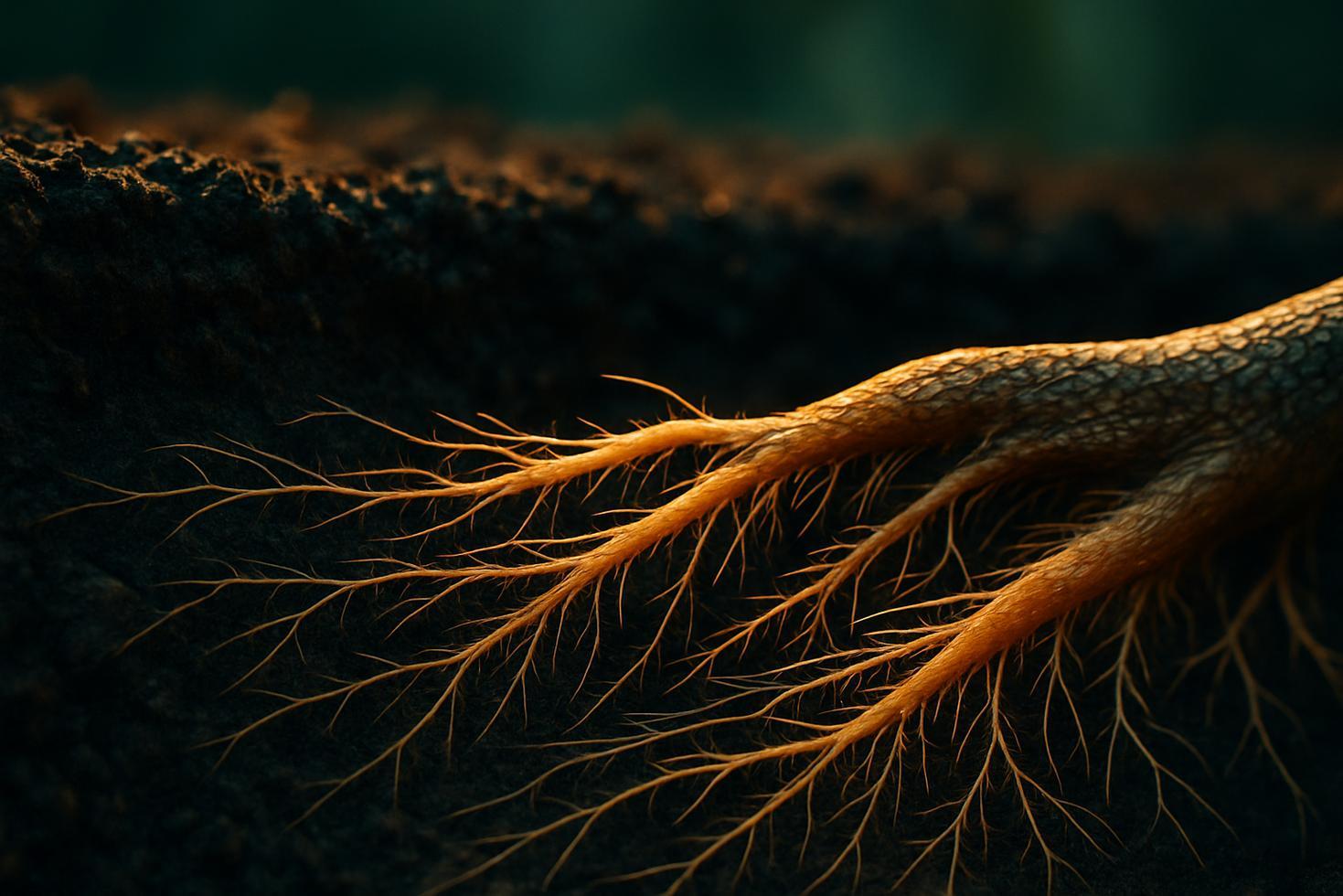
Avocado feeder roots pack into the top 6–8 inches of soil, spreading up to 8 feet laterally — cut off their oxygen and the damage begins below before the canopy shows a single sign.
Avocado trees concentrate nearly all their feeder roots in the top 6–8 inches of soil, spreading outward rather than downward. That architecture isn’t weakness — it’s a specialization built around one resource: oxygen. Those fine, fibrous roots absorb air directly and continuously, and the surface is where air lives.
One young-tree study measured a taproot that branches within 6 inches to 1 foot below the surface, with lateral roots reaching 8 feet radially from the trunk. The root system is essentially a wide, flat web — reach without depth.
How Soil Type Shifts Avocado Root Depth and Density
Root behavior isn’t uniform across soil types. In clay soils, roots remain more shallow. In sandy soils, one study found maximum root density occurring around 30 cm from the trunk. Another study reported that effective rooting depth sat roughly 100–200 mm above any restrictive layer or abrupt change in soil texture.
Root depth shifts with drainage and texture — the same species, dramatically different architecture depending on what the soil allows.
Why Oxygen Dependency Shapes the Whole Root System
Avocado roots have a high oxygen requirement. Classic root studies document that when surface roots are waterlogged or buried under added soil, root function declines quickly. Top dieback or full tree collapse can follow — not from disease initially, but from asphyxiation.
The canopy can appear healthy while the root mat underneath has already failed. This lag between root damage and visible symptoms is what makes soil management so consequential for this species. Root suffocation travels upward silently, showing in the crown only after the foundation is gone.
Mulch that keeps the surface moist and aerated supports root function. Standing water or heavy soil that blocks air does the opposite.
How the Root Web Behaves in the Real World
In one terrace comparison, primary lateral roots averaged less than 5 feet on southerly exposures and greater than 6 feet on northerly ones. In mature trees, many fine roots extended into mulch layers or sat directly on the soil surface.
One study found that in certain soil conditions, more than 70% of active roots concentrated at depths of 25–75 cm — deeper than the 6–8 inch guideline suggests. Active root distribution depends heavily on site conditions, not species behavior alone.
The 6–8 inch figure reflects commercial grower guidance for well-drained soils. The research as a whole shows a species that is shallow and lateral by default, but adaptive when soil structure forces it.
Root architecture this flat and wide trades depth for reach. The gamble works as long as the surface stays breathable.
Frequently Asked Questions
How deep do avocado tree roots actually go?
Feeder roots concentrate in the top 6–8 inches in well-drained soils, though in some soil conditions active roots have been found at 25–75 cm depth.
How far do avocado roots spread from the trunk?
One terrace study measured lateral spread up to 8 feet radially from the trunk in young trees.
Why do avocado trees die from waterlogging so quickly?
Avocado roots require constant oxygen; waterlogged soil suffocates the shallow root mat and root function declines rapidly, often before visible canopy symptoms appear.
Does soil type change avocado root behavior?
Yes — clay soils produce shallower roots, while sandy soils shift maximum root density closer to the trunk at greater depth.