
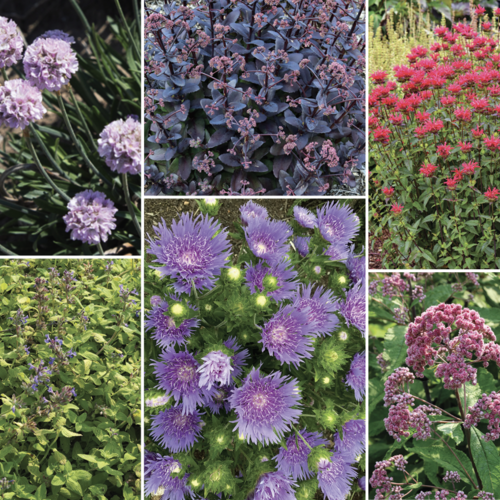
The Best New Perennials: Trialed & Tested!
We’ve all been burned by the hype surrounding a product that didn’t meet our expectations. For gardeners, it’s usually a hot new perennial that bombed—or maybe a rabbit repellent that didn’t curb the fuzzy fiends’ appetites. While a plant’s failure may be complicated, sometimes it’s not the gardener’s fault. I believe rigorous plant trialing takes away some of the mystery about which plants will live up to their promise. As a plant evaluator for over 30 years, failures bum me out too, but thankfully my failures can help all of us make better choices in the end.
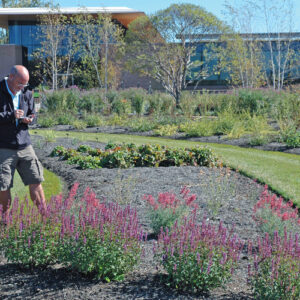
Chicago Botanic Garden plant evaluation trials
Every year the Chicago Botanic Garden evaluation beds are packed with hundreds of plants. Most are in a comparative trial of similar types; for example, last year we started evaluating 48 cultivars of hyssop (Agastache spp. and cvs., Zones 5–10), and this spring we added 39 different sedums (Hylotelephium spp. and cvs., Zones 3–9) to the trials. But each year we also test many new perennials that are not anchored to a major trial—this segment has been growing steadily and currently represents around 20 percent. Most of these new perennials are one of a kind, but sometimes there are a few cultivars of a specific genus that make a mini-comparison possible.
While these individual plants go through the same comprehensive evaluation, they can easily be overshadowed by larger trials and fall between the cracks. Sharing a plant’s success story or failure makes us all better informed when shopping at local garden centers or online. Twenty percent is a big number—almost 200 taxa—so let’s start small by highlighting nine stellar perennials from the past few years that you won’t regret spending money on.
| Plant Trial Parameters |
- Zone: 6a
- How long: Minimum of four years
- Conditions: Full sun; well-drained, alkaline, clay soil
- Care: Minimal intervention, allowing the plants to thrive or fail under natural conditions. Beyond observing ornamental traits—flowers, foliage, habit—we monitor the plants to see how well they adapt to environmental and soil conditions while keeping a close eye on any disease or pest problems and assessing plant injury or losses over winter.
Read More: Behind the Scenes of Plant Evaluation at Chicago Botanic Garden Trials
9 Best New Perennials
‘Boom Chocolatta’ meadow geranium stays neat and tidy, even after flowering
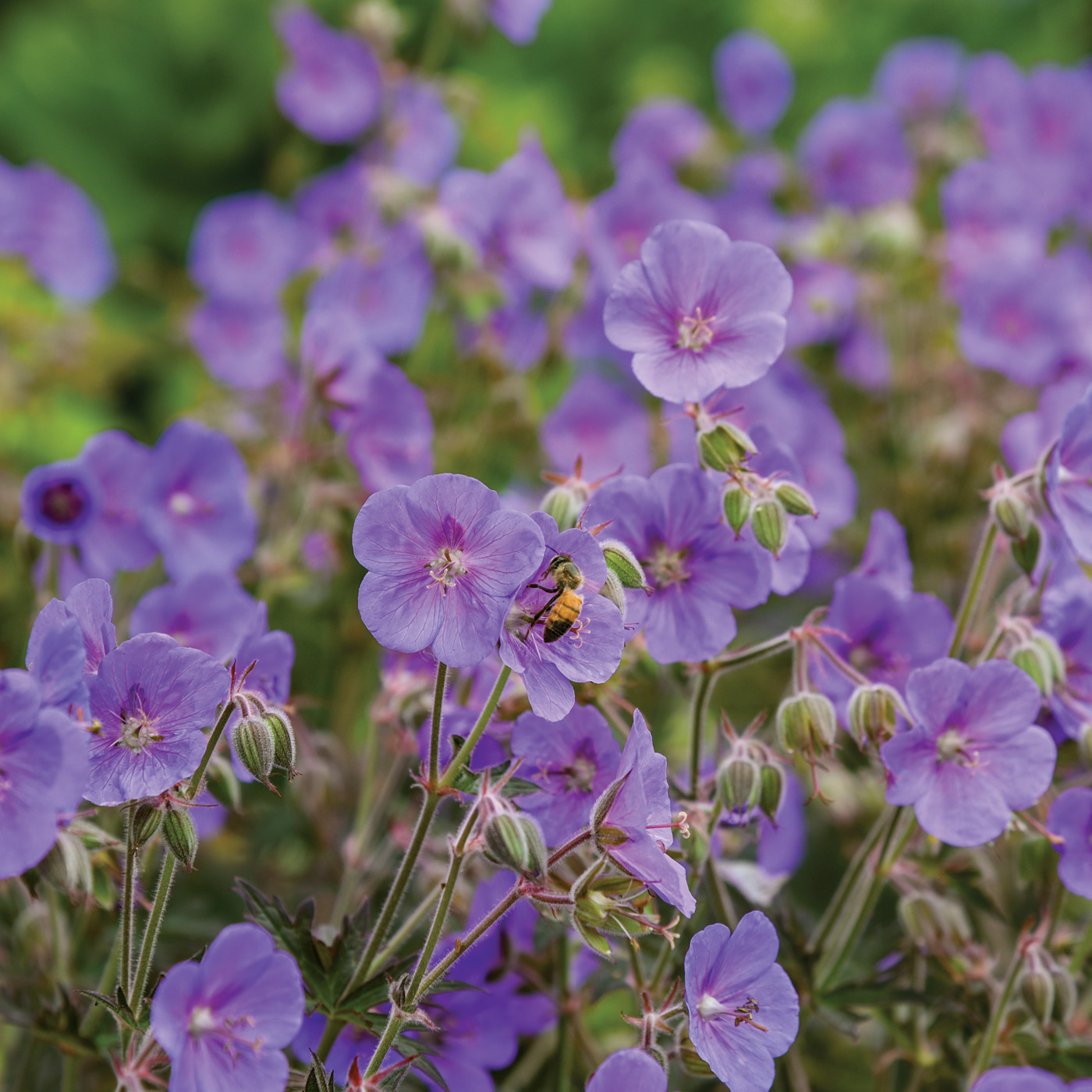
Geranium pratense ‘Boom Chocolatta’
- Zones: 4–8
- Size: 40 inches tall and 60 inches wide
- Conditions: Full sun to partial shade; average, well-drained soil
- Native range: Asia and Europe
We’ve evaluated a dozen cultivars of meadow geranium over the years, but ‘Boom Chocolatta’ blew them all away! Clusters of vibrant blue-purple flowers (1½ inches wide) blanketed the stems from late spring to late summer. The green leaves are a little chocolatey early on, with the bronze overlay fading as first flowers open. The sturdy upright habit held its tight form from spring to fall, too.
Since this cultivar doesn’t fall apart after flowering like some geraniums, deadheading is a gardener’s choice rather than a necessity. If the floral twigginess is too much, a late summer shearing reveals the deeply cut leaves, which are still healthy and attractive. The name is a bit cringe to me but ‘Boom Chocolatta’ is a nearly perfect perennial where it counts. Southern gardeners may want to provide shade from afternoon sun for the best performance.
‘Peter Cottontail’ sneezewort is an exceptionally long-blooming yarrow
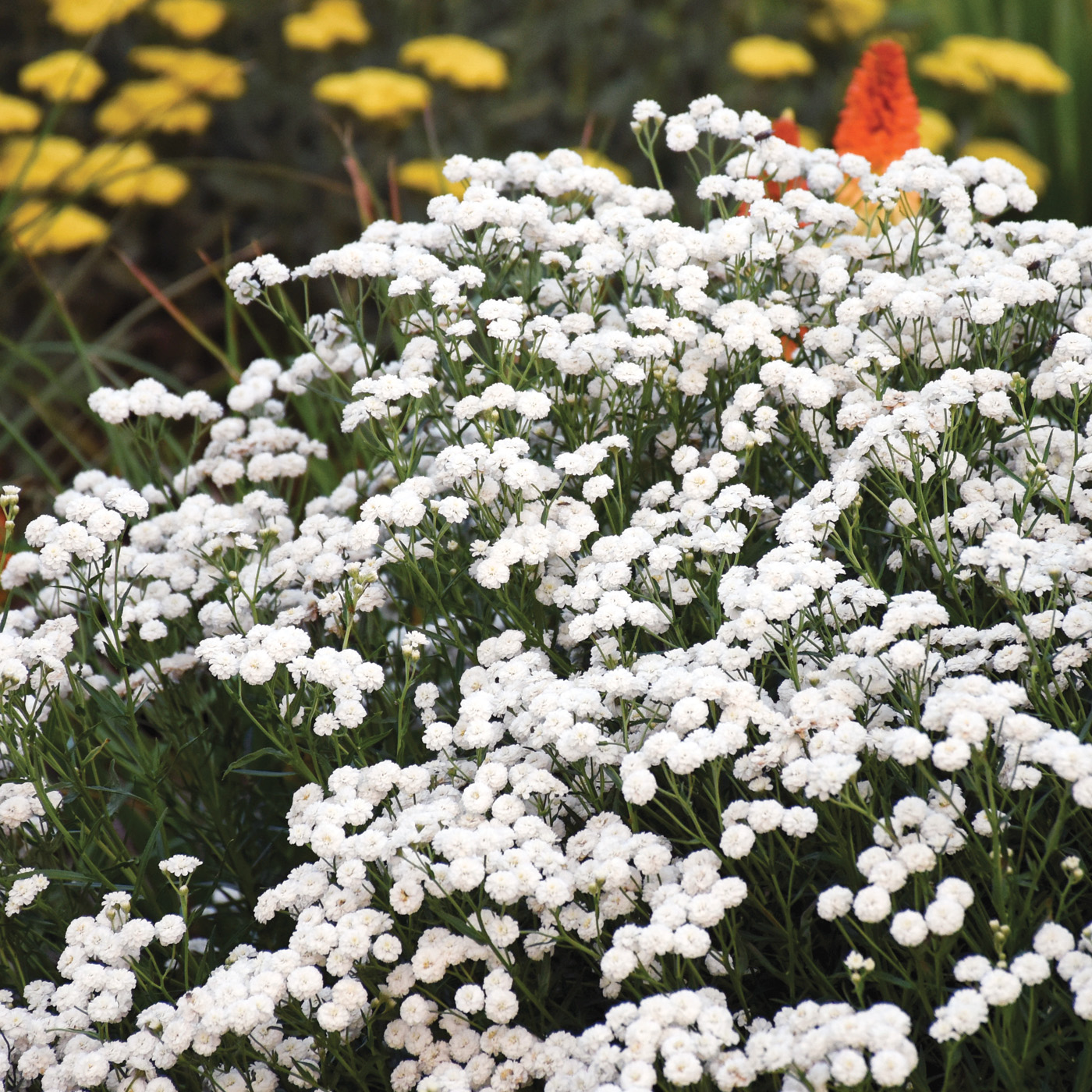
Achillea ptarmica ‘Peter Cottontail’
- Zones: 3–8
- Size: 33 inches tall and 62 inches wide
- Conditions: Full sun to partial shade; well-drained soil
- Native range: Europe and western Asia
One of our first big comparative trials was yarrows (Achillea spp. and cvs.) in 1989. A certain double-flowered sneezewort (A. ptarmica ‘The Pearl’, Zones 3–9) was new to me then, but I had all but forgotten about its pom-pom-like flowers until I encountered ‘Peter Cottontail’ over 30 years later. The bright white double florets of this newbie are clustered in small flower heads, blooming profusely from late spring to late summer. The deep green, lance-shaped leaves are a bit unusual for a yarrow, and the robust habit with sturdy rhizomatous stems looks atypical too.
Surprisingly, in a garden where late afternoon often feels right out of Watership Down, we never saw any bunny damage. However, the irony of naming it after a rabbit was not lost on my friend, who saw ‘Peter Cottontail’ relentlessly browsed in her garden. We can’t win them all. Lean, well-drained soil is the key to success; heavy clay and moist, rich soil should be avoided at all costs.
‘Chartreuse on the Loose’ catmint delivers a gorgeous French country color combo
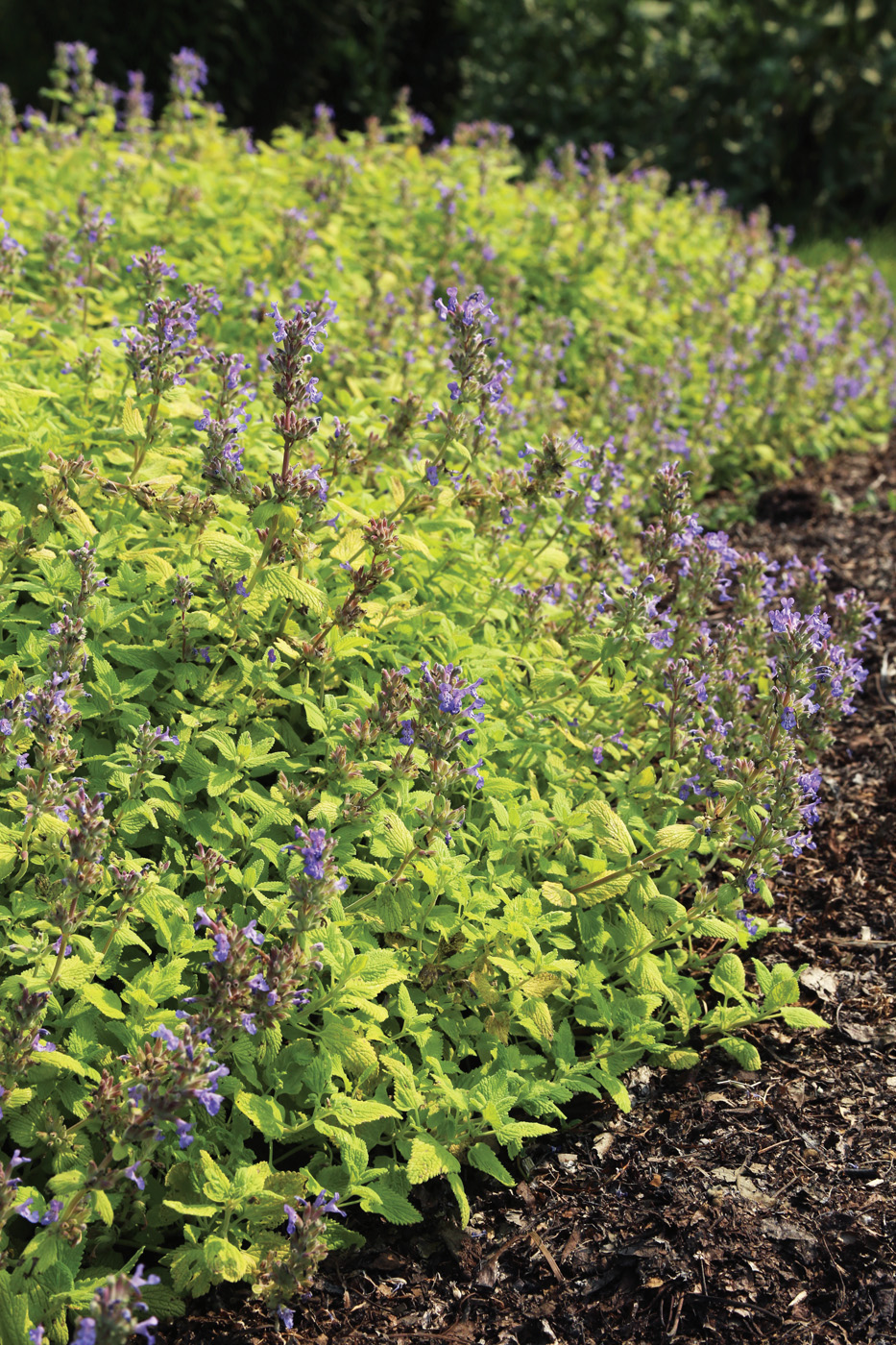
Nepeta ‘Chartreuse on the Loose’
- Zones: 3–8
- Size: 11 inches tall and 40 inches wide
- Conditions: Full sun to partial shade; dry, well-drained soil
- Native range: Africa, Asia, and Europe
I stopped talking about catmints a few years ago because the subtle differences between many cultivars bored me, so it felt like a hard sell to audiences. ‘Chartreuse on the Loose’ is the antidote for my ennui. While the bright lavender-blue flowers look much like those of other catmints, the glowing chartreuse and yellow leaves are anything but the same old. The flowering is nonstop from mid-spring until the first hard freeze, ebbing and flowing in the long season as its leaf colors shift in vibrancy.
Like other catmints, there is an ugly stage as the initial blooms fade, when centers open and deadheads are excessive. But as quickly as a cat pouncing on kibble, bright new growth and fresh flowers fill in and it looks like spring again. My only warning is that look-alike seedlings started popping up the first summer, but they are simple to spot and easy to share. ‘Chartreuse on the Loose’ prefers a little light shade in hotter regions, but watch the water—it likes it on the drier side and therefore is super drought tolerant.
Read More: All About Growing Catmint, Plant Trial Results
‘JoJo’ hollow Joe Pye weed is a gorgeous nativar earning itself a spot on the list of best new perennials
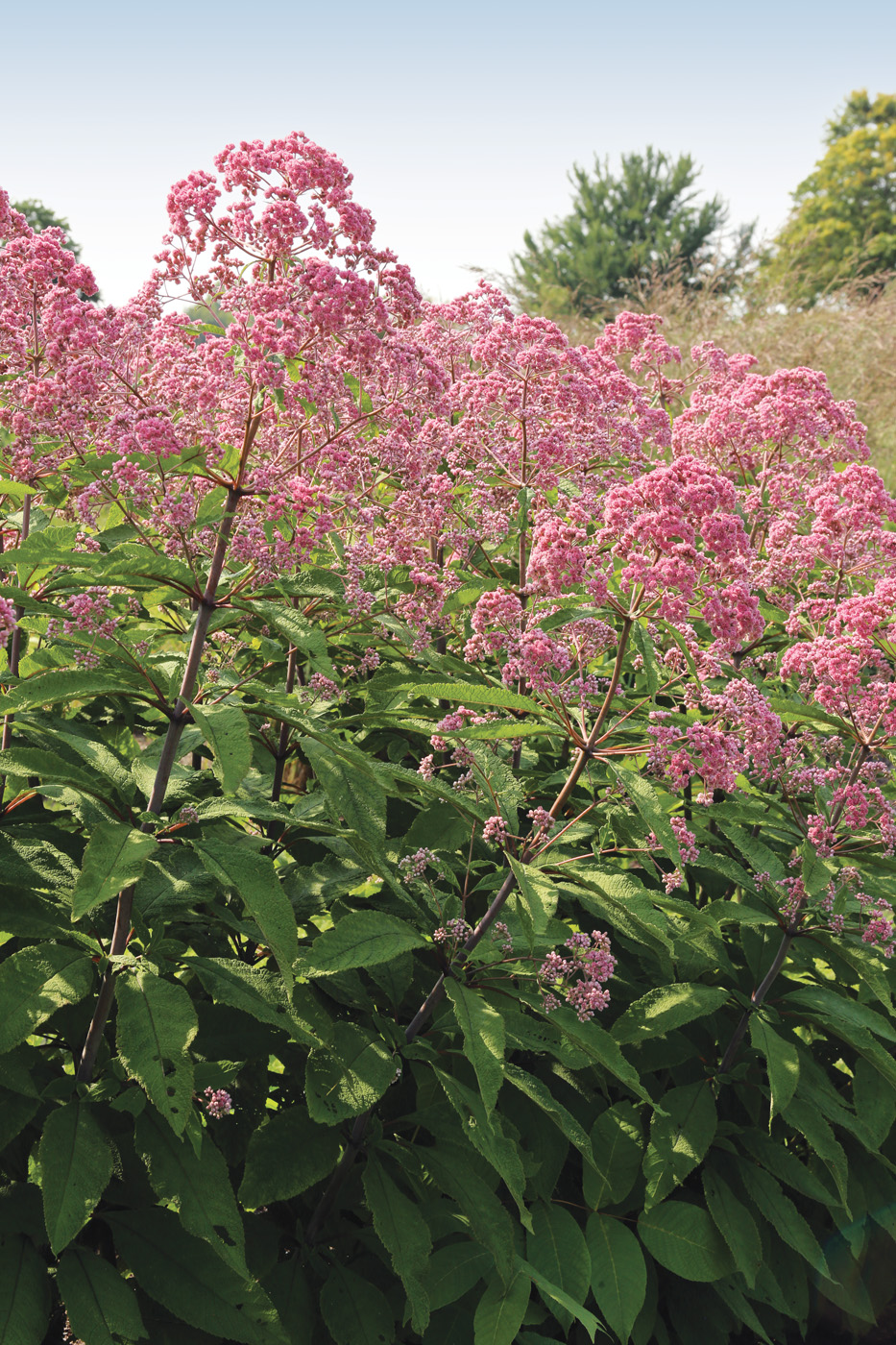
Eutrochium fistulosum ‘JoJo’
- Zones: 3–8
- Size: 57 inches tall and 52 inches wide
- Conditions: Full sun; medium to wet soil
- Native range: Eastern North America
I coveted this Joe Pye weed long before I saw it, thanks to a promotional poster from the plant breeders of ‘JoJo’ that teased me every day for a few years while I waited for it to become available. ‘JoJo’ Joe Pye weed—just saying that makes me happy—has double pink flowers in generous inflorescences from midsummer to mid-fall. The mélange of pale buds and darker pink blossoms is a lovely show for many weeks. At nearly 5 feet tall and wide, ‘JoJo’ surpassed the expected 3- to 4-foot size that was on its tag, which is fine by me. The flower trusses, with their colossal architecture, form magnificent toppers on the taller stems. Large green leaves are held in whorls on dark purple stems but can be marred by powdery mildew in late summer.
Hollow Joe Pye weed is native to a large swath of the United States and is best grown in soil that does not dry out. To assuage any ecological guilt for growing a native plant that has nothing for pollinators (due to the double flowers), I recommend pairing ‘JoJo’ with nectar-rich natives such as asters (Symphyotrichum spp. and cvs., Zones 4–9), beebalms (Monarda spp. and cvs., Zones 3–9), and goldenrods (Solidago spp. and cvs., Zones 4–9).
You can count on ‘Red Velvet’ beebalm to deliver a strong bloom show no matter what
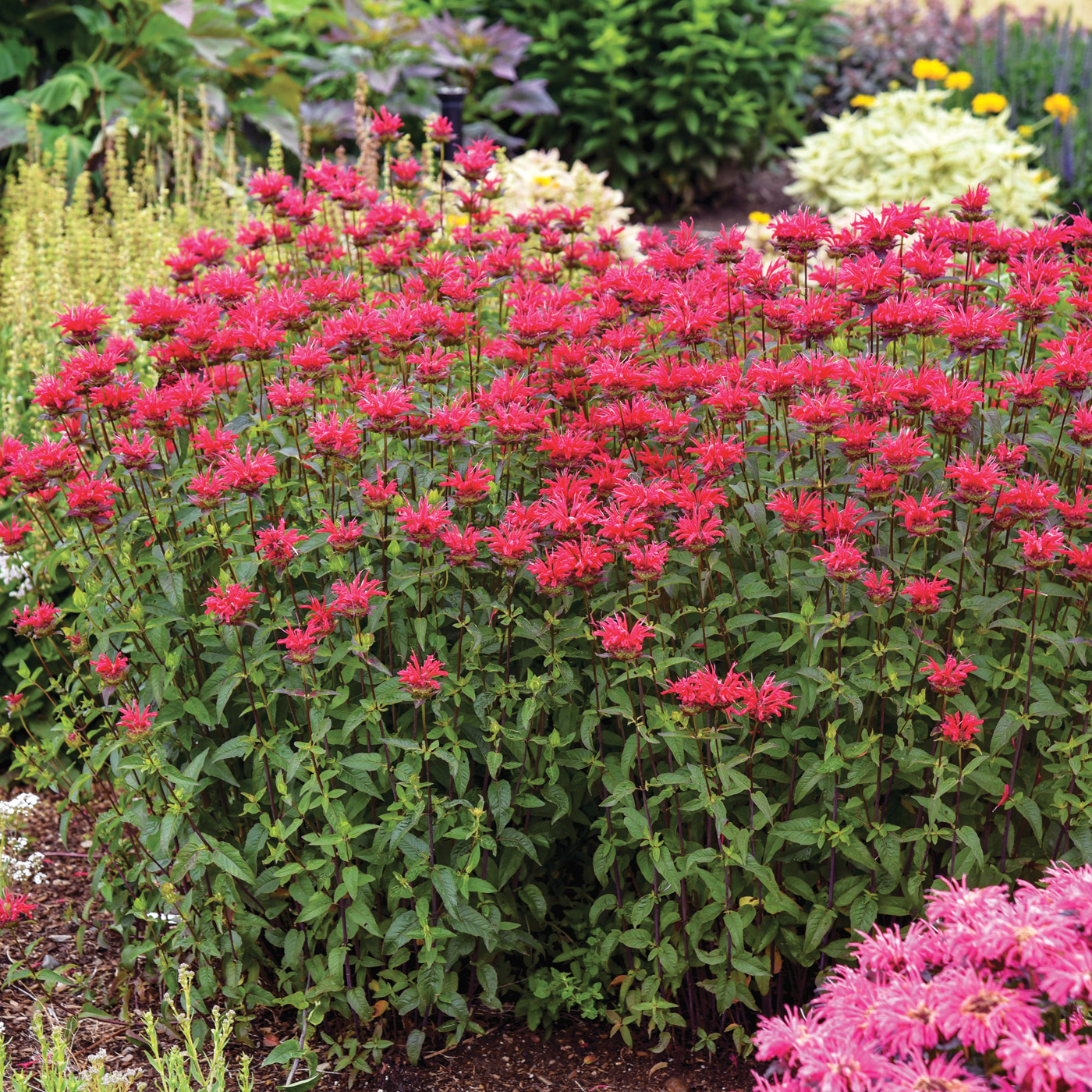
Monarda ‘Red Velvet’
- Zones: 4–8
- Size: 30 inches tall and
40 inches wide - Conditions: Full sun to partial shade; well-drained soil
- Native range: North America
Beebalms are among my favorite perennials, so there will always be a few in the trials vying for my attention. Right now, that’s ‘Red Velvet’—the strongest performer in the new UPSCALE® series. Scores of cherry-red flowers with burgundy bracts cover the plants from early to late summer. Burgundy blushes the aromatic green leaves too. By the second year, the plants really bushed out, a hint of their rhizomatous nature showing. Last year, the beebalms had to recover from a tough winter but still produced a ton of flowering stems, keeping bees and butterflies happy for months.
Powdery mildew has been a minor issue compared to other nearby beebalms. While it is not as tall as some older cultivars, I like that ‘Red Velvet’ busts out of the downsized trend so common in recent beebalm breeding; no one should have to get on their knees to see beebalm blossoms. ‘Red Velvet’ tolerates heavier clay but should never be allowed to dry out.
In a world where most sea thrifts rot in wet winter conditions, ‘Sweet Dreams’ is a notable exception
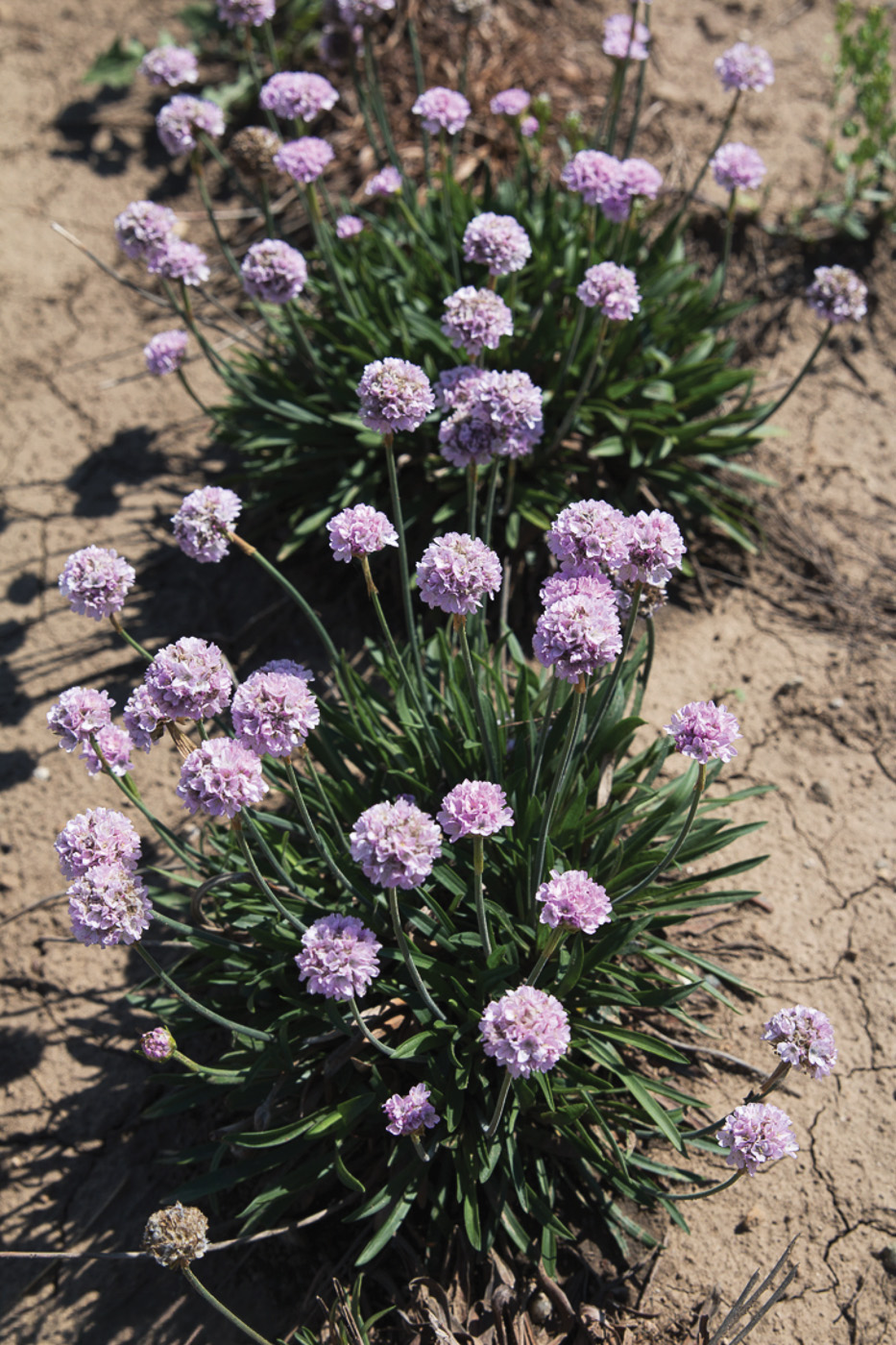
Armeria pseudarmeria ‘Sweet Dreams’
- Zones: 6–9
- Size: 12 inches tall and 18 inches wide
- Conditions: Full sun; well-drained to dry soil
- Native range: Portugal
Sometimes a plant’s performance surpasses all expectations. Such is the case of the DREAMERIA® series of sea thrifts—we trialed several cultivars from 2020–2023 with unexpected results. The series is touted as heat tolerant and longer blooming, but I was more concerned with our wet soil and harsh winters. Sea thrifts like dry, freely draining soil, the opposite of our growing conditions at CBG, so success seemed like a long shot.
From the start, ‘Sweet Dreams’ was a standout cultivar with many globe-shaped heads of lavender-mauve blossoms from early summer to early fall. Sturdy flower stems rose elegantly over the low leafy mounds, which did not hollow out in the centers like most sea thrifts tend to do. Remarkably, ‘Sweet Dreams’ repeated its first-year success throughout the four years of the trial. We cannot say how long-lived these sea thrifts will be in much wetter gardens, but I’m impressed that a perennial native to the sunny cliffs of Portugal did so well in the damp Midwest.
‘Blue Frills’ Stokes’ aster is tougher than almost all of its siblings
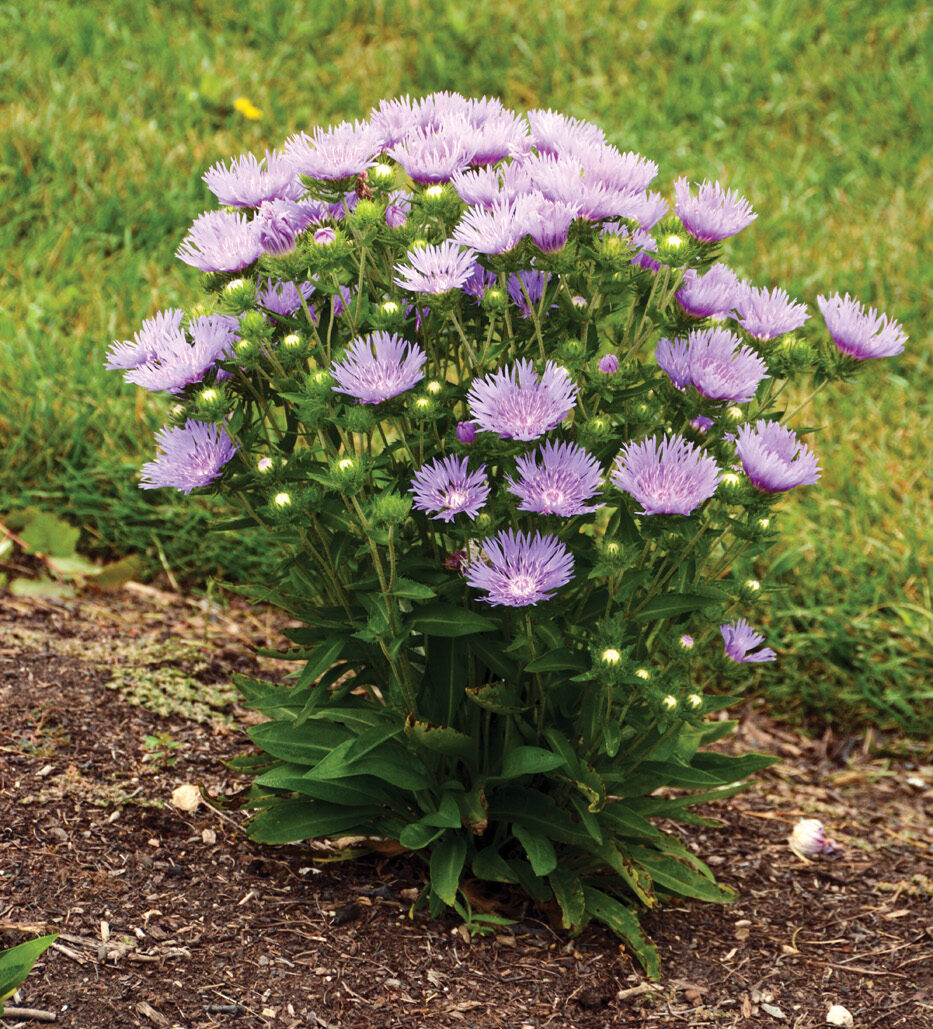
Stokesia laevis ‘Blue Frills’
- Zones: 5–9
- Size: 22 inches tall and wide
- Conditions: Full sun to partial shade; moist to well-drained soil
- Native range: Southeastern United States
In a previous trial of Stokes’ asters, half of the 20 cultivars were replanted two or three times due to poor winter survival. We chalked up the losses to their Southern nativity in the coastal areas between Mississippi and Florida, and to the CBG wet soil, especially in winter. ‘Blue Frills’ was one of the few to make it through five winters and look good at every turn. The 3-inch-wide, feathery lavender-blue flowers were plentiful from midsummer to mid-fall.
I’m fascinated by the prickly architecture of the leafy phyllaries that sit beneath and protect the buds and blooms. The strap-like, leathery leaves are evergreen in warmer regions and were occasionally so for us in the Midwest. The mounded basal rosettes were beefy with erect flower stems rising above the clumps. Despite a preference for moist, sandy soil in full sun to light shade, ‘Blue Frills’ was a strong performer in our often moisture-rich clay soil. Deadheading Stokes’ aster is usually recommended to encourage rebloom, but I can attest that no pruners were needed to keep this cultivar blossoming.
Read More: A Pair of No-Melt Perennials for Heat and Humidity
Sturdy ‘Sandhill’ little bluestem puts on a vibrant color display in fall
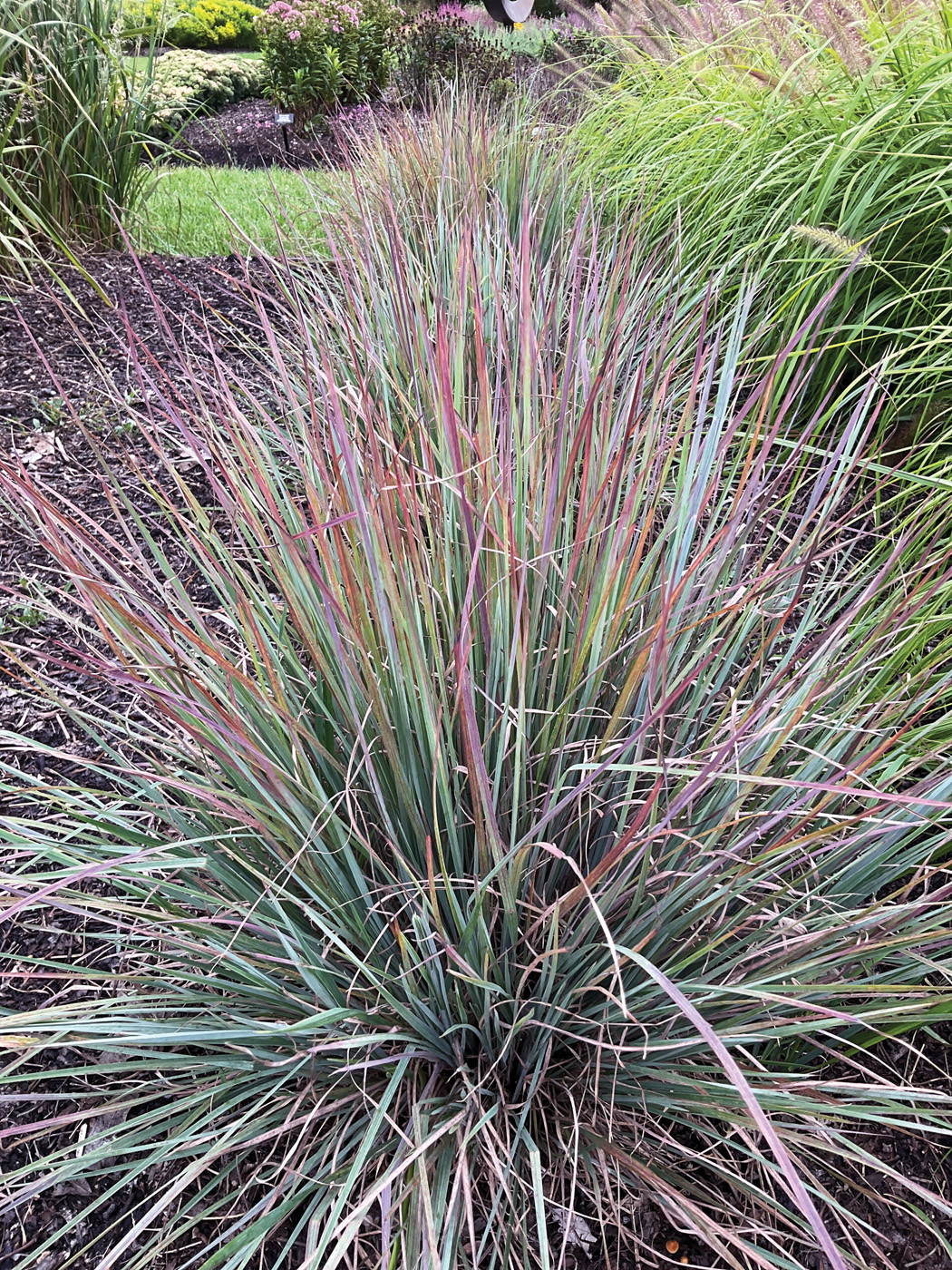
Schizachyrium scoparium ‘Sandhill’
- Zones: 4–10
- Size: 49 inches tall and 27 inches wide
- Conditions: Full sun; adaptable to
a range of soil types - Native range: Eastern North America
Native grasses have seen an explosion of cultivars in recent years, including more bluestem selections than ever before. Brent Horvath—who introduced ‘Blackhawks’ and other wonderful big bluestems (Andropogon gerardii, Zones 4–9)—has turned his attention to its smaller cousin lately. Colorful ‘Sandhill’ is his new little bluestem featuring powdery blue-green leaves that, together with the stems and fluffy inflorescences, turn lovely autumnal shades of orange and purple.
The tendency toward compact cultivars has touched little bluestems too, but ‘Sandhill’ bucks the trend, reaching over 4 feet high. And the tall stems are strong enough to stay upright even on windy sites. Little bluestem is native throughout a large swath of North America, so it is quite adaptable to a variety of soil substrates and varying moisture levels. Just be sure to plant ‘Sandhill’ in full, bright sun for the best habit and color.
‘Midnight Velvet’ sedum may be the first-ever purple-leaved cultivar to go the distance in less-than-ideal conditions
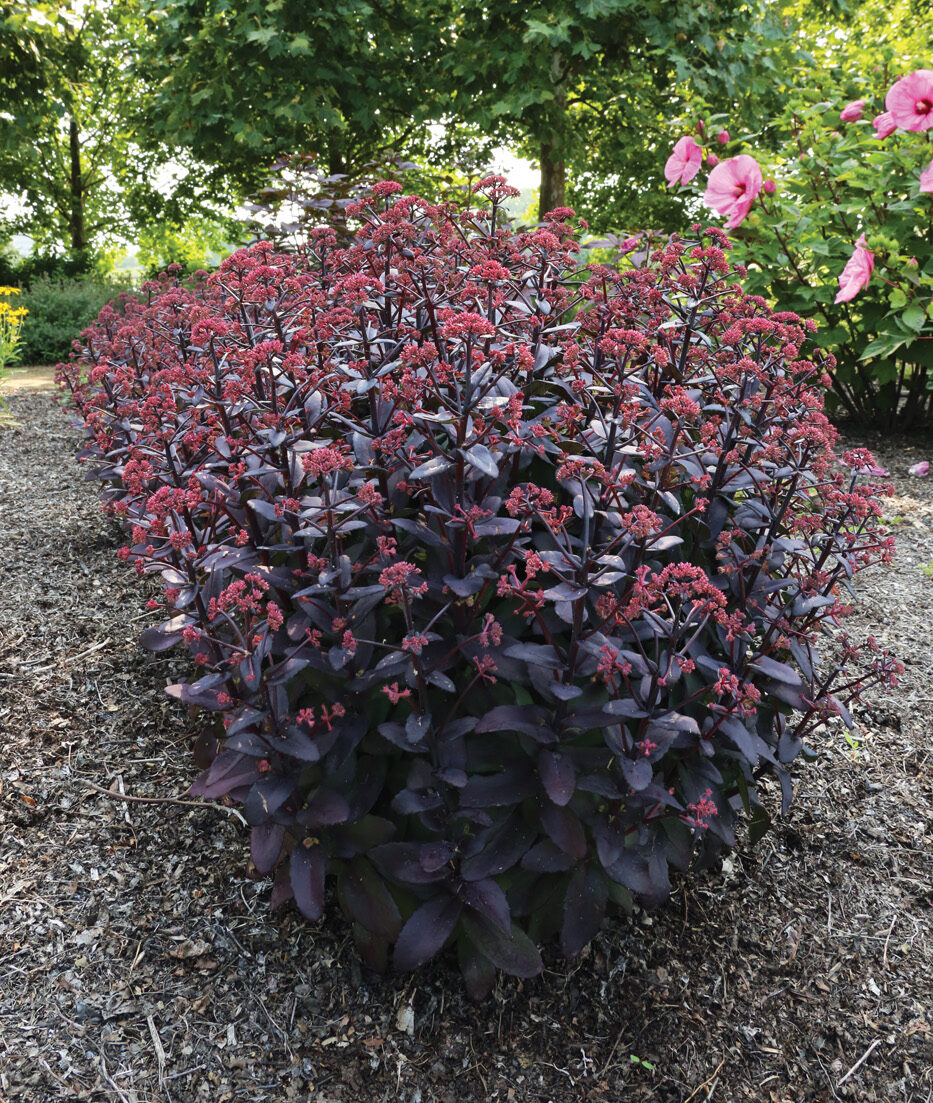
Sedum ‘Midnight Velvet’ (syn. Hylotelephium ‘Midnight Velvet’)
- Zones: 3–9
- Size: 24 inches tall and 30 inches wide
- Conditions: Full sun; well-drained to dry, lean soil
- Native range: Asia and Europe
We gave up on tall sedums—especially purple-leaved ones—over 10 years ago. Our wet clay soil was unforgiving to the succulents, resulting in one disastrous failure after another. So naturally, expectations were low when we planted ‘Midnight Velvet’ in 2022. The first year was just ho-hum, and I expected scraggly plants the next spring, if anything even lived. To my delight, robust mounds of purple-tinged gray leaves emerged that April. By early summer the colors were reversing, becoming deep burgundy with gray-green accents while the stems were growing tall and upright. And, the plants were incredibly bushy!
Clusters of pink buds in midsummer opened to rosy flowers a few weeks later. The seed-bearing carpels age brick red, providing color long after the petals have dropped. This plant holds its deep burgundy leaf color all the way to frost too. ‘Midnight Velvet’ shows its best leaf color in full sun, so don’t attempt to plant it elsewhere. Note: Tall sedums have been reclassified from Sedum to Hylotelephium, but the name change has caused confusion and has been slow to take hold.
| Plant Sources |
Richard Hawke is the director of ornamental plants at the Chicago Botanic Garden in Glencoe, Illinois.
Learn More:
Subscribe to Fine Gardening Magazine
See More Planting Plans
Watch Videos on Our YouTube Channel!
Fine Gardening Recommended Products

Attracting Beneficial Bugs to Your Garden, Revised and Updated Second Edition: A Natural Approach to Pest Control
Fine Gardening receives a commission for items purchased through links on this site, including Amazon Associates and other affiliate advertising programs.
This revised and updated edition of Jessica Walliser’s award-winning Attracting Beneficial Bugs to Your Garden offers a valuable and science-backed plan for bringing balance back to the garden. With this indispensable gardening reference—now updated with new research, insights, and voices—learn how to create a healthy, balanced, and diverse garden capable of supporting a hard-working crew of beneficial pest-eating insects and eliminate the need for synthetic chemical pesticides.
Corona® Multi-Purpose Metal Mini Garden Shovel
Fine Gardening receives a commission for items purchased through links on this site, including Amazon Associates and other affiliate advertising programs.
Longer Service Life: The blade of this round small shovel is made of carbon steel, which can effectively improve the hardness by high temperature quenching, and the surface has anti-rust coating to avoid rusting. In the process of use when encountering hard objects will not bend and deformation.
Sturdy Structure: The small garden shovel with D-handle, ergonomically designed grip can increase the grip of the hand when using, the handle is made of strong fiberglass, will not bend and break under heavy pressure. Quick Digging: Well-made digging shovel has a sharp blade, and the round shovel head is designed to easily penetrate the soil and cut quickly while digging to enhance your work efficiency.

ARS Telescoping Long Reach Pruner
Fine Gardening receives a commission for items purchased through links on this site, including Amazon Associates and other affiliate advertising programs.
Telescopes from 4 to 7′. Cut and Hold (160) Blades. Drop forged blades for unsurpassed long lasting sharpness. Lightweight, 2.3 lbs., for continued use. Perfectly balanced for easy pruning.