
To kick off the week, we’re heading to Center Barnstead, New Hampshire, where Denise has spent the past five years restoring an 1880s farmhouse and bringing the surrounding land back to life. Here’s what Denise has to say about it:
When my husband and I bought this property about five years ago, we weren’t simply looking for a house. We were looking for an old home we could bring back to life. We quickly realized that our home, “Delilah,” wasn’t the only part of the property that had a story to tell. The land has a long agricultural history and was once a potato farm.
As we restored the farmhouse, we began imagining how we could return some of the land to productive use while also creating a beautiful place where family and friends could gather. We started with raised garden beds and eventually added irrigation and electrical service to the garden area, along with a greenhouse.
The garden has become a wonderful mix of practicality and beauty. Vegetables and herbs grow alongside flowers for cutting, and one of my greatest pleasures is bringing armfuls of flowers and freshly harvested food from the garden into the farmhouse.
Our adventures in homesteading have expanded beyond plants. We keep bees and harvest our own honey, and the abundance of maple trees on the property gave us the opportunity to learn another quintessentially New England skill, making maple syrup.
We grow with the seasons here in New Hampshire. This year we’ve had abundant bean, tomato, and cucumber crops, but that isn’t always the case. It’s a joyful surprise each year to see which crops surpass my expectations and which fall short. I think that’s a metaphor for life, really!
What I’m proudest of isn’t one particular plant or bed. It’s that land that had once been productive became productive again, but in a new way. The garden, greenhouse, orchard, bees, and maple trees have become part of the same restoration story as the old farmhouse, preserving what was worth preserving, learning new skills, working with the land, and creating a place meant to be used and shared.
After five years of restoring and creating this place, we’re now preparing to pass the property along to its next steward. That makes this garden season bittersweet, but it has also made me appreciate just how much this landscape has changed and, more importantly, how much it has changed us.
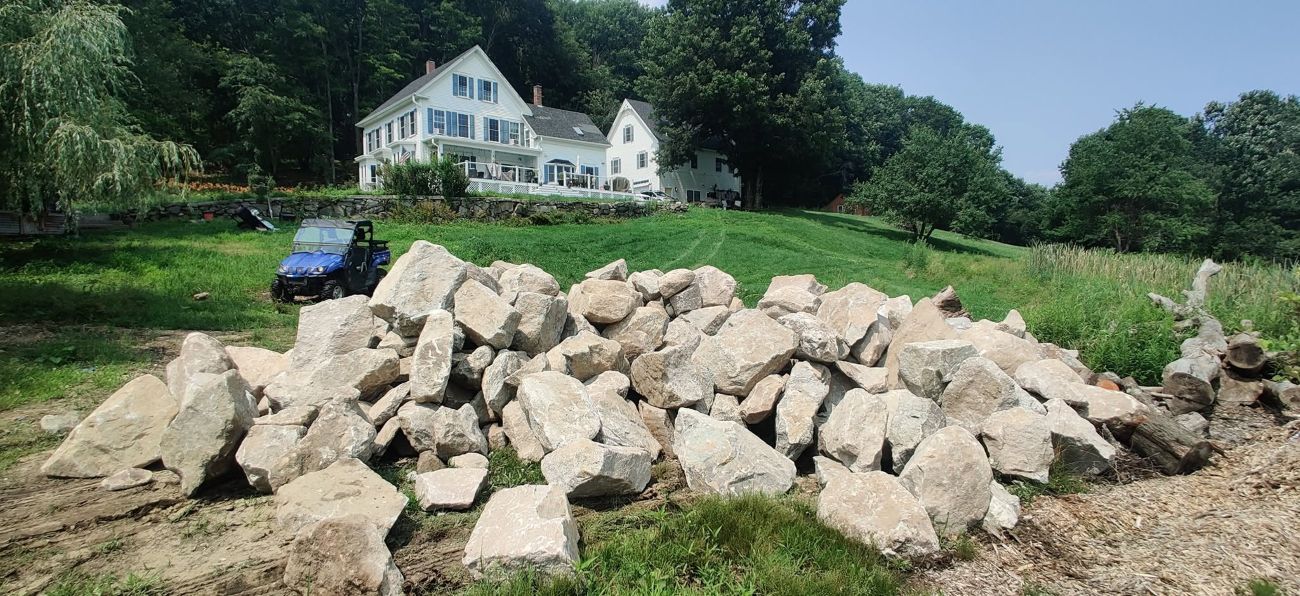
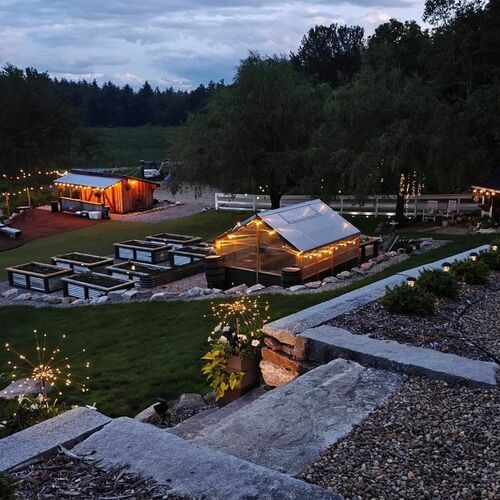
Where we began four years ago. We wanted to make the most of our hillside and showcase the beautiful setting with a functional tiered garden. There is certainly no shortage of rocks in New Hampshire!
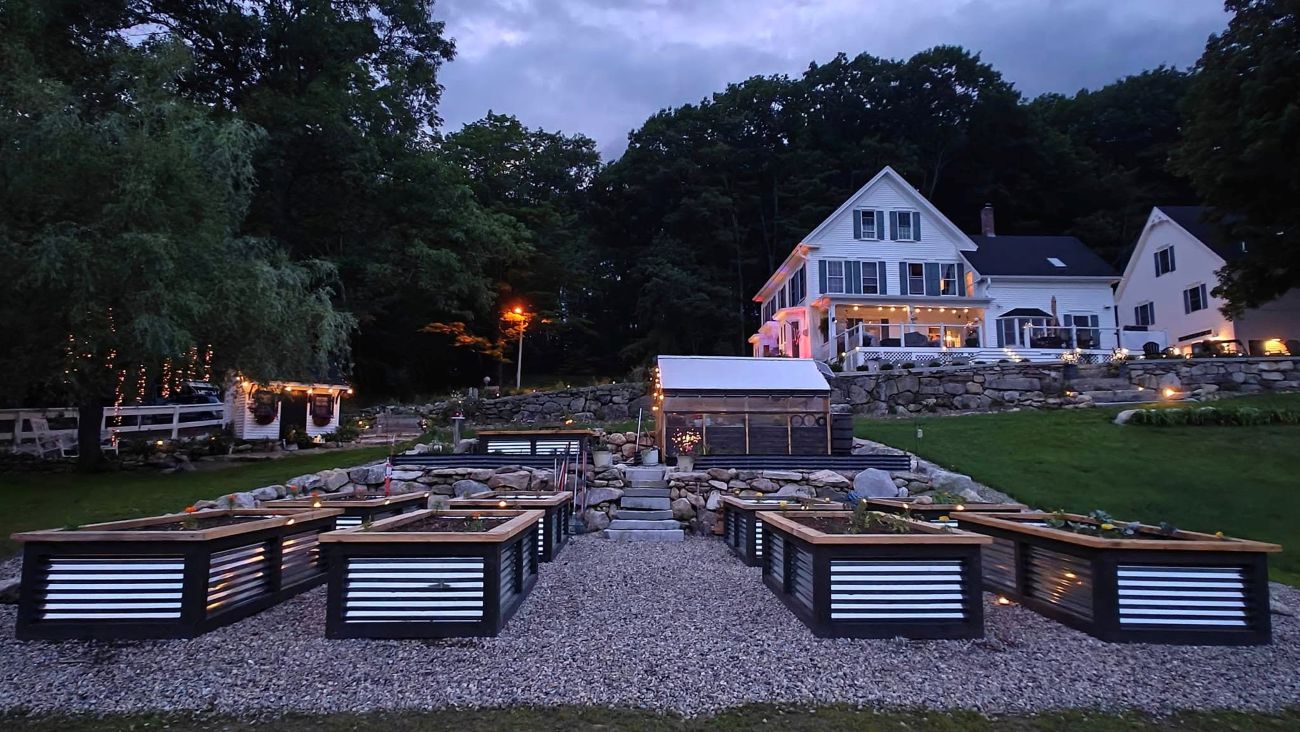
Our raised beds in the beginning, before the plants took over! Our greenhouse now houses starter plants in late spring and keeps our burgeoning tomato crop (Solanum lycopersicum, annual) going well into November.
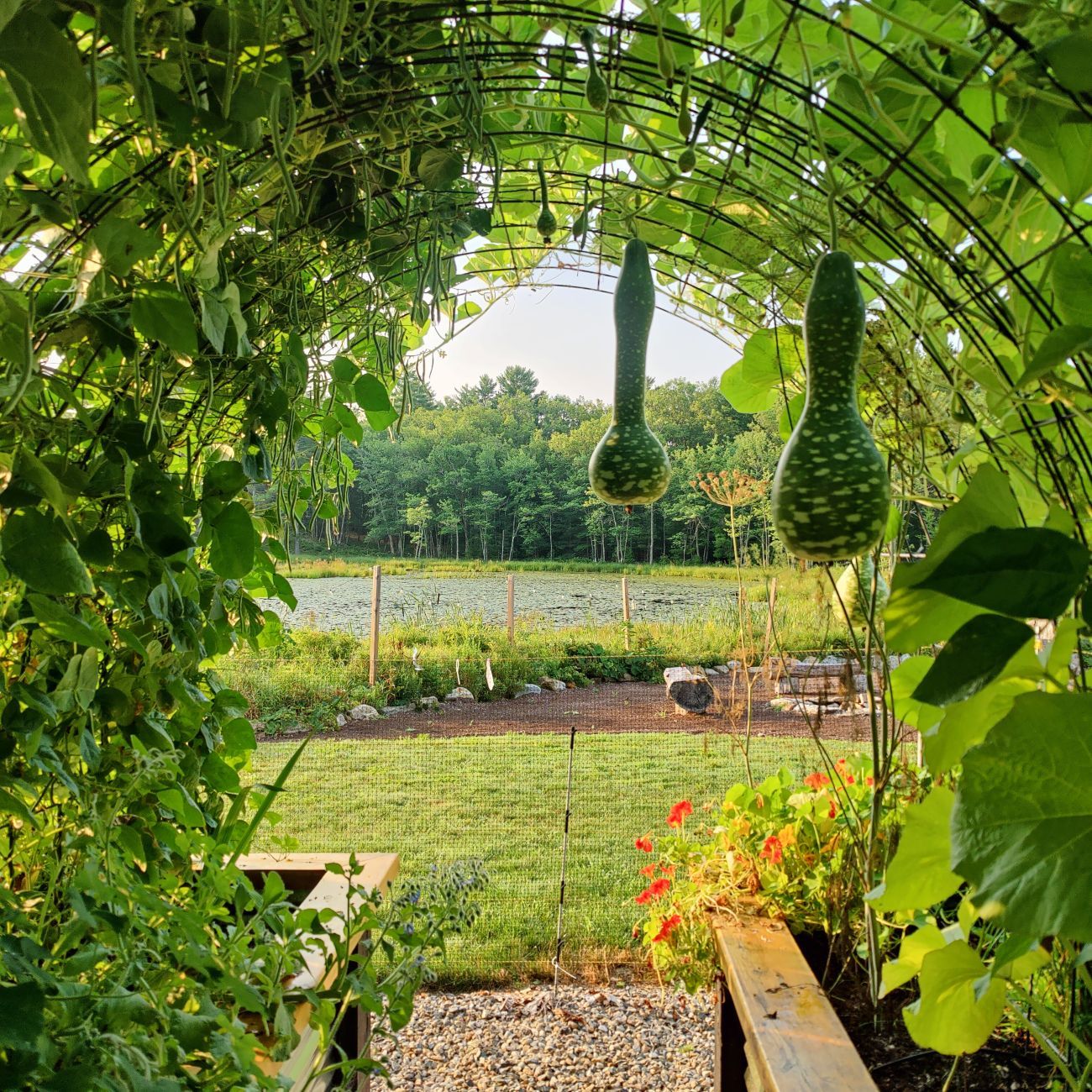
This is part of the takeover! Pole beans (Phaseolus vulgaris, annual) grow on the left, and gooseneck gourds (Lagenaria siceraria, annual) climb on the right. Borage (Borago officinalis, annual) and nasturtiums (Tropaeolum majus, annual) are constant companions throughout my raised beds.
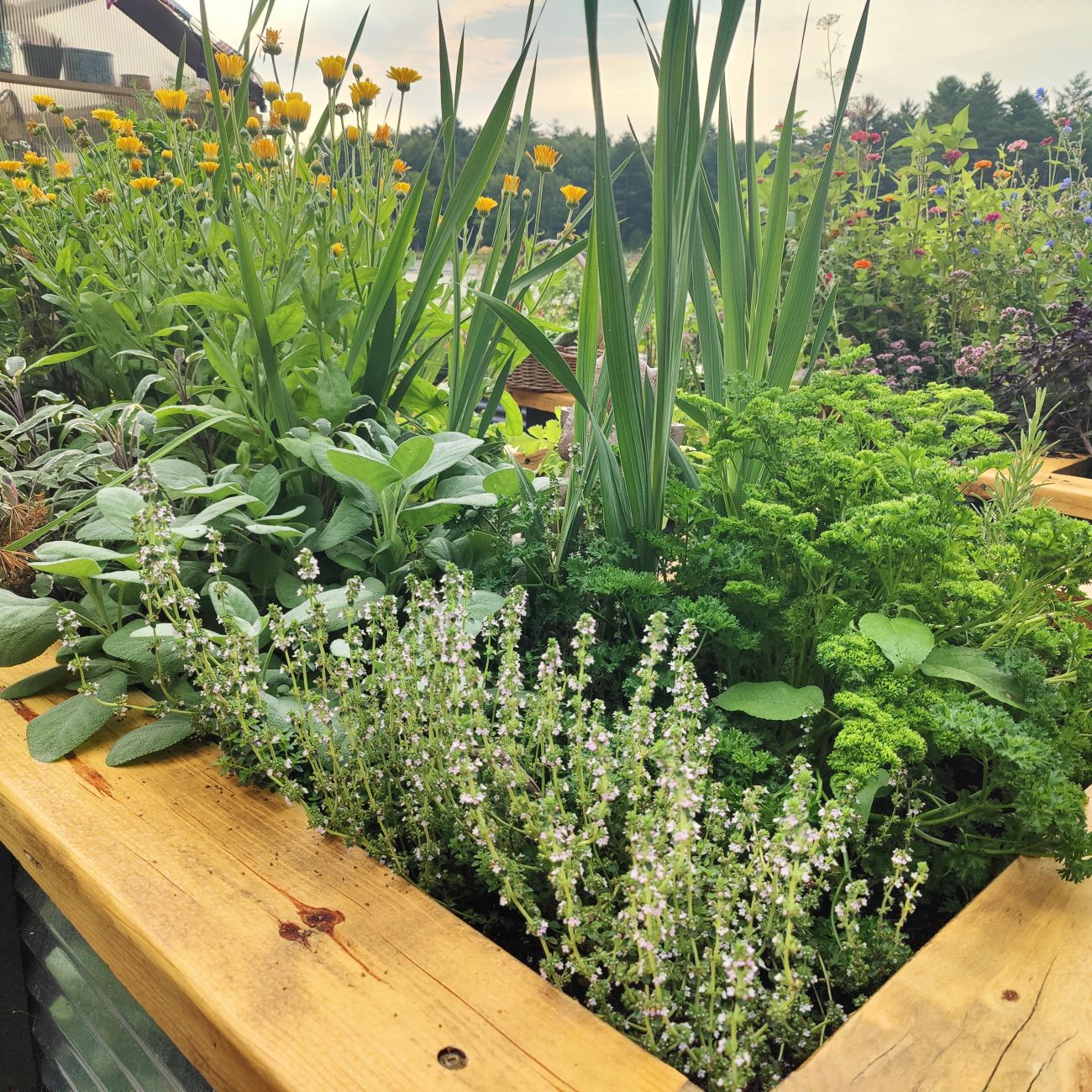
Herbs and flowers flourish together in these upper-level beds. Sage (Salvia officinalis, Zones 4–8), thyme (Thymus vulgaris, Zones 5–9), parsley (Petroselinum crispum, biennial), rosemary (Salvia rosmarinus, Zones 8–10), and basil (Ocimum basilicum, annual) share space with gladiolus (Gladiolus cvs., Zones 7–10) and calendula (Calendula officinalis, annual), another favorite. In the background, zinnias (Zinnia cvs., annual), dill (Anethum graveolens, annual), chicory (Cichorium intybus, Zones 3–10), and bachelor’s buttons (Centaurea cyanus, annual) add to the whimsy.
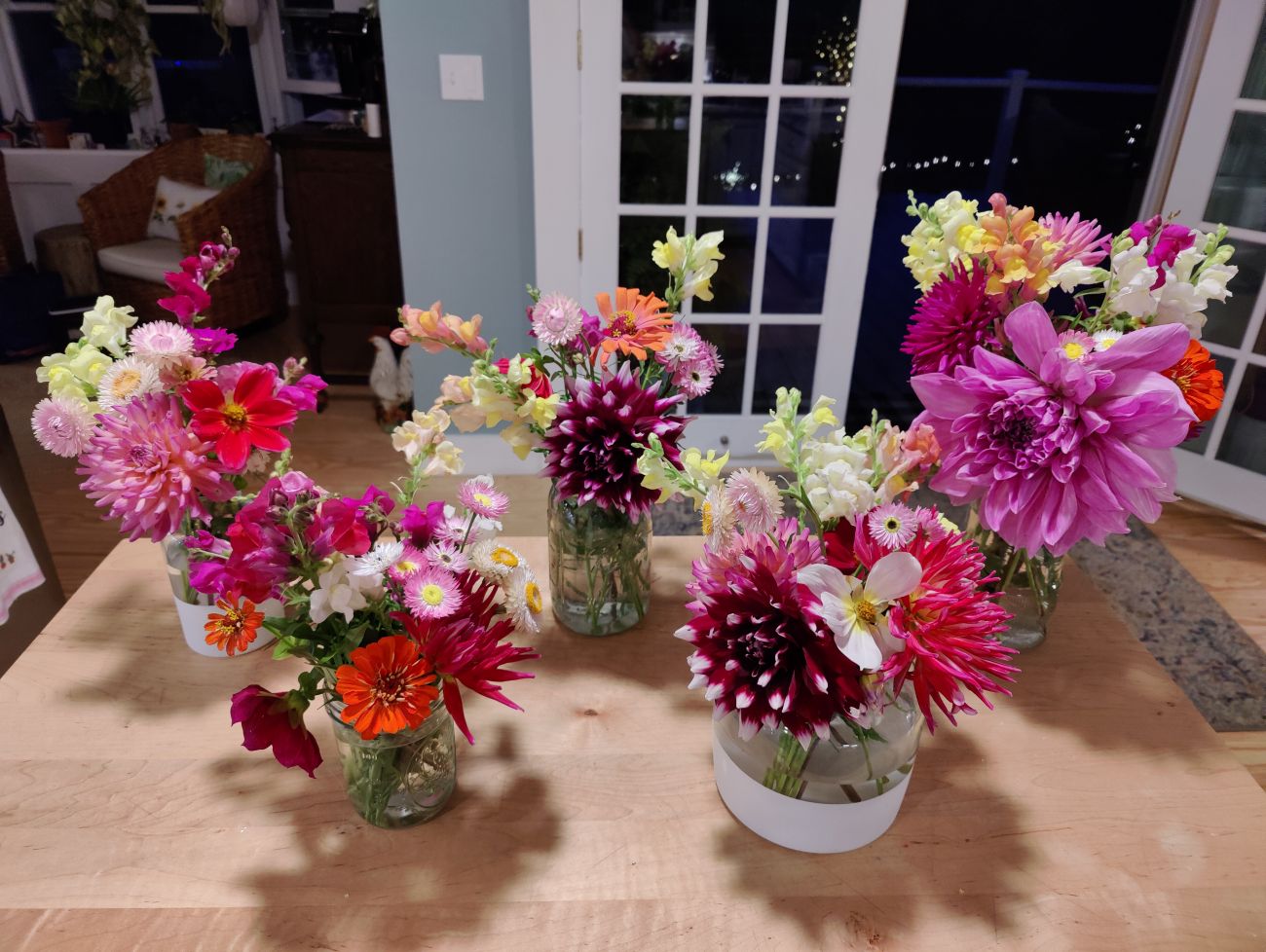
Making cut-flower arrangements is one of my greatest joys during the summer. I grow hundreds of dahlias, along with snapdragons (Antirrhinum majus, Zones 7–10), love-in-a-mist (Nigella damascena, annual), strawflowers (Xerochrysum bracteatum, annual), zinnias, and pinks (Dianthus cvs., Zones 3–9), sometimes adding an herb or two for greenery.
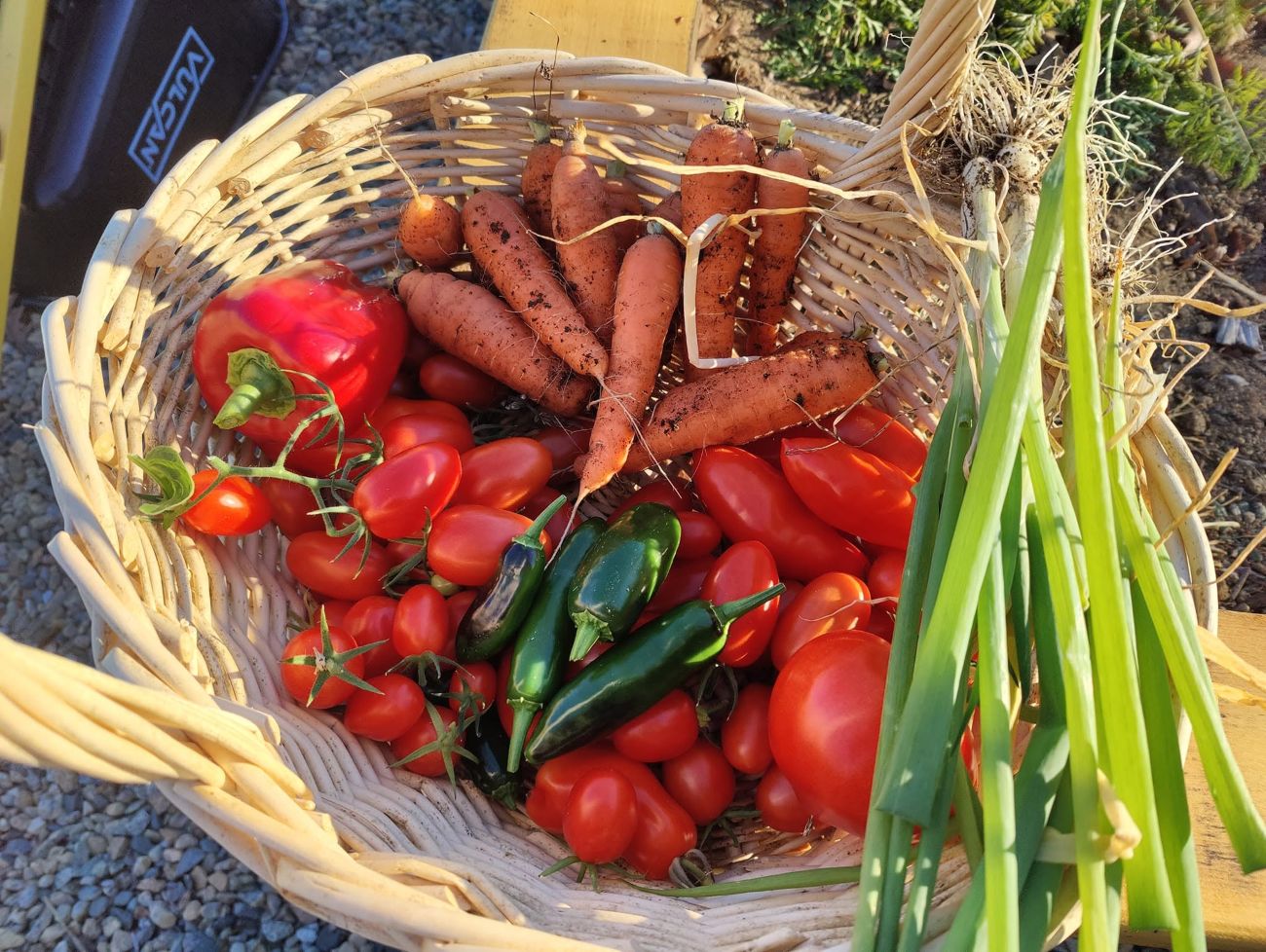
Jalapeños and ‘King of the North’ peppers (Capsicum annuum ‘King of the North’, annual) make wonderful culinary companions for cherry and paste tomatoes. Carrots and green onions are usually eaten almost as soon as they’re harvested and washed!
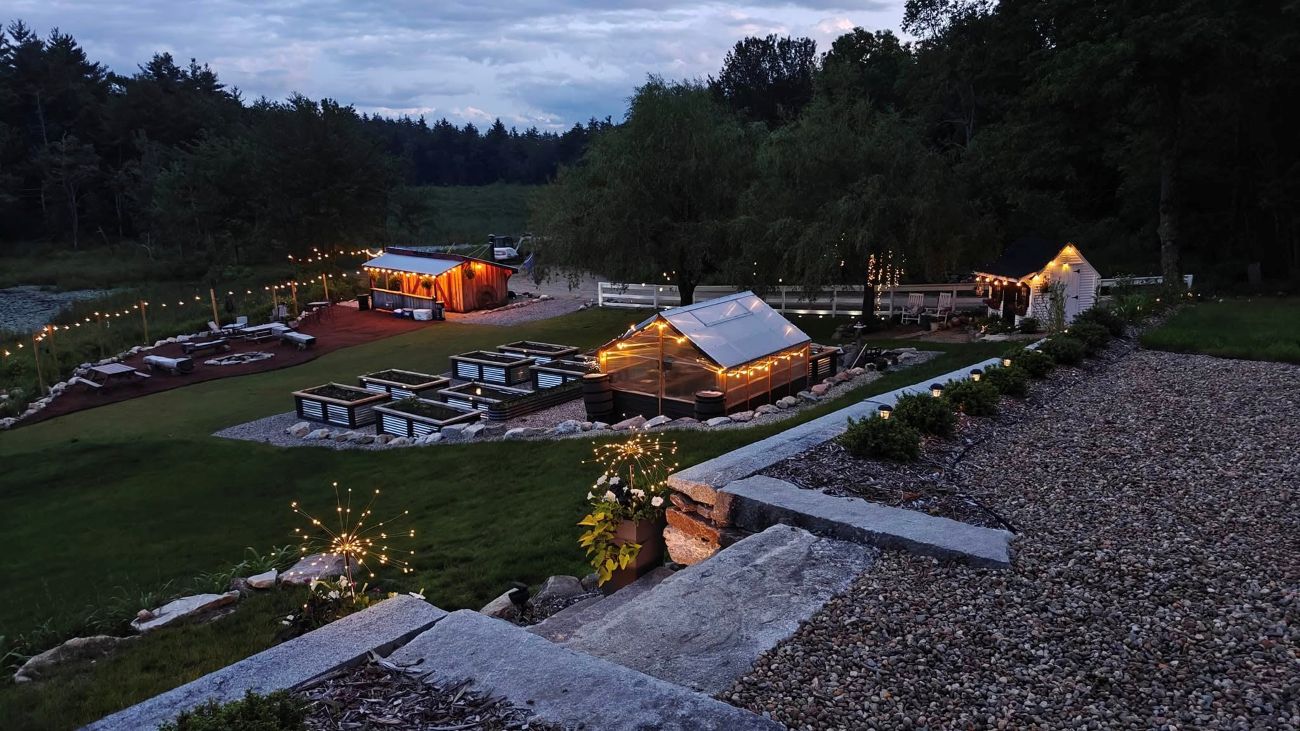
We wanted our home to be a place for gathering and growing, both together and alongside the beauty that surrounds us. We will certainly miss this special place and hope the next stewards care for our “Delilah” as we have.
Instagram: @revivingdelilah
Thank you for sharing Delilah and her gardens with us, Denise. We wish you all the best with your next chapter, and hope Delilah’s next stewards love growing here just as much as you have!
We want to see YOUR garden!
Have photos to share? We’d love to see your garden, a particular collection of plants you love, or a wonderful garden you had the chance to visit!
To submit, fill out the Garden Photo of the Day Submission Form.
You can also send 5–10 photos to [email protected] along with some information about the plants in the pictures and where you took the photos. We’d love to hear where you are located, how long you’ve been gardening, successes you are proud of, failures you learned from, hopes for the future, favorite plants, or funny stories from your garden.
Do you receive the GPOD by email yet? Sign up here
Fine Gardening Recommended Products
ARS Telescoping Long Reach Pruner
Fine Gardening receives a commission for items purchased through links on this site, including Amazon Associates and other affiliate advertising programs.
Telescopes from 4 to 7′. Cut and Hold (160) Blades. Drop forged blades for unsurpassed long lasting sharpness. Lightweight, 2.3 lbs., for continued use. Perfectly balanced for easy pruning.
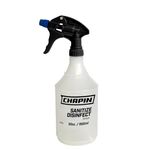
Chapin International 10509 Upside-Down Trigger Sprayer
Fine Gardening receives a commission for items purchased through links on this site, including Amazon Associates and other affiliate advertising programs.
CLEAN & DISINFECT: made to handle disinfectants and mild bleach solutions. DESIGNED TO CLEAN: adjustable nozzle for fine to coarse spray. 32-OUNCE TANK: translucent, chemical-resistant poly. COMFORT: ergonomic handle and sprays upside down to reach awkward areas.
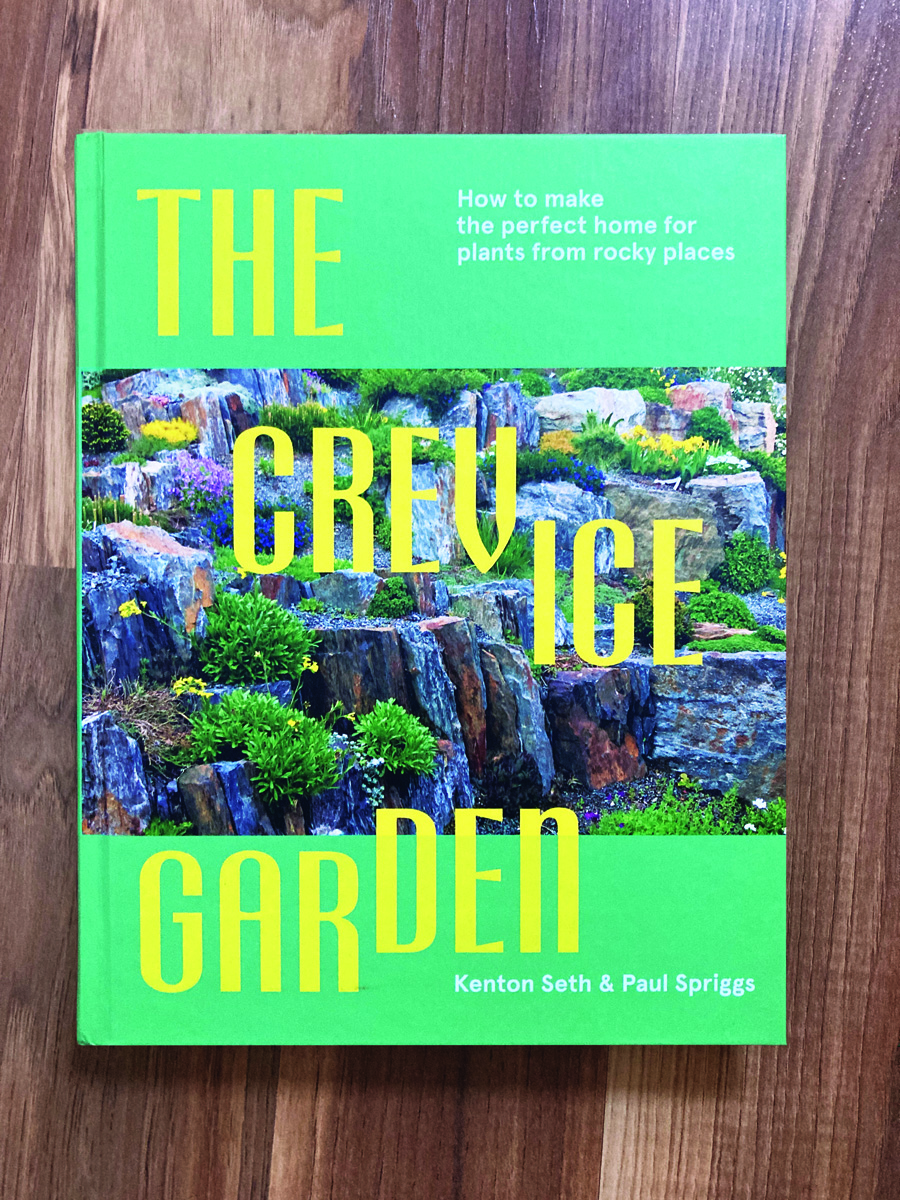
The Crevice Garden: How to make the perfect home for plants from rocky places
Fine Gardening receives a commission for items purchased through links on this site, including Amazon Associates and other affiliate advertising programs.
A crevice garden replicates the environmental conditions of mountain tops, deserts, coastlines, and other exposed or rocky places on earth. These striking garden features provide perfect conditions for the plants native to these far-off places, bringing the cultivation of these precious gems within everybody’s reach.