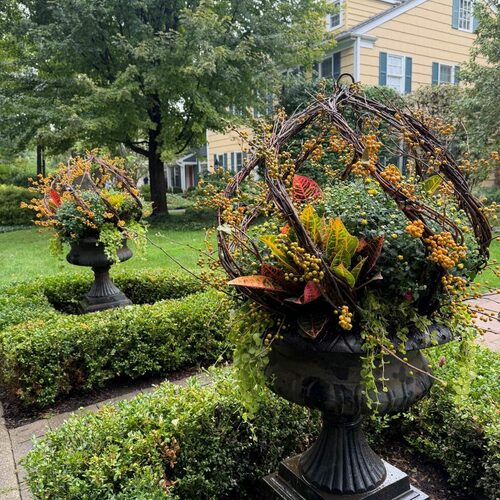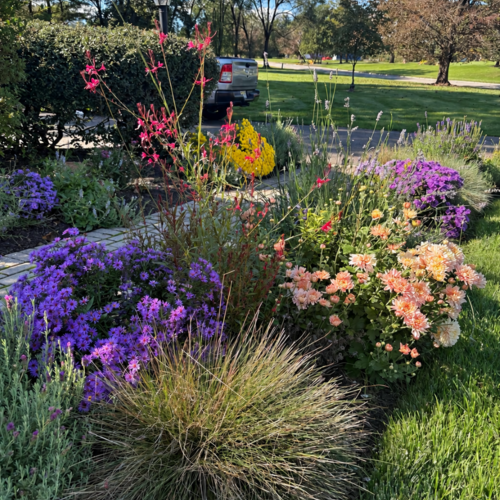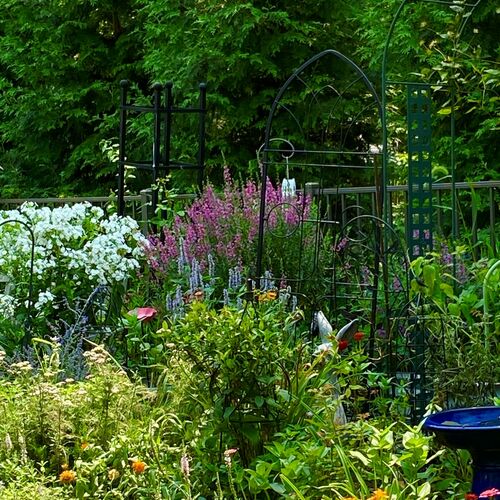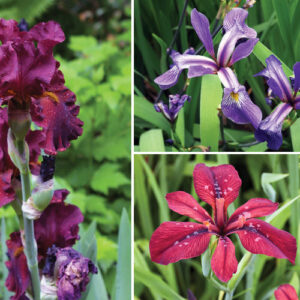

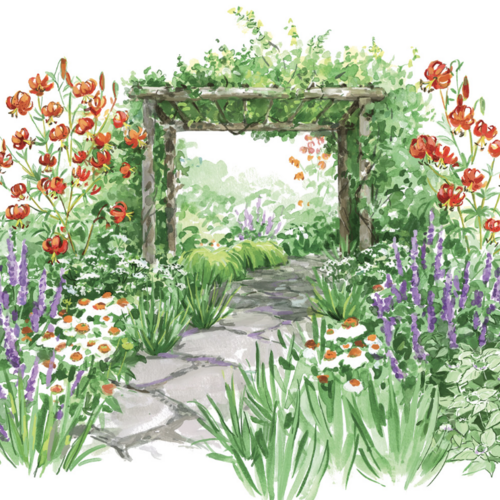
To plan a perennial border with native species, start by considering what time of year you want the planting to peak. Then, consider how to balance the textures to carry the garden from early spring through fall, with a strong summer display in between. This summer-peaking border is designed with long bloom windows and seasonal interest for both people and wildlife. It should be sited in full sun to partial shade, in average-moisture soil.
Read More: 16 Native Perennial Replacements for Common Garden Plants
Enjoy a native perennial border that transforms throughout the seasons
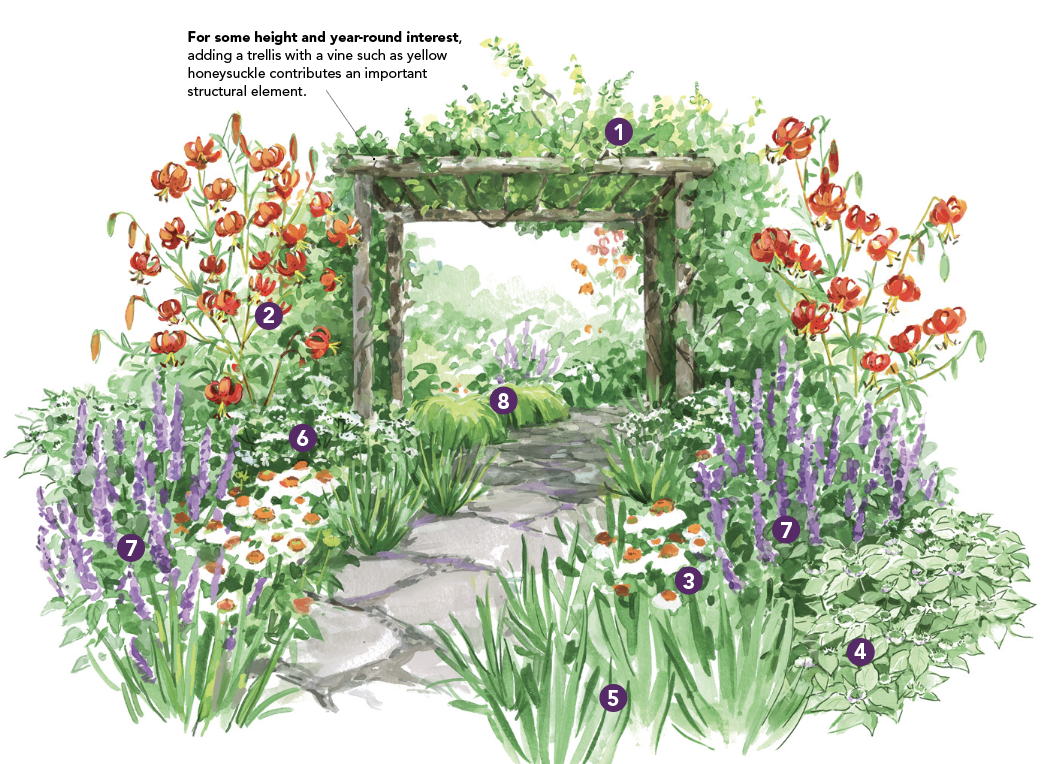
- For some height and year-round interest, adding a trellis with a vine such as yellow honeysuckle contributes an important structural element.
- In early spring, ‘Purple Flame’ blue flag iris emerges with its vibrant purple foliage, followed by pretty blooms from yellow honeysuckle and early summer structure from wild quinine and anise hyssop.
- As the garden shifts into summer, this planting will take on height and movement from Turk’s cap lilies, ‘Fragrant Angel’ purple coneflower, and clustered mountain mint.
- By fall, ripening seed heads and berries from plants like anise hyssop and yellow honeysuckle emerge. They make great companions to pink muhly grass as it blooms and creates soft pink clouds.
Multiseason native perennial garden plant list
Find the numbered plants from the stunning native perennial garden plan above in the corresponding list below.
- Yellow honeysuckle
- Turk’s cap lilies
- ‘Fragrant Angel’ purple coneflower
- Clustered mountain mint
- ‘Purple Flame’ blue flag iris
- Wild quinine
- Anise hyssop
- Pink muhly grass
Amelia Burnett is the gardens manager at Mt. Cuba Center in Hockessin, Delaware.
Learn More:
Subscribe to Fine Gardening Magazine
See More Planting Plans
Watch Videos on Our YouTube Channel!
Fine Gardening Recommended Products
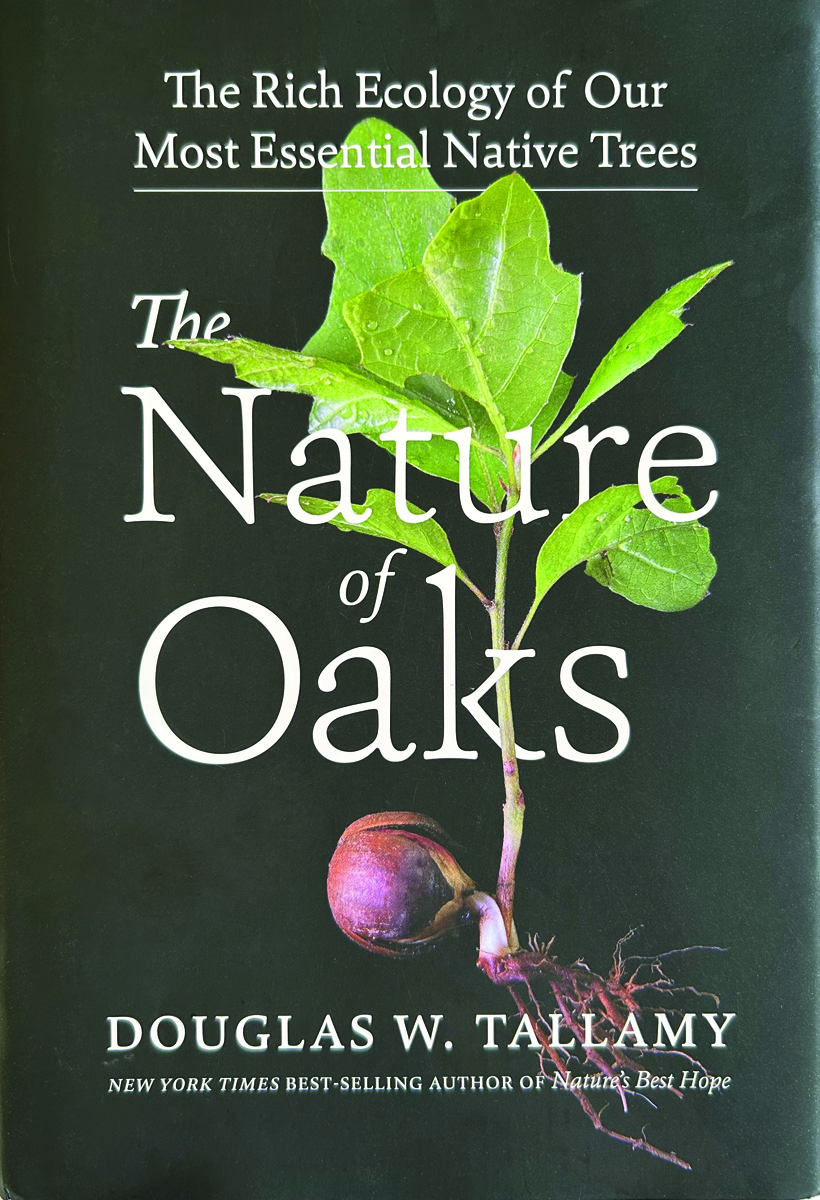
The Nature of Oaks: The Rich Ecology of Our Most Essential Native Trees
Fine Gardening receives a commission for items purchased through links on this site, including Amazon Associates and other affiliate advertising programs.
The Nature of Oaks reveals what is going on in oak trees month by month, highlighting the seasonal cycles of life, death, and renewal. From woodpeckers who collect and store hundreds of acorns for sustenance to the beauty of jewel caterpillars, Doug Tallamy illuminates and celebrates the wonders that occur right in our own backyards. He also shares practical advice about how to plant and care for an oak, along with information about the best oak species for your area.
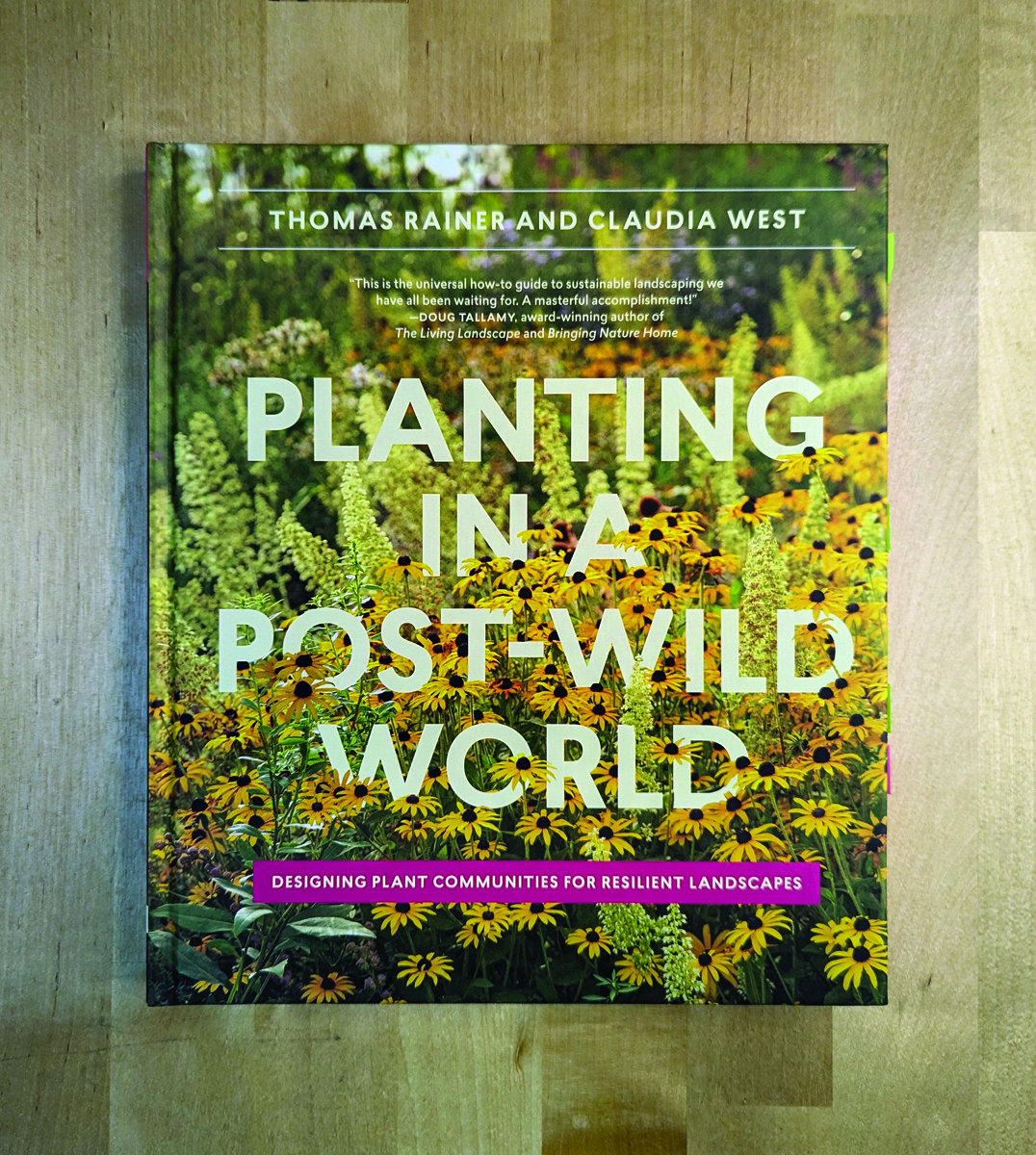
Planting in a Post-Wild World: Designing Plant Communities for Resilient Landscapes
Fine Gardening receives a commission for items purchased through links on this site, including Amazon Associates and other affiliate advertising programs.
Featuring gorgeous photography and advice for landscapers, Planting in a Post-Wild World by Thomas Rainer and Claudia West is dedicated to the idea of a new nature—a hybrid of both the wild and the cultivated—that can nourish in our cities and suburbs.
ARS Telescoping Long Reach Pruner
Fine Gardening receives a commission for items purchased through links on this site, including Amazon Associates and other affiliate advertising programs.
Telescopes from 4 to 7′. Cut and Hold (160) Blades. Drop forged blades for unsurpassed long lasting sharpness. Lightweight, 2.3 lbs., for continued use. Perfectly balanced for easy pruning.