Trade Overused Garden Staples for a Native Perennial
Native perennial plants offer a simple yet transformative way to enrich both the beauty and biodiversity of your garden. Incorporating natives is linked to a direct increase in the abundance and variety of bees, butterflies, and other wildlife. The selections that follow can serve as thoughtful, one-for-one alternatives to conventional nonnative plants, or as graceful additions alongside them.
These perennials can range from easy to hard-to-find at nurseries or online, but I highly suggest asking your local garden center if they can order the ones you want if they do not currently carry them. Consumer interest is a powerful force; the more we ask for these plants, the more readily available they become, gradually weaving these remarkable species into the fabric of home gardens everywhere.
See More from The Summer Issue of Fine Gardening
Overused perennial: Shasta daisy
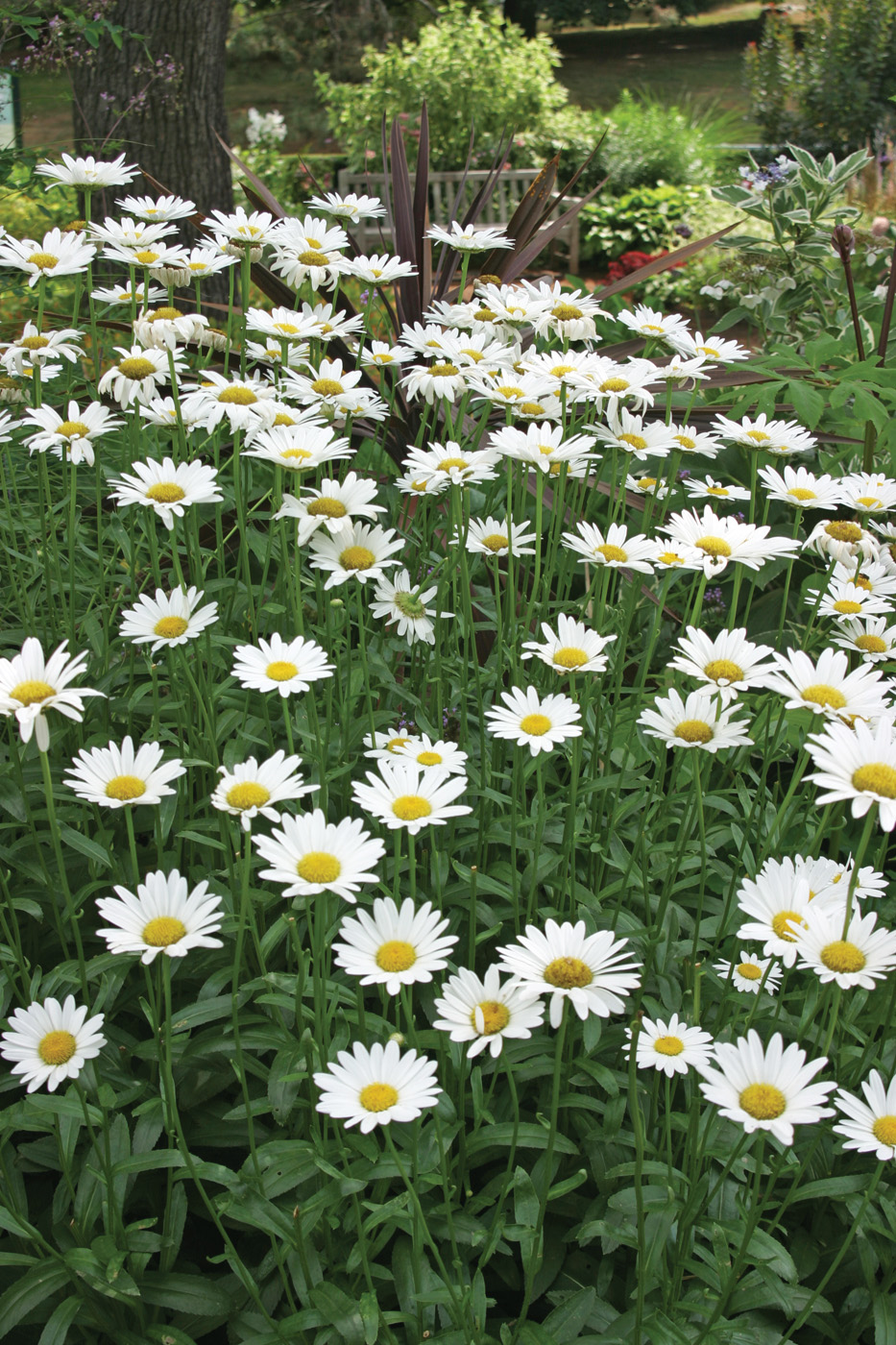
Leucanthemum × superbum and cvs.
Shasta daisy is an old-fashioned garden plant, loved for its clean white flowers. It’s not considered low-maintenance, requiring care and attention to maintain long bloom periods. It’s also a rather short-lived perennial overall. For that pop of white flower power in the summer garden, here are some other options that do the trick.
Try these native perennial alternatives for Shasta daisy
|
|
|
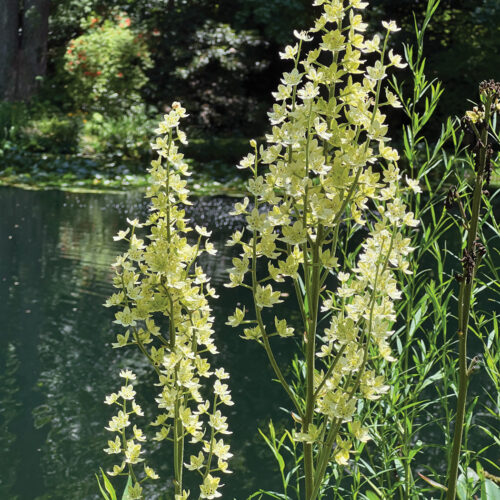
1. Virginia bunchflowerMelanthium virginicum
This perennial is slow to mature and bloom but well worth the wait. Inflorescences growing up to 5 feet tall emerge in early summer covered in delicate, small, fragrant white flowers. Though Virginia bunchflower is not currently a very popular garden plant, it will make a magnificent addition to any moist, sunny garden. Once mature, this tall, impressive perennial is an absolute show-stopper. It will attract native beetles and flies, as well as the occasional native bee or wasp, which is always a delightful sight. |
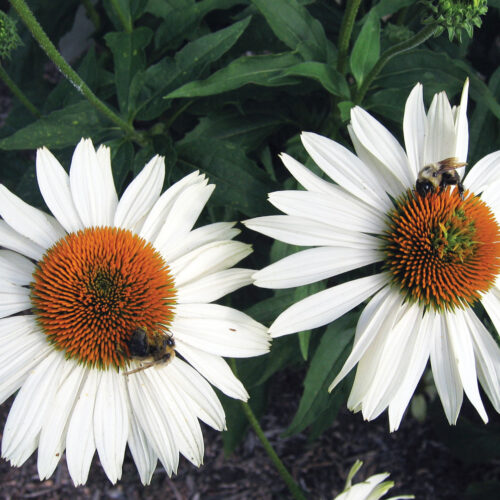
2. ‘Fragrant Angel’ purple coneflowerEchinacea purpurea ‘Fragrant Angel’
Who needs a Shasta daisy when ‘Fragrant Angel’ purple coneflower is in the mix? This long-blooming, longer-lived native substitute is sure to add charm to any full-sun garden and has a pleasant scent to boot. Pure white petals surround a bright orange cone that attracts a diverse range of pollinators week after week in the heat of summer. This plant was a top performer in Mt. Cuba Center’s Echinacea trial, which supports its horticultural credentials. In fall, birds like American goldfinch reliably flock to and feast on the seed heads. |
Read More: Best New Perennials from the Chicago Botanic Plant Trials
Overused perennial: African fountain grass
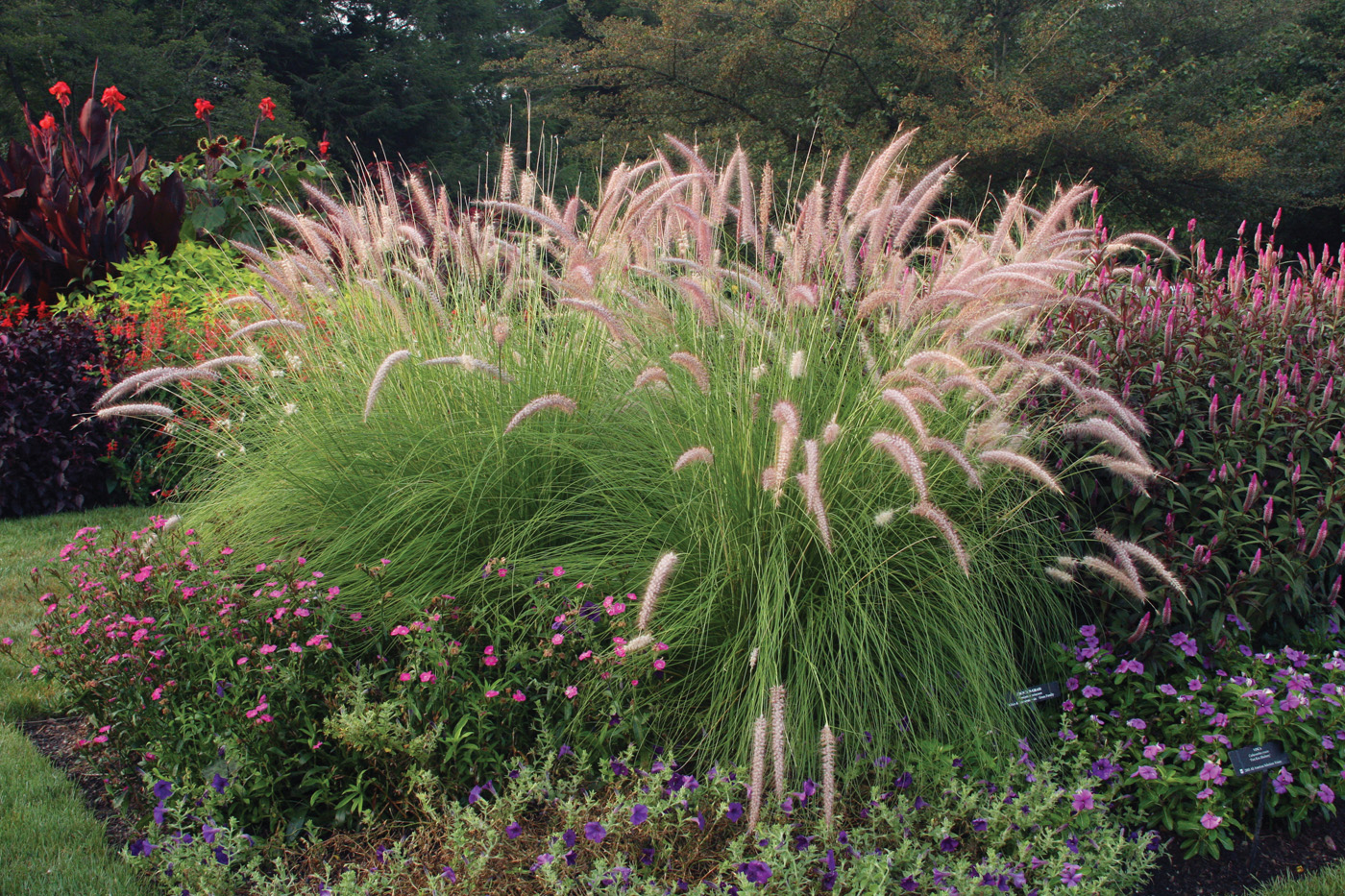
Cenchrus setaceus* syn. Pennisetum setaceum* and cvs.
Popular for being fast growing, drought tolerant, deer resistant, and showy when in bloom, African fountain grass is common in many American landscapes. However, this plant has been labeled as invasive or an emerging threat in some locations. Thankfully, there are many native grasses with similar attributes that also provide ecological benefits.
Native perennial alternatives for African fountain grass
|
|
|
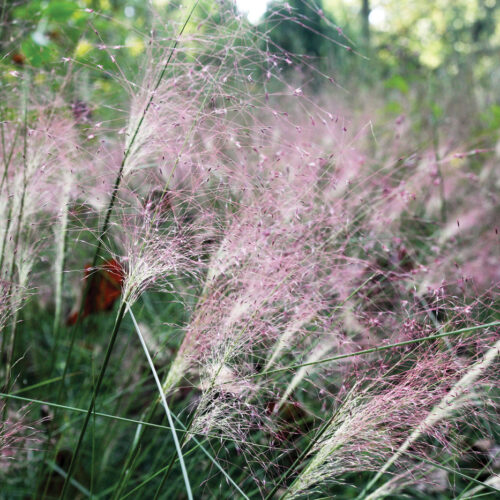
3. Pink muhly grassMuhlenbergia capillaris
There is something so special about seeing late-summer dew glimmering on the cotton candy–like inflorescences of pink muhly grass. This native plant adds texture that is unlike anything else. Pink muhly grass is a clump-forming, warm-season perennial grass that grows well in medium or dry soil. Interplant it with native perennials like blazing star (Liatris spp. and cvs., Zones 3–9), asters (Symphyotrichum spp. and cvs., Zones 3–9), and helianthus (Helianthus spp. and cvs., Zones 4–9) for a glorious fall display and pollinator feast. |
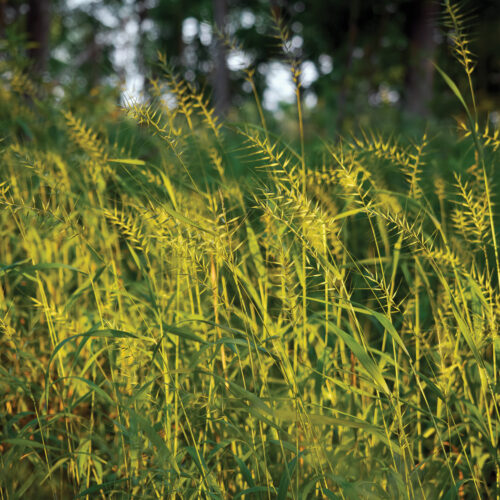
4. Bottlebrush grassElymus hystrix
If you have a dry, shady area that begs for some grassy texture, bottlebrush grass is the plant for you. Soft, flowy bottlebrush-like flower heads rise up in early summer, similar in form to African fountain grass. This is a cool-season grass that thrives during spring and fall when soil temperatures are lower. It is easy to grow in the right soil and will self-sow without becoming overwhelming. |
Overused Perennial: Bearded iris
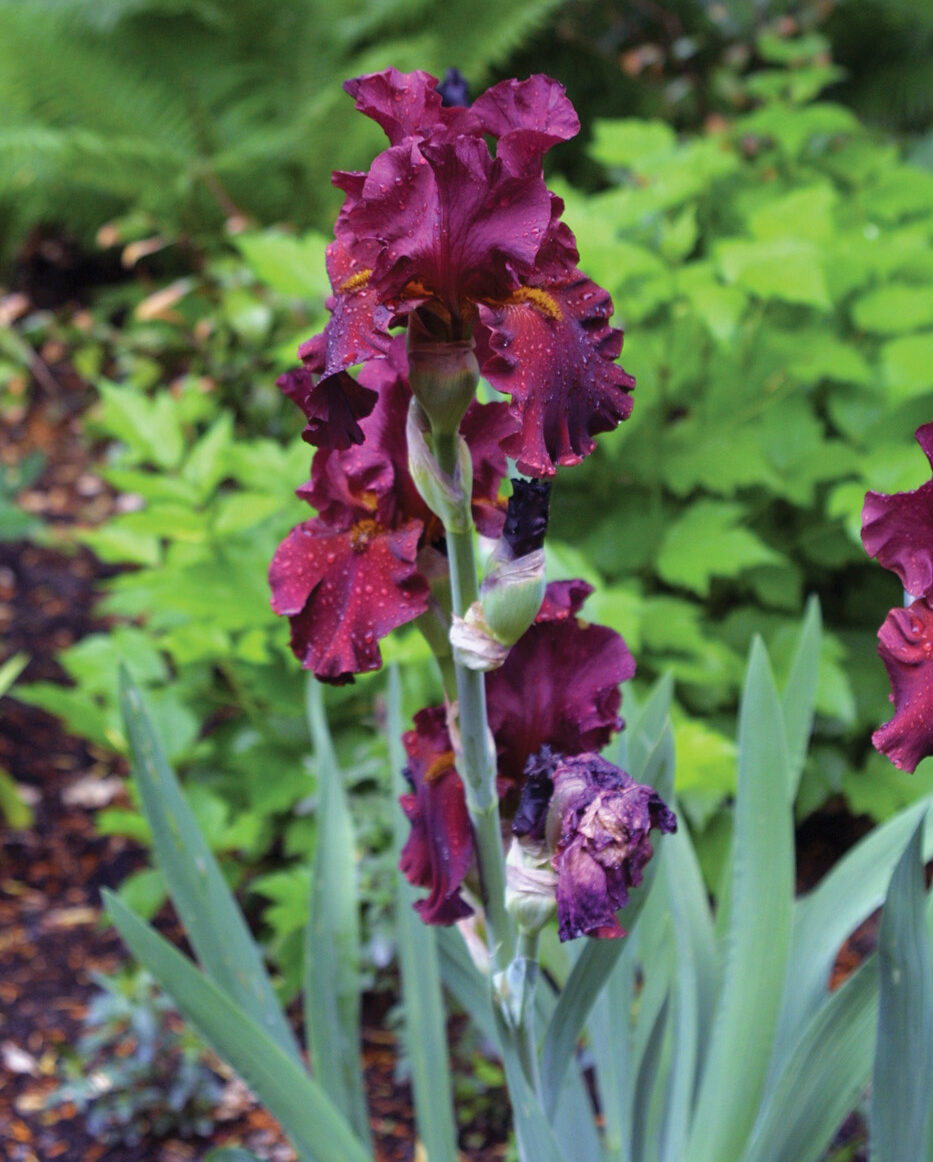
Iris × germanica and cvs.
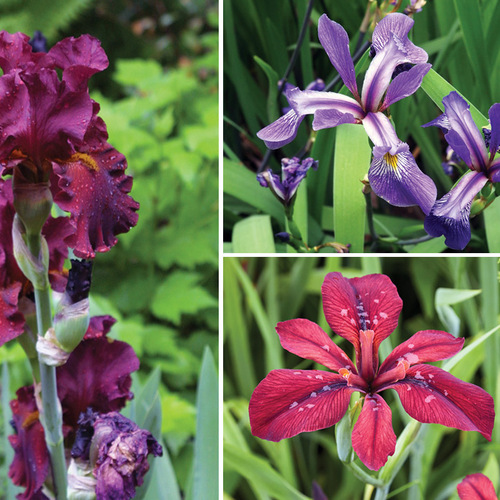
Though bearded irises are truly beautiful plants, there are native irises that are arguably just as arresting. Unlike their nonnative counterparts, these irises are hosts to the larvae of specific native moths and butterflies and play important roles in native food webs.
Try these native perennial alternatives to bearded iris
|
|
|
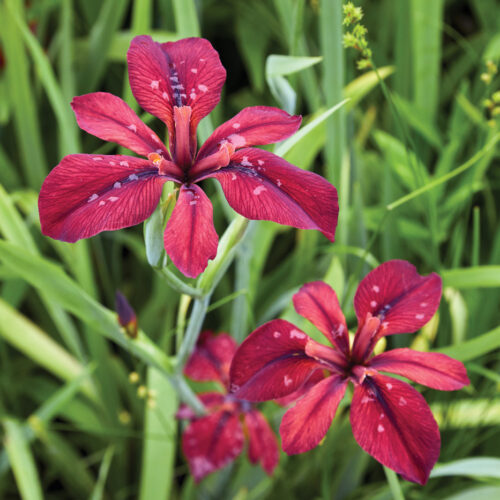
5. Copper irisIris fulva
Blooming from mid- to late spring, this water-loving perennial is a great choice for any tricky wet spots. Copper iris is increasingly rare in the wild but makes an absolutely fabulous garden plant. Its unusual blooms will catch your eye; they are a truly rare copper-red color that is not often found in landscapes and make particularly pretty cut flowers. In spring, the nectar attracts all types of butterflies, bees, moths, and hummingbirds. |
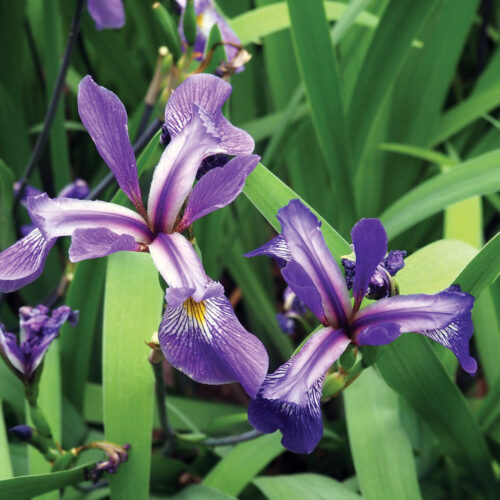
6. ‘Purple Flame’ blue flag irisIris versicolor ‘Purple Flame’
When this iris emerges from the ground, it will stop you in your tracks. Vibrant, deep purple leaves appear in early spring. In late spring, the leaves fade to green just in time for the gorgeous purple flowers to bloom and attract butterflies and hummingbirds. This Mt. Cuba Center introduction is quickly turning into a garden classic, and for good reason. Placed into a mixed perennial border, this plant’s striking purple leaves will be an indicator that summer is just around the corner. |
Read More: The Best Native Hydrangeas Plant Trial Results from Mt. Cuba
Overused perennial: Russian sage
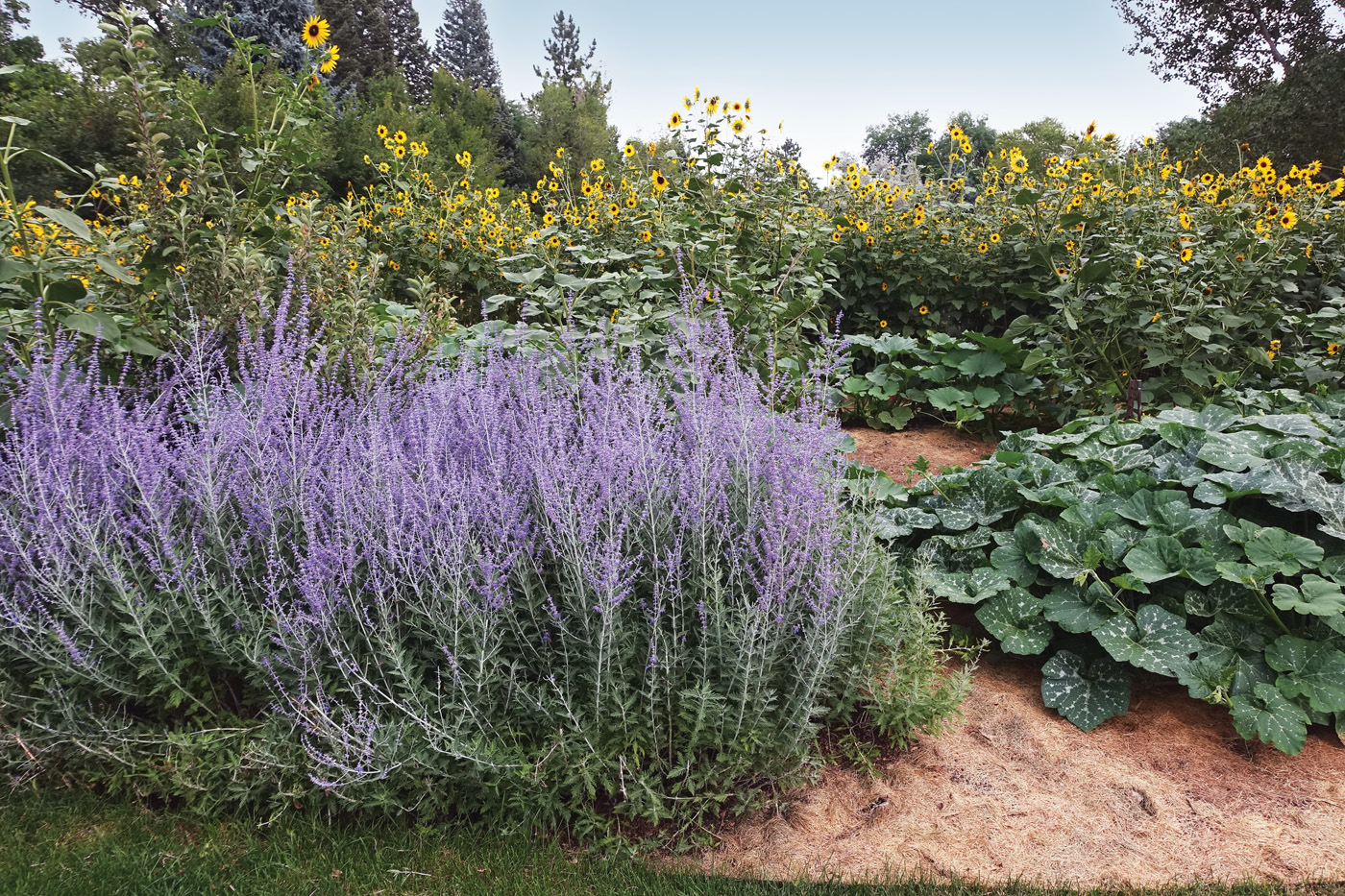
Salvia yangii syn. Perovskia atriplicifolia and cvs.
Russian sage is popular for its upright, medium-height inflorescences of lavender-blue flowers that appear in midsummer. It is known for being easy to grow and tidy, and for mixing well with other perennials. Luckily, there are some native species that have similar characteristics.
Native perennial alternatives for Russian sage
|
|
|
7. Clustered mountain mintPycnanthemum muticum
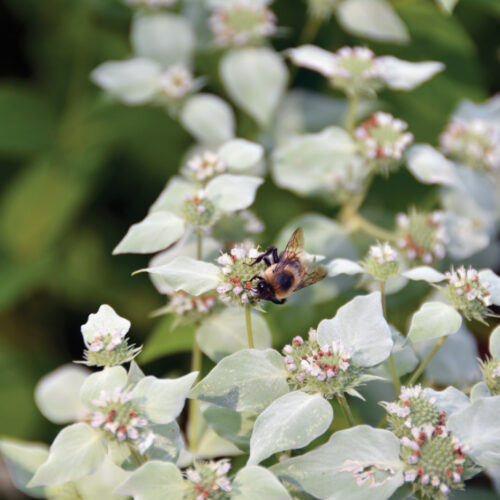
A low-maintenance, tough perennial, clustered mountain mint performs well in a variety of garden conditions. Not only does it add great texture to designs with its heart-shaped leaves, but it has striking silver foliage that shines in the sun. Its minty, fragrant leaves are a deterrent to deer and rabbits, making it a perfect addition to a high-pressure garden. It is also one of the most prolific attractants for a wide range of insects, including bees, beneficial wasps, and butterflies. |
8. Anise hyssopAgastache foeniculum
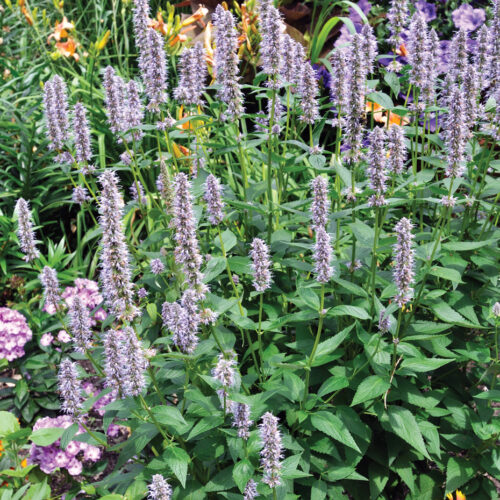
Anise hyssop may be the most relevant one-to-one native replacement option for Russian sage due to the plants’ similar appearances. Medium-sized and purple-flowering, it is a wonderful addition to a cottage garden or perennial border. Its leaves have a lovely fragrance that is close to that of Russian sage, and the scent similarly deters rabbits and deer from munching on the foliage. Its bloom spikes provide a long nectar season for hummingbirds, butterflies, and bees. Be aware that most cultivars of anise hyssop are hybrids with a nonnative parent. |
Overused perennial: English ivy
Hedera helix*
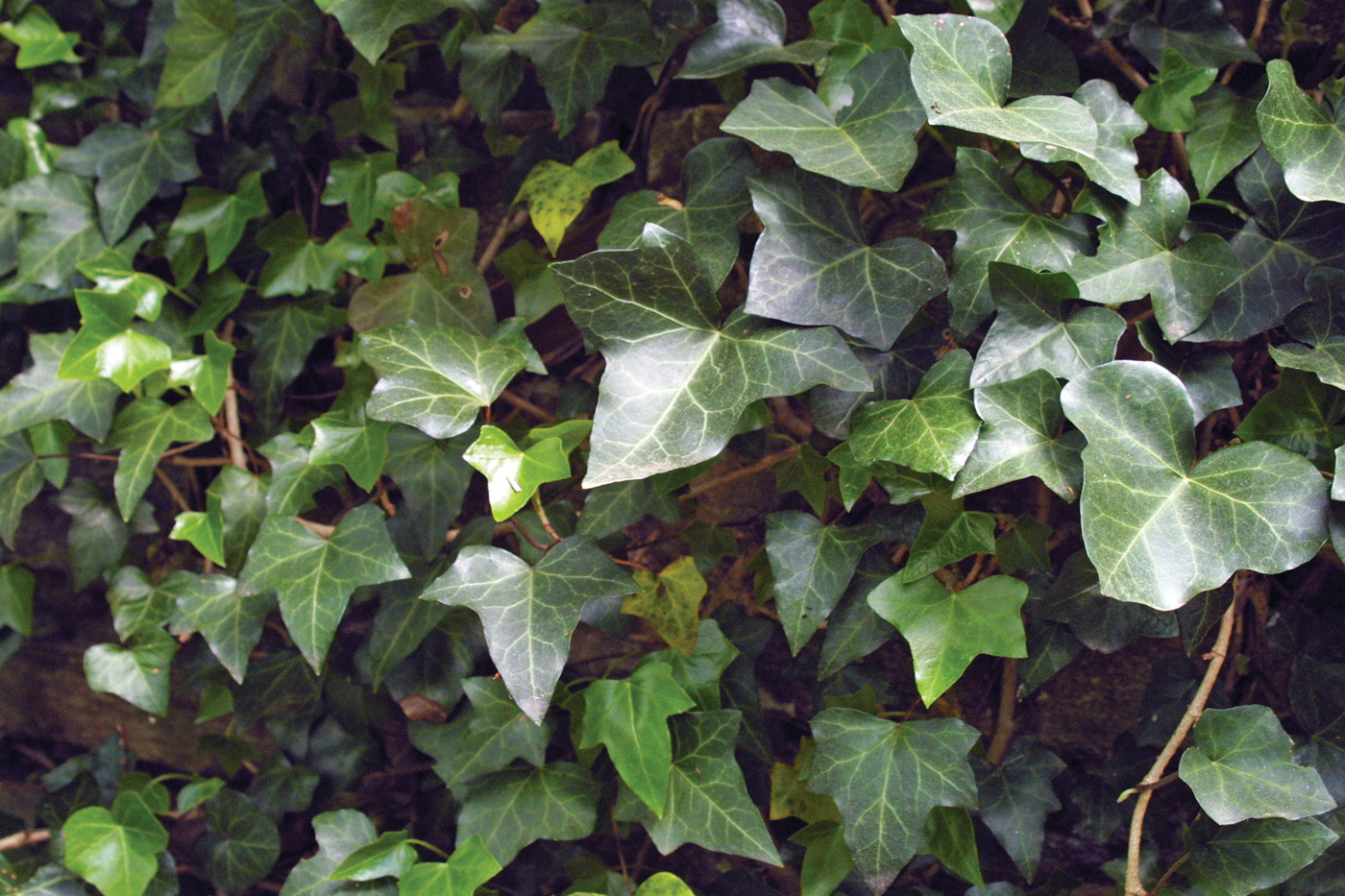
English ivy is an incredibly aggressive vine and is listed as an invasive plant in several states. It is not only fast growing but also destructive, damaging buildings and taking down entire trees. English ivy seeds are carried into other locations by birds and mammals, where they establish new populations, endangering our native plant communities.
Try these native perennial alternatives to English ivy
|
|
|
9. Virginia creeperParthenocissus quinquefolia
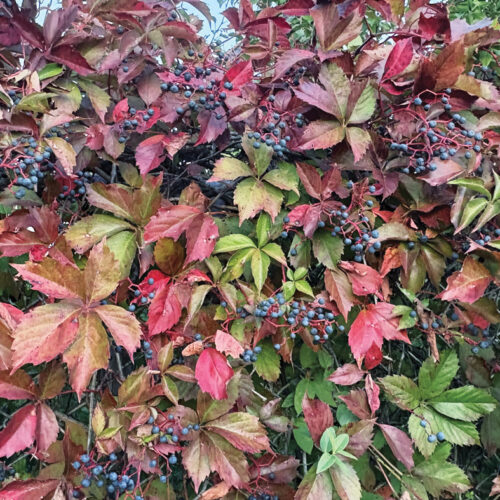
One may not immediately think of Virginia creeper and picture an ornamental plant, but if sited correctly, it can be a very attractive vine. To avoid potential damage, do not allow it to grow up buildings or fixtures, as its adhesive holdfasts can be difficult to remove. With training on a proper trellis, old tree snag, or pergola, Virginia creeper can be beautiful, and it can even be used as a ground cover. As a bonus, this native plant has noteworthy red fall color and the autumn berries are eaten by birds. |
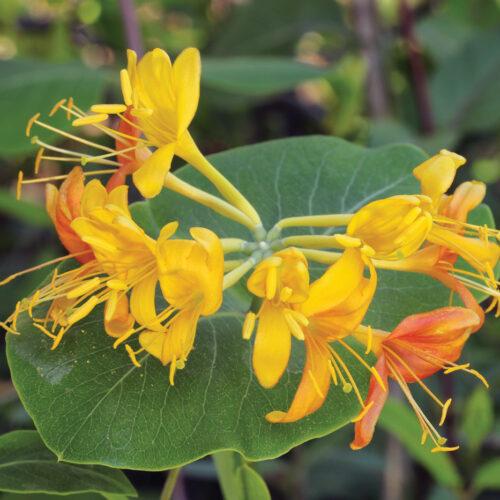
10. Yellow honeysuckleLonicera flava
Don’t confuse this handsome vine for the invasive species that are native to Korea, Japan, and China. Yellow honeysuckle has distinct blue-silver leaves that are almost eucalyptus-like in texture. In late spring and early summer, bunches of yellow blooms adorn the whole vine, attracting all types of butterflies, bees, and hummingbirds. When the flowers give way to fruit in fall, this plant becomes a food source for birds and other wildlife. It is easy to train and maintain; grow it up a trellis, lamppost, or fence for an interesting vertical element. |
Read More: Vines for the Connoisseur
Overused perennial: Hosta
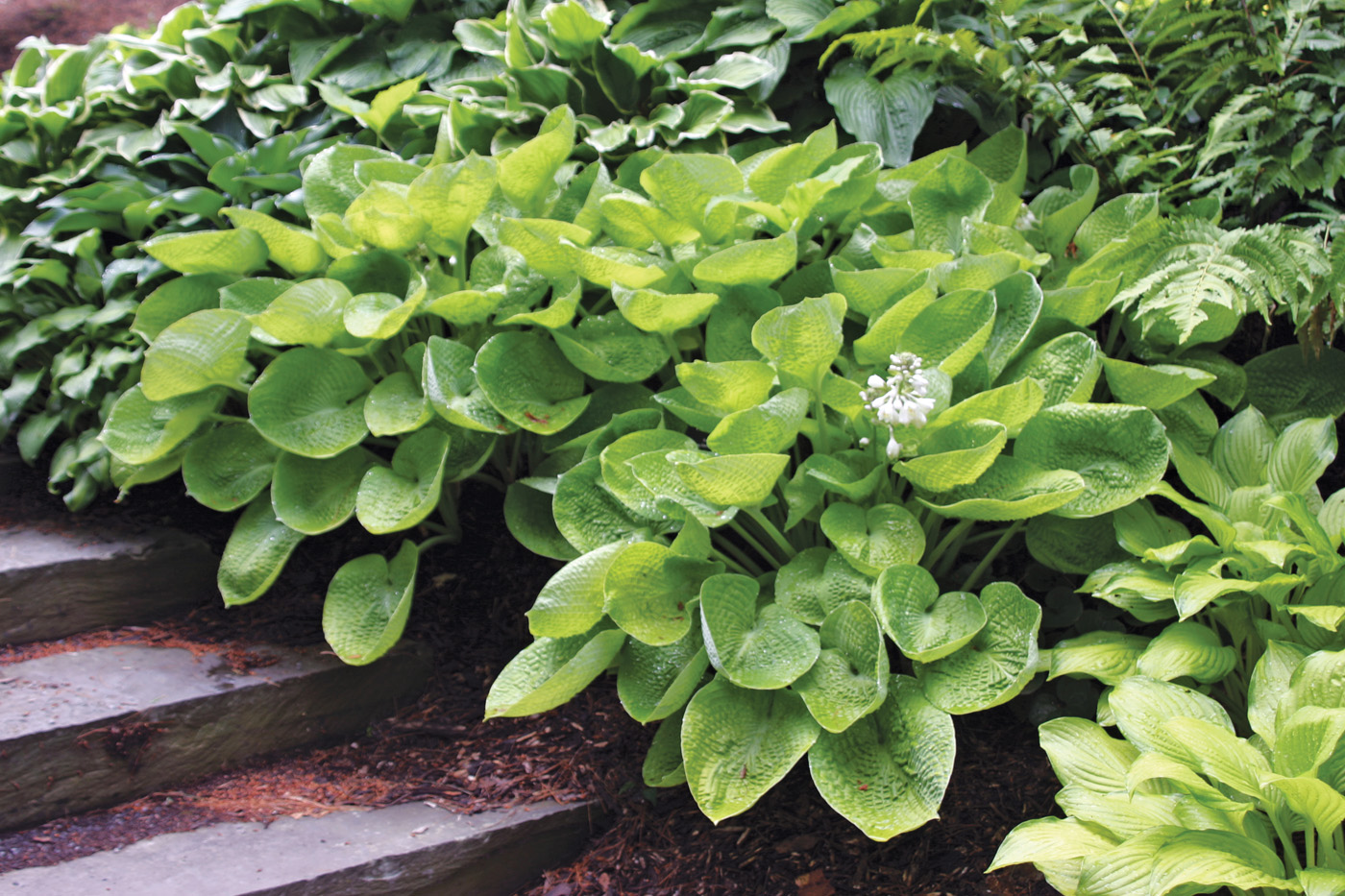
Hosta spp. and cvs.
There are so many cultivars and selections of hostas that it makes sense that they feature so prominently in gardens. Hosta leaves give a bold, almost tropical feel to a landscape that is more uncommon for native plants to provide. However, there are some native perennial plants that can fulfill that role while also contributing more ecological value.
Native perennial substitutes for hostas
|
|
 |
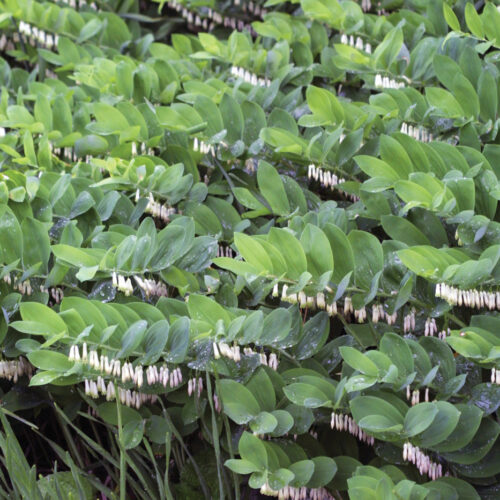
11. Smooth Solomon’s sealPolygonatum biflorum
Planting smooth Solomon’s seal in your garden is a great way to add bold texture, especially in shady areas. This perennial emerges in spring and grows quickly. It has graceful, arching stems covered in vibrant green leaves. Sweet, bell-shaped white flowers hang from the stems from spring to early summer, then turn into dark berries in fall, lending it multiseason interest. |
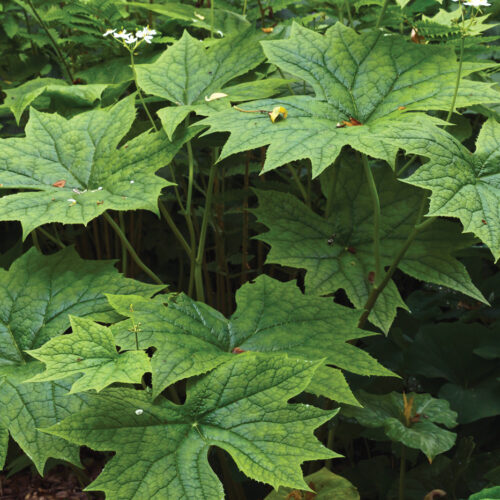
12. Umbrella leafDiphylleia cymosa
For shaded areas where eye-catching texture is desired, this umbrella-leaved perennial is the perfect plant. Emerging in spring, its foliage unfurls and eventually reaches a foot wide or more. It holds these leaves all season long, with dome-shaped clusters of white flowers blooming in early summer. In fall, the flower stems turn a rich red and are topped with blue berries. |
Read More: 27 Better Ground Covers to Replace Problematic Plants
Overused perennial: Orange daylily
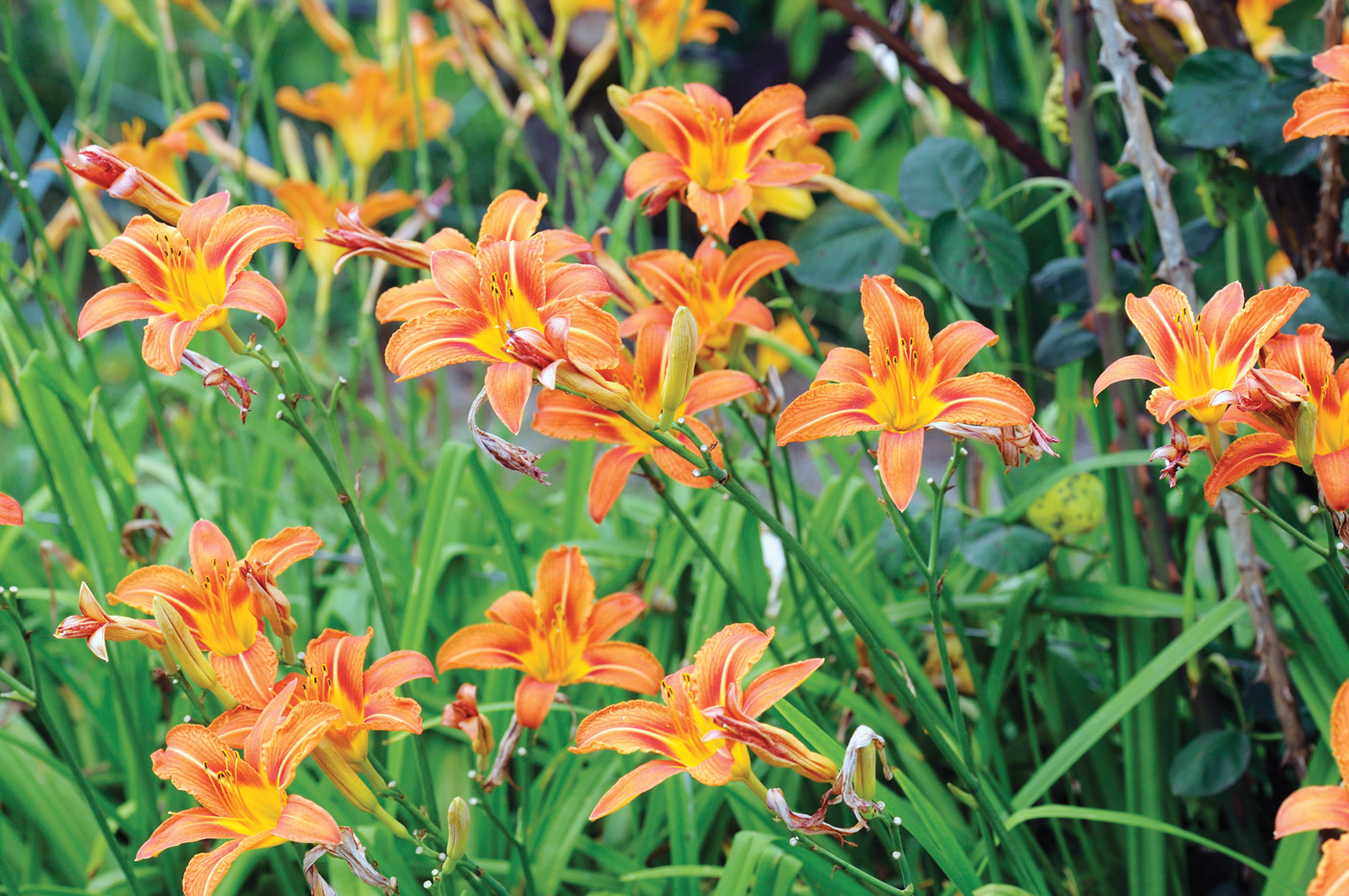
Hemerocallis fulva*
Introduced in the early nineteenth century as an ornamental garden plant, orange daylily was enjoyed for its colorful blooms with long stems in midsummer and its ease of care. Now considered an invasive species, it is often seen outside of gardens in woodland edges, roadsides, fields, and floodplains, where its dense, quickly-growing root structure displaces native plants. However, there are many excellent alternatives, including the two beautiful species below.
Native perennial alternatives for invasive orange daylilies
|
|
|
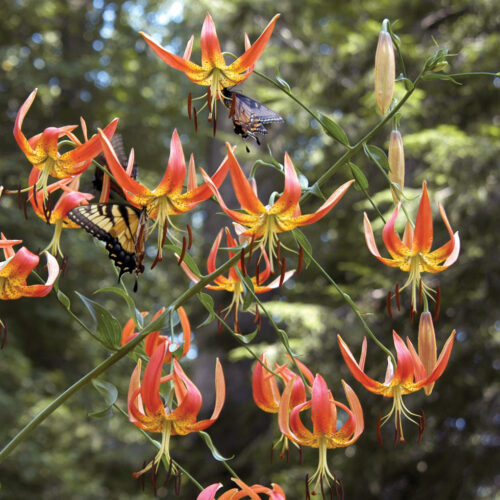
13. Turk’s cap lilyLilium superbum
Taller than the average daylily, this native lily is an absolute show-stopper in midsummer. With its nearly 8-foot-tall stems, it adds that same vertical interest that orange daylily does. When in full bloom, each stem carries a chandelier of bright orange mottled flowers. If it likes where it is planted and has damp feet and ample sun, it can form a significant colony over time and will attract bees, butterflies, and hummingbirds to your garden. |
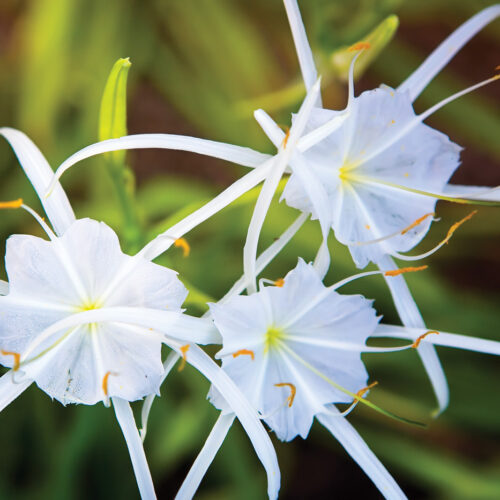
14. Spider lilyHymenocallis occidentalis syn. Hymenocallis caroliniana
This native bulb thrives in moist woods and swamps, making it a fun plant for wet spots. In midsummer, it sends up an inflorescence covered in attractive, white, spiderlike flowers. Though fleeting, these blossoms are absolutely striking and unique, especially for the time of year when they bloom. They have a light vanilla scent, attracting native pollinators. Spider lily is a native gem, and a worthwhile addition to any garden. |
Overused perennial: Tall sedum
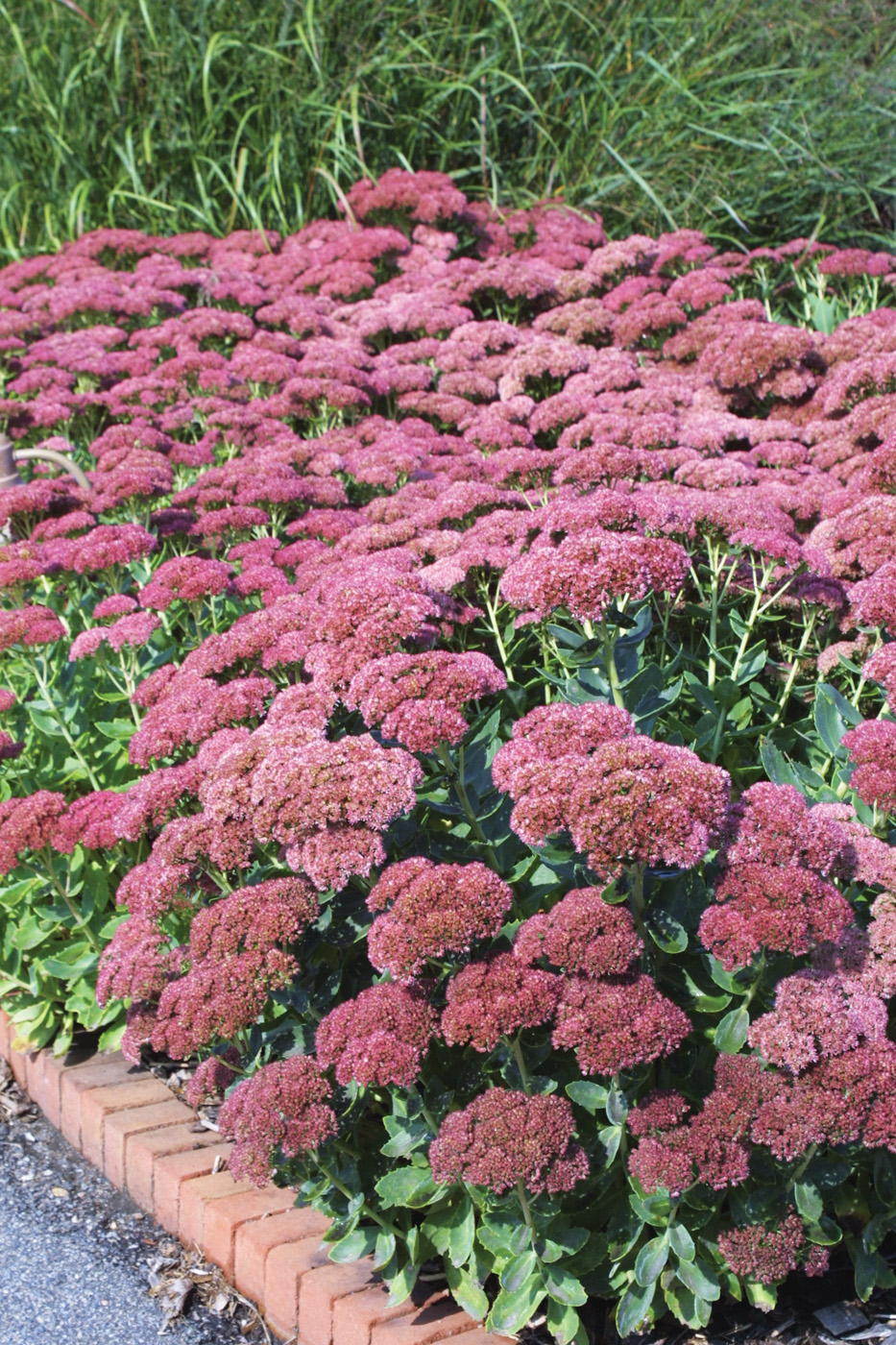
Hylotelephium spp. and cvs.
Unless sited correctly and planted in the right soil conditions, tall sedum tends to get rather floppy and can rot from the base quite easily. And while it has an interesting succulent texture, there are native plants that can hit the same mark.
Native perennial alternatives for tall sedum
|
|
|
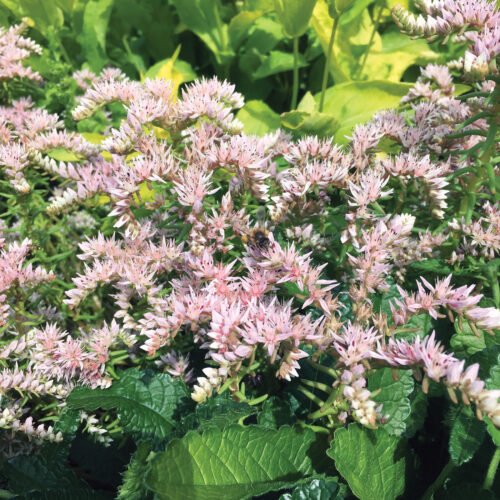
15. Widow’s crossSedum pulchellum
Though smaller in stature than tall sedum, this little plant packs a mighty punch. It’s best if added to the front of a sunny border or a rock garden. Plant it in clusters to appreciate the sweet pink blooms that persist from mid- to late spring. The blossoms form a blanket over the foliage, and it is always surprising how such a short plant produces a floral show this interesting. While widow’s cross most commonly grows as an annual or a short-lived perennial, it will function like a perennial and reliably reseed and flower every year if put in a good location. |
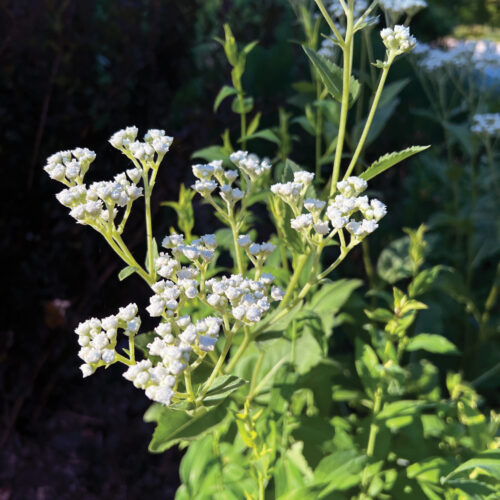
16. Wild quinineParthenium integrifolium
Wild quinine is a widely underused but extraordinary clump-forming perennial. It can withstand some of the toughest garden conditions and maintain its beauty even during a summer drought. Long-lasting white flower heads arise in late spring and last into late summer. They will also dry well when cut for excellent additions to floral arrangements. Wild quinine is beloved by pollinators such as bees, wasps, flies, and beetles. Combine this plant with purple coneflower and pink muhly grass for a breathtaking late-summer display. |
Amelia Burnett is the gardens manager at Mt. Cuba Center in Hockessin, Delaware.
*INVASIVE PLANT ALERT: The following plants mentioned in this article are considered invasive in some areas of the country. For more information, please visit invasiveplantatlas.org.
- African fountain grass (Cenchrus setaceus* syn. Pennisetum setaceum* and cvs.)
- English ivy (Hedera helix)
- Orange daylily (Hemerocallis fulva)
Learn More:
Subscribe to Fine Gardening Magazine
See More Planting Plans
Watch Videos on Our YouTube Channel!
Fine Gardening Recommended Products

The Regenerative Landscaper: Design and Build Landscapes That Repair the Environment
Fine Gardening receives a commission for items purchased through links on this site, including Amazon Associates and other affiliate advertising programs.
2024 Nautilus Award Gold Medal Winner! This awe-inspiring guide weaves together permaculture design, food resiliency, climate adaptation, community organizing, and indigenous wisdom that you can implement in your own backyard.
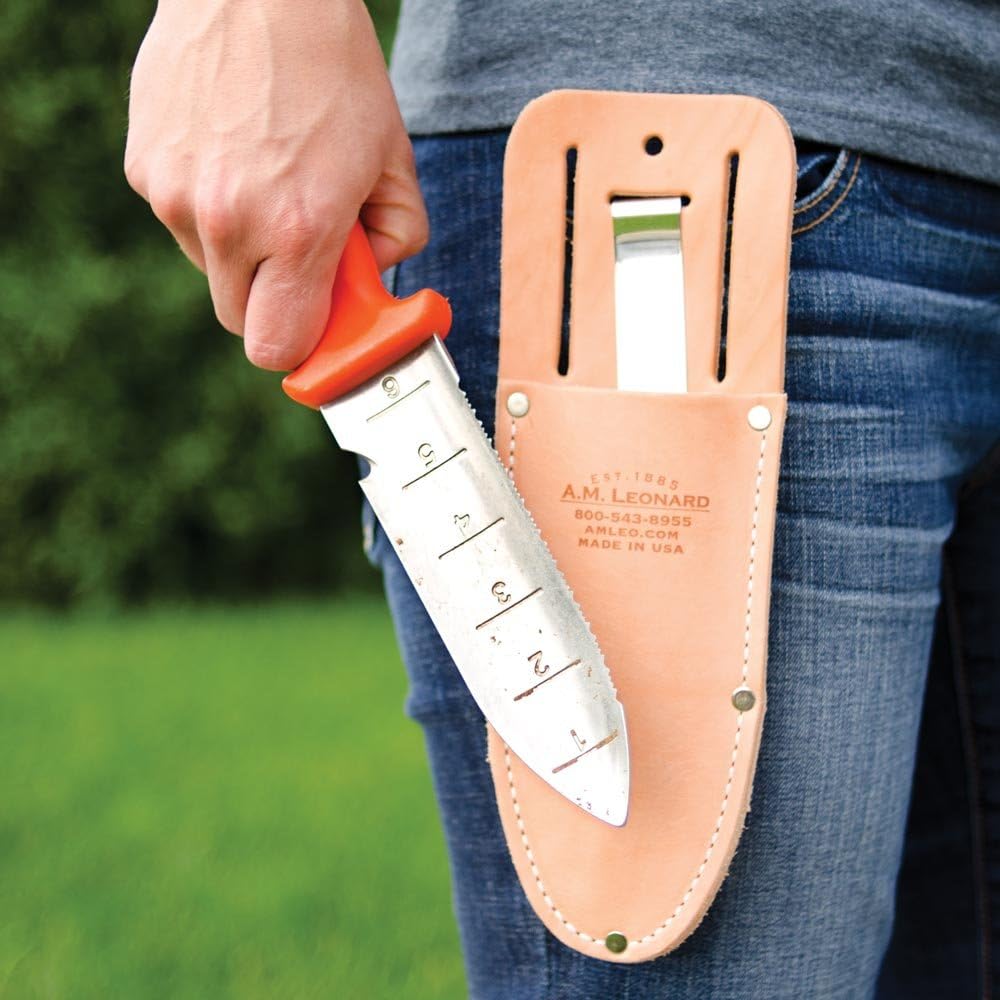
A.M. Leonard Deluxe Soil Knife & Leather Sheath Combo
Fine Gardening receives a commission for items purchased through links on this site, including Amazon Associates and other affiliate advertising programs.
MULTITASKING DUAL EDGES: a deep serrated edge and a tapered slicing edge ideal for tough or delicate cuts. DURABLE 6-inch stainless steel blade withstands 300 lbs of pressure. TWINE CUTTING NOTCH, DEPTH GAUGE MARKINGS & spear point – no need to switch tools when using this garden knife. LEATHER SHEATH: heavy duty, protective, clip on sheath to keep your knife convenient and secure. LIFETIME WARRANTY.