
Woodland Garden Beginnings
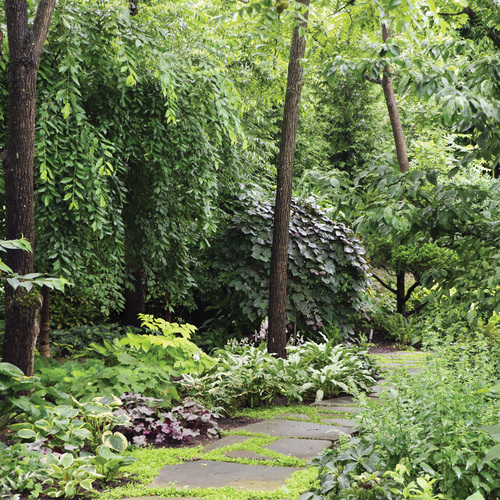
When my husband and I moved into our new Northern Virginia home in 2017, we were presented with a blank slate full of weeds. The soil was compacted from construction and composed of very heavy clay. Since then, we’ve transformed that empty canvas into several different gardens. One of these areas is the woodland garden walk. It was originally dominated by several black walnut trees (Juglans nigra, Zones 4–9), invasive plants, poison ivy, and wild onions.
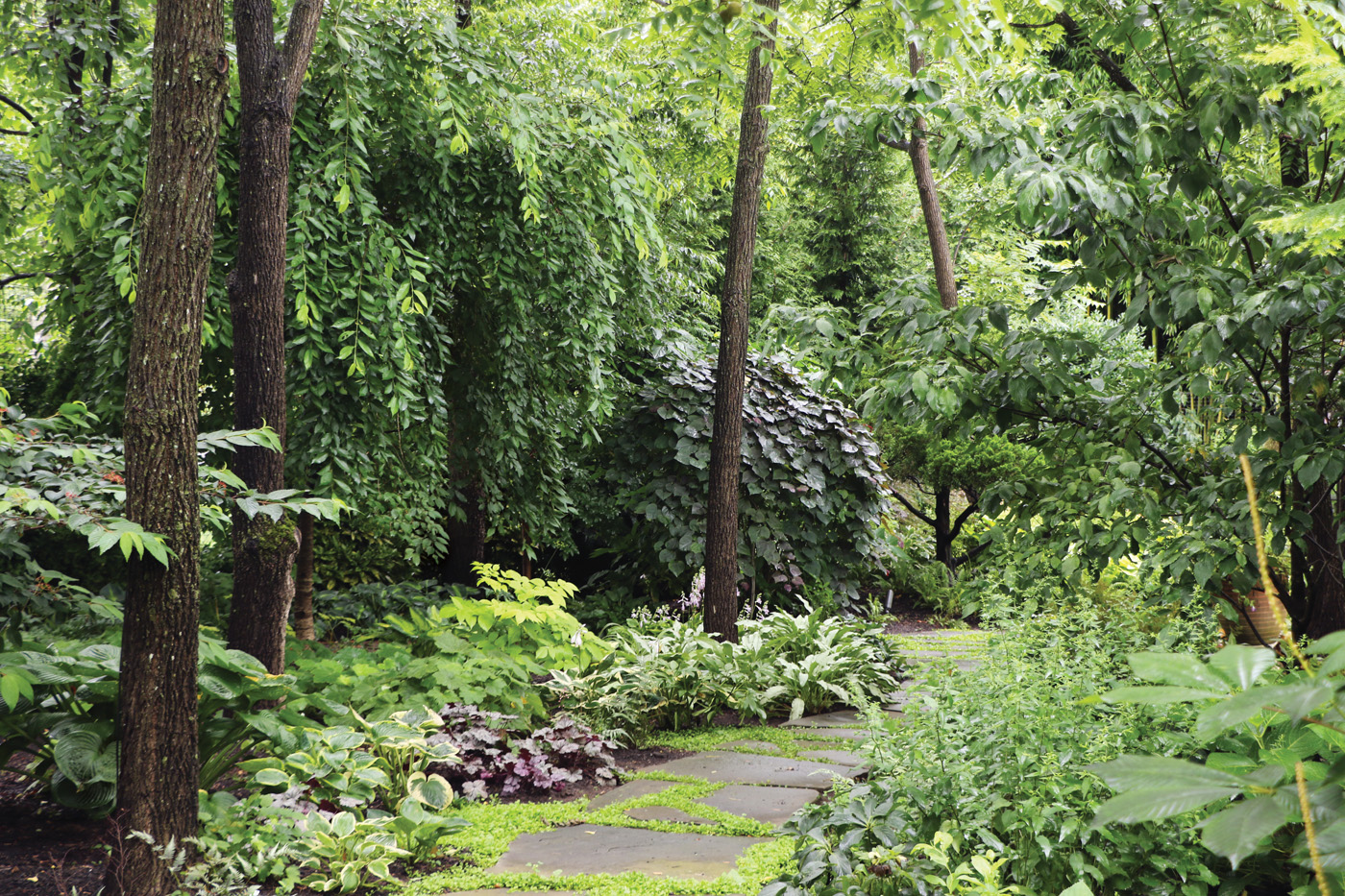
We cleared out most of the scrub and planted new understory trees to provide a shaded environment, while keeping some of the mature black walnuts. The area now contains a multitude of foliage plants and interesting garden elements, along with weaving pathways. As visitors make their way through the garden, they will find fresh discoveries at every turn, with several spaces to rest and reflect as they immerse themselves in their surroundings.
Enjoy the garden tour above and hear Yvonne share the story behind this peaceful garden, or watch it on our YouTube channel here.
See Plant ID’s for Yvonne’s Woodland Garden
| GARDEN AT A GLANCE | |
|
How to Turn Your Shade Garden into a Destination
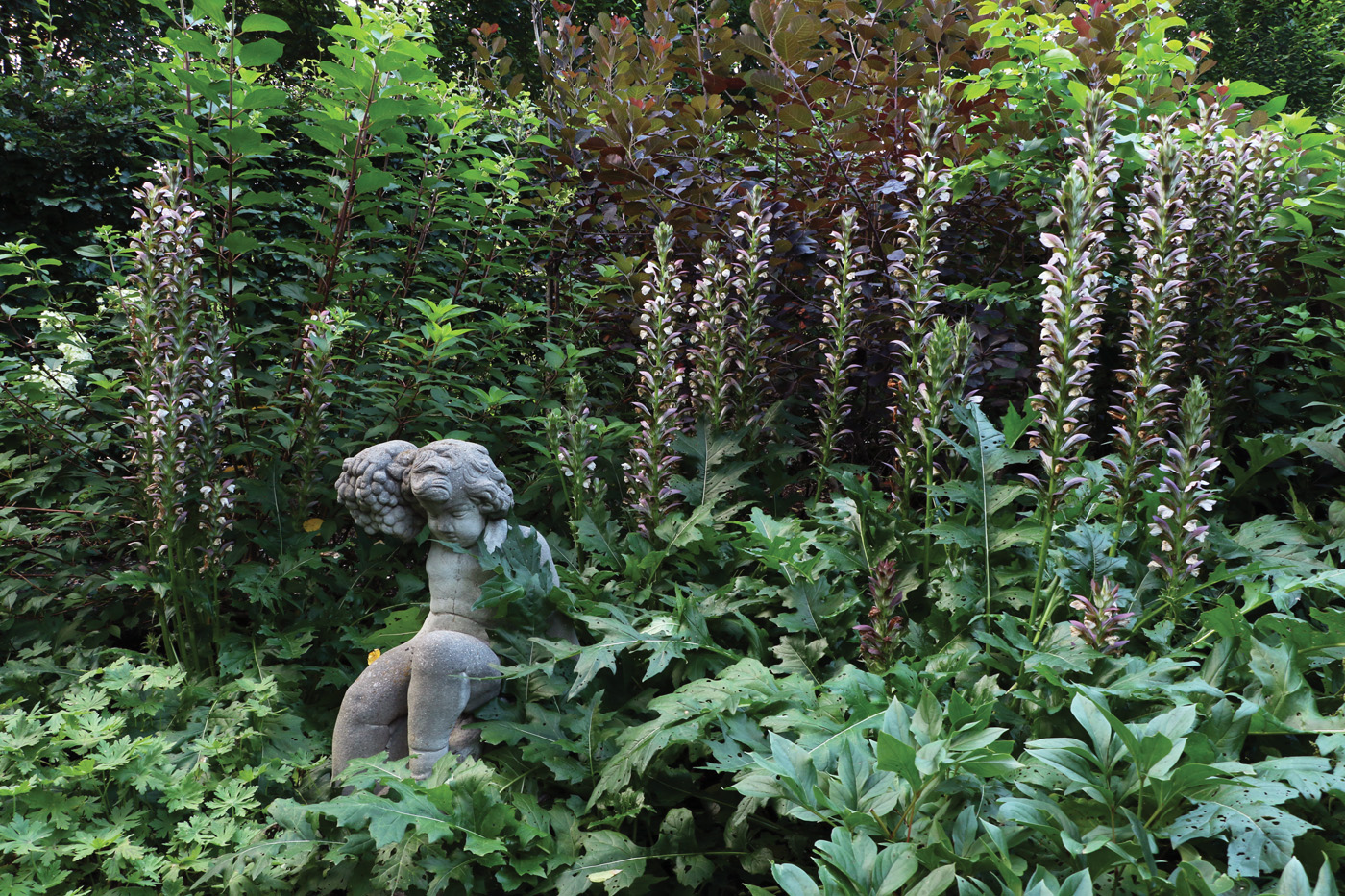
Construct an inviting garden layout through hardscaping and focal point placement
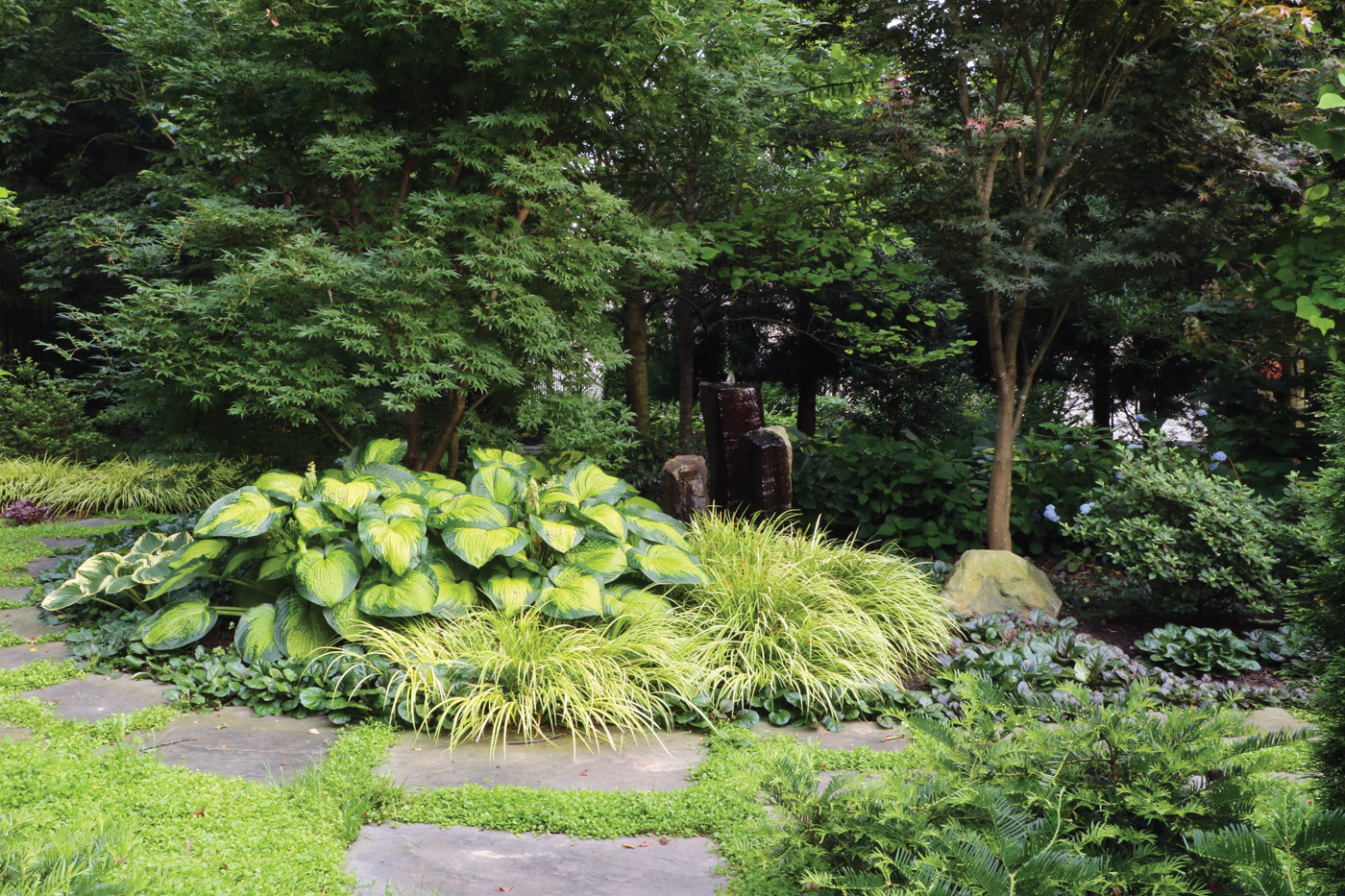
To find the woodland walk, you must first pass through the pool terrace garden into an entry marked by a group of arborvitaes (Thuja cvs., Zones 3–9) underplanted with prostrate Japanese plum yew (Cephalotaxus harringtonia ‘Prostrata’, Zones 6–9). You will then encounter a triple natural-boulder water feature surrounded by ‘Ogon’ sweet flag (Acorus gramineus ‘Ogon’, Zones 5–9) and ajuga (Ajuga reptans* cv., Zones 3–10), and framed by two Japanese maple trees (Acer palmatum cvs., Zones 5–9) (photo above).
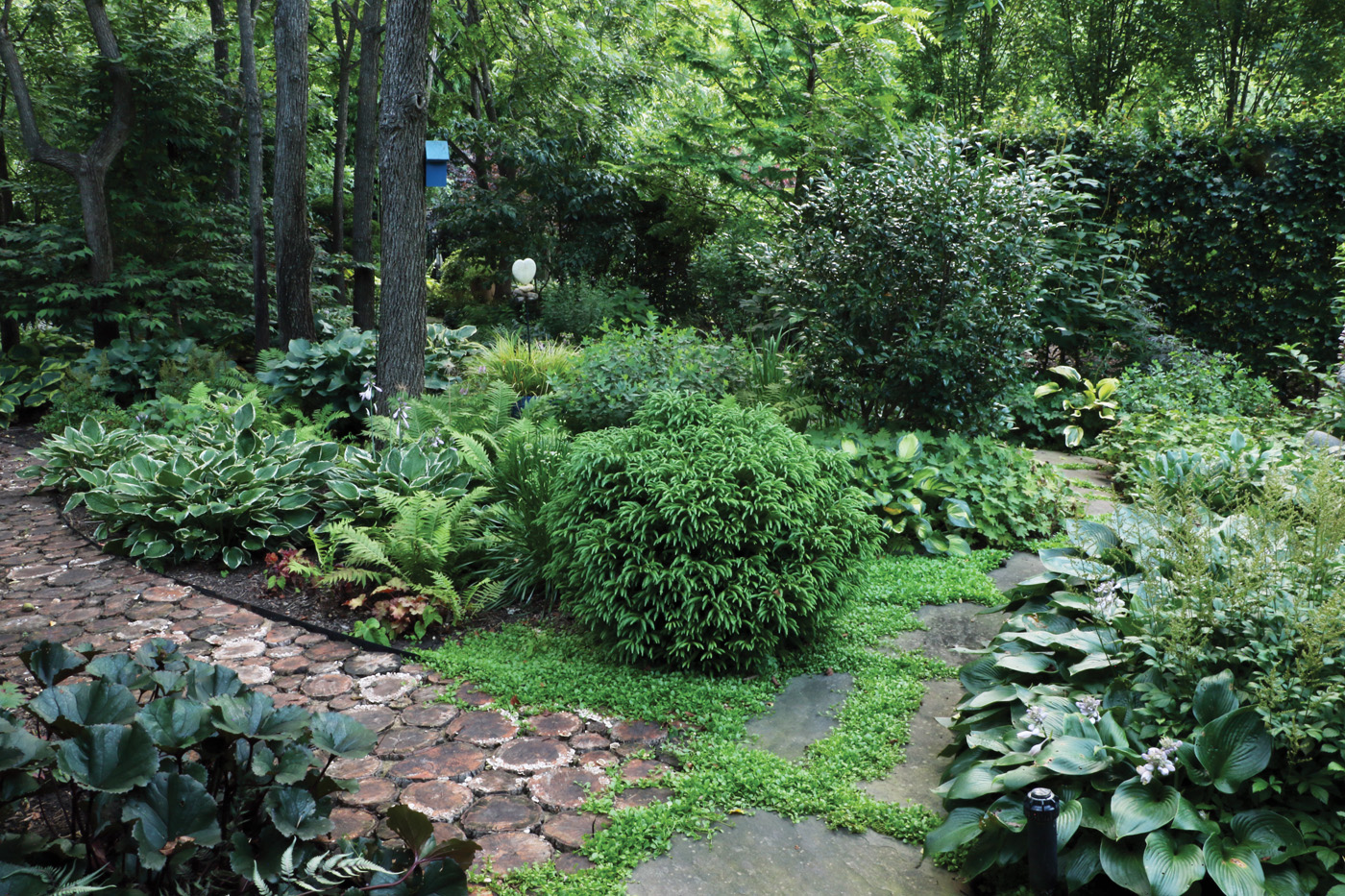
From there, a stone walkway provides an easy path through the garden, while a side path made of tree cookies (slices of trunk) adds a more rustic element as it branches off at an intersection with a noteworthy dwarf Japanese cedar (Cryptomeria japonica ‘Globosa Nana’, Zones 5–7) (photo above). Throughout this journey, you will encounter a variety of focal points like statues, benches, water features, elevated large vases, and eye-catching specimens like a Hollywood juniper (Juniperus chinensis ‘Torulosa’, Zones 5–9) topiary.
Stroll through a relaxing Japanese-inspired section of the woodland garden
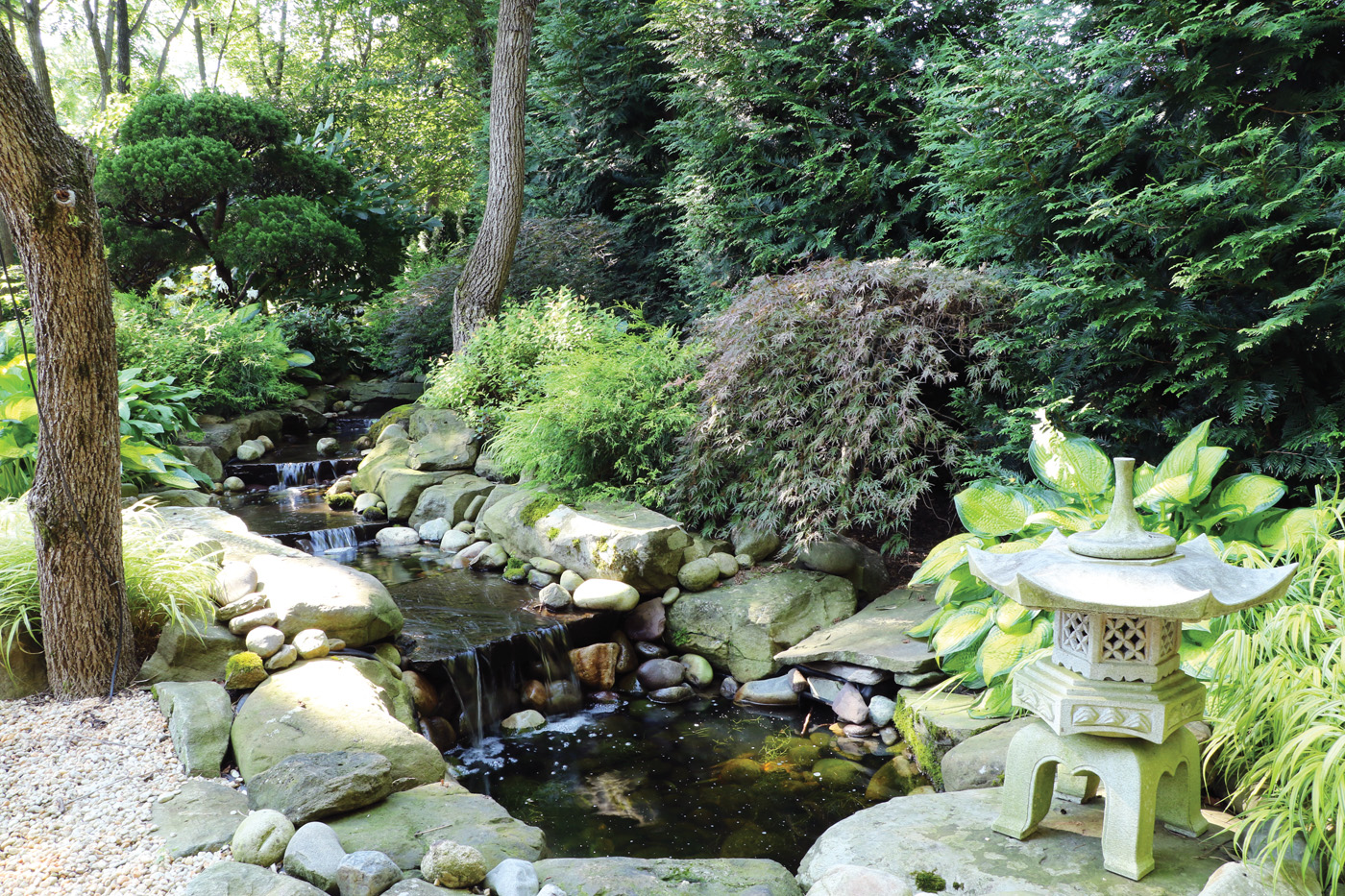
The entry into the Japanese-inspired garden at the other end of the woodland walk is planted with black mondo grass (Ophiopogon planiscapus ‘Nigrescens’, Zones 5–9), framing a gravel walkway with stepping stones. A small waterfall that winds through the black walnut trees features a range of plants native to Japan and other parts of Asia, such as hostas (Hosta spp. and cvs., Zones 3–8), ‘Aureola’ Japanese forest grass (Hakonechloa macra ‘Aureola’, Zones 5–9), and dwarf azaleas (Rhododendron cvs., Zones 5–9) (photo above).
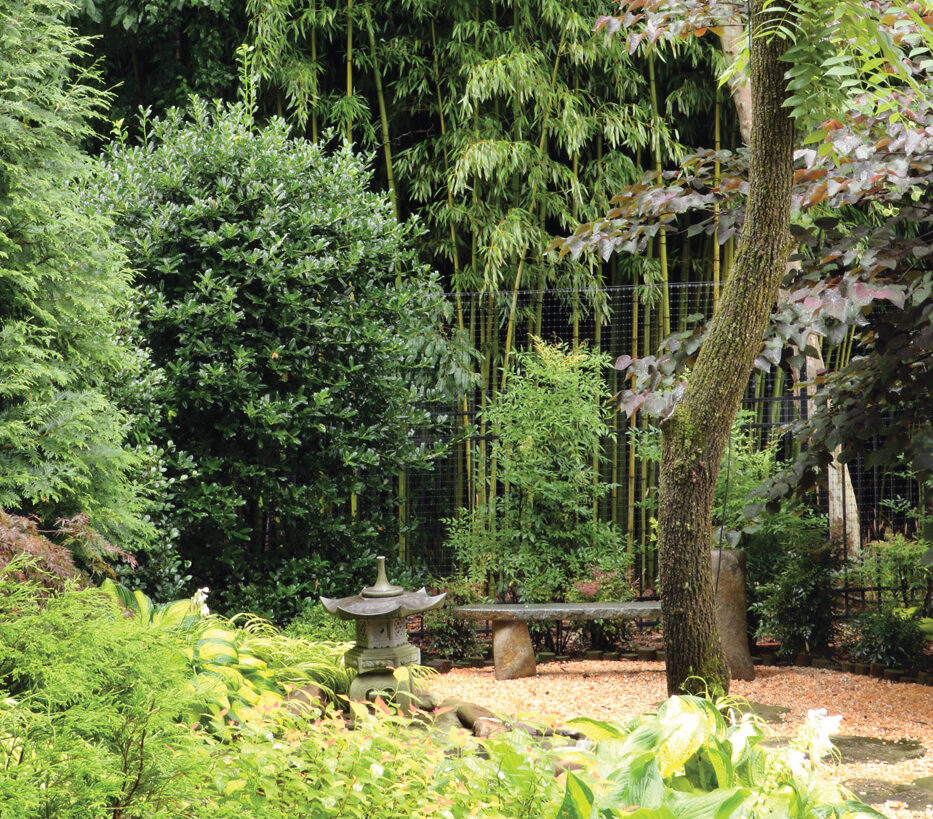
Heavenly bamboo (Nandina domestica*, Zones 6–9) backs a stone bench, which offers a tranquil spot to watch and listen to the sounds of a riverlike water feature (above). The movement and sound from the running water accentuate your stroll through the garden while attracting wildlife like birds and frogs. Textural interest from nearby plantings was key in creating these soothing spaces.
Read More: Sensory Plants for a Garden that Looks, Smells, and Feels Amazing
Work with existing garden materials and find creative solutions to challenges
The focus of the first two years of constructing this space was to take out about half of the black walnut trees because of the limitations of planting underneath them. Highly aggressive plants and wild onions also needed to be eradicated. All of the running bamboo (Phyllostachys edulis, Zones 7–10) that grew on the property was removed, but there is still some just beyond the property line. A 36-inch-deep concrete barrier built beneath ground level prevents suckers from continuing to invade our garden. However, the bamboo conveniently provides an appropriate backdrop to the Japanese garden and was used to frame the space. Across from the wall of bamboo, a berm was installed around the waterfall to allow for dense planting beds to avoid the juglone from the black walnut trees.
Using ground covers to help manage weeding
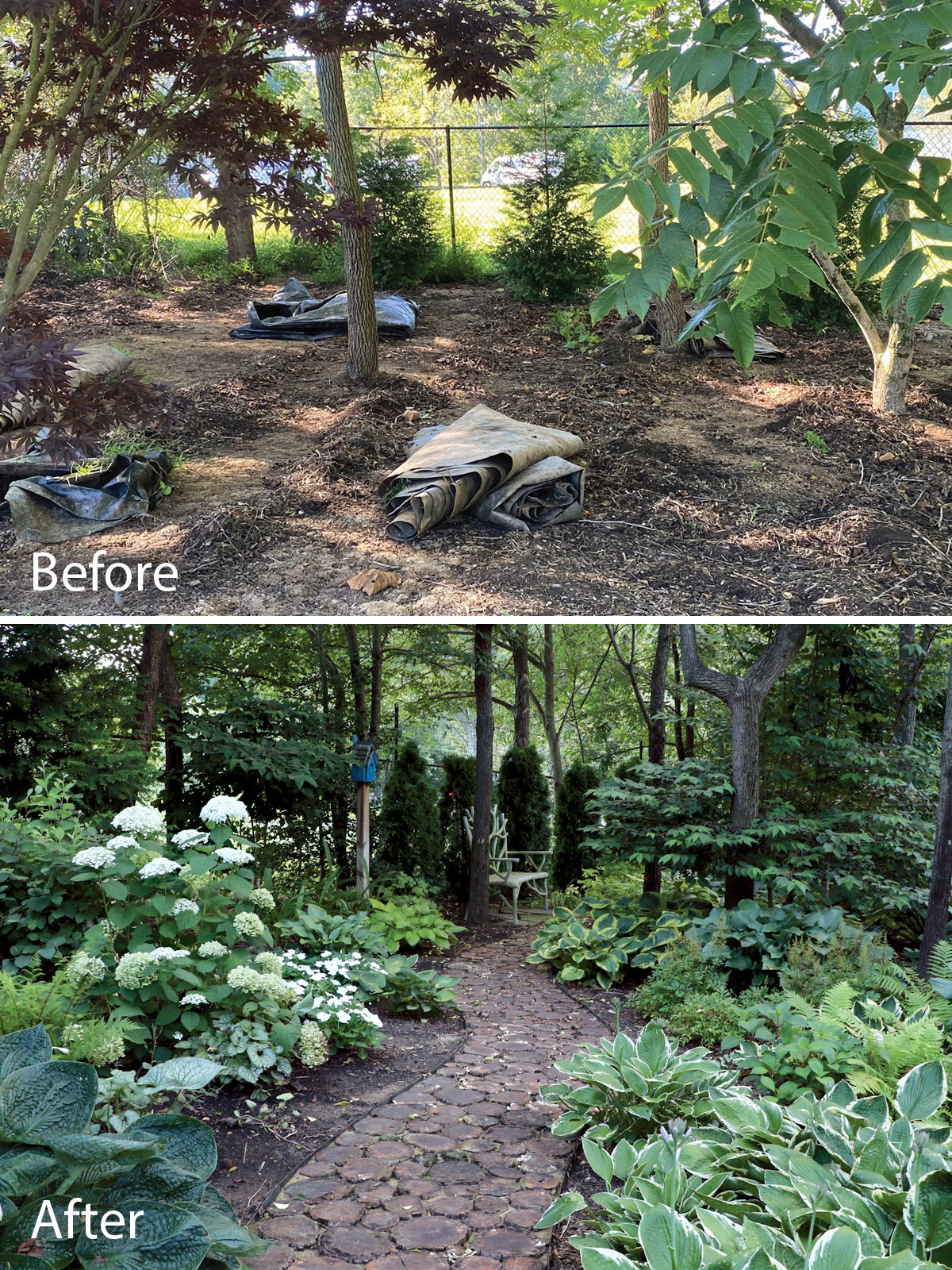
To tackle pervasive wild onions, weed mitigation strategies were used for 18 months (before photo above). After removing landscape fabric that had been temporarily installed, I planted some ground covers to spread quickly, as the returning weeds were quite aggressive. These included various ajugas, Japanese prostrate yew, creeping mazus (Mazus reptans, Zones 5–8), tiarella (Tiarella cordifolia, Zones 4–9), and woodland phlox (Phlox divaricata, Zones 3–8). This has also helped reduce weeding requirements over time.
One undesirable plant was retained in a different way. The wooden side path that winds off of the main stone walkway is made up of slices of wood from invasive ‘Bradford’ pear trees (Pyrus calleryana* ‘Bradford’, Zones 5–9) that were cut down in the garden, as well as some donated from neighbors’ yards.
Read More: 10 Tips for Picture-Perfect Garden Paths
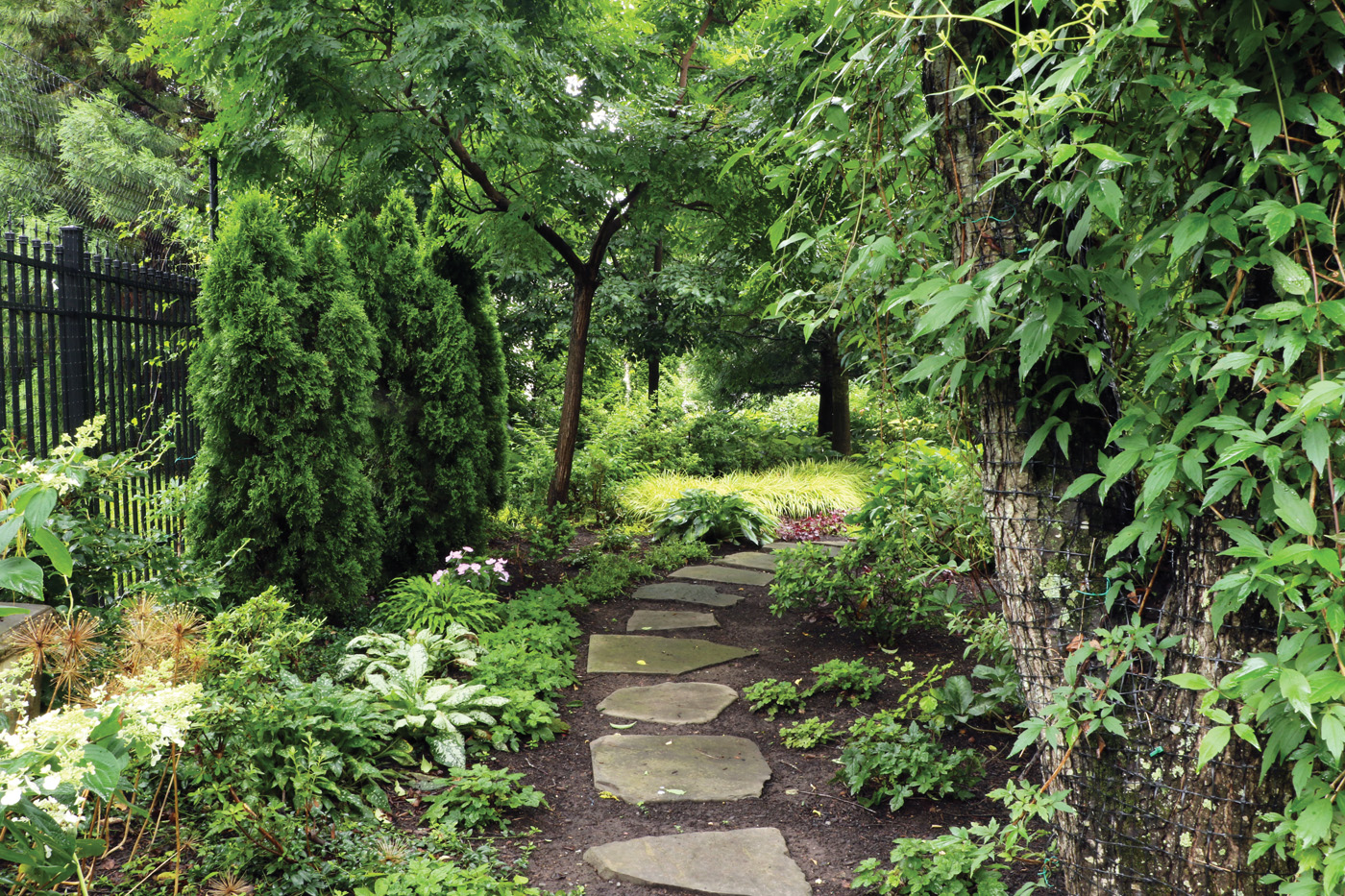
Until the shade trees mature, it continues to be sunny in some parts of the woodland. Some plants more typically associated with sunny spots can be found there, such as alliums (Allium spp. and cvs., Zones 4–9) and daylilies (Hemerocallis spp. and cvs., Zones 3–9), as well as some plants that take both sun and shade, like mountain clematis (Clematis montana cv., Zones 5–9) (photo above).
Subscribe to Fine Gardening Magazine!
| TECHNIQUE |
|
|
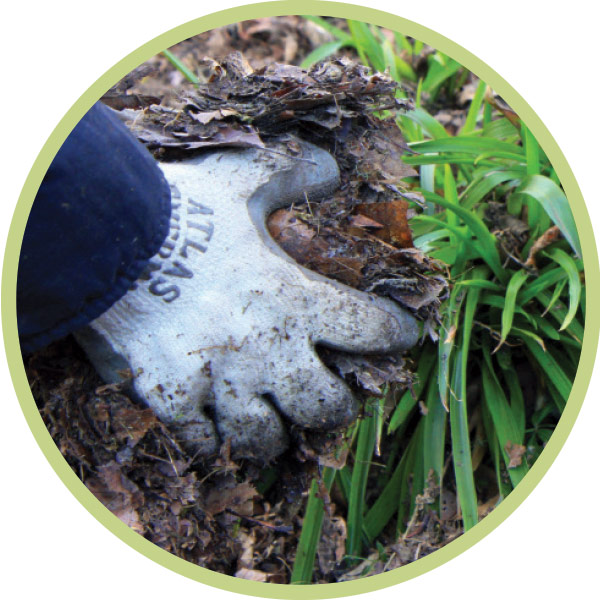
1. Improve the soil. Leaf mulch, compost, and other organic matter make soil softer and more friable. In addition to retaining moisture, amended soil makes it easier to dig in tight spaces. |
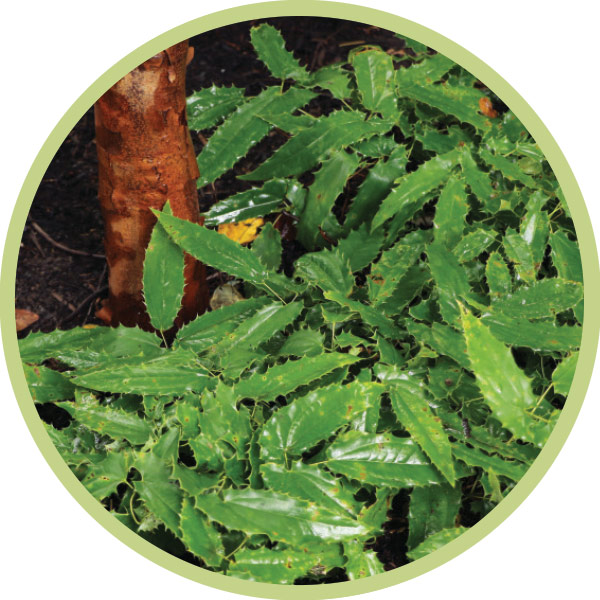
2. Pick the right plants. Use plants that thrive in your shade conditions, like epimediums (Epimedium spp. and cvs., Zones 4–9) for dry shade. |
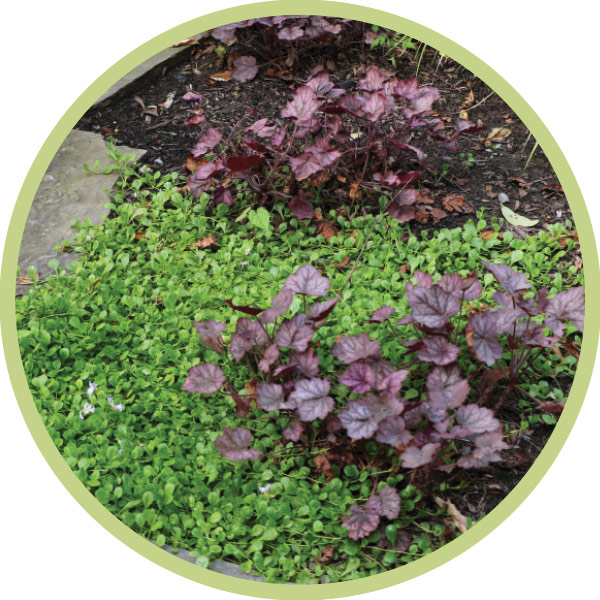
3. Start small. Plants that are more compact, like those in a 1-quart container, are easier to add between roots without damaging nearby trees. |
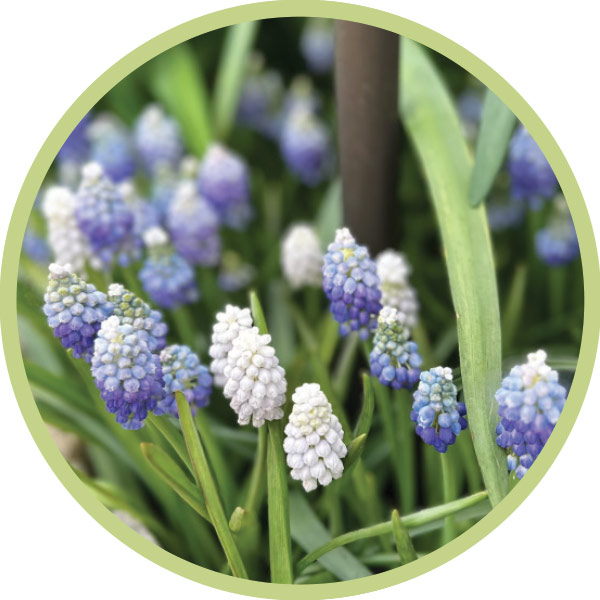
4. Add bulbs for seasonal interest. Tuck in bulbs and corms where you can, as they don’t take up much space and can extend the season. |
Incorporate a diverse mix of plants and elements for year-round interest in a woodland garden
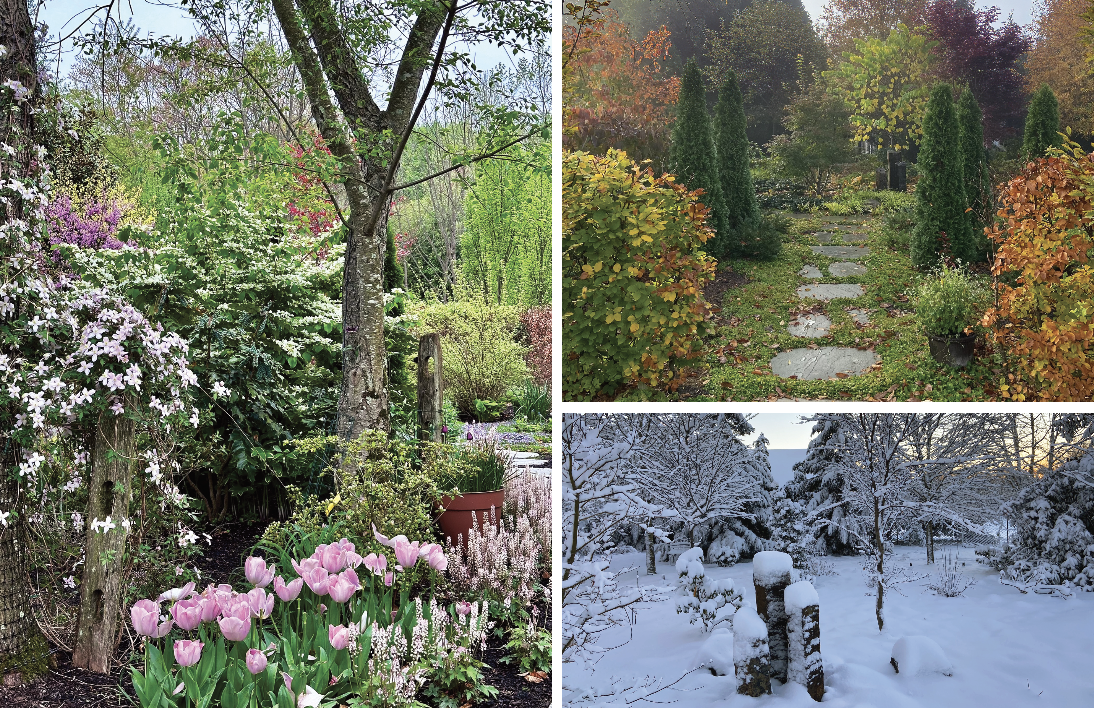
There is a major focus on foliage in this space, starting with trees and shrubs like variegated hollies (Ilex spp. and cvs., Zones 5–9), dogwoods (Cornus spp. and cvs., Zones 3–9), and maples (Acer spp. and cvs., Zones 3–9). While the woodland is most lush and abundant in summer, there is enough going on to make this space an oasis in all seasons. Perennials and shrubs are interplanted to fill each other’s dormant periods, and a number of plants were chosen for their multiseason interest.
Spring in bloom
The spring garden is awash in flowering bulbs like grape hyacinths (Muscari spp. and cvs., Zones 4–8) and tulips (Tulipa spp. and cvs., Zones 3–8), which complement nearby flowering ground covers and spring ephemerals wonderfully. Overhead, shrubs and trees bloom in succession, with viburnums (Viburnum spp. and cvs., Zones 3–9), Eastern redbuds (Cercis canadensis and cvs., Zones 4–8), and dogwoods as some of the key players (photo above left). While most of the trees flower in spring, some provide summer and winter flowering interest like ‘Winter’s Fire’ camellia (Camellia ‘Winter’s Fire’, Zones 6a–9b).
Include plants with stunning fall color
Many of those same woodies burst into fiery colors in fall, and serve as a backdrop for the changing foliage of smaller plants like Japanese forest grass and Virginia sweetspire (Itea virginica, Zones 5–9). The entry to the woodland garden is brilliant in autumn. A European beech hedge (Fagus sylvatica, Zones 4–7) has caramel foliage and yellow ‘Hearts of Gold’ redbud (Cercis canadensis ‘Hearts of Gold’, Zones 5–9) glows with a red linden viburnum (Viburnum dilatatum, Zones 4–7) to the left, Japanese maples in the foreground, and willow oak (Quercus phellos, Zones 5–9) shining yellow in the background (photo above right). Red linden viburnum has striking leaves and red berries.
Winter shows off the bones of the garden
Winter carries its own magic when the bones of the garden are more visible. Elements like benches, sculptures, and water features all stand out starkly against the snow. The triple boulder fountain at the heart of the woodland runs through much of the year. Throughout all seasons, broadleaf evergreens and conifers provide structure and boundary hedging. These foliage-forward plants coupled with the plethora of garden structures make this an escape even in the offseason.
Over the years, the woodland garden has begun to fill in and look beautiful. As it grows, its function as a tranquil escape full of wonder and surprise grows with it.
Yvonne Tsikata is a Master Gardener, consulting rosarian, and regional ambassador for the Garden Conservancy.
Photos, except where noted: Diana Koehm
Learn More:
Subscribe to Fine Gardening Magazine
See More Planting Plans
Watch Videos on Our YouTube Channel!