

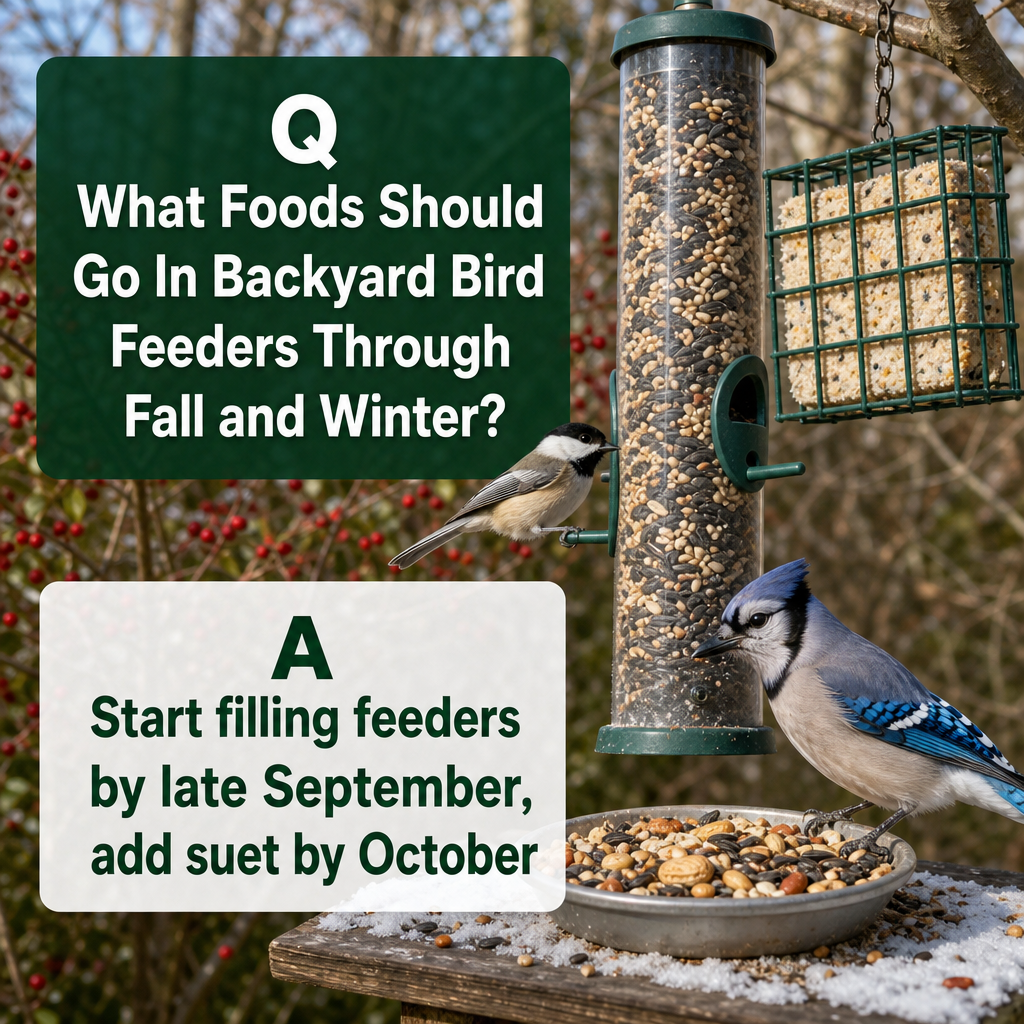
Filling feeders can start toward the end of September, before the first hard frost. This gives returning and wintering birds a reliable source already in place.
Black oil sunflower seed remains the single best all-purpose seed. More than 40 North American species eat it. Its thin shell keeps it accessible to smaller birds.
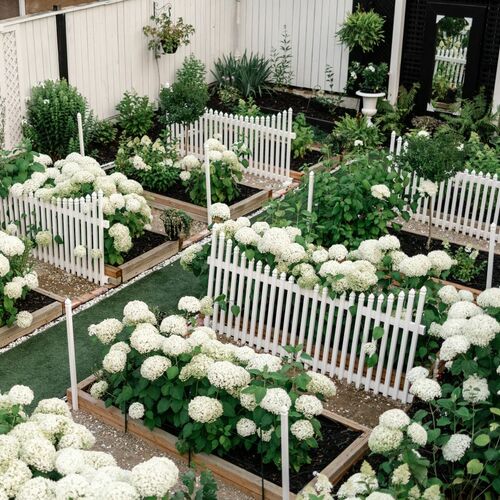
Feeders placed above a garden bed should stick to sunflower seed alone rather than a mixed blend. Birds are messy eaters. The millet, milo, and wheat filler common in cheap mixes gets kicked to the ground and can sprout as unwanted volunteers the following spring.
Sunflower seed offers only a modest edge against starlings. Starlings will eat it, but less eagerly than cracked corn or suet.
A feeder with a real starling problem does better switching to safflower seed or nyjer. Starlings largely avoid those seeds.
Suet is worth putting out by October. The safer modern version is a commercially rendered suet cake rather than a raw beef trimming wired to a branch. Raw fat can turn rancid and mat feathers.
Rendered suet holds its shape and keeps longer. Unsalted peanut butter mixed with cornmeal or oats is still a good high-fat option. Shelled peanuts or dried mealworms add variety.
Bread and doughnuts were once treated as acceptable side orders. They are now known to fill birds up with little nutritional value. They are better left out of the mix entirely.
Water matters as much as food once temperatures drop. A steady supply of unfrozen water draws birds that seed alone will not. A few roost boxes facing away from prevailing winds give them shelter on the hardest winter nights.