
Mid-Century Front Entry Makeover
This midcentury suburban home in the Seattle area came with an awkward layout and some uninspiring plantings. Working with the existing framework, designer Robin Parsons developed a carefully curated plant palette and installed better-functioning hardscape elements to create a dramatic yet inviting entryway that beckons you to come inside. Watch the video tour with Robin above or on our YouTube Channel to get even more insight into this front entry makeover.
|
| KEY GARDEN ELEMENTS | Garden Designer: Robin Parsons
|
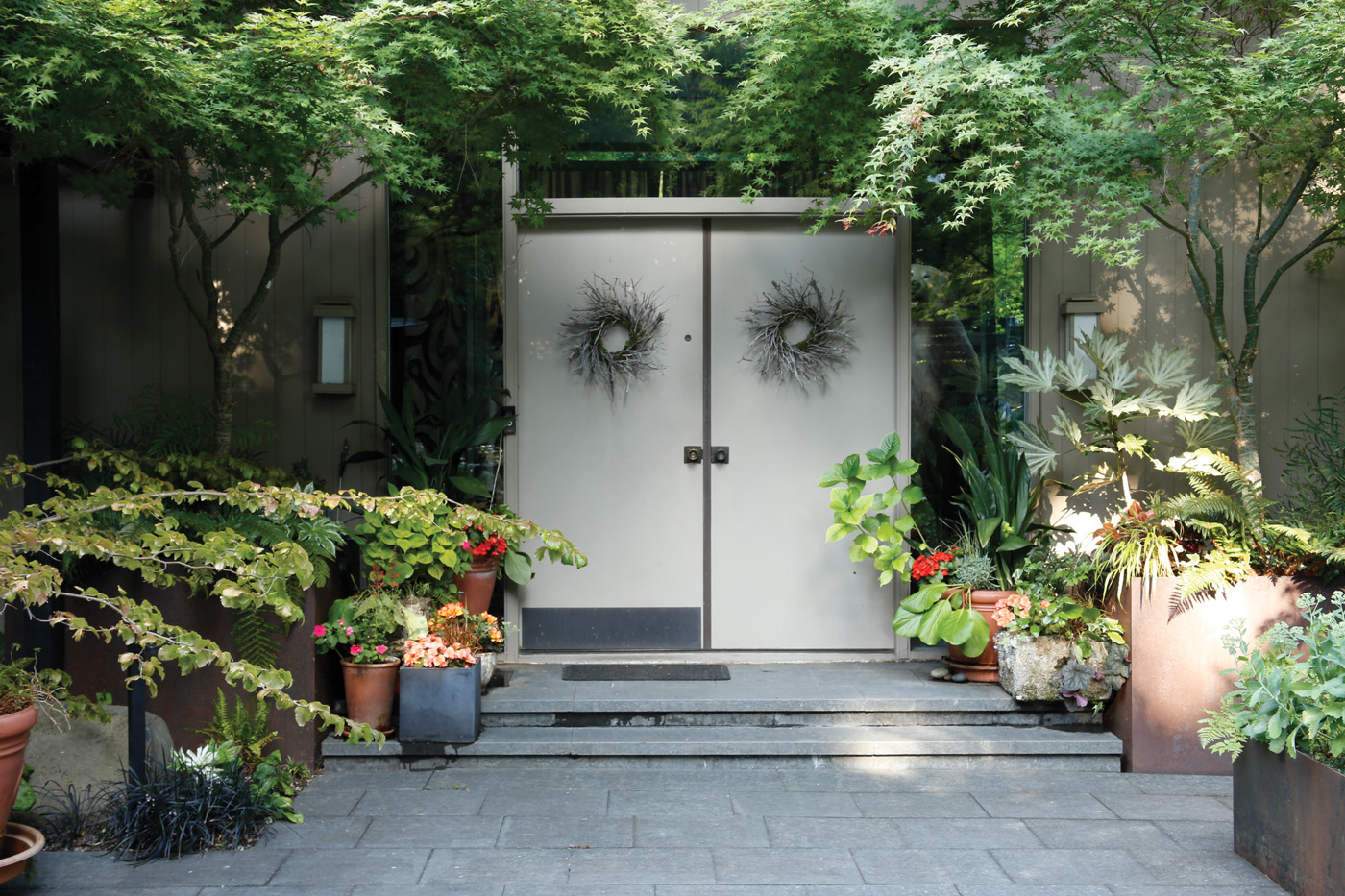
A front entry makeover that adds drama and definition
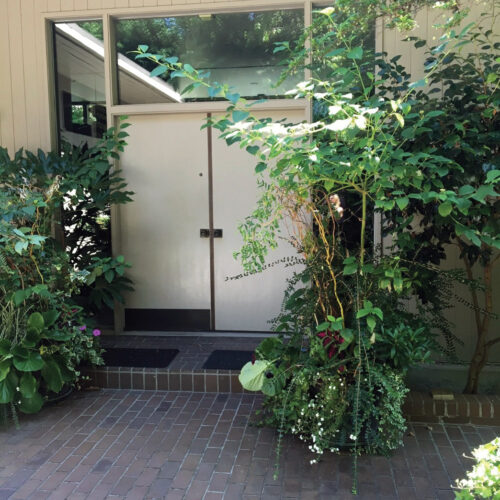
This mid-century modern home near Seattle was restored about 10 years ago. The front entrance is situated down a long, private drive that leads directly to a garage, with the front door right off the driveway. There is limited space for a garden of any kind, but some bedraggled shade plants and structurally compromised trees dominated the area, surrounded by bricks and concrete blocks.
 |
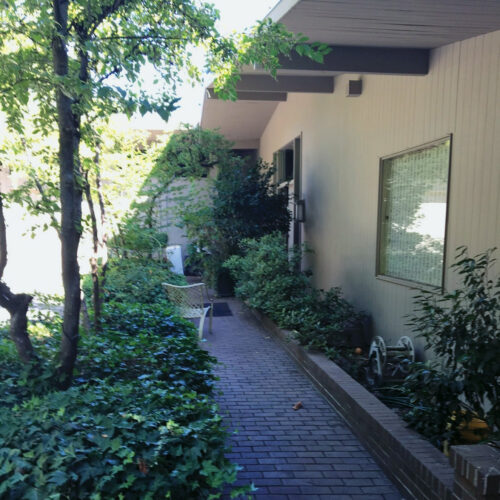 |
| Front entry and side walkway “before” photos | |
Working within the existing architecture of the house and courtyard, landscape designer Robin Parsons made this area brighter and more welcoming. Altering the hardscape to match but also soften the aesthetics of the home, adding plants that offer contrast and color, and bringing innovative solutions to the unique layout transformed this space into a truly distinctive entrance.
Add hardscape that complements the house and elevates the space
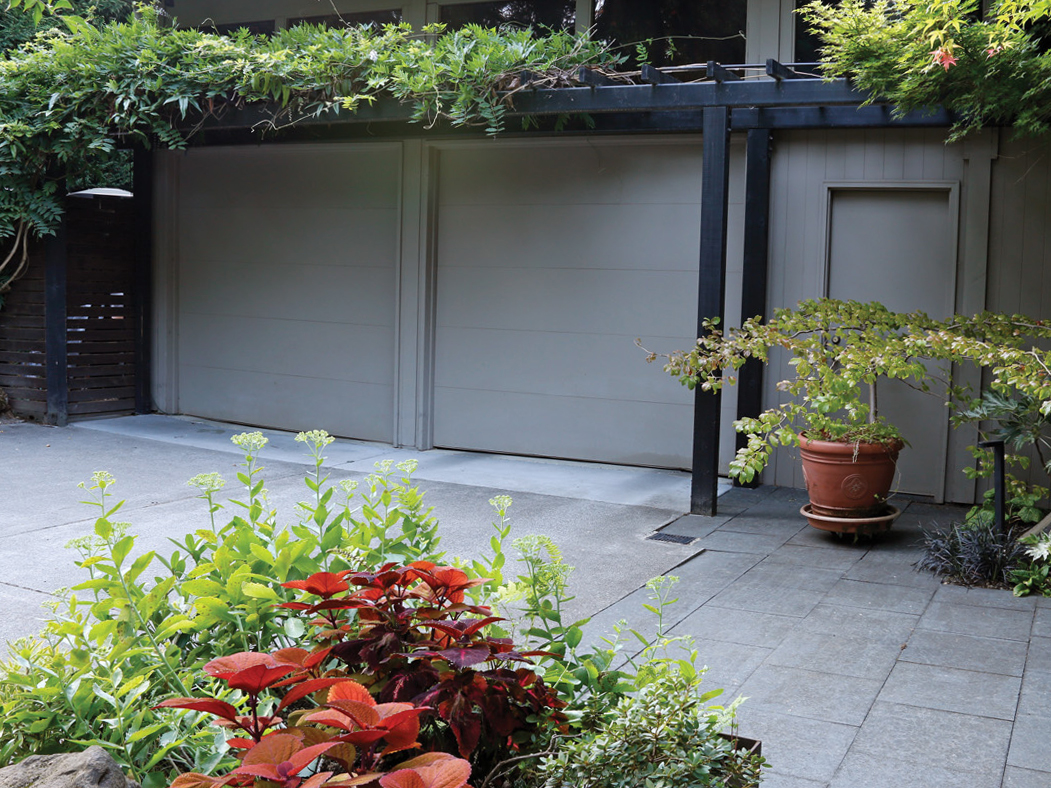
Robin replaced the small gray concrete blocks and faded brick that made up the entryway with large, sleek basalt pavers. Their slate gray hue adds depth but still marries with the existing colors of the driveway and house. The larger size of the pavers also makes the area look more open, with decorative river rocks between them and the planting beds on either side demarcating the hardscape and giving the space more definition. Replacing the concrete blocks that surrounded the planting beds with Corten steel also added a strong architectural element that makes for an elegant upgrade.
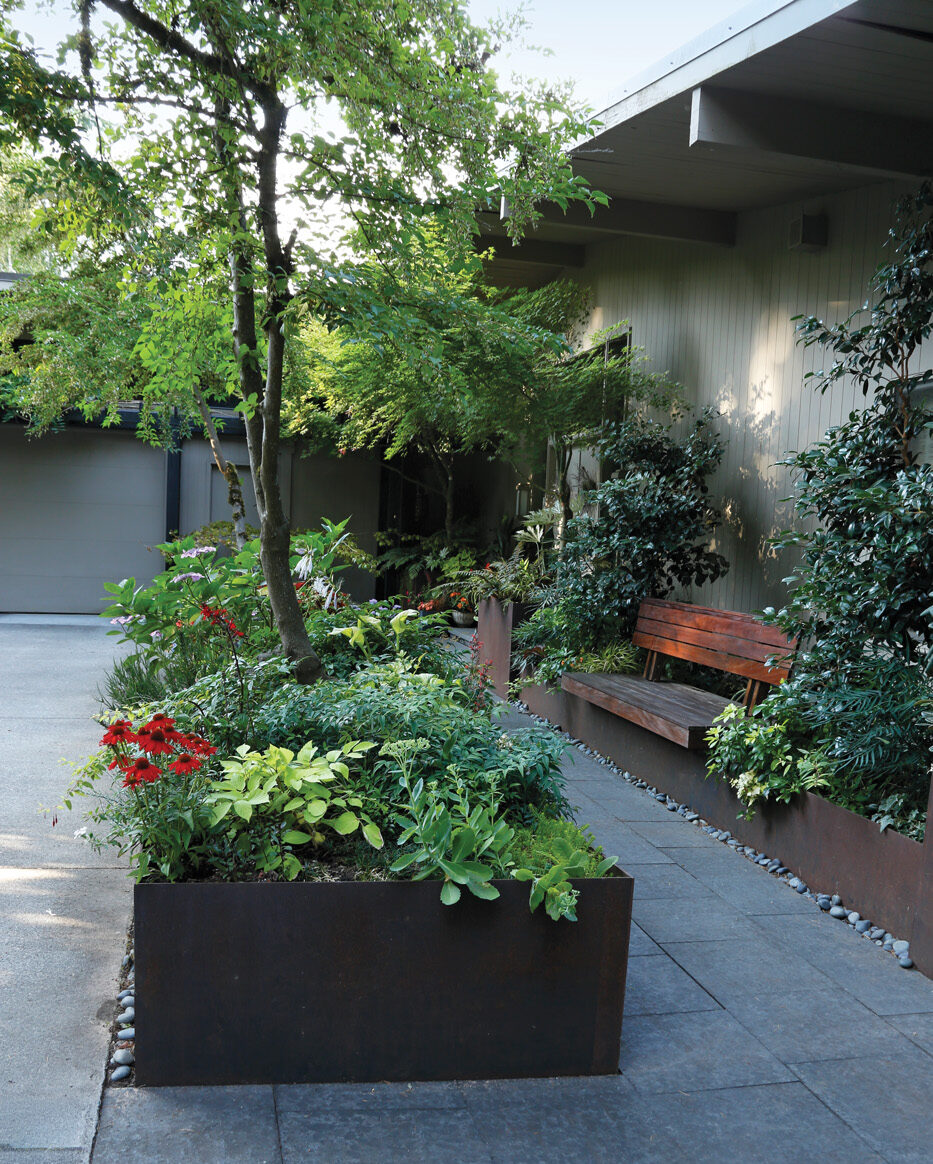
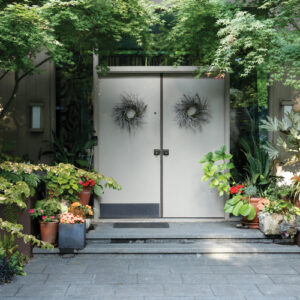
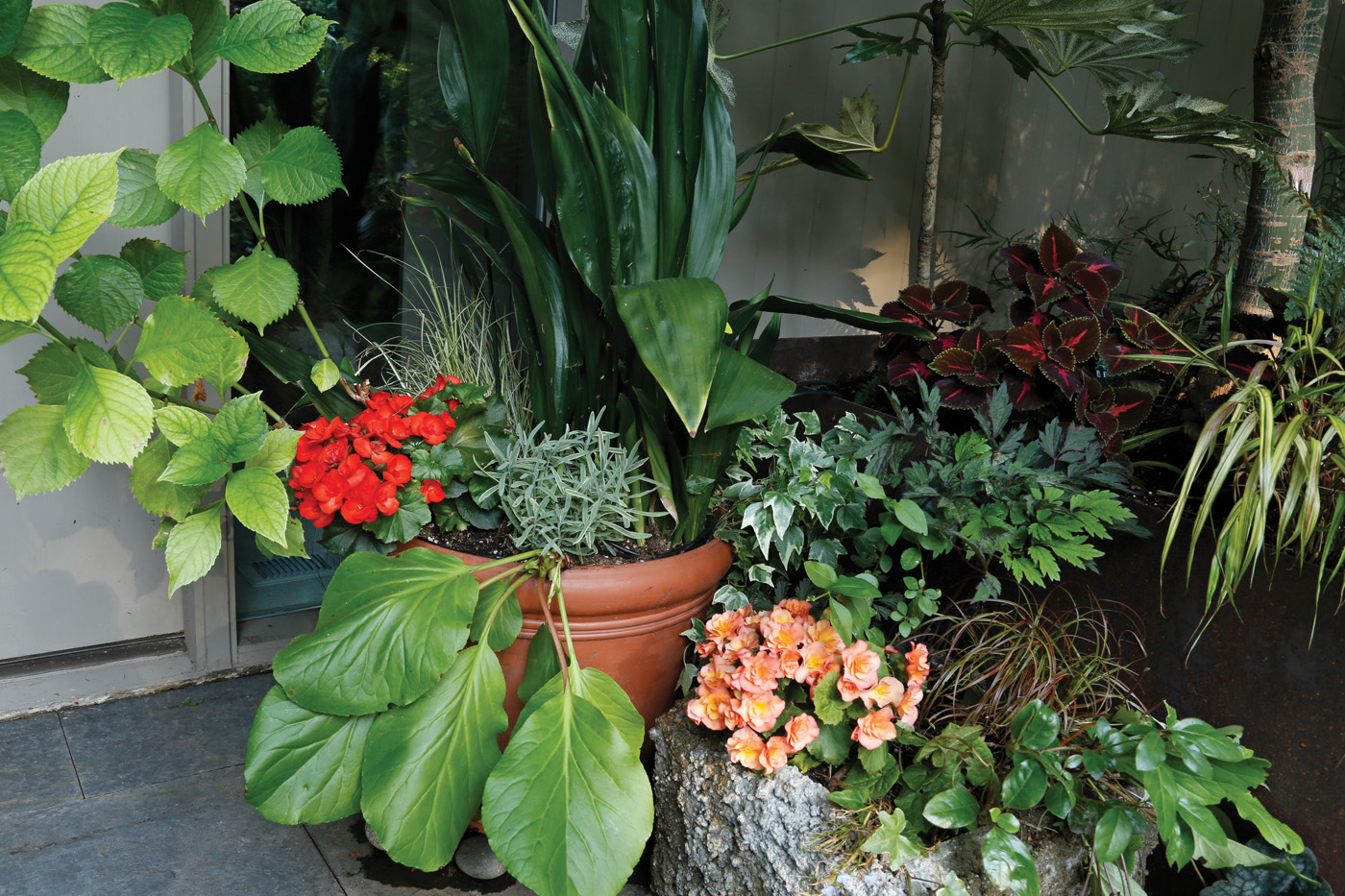
A hardwood Ipe bench placed in the middle of a planting bed close to the home provides a nook to rest and enjoy the shade, instantly turning this small corridor from a spot you just pass through into a livable space. It also visually elongates the area with its horizontal boards. New raised steps to the front door are flanked by artfully arranged containers and additional Corten planters that draw attention to the entryway while framing it. This otherwise unassuming entrance now stands out beautifully rather than getting lost in the background. While they match the aesthetics of the home, these hardscape elements soften its harsh lines into something warmer.
Learn More: See Plant IDs from This Entry Garden Makeover
Bring color to the shade with vibrant, textured plants
Two mature Japanese snowbell trees (Styrax japonicus, Zones 5–9) grew in the courtyard before the renovation. While the concrete blocks around them may give the appearance that they were planted in a raised bed, they are actually growing in-ground, as was the rest of the plant material (see “before” photos at top). The challenge was to build a garden around those trees that could soften the crisp lines of the planters and pavers while adding color and contrast.
Robin explains, “It’s a shade garden. So, I like to bring in lighter colors because they go forward in the landscape rather than receding. I wanted to balance the hardscape elements with soft, naturalistic plantings, because that’s what makes everything sing and stand out.” Lush foliage plants like ‘Soft Caress’ mahonia spill from the planters to provide a touch of textural contrast, while broader-leaved selections like ‘Spider’s Web’ Japanese aralia (Fatsia japonica ‘Spider’s Web’, Zones 7–10) make a bigger impression near the front door.
Add structure and interest with woodies
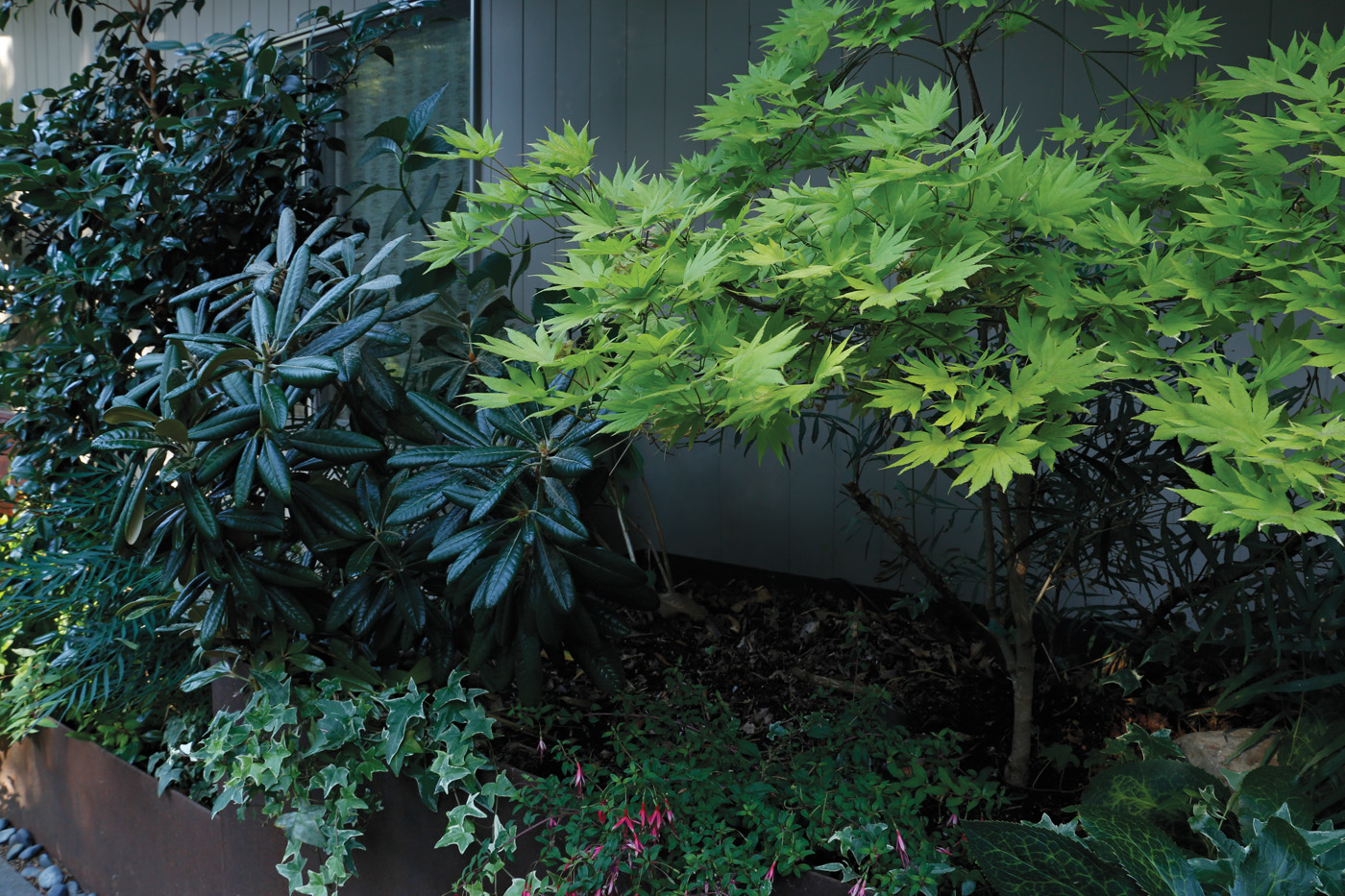
A golden full moon maple (Acer shirasawanum ‘Aureum’, Zones 5–9) lights up the dark recesses of the beds under the awning (above). Nearby, contorted branches from an ‘Unryu’ camellia (Camellia japonica ‘Unryu’, Zones 7–9) arch their way upward on either side of the bench, adding some twists and turns to contrast with the clean lines of the surrounding hardscape. There is so much going on with interesting foliage and plant forms that flowers almost aren’t necessary, but dots of bright red from fuchsias (Fuchsia cvs., Zones 6–11) and Sombrero® Salsa red coneflowers (Echinacea ‘Balsomsed’, Zones 4–9) are the icing on the cake.
Work with challenges, not against them
In such a small space, it was necessary to work around existing elements to make the entryway reach its full potential. The Ipe bench takes advantage of the shaded, narrow area between the house and Corten steel planter, which would otherwise be an odd stretch. The existing Japanese snowbell trees became assets instead of impediments as they provided an opportunity for additional plantings. When Robin swapped the concrete blocks for Corten steel, this bed was raised up along with the trees, so when you are coming down the sloped driveway, you see it sooner and more prominently.
Robin also installed an arbor that is covered in shade-tolerant vines, which unifies the area between the garage and front door (above). Despite the total overhaul, some of the existing plant material stayed, such as a container holding a gorgeous witch hazel (Hamamelis cv., Zones 4–9), which worked naturally with the colors and textures of the plants in the new design. By capitalizing on the site’s unique qualities, the redesign enhances the home’s modernist architecture while creating a front entrance that is warm, welcoming, and full of character.
|
| DESIGNER PLANT PICKS | |
|
Fine-Textured Plants for Shade |
|
| Balancing bold hardscape sometimes takes a delicate touch. The following plants are Robin’s favorites because they wow with their foliage alone, creating a strong but soft statement all season long. | |
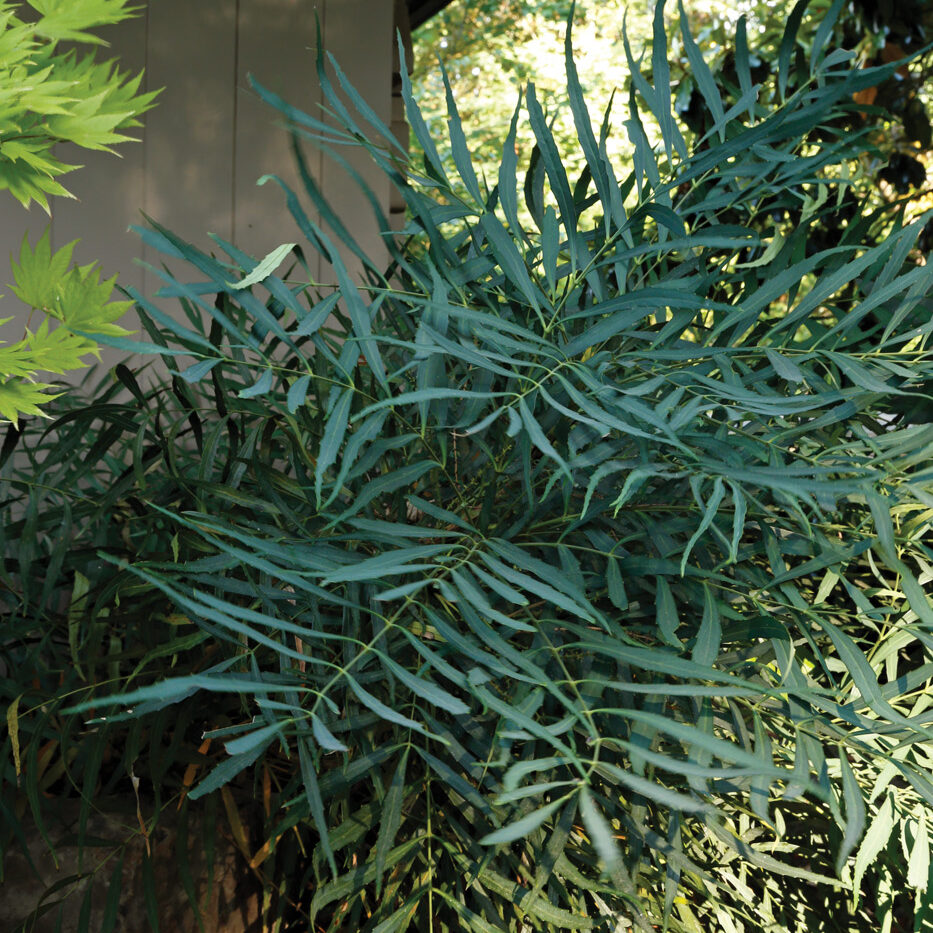 |
‘Soft Caress’ mahoniaMahonia eurybracteata ‘Soft Caress’
|
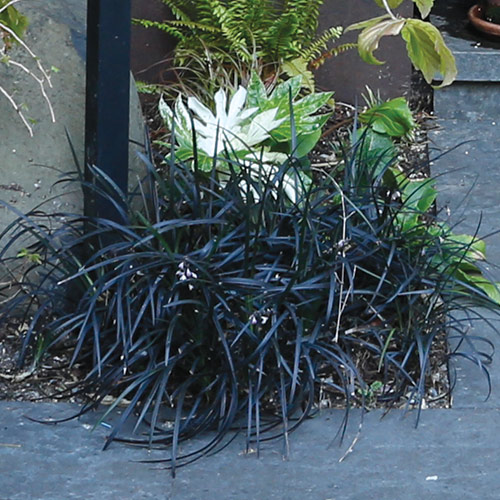 |
Black mondo grassOphiopogon planiscapus ‘Nigrescens’
|
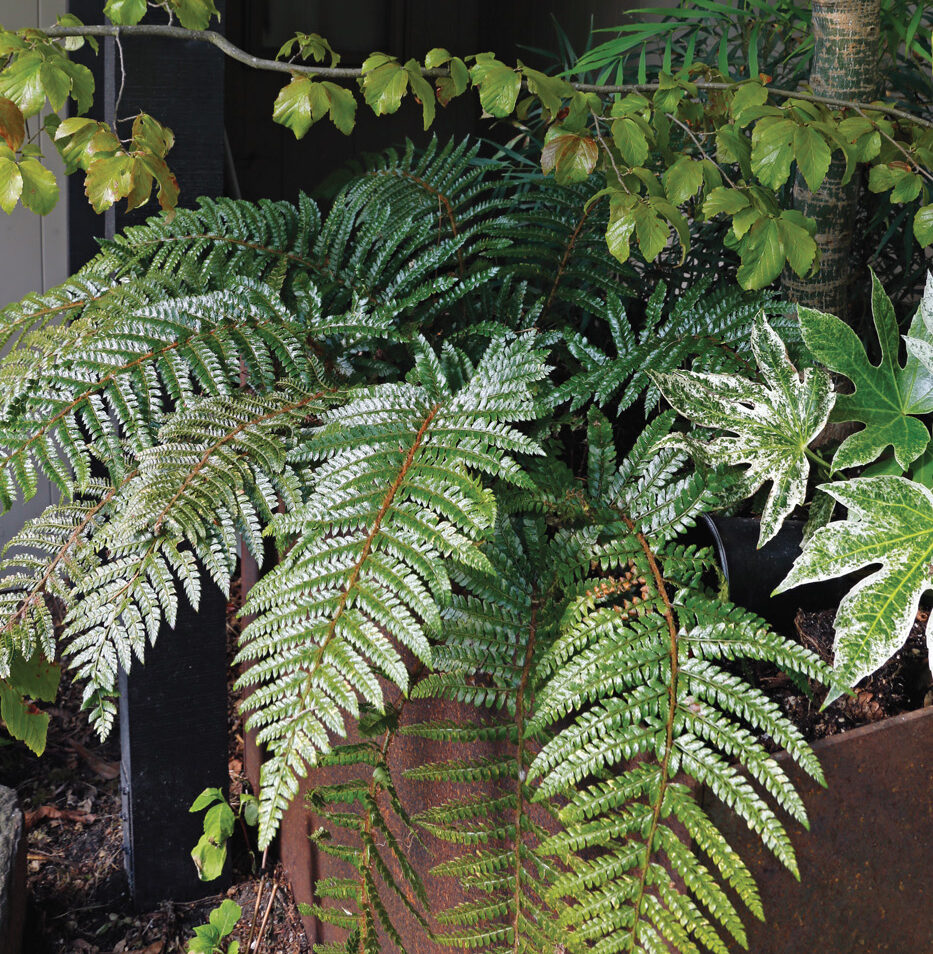 |
Tassel fernPolystichum polyblepharum
|
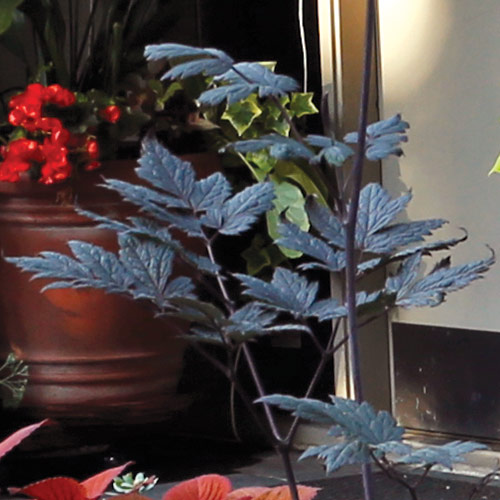 |
‘Brunette’ bugbaneActaea simplex ‘Brunette’
|
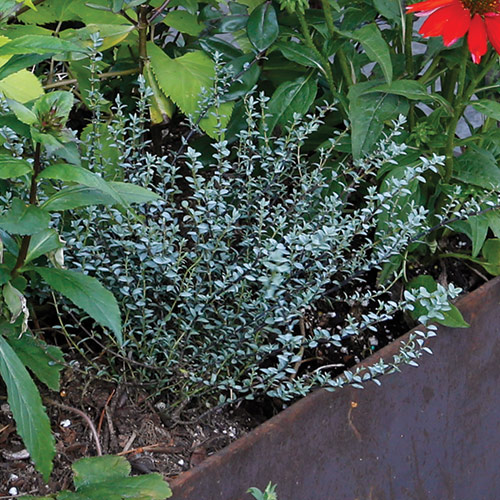 |
‘Quicksilver’ hebeVeronica pimeleoides ‘Quicksilver’
|
Robin Parsons is a member of the APLD and the owner and operator of Spring Greenworks, LLC, a landscape design company based in Seattle.
Photos, except where noted: Diana Koehm.
Diana Koehm is Fine Gardening’s content editor.
Learn More:
Subscribe to Fine Gardening Magazine
Watch More Garden Tours on YouTube
See More from the Fall Issue of Fine Gardening