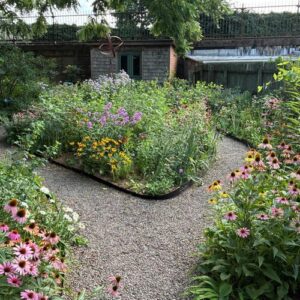

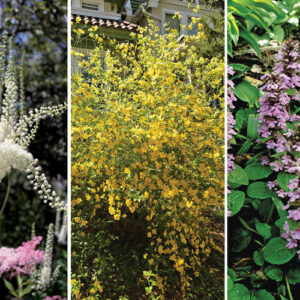

Today we’re visiting Nancy in Philadelphia, Pennsylvania (Zone 7b), where she has spent 10 years figuring out what will thrive in a small garden with an unusual mix of morning shade and intense afternoon sun. She has filled the space with naturalistic plantings chosen with pollinators in mind.
My small, naturalistic, 10-year-old garden in Philadelphia is designed to attract pollinators as much as people. In spring, it is a tranquil oasis filled with sweeps of green and purple, with shots of yellow throughout. But in high summer, the garden transforms into an in-your-face kaleidoscope of bright colors and almost human-height forms.
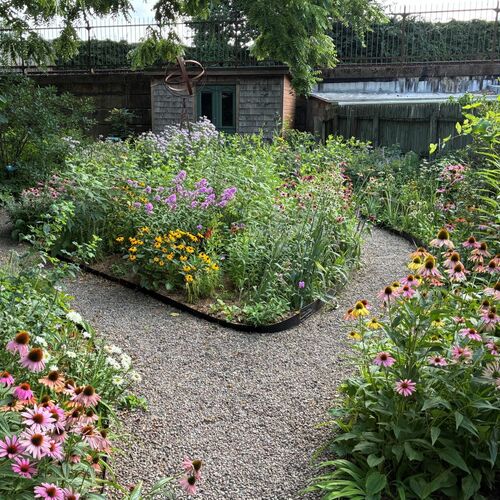
The key element is an oval-shaped bed I call the “meadow-ish” garden. It consists largely of native plants that grow vertically and attract pollinators. The bed gets morning shade followed by intense afternoon sun, so finding plants that thrive there has taken a lot of trial and error. Coneflowers, bee balm, rudbeckias, ironweeds, and lobelias have become some of my most dependable plants. I cut some of them back in May, but a few still need staking by late summer.
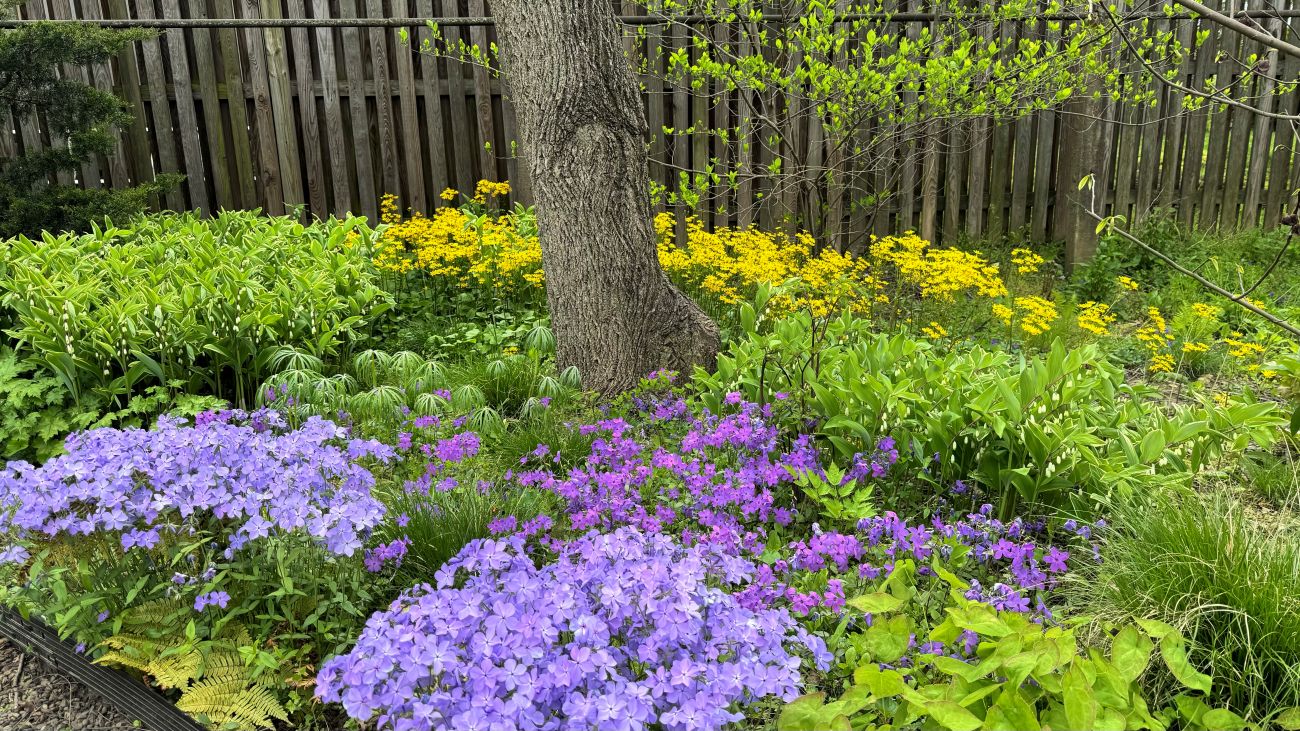
In spring my garden presents a tranquil visage with woodland phlox (Phlox divaricata, Zones 3–8), Solomon’s seal (Polygonatum biflorum, Zones 3–8), and golden ragwort (Packera aurea, Zones 3–8).
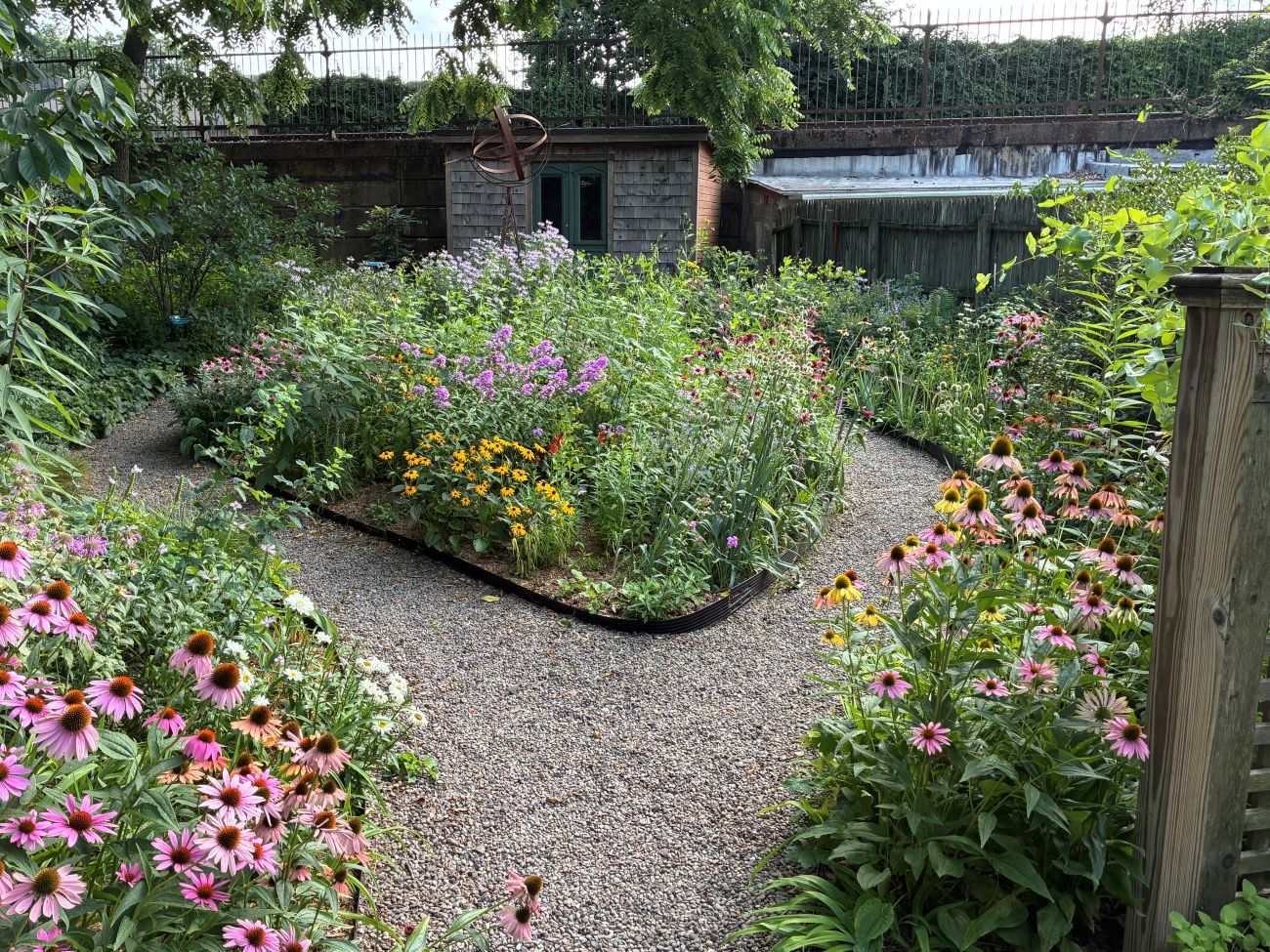
There is no lawn in this 0.11-acre plot. Instead, beds are filled with largely native perennials, with various coneflowers as key plants.
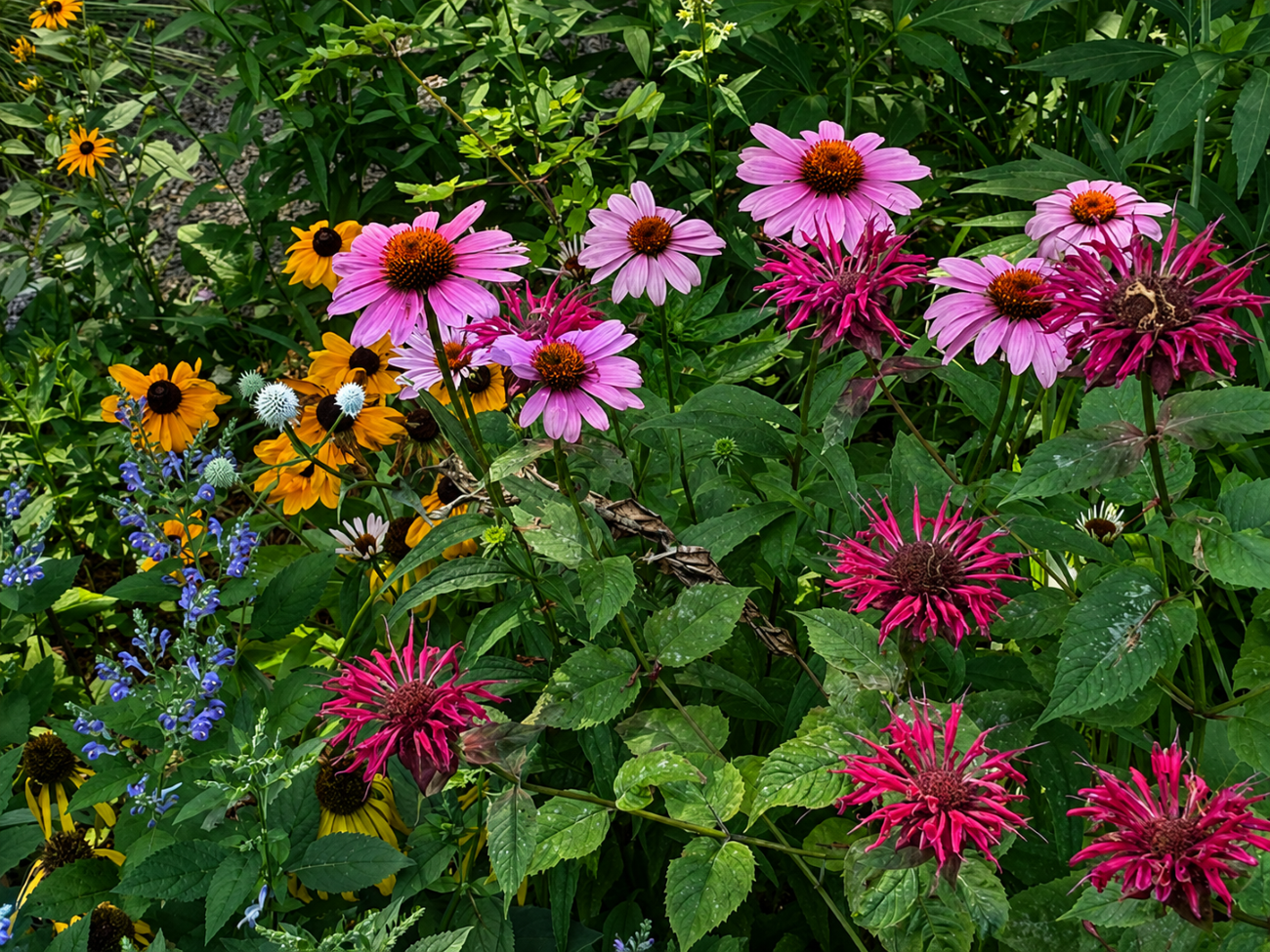
A close-up of the “meadow-ish” garden with downy skullcap, black-eyed Susan (Rudbeckia hirta, Zones 3–7), ‘Magnus’ coneflower (Echinacea purpurea ‘Magnus’, Zones 3–9), and ‘Raspberry Wine’ bee balm (Monarda ‘Raspberry Wine’, Zones 4–9)
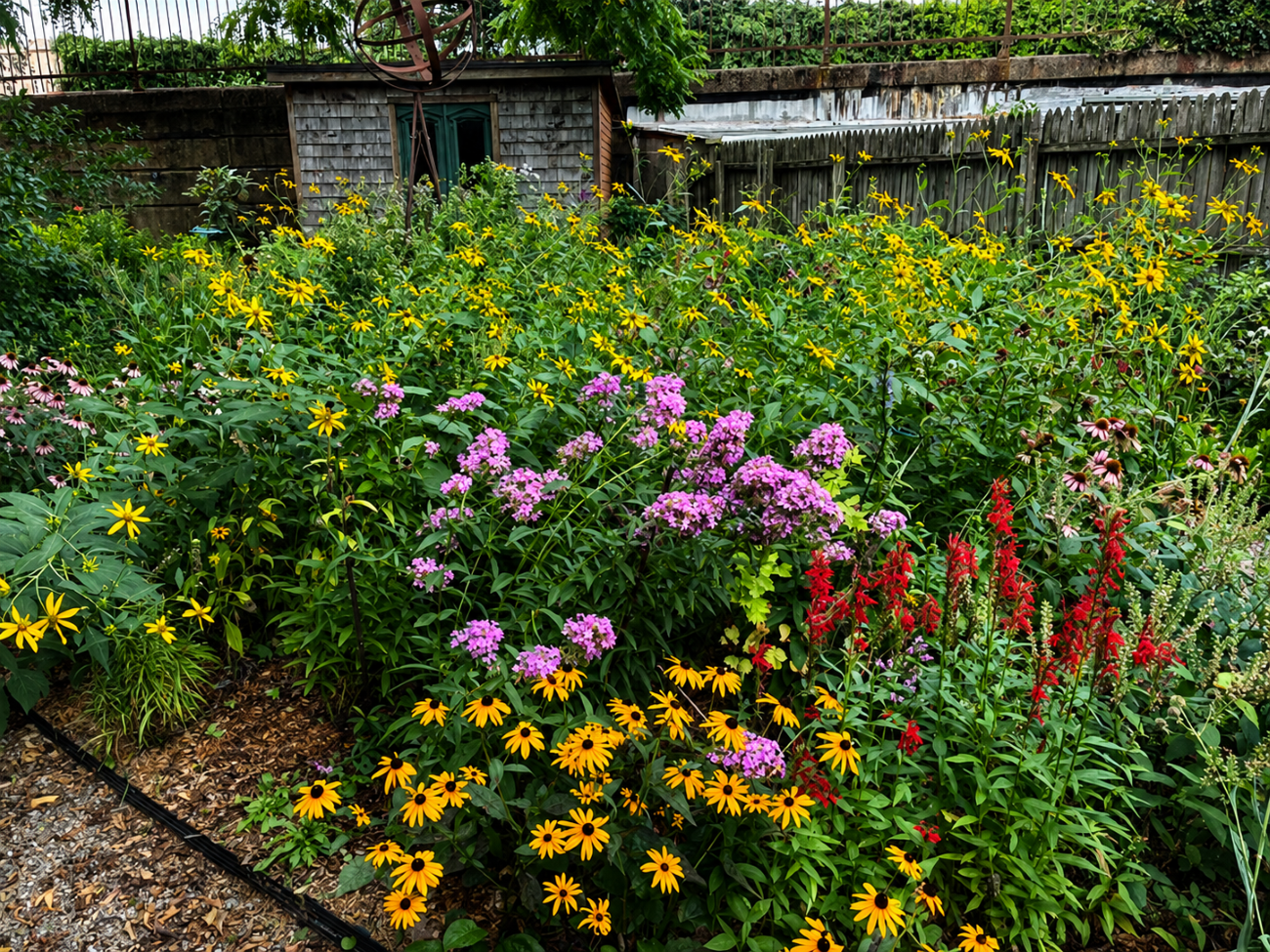
In late August, cutleaf coneflower in the back dominates the “meadow-ish” bed, which is also filled with orange coneflower, ‘Jeana’ garden phlox (Phlox paniculata ‘Jeana’, Zones 4–8), and cardinal flower.
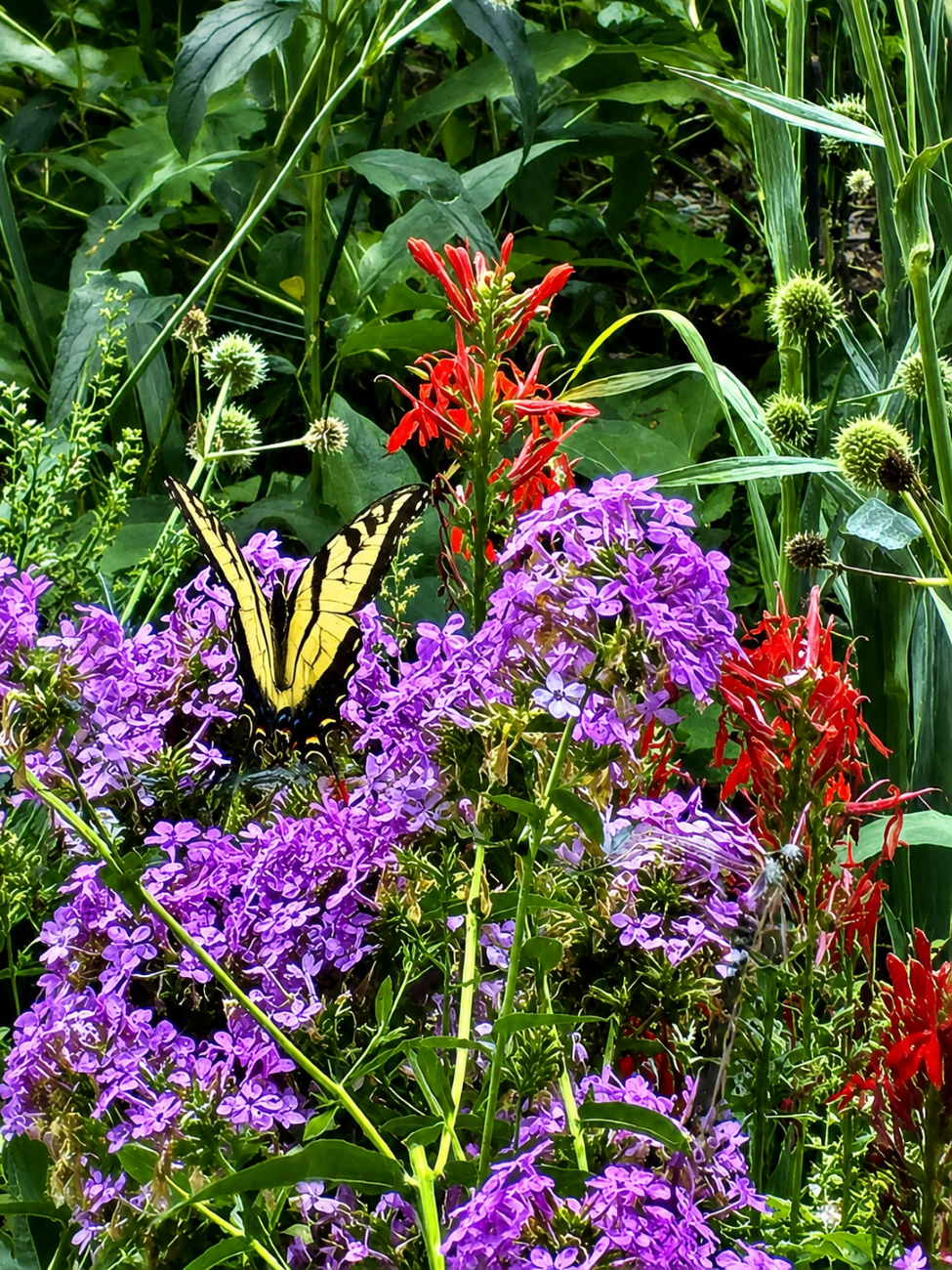
‘Jeana’ garden phlox lives up to its reputation as a pollinator attractor, especially for eastern tiger swallowtails.
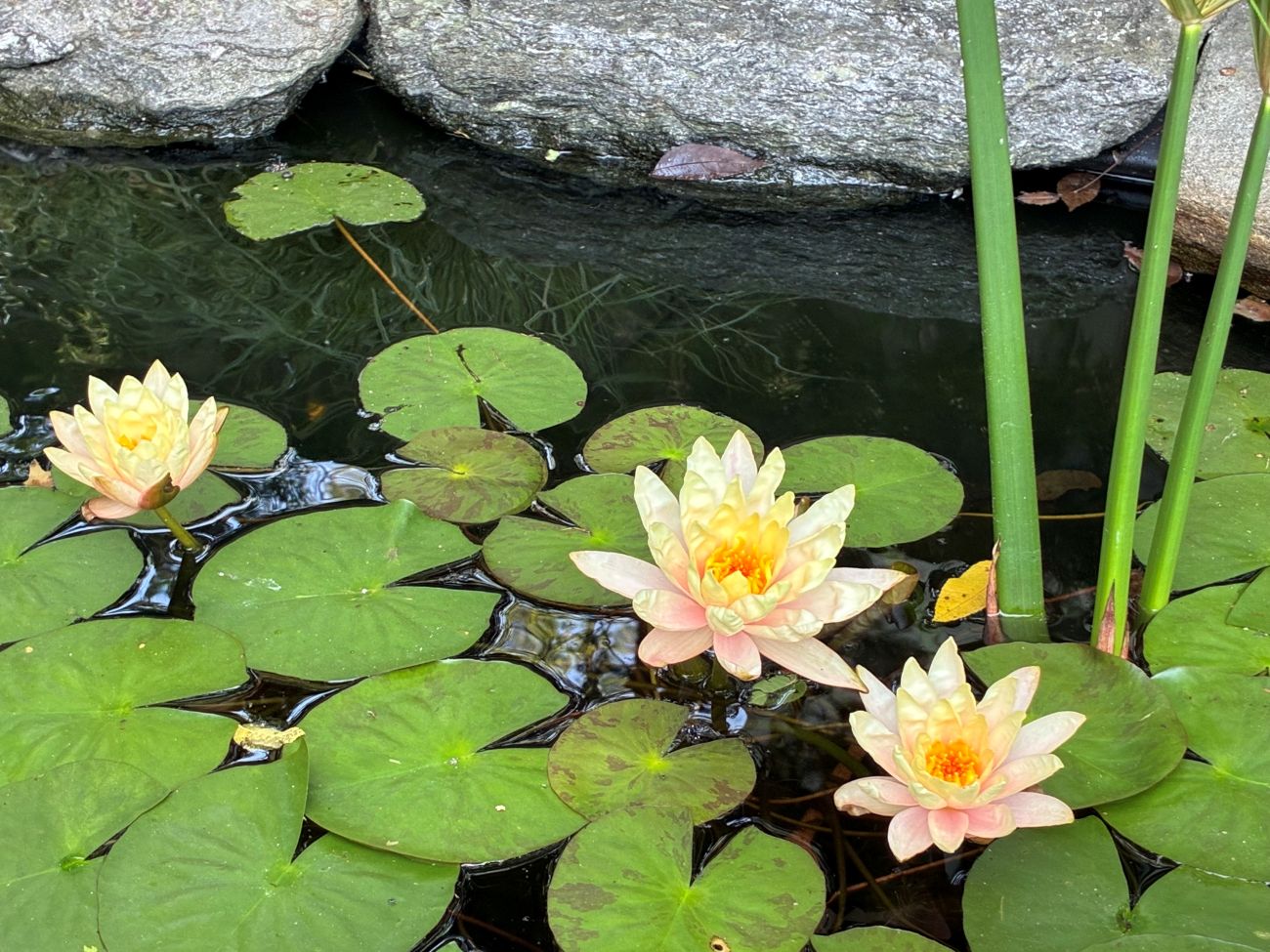
A small pond with a hardy water lily (Nymphaea hybrid, Zones 4–10) provides a place for birds—and feral cats!—to get a sip of water.
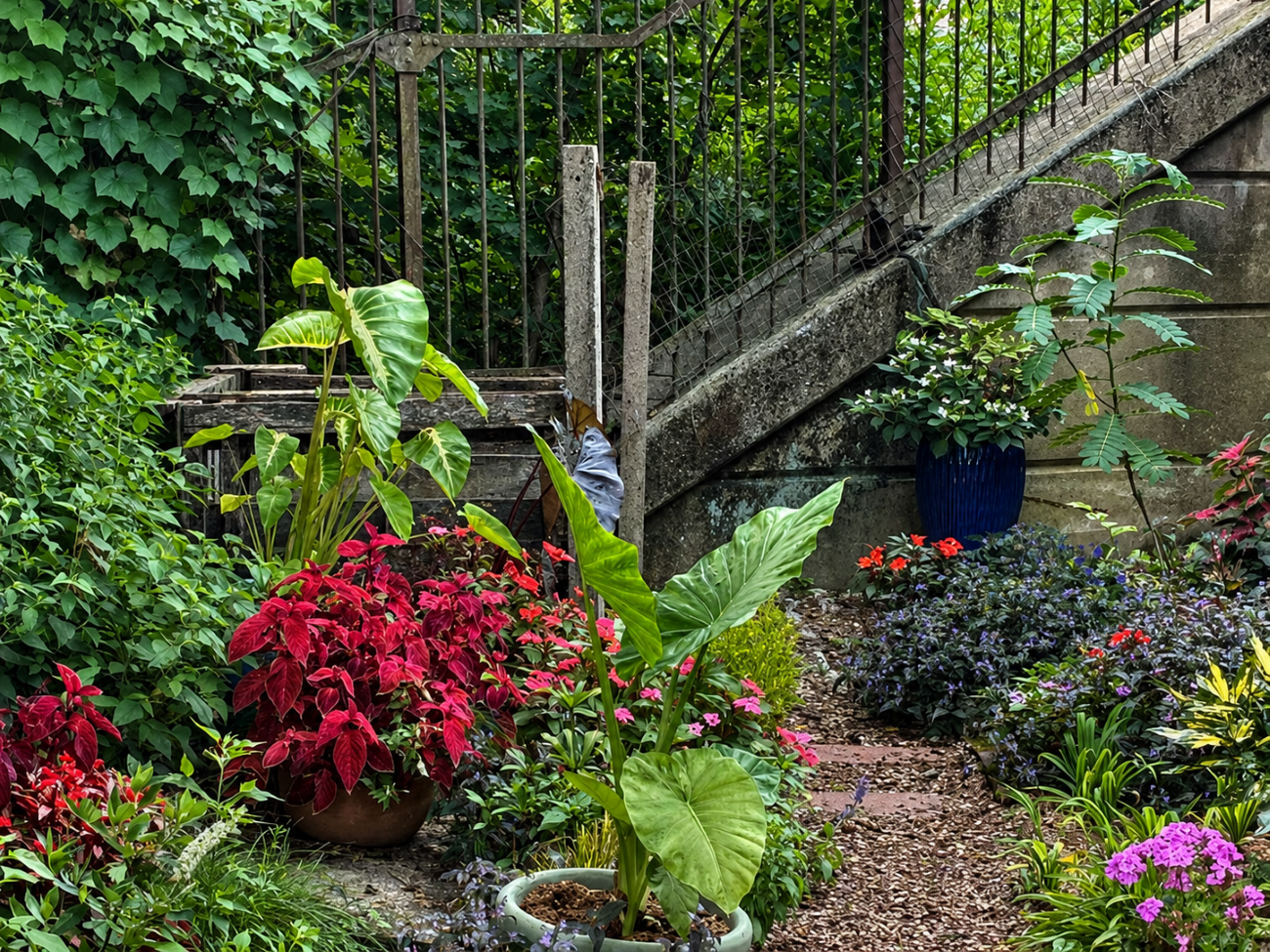
In this back area, which used to be a dumping ground, tropical plants—many grown in pots—provide shots of color. Elephant ears, coleus, impatiens, and caladiums fill the space, along with spotted widow’s tears (Tinantia pringlei, Zones 7–11), a purple-leaved pass-along plant in Northwest Philadelphia.
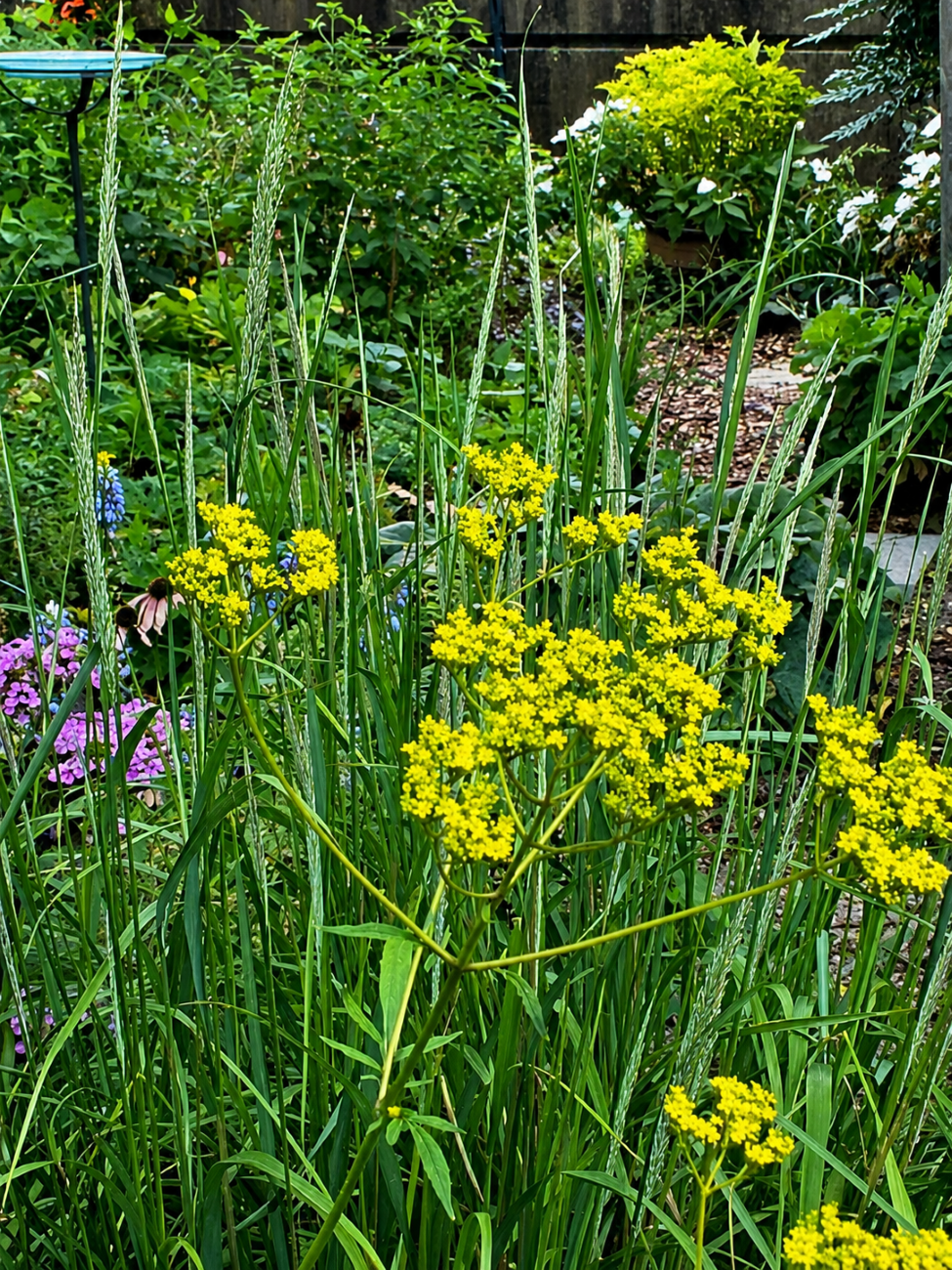
In late August, golden valerian (Patrinia scabiosifolia, Zones 5–8) stands in front of Korean feather reed grass (Calamagrostis brachytricha, Zones 4–9). I planted the grass after struggling with taller native grasses that repeatedly flopped in this part of the garden, and it has handled the partial shade well. Its plumes will turn pink in a few weeks.
Note: Korean feather reed grass can self-sow in some regions, so gardeners should check local recommendations before planting.
Thanks for sharing your garden with us, Nancy! The second photo is my favorite—the way the gravel path disappears into the planting makes this 0.11-acre space feel so much larger than it is. I also love the contrast between the quiet spring garden you describe and the almost wild abundance it reaches by late summer. I’d happily take another tour when fall color starts to take over.
We want to see YOUR garden!
Have photos to share? We’d love to see your garden, a particular collection of plants you love, or a wonderful garden you had the chance to visit!
To submit, fill out the Garden Photo of the Day Submission Form.
You can also send 5–10 photos to [email protected] along with some information about the plants in the pictures and where you took the photos. We’d love to hear where you are located, how long you’ve been gardening, successes you are proud of, failures you learned from, hopes for the future, favorite plants, or funny stories from your garden.
Do you receive the GPOD by email yet? Sign up here
Fine Gardening Recommended Products
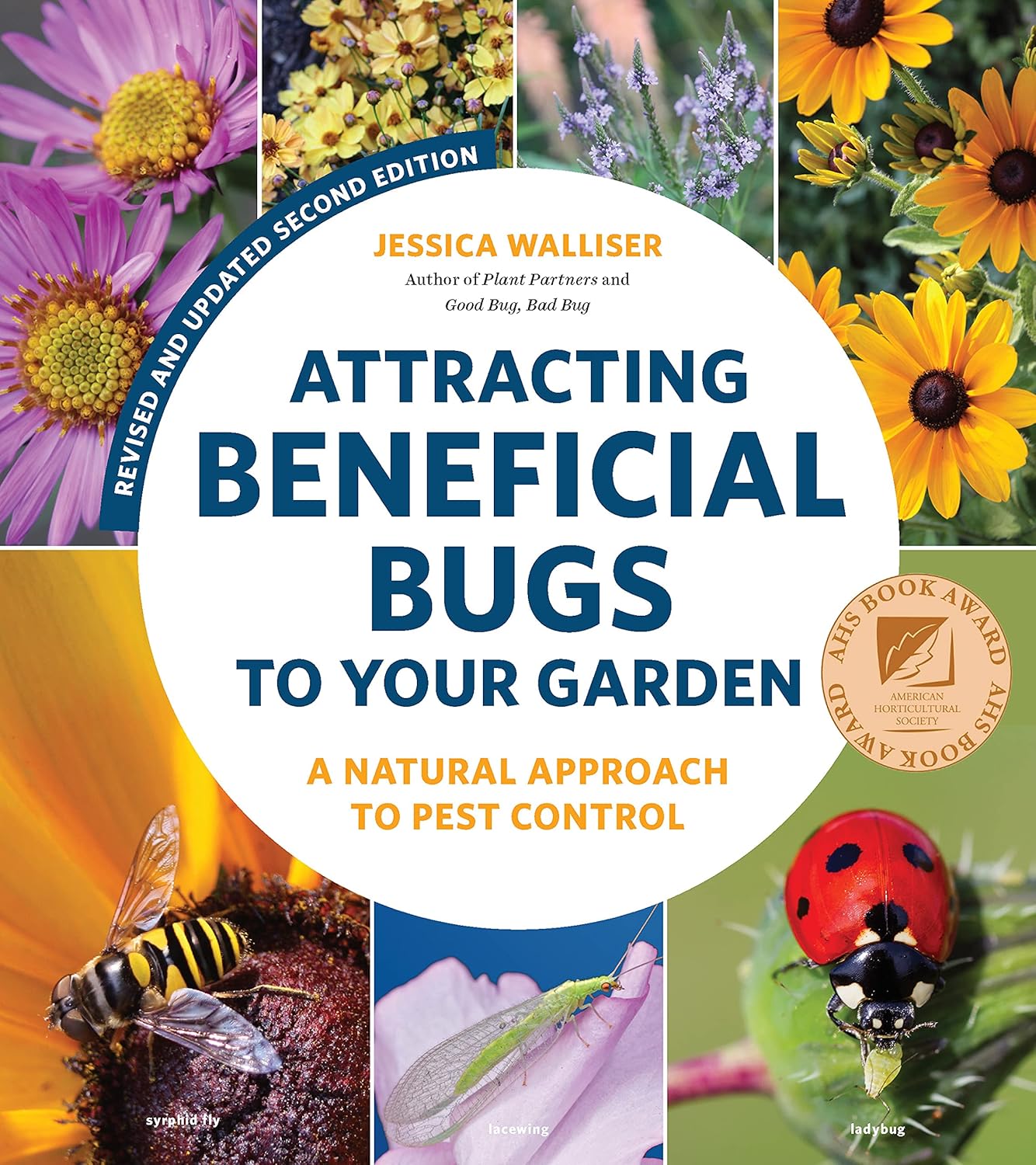
Attracting Beneficial Bugs to Your Garden, Revised and Updated Second Edition: A Natural Approach to Pest Control
Fine Gardening receives a commission for items purchased through links on this site, including Amazon Associates and other affiliate advertising programs.
This revised and updated edition of Jessica Walliser’s award-winning Attracting Beneficial Bugs to Your Garden offers a valuable and science-backed plan for bringing balance back to the garden. With this indispensable gardening reference—now updated with new research, insights, and voices—learn how to create a healthy, balanced, and diverse garden capable of supporting a hard-working crew of beneficial pest-eating insects and eliminate the need for synthetic chemical pesticides.
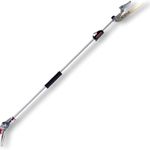
ARS Telescoping Long Reach Pruner
Fine Gardening receives a commission for items purchased through links on this site, including Amazon Associates and other affiliate advertising programs.
Telescopes from 4 to 7′. Cut and Hold (160) Blades. Drop forged blades for unsurpassed long lasting sharpness. Lightweight, 2.3 lbs., for continued use. Perfectly balanced for easy pruning.
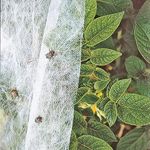
Gardener’s Supply Company Summerweight Fabric Plant Cover
Fine Gardening receives a commission for items purchased through links on this site, including Amazon Associates and other affiliate advertising programs.
Ideal for summertime pest control, this garden cover effectively screens out Japanese beetles, potato beetles, cabbage worms, leaf miners, carrot flies and most vine borers. It transmits 97.6% of the light to your plants without allowing heat build-up, and it provides cold protection down to 41° F, to extend your growing season.