

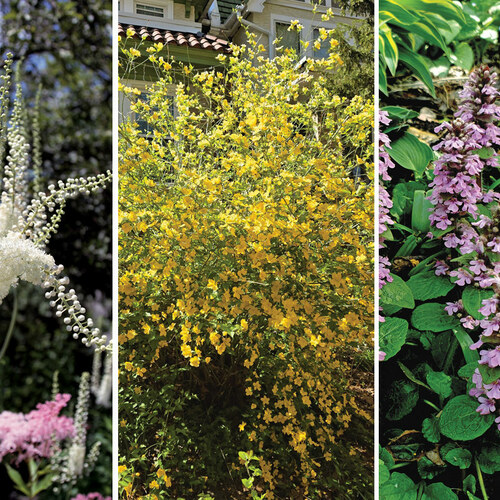
Some gardeners see shade as a limitation and seem convinced that only a few things will grow in the spots where traditional turfgrass struggles. But for every shaded microclimate in the natural world, there are plants that have found ways to thrive and make the most of the resources available. So, whatever your landscape’s shady circumstances are, you can draw inspiration from nature to find a solution.
Best problem-solving plants for challenging shade gardens
I’ve chosen a few of my favorite problem-solving plants for low-light conditions to get your thinking process started. I hope you will be inspired to find some fun, new-to-you plants perfectly suited to flourish no matter what the dark corners of your yard throw at them.
Read More: Dealing with a Sudden Loss of Shade
Seek out stalwarts that take dry shade and root competition in stride
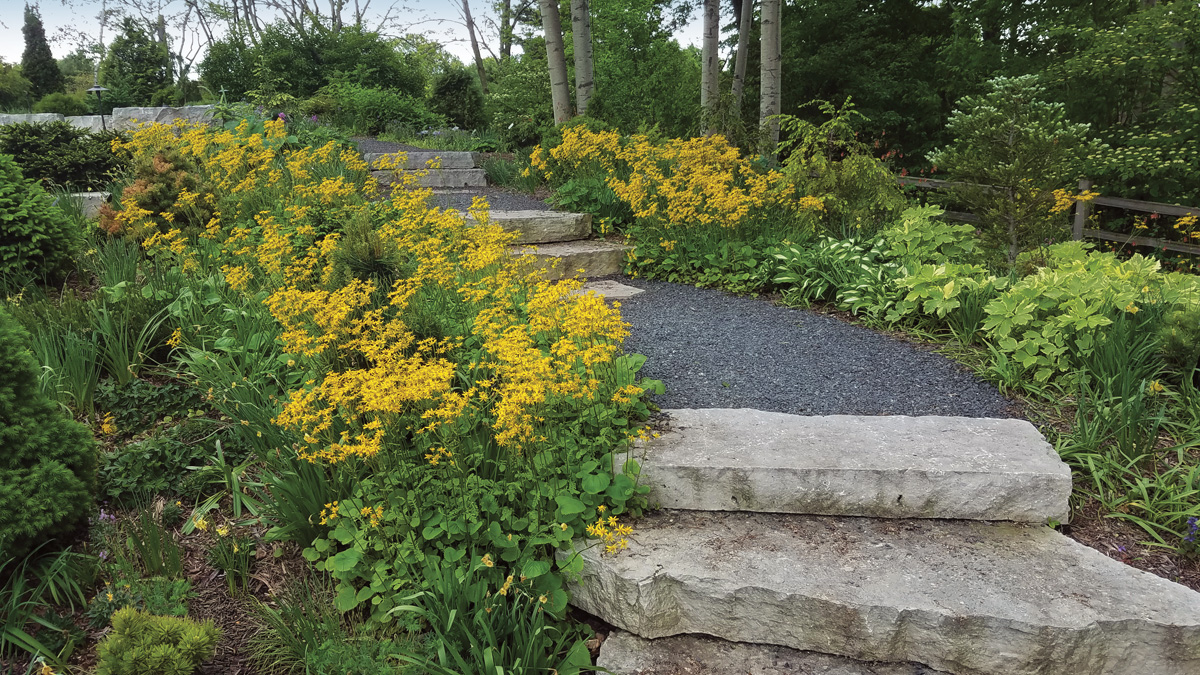
Golden ragwort
Name: Packera aurea
Zones: 3–8
Size: 6 to 30 inches tall and 6 to 18 inches wide
Conditions: Full sun to partial shade; average to wet soil
Native range: Eastern North America
An excellent contender in the battle with tree roots is golden ragwort, which I first planted in the road verge under mature trees. It withstood a nightmare combination of droughty, compacted soil; dense surface roots; and almost impenetrable summer shade. Despite those obstacles, a small clump spread by both seed and rhizome to fill the area and delight the neighborhood with masses of bright, cheery flowers in early spring. Use it in a spot where you will appreciate its ability to spread quickly. You’ll find that it is easy to divide and that it amiably allows other hearty perennials to emerge through its carpet of glossy, dark green foliage. Golden ragwort is one of the few larval food sources for the northern metalmark butterfly, adding to its ecological value.
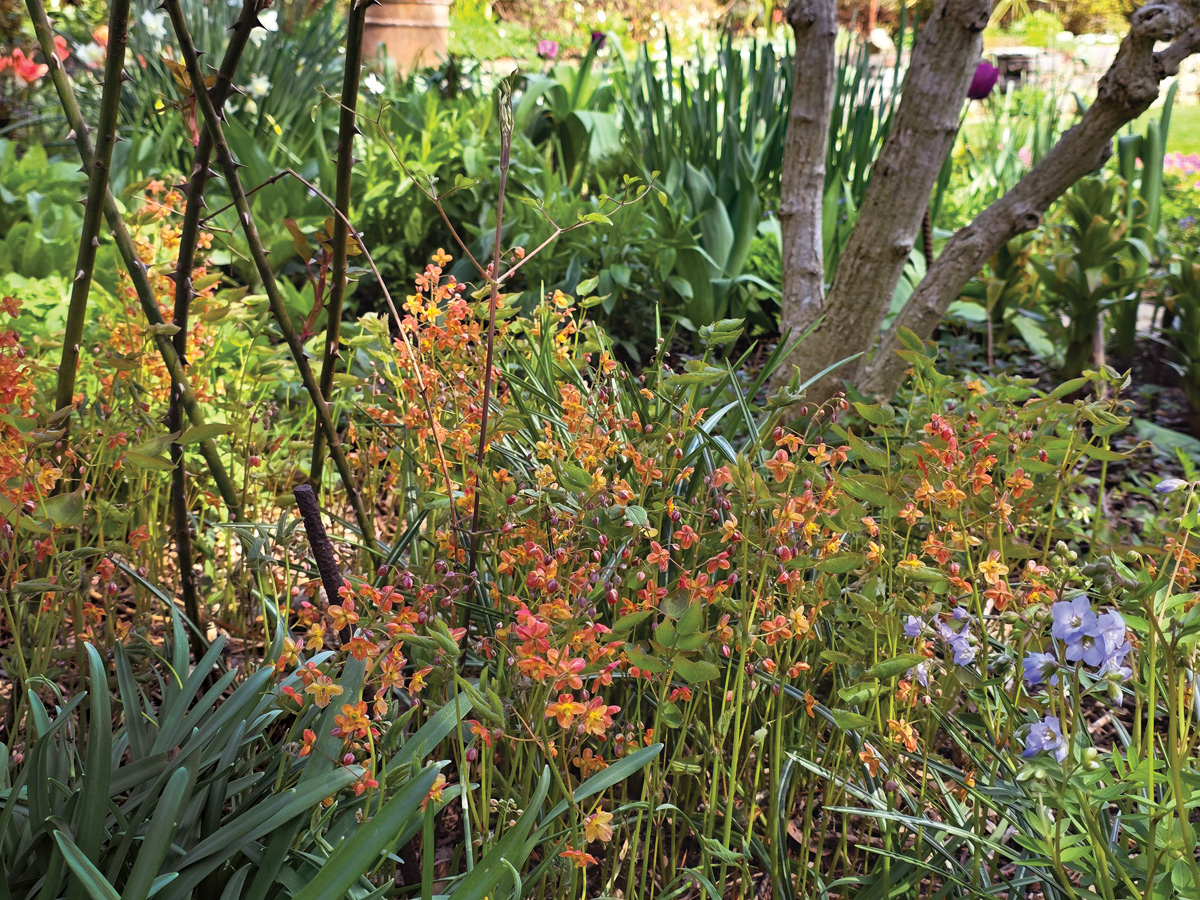
Warley’s epimedium
Name: Epimedium × warleyense
Zones: 4–8
Size: 9 to 12 inches tall and wide
Conditions: Partial to full shade; dry to average soil
Native range: Garden origin hybrid
Warley’s epimedium and its cultivars also offer superb drought resistance, and this beauty is stronger than its floating flowers belie. The blooms offer a unique pairing of burnished orange-red sepals and spurred yellow petals, bringing small flashes of color to shady areas from mid- to late spring.
This deer- and rabbit-resistant plant thrives in moist, fertile, well-drained soil but adapts readily to average, nutrient-lean, or even dry conditions as long as there is adequate drainage. Its extensive, wiry root system coexists with tree roots quite admirably. Not all epimediums have this hybrid’s drought tolerance, inherited from predecessors that evolved in rocky soil with limited water. A thick, waxy cuticle reduces water loss through the leaves, and the plant can store water in its root tissues and even lower its metabolic rate during droughts to conserve energy.
Listen: Super Cool Plants Podcast Episode 5 | Shade-Loving Plants for Tough Conditions
For woodland gardens, find shade plants that are adaptable but not overly competitive
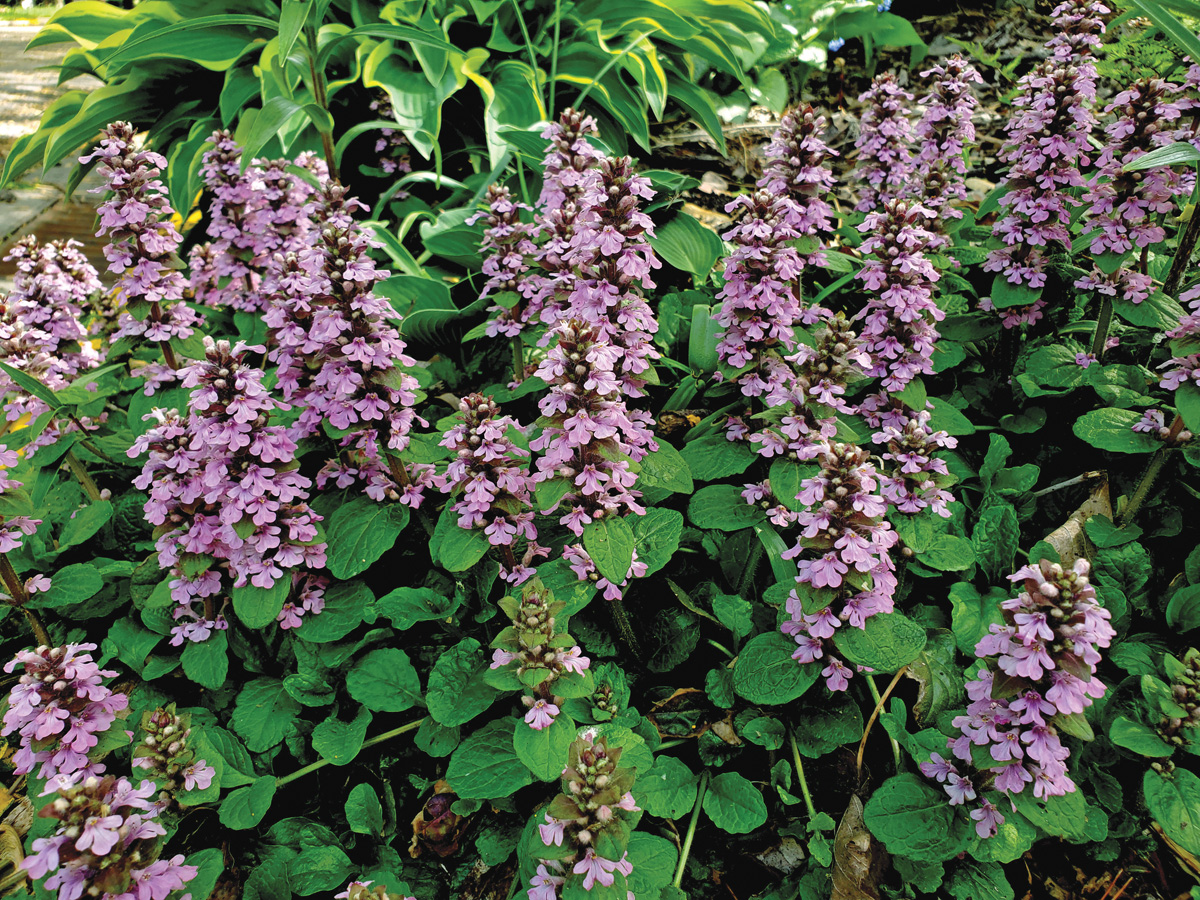
Meehan’s mint
Name: Meehania cordata
Zones: 4–8
Size: 6 to 10 inches tall and 12 to 18 inches wide
Conditions: Partial to full shade; moist to dry, well-drained soil
Native range: Central and Eastern United States
Meehan’s mint makes an excellent ground cover and edger because it is not an aggressive spreader. The plants expand slowly outward via a mat of shallow, stoloniferous roots, so transplanting and sharing takes just a scoop of the trowel. When the neighbors admire it, you can confidently pass it along knowing that it will never become a rampant problem for the recipient.
In early spring, its flowers are the most delicious shades of rose-pink to violet-purple, and the rich green, semi-glossy foliage looks great until the snow flies. I tried it with trepidation along sidewalk edges and in the hellstrip, two notoriously terrible locations for plant survival. It managed beautifully for years, confirming its durability.
Woodland phlox
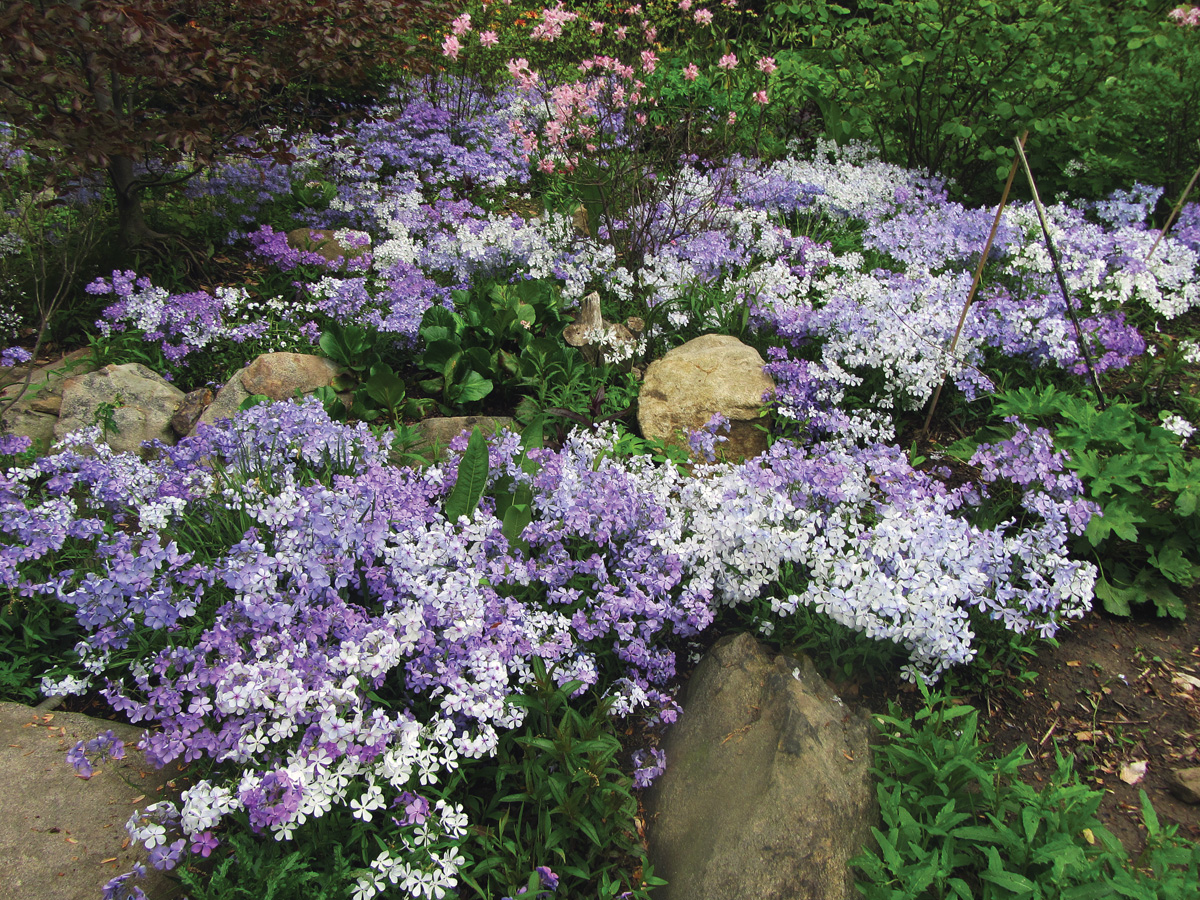
Name: Phlox divaricata
Zones: 3–8
Size: 9 to 12 inches tall and wide
Conditions: Partial to full shade; well-drained soil
Native range: Eastern North America
I have always thought of woodland phlox as a shade-tolerant plant, but it also does very well in the transitional trees-to-lawn perimeter between shade and sun. Like Meehan’s mint, there is a deceptively delicate look to its airy flowers, but this plant is more sturdy than it appears, especially once it’s established. It is considered ephemeral or semi-ephemeral because the low-growing mounds of foliage are all that remain after the lavender to white spring flowers decline. However, this carpet does not deter later-emerging plants from pushing through. Perhaps one of woodland phlox’s greatest attributes is that it is an important early nectar source for bees, butterflies, moths, and hummingbirds. Mt. Cuba Center’s trials ranked the cultivar ‘Blue Moon’ as being equally robust as the straight species, so go ahead and mix a few into mass plantings for pops of darker blue flowers.
Turn to versatile, moisture-loving plants to deal with challenging wet shade conditions
Sugar Shack® buttonbush
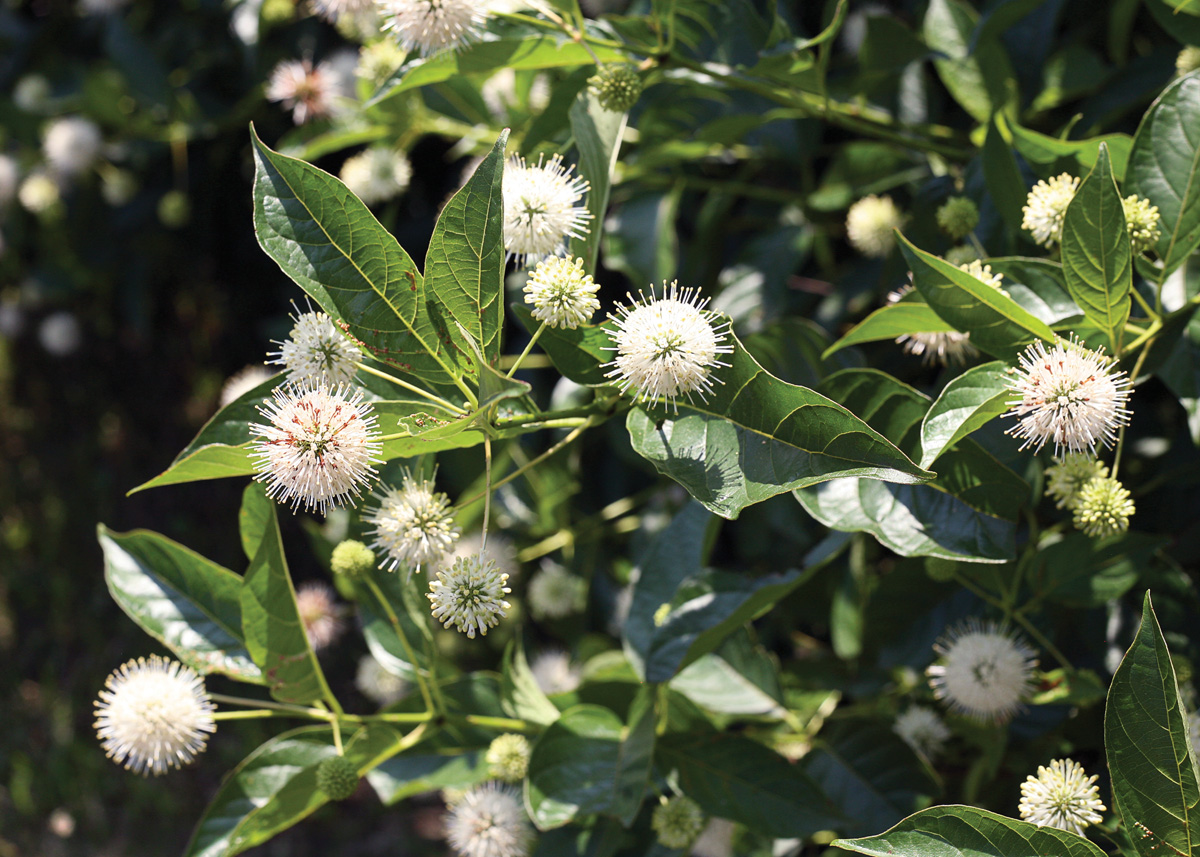
Name: Cephalanthus occidentalis ‘SMCOSS’
Zones: 4–10
Size: 3 to 4 feet tall and wide
Conditions: Full sun to partial shade; moist to wet soil
Native range: Central America and eastern and southern North America
I must confess to loving garden oddities, and Sugar Shack® buttonbush delivers. Its bountiful blooms resemble pincushions and attract hummingbirds, butterflies, and other pollinators from early to late summer. The rosy red fruit that follows is just as showy and can persist through winter for seasonal interest. Glowing burgundy fall foliage is an added bonus.
This native of marshes and wetlands doesn’t mind periodically wet feet, making it a stellar choice for rain gardens, bioswales, or low spots that hold water in spring and dry up in summer. Sugar Shack® is a sturdy, compact cultivar that requires little to no maintenance, but it can reach up to 4 feet tall and wide, so be sure to account for that mature size when you plant it. If it starts to decline, it can be coppiced and revitalized. For a smaller space, compact varieties that are just as durable are available.
Astilboides
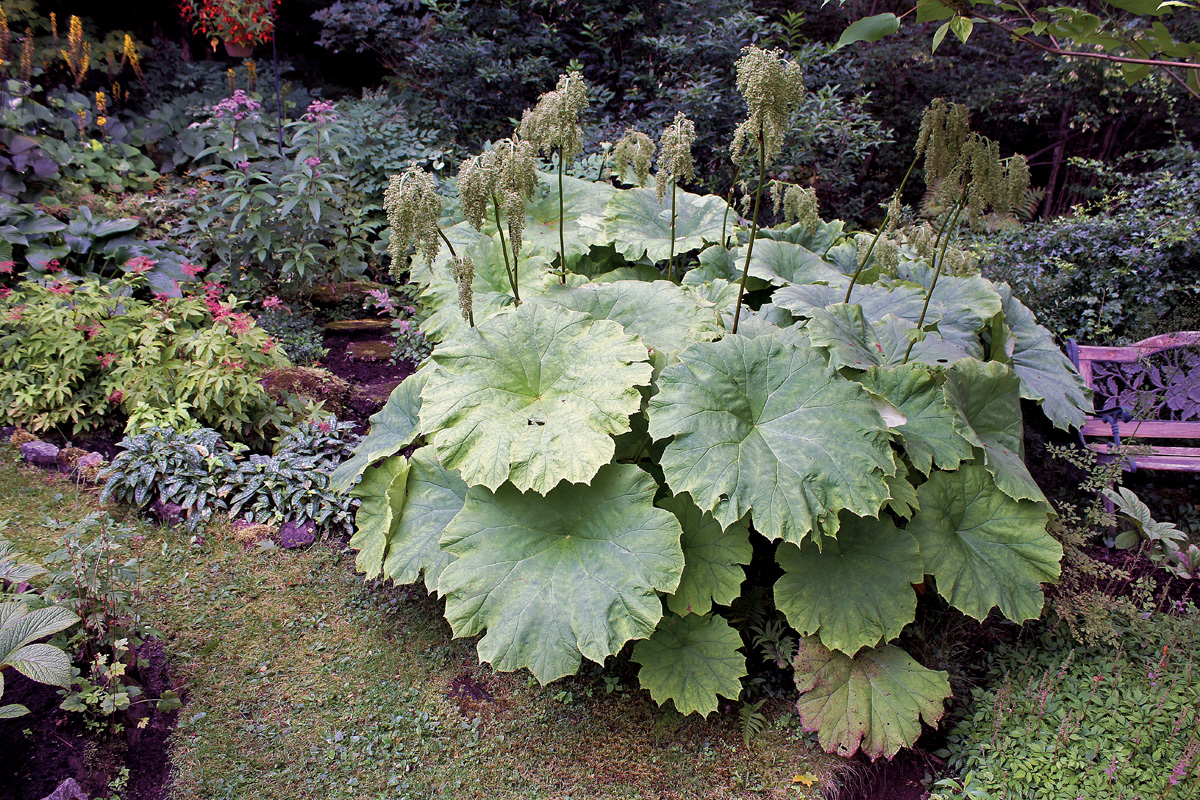
Name: Astilboides tabularis
Zones: 5–7
Size: 3 to 4 feet tall and 2 to 3 feet wide
Conditions: Partial to full shade; average to moist,
well-drained soil
Native range: Northern China
Astilboides thrives in the problematic wet spots that occur under drain spouts, in low-lying areas with poor drainage, and in soil with high clay content. If you feel thwarted by too-moist, poorly drained conditions, astilboides will reward you with bodacious, umbrellalike leaves that can grow 3 to 4 feet tall and wide. The flowers arrive in towering white plumes that shine in low light, appearing to float over the dramatic, tropical-looking foliage. Surround it with masses of ferns or other plants with fine foliage for a textural contrast that balances its strong visual impact.
These tough shade plant selections lean into the challenge of nutrient-poor soil
Japanese kerria
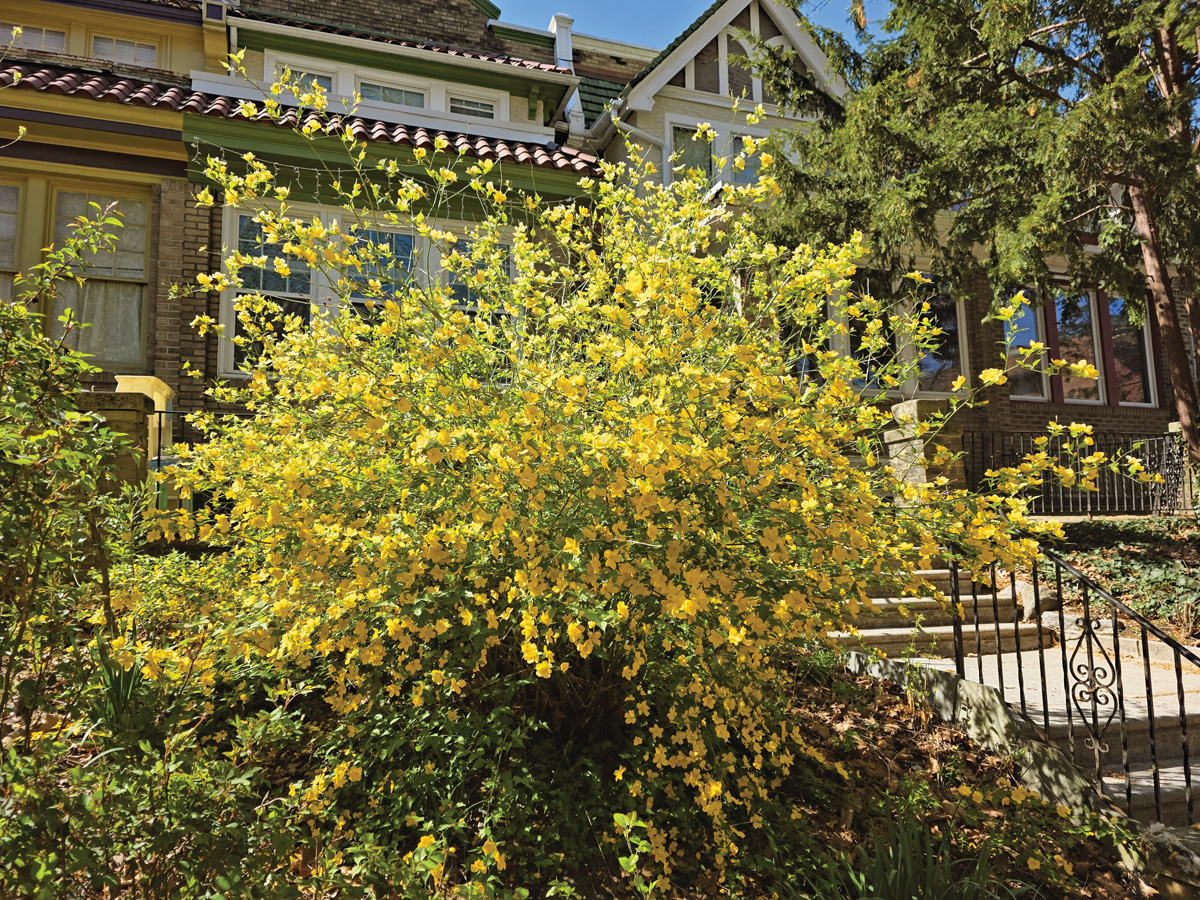
Name: Kerria japonica
Zones: 4–9
Size: 3 to 7 feet tall and 6 to 9 feet wide
Conditions: Partial to full shade; average to moist, well-drained soil
Native range: Central and southern China, Japan, and southern Korea
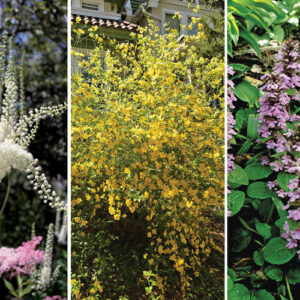
I have used Japanese kerria in every location where I’ve gardened and can attest that it does very well in lean, shallow soil. I’ve seen it adapt to average, low-nutrient, dry soil in shade and was even more impressed by its heartiness when I moved to an urban neighborhood and found it performing well in poor soil in tiny row-house front plots. (If you want to test durability, urban conditions are great for plant trials.) This plant tolerates full shade, although it will flower less as sunlight duration diminishes. Do not site it in a spot with afternoon sun, as the blooms will fade to a dull, lackluster yellow instead of the lovely gold hue they have in partial shade.
This is a true four-season shrub with its gracefully arching stems, spring flowers, golden fall color, and yellow-green bark that brightens snowy landscapes in winter. Captivating cultivars include ‘Golden Guinea’, which has single, bright gold flowers that are larger and showier than the species. For those looking for variegation, ‘Picta’ has a thin white leaf margin but also has a considerably weaker growth habit than other cultivars. It requires shade to prevent burning and does not have striking flowers, but its foliage will charmingly brighten a dimly lit corner.
White wood aster
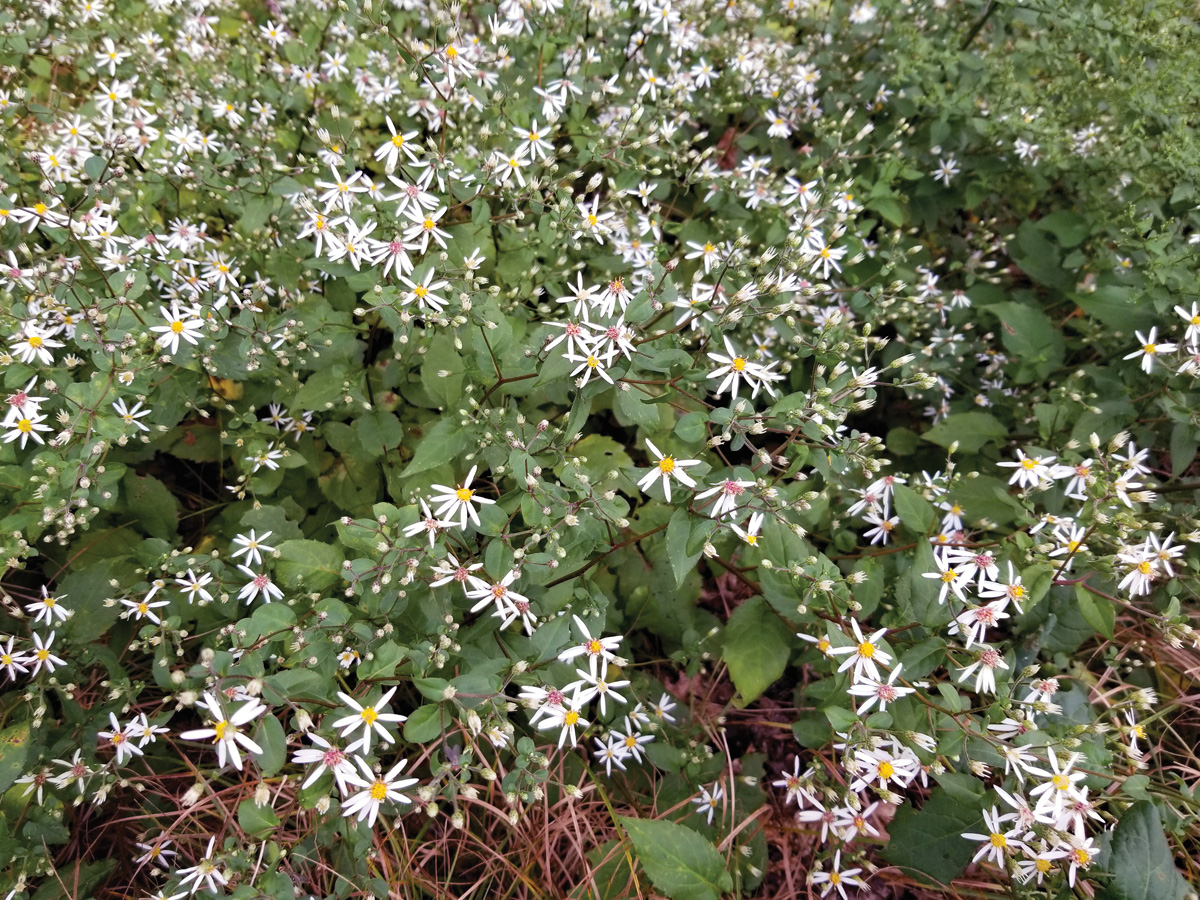
Name: Eurybia divaricata
Zones: 3–8
Size: 12 to 30 inches tall and 18 to 30 inches wide
Conditions: Partial to full shade; average to dry, well-drained soil
Native range: Eastern North America
Let me tell you about white wood aster, a valuable fall bloomer for the woodland garden. It is drought tolerant once established, requires no supplemental fertilization, and thrives in shallow, rocky soil. The gardening public generally considers asters full-sun plants because of the large number that have been offered for splashes of autumn color in naturalized landscapes such as meadows. The blooms of wood aster are more subtle, though they can be quite impressive when they cluster abundantly over the entire plant as summer transitions into fall. It has a long bloom time, and the whitish flowers with yellow to red centers almost glow in the shade.
To attract butterflies, add some plants at the transitional border between shade and sun, since butterflies tend to stay in the sun. There are two notable cultivars: ‘Raiche Form’, with larger flowers than the species, and ‘Snow Heron’, with variegated foliage. These specialties might require a search beyond the garden center, but the straight species is still highly useful if you cannot find the cultivars.
Problem-solving plants for challenging deep shade
Black cohosh
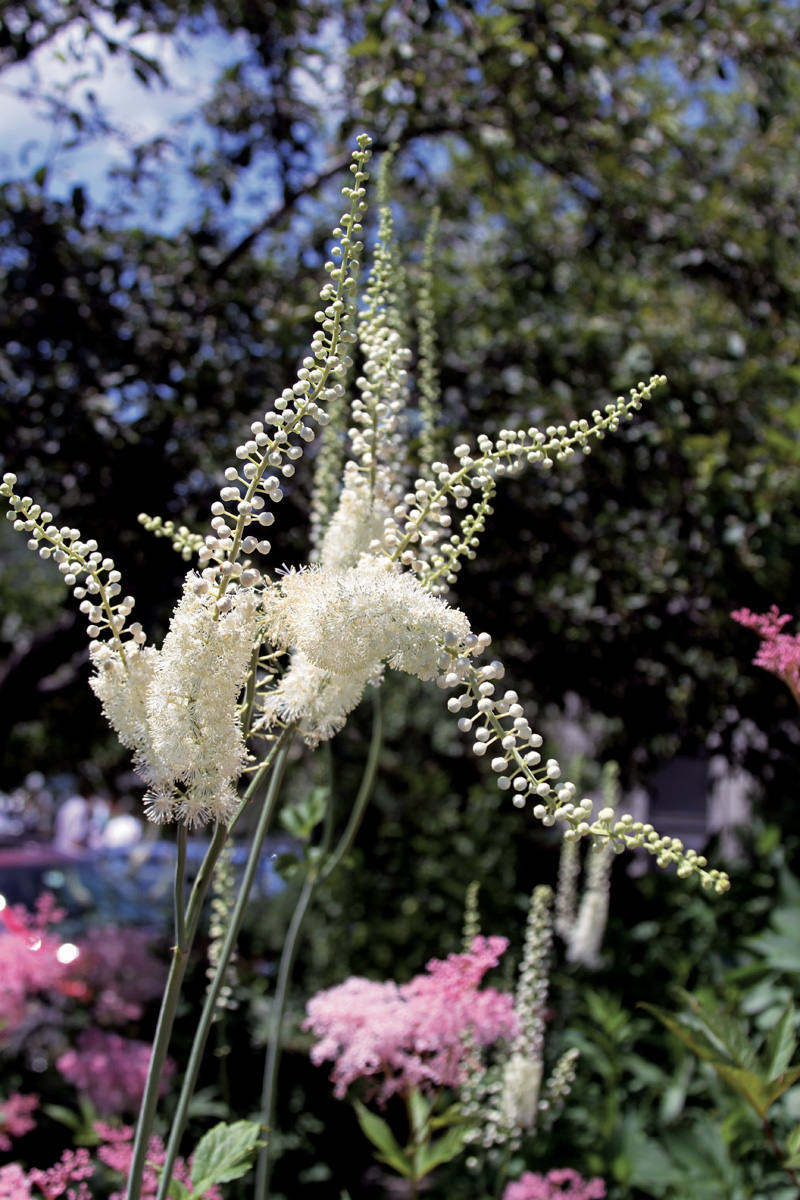
Name: Actaea racemosa
Zones: 3–8
Size: 4 to 6 feet tall and 2 to 4 feet wide
Conditions: Partial to full shade; average to moist soil
Native range: Eastern North America
White flowers may not ‘pop’ like other colors on the nursery bench, but they shine in deep shade. Black cohosh has a quiet drama that augments the tranquility of a shadowy area, with racemes of blooms that appear to float at eye level like white fairy candles. The flowers have a light fragrance that some describe as sweet but others might find fetid.
This wide-ranging native species is quite tough and durable once established but will burn severely in hot sun. It does best in organically rich, evenly moist soil with dappled afternoon shade; if your shaded site has thin, droughty soil, it is worth the extra effort to amend heavily with composted organic matter to improve water retention and fertility. Provide consistent moisture, never allowing the bed to dry out in summer heat. Be aware that the fruits are toxic, but siting plants at the back of the perennial border or deep in the shade garden should be enough to keep them out of picking distance by unsuspecting children or visitors.
Goldenstar
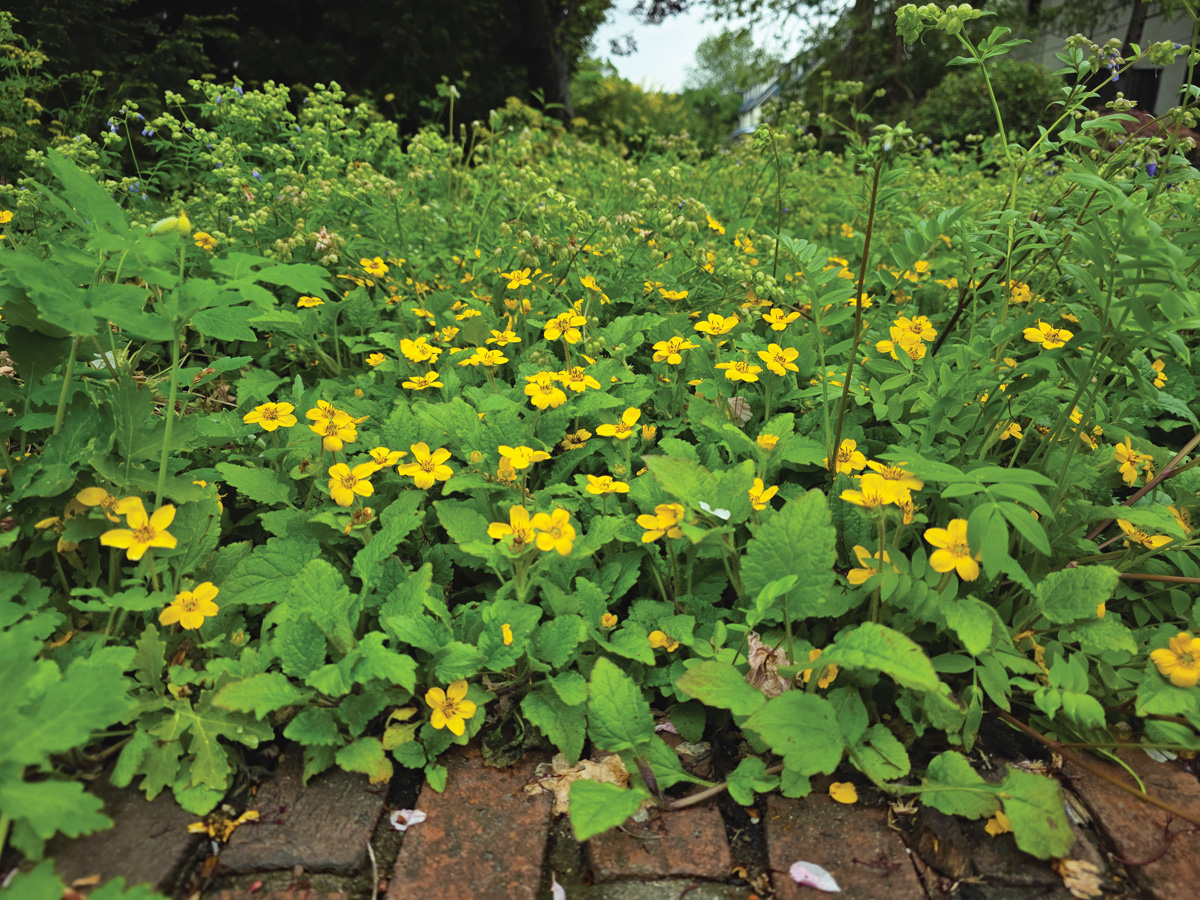
Name: Chrysogonum virginianum
Zones: 5–9
Size: 6 to 12 inches tall and 9 to 18 inches wide
Conditions: Partial to full shade; average to moist, well-drained soil
Native range: Eastern United States
Bright flowers are welcome harbingers of spring, and one of the jauntiest is the diminutive goldenstar. It is perfect for use as edging or as a ground cover, thriving in moist soil and adapted to deep shade. Goldenstar is more robust in acidic soil, but I had excellent luck establishing it in alkaline Midwest soil augmented with rich organic matter. It will also tolerate thinner soil once it is mature.
Goldenstar has a long duration of bloom if spring temperatures remain cool and without heat spikes when it is flowering. It has a delightful habit of lightly reblooming in summer through fall, especially in cool, northern climates and with shelter from intense summer heat. Even though it spreads by short rhizomes and forms mats, it is easily controlled. It may also spread by seed, but rhizome division will be the fastest, most reliable multiplier for this truly deer-resistant plant.
Ed Lyon is a retired professional horticulturist and gardener with 25 years of experience in the public garden field, most recently as director of Reiman Gardens at Iowa State University in Ames, Iowa.
Photos by Ed Lyon unless otherwise noted.
| Plant Sources |
The following mail-order sources may offer some of the plants featured in this article:
- Bluestem Natives, Norwell, MA; 781-738-4869; bluestemnatives.com
- Dancing Oaks Nursery and Gardens, Monmouth, OR; 503-838-6058; dancingoaks.com
- Plant Delights Nursery, Raleigh, NC; 919-772-4794; plantdelights.com
- Prairie Nursery, Westfield, WI; 800-476-9453; prairienursery.com
- Rare Roots, Mechanicsville, VA; 804-296-6592; rareroots.com
Subscribe to Fine Gardening Magazine
Watch Our Garden Tours on YouTube
Travel with Us!
Fine Gardening Recommended Products

New England Springport Arbor Trellis
Fine Gardening receives a commission for items purchased through links on this site, including Amazon Associates and other affiliate advertising programs.
The New England Springport Arbor brings classic style and smart function to any garden. Its flat-top design and crisp white vinyl finish create a clean, modern look—without the upkeep.
Perfect for small-space gardening, the half-lattice side panels support climbing plants like roses, clematis, or grapes, helping you grow vertically when ground space is limited.
Built-in eye hooks make it easy to hang flower baskets or garden décor, while the open top allows sunlight to filter through.
Whether used to frame a narrow path or define a cozy corner, this arbor adds structure, height, and charm to any small outdoor space.
Razor-Back Potato/Refuse Hook
Fine Gardening receives a commission for items purchased through links on this site, including Amazon Associates and other affiliate advertising programs.
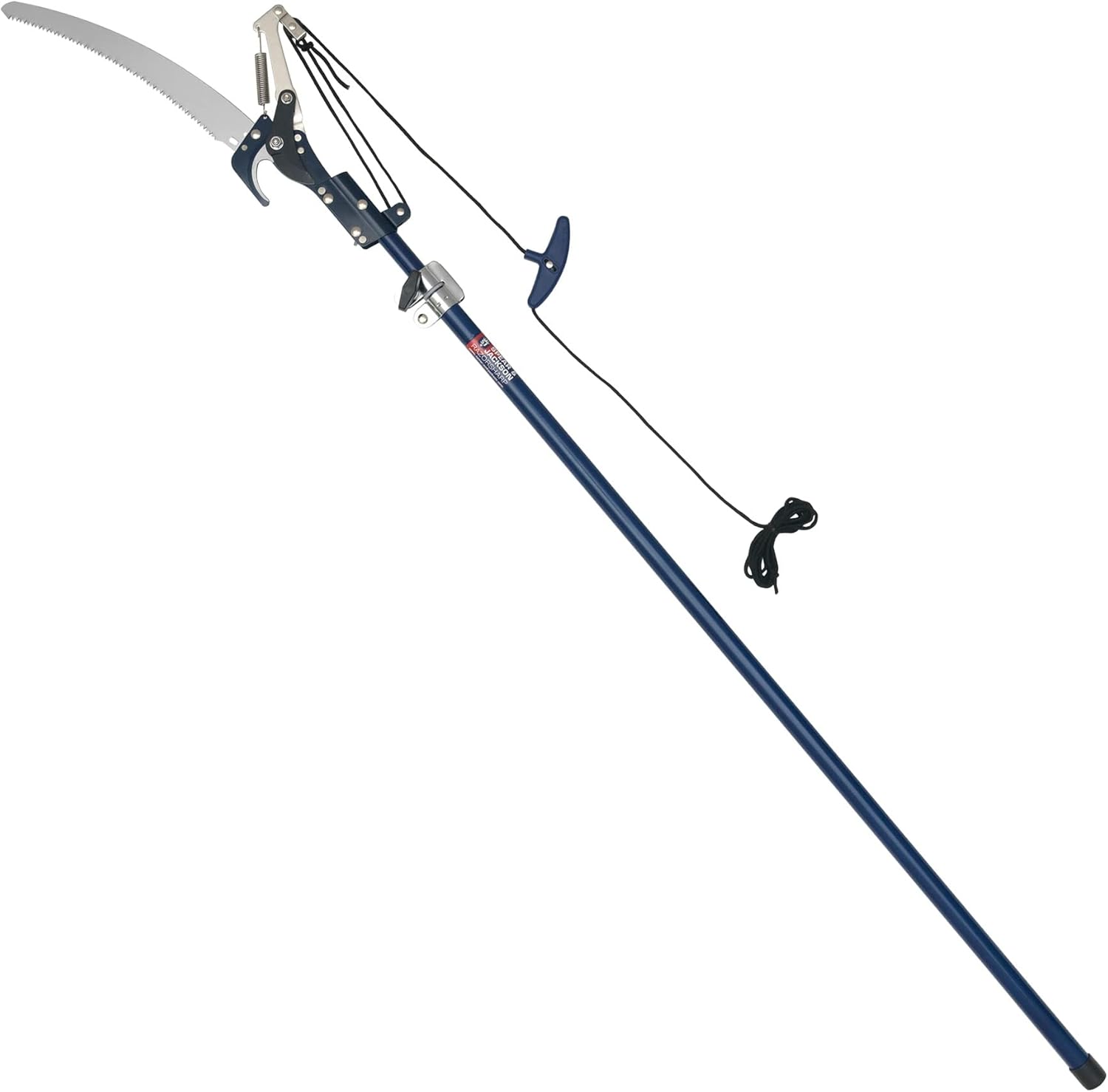
Spear & Jackson 4930FZ Razorsharp Telescopic Tree Pruner
Fine Gardening receives a commission for items purchased through links on this site, including Amazon Associates and other affiliate advertising programs.
Telescopic tree pruner with SK5 carbon steel blade which stays sharper for longer. Variable length telescopic handle extends up to 92 Inch (2340mm). Lopper for cutting branches up to 1.2″ (30mm). 13 inch (330mm) saw is ideal for cutting thicker branches. Supplied with a long cord and pull-action handle. Part of the Razorsharp Advantage collection, the obvious choice for gardeners who demand and expect precise, powerful performance. “Grow Your Own” Great British Growing 2020 Award Winners.