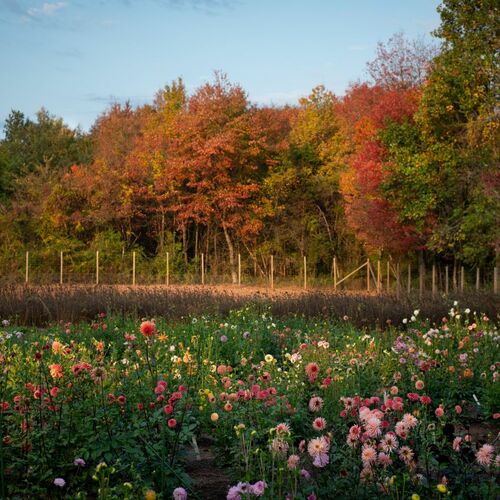
When Laura Grimm bought an 11-acre farm with a once-stately house that hadn’t been updated in decades, what did she renovate first? The land.
She spent two years clearing invasive plants that had swallowed the property during the 50 years since it was last farmed, before tilling its heavy clay soil. Only then could she begin building Bewitching Blooms, her flower farm in Far Hills, New Jersey, which formally opened this year.
From Finance to Flower Farming
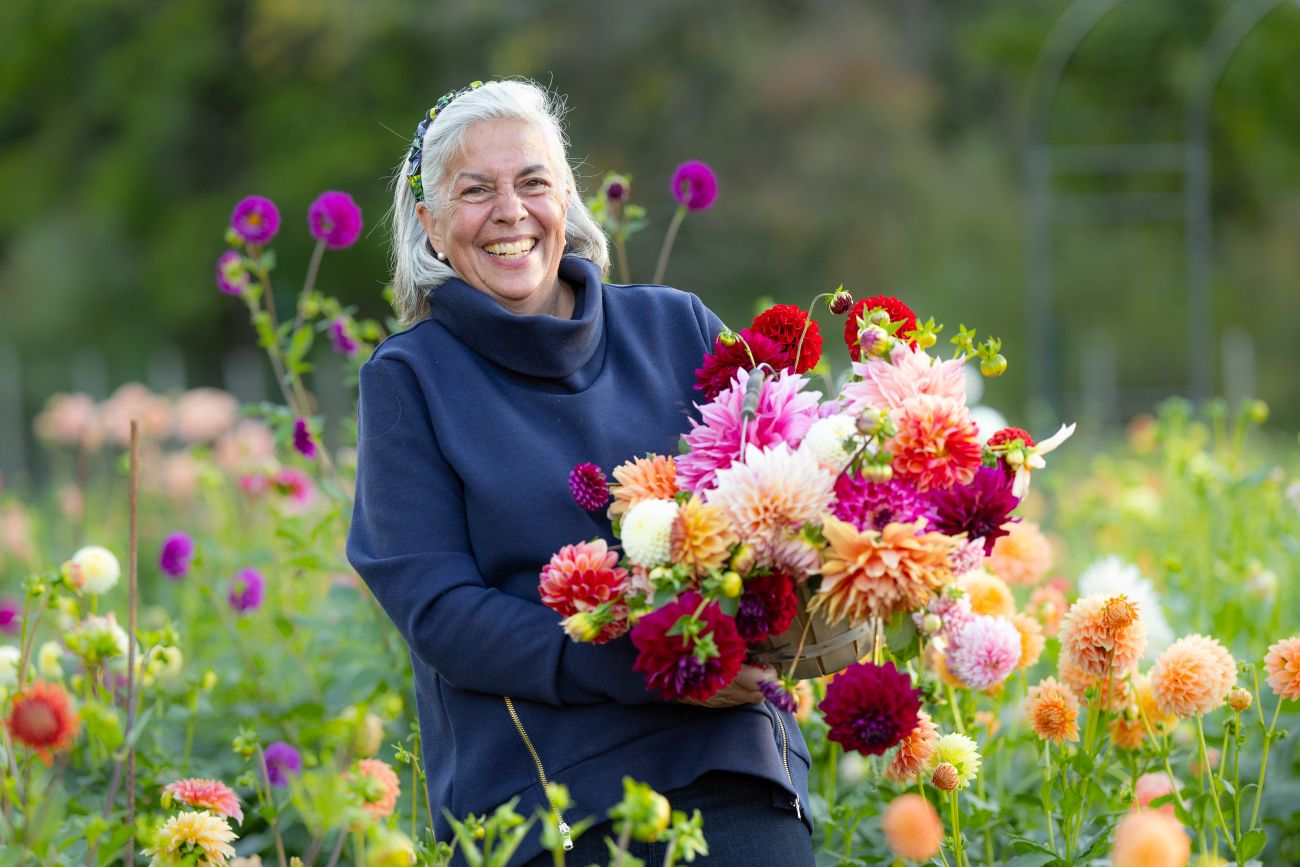
Grimm, 63, seems an improbable farmer. She spent years in the white-collar world of finance in New York City, but gardening was always part of her life. She grew plants on city rooftops and terraces, and when she moved to the suburbs, the garden behind her house just kept expanding—until she simply ran out of room.
Enter the farm—and gardening on a whole new scale. Last year, Grimm and her cousin planted 17,000 tulip bulbs.
“Some people don’t realize how much work it is,” Grimm said. “Because it’s flowers, some people think it’s all pretty dresses and hair ribbons, and not the dirty nails and sore feet.”
A growing market for local flowers
Grimm started her farm in the middle of a quiet boom. Between 2012 and 2022, the number of U.S. farms reporting cut-flower production increased by roughly 50 percent, according to the USDA Census of Agriculture, and many of the new growers are women building small businesses on relatively modest pieces of land. Unlike many forms of agriculture, flower farming can begin with a small plot and expand as customers—and confidence—grow.
That growth has been accompanied by rising enthusiasm for locally grown flowers. Debra Prinzing, founder of the Slow Flowers Society, an organization that promotes locally and sustainably grown flowers, sees the shift as something more enduring than a passing preference.
“I don’t think it’s a trend,” Prinzing said. “I think it’s a cultural shift—and one that’s here to stay.”
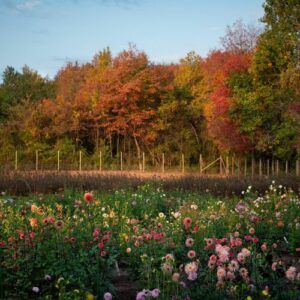
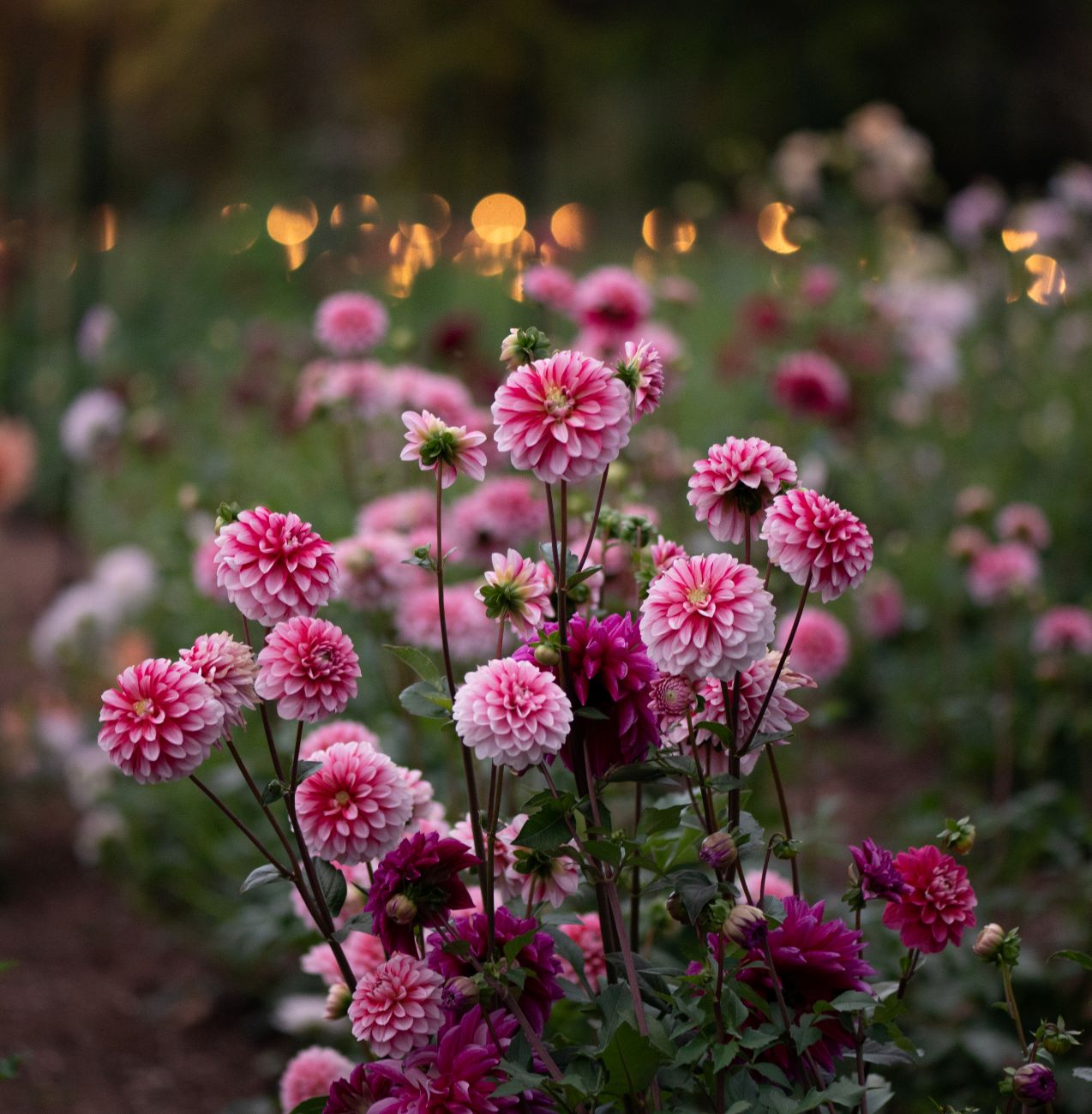
Grimm sees the demand firsthand. In her first year alone, thousands of customers came to the farm, stunning her. They wandered the rows of tulips and dahlias, filling buckets to overflowing. When the flower stand was empty, some even knocked on her front door.
Read More: Peony’s Envy Flower Farm & How It Got Started
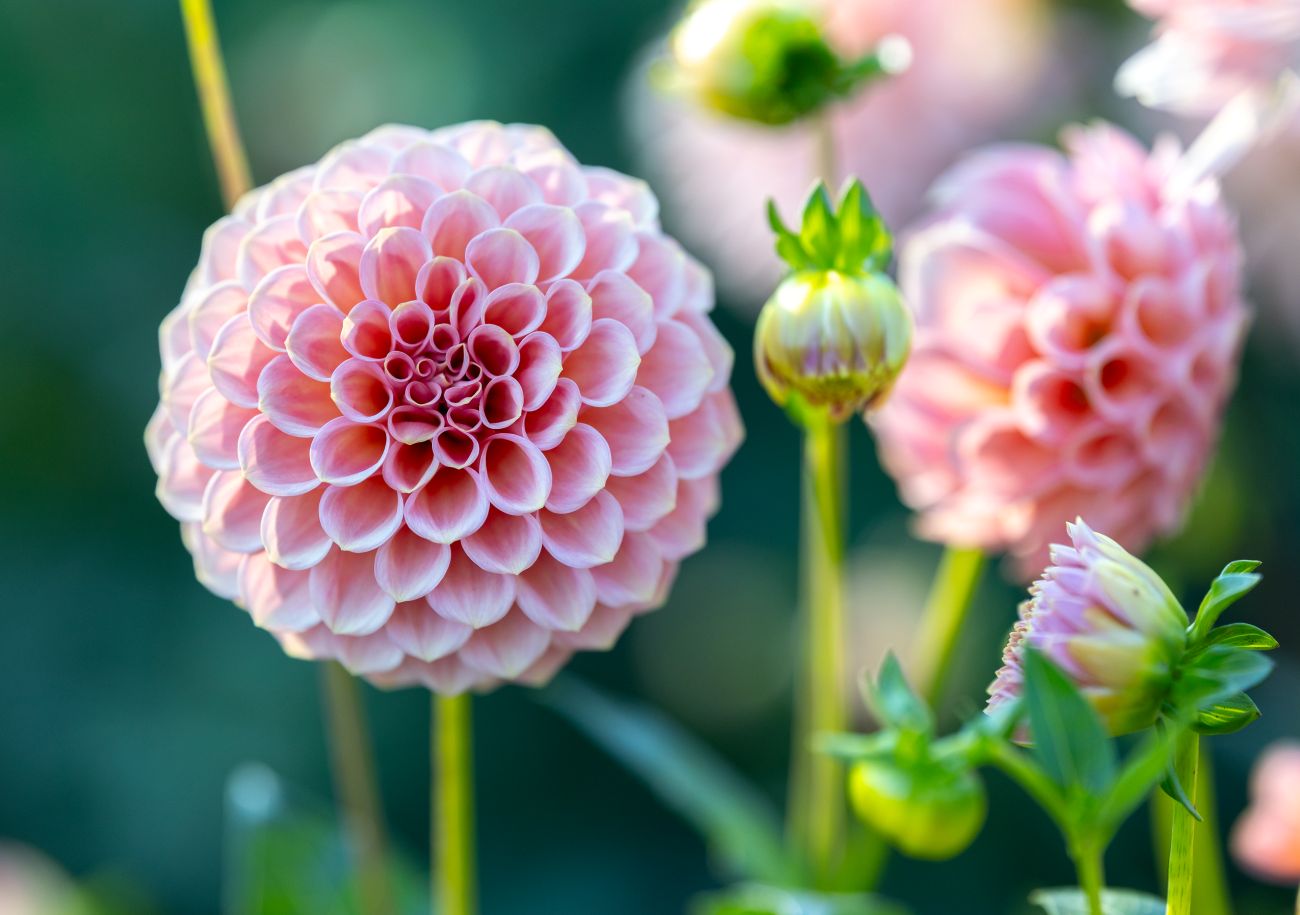
Her son Mark, 27, who helps run the farm’s Instagram account, has learned to brace himself whenever a florist posts a photo of Grimm’s flowers and tags Bewitching Blooms.
“All of our phones will start blowing up with direct messages, and we’re like, ‘Oh God, it’s going to be a long one for Mom,’” he said.
The flower farm is a family effort
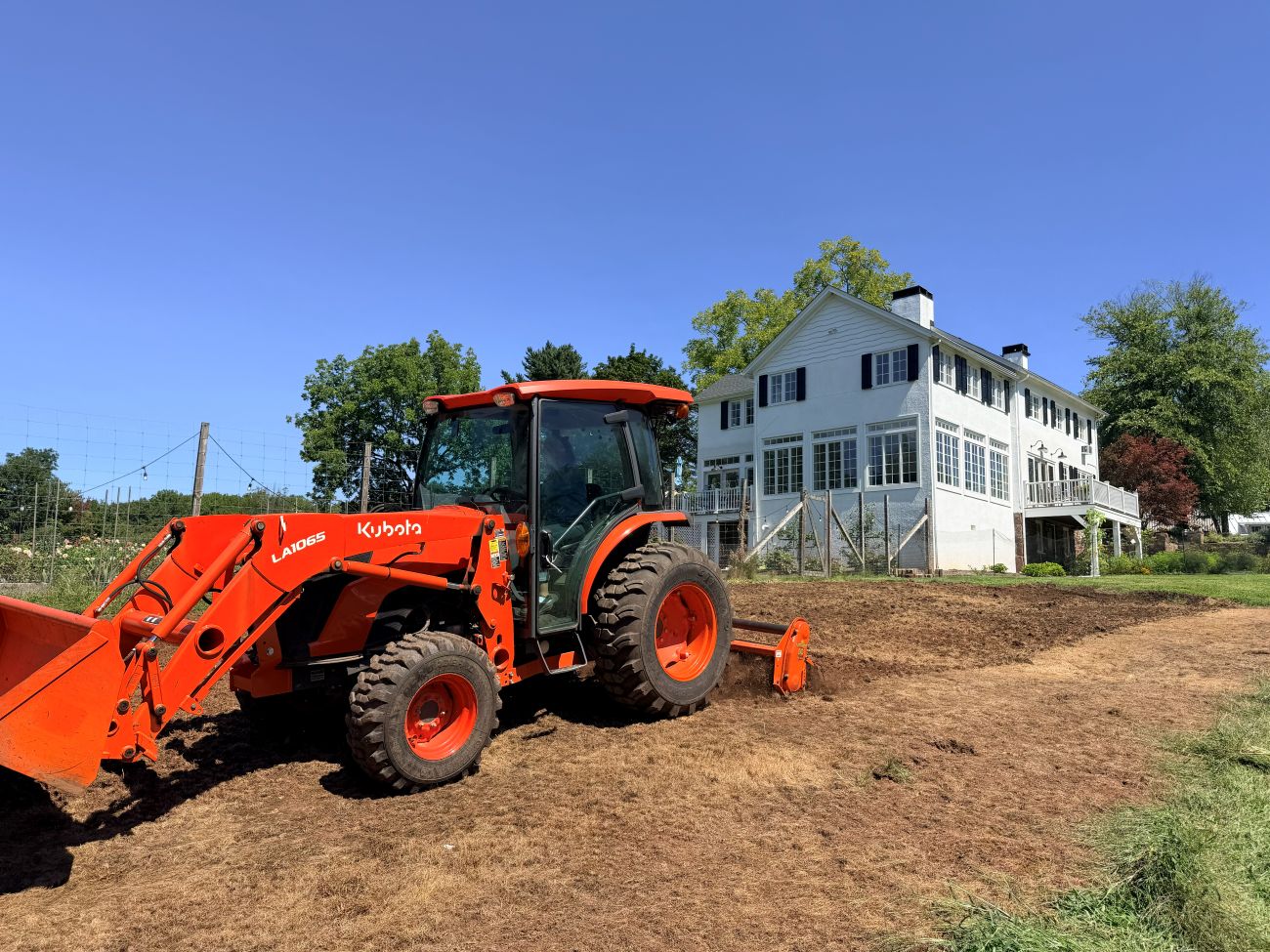
Grimm’s three sons, ages 25 to 29, come home about twice a month to work alongside her, planting and hauling compost. They call every day to check in. Last year, though, they realized their mother needed more help than they could give her. So they bought her a tractor.
Grimm wept.
“It was amazing because I thought I was in a little over my head,” she said, “and they believed in me enough to do that.”
Learning to let go
Days on the farm start at 5:00 a.m. Grimm walks around the beds with her dogs and a cup of coffee, doing a daily assessment of what needs to happen that day and what can wait. She has given up on making a to-do list the night before, because she just never knows what is going to happen.
“You have to learn to let go, and that’s been really hard for me,” she said. “You don’t have control, and you have to work with what you have. Even though you think you’re doing it the right way, Mother Nature kind of wallops you.”
More than anything, though, she is grateful for it all. She finds a sense of peace walking through the farm and loves watching it become a place where other people find that peace, too.
Event planners come not only to buy flowers but to draw inspiration from the colors in the fields. Local residents come to gather bouquets or pick a few flowers for the dinner table. Some simply come to walk the rows.
On a recent day, a family visited the farm with their daughter. Among the tulips, Grimm watched her transform—smiling, taking pictures, and gathering flowers by the armful as her amazed parents looked on.
Grimm loves seeing people experience the farm that way: “Just seeing how much joy people can find just walking through the rows of flowers.”
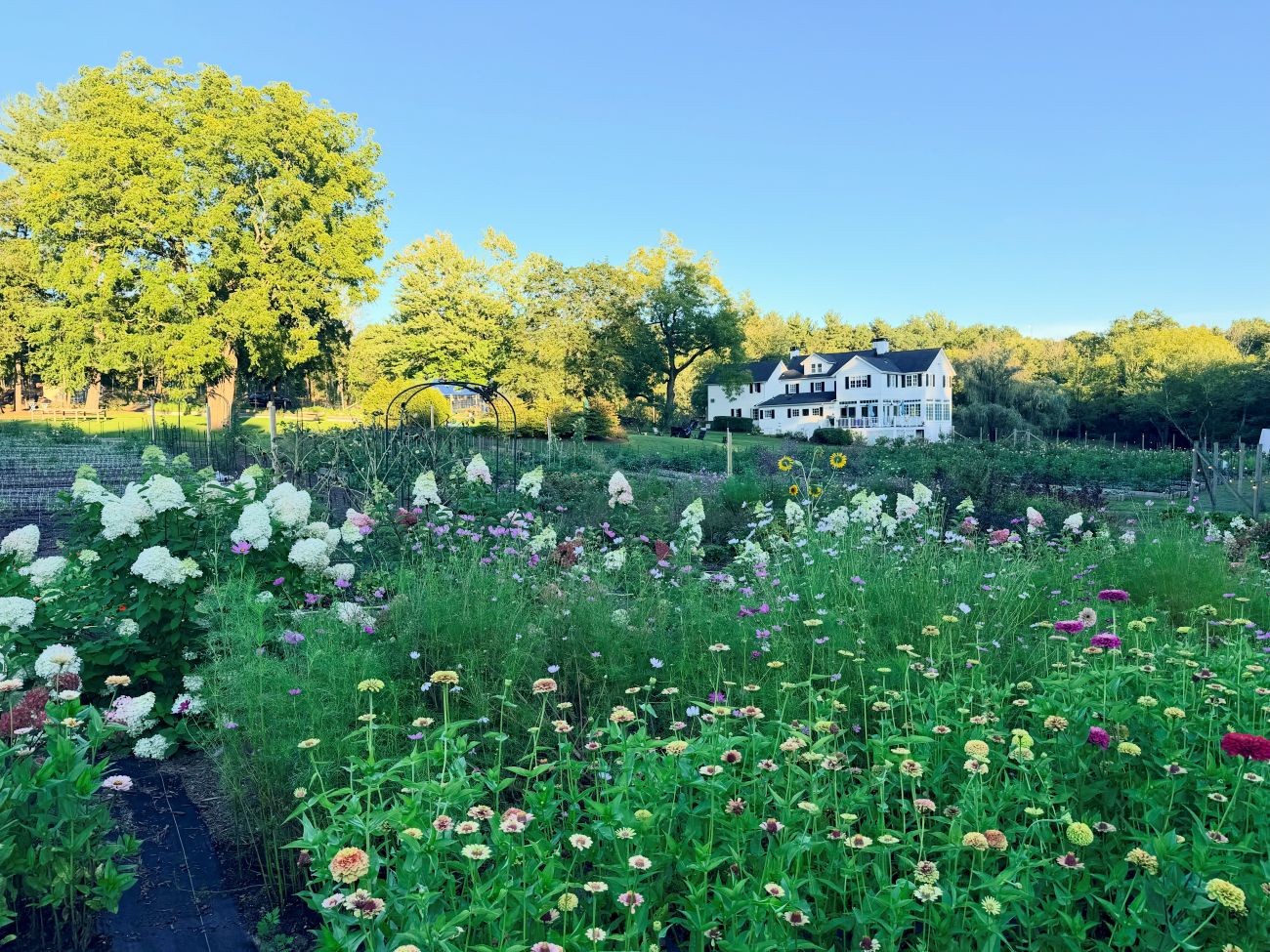
The house can wait. For now, this is the dream.
“At some point, we’ll get around to having a working bathroom on the second floor,” Grimm said, “so I do not have to go down the hallway to brush my teeth.”
Find more on flower farming and growing cut flowers:
Discuss this article or ask gardening questions with a regional gardening expert on the Gardening Answers forum.
And for more Northeast regional reports, click here.
Caitlin Bird Francke is a landscape designer, writer, and speaker who owns Caitlin Bird Landscape Design in Chatham, New Jersey.
Photos: Erin Kiernan, Maureen Nowak, and Scott Forbes
Fine Gardening Recommended Products
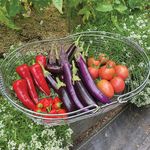
Lee Valley Large Gardener’s Wash Basket
Fine Gardening receives a commission for items purchased through links on this site, including Amazon Associates and other affiliate advertising programs.
This basket was designed to be used by gardeners to wash freshly harvested vegetables before taking them inside. You can gather your vegetables and then hose them off right in the same basket. However, you can also use it for fruit or add a cloth liner for serving bread or other baked goods. Measuring 16″ long, 11″ wide and 4″ deep, it is made of chrome-plated steel to resist rust.
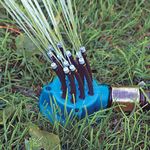
D&X Garden Sprinkler
Fine Gardening receives a commission for items purchased through links on this site, including Amazon Associates and other affiliate advertising programs.
– The Sprinkler is made of durable ABS Plastic, Base connector: Approx. 1/2″ ; Side connector: Approx. 3/4″
– 12 flexible nozzles that you can set in any direction, simply bend hoses to customize new watering patterns
– 360 degree coverage of 3000 sq. ft area
– 3.5 x 4 x 6 inches
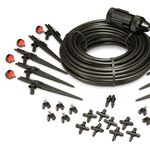
Rain Bird PATIOKIT Drip Irrigation Patio Watering Kit
Fine Gardening receives a commission for items purchased through links on this site, including Amazon Associates and other affiliate advertising programs.
– Complete 42-piece drip irrigation kit eliminates watering by hand
– Provides drip irrigation for up to 6 planters
– Easy to assemble: just attach to faucet, cut tubing and connect watering devices
– Attaches easily to your outdoor faucet or hose