Try These Unusual Foliage Plants for Impressive Shade Containers
Shady containers don’t have to rely on flowers for color and interest. Foliage plants can bring unexpected colors, textures, and growth habits to the mix, creating combinations that are anything but ordinary. These four favorites have earned a place in my containers, and as a bonus, they can also thrive indoors, extending their appeal well beyond the growing season.
Blue star fern
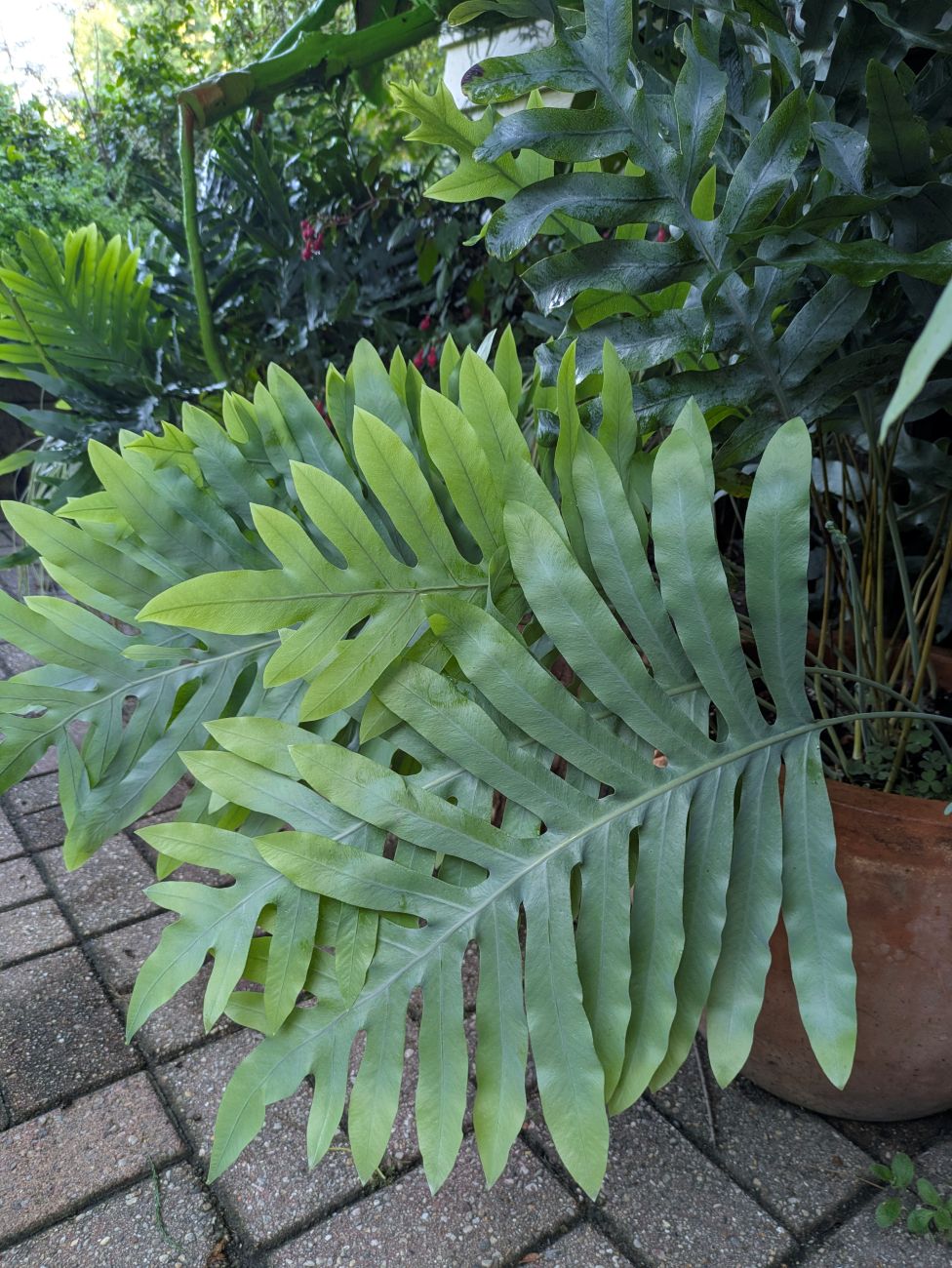
When I first spotted blue star fern (Phlebodium aureum, Zones 9–11) in a holiday display, I just had to track it down. Initially, each emerging blade (the leafy part of the frond) has a powder-blue interior with a faint margin of glowing lime and then matures to a handsome steel blue. Each blade is about 2 feet long by a foot wide and is held on a thin, wiry stipe (the stalk holding the blade).
This upright form makes it an easy companion as a container plant, with plenty of space for flowering or trailing plants at the base. Another selling point is this fern’s tolerance for a variety of shade levels, holding its color well even in deep shade. Like the more familiar rabbit’s-foot fern (Davallia fejeensis, Zones 10–12), blue star fern has thick, fuzzy rhizomes, which lend vigor and drought tolerance and are easy to divide. And you will definitely want more!
Watch: How to Build a Fern Table
Piggyback plant
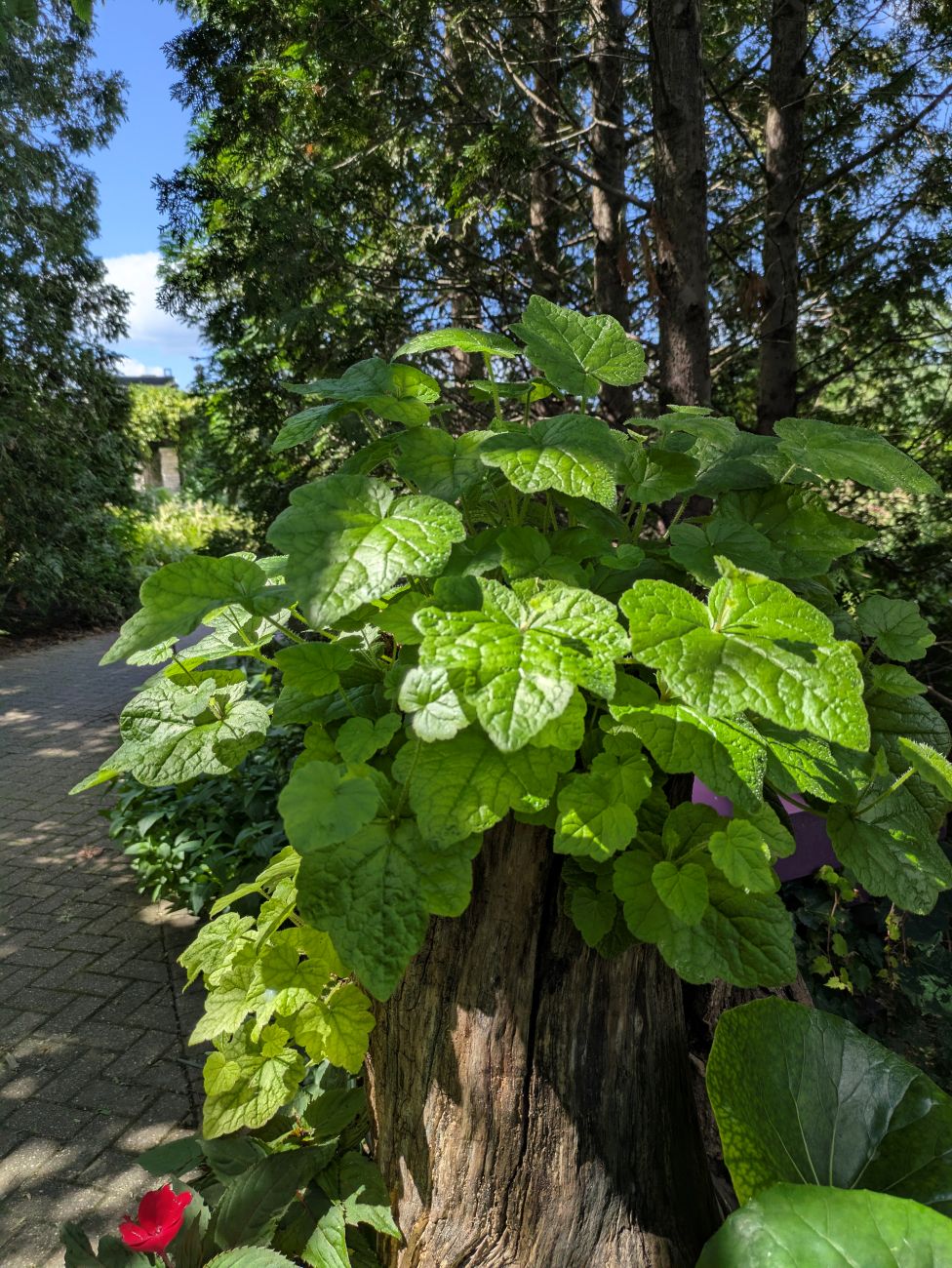
If you’ve ever visited the Pacific Northwest, you’re probably familiar with the adorable native piggyback plant (Tolmiea menziesii, Zones 6–9), which carpets soil, rocks, and stumps in moist forests. The slightly rippled and fuzzy apple green leaves look like mini coral bells (Heuchera cvs., Zones 4–9) leaves.
A vigorous grower, piggyback plant earns its name from the baby “plantlets” that form where the leaf blade meets the petiole. The plantlets are easy to pluck off and root in new containers, so each plant is a gift that keeps on giving. In a container, piggyback plant is somewhere between mounding and trailing and looks especially great dangling from hanging baskets. The foliage also has a pleasant cucumber smell when handled, so I always enjoy working with this plant.
Leopard plant
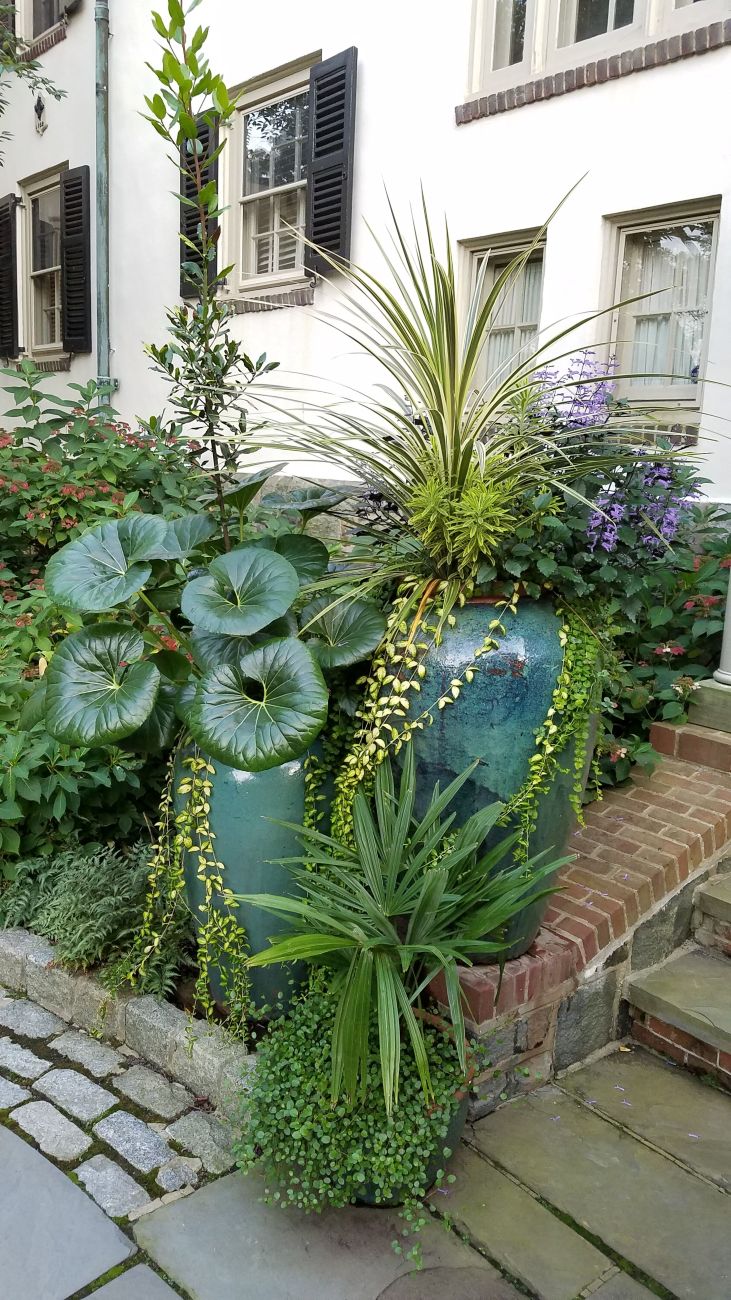
Leopard plant (Farfugium japonicum, Zones 7–10) first grabbed my attention in a container at the magical public garden Chanticleer in Wayne, Pennsylvania. This striking beauty has all the characteristics of a catwalk model—long limbs and high gloss from the shoulders up.
Each succulent 12- to 18-inch-long petiole bears a round, dinner-plate-size leaf that is so shiny it almost looks fake—in a good way!
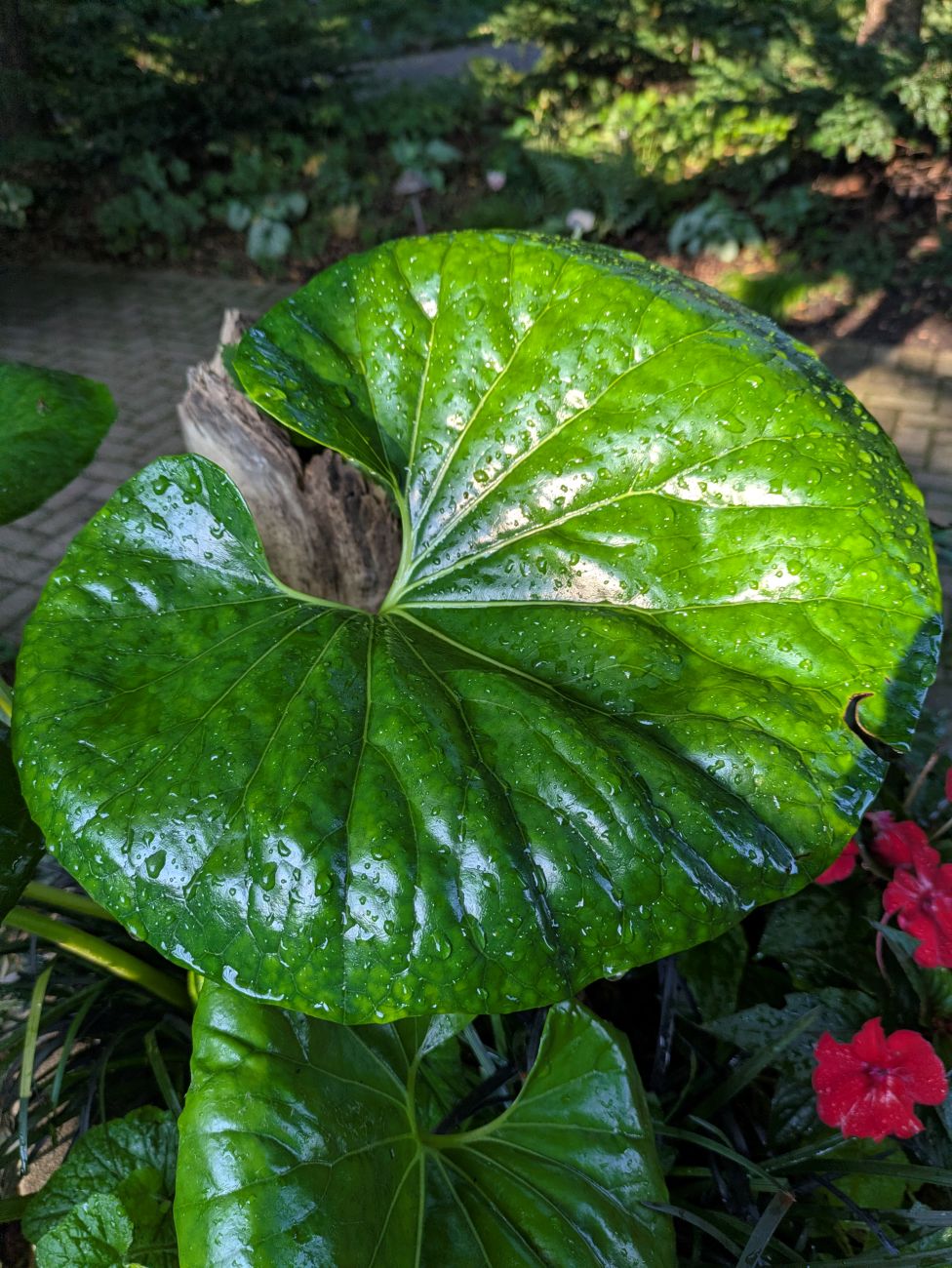
A closer look reveals leopard plant’s kinship with the familiar shade perennial, ligularia (Ligularia cvs., Zones 4–8), but leopard plant is not reliably winter hardy north of Zone 7. Both prefer soil that remains consistently moist. In a container, leopard plant looks great with just a skirt of trailing plants around the base so the plant’s full architecture can be appreciated.
Begonia ‘Sinbad’
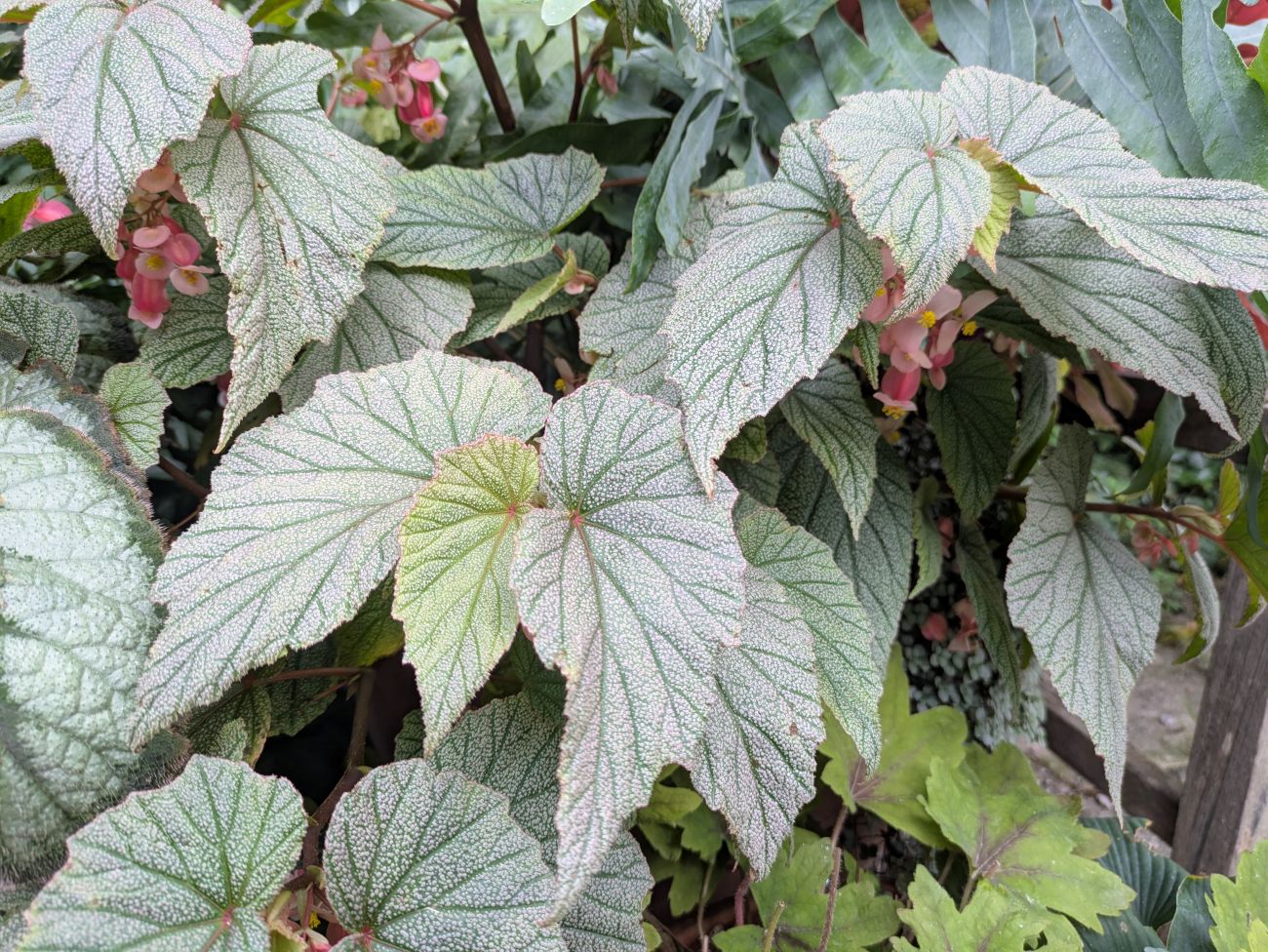
Is it bad to admit I’m not really a begonia lover? Between problems with rotting off, too much or too little sun, or getting too leggy, they typically don’t top my list. Not so with the effortlessly adaptable ‘Sinbad’ begonia (Begonia ‘Sinbad’, Zones 10–11), which has proven to be a hardworking contributor in a container, with stunning unusual foliage.
This begonia is a hybrid between a sturdy cane-type begonia and two-petal begonia (Begonia dipetala, Zones 10–12), with silvery, spotted foliage inherited from its parentage. Though the plant also has nice, soft-pink flowers, the foliage is the main attraction.
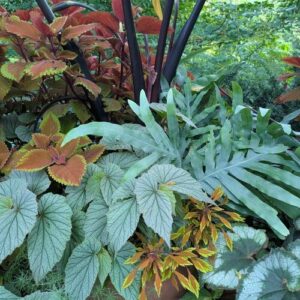
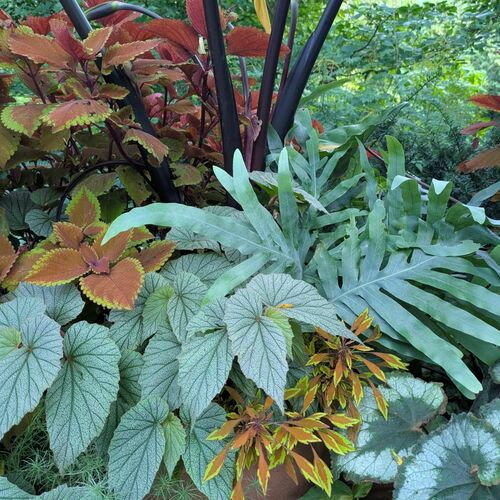
The silvery-speckled leaves have color notes including soft bronze, pink, and powder blue, all highlighted by darker green veins. This intriguing color scheme lends itself to imaginative combinations; my favorite container recipe this year contrasts the silvery blues of ‘Sinbad’ begonia and blue star fern with the peach and rust tones of ‘Sweet Tea’ foamy bells (Heucherella ‘Sweet Tea’, Zones 4–9) and ‘Campfire’ coleus (Coleus scutellarioides ‘Campfire’, Zones 10–11).
Find more inspiration for shady containers:
Discuss this article or ask gardening questions with a regional gardening expert on the Gardening Answers forum.
And for more Midwest regional reports, click here.
Erin Presley is a horticulturist at Olbrich Botanical Gardens in Madison, Wisconsin.
Photos: Erin Presley
Fine Gardening Recommended Products
Johnny’s Selected Seeds Connecta® Cultivation Kit
Fine Gardening receives a commission for items purchased through links on this site, including Amazon Associates and other affiliate advertising programs.
Choose the right tool head for the job and switch out quickly with a simple push-button release. Includes the Connecta receiver, Connecta Collinear 4 head, Connecta Collinear 7 head, Connecta Contour Wire 4 head, Connecta Contour Wire 6 head, a sustainably harvested oiled ashwood handle, and a stainless-steel carrying clip.
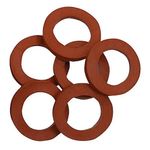
Gilmore Rubber Hose Washer 10pk
Fine Gardening receives a commission for items purchased through links on this site, including Amazon Associates and other affiliate advertising programs.
– Live red rubber construction, 3/4in. washers
– Clip of 10
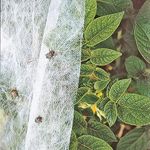
Gardener’s Supply Company Summerweight Fabric Plant Cover
Fine Gardening receives a commission for items purchased through links on this site, including Amazon Associates and other affiliate advertising programs.
Ideal for summertime pest control, this garden cover effectively screens out Japanese beetles, potato beetles, cabbage worms, leaf miners, carrot flies and most vine borers. It transmits 97.6% of the light to your plants without allowing heat build-up, and it provides cold protection down to 41° F, to extend your growing season.