
Hi GPODers!
We’re back in Atlanta, Georgia today to enjoy more woodland garden magic from Steve Schmidt. Be sure to check out Part 1 if you missed it yesterday, otherwise you can keep scrolling to see more of this shady oasis.
Steve Schmidt here in Atlanta’s Virginia-Highland neighborhood. My residence sits high up a steep hill (25 steps from the alluvial floodplain of the stream to the subbasement level). Roughly a quarter acre of land is in the floodplain. It once was pretty much all kudzu, privet, ivy, fallen tree trunks and a colony of paw paws. Over the years, but especially after retiring, the land has been in transition. It’s now at a point where it’s coming together to share pictures. Even then, the more I read about pollinators, birds, native plants, etc, another layer of transitioning has been added as slowly I try to balance natives with non-native plants I like.
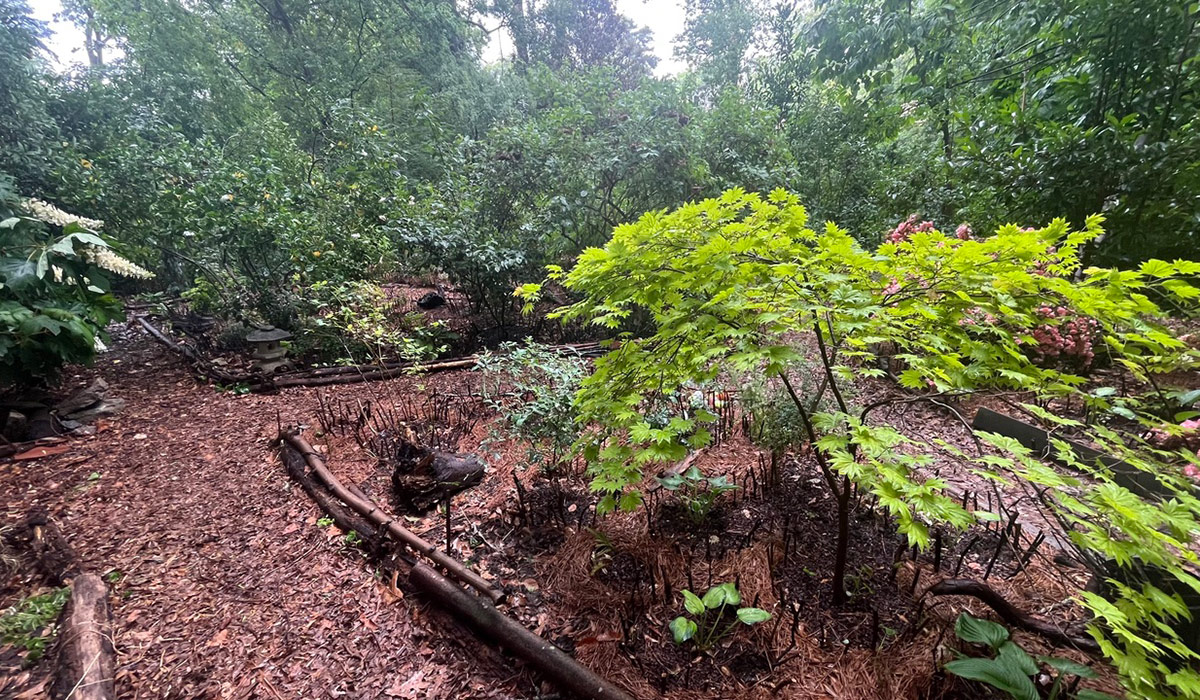 I’ve dubbed the path on the left “The Diagonal” as it is on a N-S axis but cuts diagonally across the garden. To the left are three poplars and a couple of other tall (but not as tall as the poplars!) trees which make that side of the yard shade, shade and more shade. Given the high hill to the south and trees up there, the ‘left side’ gets little sun. More recently I removed a lot of smaller understory trees which allows in more light as the sun climbs in the east…and that has definitely perked up plants to the left! This picture is part of what I call the Center Garden. This spring the blueberry patch, just the other side of the Japanese maple, has been mostly completed—3 rabbiteye (Vaccinium virgatum, Zones 7–8) and one Southern highbush (Vaccinium formosum, Zones 4–9) for which I will find a pairing. The ‘Moonrise’ full moon Japanese maple (Acer shirasawanum ‘Munn001’, Zones 5–9) was shifted to give the blueberries the most sun. Beyond lies the Secret Garden. A ‘Snow Queen’ oakleaf hydrangea (Hydrangea quercifolia ‘Flemygea’, Zones 5–9) can be seen on the left edge of the photo.
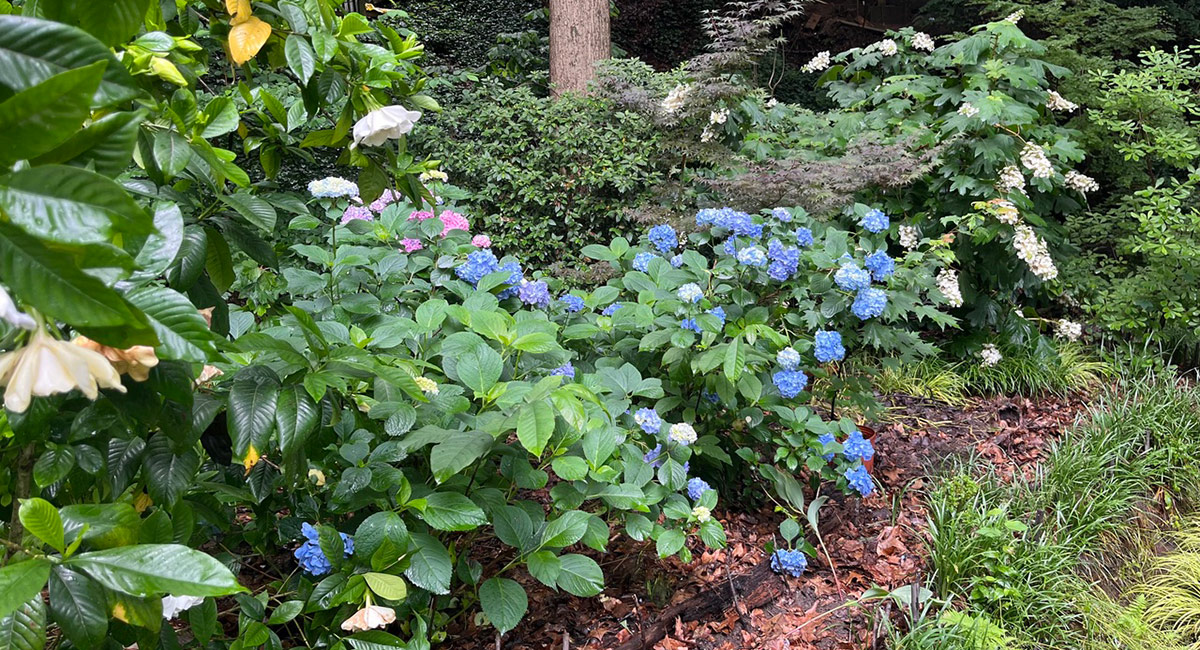 From the same spot as the preceding, one looks south into the South Garden which is currently full of clones of the ‘Generale Vicomtesse de Vibraye’ hydrangea (Hydrangea macrophylla ‘Generale Vicomtesse de Vibraye’, Zones 6–9), a gardenia, a volunteer Japanese maple and ‘Snow Queen’ oakleaf hydrangea among other shrubs—I clone a lot of plants. 😀 At the lower right corner is a swale which runs across the property. When there’s been plenty of rain and more falls, the swale will fill up.
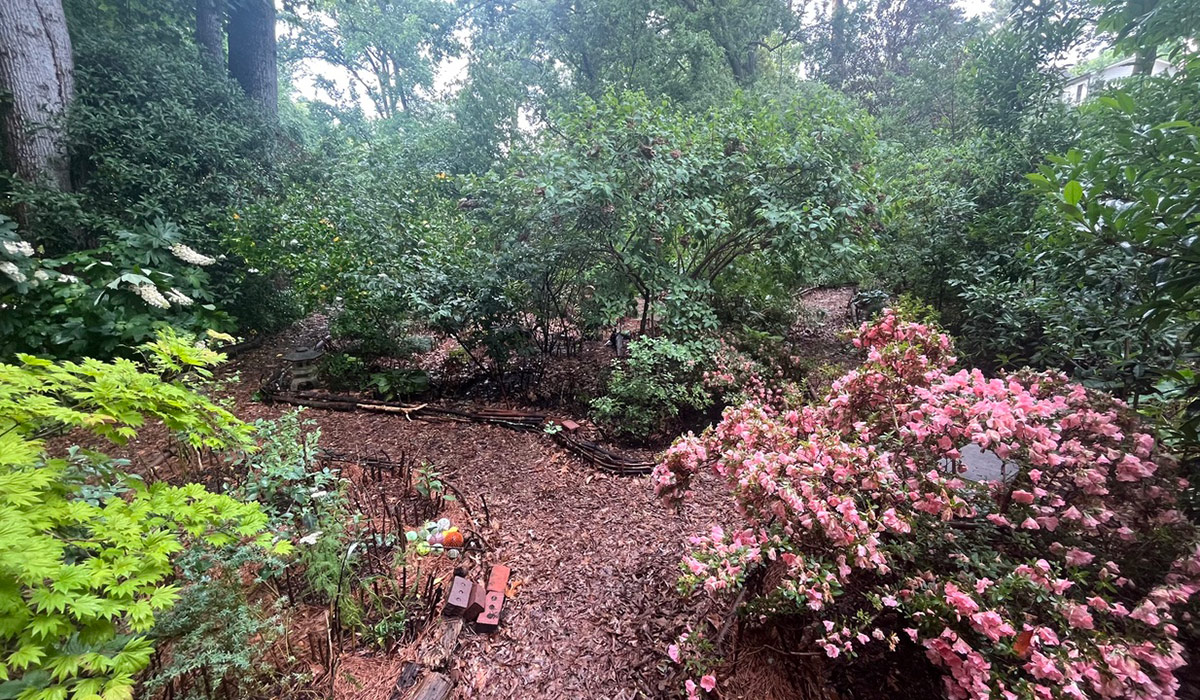 To the right of the Center Garden is the East Garden path (can just make out in the foliage tunnel on the right, Diagonal is off to the left). Fading is the ‘Blaauw’s Pink’ Kurume azalea (Rhododendron ‘Blaauw’s Pink’, Zones 6–9). Other plants which bloom at various times in this photo are, from the left, ‘Snow Queen’ oakleaf hydrangea, gardenia (currently in bloom), ‘Kintoki’ cornelian cherry dogwood (Cornus officinalis ‘Kintoki’, Zones 4–9) (little yellow flowers early spring), three different native rhododendrons (March blooming), ‘Vanillia Strawberry’ panicle hydrangea (Hydrangea paniculata ‘Renhy’, Zones 3–8) (summer blooms). Lining the eastern property line are mostly ‘Chindo’ sweet viburnum (Viburnum awabuki ‘Chindo’, Zones 7–11) and orange flowering fragrant tea olive (Osmanthus fragrans f. aurantiacus, Zones 8–11).
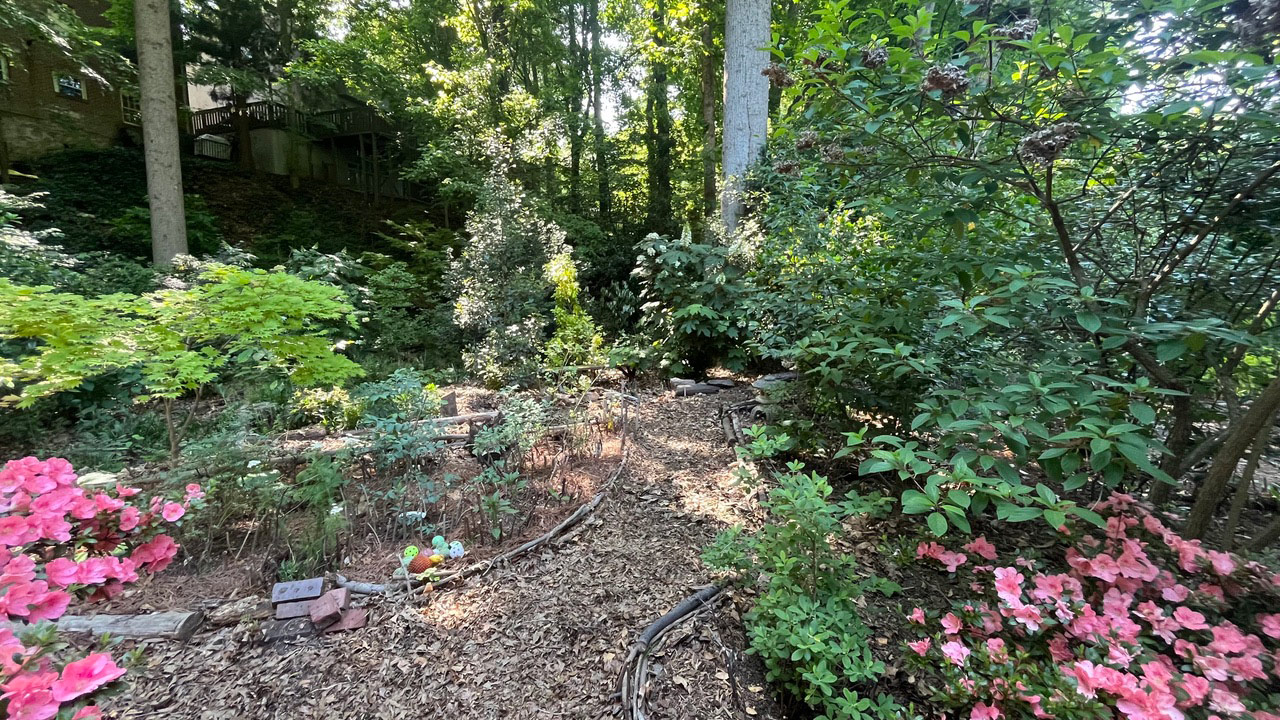 Sitting on one of the three existing benches (plan is for more, each with a mosquito bucket next to it!!!!) looking across the Center Garden toward the West Garden. You can see the ‘Moonrise’ Japanese maple and the blueberry patch on the left…..with a collection of balls deposited by dogs in their travels through the yard. Looking back I’ve wondered if I should have kept an inventory of all that was found when digging—from toys to stuff thrown away (including broken glass!).
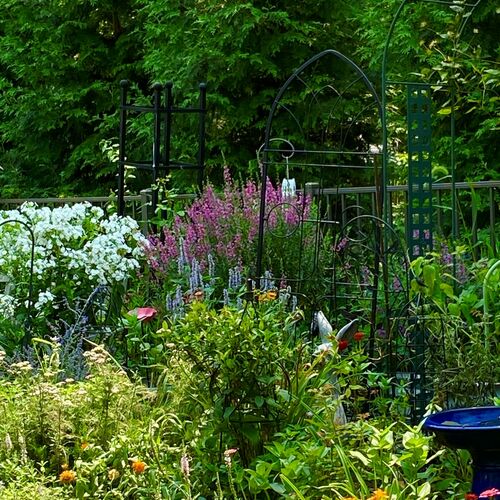
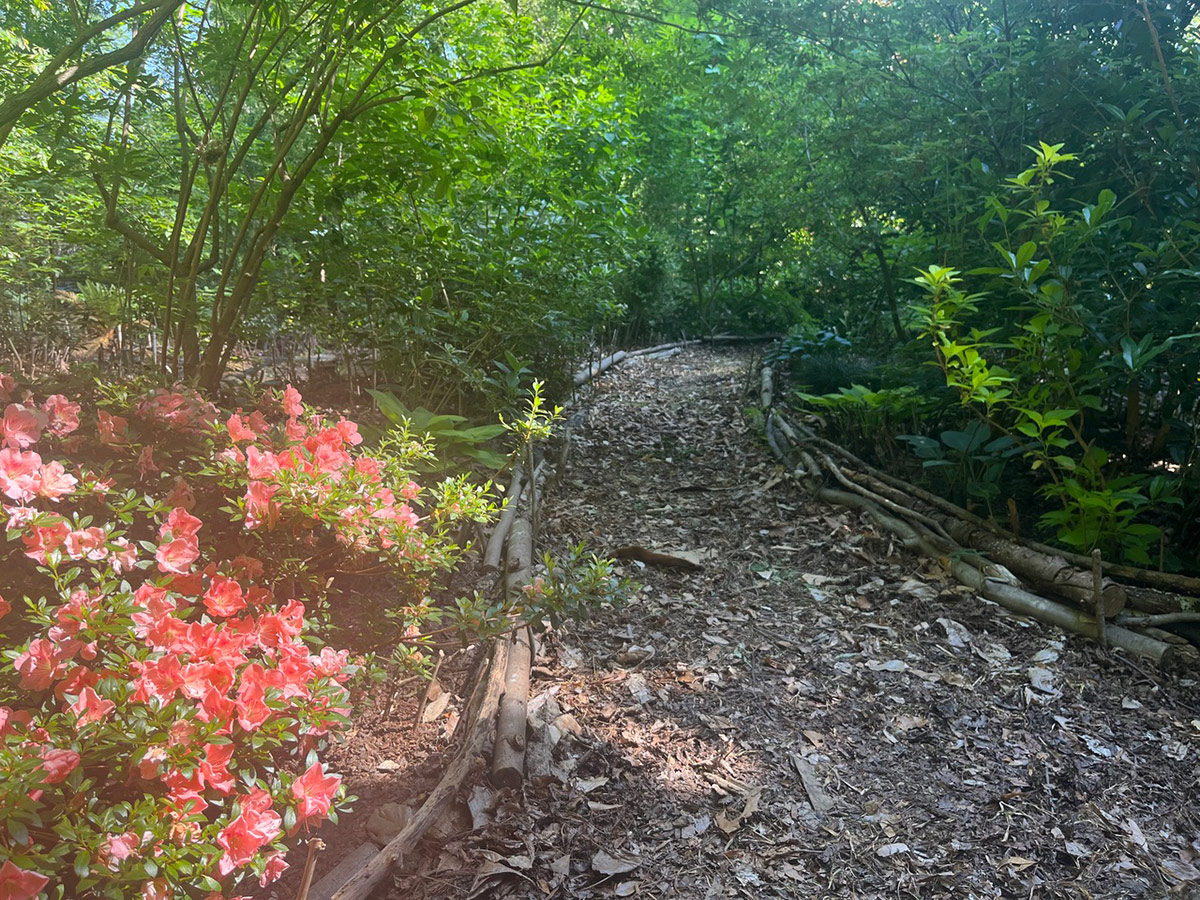 The East Garden path continues until it reaches an overlook above the stream. The Secret Garden is to the left. This corridor is framed by winterberries (Ilex verticillata, Zones 3–9), native and non-native rhododendron (‘Rising Sun’ [Rhododendron austrinum ‘Rising Sun’, Zones 5–9] along with the cloned or rescued ‘Blaauw’s Pink’, respectively), buckwheat tree (Cliftonia monophylla, Zones 7–10), 3 hydrangeas (‘Lemon Zest’ and ‘Mariesii Variegata’ bigleaf hydrangeas [Hydrangea macrophylla ‘Lemon Zest’ and ‘Mariesii Variegata’, Zones 6–9] and ‘Vanillia Strawberry’ panicle hydrangea), 3 viburnums (‘Popcorn’ [Viburnum plicatum f. plicatum ‘Popcorn’, Zones 5–9], ‘Compactum’ [V. opulus ‘Compactum’, Zones 3–8] and Blue Muffin® [V. dentatum ‘Christom’, Zones 3–8], the last for which I want to get a pollinator pairing), a ‘Mount Airy’ fothergilla (Fothergilla ‘Mount Airy’, Zones 5–8), witch hazel (Hamamelis virginiana, Zones 3–9), chaste tree (Vitex agnus-castus, Zones 7–8) and hostas. This seems to be a favorite area for a little brown bunny… which has eaten all the black-eyed Susans (Rudbeckia hirta, Zones 3–8) and Mexican petunia (Ruellia simplex, Zones 8–10) to the ground in the sunny gaps.
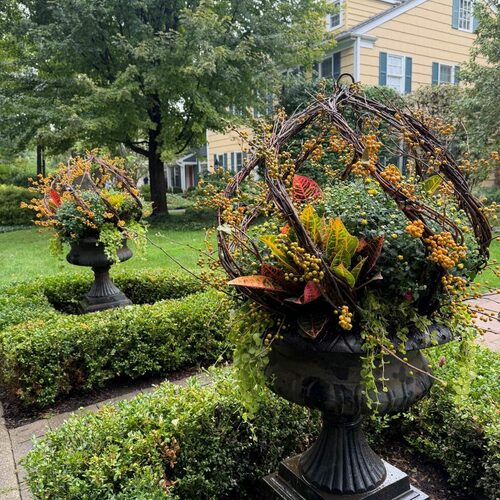
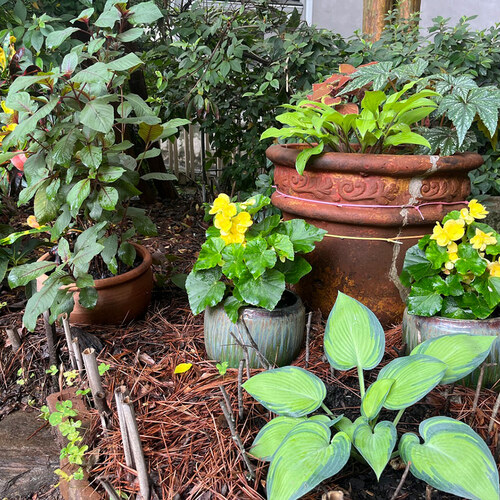
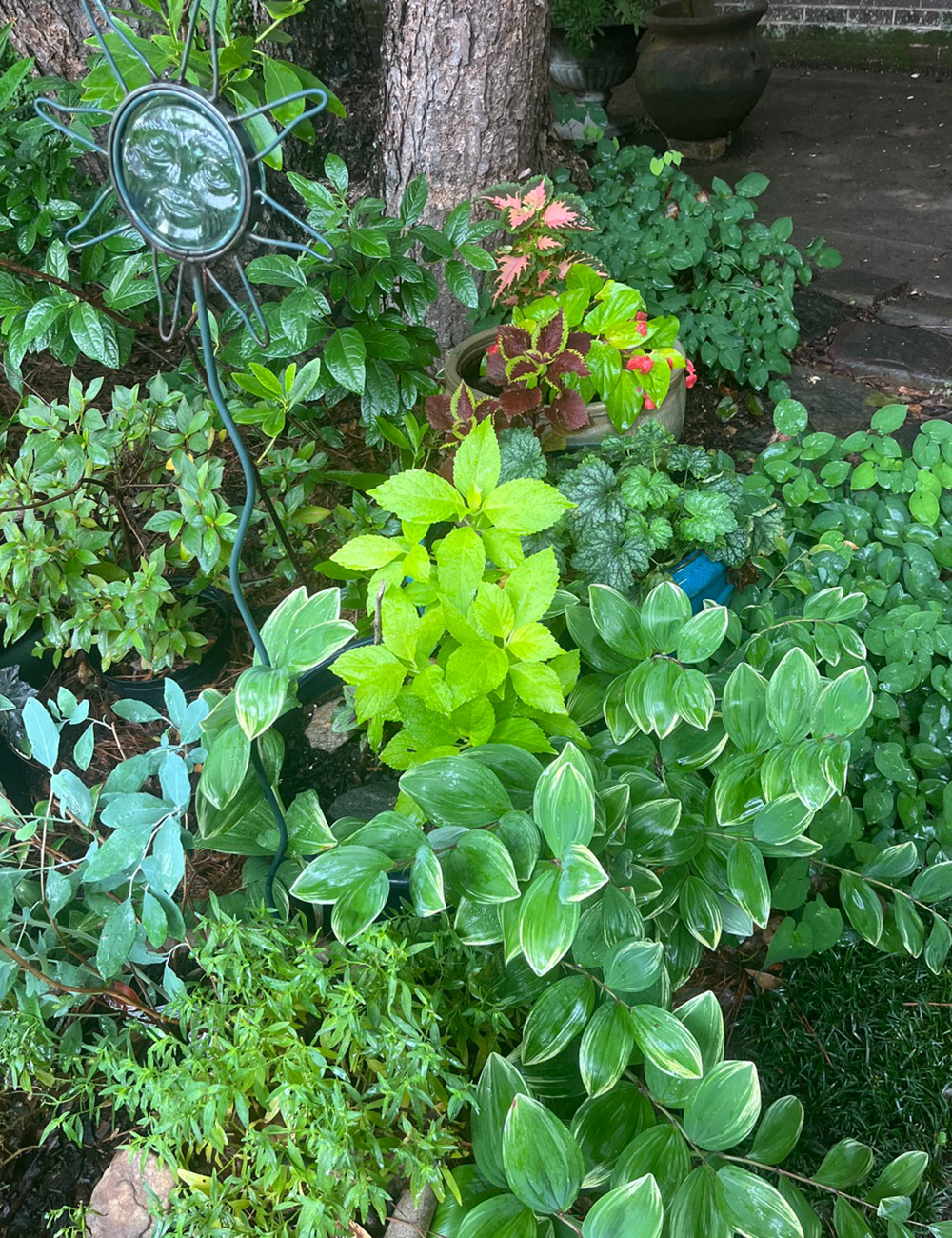 Shifting to the front yard, I tend to use pots for two purposes—to get clones grown to a certain size or to enjoy new plants I’ve purchased before putting in back (which may depend on whether or not spots are ready for them!), to provide lots of summer color with annuals for sidewalk interest for those passing by and to put tropicals outside that have been inside for five months!! Here are clones of Southern indica azalea (Rhododendron indica ‘Formosa’, Zones 7–10), ‘Winterthur’ viburnum (Viburnum nudum ‘Winterthur’, Zones 5–9), ‘Florida Sunshine’ anise (Illicium parviflorum ‘Florida Sunshine’, Zones 6–9), and ‘Lemon Zest’ hydrangea. A ‘Woodlanders Blue’ zenobia (Zenobia pulverulenta ‘Woodlanders Blue’, Zones 6–9) (front left) is biding its time in front so I can keep an eye on it. Some color is provided by 2 coleuses—Wizard® ‘Coral Sunrise’ and ‘Ruby Slipper’ (Solenostemon scutellarioides ‘Coral Sunrise’ and ‘Ruby Slipper’, annual) (which despite the ‘burgundy-only color’ on the tag according to research CAN present with a chartreuse edge!)—and ‘Canary Wings’ begonia (Begonia ‘Canary Wing’, Zones 10–11 or as an annual). The variegated Solomon’s seal (Polygonatum odoratum var. pluriflorum ‘Variegatum’, Zones 3–8) and epimedium are permanent fixtures. At the bottom I’m seeing if the snapdragons planted in the pot last autumn will continue to produce flowers…
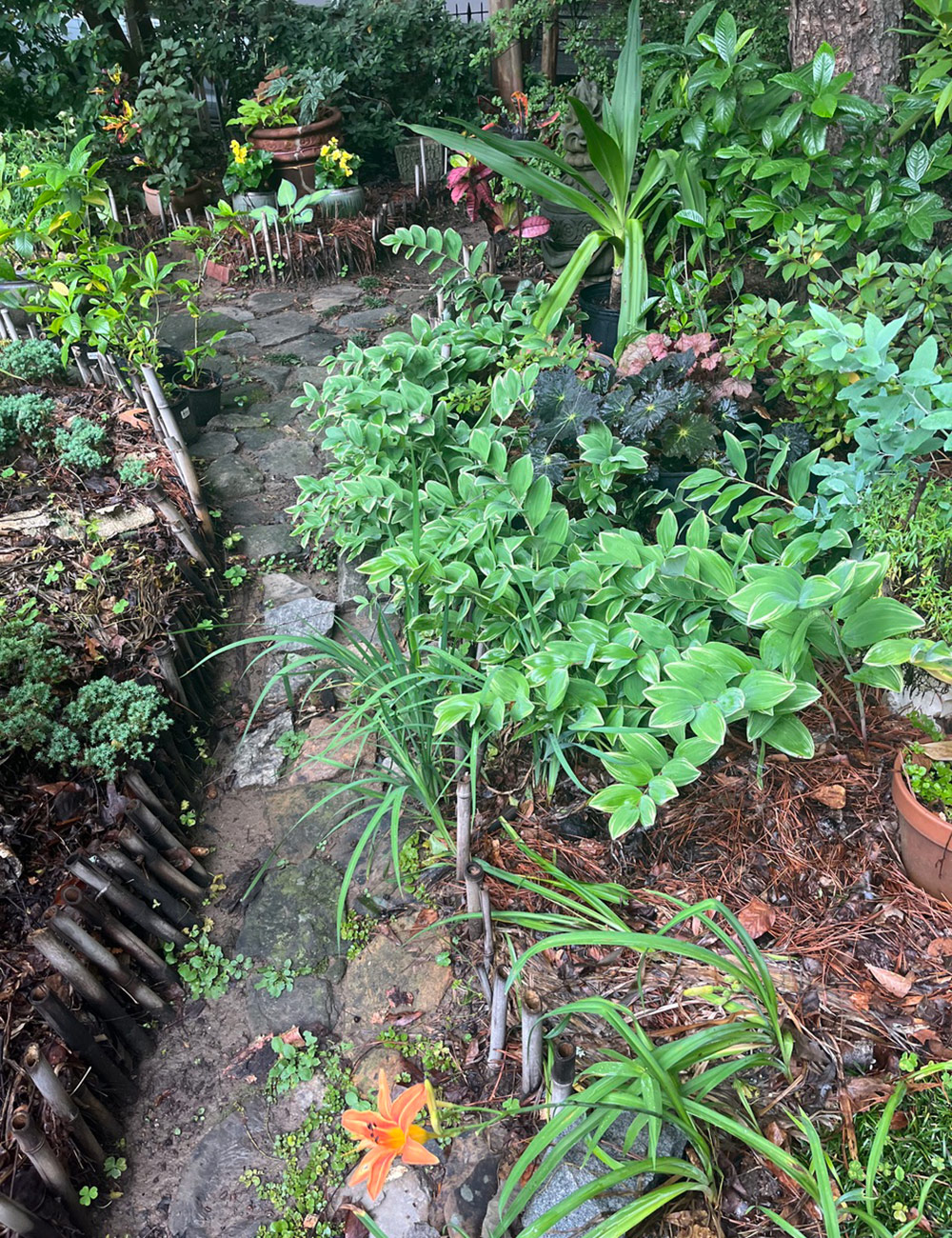 To the left of the preceding picture is the dry stream drainage area—directing water away from the structure. Crotons brought out for the summer along with a crinum lily fill in among heucheras and begonias in pots.
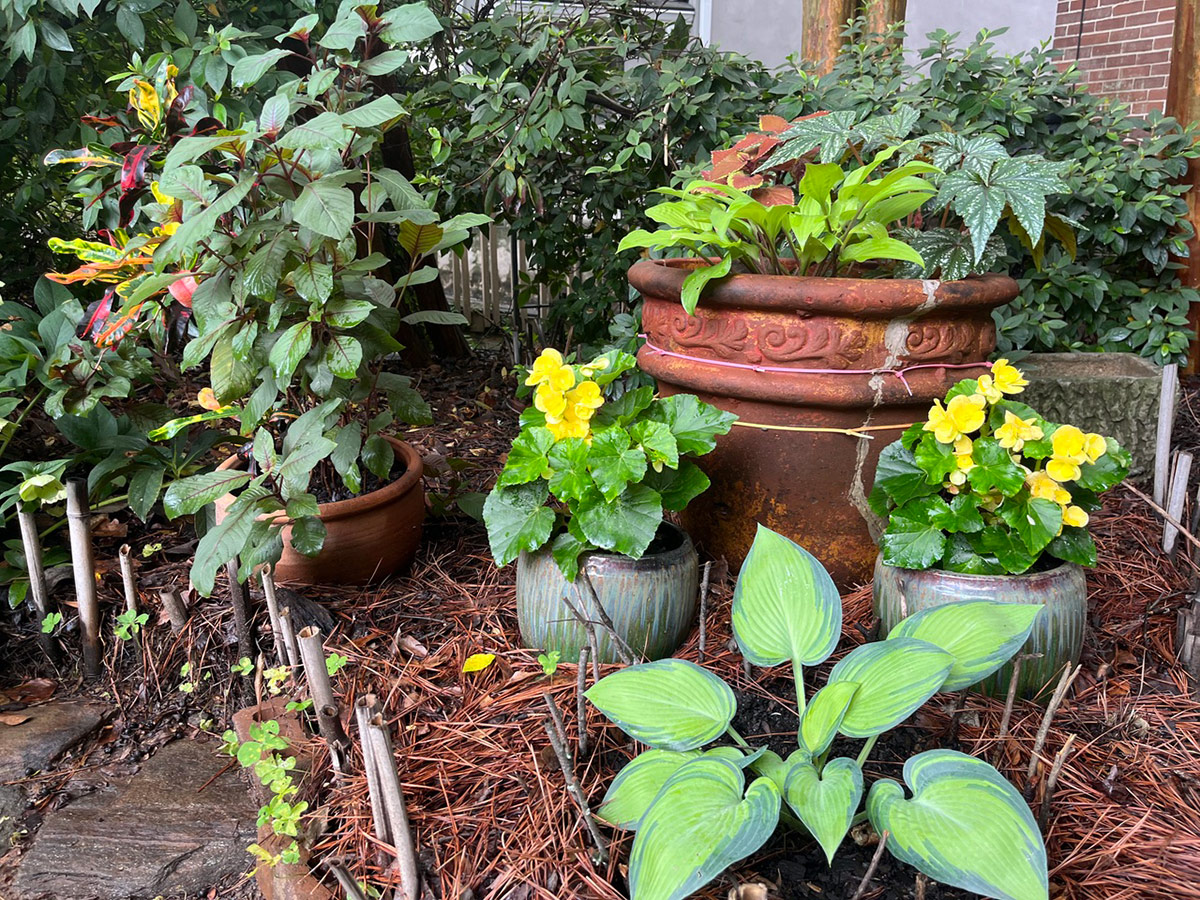 A closer look, from the left, are a croton (variety not known), ‘Gartenmeister’ fuchsia (Fuchsia ‘Gartenmeister’, Zones 9–11) (both of which I overwinter indoors), a couple of ‘Blitz’ begonias (Begonia x hiemalis ‘Blitz’, annual), a large pot with ‘Fire Island’ hosta (Hosta ‘Fire Island’, Zones 3–8), ‘Gryphon’ rex begonia (Begonia ‘Gryphon’, Zones 8–10 or as an annual) and coleus. A hosta takes up the front spot. The original Southern indica azalea that begat all the others is in the background.
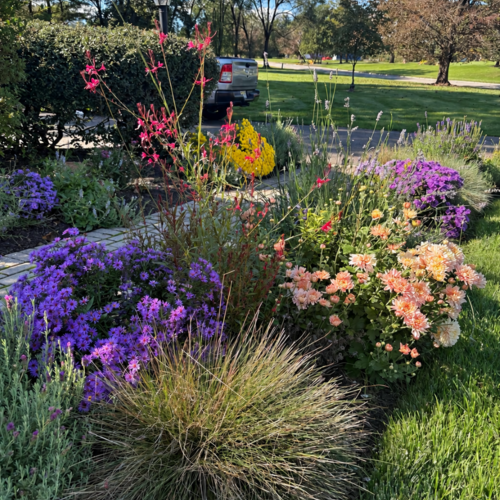
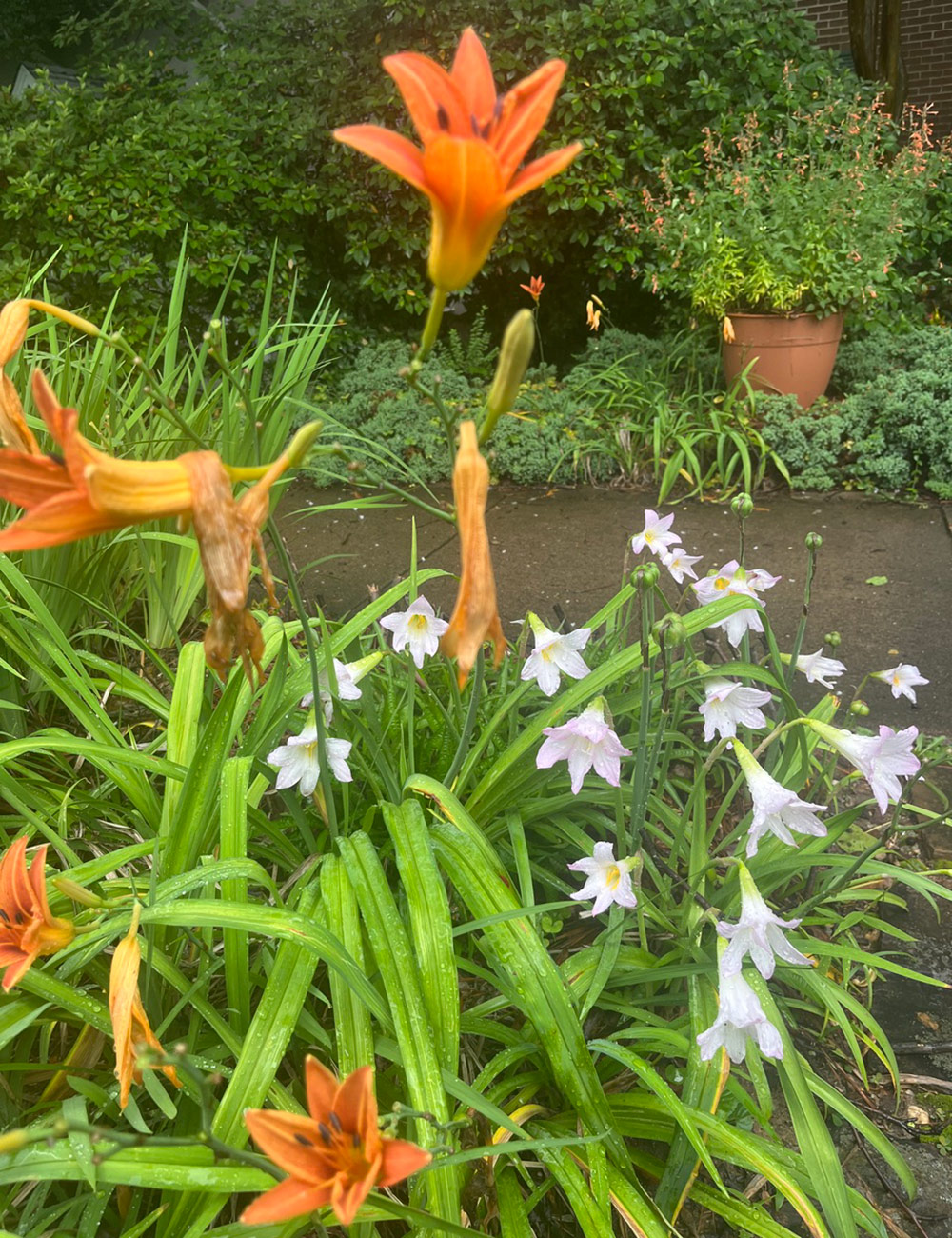 Finally, due to all the almost daily rain we’ve been having lately the rain lilies (Zephyranthes spp., Zones 7–10) have burst forth in profusion in the verge! Occasionally 2 or 3 will pop up, but apparently the conditions lately have been ideal! The pot on the other side of the public sidewalk has ‘Apricot Nectar’ agastache (Agastache ‘Apricot Nectar’, Zones 7–10).
Thank you so much for this deep-dive into your gorgeous garden, Steve! The photos of plants you have shared in your past two submissions certainly piqued my curiosity about your landscape at large, and it’s wonderful to finally see how all of these marvelous selections come together.
Whether your landscape is finally starting to fill out this year, like Steve’s has, or you’re still in the process of getting plants into the ground, we would love to see your garden this growing season. Follow the directions below to submit your photos to Garden Photo of the Day!
We want to see YOUR garden!
Have photos to share? We’d love to see your garden, a particular collection of plants you love, or a wonderful garden you had the chance to visit!
To submit, fill out the Garden Photo of the Day Submission Form.
You can also send 5–10 photos to [email protected] along with some information about the plants in the pictures and where you took the photos. We’d love to hear where you are located, how long you’ve been gardening, successes you are proud of, failures you learned from, hopes for the future, favorite plants, or funny stories from your garden.
Do you receive the GPOD by email yet? Sign up here
Fine Gardening Recommended Products
ARS Telescoping Long Reach Pruner
Fine Gardening receives a commission for items purchased through links on this site, including Amazon Associates and other affiliate advertising programs.
Telescopes from 4 to 7′. Cut and Hold (160) Blades. Drop forged blades for unsurpassed long lasting sharpness. Lightweight, 2.3 lbs., for continued use. Perfectly balanced for easy pruning.