Expert Picks: Try These Native Shrub Alternatives to Common Landscape Plants
Looking to incorporate more native plants into your landscape? Our regional expert shares four versatile native shrub alternatives that thrive in the Pacific Northwest’s mild summers and wet winters. These plant picks add year-round structure and seasonal beauty while providing valuable habitat. Research shows that incorporating native plants can increase the abundance and diversity of bees, butterflies, birds, and other beneficial wildlife, making your garden more resilient and ecologically rich.
Pacific wax myrtle
- Name: Morella californica syn. Myrica californica
- Zones: 7–9
- Size: 12 to 15 feet tall and wide
- Conditions: Full sun to full shade; moist, well-drained soil
- Native range: Coastal Pacific Northwest
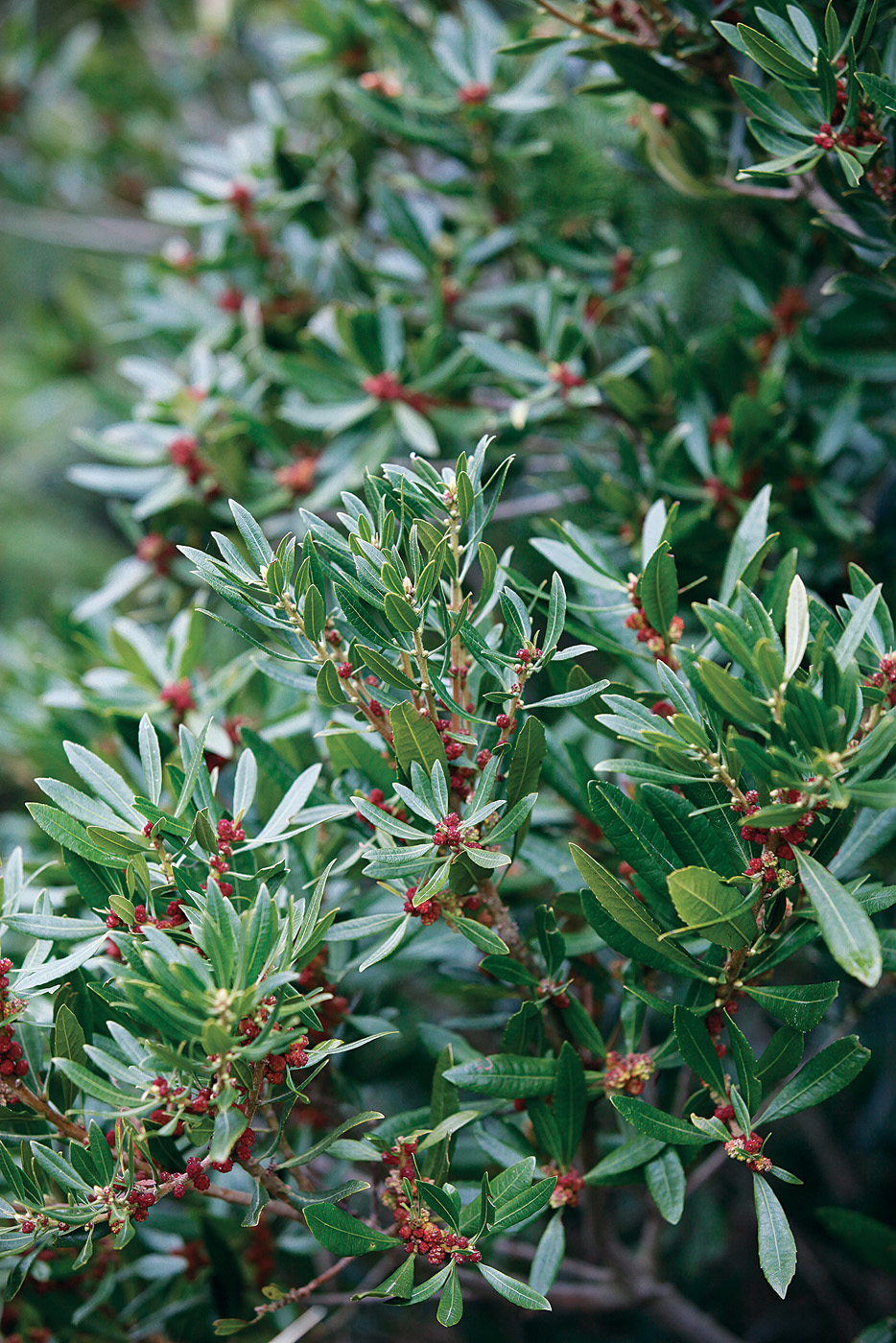
A suitable evergreen screening hedge can sometimes be difficult to find. So often the plants grow too slowly, or grow too quickly and too tall. But we are very fortunate to have an ideal evergreen shrub native to the Pacific Northwest. Pacific wax myrtle is an adaptable shrub that grows quickly when it is young, then slows as it matures. It can form a beautiful natural screen that suits most privacy needs.
If you have a more formal garden in mind, it can withstand shearing to become dense and tight. It is an excellent replacement for the invasive English laurel (Prunus laurocerasus*, Zones 6–8), and I think the fine-textured foliage of wax myrtle is far prettier. It does best in sandy soil but tolerates a wide range of soil conditions, including clay and wet.
Read More: Essential Guide to Growing Hedges
Red-flowering currant
- Name: Ribes sanguineum
- Zones: 6–9
- Size: 5 to 10 feet tall and wide
- Conditions: Full sun to partial shade; average to dry, well-drained soil
- Native range: Coastal Pacific Northwest
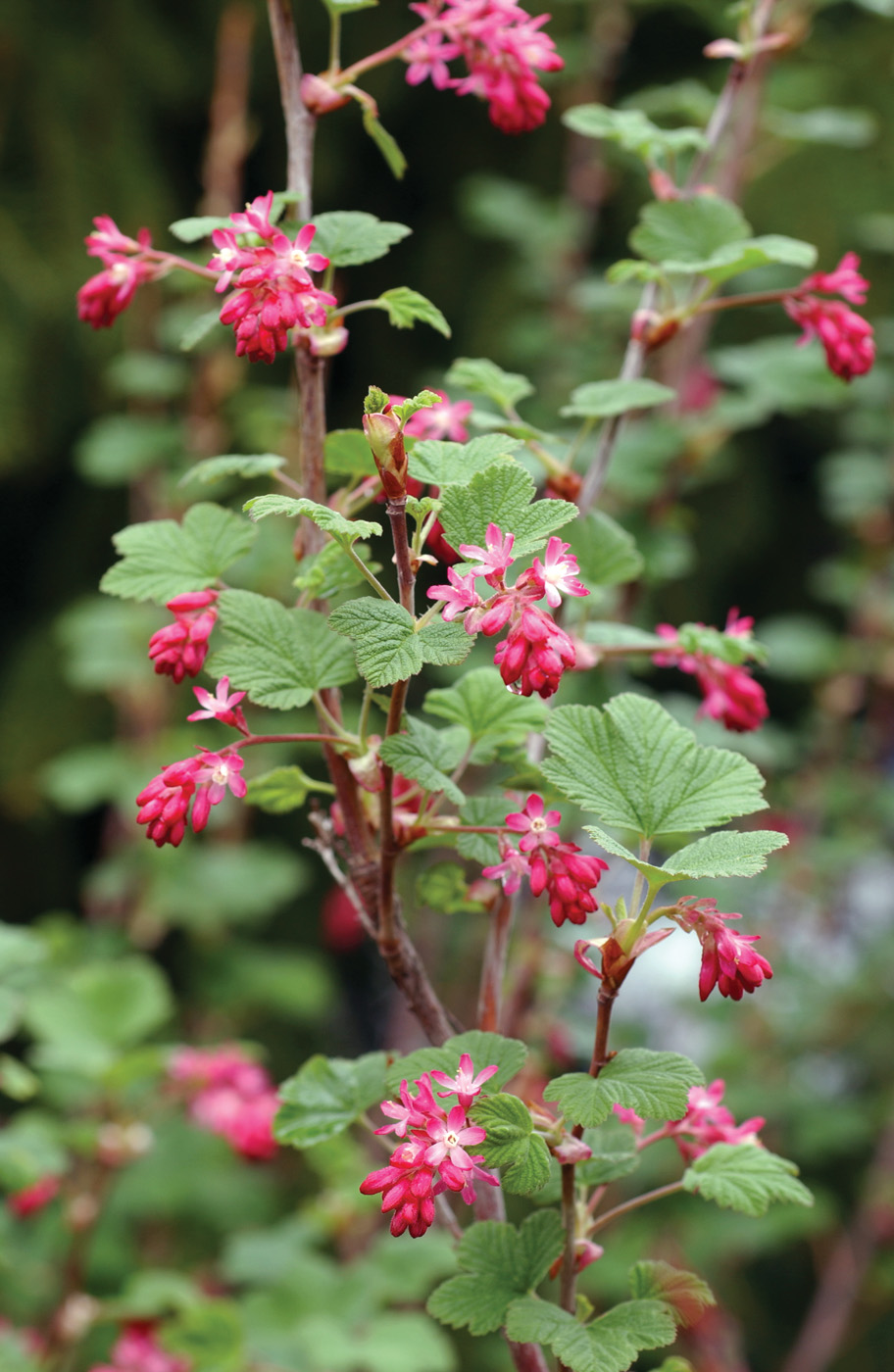
One of the Pacific Northwest’s prettiest spring-flowering shrubs is red-flowering currant. This upright grower becomes covered with delicate, pendulous racemes of flowers in pink, white, or cherry red. I find these colors much easier to incorporate into a landscape than the overused, brassy yellow flowers of a spring bloomer like forsythia (Forsythia spp. and cvs., Zones 4–9).
The habit of red-flowering currant is also more manageable than forsythia’s wild, rangy growth. Little pruning is needed for it to keep its upright shape and not sprawl over neighboring plants. As a bonus, this choice native is drought tolerant during long, dry summers. Light, open shade will produce the most abundant flowering.
Evergreen huckleberry
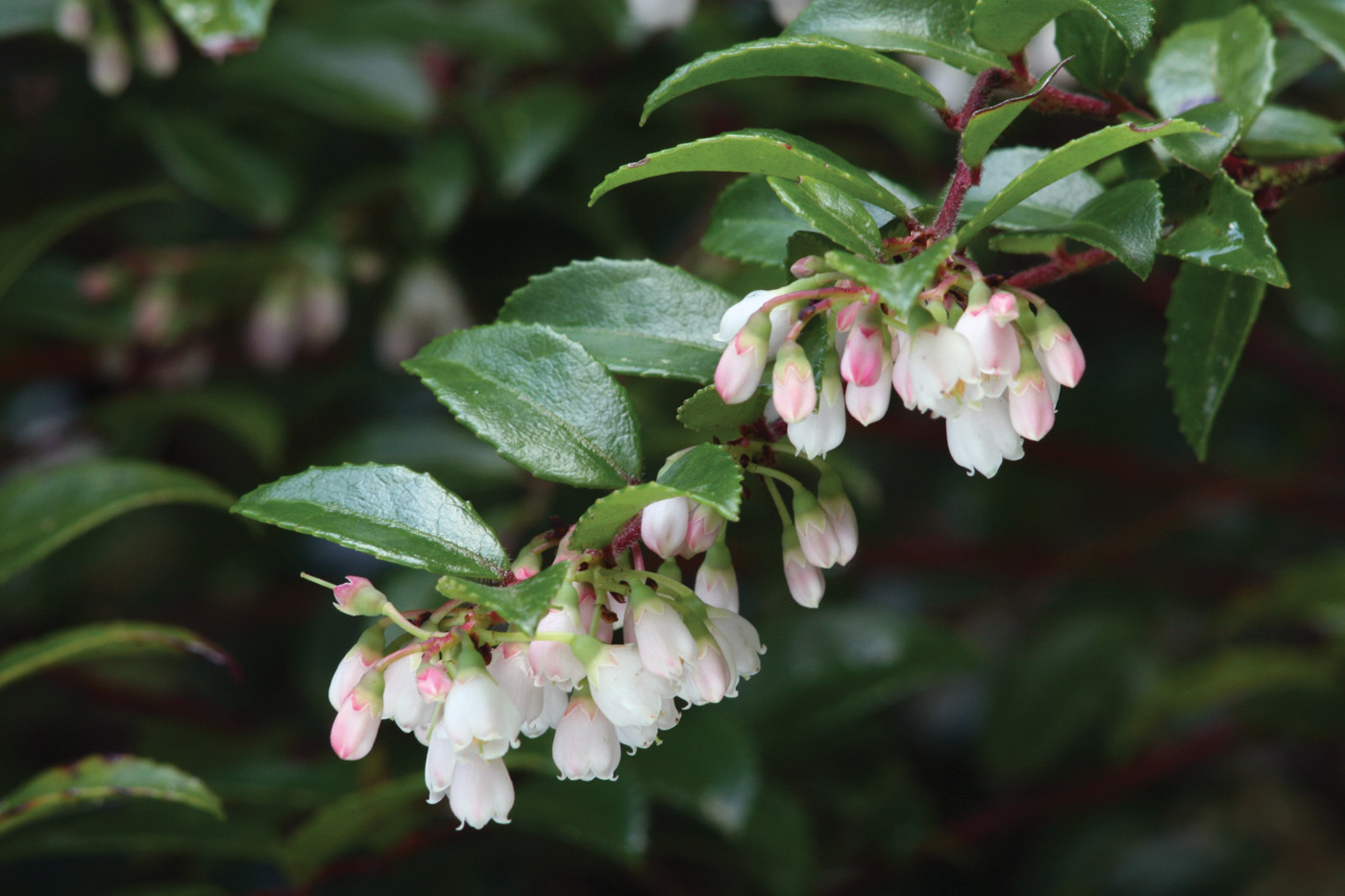
- Name: Vaccinium ovatum
- Zones: 6–9
- Size: 5 to 6 feet tall and wide
- Conditions: Full sun to partial shade; well-drained soil
- Native range: Coastal western North America
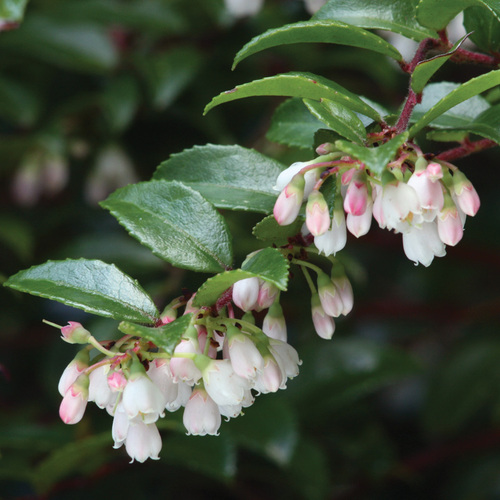
Every year in late summer, I enjoy foraging for the small but delicious berries of evergreen huckleberry. A beautiful and useful native shrub alternative, its small, shiny, deep green leaves are at home in sun or shade. With light pruning, it can become quite dense and is even tolerant of intense shearing for tight, formal, small- to medium-sized hedges.
It makes a perfect substitute for thirsty boxwoods (Buxus spp. and cvs., Zones 4–9). Evergreen huckleberry is far less disease- and insect-prone, and better suited for providing habitat for native fauna. In addition, it has lovely bronzy red new growth. If you grow it in sun, the foliage will become an attractive shade of burgundy in winter.
‘Burgundy Jewel’ vine maple
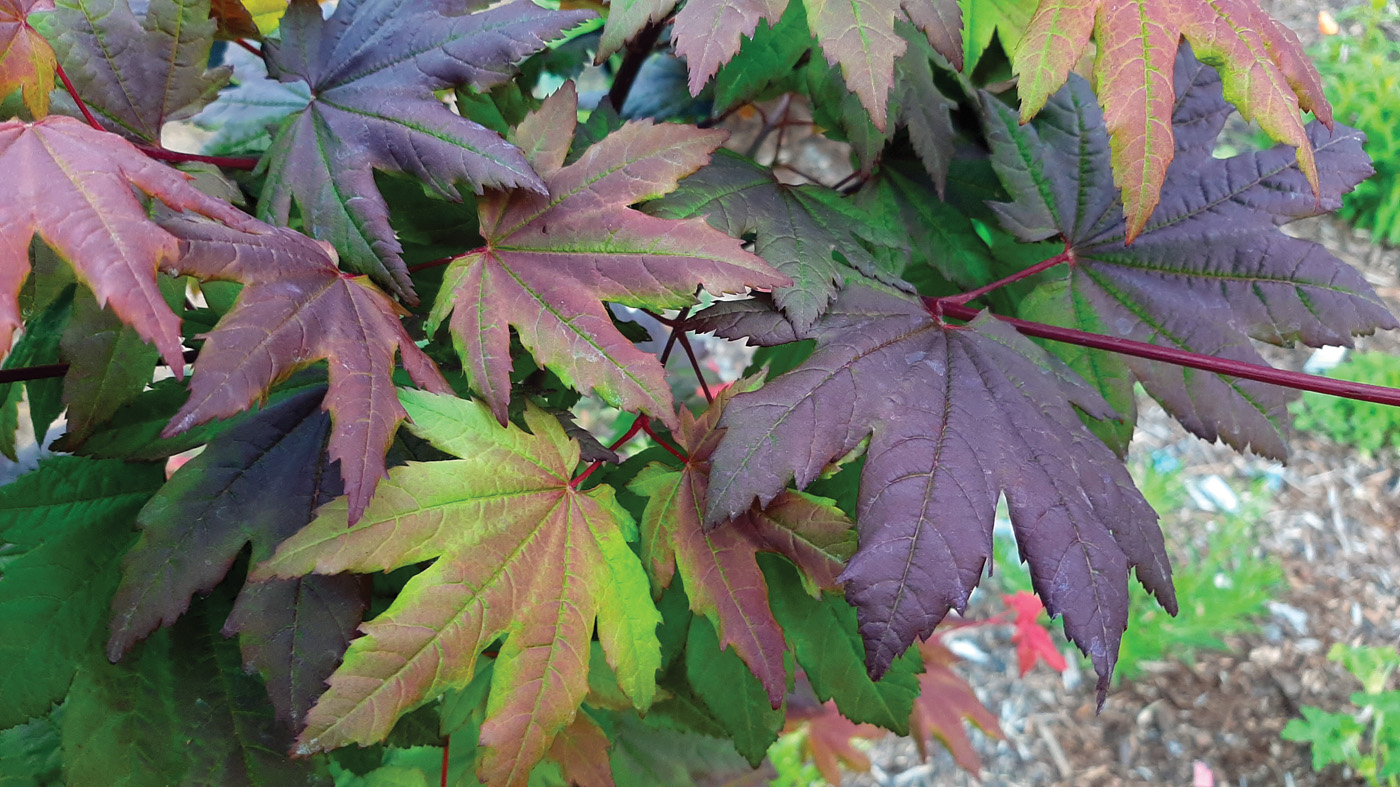
- Name: Acer circinatum ‘Burgundy Jewel’
- Zones: 5–9
- Size: 6 to 12 feet tall and 4 to 8 feet wide
- Conditions: Full sun to partial shade; well-drained soil
- Native range: Pacific Northwest
Japanese maples (A. palmatum and cvs., Zones 5–9) are ubiquitous in our region, with red-leaf seedling forms being very common and sometimes of dubious beauty. I planted ‘Burgundy Jewel’ vine maple in my garden several years ago and was amazed by its stunning good looks. In spring, the leaves emerge green with a purple blush that deepens as the season progresses, reaching a bright burgundy by early summer.
My young plants always push out additional growth in midsummer that is a vibrant orange-red, contrasting nicely with the older burgundy leaves. This cultivar is one of the best selections from our native vine maple. Provide full sun for fantastic foliage color. Grafted plants require occasional watering during summer.
Richie Steffen is the executive director of the Miller Garden in Seattle and a contributing editor.
*Indicates invasive plant alert. Check alerts in your area to learn more.
Photos courtesy of contributor unless otherwise noted.
Read More:
Great Native Perennials for Your Region
See More Regional Picks for the Pacific Northwest
Watch Videos on Our YouTube Channel
Get All Access to Fine Gardening!
Fine Gardening Recommended Products
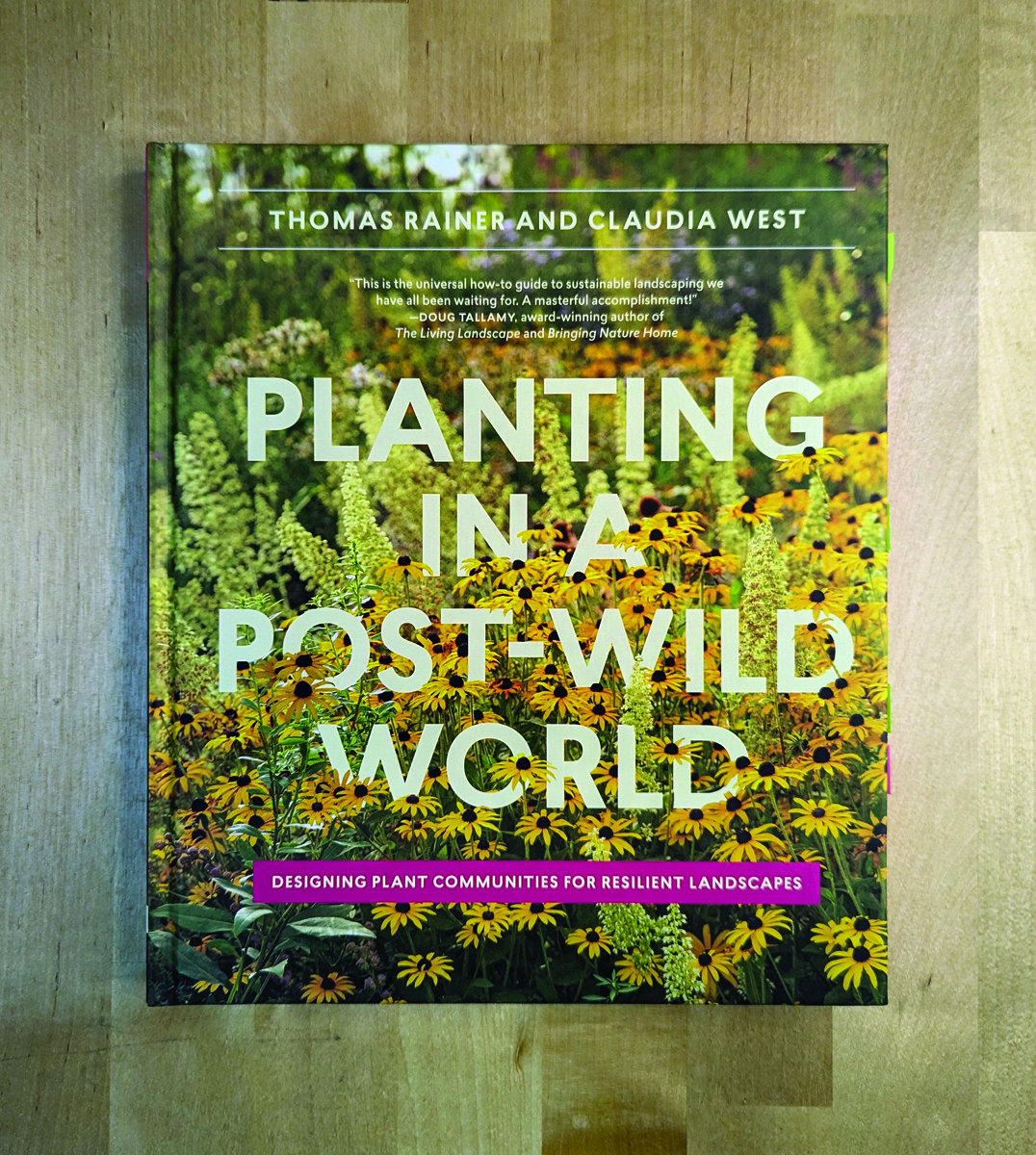
Planting in a Post-Wild World: Designing Plant Communities for Resilient Landscapes
Fine Gardening receives a commission for items purchased through links on this site, including Amazon Associates and other affiliate advertising programs.
Featuring gorgeous photography and advice for landscapers, Planting in a Post-Wild World by Thomas Rainer and Claudia West is dedicated to the idea of a new nature—a hybrid of both the wild and the cultivated—that can nourish in our cities and suburbs.

DeWalt Variable-Speed Cordless Reciprocating Saw
Fine Gardening receives a commission for items purchased through links on this site, including Amazon Associates and other affiliate advertising programs.
You can fit a variety of blades to this saw to cut fallen branches or prune larger limbs from trees in a pinch. It’s fast, tough, easy to use, and extremely versatile.
– 18.31 x 6.13 x 4 inches
– 1-1/8-inch stroke length
– Variable speed trigger with 0-3000 spm
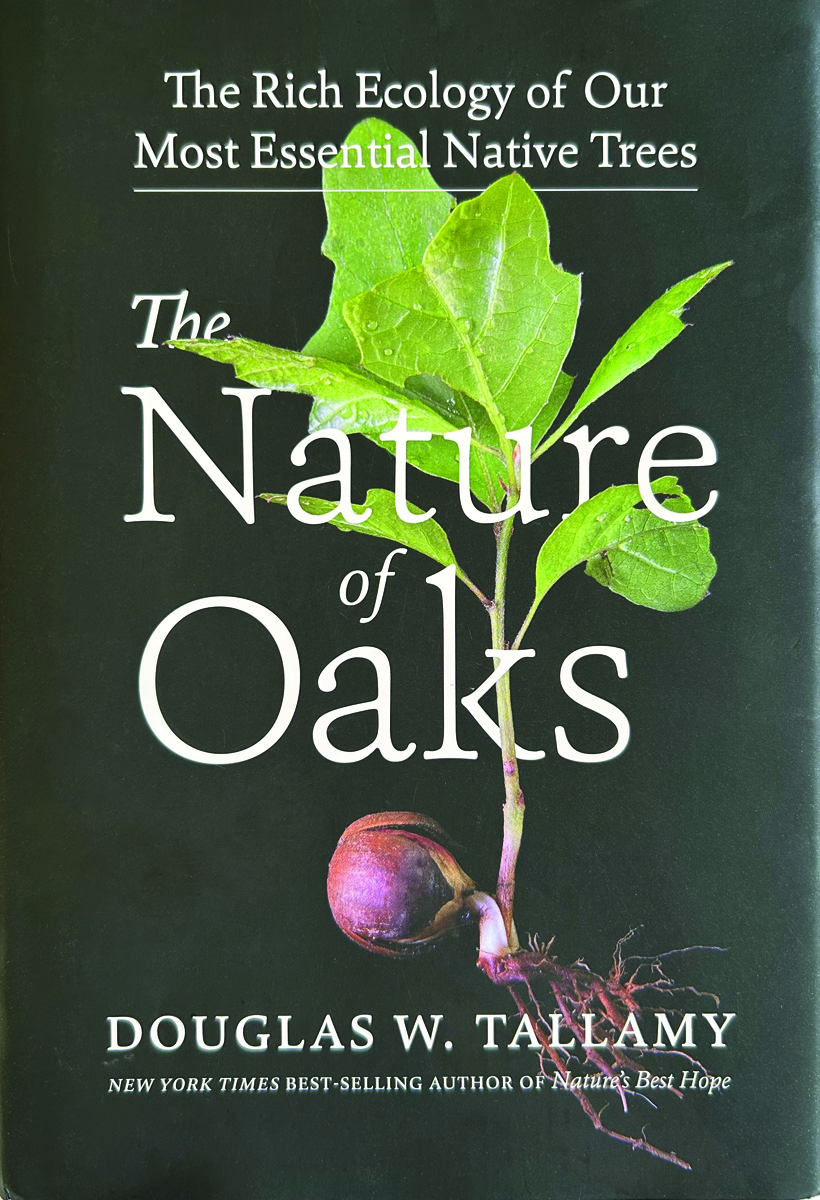
The Nature of Oaks: The Rich Ecology of Our Most Essential Native Trees
Fine Gardening receives a commission for items purchased through links on this site, including Amazon Associates and other affiliate advertising programs.
The Nature of Oaks reveals what is going on in oak trees month by month, highlighting the seasonal cycles of life, death, and renewal. From woodpeckers who collect and store hundreds of acorns for sustenance to the beauty of jewel caterpillars, Doug Tallamy illuminates and celebrates the wonders that occur right in our own backyards. He also shares practical advice about how to plant and care for an oak, along with information about the best oak species for your area.