

Containers are a great way to work more color into the landscape, whether you’re filling a gap in a garden bed or brightening a spot where planting in the ground can be difficult. They can be especially useful beneath mature trees, where established roots often make digging a challenge. Today we’re visiting Linda in Hinckley, Ohio (Zone 6b) who uses containers throughout her garden to bring color to all kinds of spaces.
We have lived here for 15 years on 1 acre, which had no gardens when we arrived. I have been working on incorporating native plants and have had great success with many of them. I especially enjoy watching the pollinators that visit.
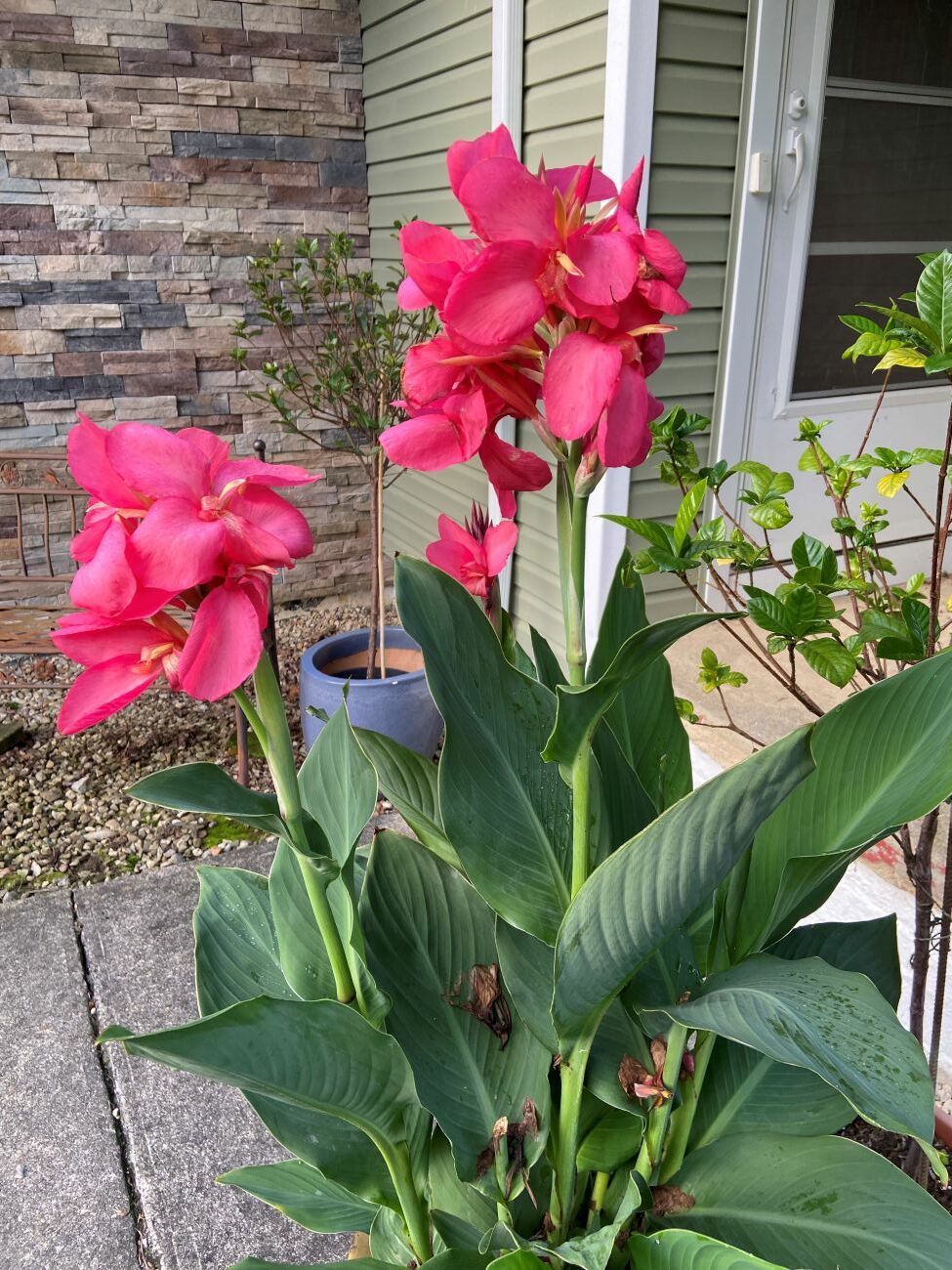
Canna (Canna cvs., Zones 7–10): Because cannas aren’t reliably hardy in Linda’s Zone 6b garden, the rhizomes can be lifted after frost and stored over winter for planting again in spring.
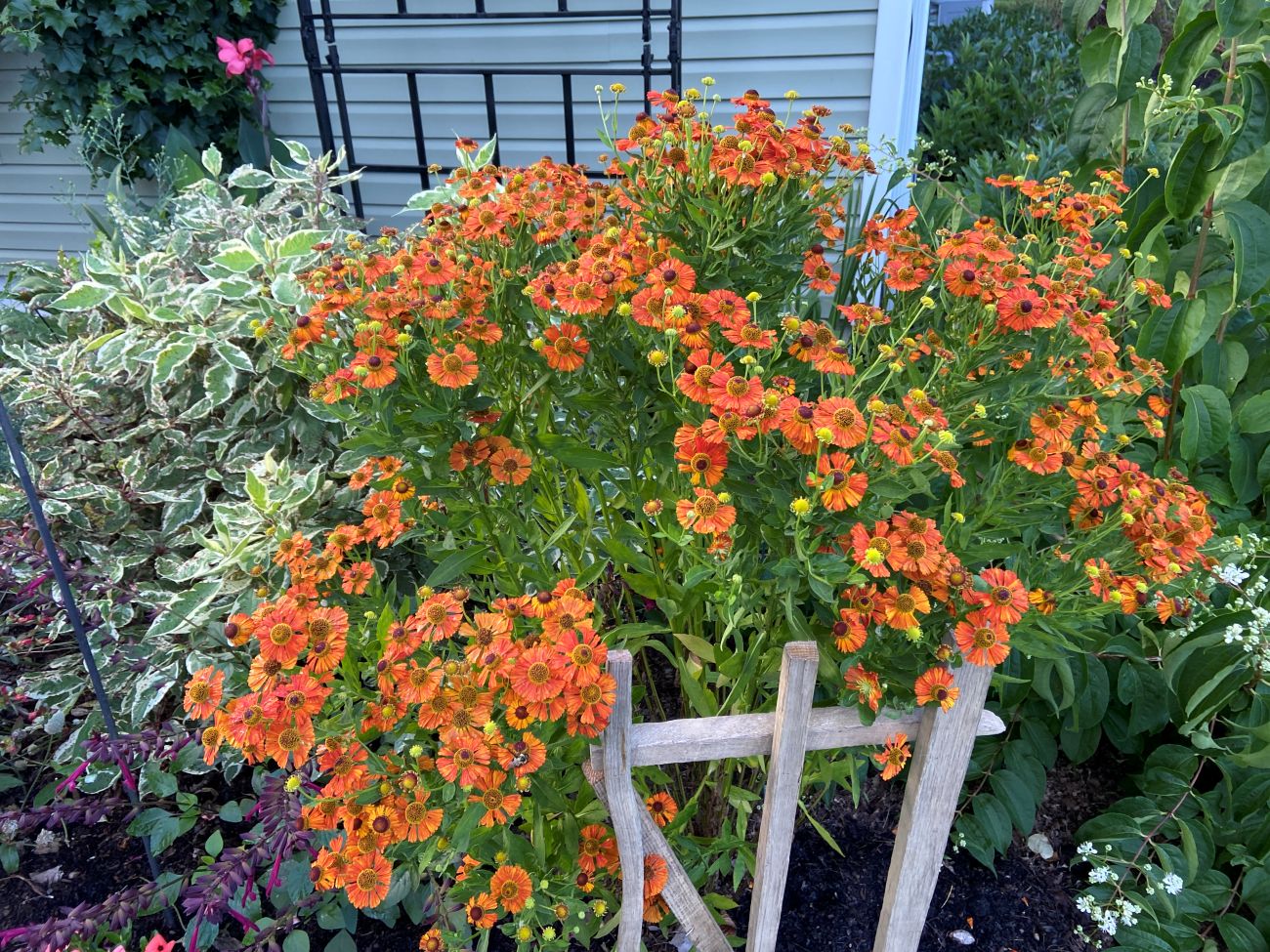
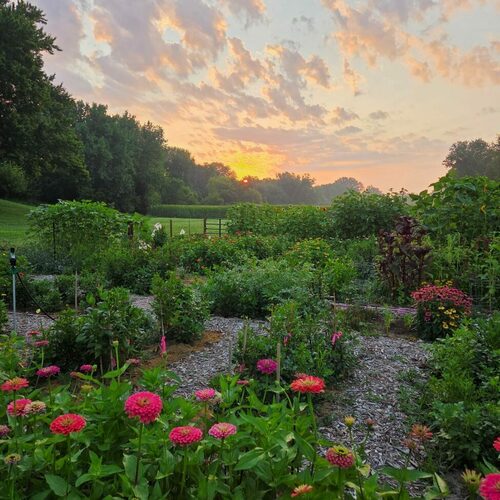
My front garden, which is about 3 years old, with Ivory Halo Tatarian dogwood (Cornus alba ‘Bailhalo’, Zones 3–7) on the left, sneezeweed (Helenium autumnale, Zones 3–8) in the middle, and seven-son flower (Heptacodium miconioides, Zones 5–9) on the right
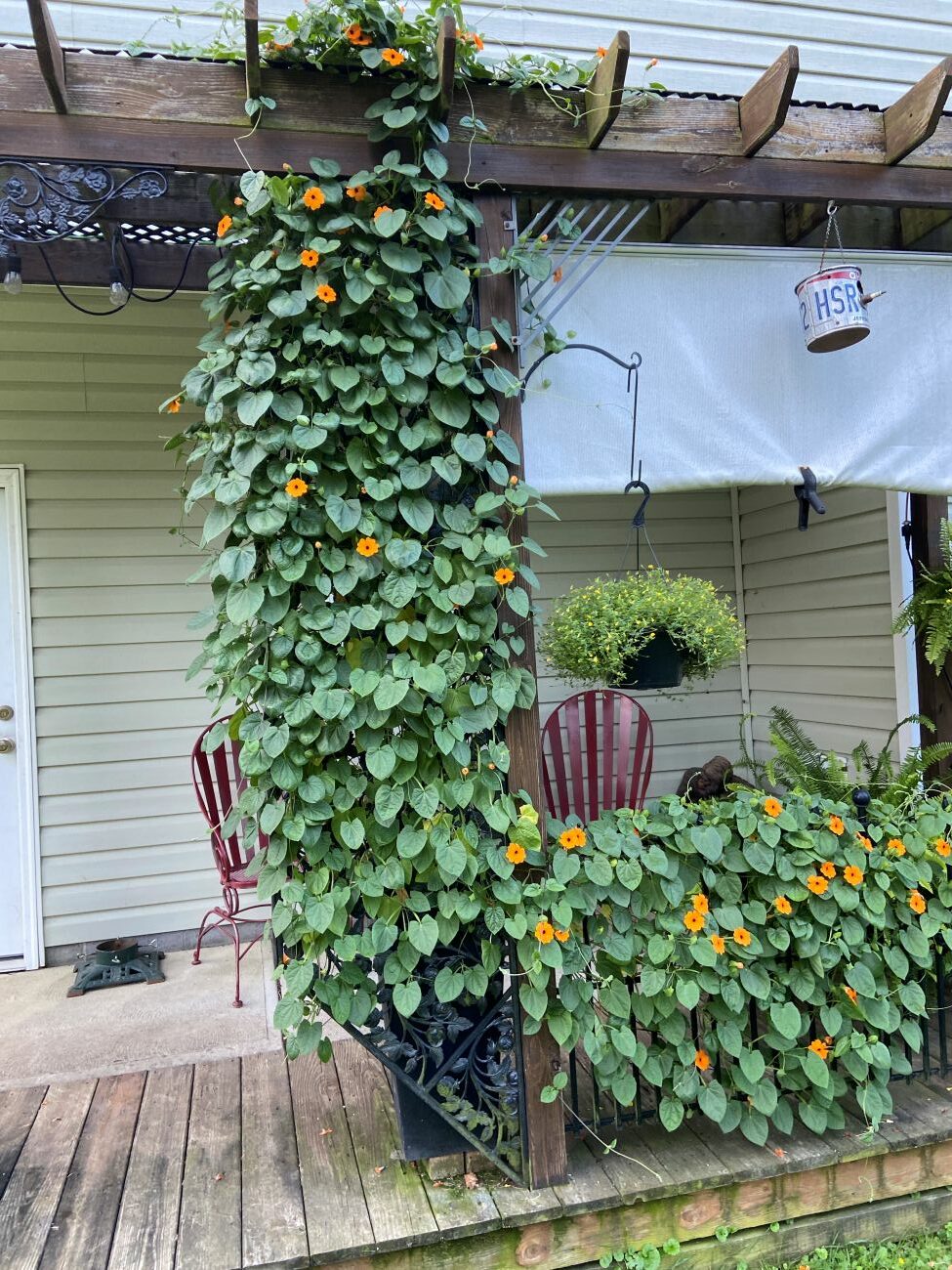
Orange black-eyed Susan vine (Thunbergia alata, Zones 10–11): It has done fantastic this year.
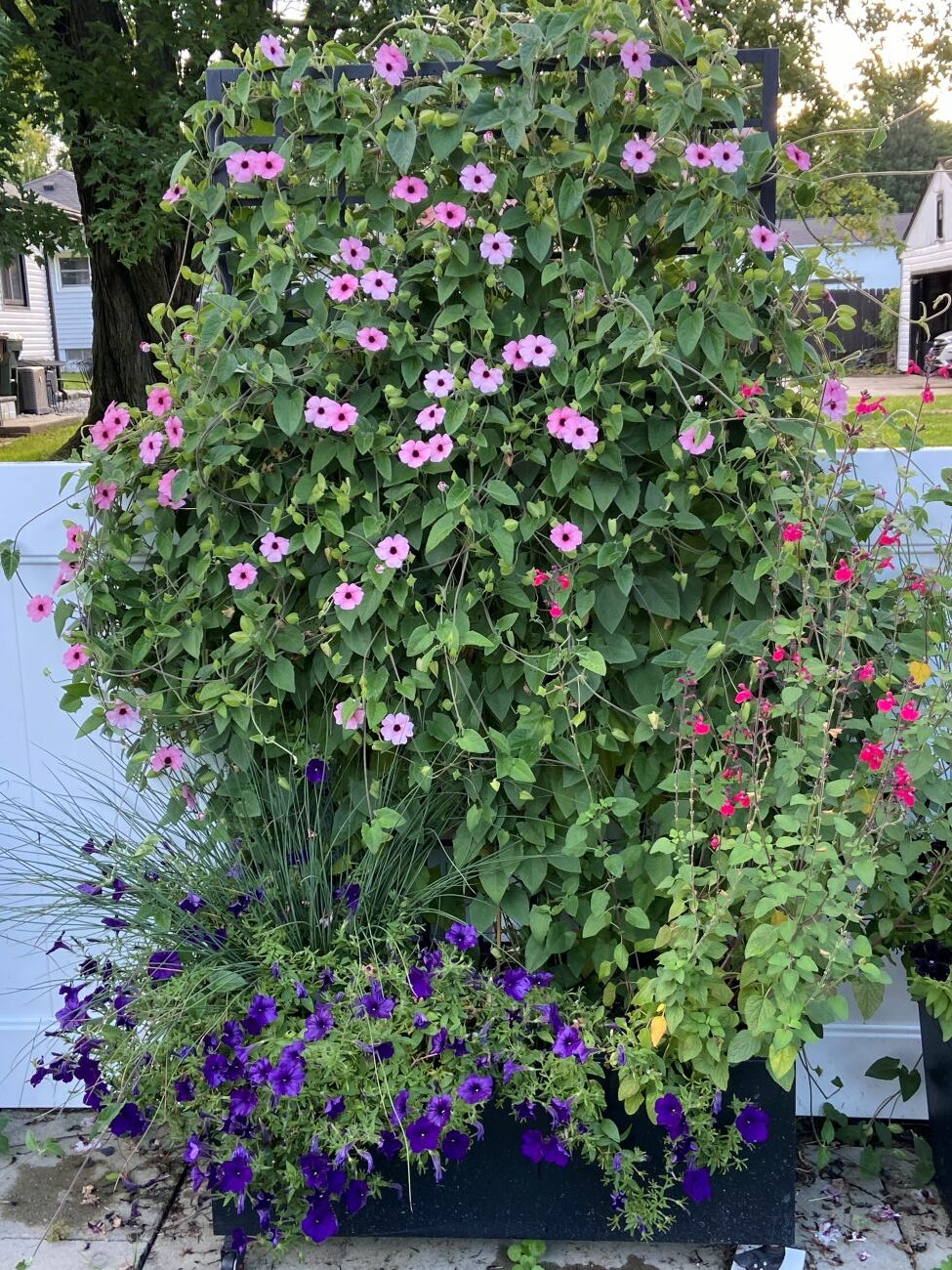
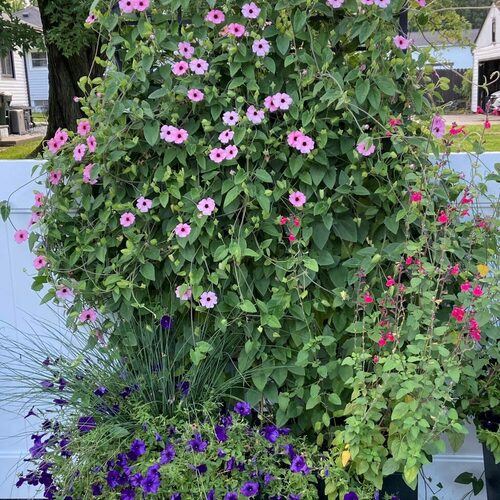
Pink black-eyed Susan vine, salvia, petunia (Petunia hybrid, annual), and perennial ornamental grass in a driveway planter
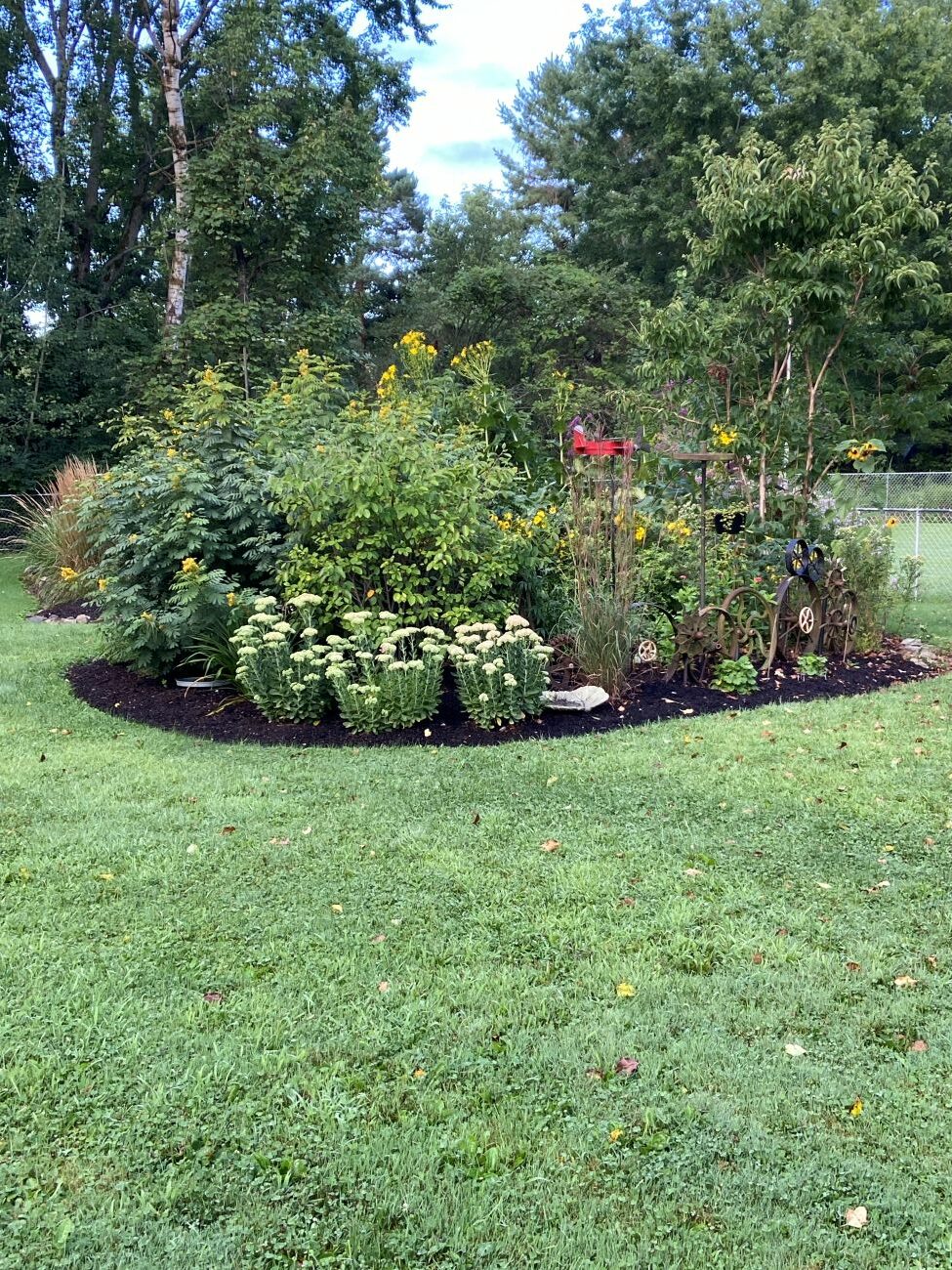
One of five native gardens in the backyard: I enjoy seeing which pollinators visit which plants.
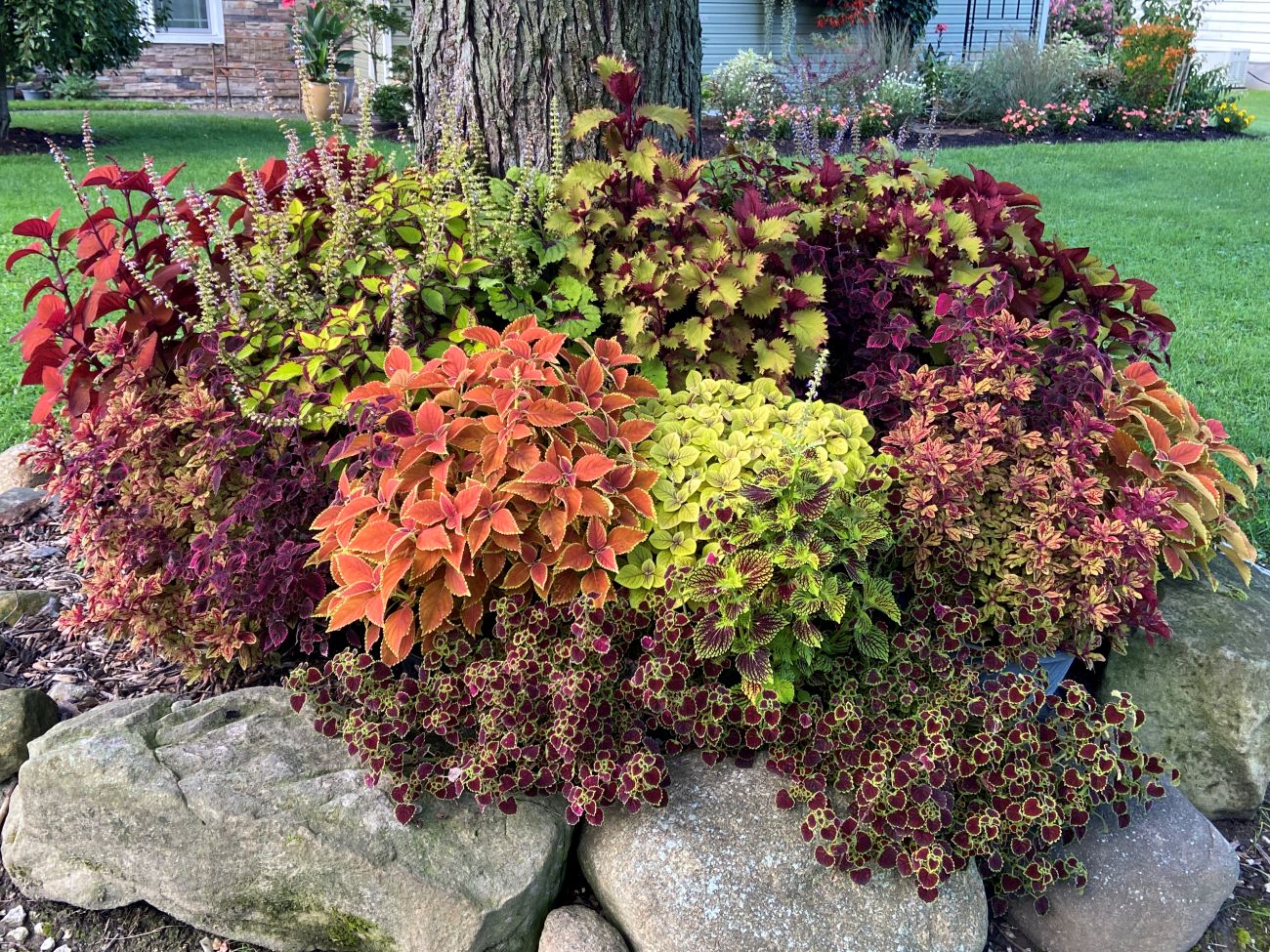
My coleus garden under a maple tree: These coleus (Plectranthus scutellarioides cvs., Zones 10–11) are all in large pots because it is difficult to plant under this tree. This is my favorite look.
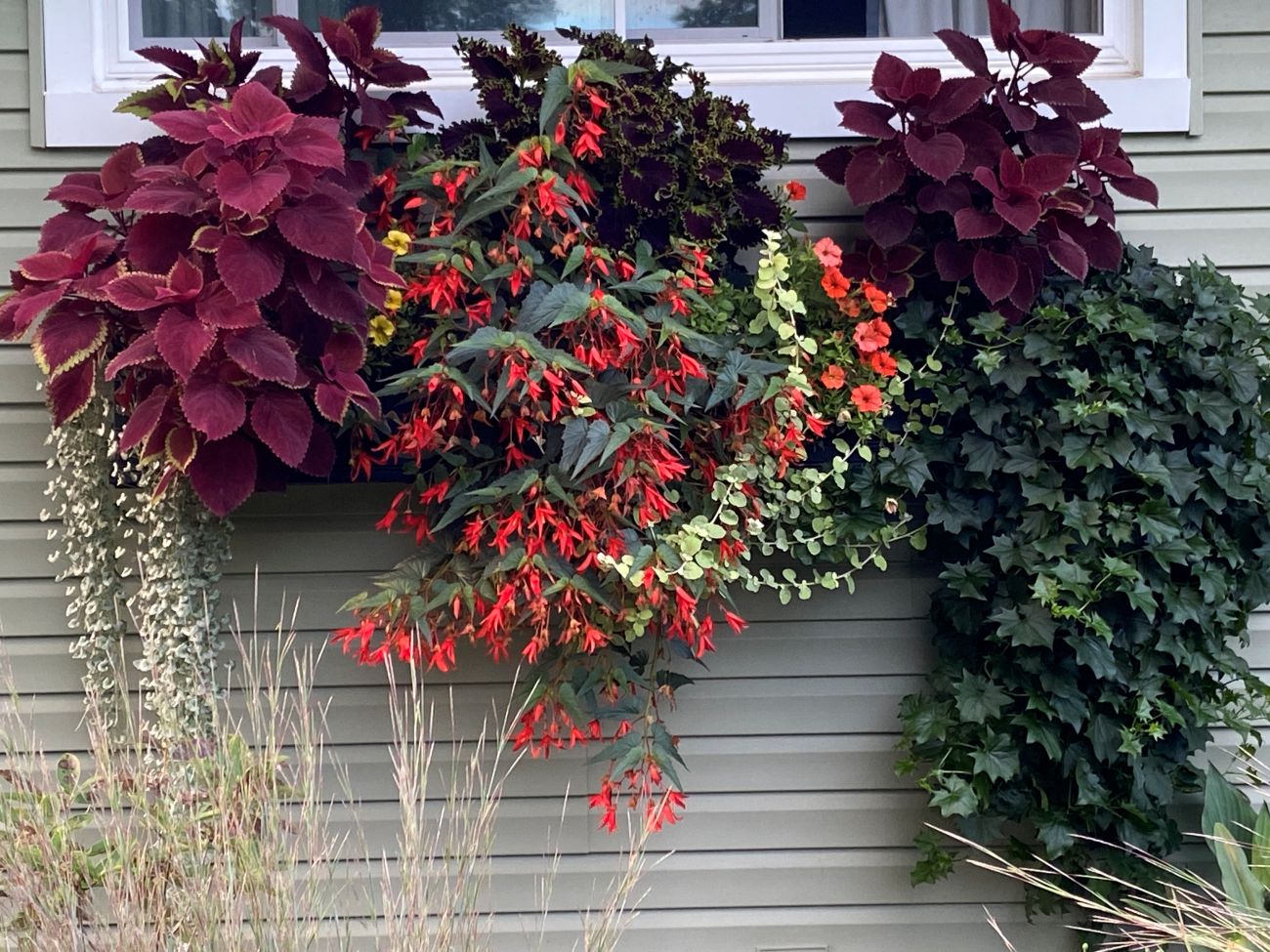
My window box in the front yard includes coleus, trailing begonia (Begonia hybrid, annual), silver dichondra (Dichondra argentea, Zones 10–12), annual ivy vine, petunias, and a lime green vine whose name escapes me. The lime green trailer appears to be creeping Jenny (Lysimachia nummularia, Zones 3–9).
Thanks for sharing your garden, Linda! Your coleus display under the maple is such a smart use of containers, and I love how much color you’ve worked into the spaces around your home.
We want to see YOUR garden!
Have photos to share? We’d love to see your garden, a particular collection of plants you love, or a wonderful garden you had the chance to visit!
To submit, fill out the Garden Photo of the Day Submission Form.
You can also send 5–10 photos to [email protected] along with some information about the plants in the pictures and where you took the photos. We’d love to hear where you are located, how long you’ve been gardening, successes you are proud of, failures you learned from, hopes for the future, favorite plants, or funny stories from your garden.
Do you receive the GPOD by email yet? Sign up here
Fine Gardening Recommended Products
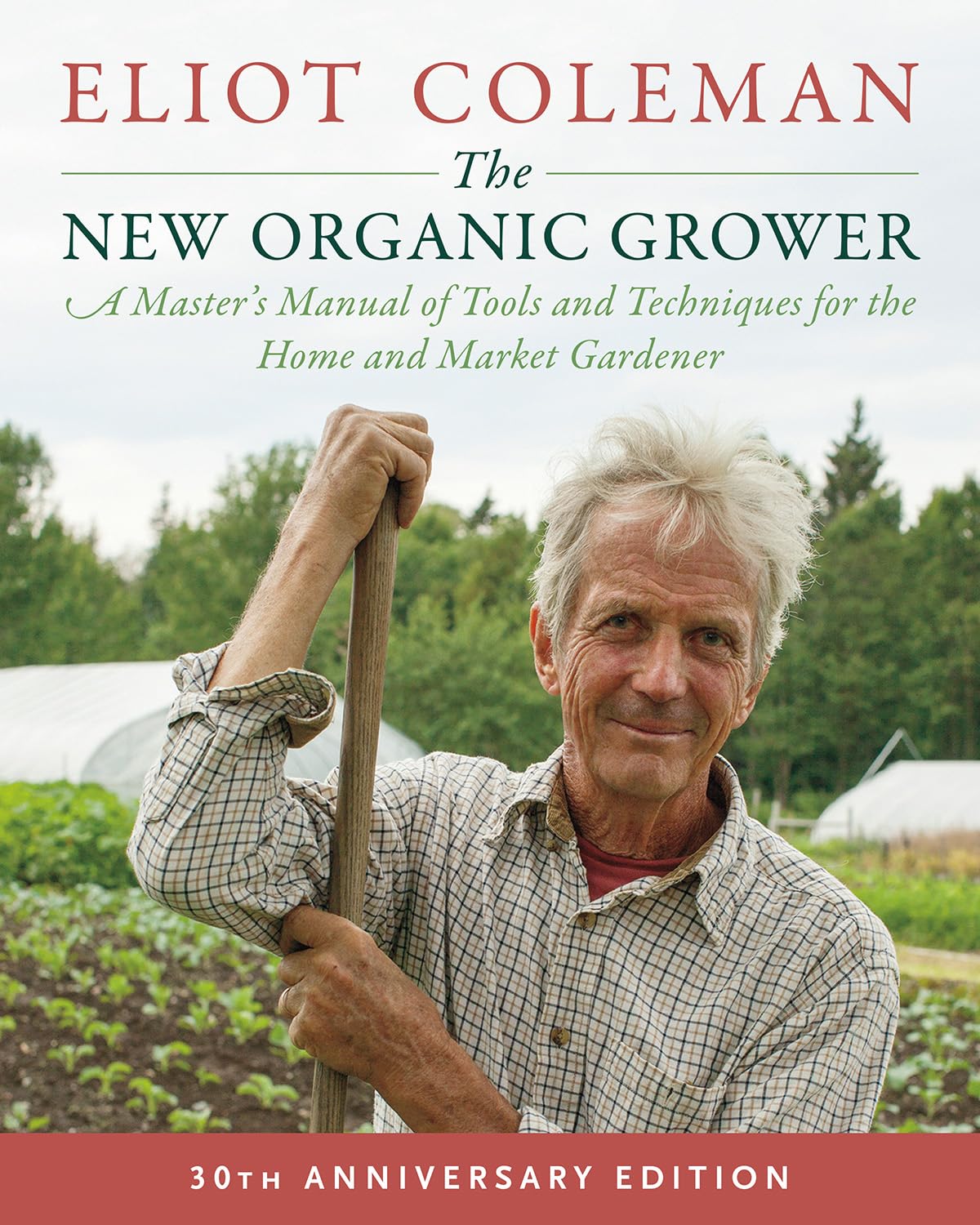
The New Organic Grower, 3rd Edition: A Master’s Manual of Tools and Techniques for the Home and Market Gardener, 30th Anniversary Edition
Fine Gardening receives a commission for items purchased through links on this site, including Amazon Associates and other affiliate advertising programs.
Since its original publication in 1989, The New Organic Grower has been one of the most important farming books available, with pioneer Eliot Coleman leading the charge in the organic movement in the United States. Now fully illustrated and updated, this 30th Anniversary Edition is a must-have for any agricultural library.
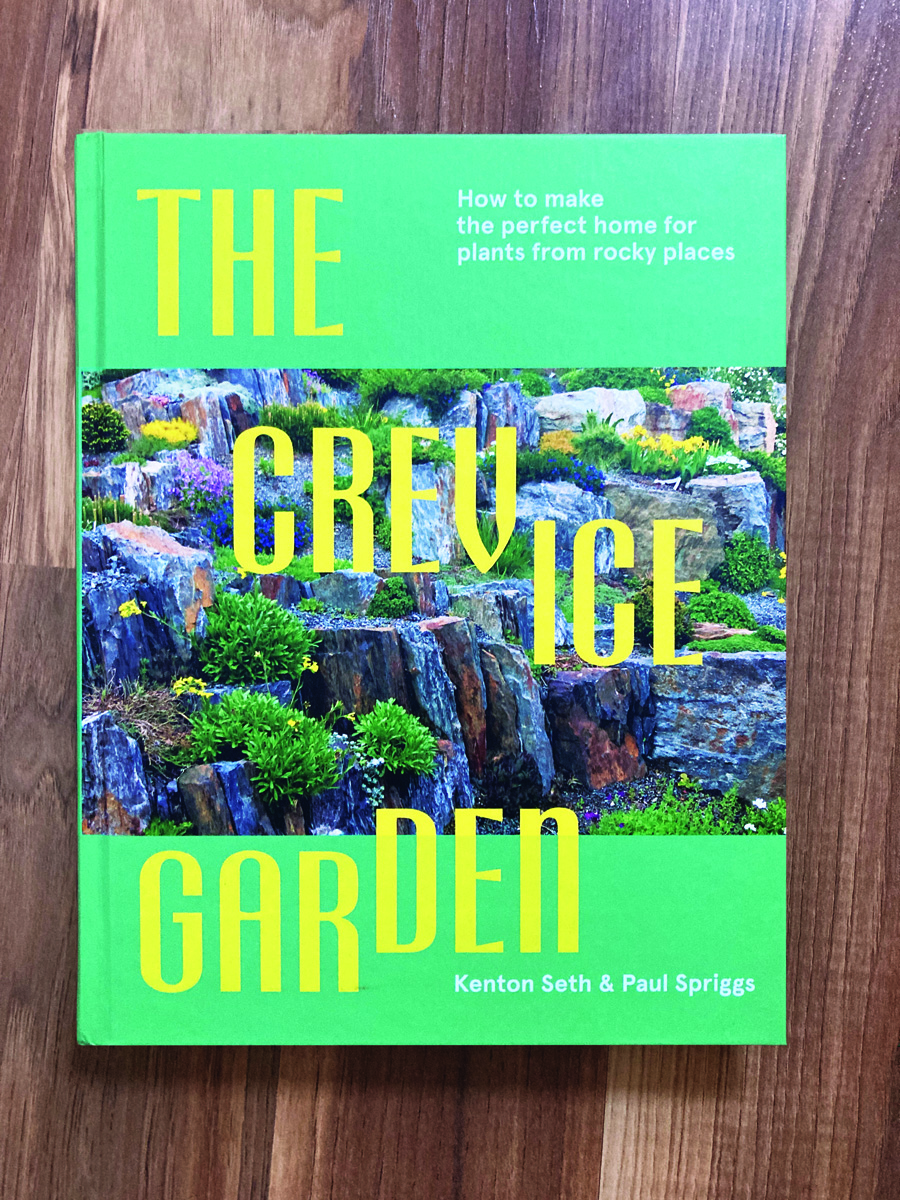
The Crevice Garden: How to make the perfect home for plants from rocky places
Fine Gardening receives a commission for items purchased through links on this site, including Amazon Associates and other affiliate advertising programs.
A crevice garden replicates the environmental conditions of mountain tops, deserts, coastlines, and other exposed or rocky places on earth. These striking garden features provide perfect conditions for the plants native to these far-off places, bringing the cultivation of these precious gems within everybody’s reach.
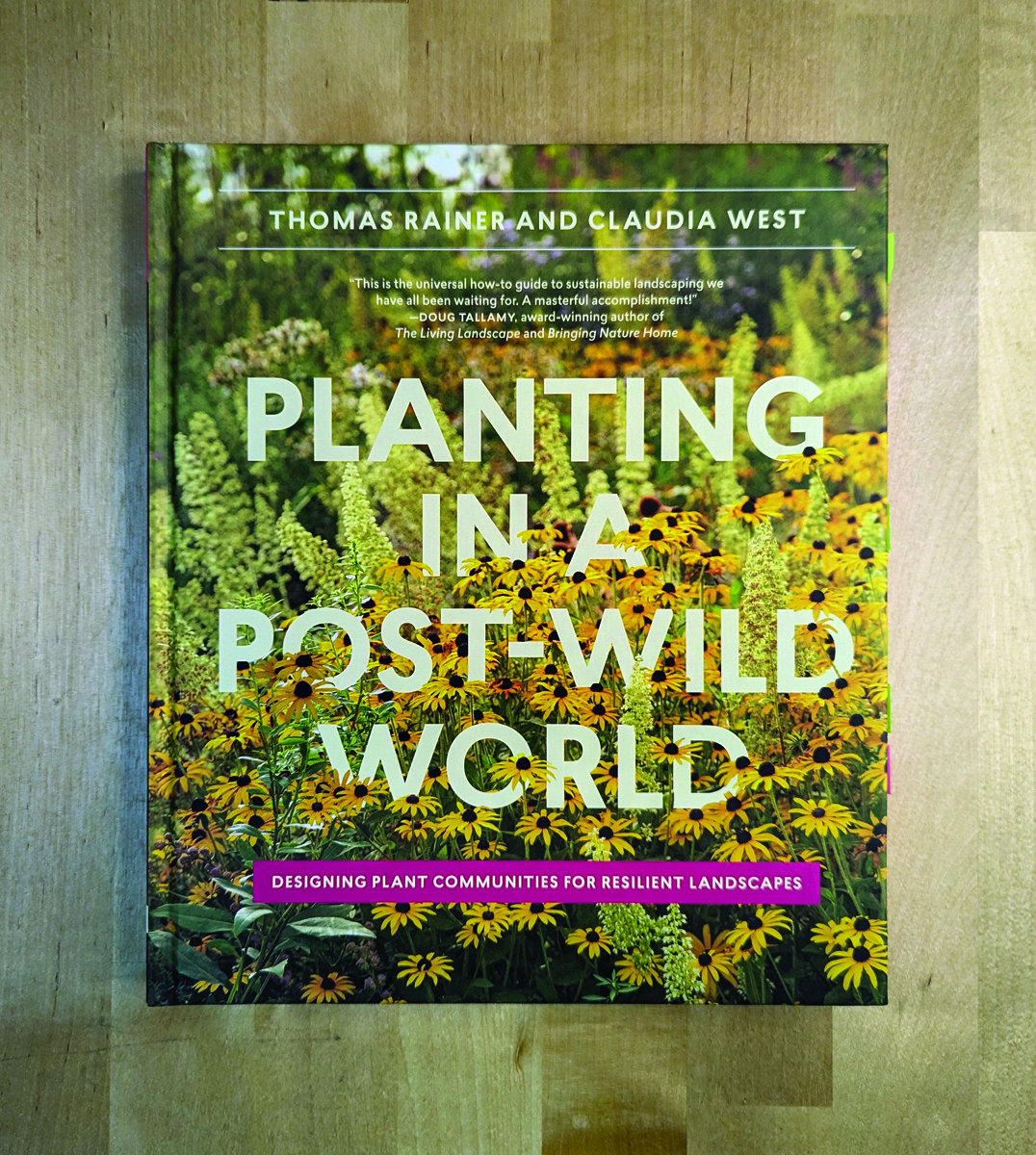
Planting in a Post-Wild World: Designing Plant Communities for Resilient Landscapes
Fine Gardening receives a commission for items purchased through links on this site, including Amazon Associates and other affiliate advertising programs.
Featuring gorgeous photography and advice for landscapers, Planting in a Post-Wild World by Thomas Rainer and Claudia West is dedicated to the idea of a new nature—a hybrid of both the wild and the cultivated—that can nourish in our cities and suburbs.