Creating a Seaside Garden Escape with Cohesive Garden Design
To escape the hustle and bustle of Seattle, my clients built a weekend getaway in the tiny town of Indianola, Washington. While their first garden was a showcase filled with rare and beautiful specimens from their friend Dan Hinkley’s collection, they wanted the seaside section of their property to have a quieter aesthetic with cohesive garden design that would harmonize with views of Puget Sound and distant Mount Rainier.
My daunting challenge was to pare down the impressive plant list, simplify the color scheme, and build up waves of texture that seamlessly tie in with the surrounding scenery. Watch the video above and keep reading to get a glimpse into the design process that made all of this happen.
Working with limitations can be liberating
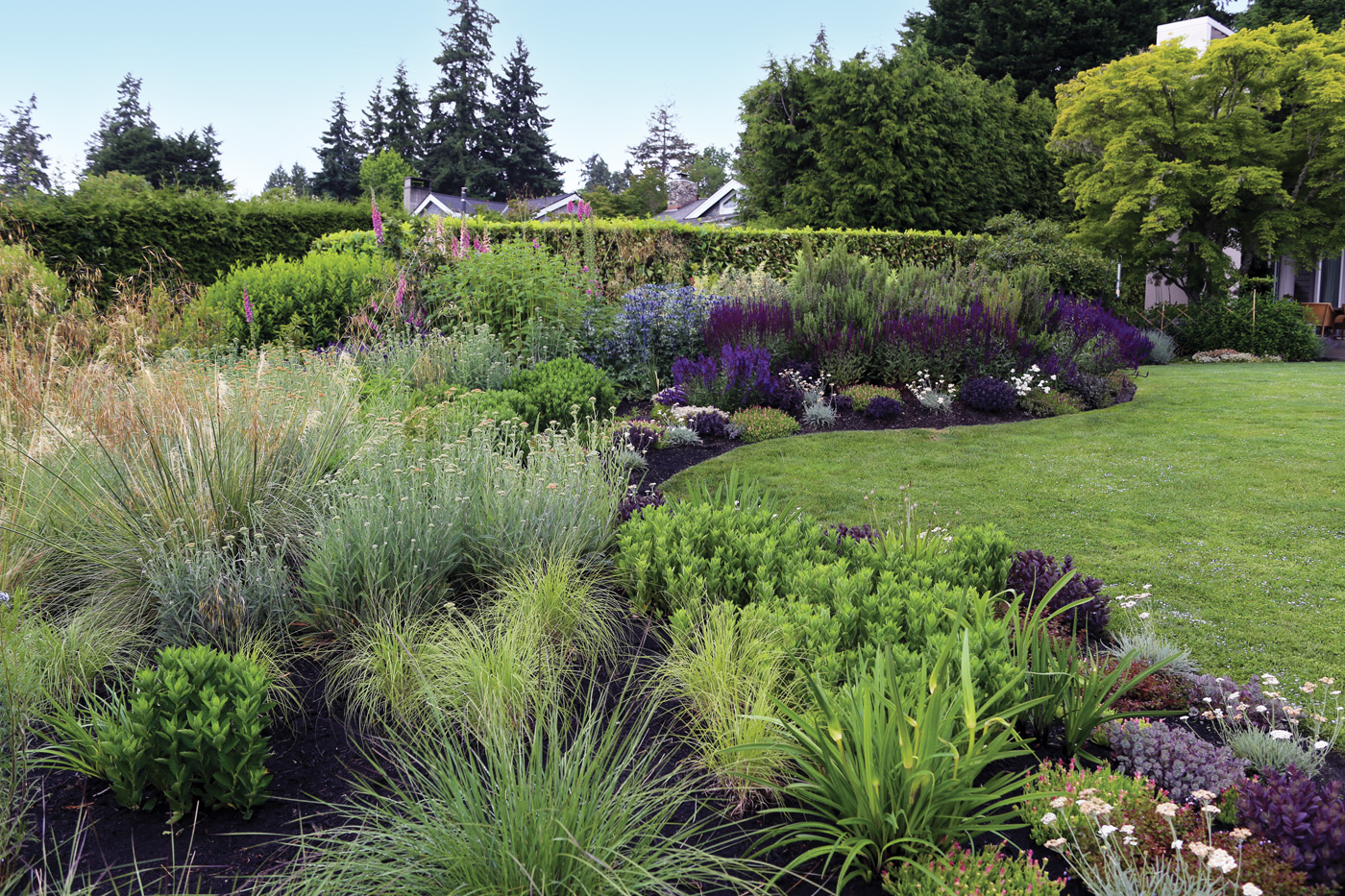
The small waterfront lot needed more privacy, so we made it an early priority to build up and soften the screening along the side property lines. Enclosing spaces like the hot tub and dining area without interfering with water views was a delicate balancing act. Between the house and waterfront, we worked mostly with compact perennials and low-growing woody plants like ‘Little Joe’ Joe Pye weed (Eupatorium dubium ‘Little Joe’, Zones 3–9) and strawberry tree (Arbutus unedo, Zones 7–10).
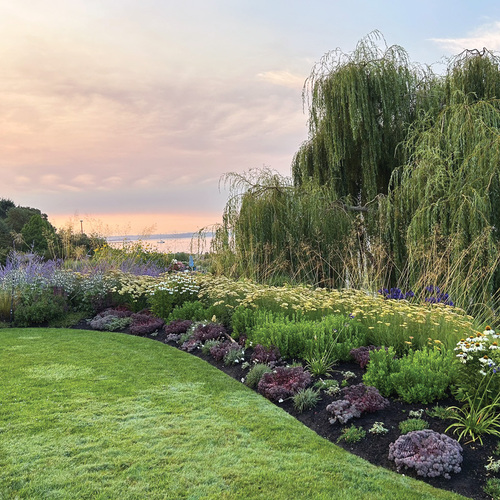
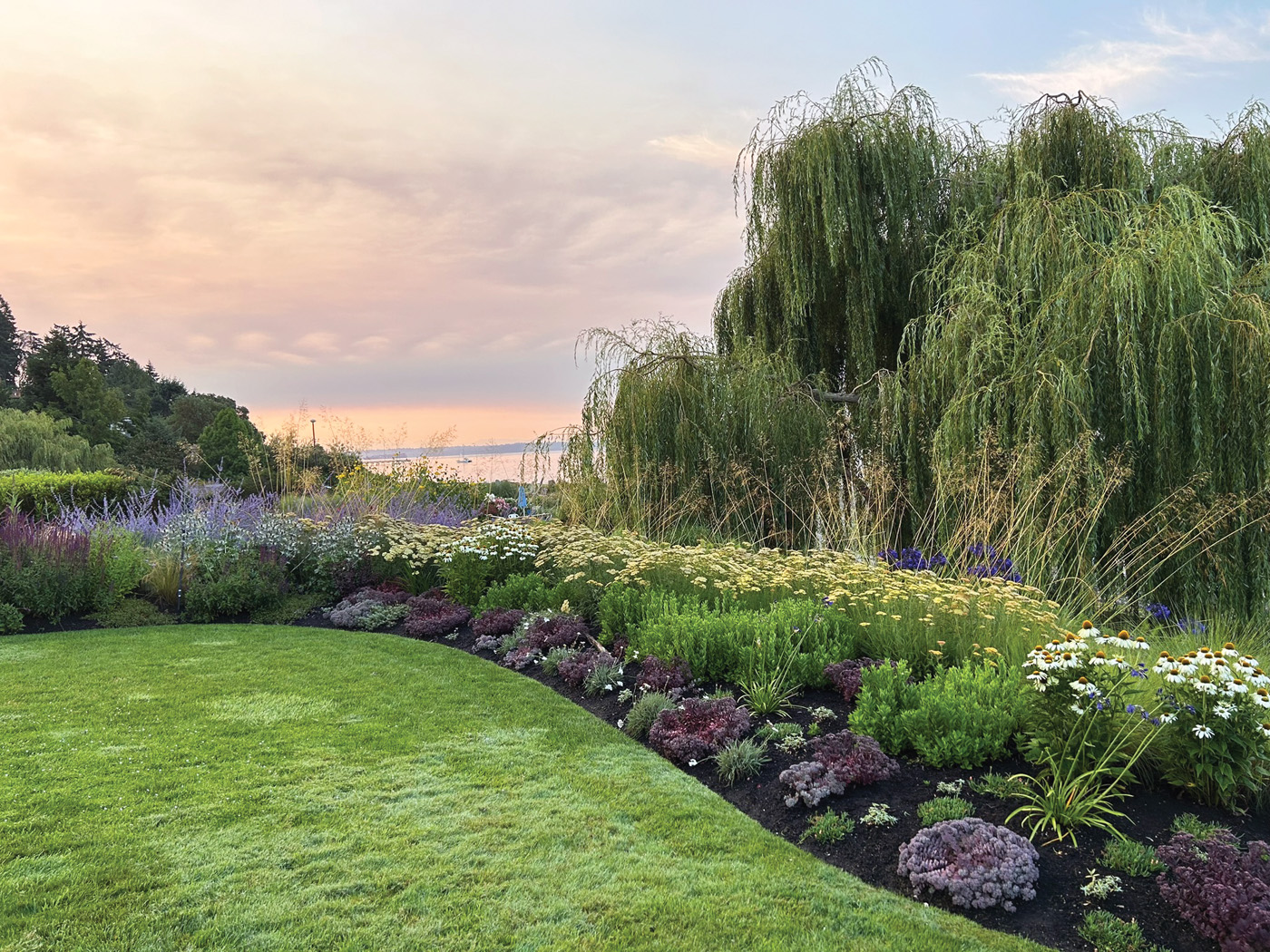
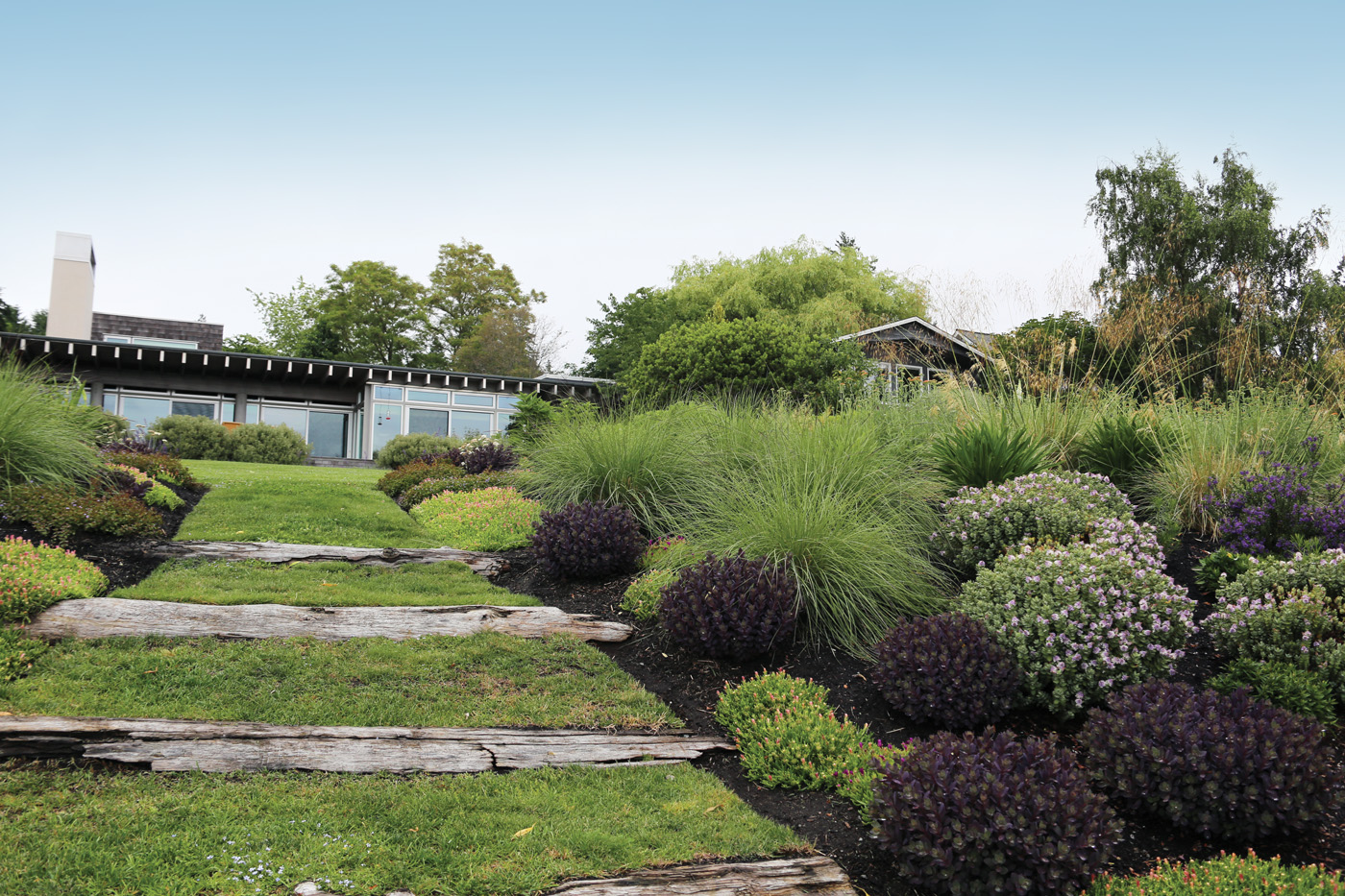
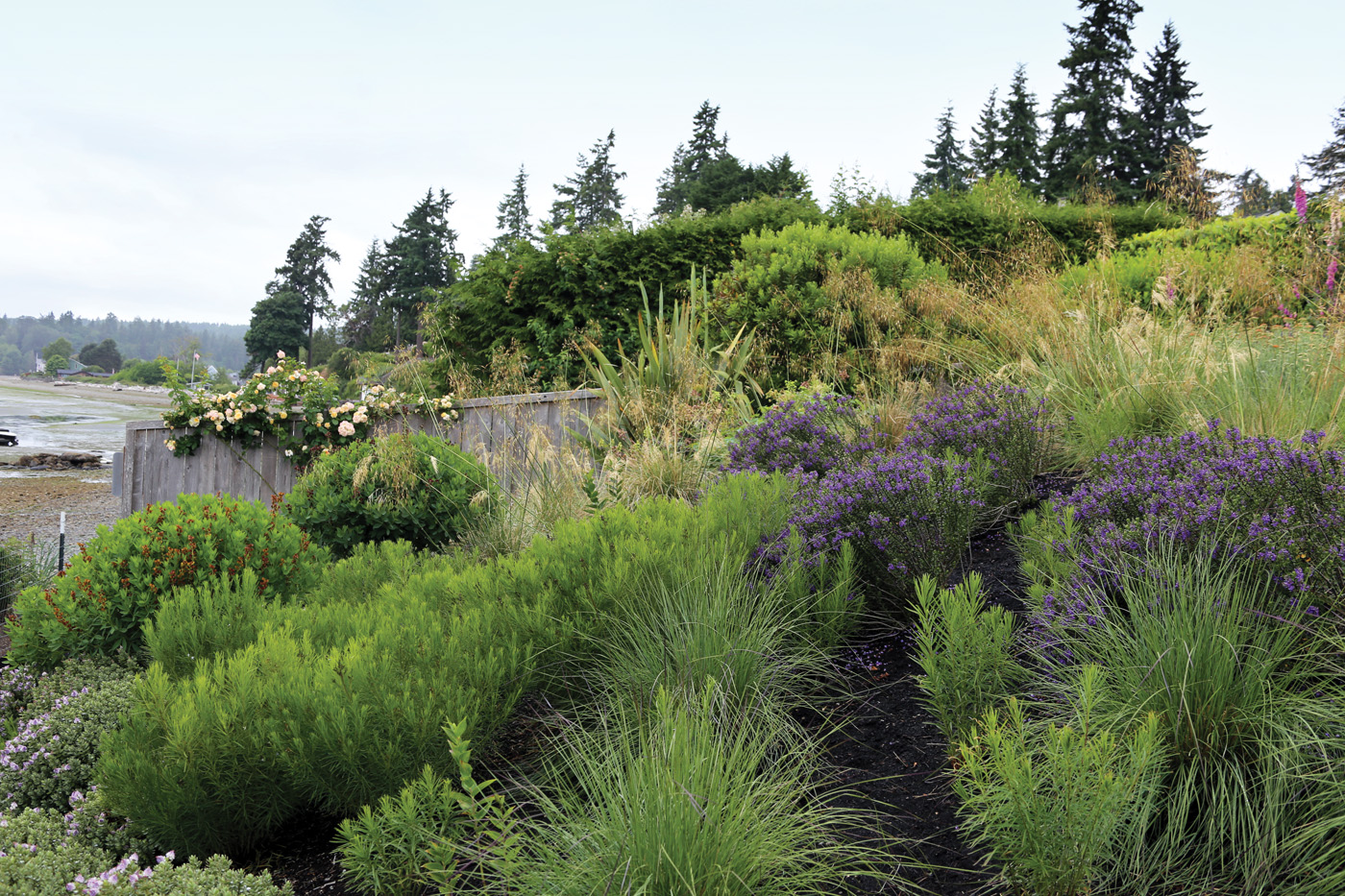
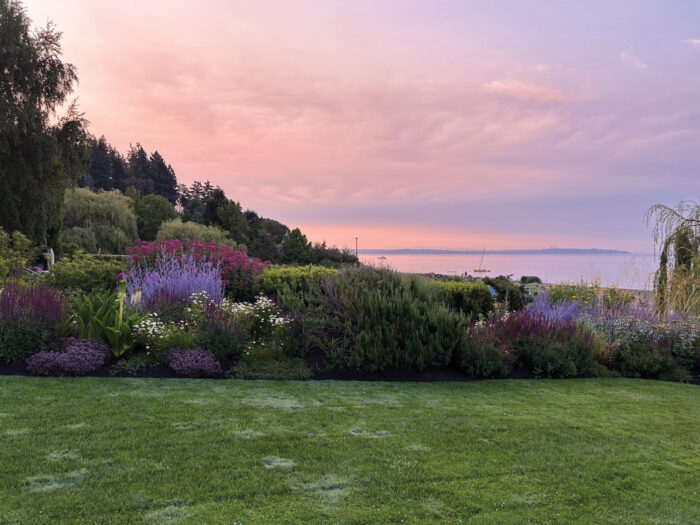
Considering the views from the home’s back windows, deck, and patio would also be pivotal to developing a workable design. On the slope down to the beach, we created wavelike planting beds with big sweeps of color that echo the sky, water, and sand when viewed from above. But looking from the beach toward the house, the outdoor living areas have a reasonable degree of privacy.
Preserve specimen plants and trees
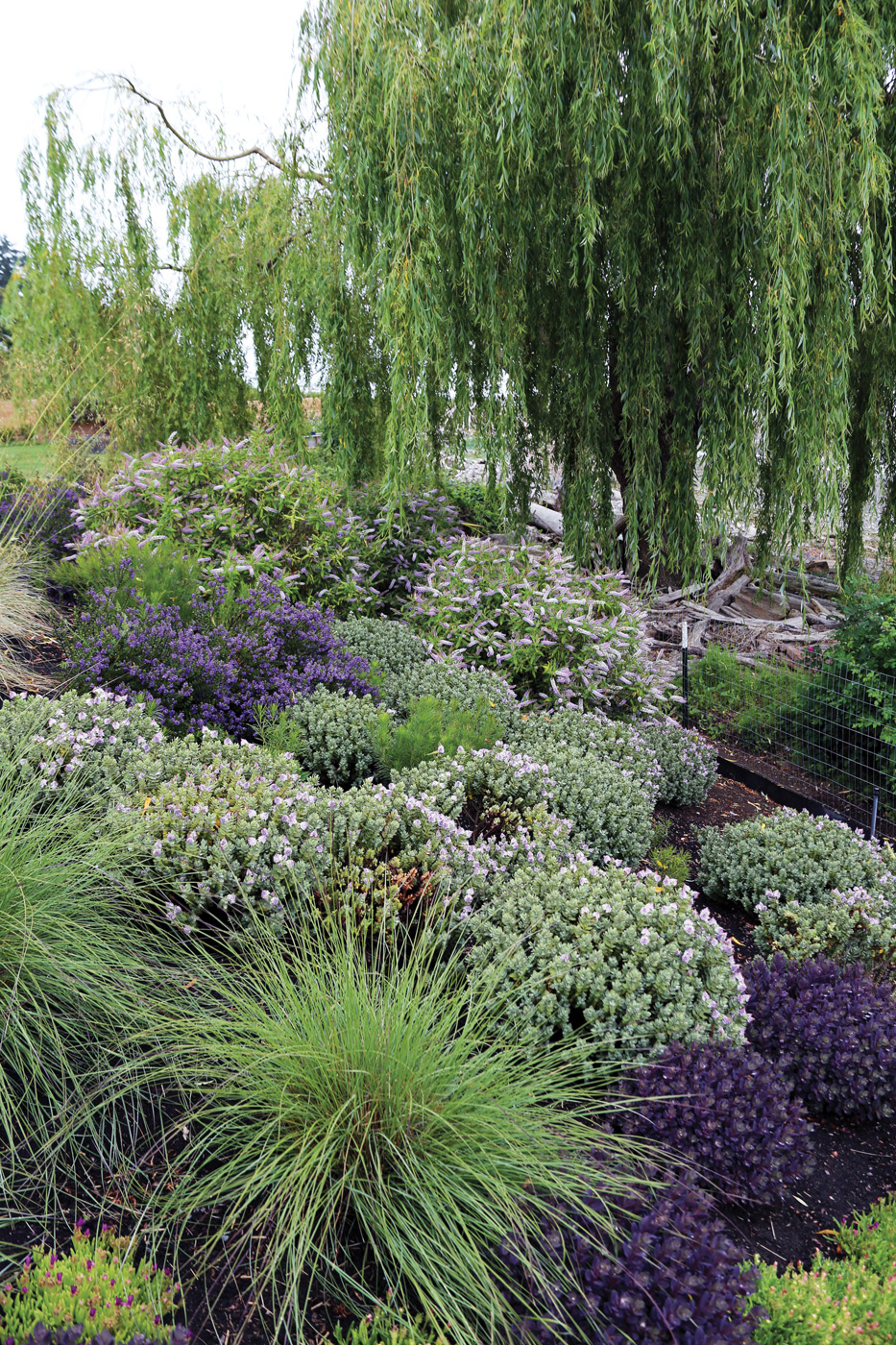
In certain instances, knowing what to preserve was as important as figuring out which plantings should be moved, amplified, or eliminated. For example, in the sandy soil where the garden meets the beach there is a venerable weeping willow (Salix babylonica, Zones 6–8) that has stood tall for generations, its roots occasionally covered by high tides. Everyone agreed that it should remain part of the water view because it brings such value to the landscape. Under its trailing branches, silvery drift logs invite passersby to sit and enjoy the view with their toes in the sand.
A subdued color story underpins this cohesive garden design
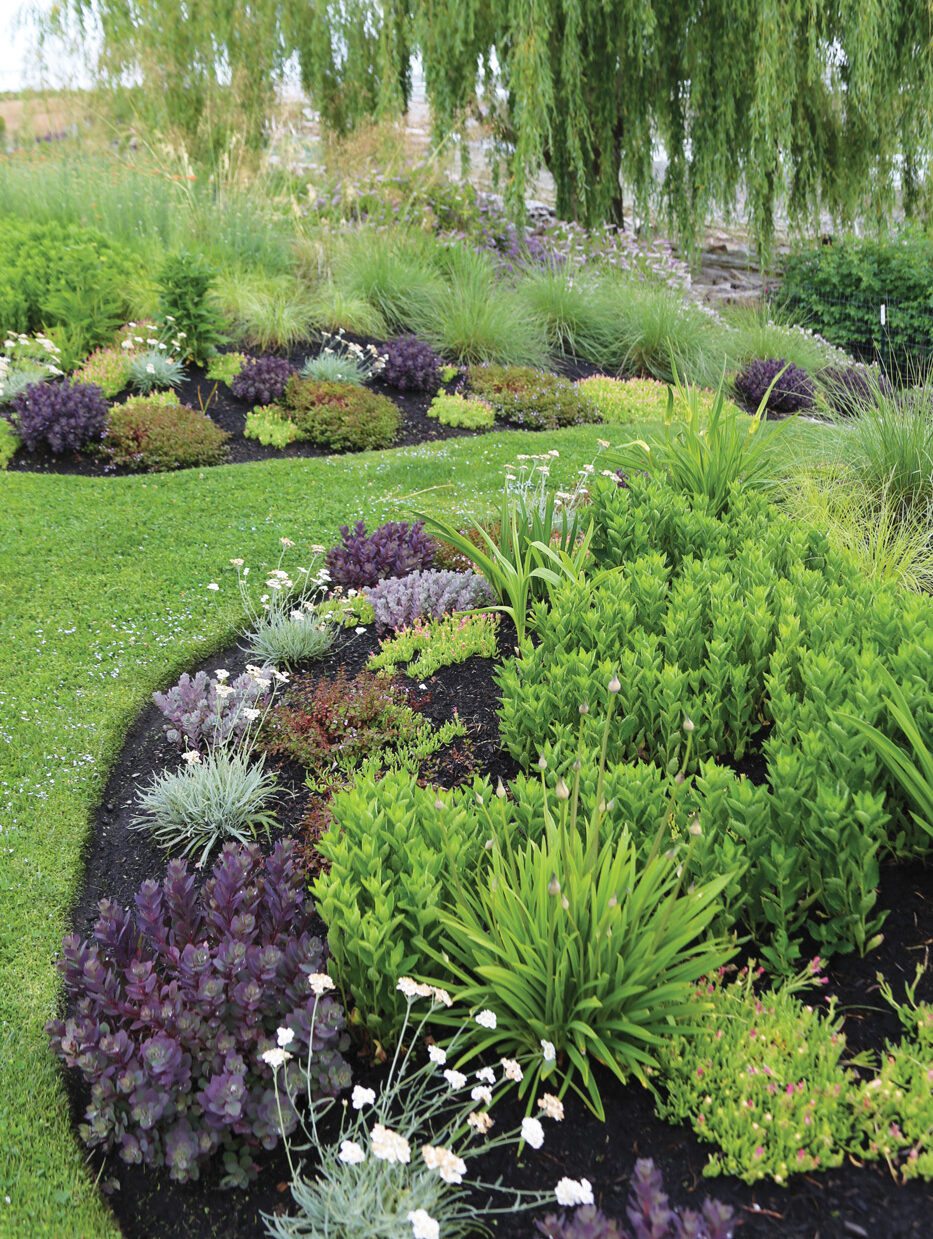
My mantra for this project was to simplify the planting plan, but that meant making some hard choices. The lawn is the main access to the beach, and the beds on either side of the lawn were filled with stunning specimens that didn’t fit together with the other plants. These standouts were moved out and replaced with masses of summer-blooming perennials, bulbs, and shrubs, with some fragrant selections sited near seating areas and pathways to perfume the salt breezes.
Draw inspiration from your surroundings
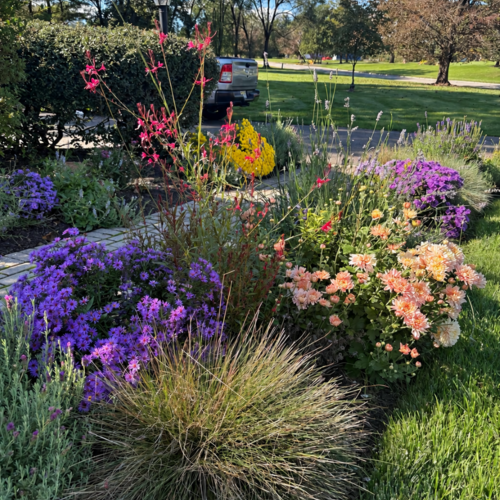
Undulating layers of foliage and flowers rise up from the lawn’s edge to the back of the beds. Keeping a good percentage of evergreens in the mix ensures that the garden remains beautiful year-round, though in a less exuberant way during winter. To guide plant choices, we adopted a nature-inspired color palette that echoes the lavender, apricot, dark purple, and blue hues that are often visible in the sky and mountains. These signature colors feel like sweeping brushstrokes that help to blur the line between the garden and the beach, and between the observer and their surroundings.
Plant in groups for more impact
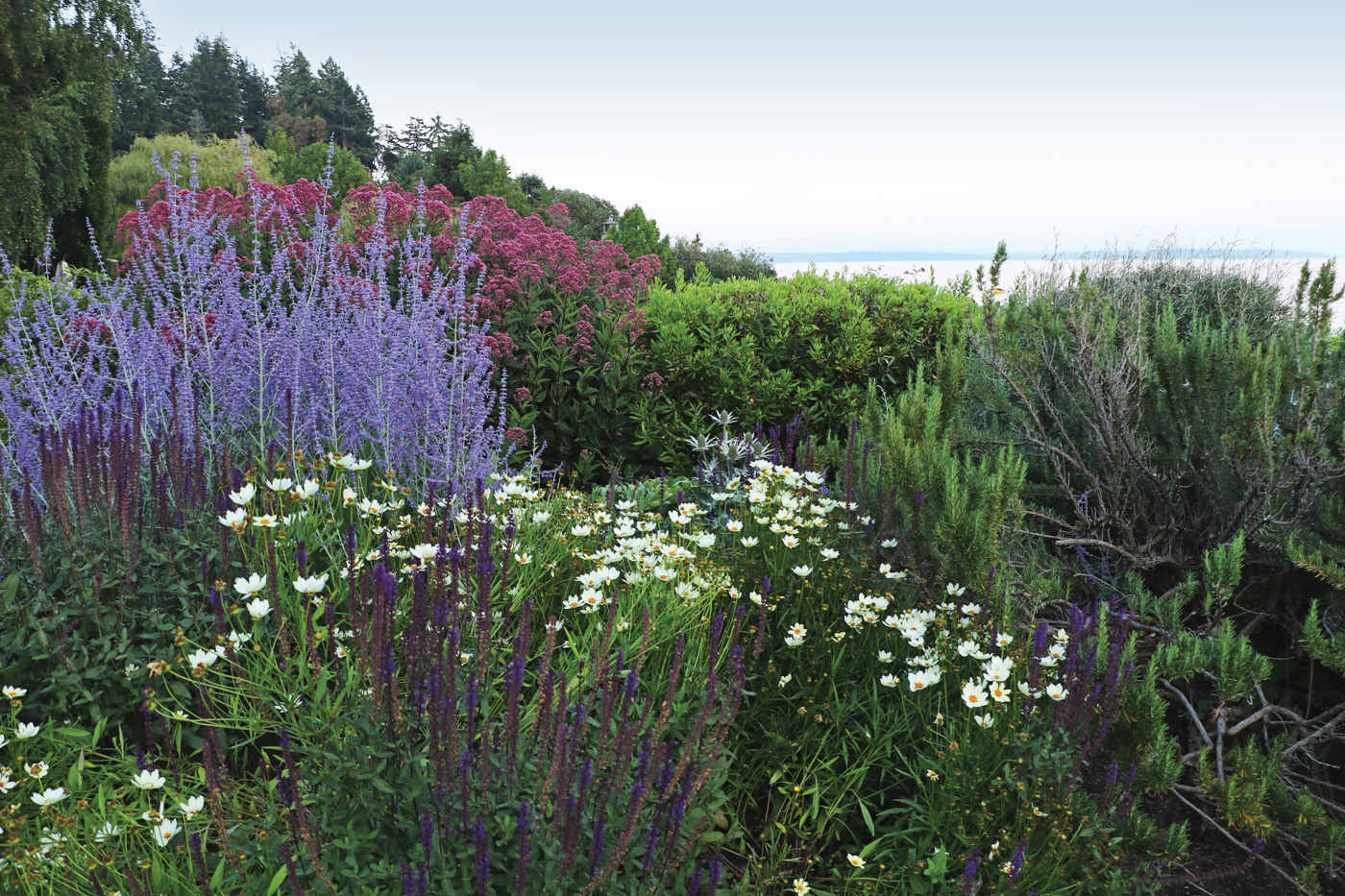
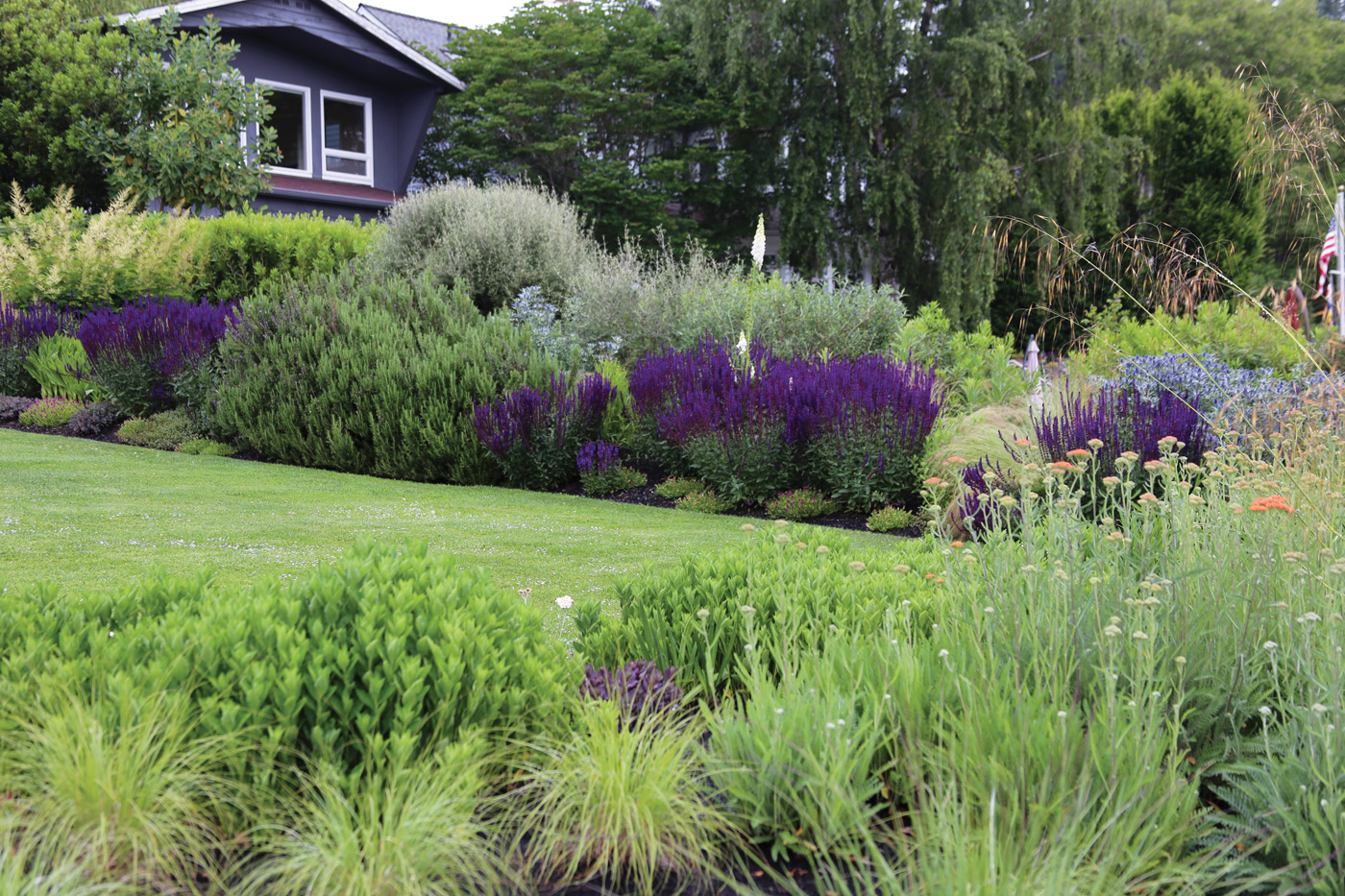
Dramatic shapes have even more impact when planted in large groups. In a garden like this there are no onesies or twosies; a single plant would be lost amid the abundant and playful groupings. A lone giant pineapple lily (Eucomis pole-evansii, Zones 7–10) is very striking, but a stand of them in full bloom will take your breath away. Plants with pleasing and varied architecture like ‘Purple Sensation’ allium (Allium ‘Purple Sensation’, Zones 4–9), Russian sage (Salvia yangii, Zones 5–9), and ‘Big Blue’ sea holly (Eryngium × zabelii ‘Big Blue’, Zones 5–9) take the color story to new heights when they are in bloom.
|
|
|
During summer, garden beds filled with harmonious waves of color lead the eye down the slope from the house to the water. Grasses and perennials sway in the wind, making you feel like you are part of the garden. With no jarring pops of contrasting hues, the effect is calm, serene, and warm, like a Puget Sound sunset. |
|
|
|
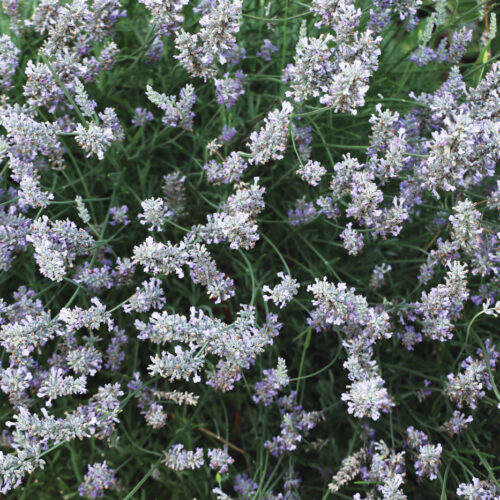
Cool lavender shows up in the blooms of ‘Hidcote’ English lavender (Lavandula angustifolia ‘Hidcote’, Zones 5–8, pictured), ‘Big Blue’ sea holly (Eryngium × zabelii ‘Big Blue’, Zones 5–9), and Russian sage (Salvia yangii, Zones 5–9). |
|
|
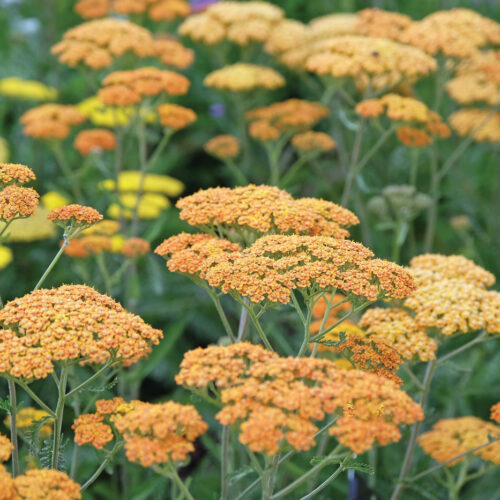
Soft peach is represented by low-growing ‘Cheviot’ sun rose (Helianthemum nummularium ‘Cheviot’, Zones 5–8) and taller masses of ‘Terracotta’ yarrow (Achillea ‘Terracotta’, Zones 3–8, pictured). You can also see hints of peach in the centers of ‘White Swan’ coneflower (Echinacea purpurea ‘White Swan’, Zones 3–8) and the seed heads of giant feather grass (Celtica gigantea, Zones 5–8). |
|
|
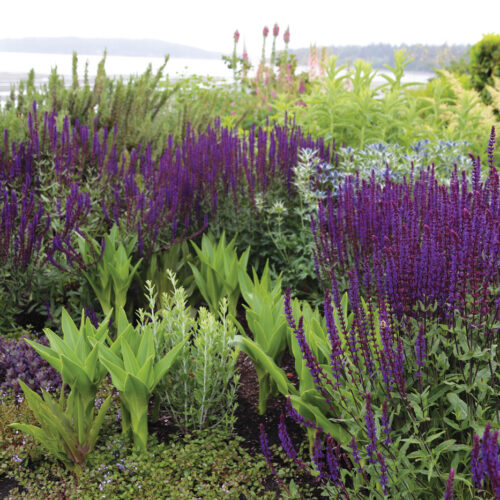
Blue-purple creates a thrilling echo of the deepest colors in the evening sky. It is strongly represented in midsummer by the nodding flowers of agapanthus (Agapanthus cvs., Zones 8–11) and over a longer season by ‘Caradonna’ woodland sage (Salvia nemorosa ‘Caradonna’, Zones 4–8, pictured). |
Finishing details should honor a garden’s surroundings
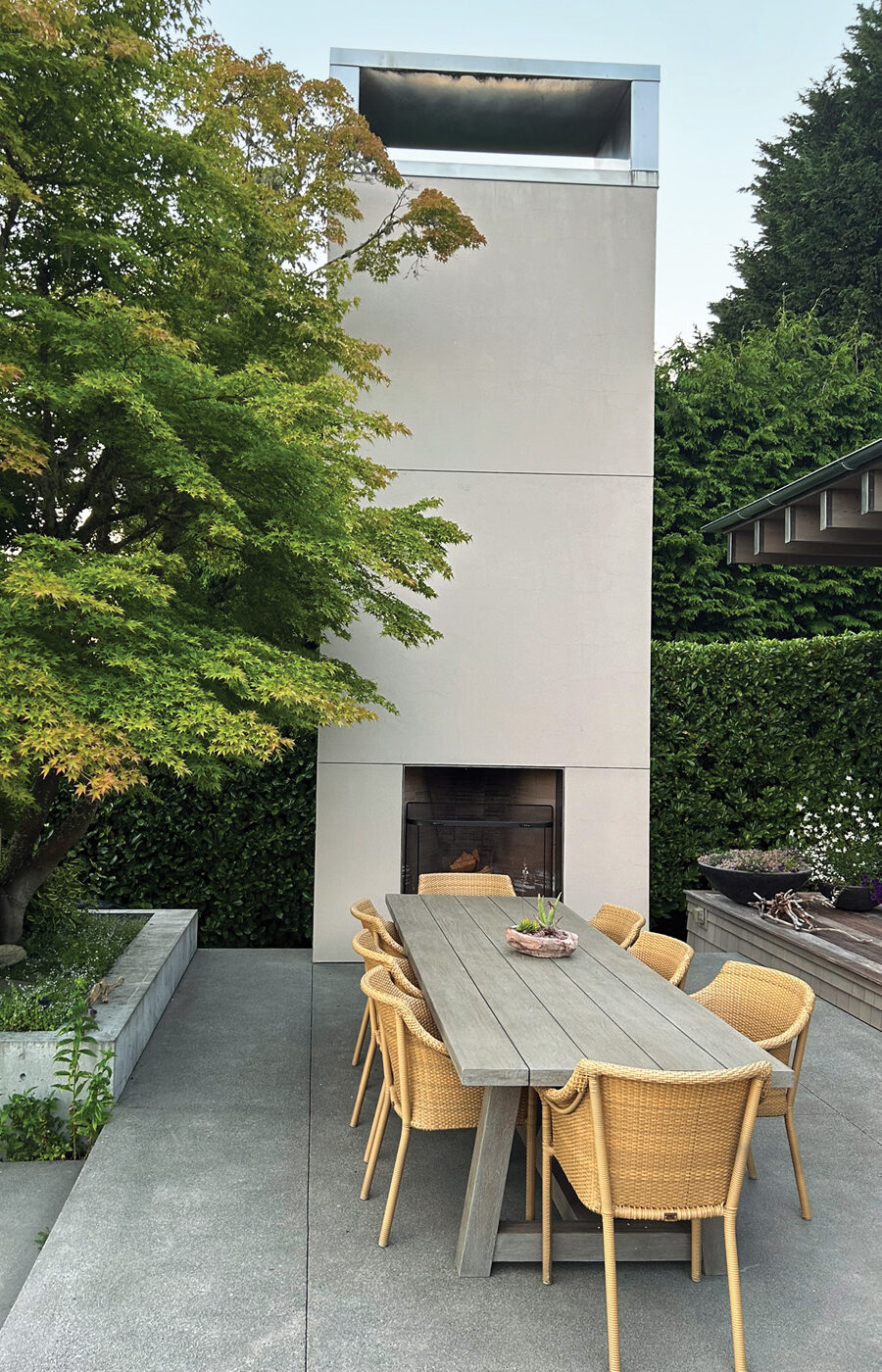
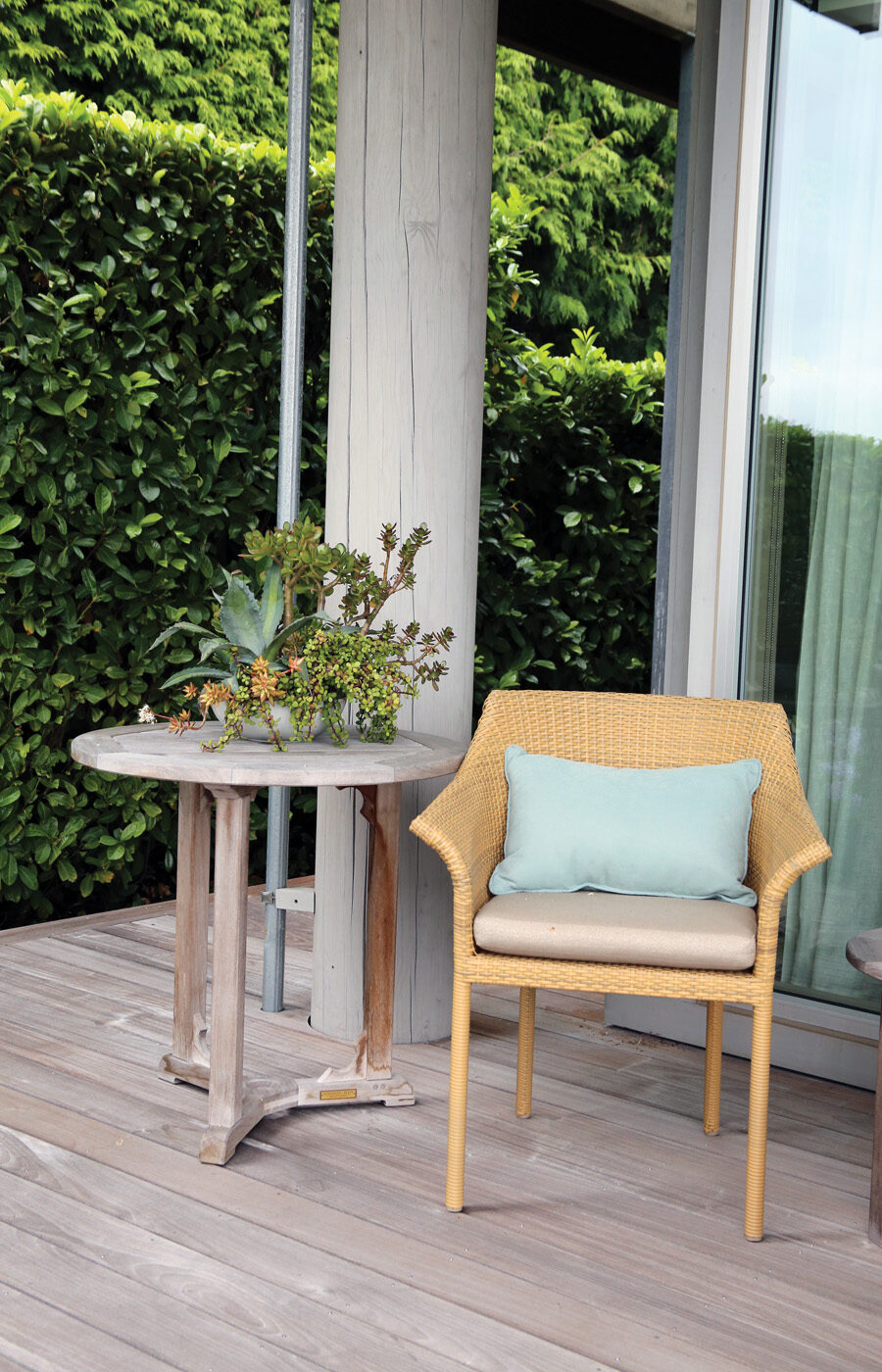
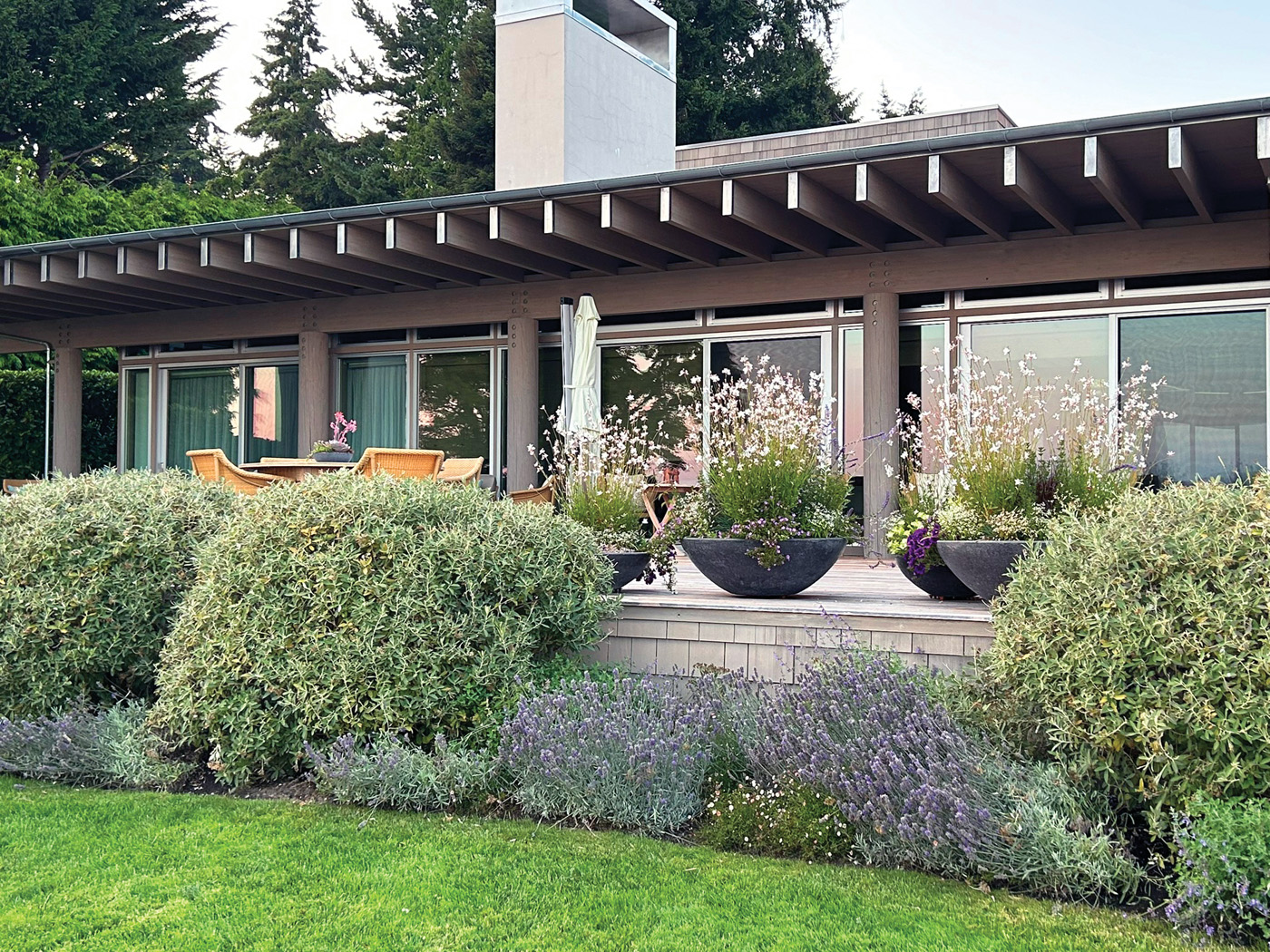
Across the back of the house, a wide, sheltered deck is the same silvery gray as weathered driftwood. Comfortable seating areas are tucked under the home’s overhanging eaves. A patio with a large outdoor dining table and fireplace are off to the side, where they don’t interrupt the view and can’t be seen from the neighbors’ side of the hedge. The furnishings coordinate quietly with the natural setting, with colors inspired by sand and sea.
Containers add a casual touch
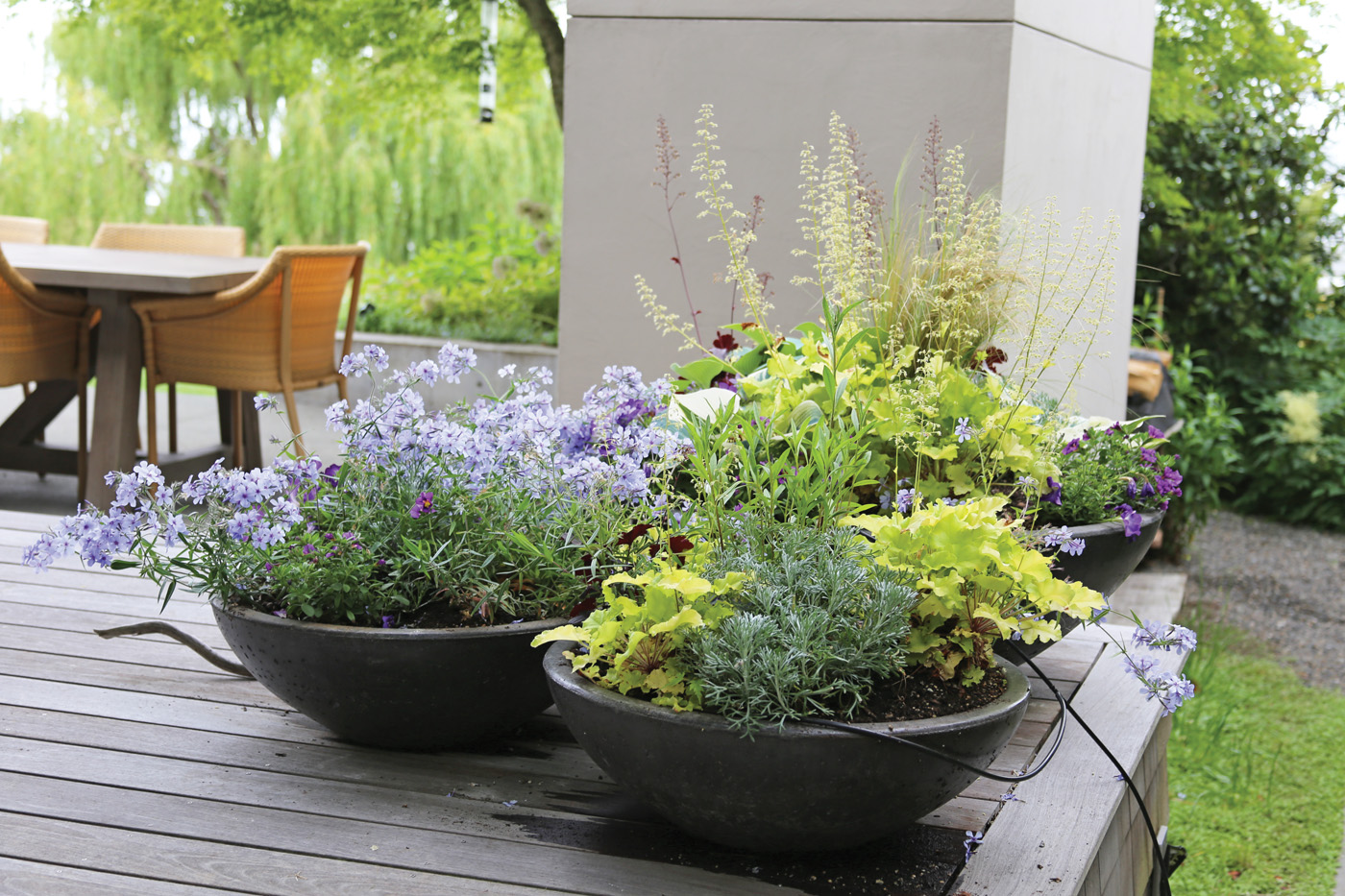
Containers on the deck continue the color palette from the garden and are kept low so they do not disrupt the view. The homeowners and their guests love to wander the beach collecting driftwood, beach glass, and similar treasures, which can often be found in impromptu arrangements on the deck, in containers, or in garden beds. The relaxed, simplified approach to color and form helps this garden feel connected to nature, the perfect retreat from a busy world.
|
|
|
 |
 |
Susan Calhoun is the owner and principal designer of Plantswoman Design in Bainbridge, Washington. She is also a regional reporter for Fine Gardening.
Photos, except where noted, by Diana Koehm
Learn More:
Subscribe to Fine Gardening Magazine
See More Planting Plans
Watch Videos on Our YouTube Channel!