
Black walnut roots keep releasing juglone after removal — decaying roots convert a stored nontoxic compound into active toxin on contact with soil. With roots in place and poor drainage, that process can run for up to 5 years.
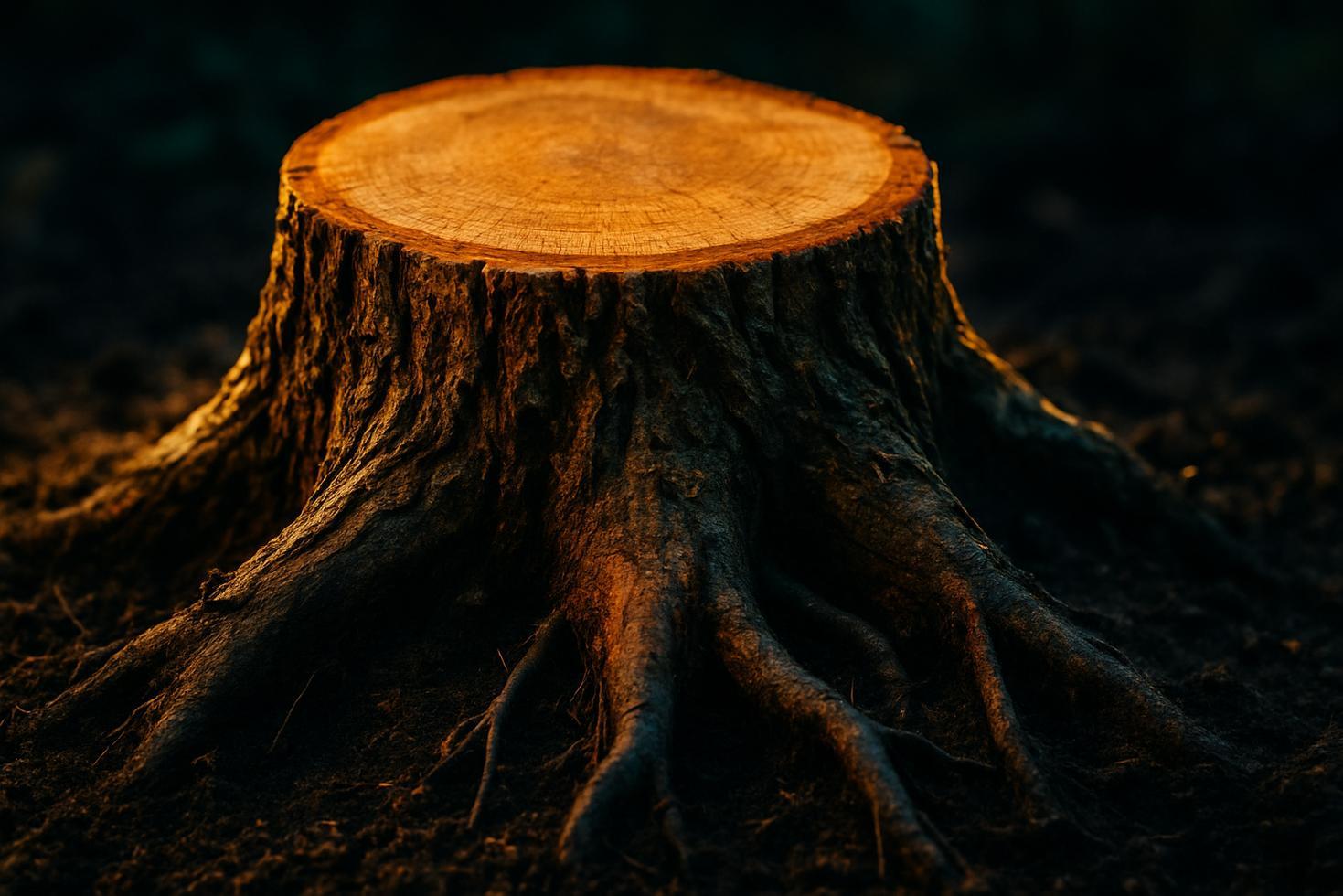
Black walnut trees release juglone, an allelopathic toxin, from their roots — and that release does not stop when the tree comes down. What keeps it going is the decay of roots still in the ground, not any living biological process in the tree itself.
The mechanism is specific. Walnut tissues store hydrojuglone, a nontoxic precursor. The moment that compound contacts air or soil, it oxidizes into biologically active juglone. Every decaying root segment continues that conversion independently, patch by patch, as breakdown proceeds.
Quick Answer
- Juglone persists from a few months to as long as 5 years after removal, depending on soil conditions.
- Decaying roots, not a living tree, drive continued toxin release.
- In well-aerated, microbially active soil, juglone can degrade within a few months.
- In compacted or poorly drained soil, persistence can reach up to 2 years; with stump and roots intact, up to 5 years.
- Iowa State Extension notes replanting can be considered safe the next growing season in spaces formerly occupied by walnuts — if roots are gone and soil conditions support it.
What Soil Conditions Control How Long Juglone Persists
Soil drainage and microbial activity are the two variables that determine the actual timeline. Microbial breakdown neutralizes juglone faster than decaying roots can produce it, when conditions support a dense, active microbial population.
In organically rich, well-aerated soil, that degradation can complete within a few months. In compacted or waterlogged soil with low microbial activity, the same toxin lingers — up to 2 years even after roots are cleared, and up to 5 years when the stump and root mass remain in place. Two adjacent gardens can have entirely different outcomes after the same tree is removed, driven purely by what lives in their soil.
Why Juglone Does Not Travel Far in Soil
Penn State Extension notes that juglone is poorly soluble and does not move far from its source. It acts locally — concentrated around the root zone where conversion is happening — rather than spreading through soil the way a water-soluble compound would.
A peer-reviewed study on juglone in alley cropping soils found that pore-water concentrations exceeded toxicity thresholds for sensitive plants but did not reach inhibition thresholds for typical crops like maize and soybeans. This confirms that proximity to roots matters more than general soil contamination.
Frequently Asked Questions
How long after cutting down a black walnut is it safe to plant?
Iowa State Extension says juglone can clear within a few months in favorable conditions, with replanting considered safe the next growing season when former root zones are addressed.
Does removing the stump speed up juglone breakdown?
Yes. Stump and root removal eliminates the ongoing conversion of hydrojuglone to juglone. Persistence drops from a potential 5 years with roots intact to a shorter window depending on soil drainage and microbial activity.
Do black walnut leaves and debris also release juglone?
Yes. Morton Arboretum confirms juglone occurs in all parts of the tree, with the highest concentrations in buds, nut hulls, and roots. Ontario.ca recommends composting leaves, twigs, and husks for at least one year before using them near sensitive plants.
Does juglone spread widely through the soil?
No. Penn State Extension notes it is poorly soluble and remains localized near roots rather than migrating broadly through the soil profile.