Happy Friday GPODers!
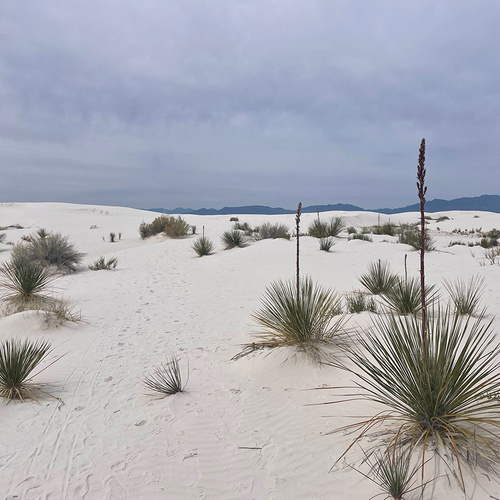
Over the past several weeks I have been sharing highlights from the month I spent on the road in the mountain west and southwest United States this spring. So far I have shared some of the garden moments I enjoyed in Denver, Colorado (Spring in the West, Denver Botanic Garden in Spring, and Denver Botanic Garden Conservatory), but today it is time to move on to a more extreme environment and some wild plants. After exploring a slice of Colorado we made our way to New Mexico and had to make a stop at White Sands National Park, located just outside the city of Alamogordo.
This other worldly location is one of the newest national parks in the United States, gaining the designation in 2019 after being a national monument since 1933. Despite its new status, this location is truly one of the world’s greatest natural wonders and nothing like it can be found anywhere else on the planet. 275 square miles of desert are covered in the the world’s largest gypsum dunefield, and some of those dunes reach up to 60 feet tall. Paired with the intense heat of southern New Mexico, it is reasonable to assume this is an inhospitable place. However, as they seemingly always do, plants and animals find a way to survive and thrive in this unique environment. When I made my visit, I was even able to spot some spring blooms on display.
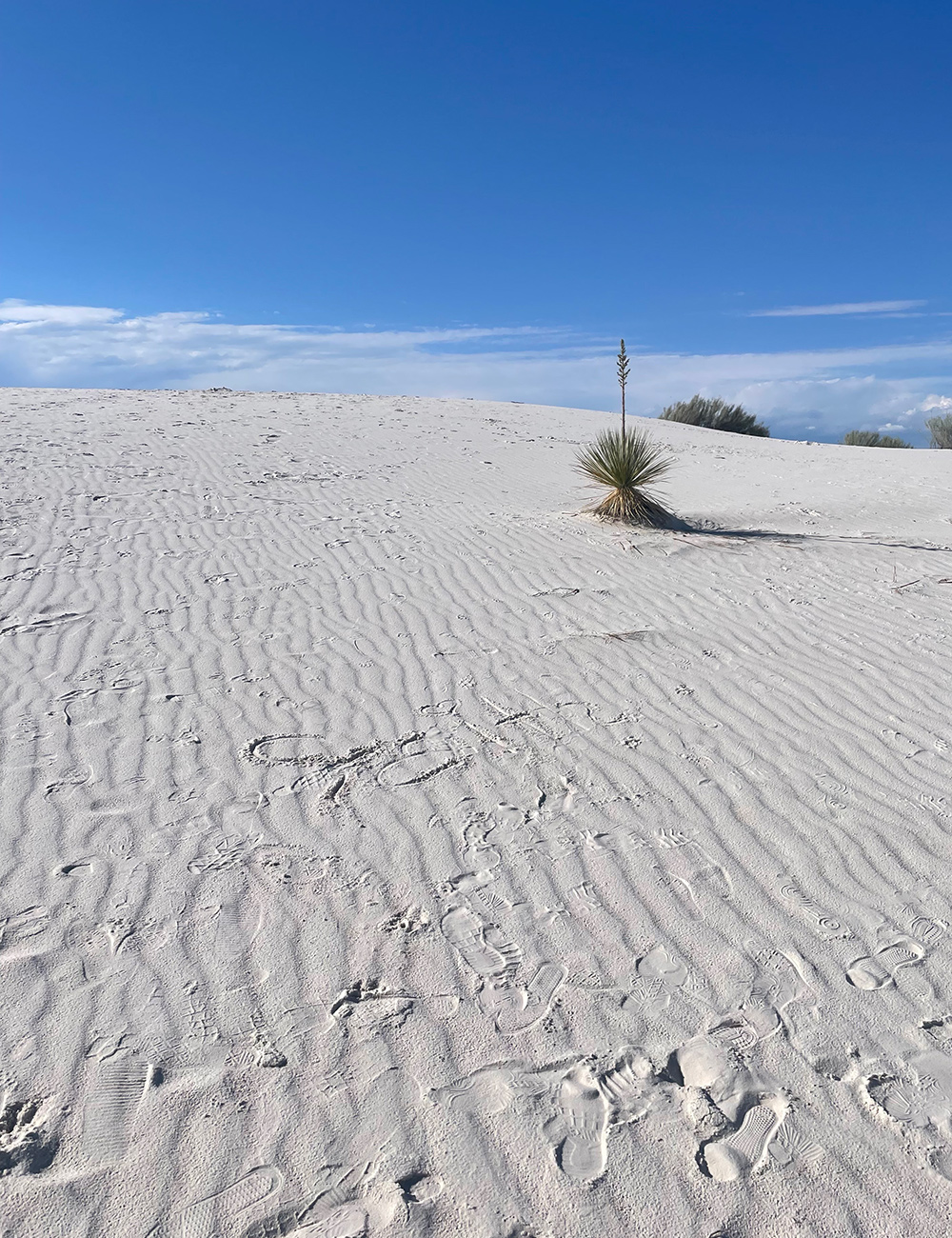 If you Google “White Sands National Park” you will find that many people opt to share photos of the most pristine dunes, most with not a plant in sight or with just a few photogenic yuccas (as I have captured here). These scenes are spectacular, but not a completely realistic depiction of the park.
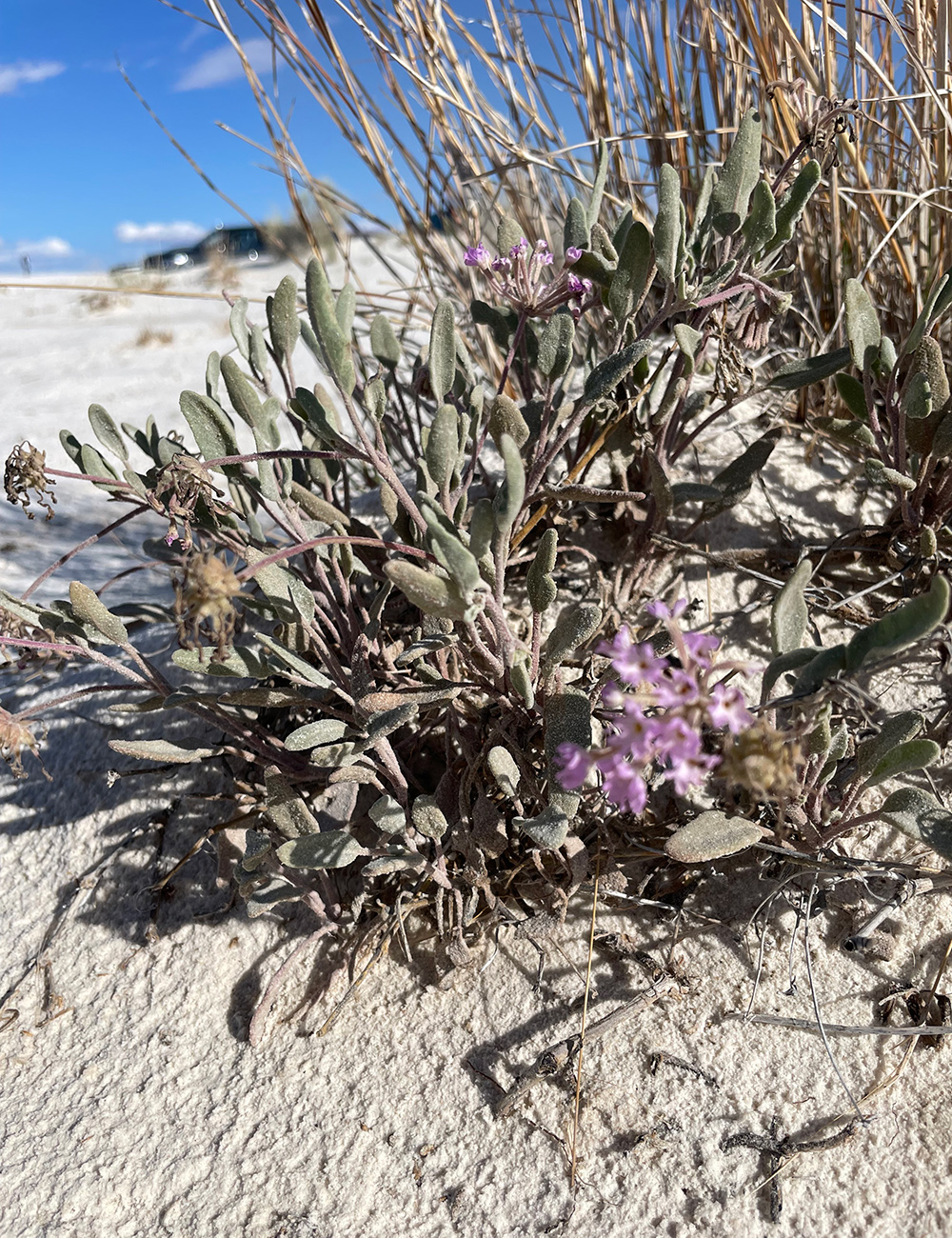 In reality, interesting little specimens are scattered absolutely everywhere. Yuccas are the most abundant (they are New Mexico’s state flower for a reason!), but a variety of wildflowers, trees, and shrubs make up this ecosystem. One such plant that immediately caught my attention was the purple sand verbena (Abronia angustifolia, Zones 7–10).
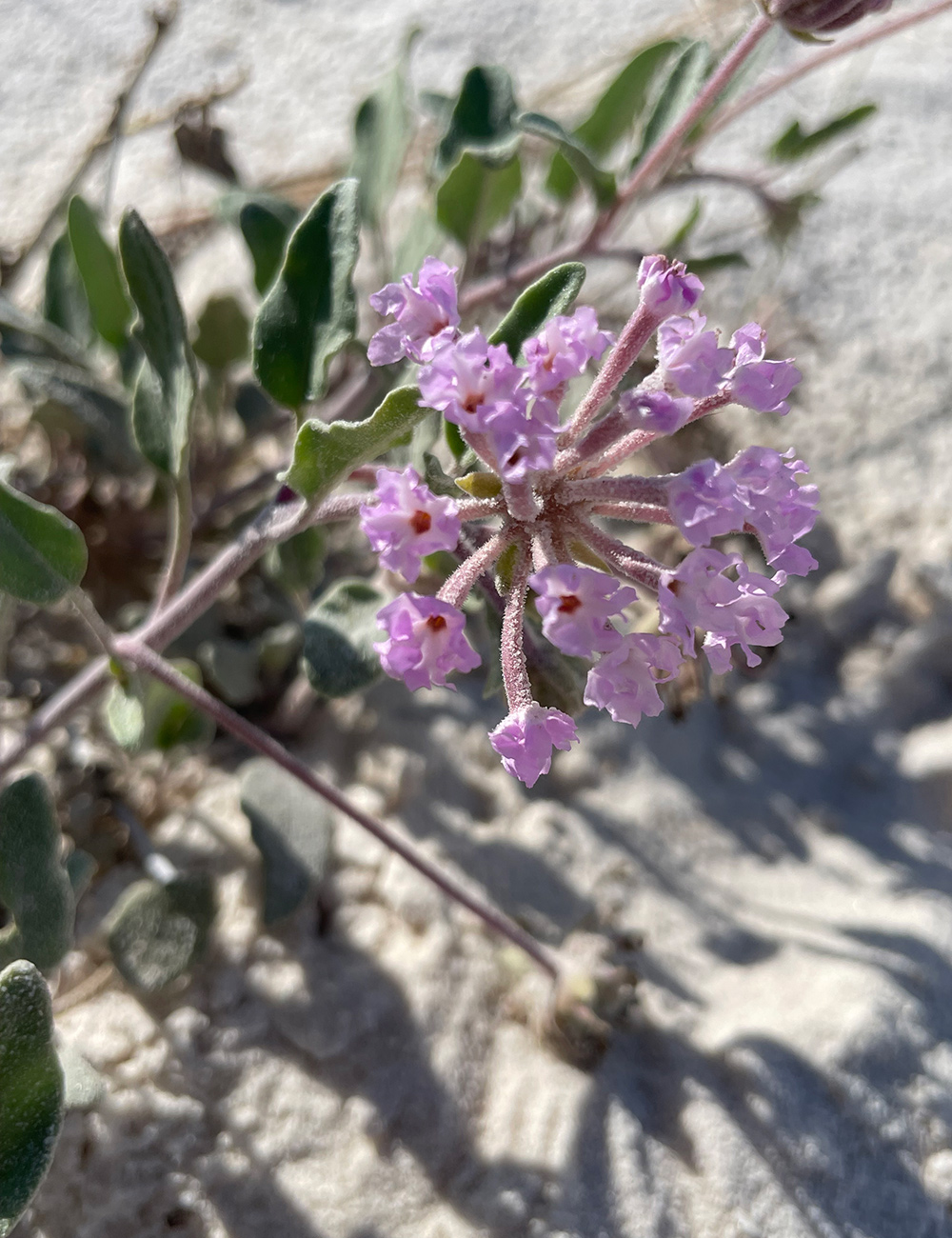 And here is a better look at the sand verbena’s tiny purple blooms.
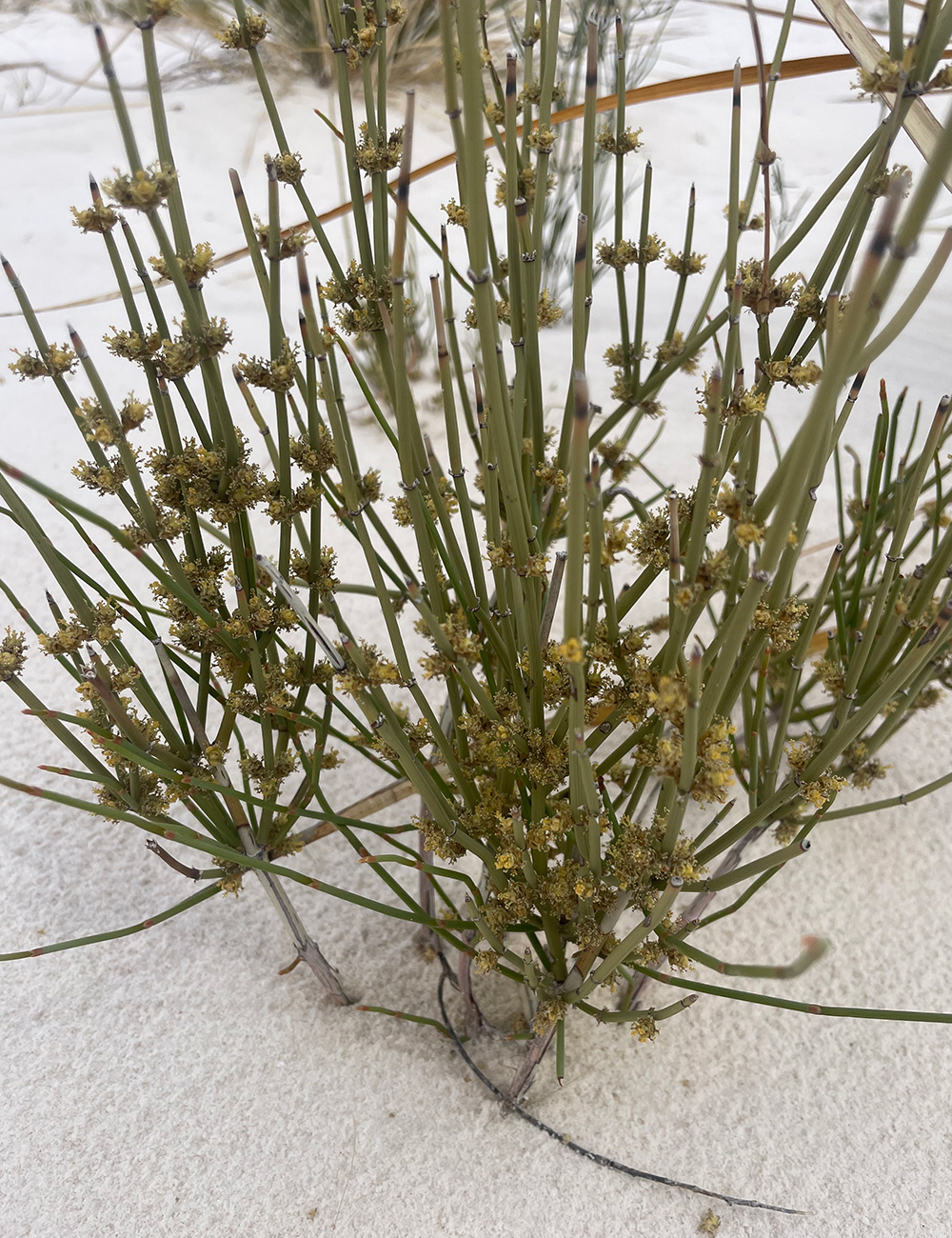 Longleaf jointfir (Ephedra trifurca, Zones 7–10) is a stick-like shrub that only grows leaves and flowers from its nodes, which gives it the look of bamboo. The interesting growth structure of this plant was eye-catching, but the real intrigue comes from its many beneficial properties. Both the stems and roots contain a high level of flavonoids, and native Americans as well as early pioneers used the plant for medicinal purposes. Twigs were also used to dye wool a light tan or yellow-green color.
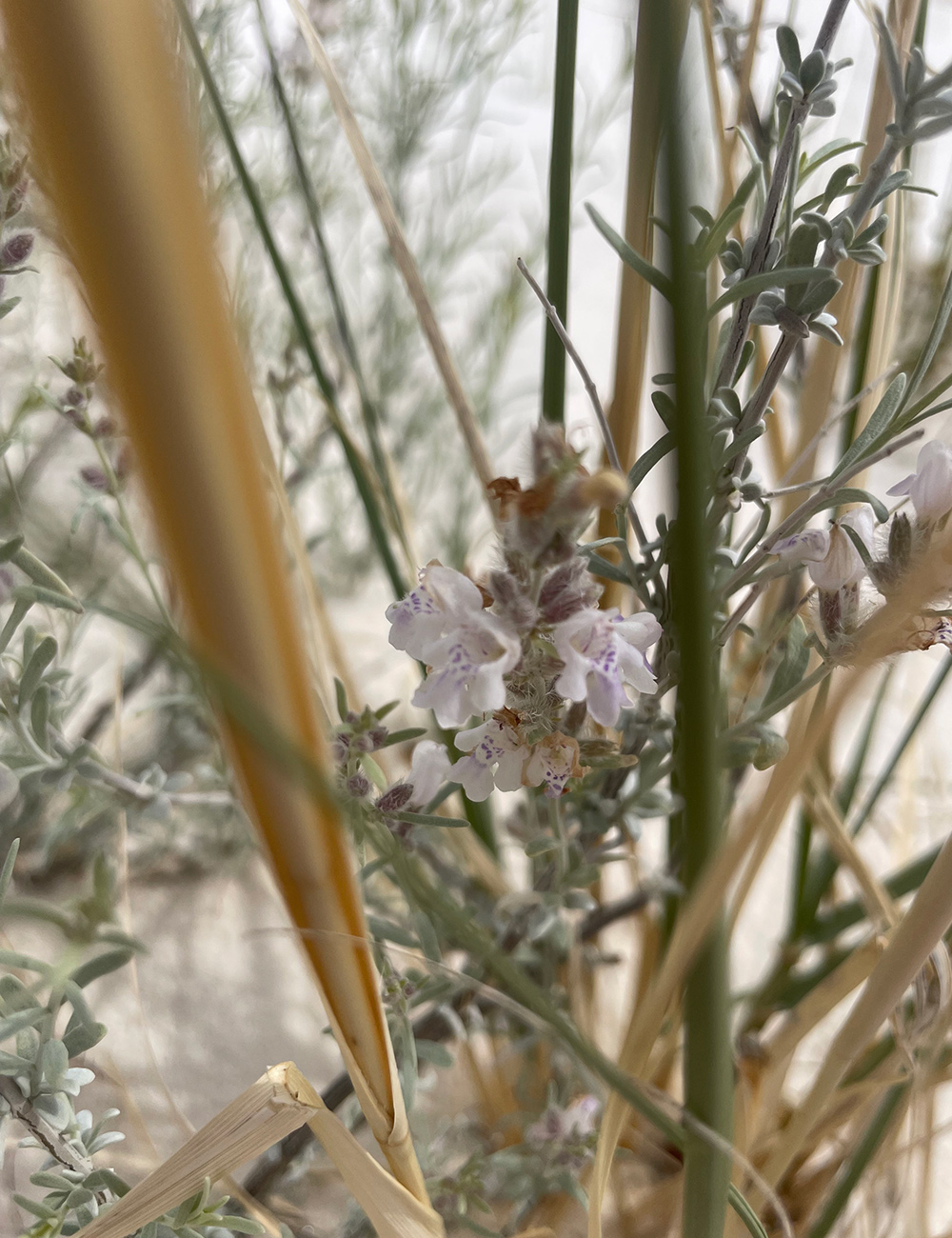 Mints are one of those plants that can seemingly grow anywhere, so it’s not a huge surprise to find a species that thrives in this harsh environment. Hoary rosemary mint (Poliomintha incana, Zones 9–11), however, has a double life. Depending on the time of year, it will smell more like rosemary, mint, or a combination of the two. When I visited, it smelled a bit like a combination of both and was beginning its yearly bloom that will last until early summer.
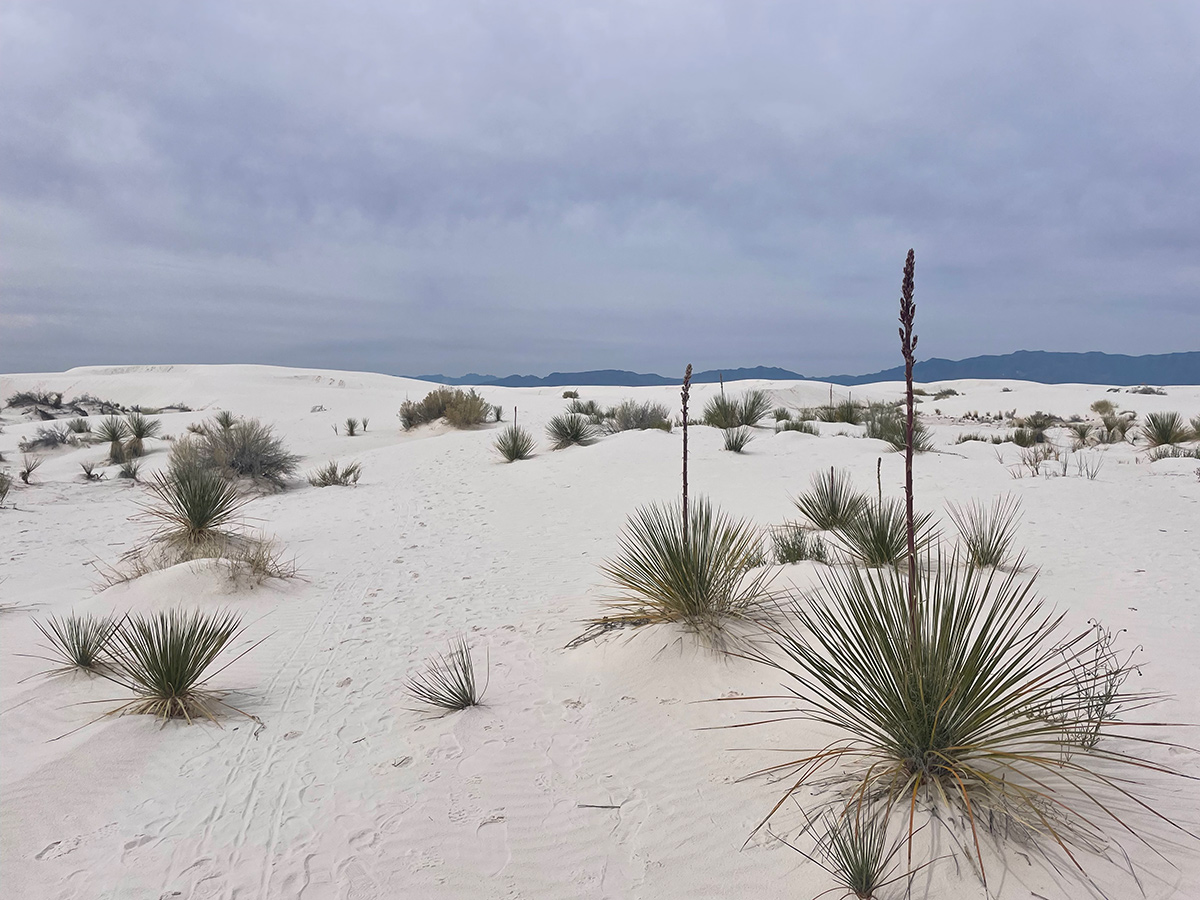 While I initially came to this park to see the giant white waves of gypsum, I was pleasantly surprised by the array of plant life I was also able to enjoy.
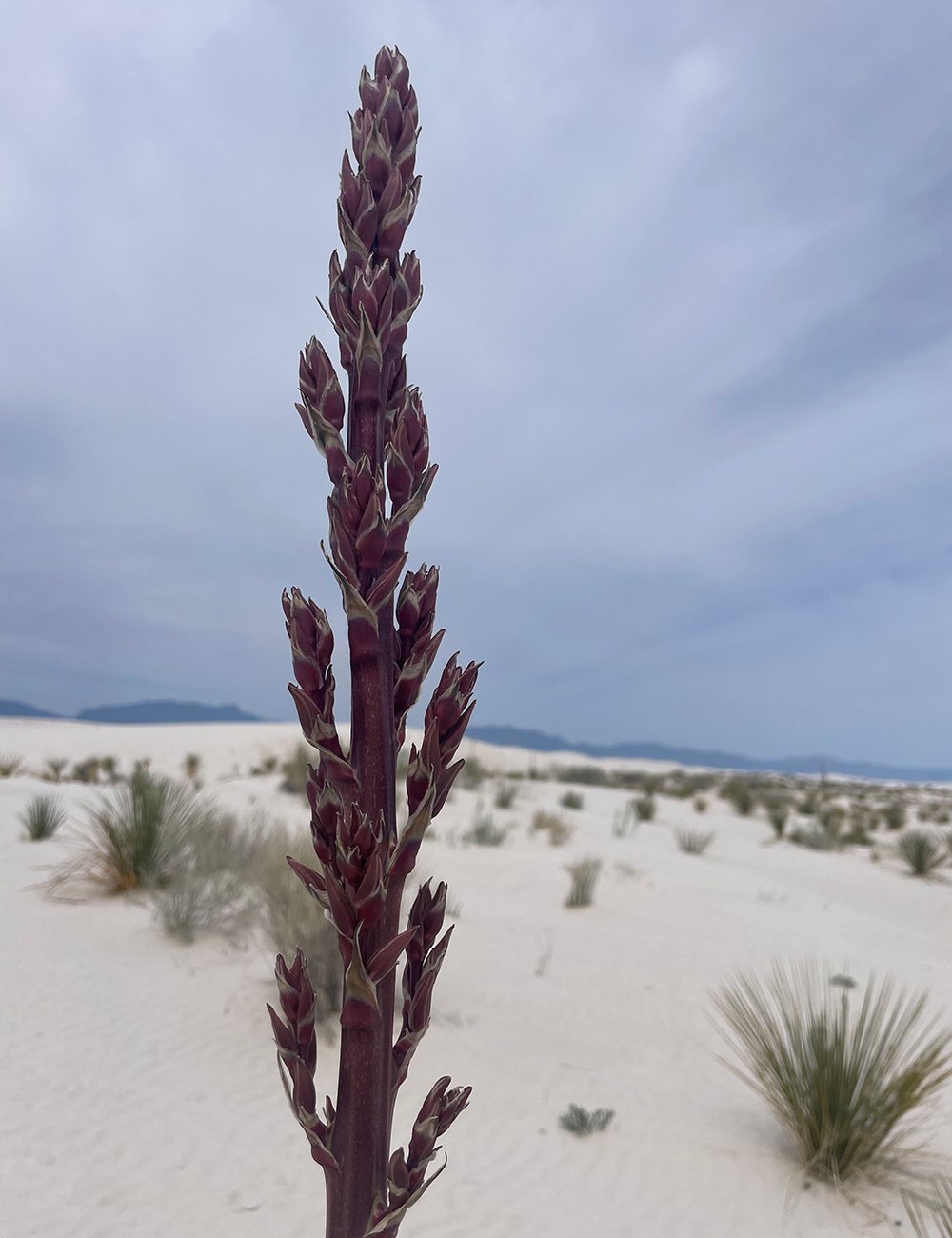 Most of the yuccas were not yet in bloom, but the tall, dark spikes of buds were still fascinating against the stark white backdrop.
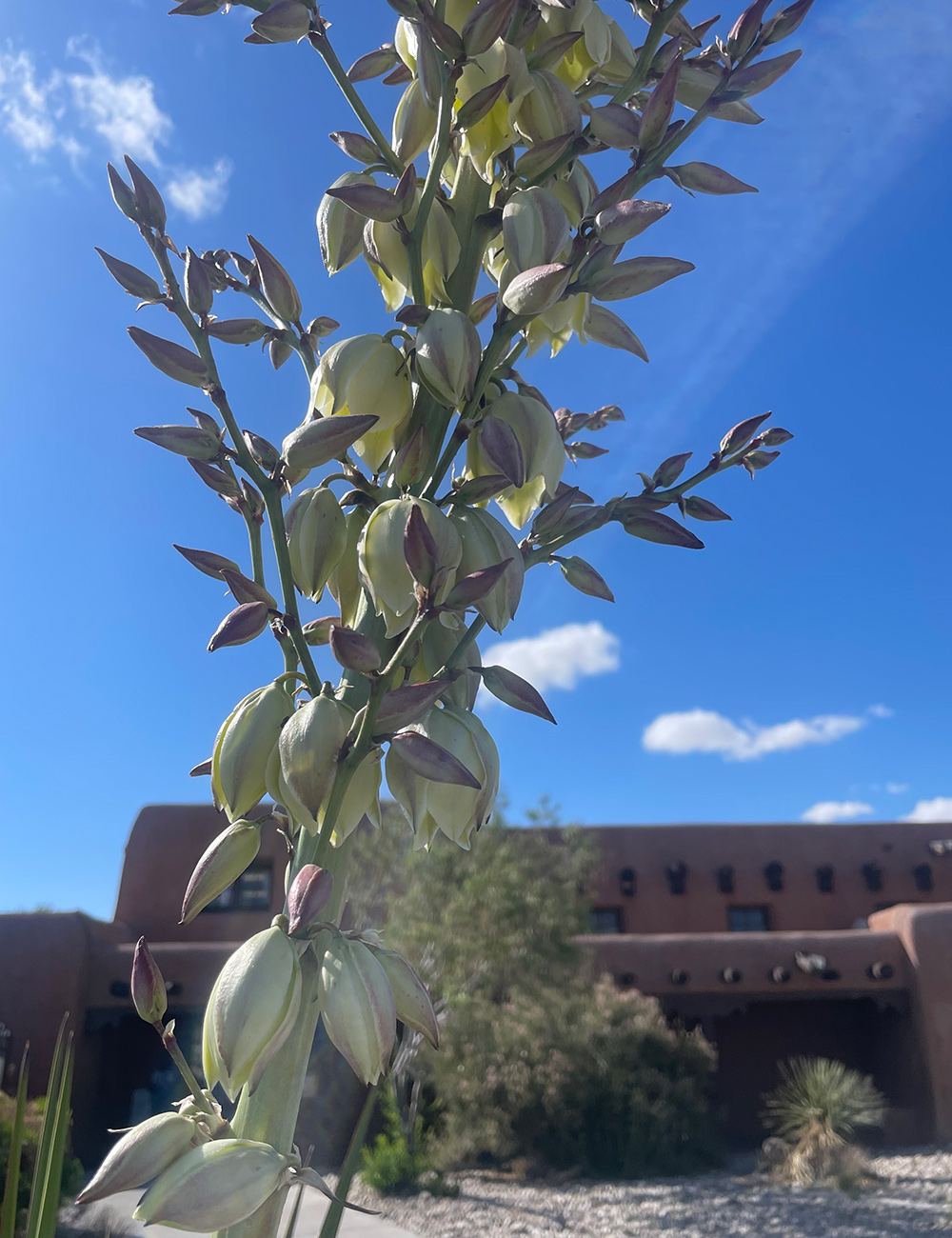 Thankfully, there were some larger yuccas outside of the visitor center that were putting on an early display of drooping yellow blooms. It can be hard to capture the beauty and magnitude of these massive plants, but this was the best shot I got!
I hope you enjoyed seeing the plant life at this one-of-a-kind location. If you’re considering a trip to White Sands National Park, I would highly consider planning your visit for spring.
Leaf peeping—traveling to certain destination with the intention of enjoying colorful fall foliage—is a pretty common phenomenon these days, but I would like to start a new trend of flower finding! Late spring to early summer is a wonderful time to seek out the wildflowers that are unfortunately harder to find in our more populated areas, and you don’t always have to go on a long hike to hunt them down. If you’ve peeped some wonderful wild blooms this year, please consider sharing the photos with the blog and inspire more people to go flower finding. Follow the directions below to submit your photos to Garden Photo of the Day!
We want to see YOUR garden!
Have photos to share? We’d love to see your garden, a particular collection of plants you love, or a wonderful garden you had the chance to visit!
To submit, fill out the Garden Photo of the Day Submission Form.
You can also send 5–10 photos to [email protected] along with some information about the plants in the pictures and where you took the photos. We’d love to hear where you are located, how long you’ve been gardening, successes you are proud of, failures you learned from, hopes for the future, favorite plants, or funny stories from your garden.
Do you receive the GPOD by email yet? Sign up here
Fine Gardening Recommended Products
The Crevice Garden: How to make the perfect home for plants from rocky places
Fine Gardening receives a commission for items purchased through links on this site, including Amazon Associates and other affiliate advertising programs.
A crevice garden replicates the environmental conditions of mountain tops, deserts, coastlines, and other exposed or rocky places on earth. These striking garden features provide perfect conditions for the plants native to these far-off places, bringing the cultivation of these precious gems within everybody’s reach.

Lee Valley Garden Knife
Fine Gardening receives a commission for items purchased through links on this site, including Amazon Associates and other affiliate advertising programs.
These knives have a trowel-like blade with a sharp edge to let you use the same tool for digging, planting and cutting. The blade is sharpened on both sides, with serrations on one edge to help with cutting tough roots or dividing perennials. Deeply stamped markings on the blade (in 1/2″ and 5mm increments) help you set the correct planting depth for seeds and bulbs.

SHOWA Atlas 370B Nitrile Palm Coating Gloves, Black, Medium (Pack of 12 Pairs)
Fine Gardening receives a commission for items purchased through links on this site, including Amazon Associates and other affiliate advertising programs.
Lightweight and close-fitting for excellent dexterity. Machine washable. Breathable back of hand to reduce perspiration. Designed for easy movement and continuous wear. Ideal for aerospace, assembly, automotive, construction, final fix, gardening, manufacturing, operating machinery, packaging, precision handling, tiling, warehousing.