The Beauty and Benefits of Golden Currant
A tidal wave of understanding is sweeping through the gardening community about the importance of using locally appropriate native plants in our home landscapes. Native woody plants play a key role in supporting food webs that include birds, insects, and other wildlife. By blending conservation with traditional garden aesthetics, it’s possible to create stunning, biodiverse landscapes that help combat species loss. One of the best native woody plants for combining attractiveness and ecological value is golden currant.
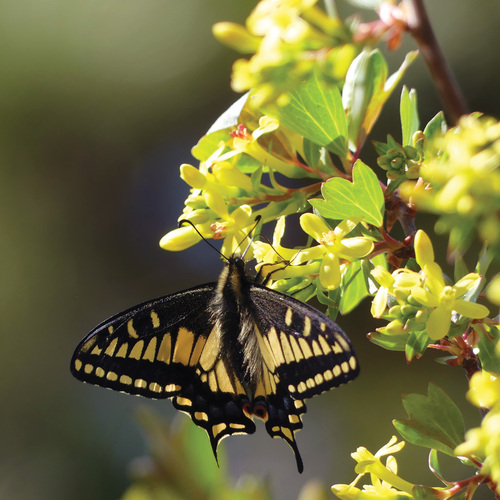
This North American beauty produces an overwhelming abundance of sunny yellow blossoms in spring, just as the muted tones of winter subside and a deep yearning for sunshine and color permeates every gardener’s thoughts. Along with being a copious bloomer, it is wonderfully fragrant and sometimes called clove currant for the savory scent the flowers emit. The showy, aromatic clusters of blooms attract hummingbirds, butterflies, bumblebees, and other native pollinators. I love watching swallowtail butterflies and the year’s newly emerged bumblebee queens gathering nectar on the flowers, which have petals that change colors after pollination to signal a job well done.
Learn more: Planting Plan for a Sophisticated Pollinator Garden
Use this native shrub in wildlife and edible gardens
Golden currant is perfect for sunny pollinator gardens and a great feature for low-water landscapes as well. This is a choice plant for edible gardens and wildlife habitat, since it bears bunches of sweet berries, which turn orange, red, burgundy, or almost black as they ripen. Fruit-eating birds such as cedar waxwings and grosbeaks are quick to feast on them. This shrub then rounds out its seasonal interest with lovely fall color, as its deeply lobed leaves turn yellow, red, or purplish.
Preferring well-drained soil, this hardy, deciduous shrub reaches its mature size quickly. It produces rhizomatous shoots but not aggressively. It can be used for hedgerows and bank stabilization, or easily maintained as a garden focal point. Golden currant occurs naturally in a variety of habitats and soil conditions, but in overly moist or humid situations it can develop fungal problems like powdery mildew. Most importantly, because Ribes species are alternate hosts for white pine blister rust, they should not be planted where species of five-needled pines (Pinus spp. and cvs., Zones 2–9) are present.
Variations of golden currant
Golden currant comes in three variations. R. aureum var. aureum occurs primarily in western North America. R. aureum var. villosum (formerly R. odoratum) is found in central and eastern North America, where it is considered native west of the Mississippi River and naturalized in the northern and Mid-Atlantic areas east of the Mississippi. The third variation, R. aureum var. gracillimum, occurs in the Central Valley and Coast Ranges of California.
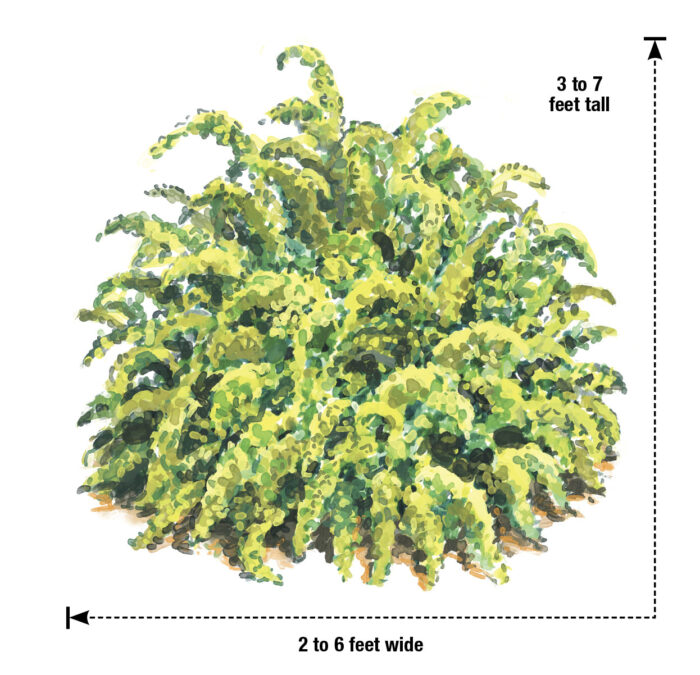
Golden currant
Ribes aureum
Zones: 4–8
Conditions: Full sun to partial shade; rich
to lean, moderately moist to seasonally dry,
well-drained soil
Native Range: North America
Plant Sources:
Kristin Currin is the owner of Humble Roots Nursery in Mosier, Oregon, and the coauthor of The Pacific Northwest Native Plant Primer: 225 Plants for an Earth-Friendly Garden.
Photo: courtesy of Kristin Currin. Illustration: Elara Tanguy.
Learn More:
Watch Fine Gardening YouTube Videos
See More Super Cool Plants
Listen to the podcast
Fine Gardening Recommended Products
National Wildlife Federation®: Attracting Birds, Butterflies, and Other Backyard Wildlife, Expanded Second Edition (Creative Homeowner) 17 Projects & Step-by-Step Instructions to Give Back to Nature
Fine Gardening receives a commission for items purchased through links on this site, including Amazon Associates and other affiliate advertising programs.
From the National Wildlife Federation, the largest U.S. nonprofit conservation organization, with 6 million members and 51 state and territorial affiliated organizations. 17 step-by-step projects that everyone can do together make getting your family back to nature easy, educational, and fun. Over 200 color photos of backyard wildlife habitats and the wide variety of creatures they attract, plus step-by-step photos and illustrations for family projects. Learn wildlife-friendly practices for gardening, landscape design, supplemental feeders, birdbaths, nesting places, and more. Learn how to attract backyard pollinators, from bees and butterflies to beetles, bats, and hummingbirds
Get your garden certified by the National Wildlife Federation’s Garden for Wildlife(TM) program by following the included certification application checklist.
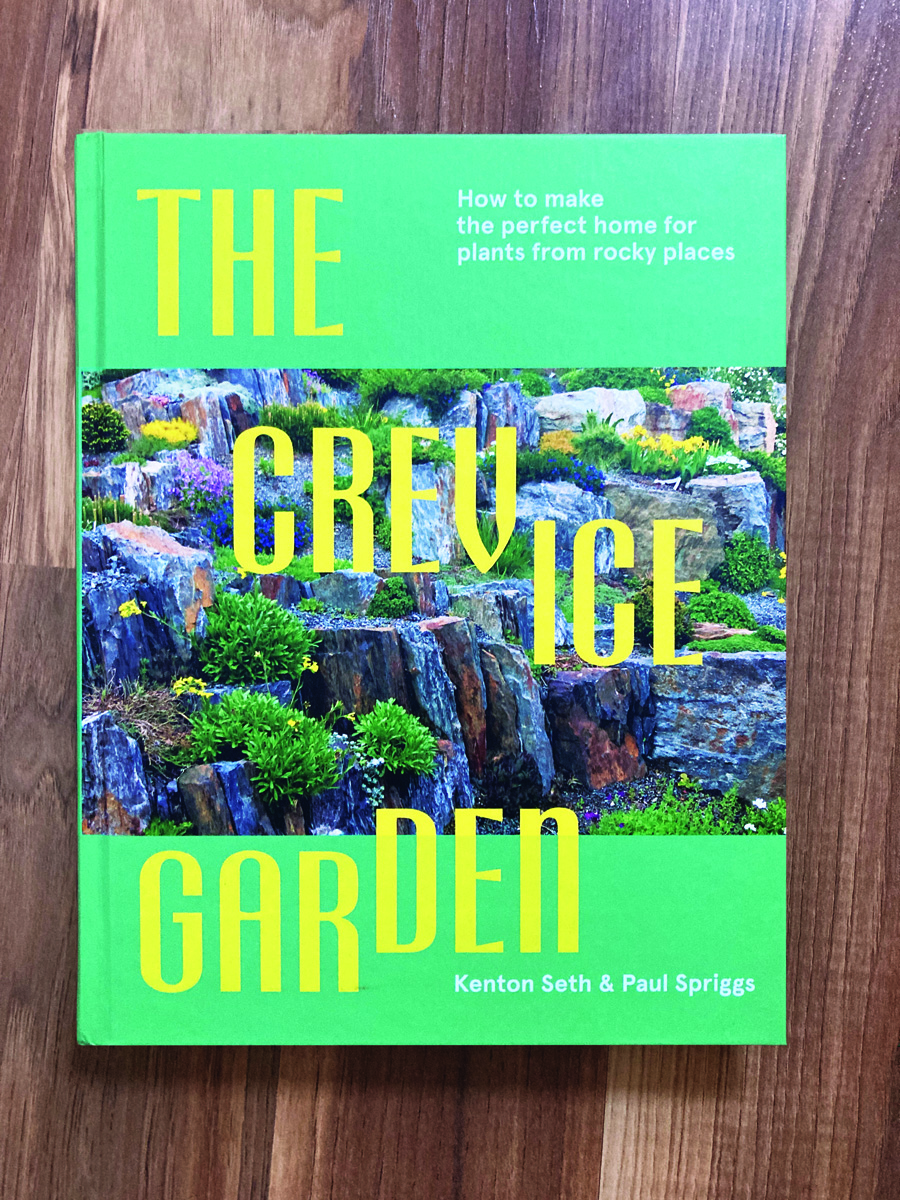
The Crevice Garden: How to make the perfect home for plants from rocky places
Fine Gardening receives a commission for items purchased through links on this site, including Amazon Associates and other affiliate advertising programs.
A crevice garden replicates the environmental conditions of mountain tops, deserts, coastlines, and other exposed or rocky places on earth. These striking garden features provide perfect conditions for the plants native to these far-off places, bringing the cultivation of these precious gems within everybody’s reach.
Wagner’s 52003 Classic Blend Wild Bird Food, 6-Pound Bag
Fine Gardening receives a commission for items purchased through links on this site, including Amazon Associates and other affiliate advertising programs.
Classic wild bird food uses the highest quality grains to attract backyard wild Birds. A high-quality mix containing Millet, milo, cracked corn and Sunflower for a wide range of wild birds to enjoy. Perfect for tube, hopper, or platform feeders. Great to feed in all seasons! Perfect for the winter, when seeds are scarce; spring and summer for hatchlings; and autumn to give energy to migrating birds. This seed will help you fill your yard with birds such as Jays, cardinals, doves, Juncos, finches, goosebeaks, any many more.