
Design a beautiful spring garden for the Mid-Atlantic
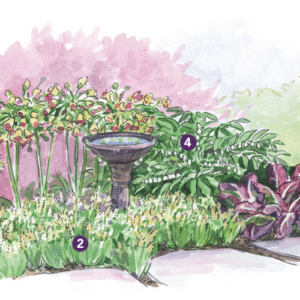
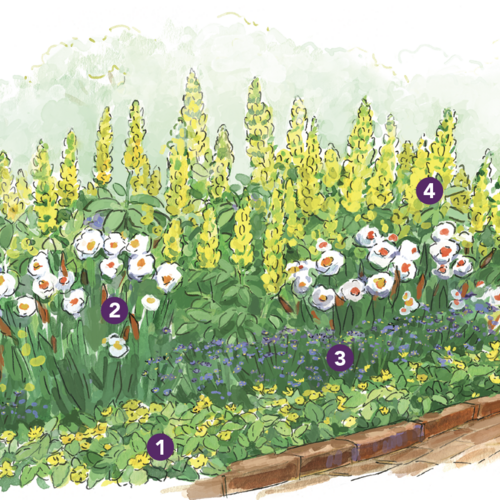
Maureen Robinson, president of the Washington, D.C., Maryland, and Virginia chapter of the Association of Professional Landscape Designers (APLD), shares an expert planting plan tailored to the Mid-Atlantic region. Bright yellow blooms of Carolina lupine establish a vibrant backdrop for double daffodils and blue-eyed grass, creating a layered and seasonally dynamic spring garden layout for this area.
Spring garden layout plant list
Read on to find details about each corresponding plant numbered in the illustration above to recreate this expert design in your own landscape.
See More: Design Ideas for the Mid-Atlantic
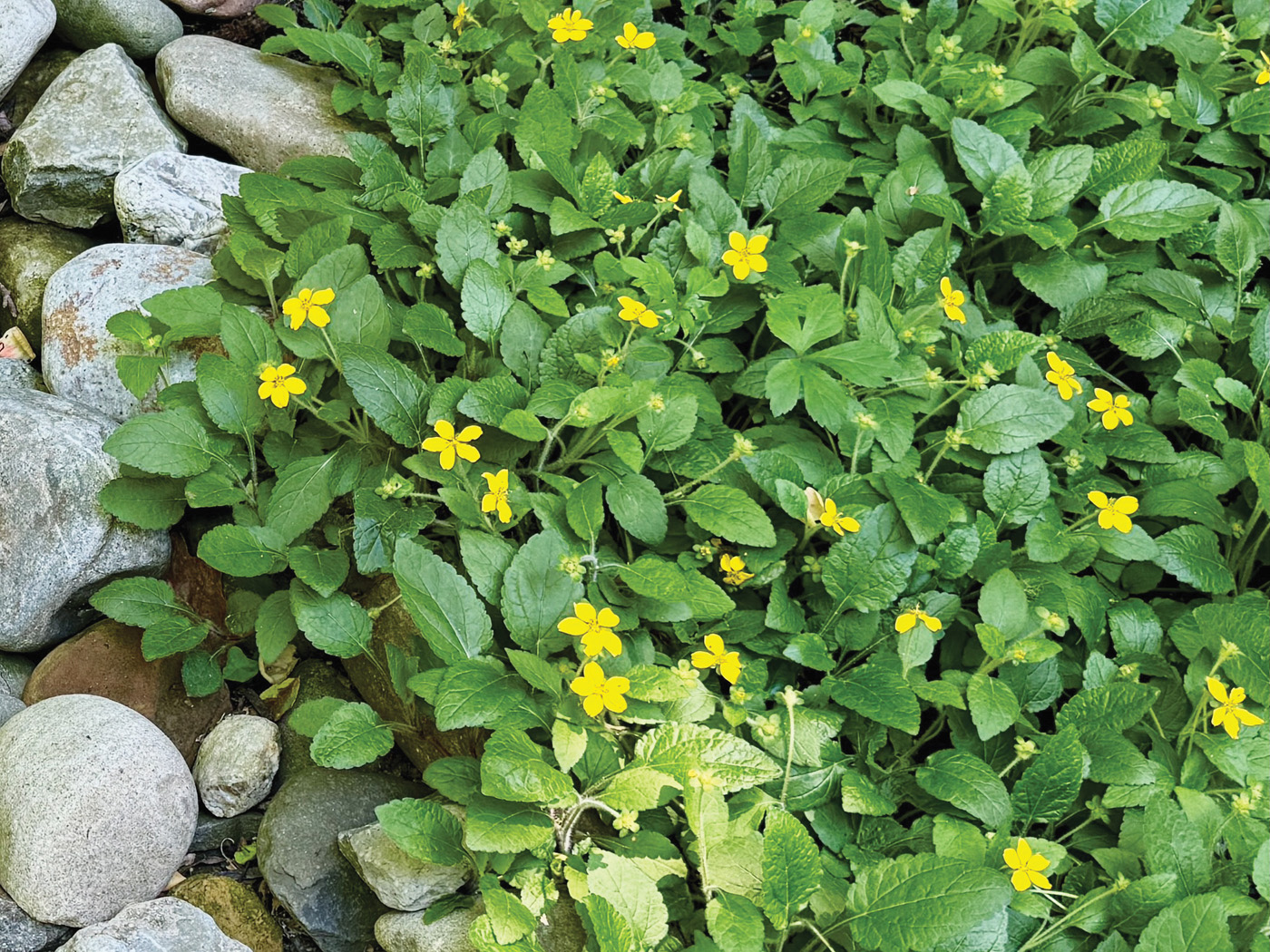
1. ‘Allen Bush’ green and gold
Chrysogonum virginianum ‘Allen Bush’
- Zones: 5–9
- Size: 8 inches tall and 12 inches wide
- Conditions: Partial to full shade; average to moist, well-drained soil
- Native range: Eastern United States
Green and gold is one of the most charming native ground covers for our region. With semi-evergreen foliage that is deer and rabbit resistant and a low, clumping habit, it forms a dense green mat that largely holds up through winter and then produces cheery yellow flowers from April to June (and often again in fall).
While naturally at home in a woodland setting, I frequently use it for stabilization on hillsides with at least some shade, or in garden beds for a “green mulch” layer that provides weed control as well as seasonal allure. All cultivars are excellent, but I like ‘Allen Bush’ for its more elevated flowers and brown stamens, which give the flowers a defined center.
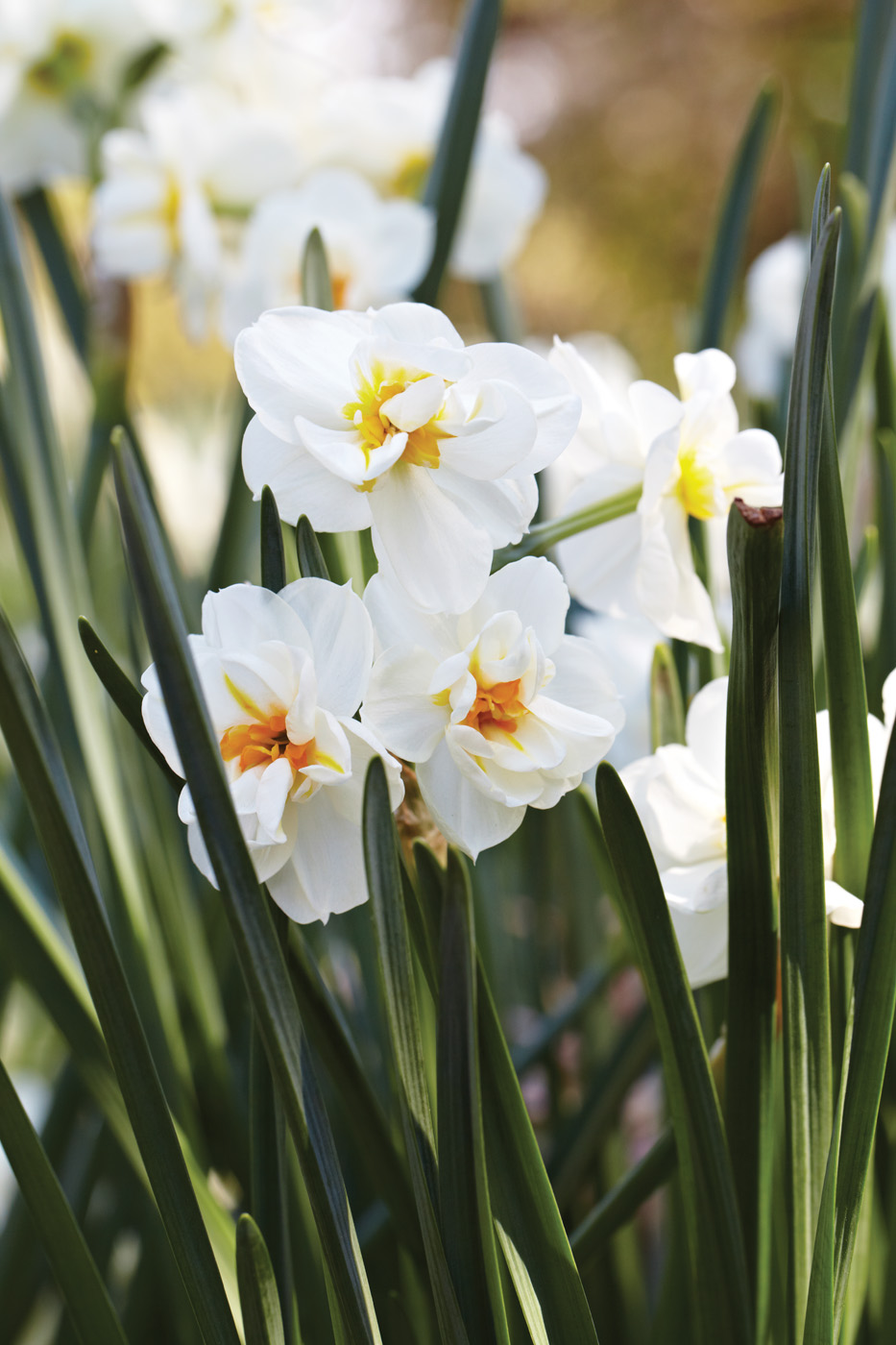
2. ‘Sir Winston Churchill’ daffodil
Narcissus ‘Sir Winston Churchill’
- Zones: 3–9
- Size: 14 to 18 inches tall and 6 to 12 inches wide
- Conditions: Full sun to partial shade; well-drained soil
- Native range: Hybrid
Few things are as exciting at the end of winter as seeing bulbs emerging from the soil. Tulips are a beloved option, but in our area I’m always afraid that they won’t survive the wildlife, so I look for interesting daffodil mixes. ‘Sir Winston Churchill’ is a double daffodil with an impressive four to six blooms per stem, and it is fragrant as well.
The creamy white petals have a velvety opaqueness that reminds me of vanilla ice cream, and the centers are a striking yellow-orange. With a height of only 14 to 18 inches, these bulbs can be planted throughout your garden borders where other later perennials can grow up around them as they die down. Daffodils are also deer, squirrel, and rabbit resistant—victory!
Read More: 32 Plants That Are Deer Resistant
3. ‘Lucerne’ blue-eyed grass
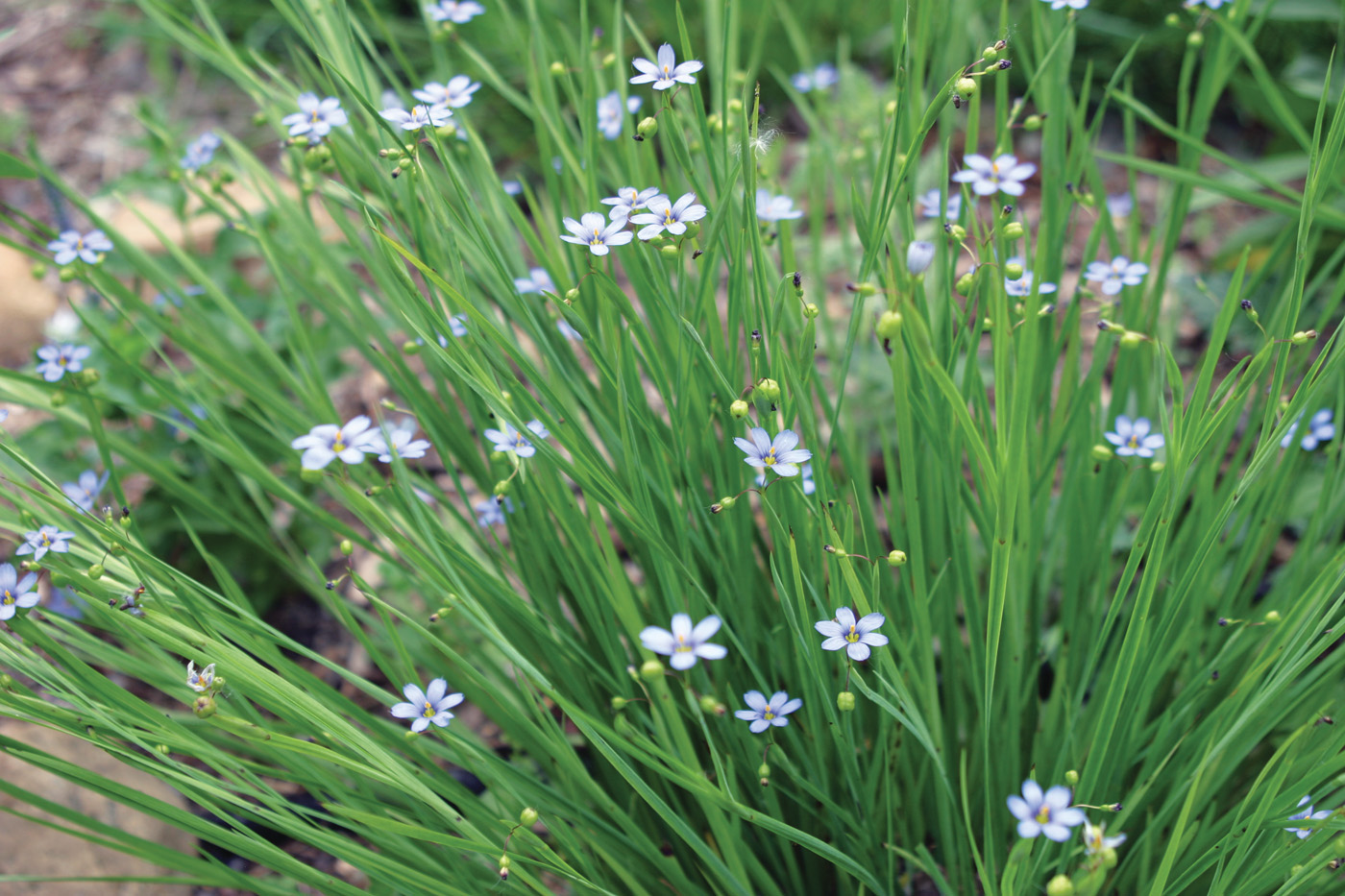
Sisyrinchium angustifolium ‘Lucerne’
- Zones: 4–8
- Size: 6 to 12 inches tall and 6 to 8 inches wide
- Conditions: Full sun to partial shade; medium, well-drained soil
- Native range: Eastern North America
The next time you’re considering planting something like a small sedge (Carex spp. and cvs., Zones 3–10) or liriope (Liriope spp. and cvs., Zones 4–10), consider this wonderful perennial instead. Blue-eyed grass is a semi-evergreen, upright clumping plant with slender leaves that grow about 8 inches high. The flower stems emerge up through and past the foliage height.
‘Lucerne’ features beautiful blue to purple blooms that are held upward, making them clearly visible as you walk by. This plant is native to many habitats, from floodplains to prairies, and it grows in nearly any type of soil. It’s especially useful in our heavy Virginia clay and will prosper in tough conditions.
Read More: Great Native Grasses | Let’s Argue About Plants
4. Carolina lupine
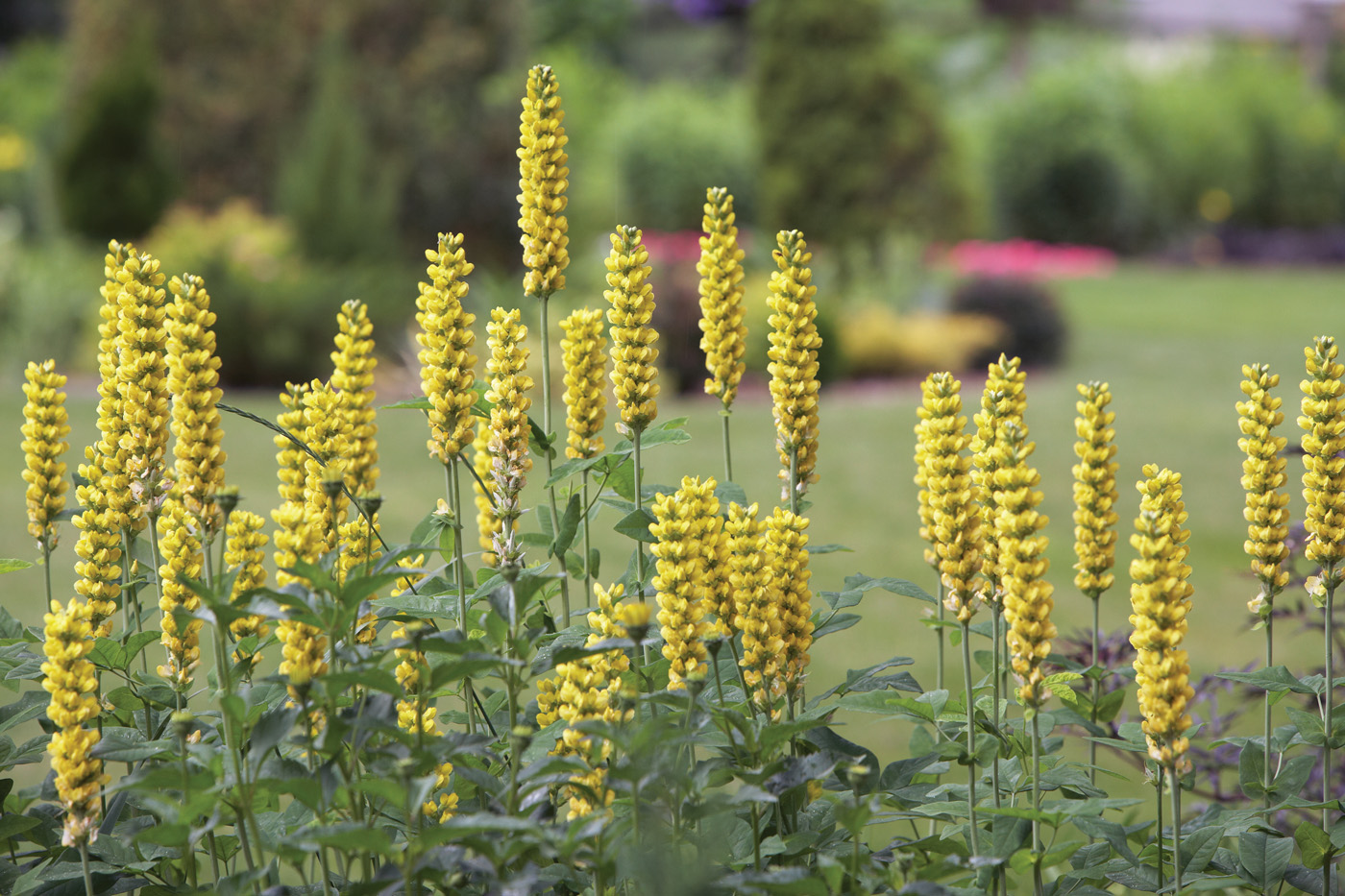
Thermopsis villosa
- Zones: 4–9
- Size: 4 feet tall and 3 feet wide
- Conditions: Full sun to partial shade; medium to dry soil
- Native range: Eastern North America
Thermopsis villosa has many names—Carolina lupine, Aaron’s rod, false lupine, bush pea, and more—but you’re more likely to think it is a baptisia (Baptisia spp. and cvs., Zones 3–9) if you’re not familiar with it. Pea-like foliage emerges in early spring, with gorgeous racemes of yellow flowers starting in May and continuing well into June. This is a longer bloom time than baptisia has, which allows Carolina lupine to shine alongside other favorite perennials like ‘Lucerne’ blue-eyed grass.
After flowering, the seedpods are a lovely ornamental element that become more decorative as they dry and serve as a food source for songbirds. This plant has a strong taproot and is not easy to move around, so take its mature size into account when planting. It is also squirrel and deer resistant.
See More from the Summer Issue of Fine Gardening!
Fine Gardening Recommended Products
ARS Telescoping Long Reach Pruner
Fine Gardening receives a commission for items purchased through links on this site, including Amazon Associates and other affiliate advertising programs.
Telescopes from 4 to 7′. Cut and Hold (160) Blades. Drop forged blades for unsurpassed long lasting sharpness. Lightweight, 2.3 lbs., for continued use. Perfectly balanced for easy pruning.
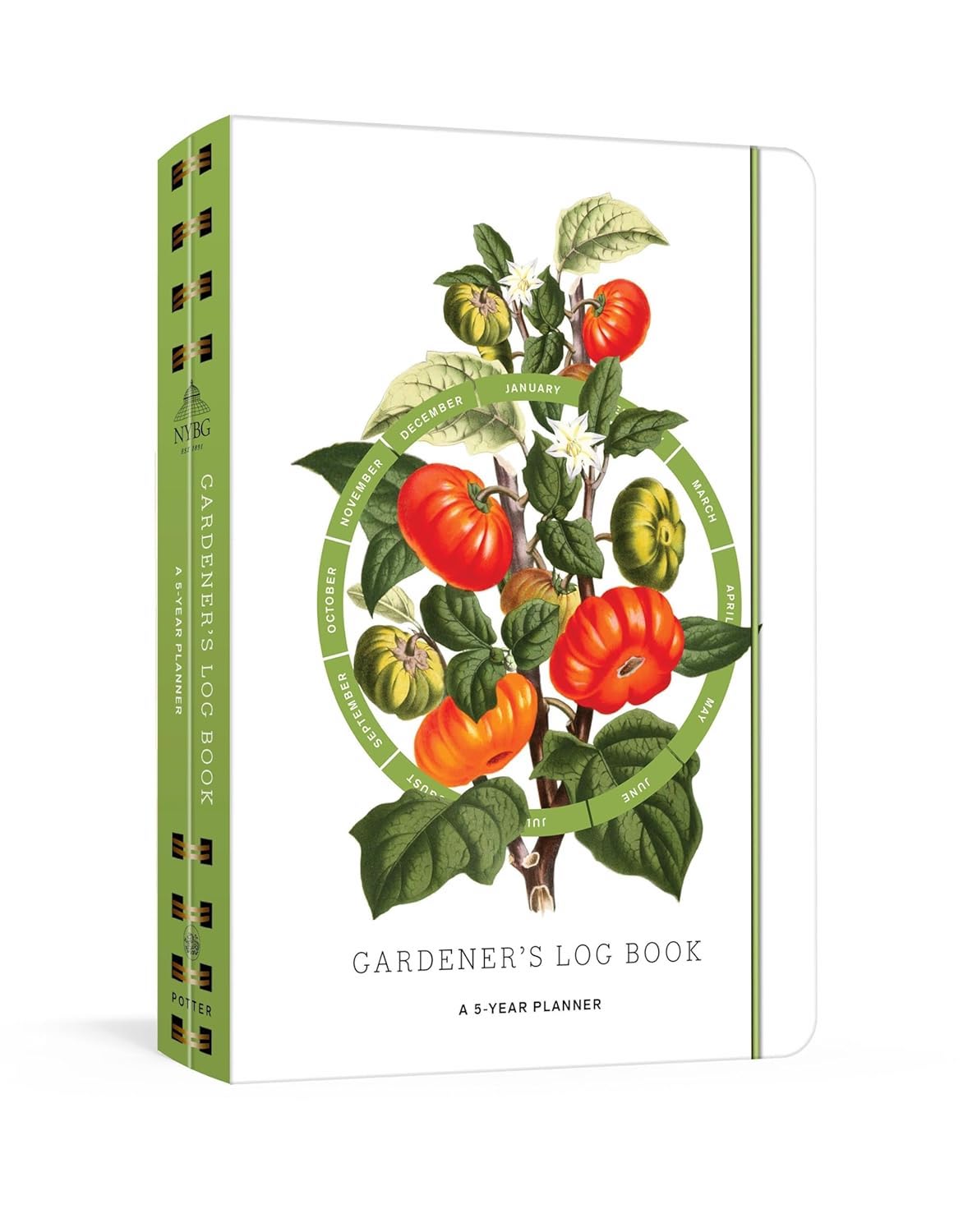
Gardener’s Log Book from NYBG
Fine Gardening receives a commission for items purchased through links on this site, including Amazon Associates and other affiliate advertising programs.
This weatherproof five-year log book includes the following features:
· Sturdy waterproof cover to protect pages from rain and muddy soil
· Lined pages and gridded paper for plotting beds
· Five years of 12-month bloom and harvest grids for recording what you planted and when
· Authoritative appendices on composting, pruning, pest and disease control, and container gardening
· Useful reminders by season on fertilizing, mulching, and transplanting
· Space for listing your favorite sources and suppliers.

The New Organic Grower, 3rd Edition: A Master’s Manual of Tools and Techniques for the Home and Market Gardener, 30th Anniversary Edition
Fine Gardening receives a commission for items purchased through links on this site, including Amazon Associates and other affiliate advertising programs.
Since its original publication in 1989, The New Organic Grower has been one of the most important farming books available, with pioneer Eliot Coleman leading the charge in the organic movement in the United States. Now fully illustrated and updated, this 30th Anniversary Edition is a must-have for any agricultural library.