
Plant this beautiful spring garden layout in the Midwest
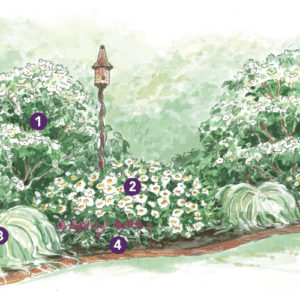
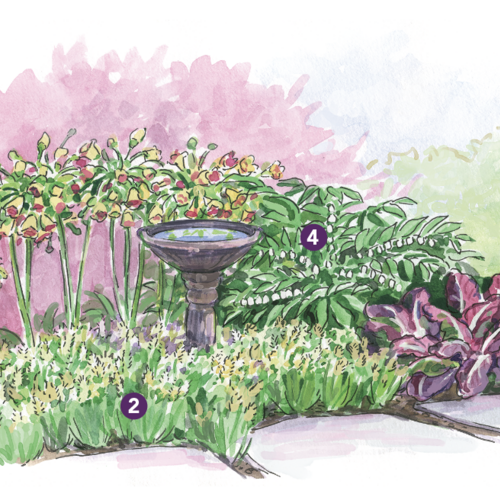
Amanda Thomsen, owner of the garden shop Aster Gardens in Lemont, Illinois, shares a spring garden layout tailored to the Midwest’s dynamic climate. Arching sprays of smooth Solomon’s seal are accented by the striking dark foliage of ‘Japanese Giant Red’ and the fine texture of Pennsylvania sedge. The unique nodding blooms of Sicilian honey garlic are sure to turn heads in this charming spring garden layout for the Midwest.
Spring garden layout plant list
Read on for details about each numbered plant in the illustration above and learn how to recreate this expert design in your own landscape.
See More: Design Ideas for the Midwest
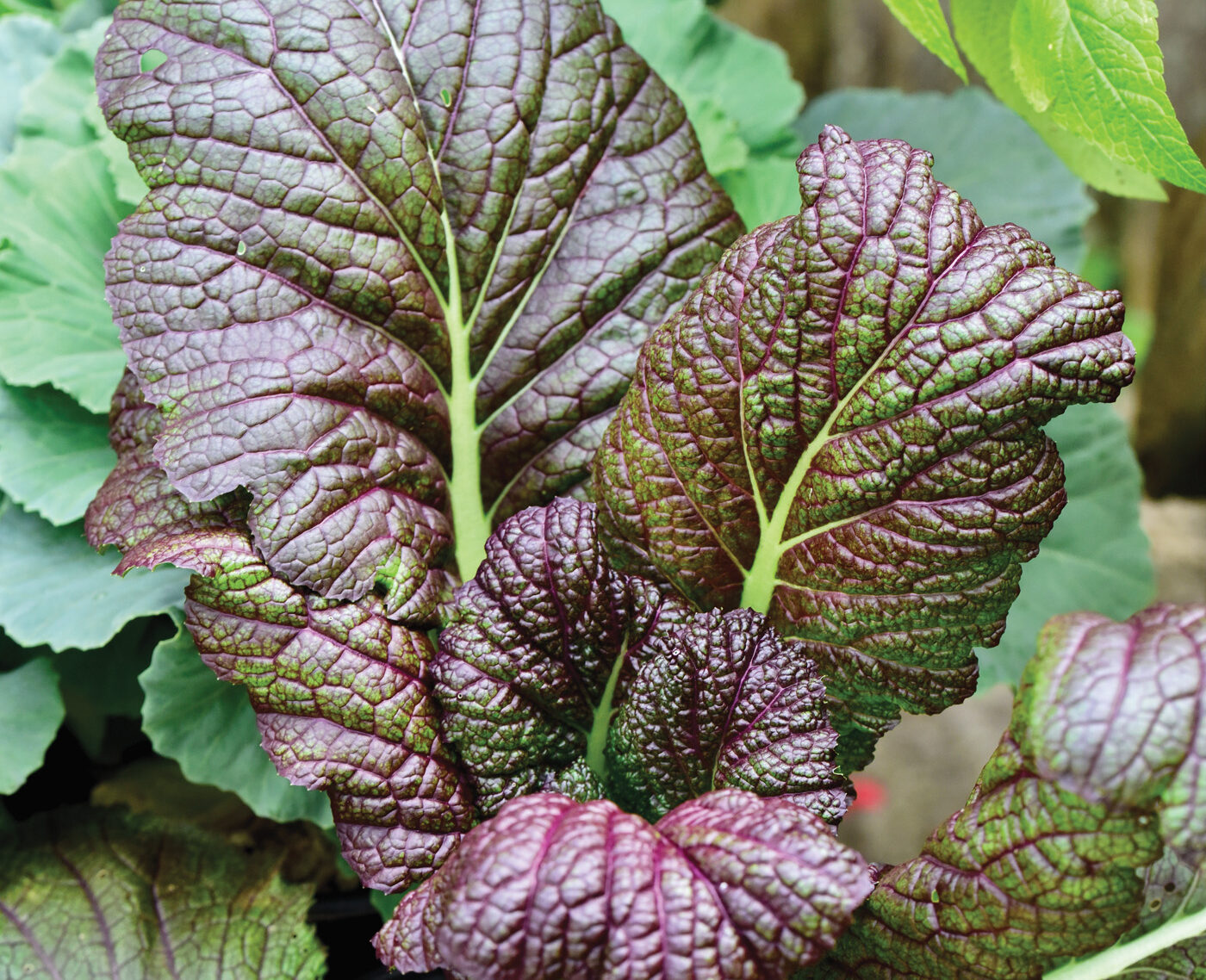
1. ‘Japanese Giant Red’ mustard
Brassica juncea ‘Japanese Giant Red’
- Zones: Annual
- Size: 16 inches tall and wide
- Conditions: Full sun to partial shade; rich, moist, well-drained soil
- Native range: Asia and Western Europe
Years ago, and I truly mean pre-Y2K, I saw a photo in a garden book of parrot tulips paired with deep purple, crinkly textured ‘Japanese Giant Red’ mustard in a spring planting, and it imprinted on my brain in such a way that I’m here to evangelize it. In my mostly native front yard, I toss these mustard seeds all around in March, and they quickly fill those spots that other plants will expand into later. The crop comes up quickly in spring and fades away before the heat of summer.
I find it easy to pull and control, although others may disagree. Sometimes there is a lesser reprise in autumn. We eat the baby greens in salads, and a TikTok creator has me almost convinced to collect the seeds and make brown mustard.
2. ‘Straw Hat’ Pennsylvania sedge
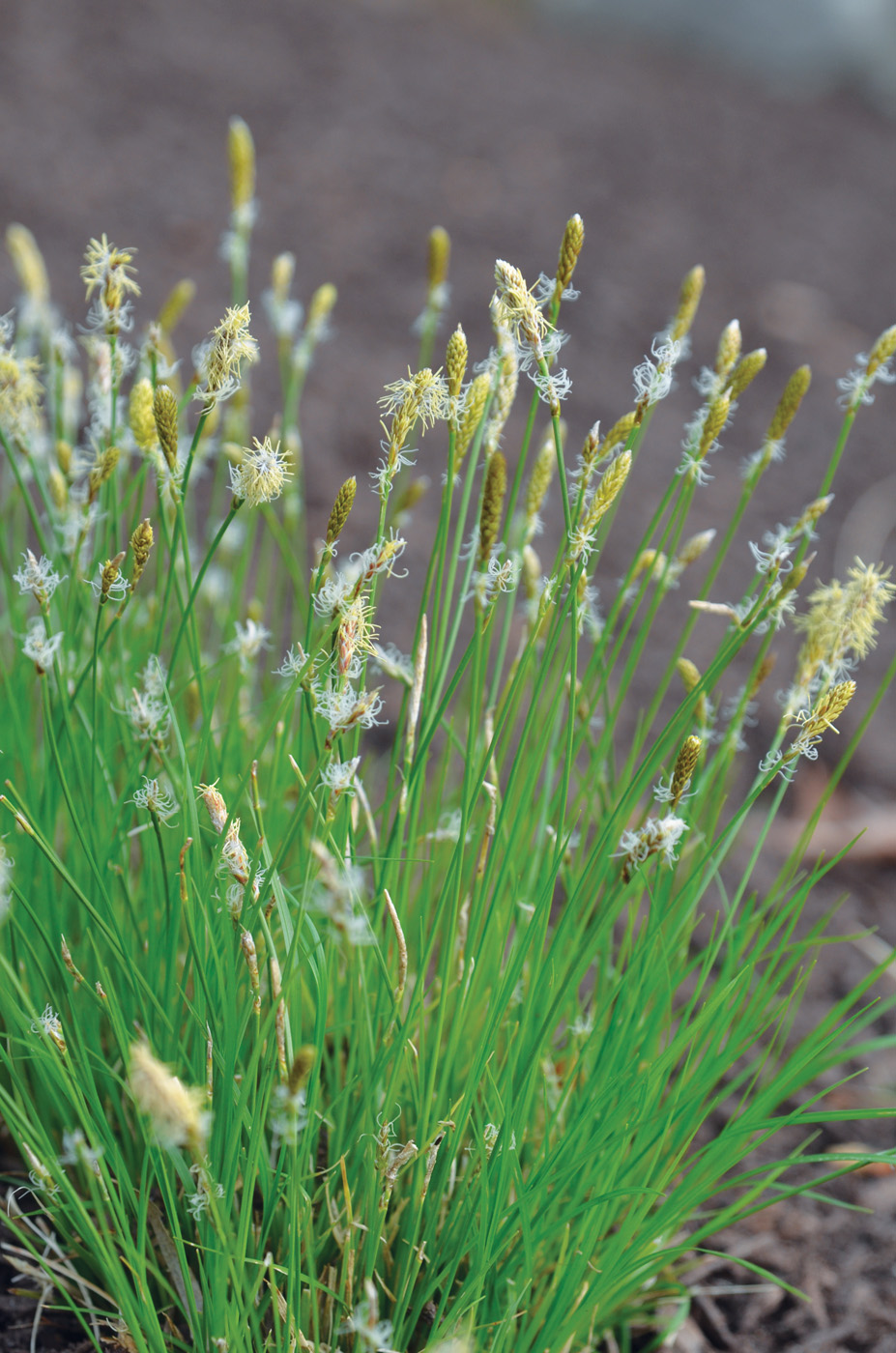
Carex pensylvanica ‘Straw Hat’
- Zones: 3–8
- Size: 6 to 12 inches tall and 12 to 18 inches wide
- Conditions: Partial to full shade; average to dry, well-drained soil
- Native range: Central and eastern North America
If I have the platform to share a really great plant for dry shade, I should jump at it—and here it is! The flowers on ‘Straw Hat’ Pennsylvania sedge are so cute, I audibly sighed when I first saw them, like some people do when they look inside a stroller and see an adorable infant. Large and bottlebrush-like, the flowers appear in April and May in my garden.
‘Straw Hat’ is a perfect partner for ‘Japanese Giant Red’ mustard if you’re into striking color and texture combinations. The bulky dark leaves of the mustard make ‘Straw Hat’ look even more like it was conjured by fairies. Overwatering this plant is a death sentence, so control yourself.
3. Sicilian honey garlic
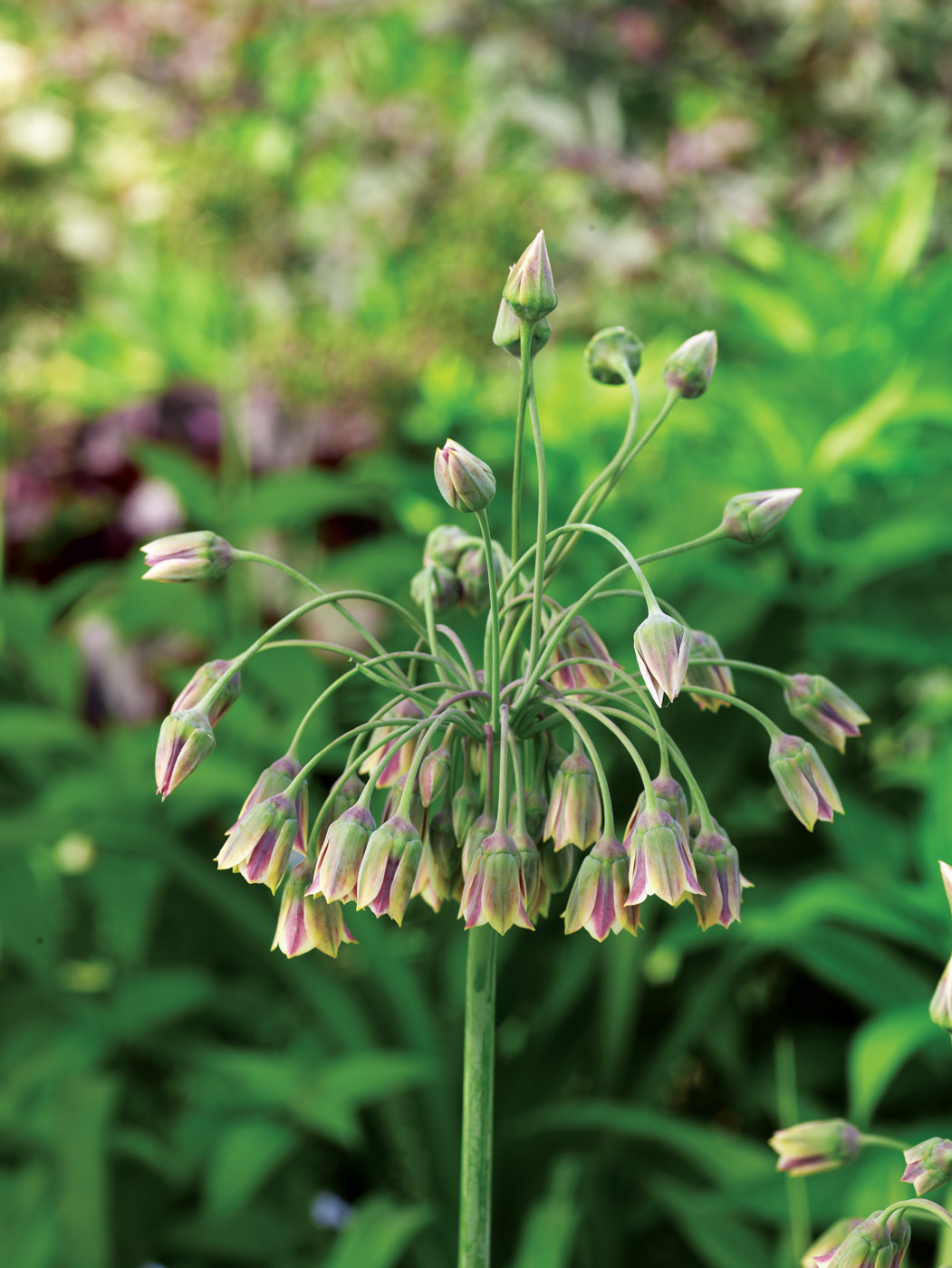
Allium siculum subsp. dioscoridis syn. A. bulgaricum
- Zones: 4–8
- Size: 24 to 36 inches tall and 6 to 8 inches wide
- Conditions: Full sun to partial shade; well-drained soil
- Native range: The Mediterranean
When you’re at an art museum and something strikes your fancy, you may think, I like this, but…is it pretty? It’s definitely interesting! That’s Sicilian honey garlic. The clusters of downward-facing, bell-shaped flowers would be a celebrated staple in everyone’s garden if they came in a more cheerful color combination than maroon-purple with creamy yellow-green stripes. But the bees and I don’t care that the blossoms arrive each May in the color palette of a fresh bruise—we can’t get enough!
As with all alliums, it does a great job of keeping critters away. I have a mass planted with brunnera (Brunnera macrophylla, Zones 3–8), and it’s a perfect spring duo.
Read More: 5 Unusual Bulbs for the Midwest
4. Smooth Solomon’s seal
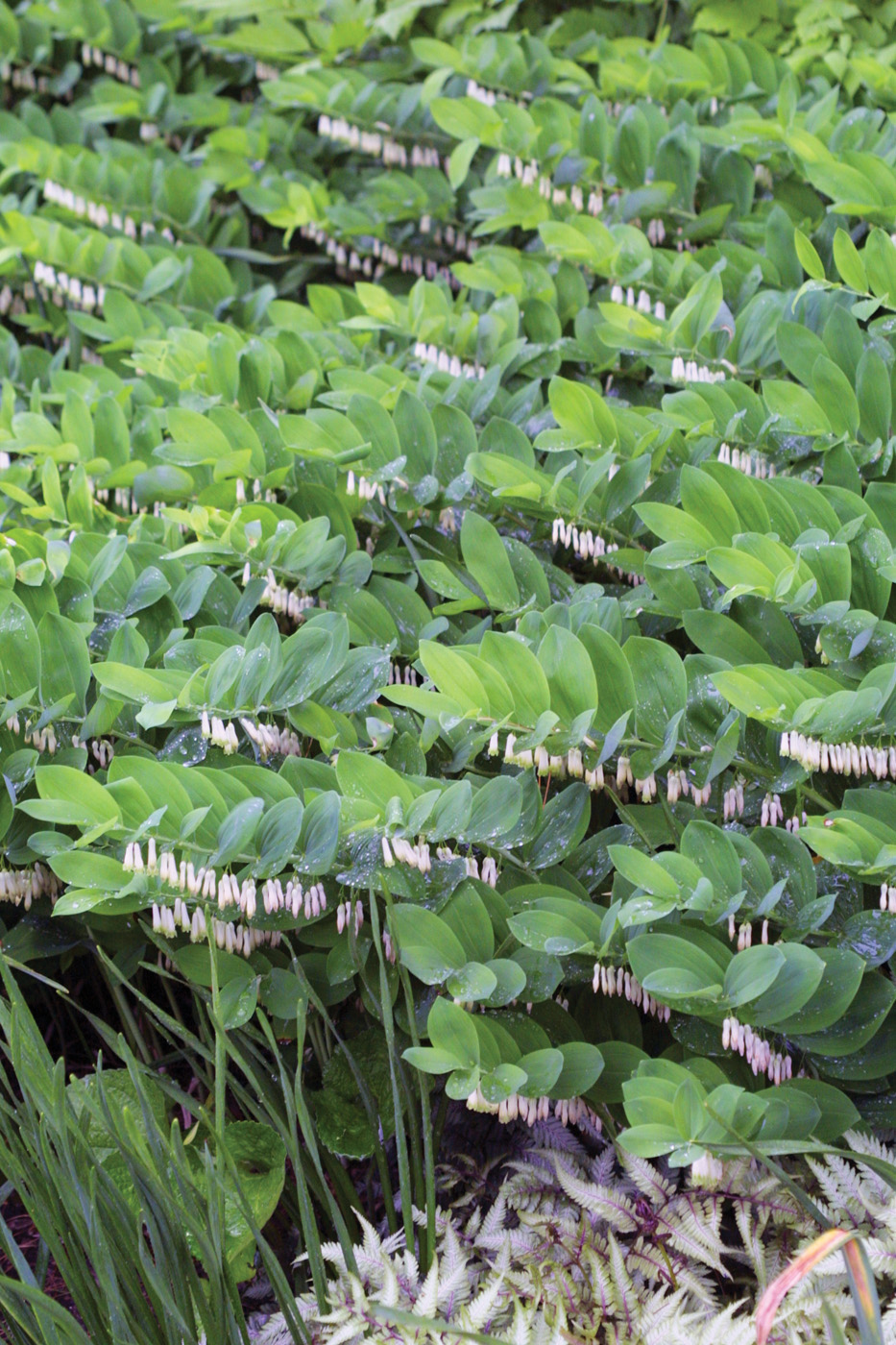
Polygonatum biflorum
- Zones: 3–8
- Size: 1 to 3 feet tall and wide
- Conditions: Partial to full shade; average to wet, well-drained soil
- Native range: Central and eastern North America
This is a plant I never would have purchased on my own, but I inherited one when we moved into our house. Reliably cutting a bouquet of blooming stems for an Easter centerpiece—along with some Koreanspice viburnum (Viburnum carlesii, Zones 4–7) and white daffodils—has made me fall in love with smooth Solomon’s seal.
It has a classic woodland aesthetic, and in this particular planting, the arching stems and dangling greenish white flowers echo the nodding of the Sicilian honey garlic blooms, making it all look very intentional. Classically teamed with ferns, smooth Solomon’s seal gets paired with dark foliage in my garden: heucheras (Heuchera spp. and cvs., Zones 4–9), baneberries (Actaea spp. and cvs., Zones 3–9), or even a dramatic mustard.
See More from the Summer Issue of Fine Gardening
Fine Gardening Recommended Products

The New Organic Grower, 3rd Edition: A Master’s Manual of Tools and Techniques for the Home and Market Gardener, 30th Anniversary Edition
Fine Gardening receives a commission for items purchased through links on this site, including Amazon Associates and other affiliate advertising programs.
Since its original publication in 1989, The New Organic Grower has been one of the most important farming books available, with pioneer Eliot Coleman leading the charge in the organic movement in the United States. Now fully illustrated and updated, this 30th Anniversary Edition is a must-have for any agricultural library.
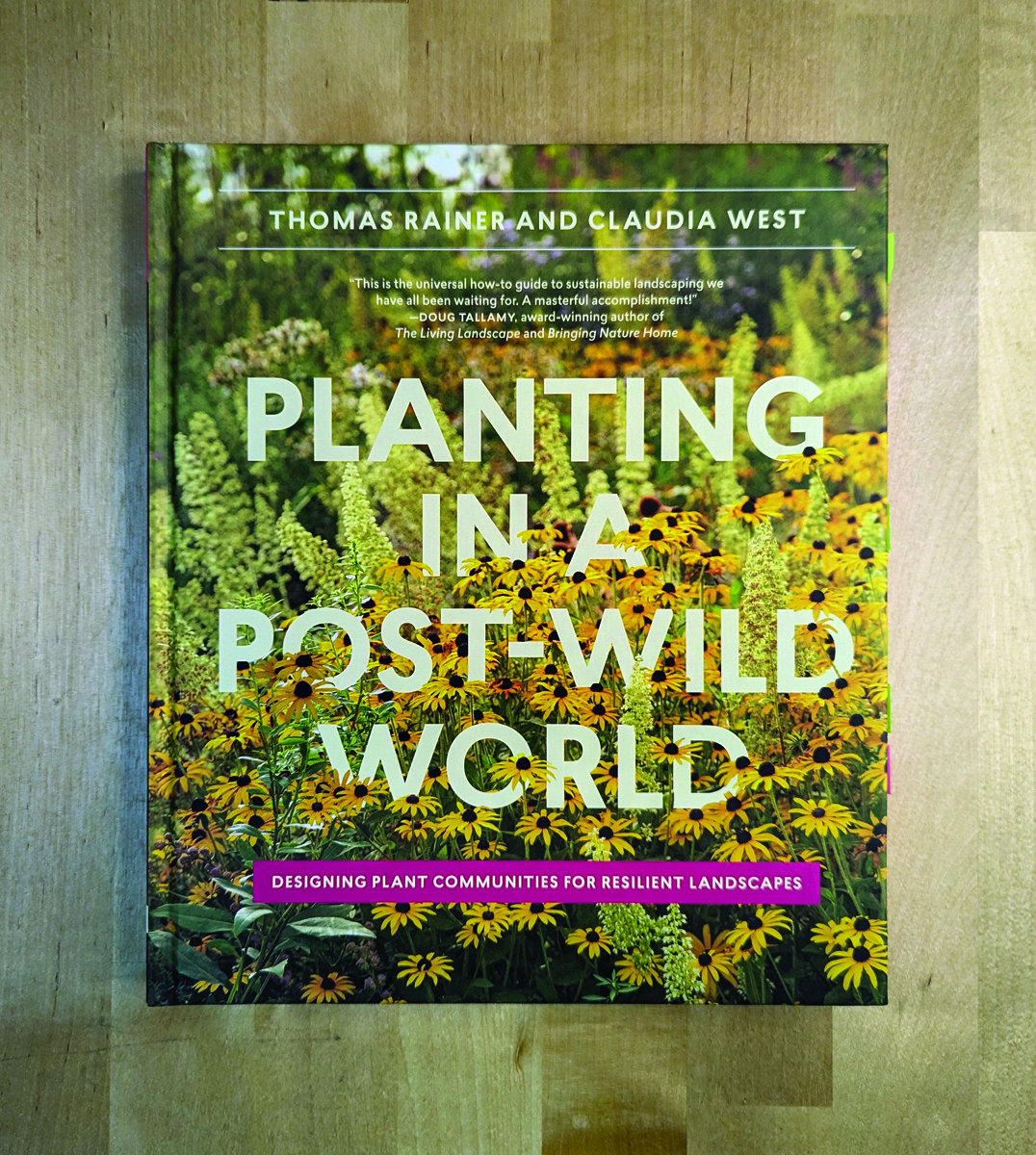
Planting in a Post-Wild World: Designing Plant Communities for Resilient Landscapes
Fine Gardening receives a commission for items purchased through links on this site, including Amazon Associates and other affiliate advertising programs.
Featuring gorgeous photography and advice for landscapers, Planting in a Post-Wild World by Thomas Rainer and Claudia West is dedicated to the idea of a new nature—a hybrid of both the wild and the cultivated—that can nourish in our cities and suburbs.