

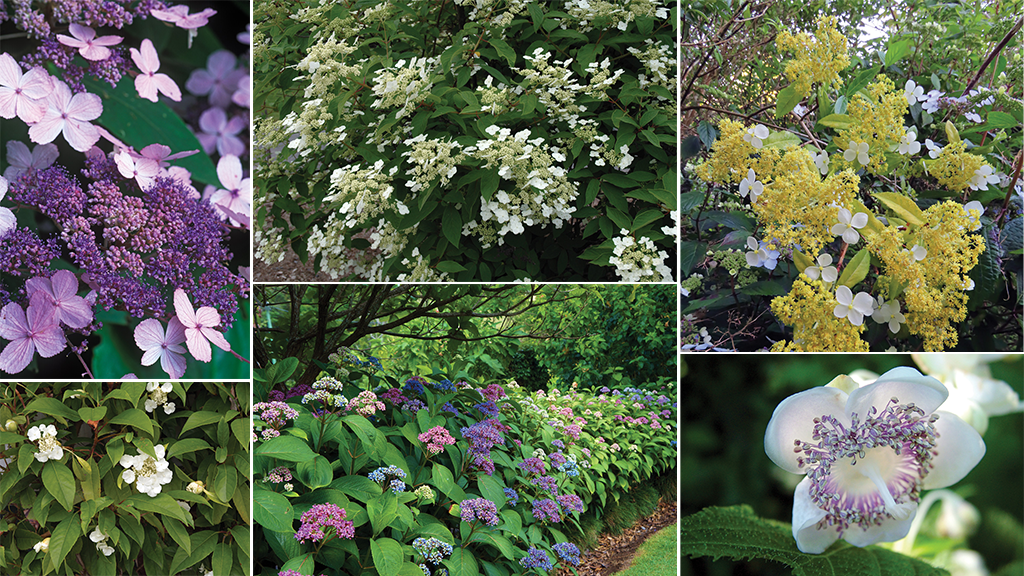
The appreciation of the genus Hydrangea rises and falls over time much like that of certain fashions and foods. In the late nineteenth and early twentieth centuries, the famed French plant breeder Émile Mouillère focused on bigleaf hydrangeas (H. macrophylla, Zones 5–9), making them a must-have ingredient for any well-bred garden in temperate zones of the Northern Hemisphere. After a few decades of being a quiet obsession among gardeners, the beloved “mopheads” surged in popularity. New breeding work within native North American species, notably oakleaf hydrangea (H. quercifolia, Zones 5–9) and smooth hydrangea (H. arborescens, Zones 3–8), added to the overall rise in interest. Countless new cultivars of the extremely hardy panicle hydrangea (H. paniculata, Zones 3–9) from eastern Asia were soon to follow.
Yet still in its infancy in North America is the realization that the charms inherent to the lion’s share of the genus, which has recently swelled to approximately 80 species of herbaceous perennials, shrubs, and vines, remain vastly underappreciated. There are no particular reasons why these plants are not more widely available—their propagation is straightforward—other than our collective lack of knowledge that they even exist. Here are some of my favorites that should be known and grown by keen gardeners.
Read more: 3 Lesser-known Hydrangeas That Make Great Garden Plants
Medium & Large Hydrangeas
Varieties with presence provide strong structural focal points
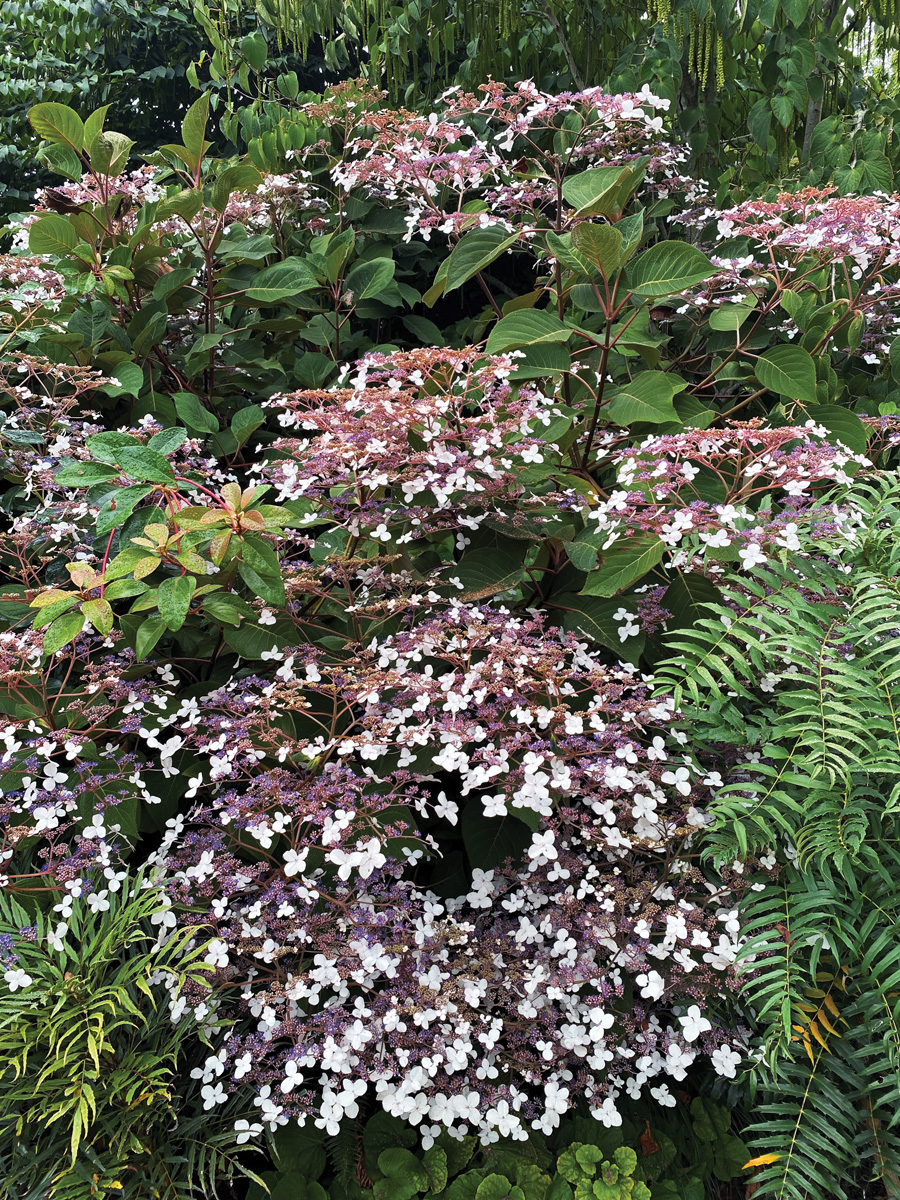
Rough-leaved hydrangeas in the Villosa group feature super-colorful flowers beloved by gardeners and pollinators alike
Name: H. aspera subsp. villosa and cvs.
Zones: 7–9
Size: 5 to 12 feet tall and wide
Conditions: Partial shade; moderately moist, humus-rich, well-drained soil
Native range: China, the Himalayas, and Indochina
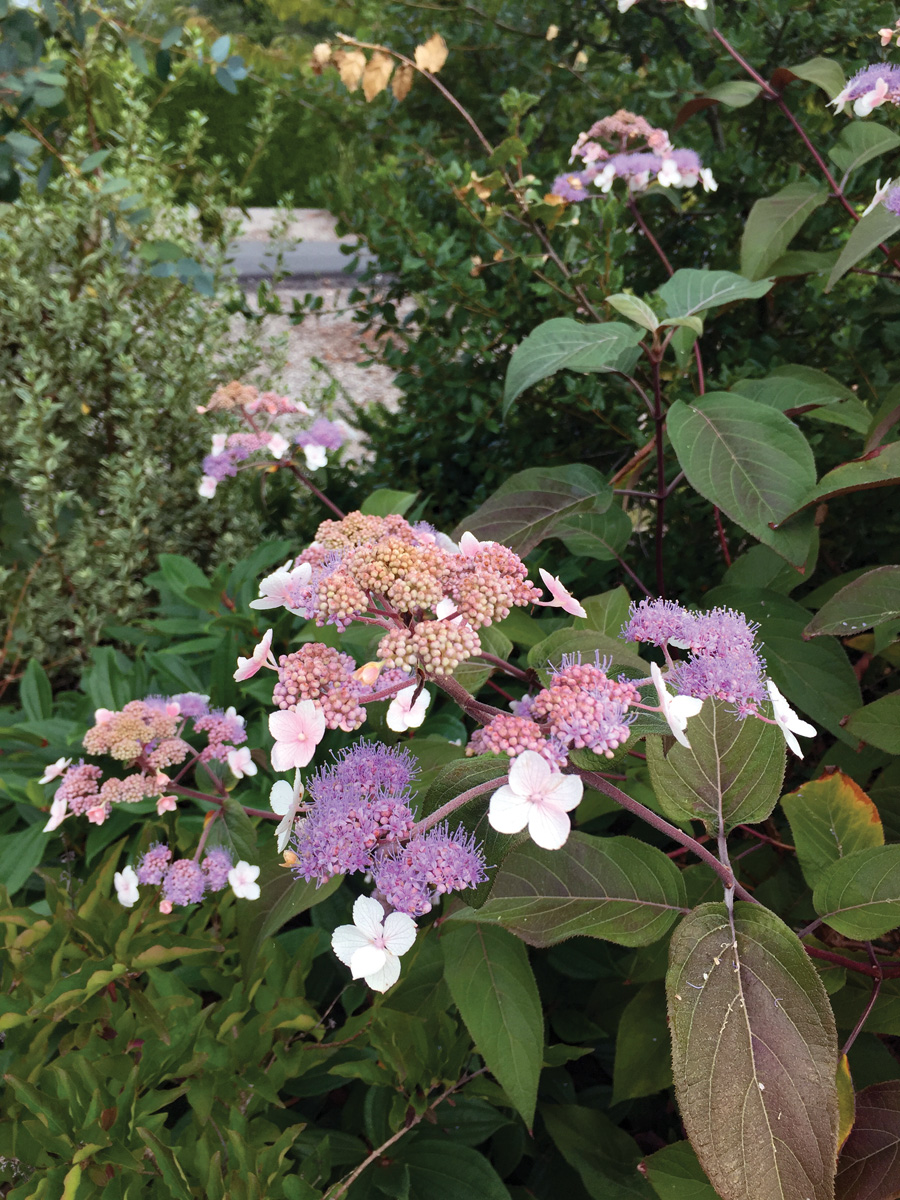
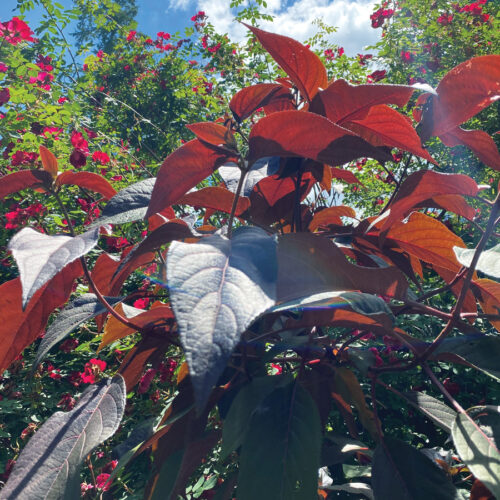
One of the most beautiful hydrangea species, rough-leaved hydrangea possesses many excellent qualities. The common name suggesting sandpaper-like leaves is misleading, as the rather large linear foliage possesses more of a velvety texture. A wide range of pollinators flock to the big bicolor blossoms of creamy white sepals surrounding a central disk of lavender-purple fertile flowers that bloom in mid-to-late summer. The spectacular cultivar Plum Passion® (H. aspera ‘Monpulsel’, Zones 7–9, pictured) offers foliage that emerges purple-green and then deepens to delicious tones of chocolate brown with bright raspberry-colored undersides. ‘Sam McDonald’ also remains one of the very best, with large purple sepals surrounding darker central fertile flowers.
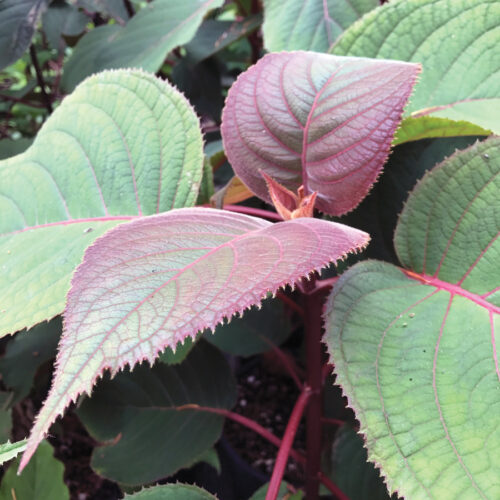
Himalayan tree hydrangea’s showy blossoms are only eclipsed by its magnificent leaves
Name: H. robusta (syn. H. aspera subsp. robusta)
Zones: 7–9
Size: 10 feet tall and wide
Conditions: Partial shade; moderately moist, cool, humus-rich soil
Native range: China, the Himalayas, and Indochina
Like rough-leaved hydrangea, Himalayan tree hydrangea has a vast distribution in the wild, though it is often found at higher elevations than its smaller-leaved counterpart. This makes it difficult to describe the characteristics of a typical individual, and inherent variations in its hardiness surely exist. Its very large leaves, which can grow up to 1 foot long and 8 inches wide, have a soft velveteen surface. This has always been enough on its own for me to grow it, despite the fact that the large lacecap inflorescences are also extremely showy. Purple fertile flowers are surrounded by white- to cream-colored sterile florets.
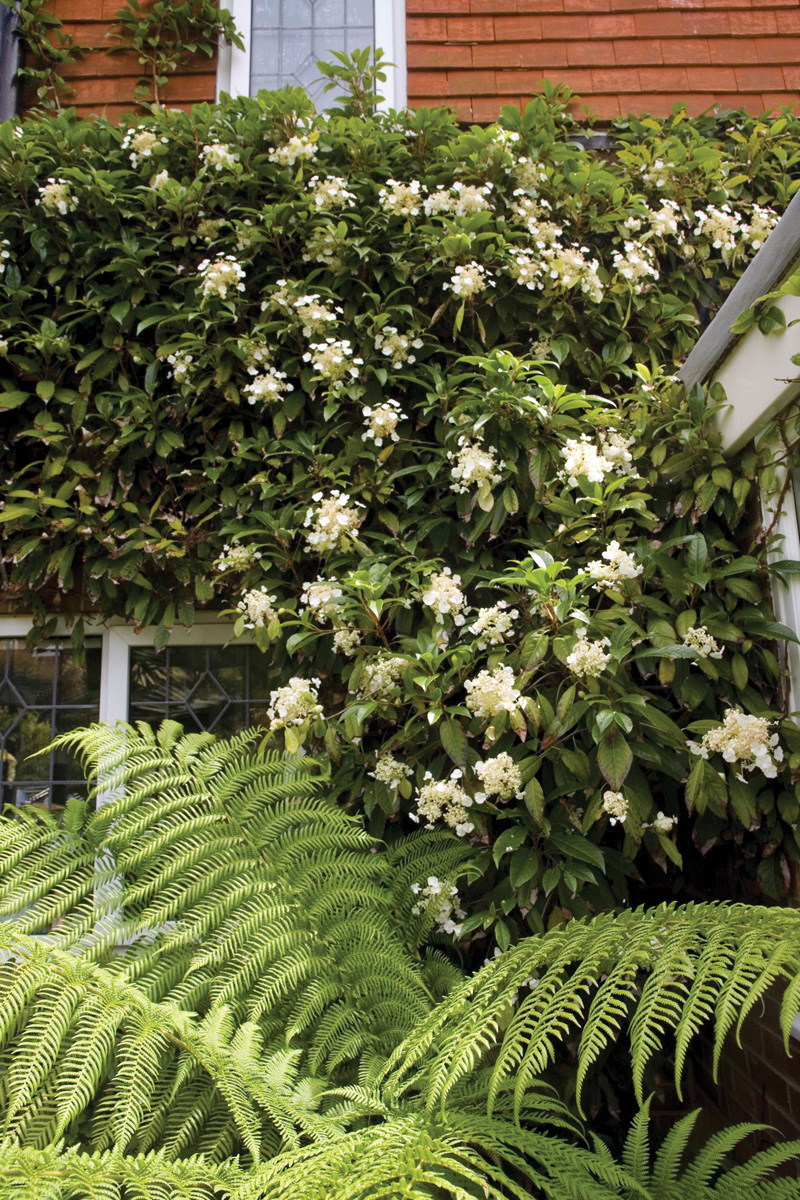
Mexican climbing hydrangea is an attractive vine that won’t topple your trees
Name: H. seemannii
Zones: 7–10
Size: 30 to 50 feet tall and 10 to 30 feet wide
Conditions: Partial shade; rich, evenly moist, well-drained soil
Native range: Mexico
Native to just south of the border with Mexico, this species has globular, drumstick-like buds that open to become white lacecap flowers. Mexican climbing hydrangea is a self-clinging evergreen vine with large and glossy leaves. For those wary of invasive vines—such as Asian species of wisteria (Wisteria sinensis and cvs., W. floribunda and cvs., Zones 4–9) or English ivy (Hedera helix, Zones 5–11), which diminish the health and vigor of trees they grow on—rest assured that this climbing hydrangea is better behaved. Instead, it remains attached to the central trunk rather than growing laterally and subverting the tree’s ability to photosynthesize, and it gathers its own nutrients from the soil below. So don’t worry about letting this beauty climb up a nearby tree, where its dense growth will provide ample choices for nesting birds.
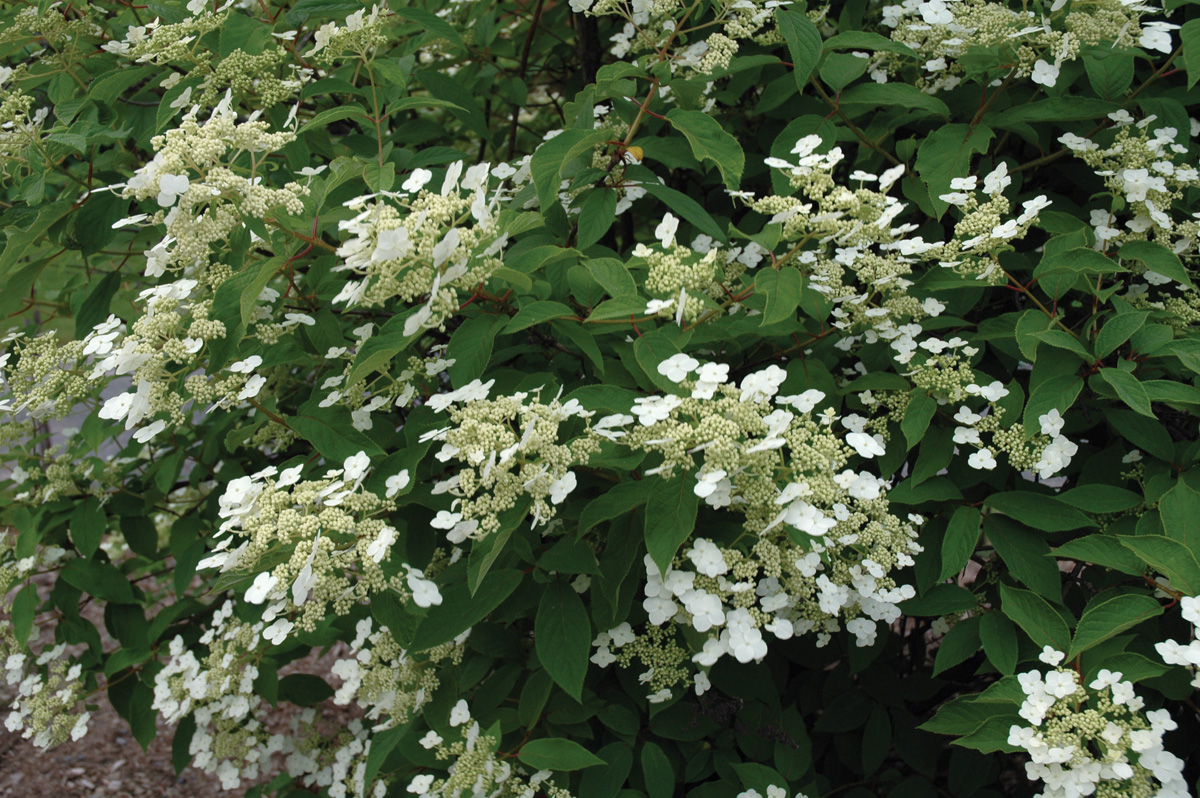
Woolly hydrangea is a large, floriferous shrub with leaves you’ll want to touch as you pass by
Name: H. heteromalla
Zones: 7–9
Size: 20 feet tall and 8 feet wide
Conditions: Partial shade; rich, medium to moist, well-drained soil
Native range: Bhutan, China, India, Nepal, and Vietnam
A strapping small tree or large shrub, woolly hydrangea is closely related to the widely grown panicle hydrangea, with a possible similar range of hardiness depending on the native habitat where the plant originated. The leathery, textured leaves can reach a length of nearly 1 foot. The flowers feature an intriguing display of white sterile florets that can tumble outward and downward from a large central disk of fertile florets, which range in color from white to pink to lavender.
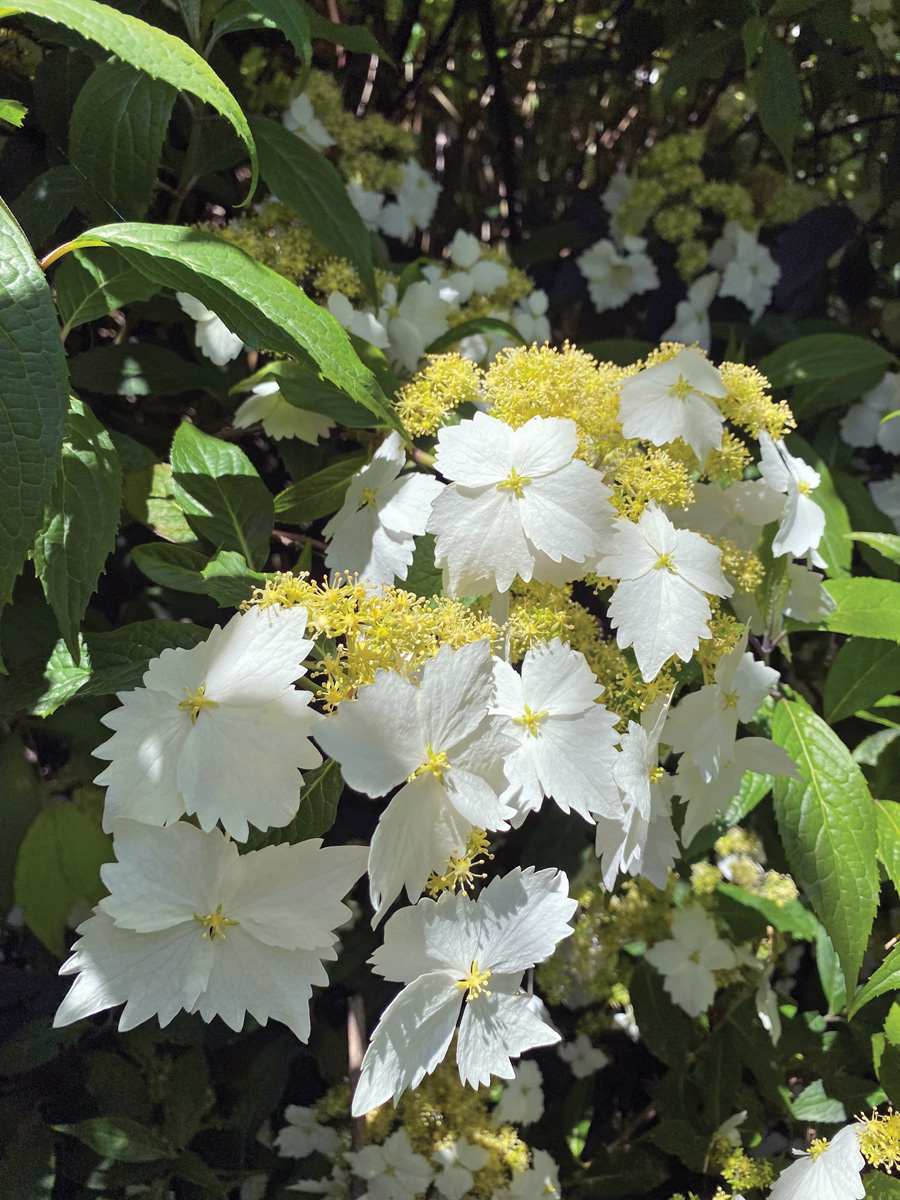
Narrow-petaled hydrangea offers unique golden flowers
Name: H. angustipetala and cvs. (syn. H. chinensis var. angustipetala and cvs.)
Zones: 6–9
Size: 5 to 6 feet tall and wide
Conditions: Partial shade; rich, medium moisture, well-drained soil
Native range: Taiwan
This is a remarkable species with very early-blooming blossoms that have a lovely fragrance and a touch of yellow, a color that is rare for a hydrangea. Rather unknown, there is no reliable common name for this plant, but a selection called Golden Crane® (‘MonLongShou’, pictured) has made its way into cultivation and offers golden yellow fertile flowers surrounded by white sterile florets that open in late spring. ‘Hoop’ is also an exceptional cultivar, with distinctive rounded sterile florets that bloom in early summer and look good for weeks on end.
Read more: Pop Star® Bigleaf Hydrangea Is a Reliable, Reblooming Variety for Small Spaces
Small Hydrangeas
Compact options fill tight spaces with eye-catching blossoms and interesting forms
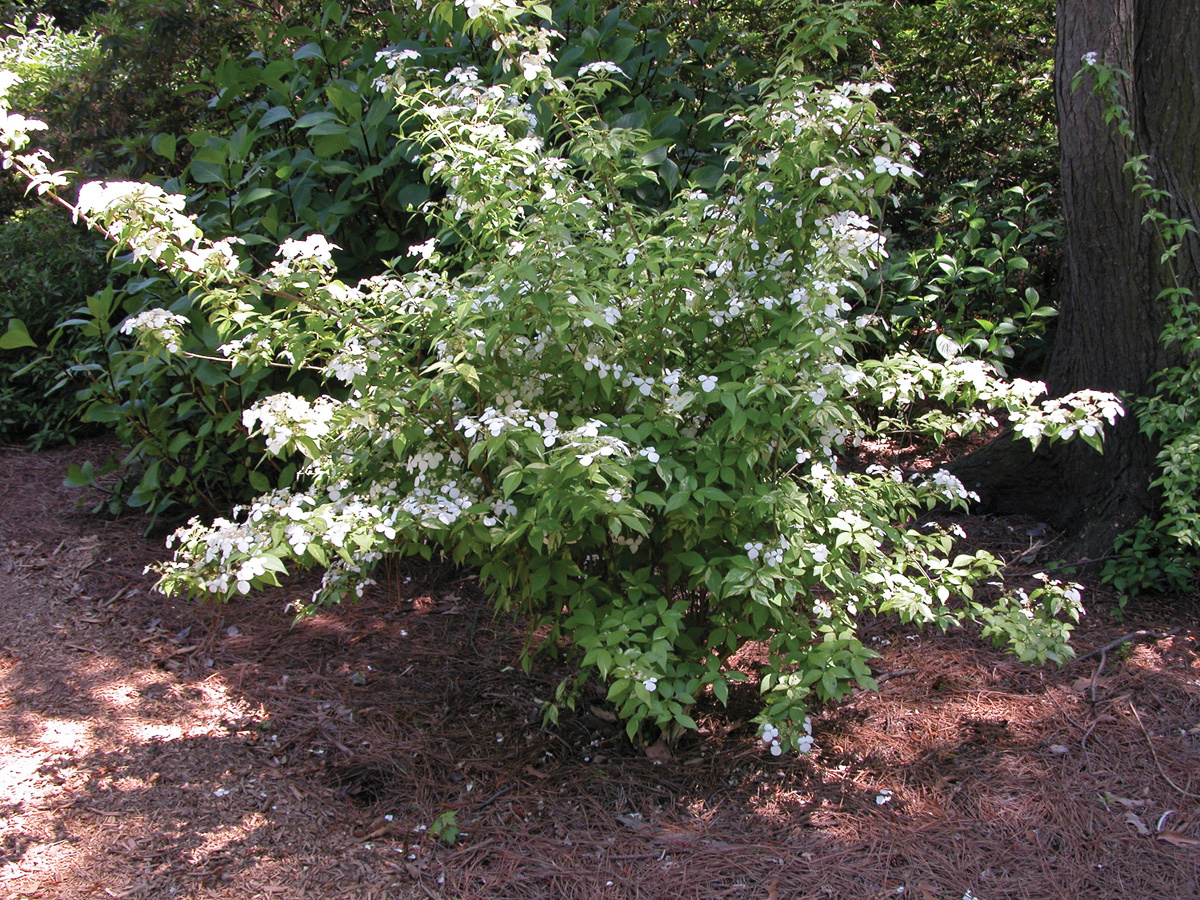
Turn to yellow-vein hydrangea for an elegant shrub with decorative leaves and stems
Name: H. luteovenosa and cvs.
Zones: 6–9, possibly colder
Size: 3½ feet tall and 3 feet wide
Conditions: Partial shade; evenly moist, humus-rich, well-drained soil
Native range: Japan and South Korea
This very pleasing and modest shrub, which features early-blooming flowers and extraordinary hardiness, is mostly overlooked by North American gardeners and lacks a definitive common name. Small leaves are carried along deep purple, almost black stems. The blossoms, consisting of oversized white sterile florets surrounding small greenish white fertile florets, are borne in the leaf axils rather than at the end of each branch as with most other hydrangeas. Yellow-vein hydrangea is often confused with and labeled as H. scandens, a species that looks very similar and is closely related. A cultivar worth seeking out is ‘Fragrant Splash’ (pictured). It has tiny leaves marked with creamy white and delightfully fragrant flowers that appear in early spring.
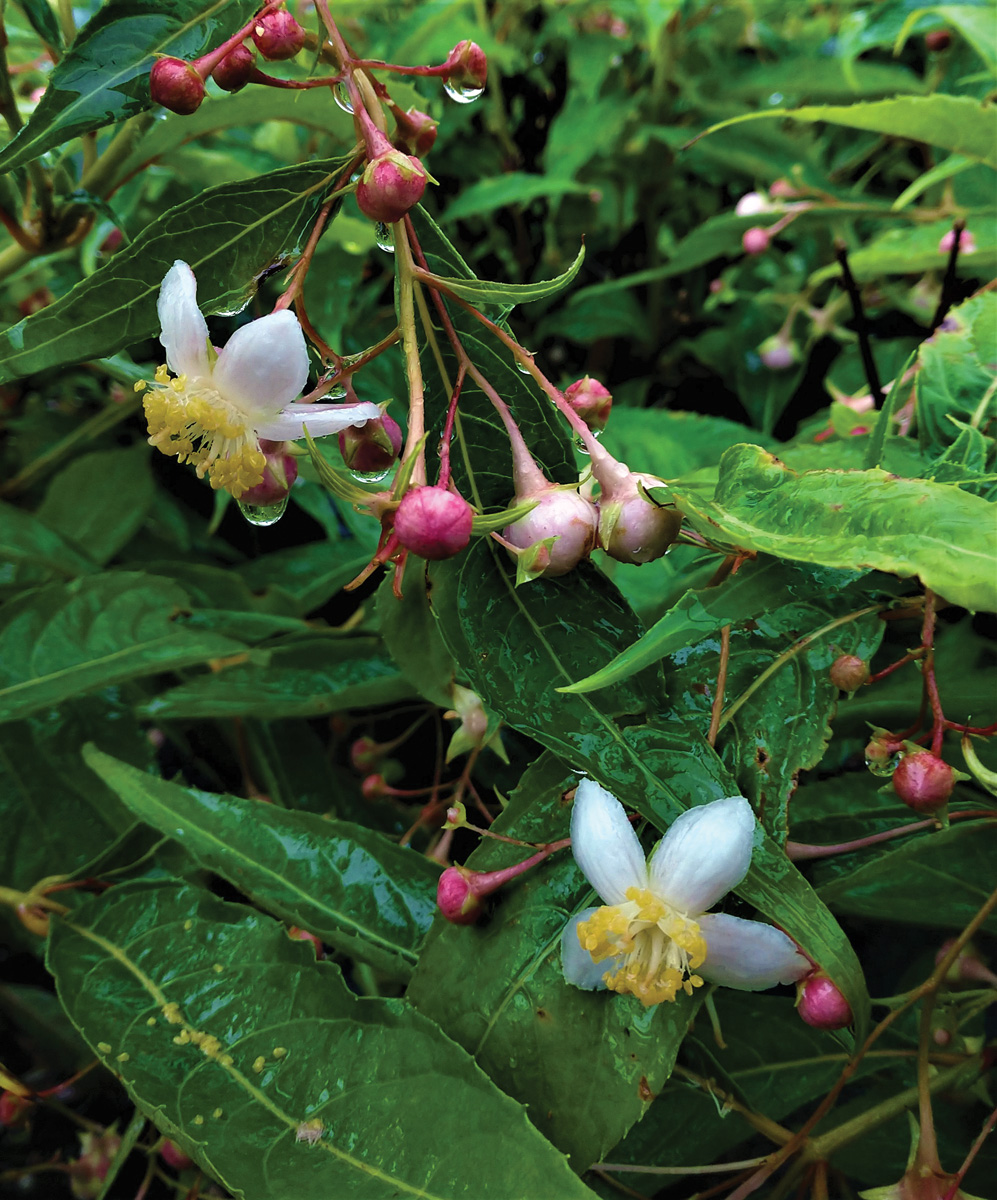
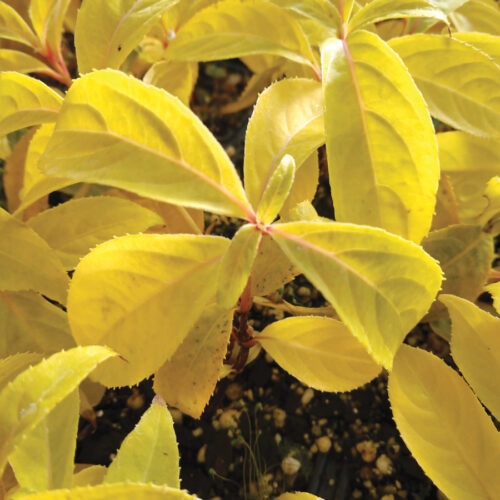
Tea of Heaven will win your heart with its charming
nodding flowers
Name: H. platyarguta and
cvs. (syn. Platycrater arguta and cvs.)
Zones: 6–9, possibly colder
Size: 2 to 4 feet tall and wide
Conditions: Partial shade; moist, humus-rich,
well-drained soil
Native range: Eastern China and southern Japan
This unusual hydrangea is still most often found for sale under the name Platycrater arguta. Its sublime, slightly nodding blossoms are quite attractive, with both the fertile and sterile florets putting on a good show, and its lovely foliage turns golden in autumn. You will generally find one of two cultivars for sale: ‘Rosea’ is a demure shrub that rises to less than 2 feet tall, brandishing light pink flowers (pictured). ‘Kaeda’ has a more robust form that grows to 4 feet tall with larger white flowers. Though infrequently encountered in the gardening world, it is a show-stopping plant in full flower.
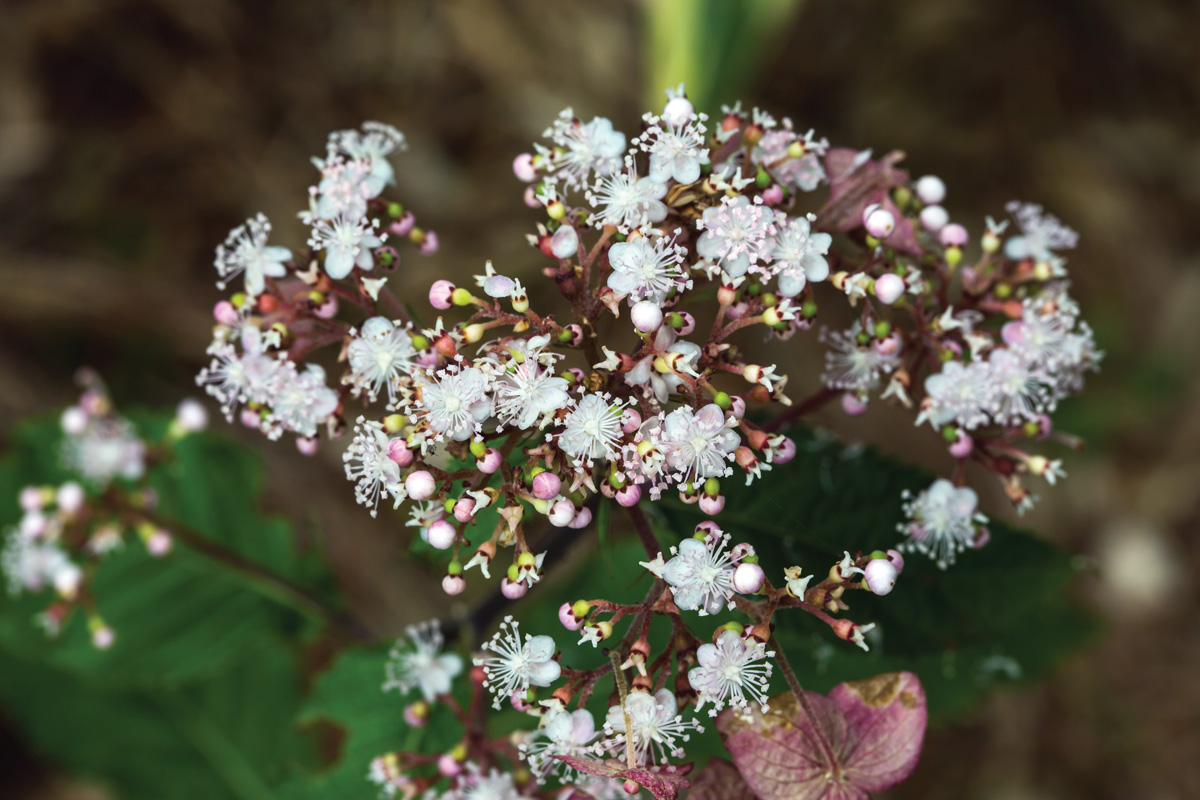
Cardiandra features lacecap-like flowers on a woodland shade perennial
Name: H. alternifolia (syn. Cardiandra alternifolia)
Zones: 6–9, colder with mulch protection
Size: 1½ feet tall and wide
Conditions: Partial shade; evenly moist, well-drained soil
Native range: Japan
Cardiandra is a fully herbaceous perennial that brings a unique elegance to the shade garden. It is also capable of being much hardier than most people suspect. The flowers of this perennial are doppelgangers for a typical lacecap hydrangea blossom, with pink sterile florets surrounding pink fertile florets, though the entire plant retreats underground in autumn. The major difference an observant gardener will notice is that the foliage is arranged in an alternate fashion on the stem rather than in a paired and opposite manner, which is found in virtually all other hydrangeas.
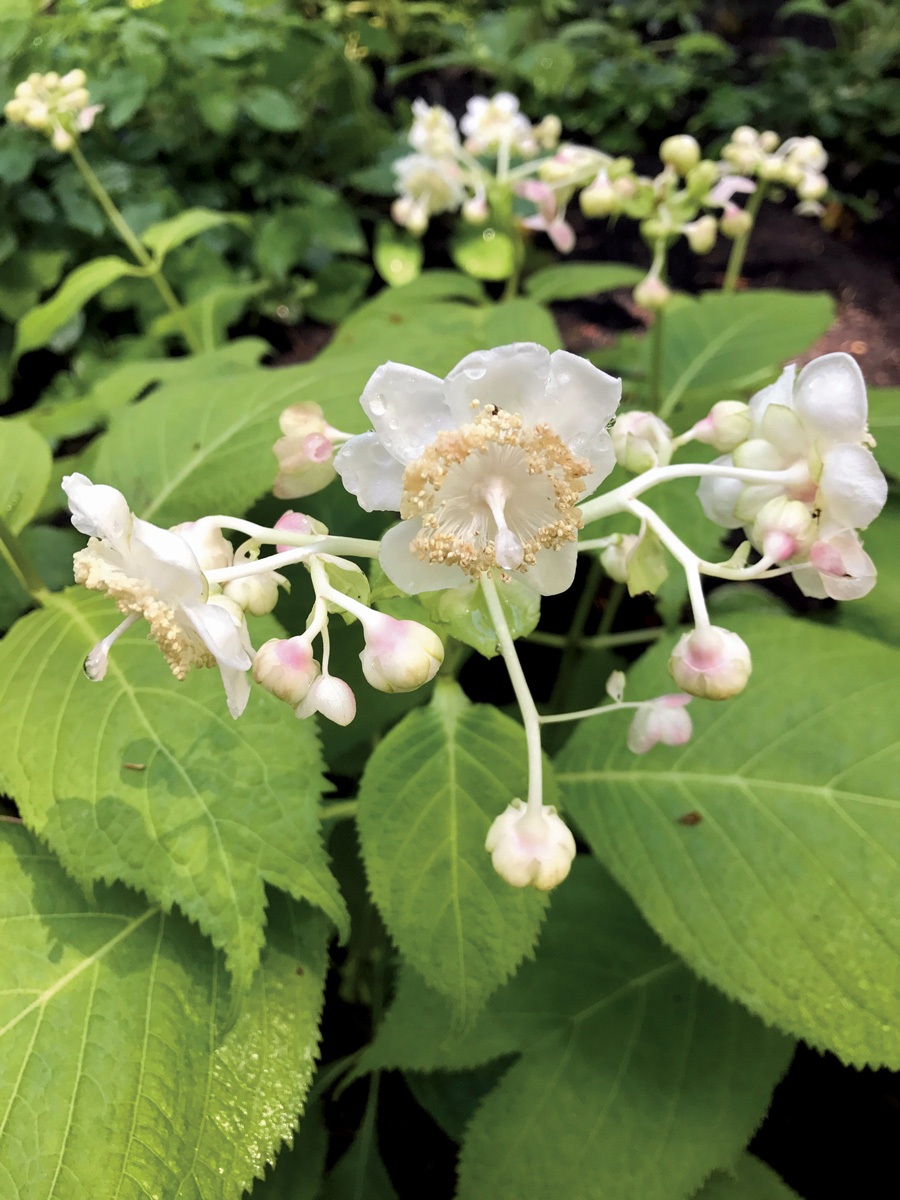
False hydrangea is a true stunner with its unique
summer flowers
Name: H. bifida and cvs. (syn. Deinanthe bifida and cvs.)
Zones: 4–9
Size: 1½ feet tall and wide
Conditions: Partial to full shade; moderately moist, well-drained soil
Native range: China and Japan
There are two species of the genus formerly classified as Deinanthe. I’ve chosen to highlight the Japanese false hydrangea, which tends to be somewhat more robust in my garden in Indianola, Washington, than its Chinese counterpart, H. caerulea (syn. D. caerulea, Zones 4–9). Like cardiandra, this species is entirely herbaceous, going fully dormant in fall. They are both quite unusual, handsome, and hardier than many shrubby hydrangeas. In late spring, stems arise from the ground carrying pairs of leaves with a forked (or bifid) leaf tip, while in midsummer terminal clusters of nodding, white, waxy, textured flowers emerge. My seed collection of this species, collected on the Kii Peninsula in 1997, produces lovely pink-tinged rather than white flowers and makes the rounds under the cultivar name ‘Pink Kii’ (pictured).
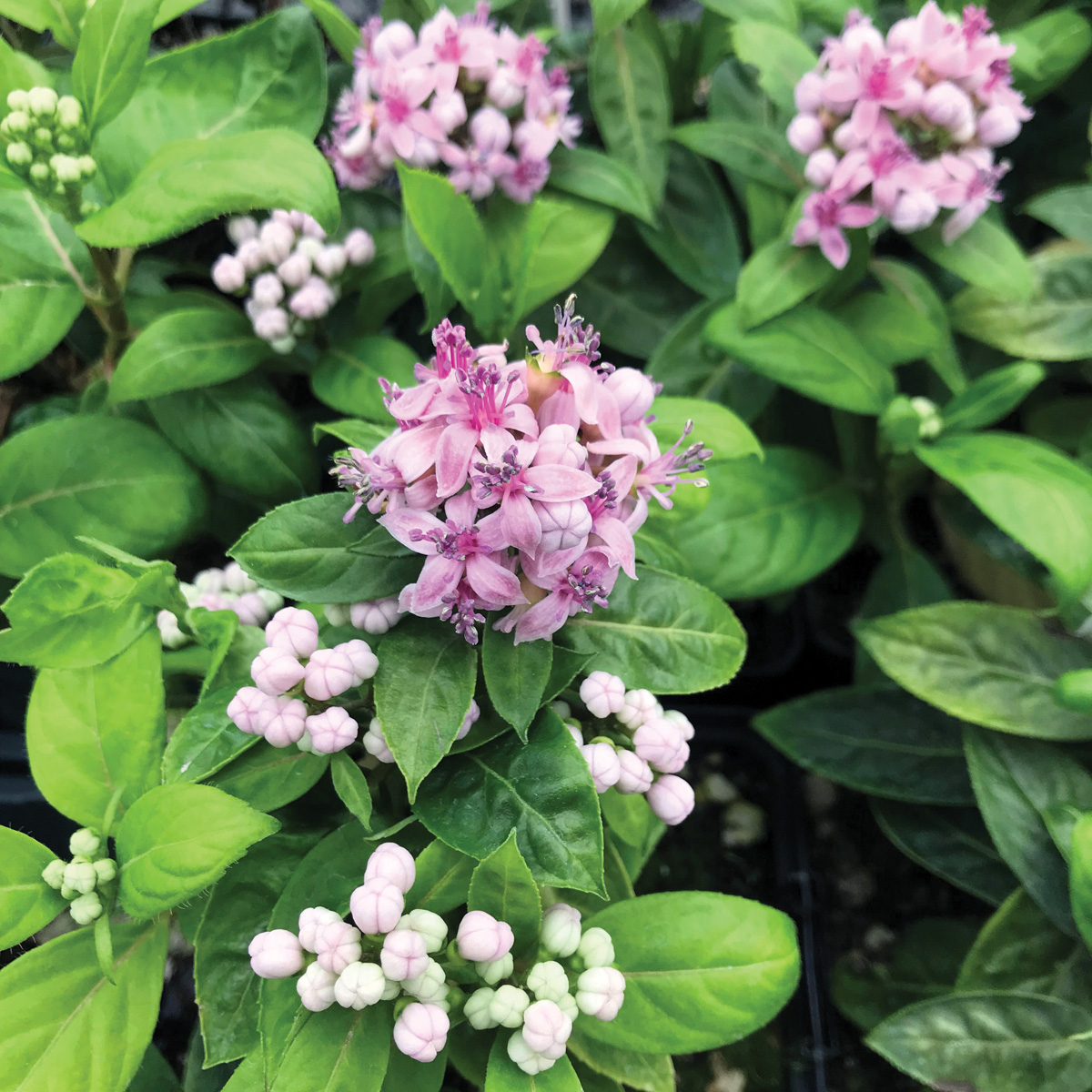
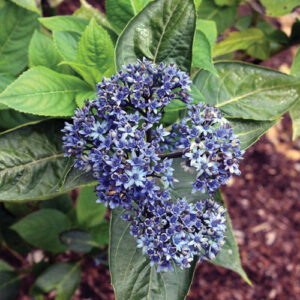
The vivid blue or pink blossoms of Chinese quinine give way to fleshy fruit
Name: H. febrifuga and cvs. (syn. Dichroa febrifuga and cvs.)
Zones: 7–9
Size: 4 feet tall and 3 feet wide
Conditions: Partial shade; rich, evenly moist, well-drained soil
Native range: The Himalayas, Indochina, New Guinea, and the Philippines
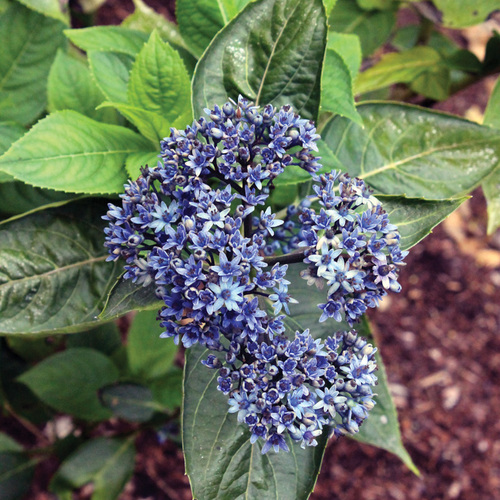
Chinese quinine differs from other hydrangeas in producing a fleshy berry rather than a dry capsule after it blooms. The flowers appear without showy sterile florets. They can be white to pink to light or dark blue, and result in crops of striking cerulean fruit that will often remain on the shrubs throughout much of winter. The color of the blossoms is quite variable depending on the soil pH. My Chinese quinine plants blossom pink in nursery pots but turn to rich blue when planted in the ground. This plant can be evergreen or semi-evergreen. The clone introduced by the University of British Columbia as ‘Hubei Form’, also known as ‘UBC Form’ (pictured), represents one of the best currently in cultivation.
Read more: What’s Wrong with My Hydrangea? Learn to Recognize and Treat Common Diseases
| GOOD TO KNOW |
Understanding the new hydrangea family tree
 |
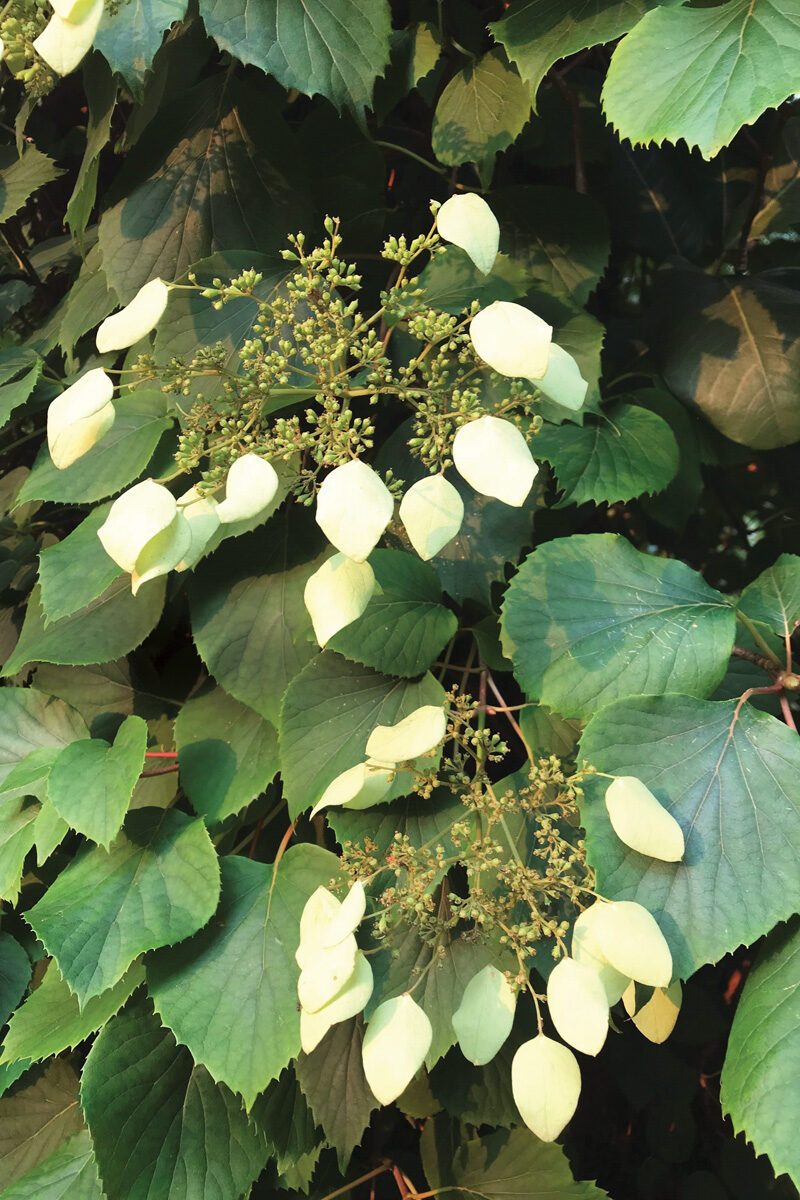 |
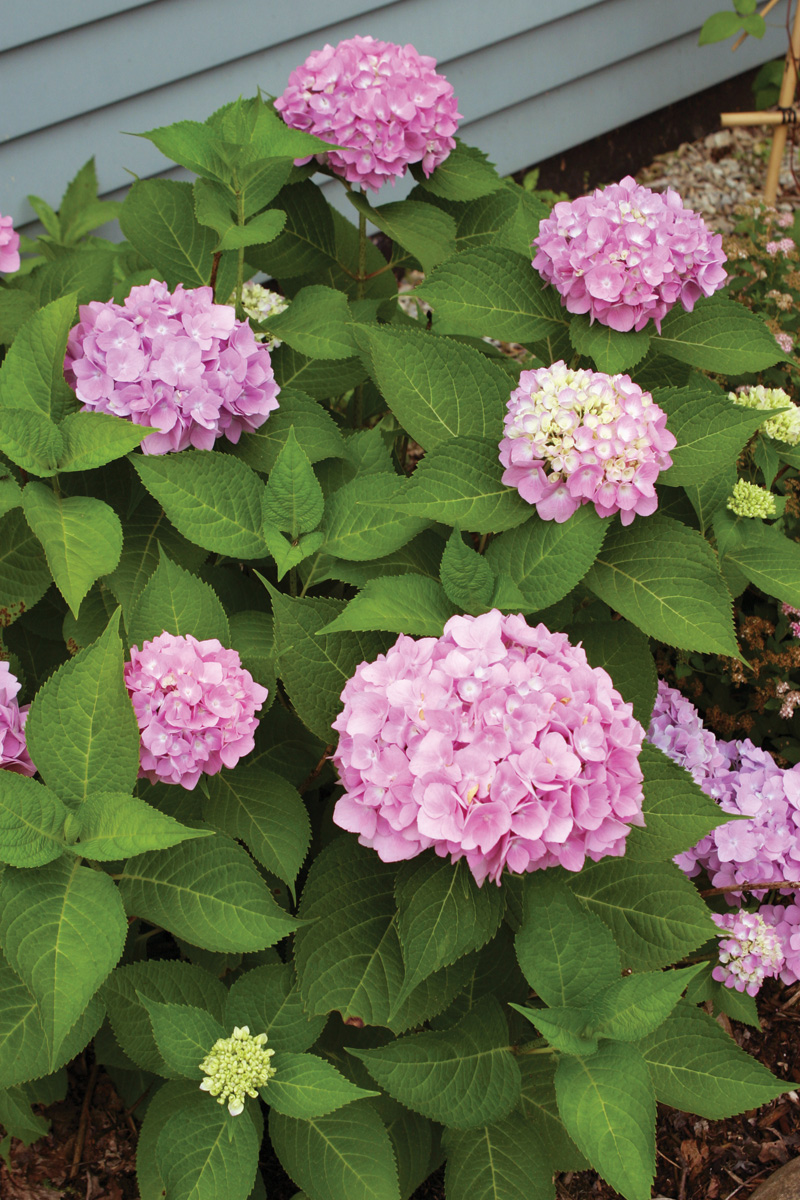
H. macrophylla ‘Bailmer’ (left) and H. hydrangeoides, formerly Schizophragma hydrangeoides (right). Photo on right by Steve Aitken
In the 1730s, two centuries before the discovery of DNA, Carl Linnaeus took the first stab at ordering the plant kingdom in Latin based on the morphology of flowers. Now with tools entirely unimaginable in the early eighteenth century, plant taxonomists have begun reassembling the origins and relationships of both the flora and fauna of our planet, which often leads to some revisions as new information is discovered. Such is the case with hydrangeas.
The original Hydrangeaceae (Hydrangea family) consisted of nine genera: Hydrangea, Broussaisia, Cardiandra, Decumaria, Deinanthe, Dichroa, Pileostegia, Platycrater, and Schizophragma. All of these have now been brought under the same genus—Hydrangea. The plants featured in this article reflect this change, although you are still more likely to find many listed for sale under their previous and more well-recognized names.
What does this mean for gardeners? Plant names may change as botanists learn more about how different hydrangeas are related, but the science behind those changes isn’t entirely new. One clue that species are closely related is their ability to cross with one another—and plant breeders have already created hybrids between traditional Hydrangea species and plants that were once classified in other genera within the family.
| Plant Sources |
The following mail-order sources may offer some of the plants featured in this article:
- Broken Arrow Nursery, Hamden, CT; 203-288-1026; brokenarrownursery.com
- Dancing Oaks Nursery, Monmouth, OR; 503-838-6058; dancingoaks.com
- Far Reaches Farm, Port Townsend, WA; 360-385-5114; farreachesfarm.com
- Hydrangeas Plus, Aurora, OR; 503-651-2887; hydrangeasplus.com
- Keeping It Green Nursery, Stanwood, WA; 360-652-1779;
keepingitgreennursery.com - Secret Garden Growers, Canby, OR; 503-381-2661; secretgardengrowers.com
Daniel J. Hinkley is a plant explorer, nurseryman, lecturer, and author. His most recent book, Windcliff: A Story of People, Plants, and Gardens, chronicles the evolution of his home landscape.
Photos in opening collage: Richard Bloom (top left); Nancy J. Ondra (bottom right); millettephotomedia.com (bottom left, top right, top and bottom center). All other photos, except where noted: courtesy of Daniel J. Hinkley.
Learn More:
Subscribe to Fine Gardening Magazine
See More Planting Plans
Watch Videos on Our YouTube Channel!
Fine Gardening Recommended Products
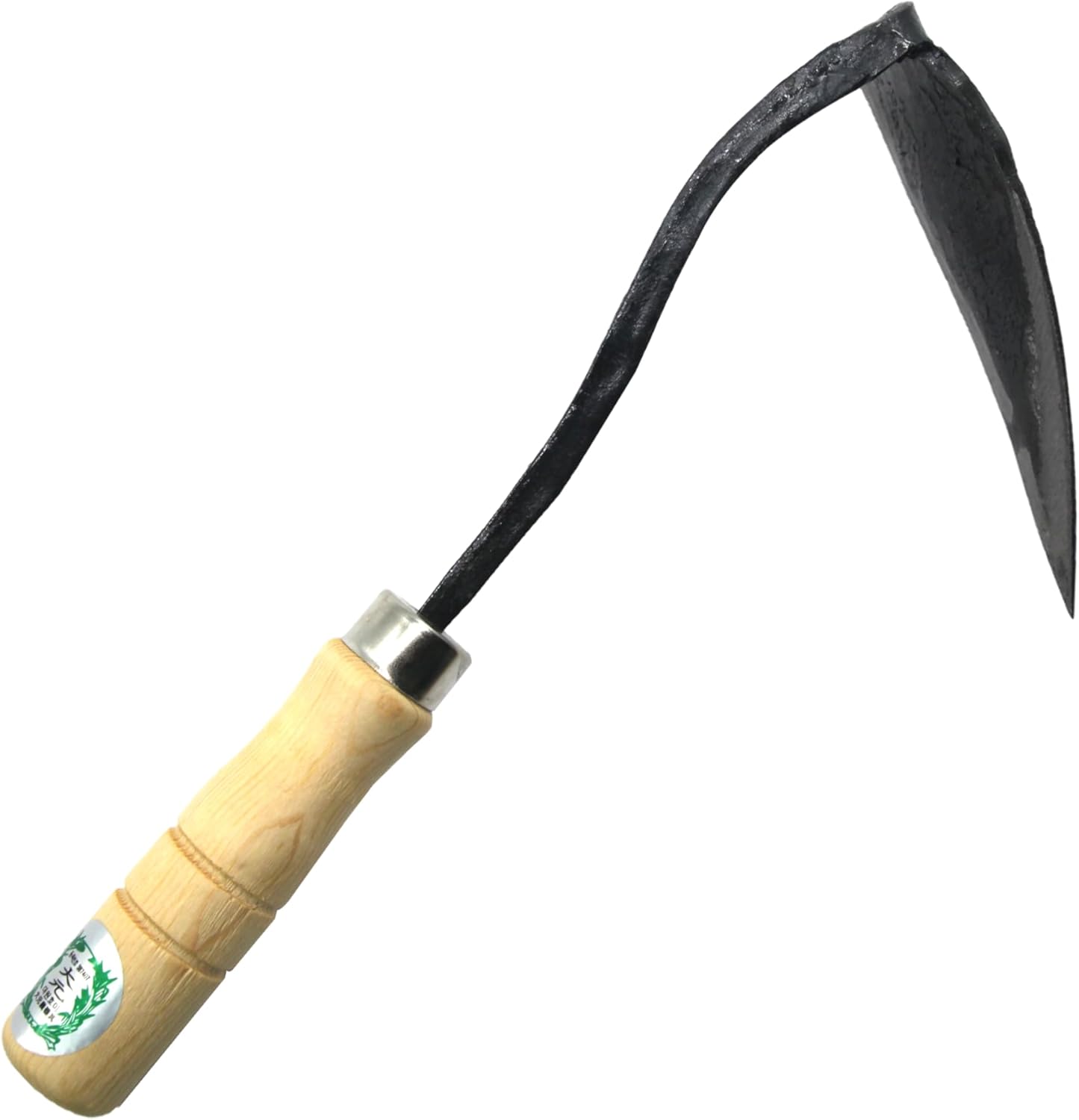
Ho-Mi Digger – Korean Triangle Blade
Fine Gardening receives a commission for items purchased through links on this site, including Amazon Associates and other affiliate advertising programs.
Versatile Tool: The Easy Digger Korean Triangle Blade Ho Mi Ho-mi is a versatile gardening tool designed for leveling and digging in home and garden settings. Efficient Design: Its unique triangular blade shape allows for easy soil penetration and efficient leveling of garden beds or landscaping areas. Durable Construction: Crafted with sturdy materials, this tool ensures long-lasting performance and reliability.
Ergonomic Handle: The comfortable handle provides a secure grip, reducing hand fatigue during extended use. Compact Size: Its compact design makes it easy to maneuver in tight spaces and store when not in use.
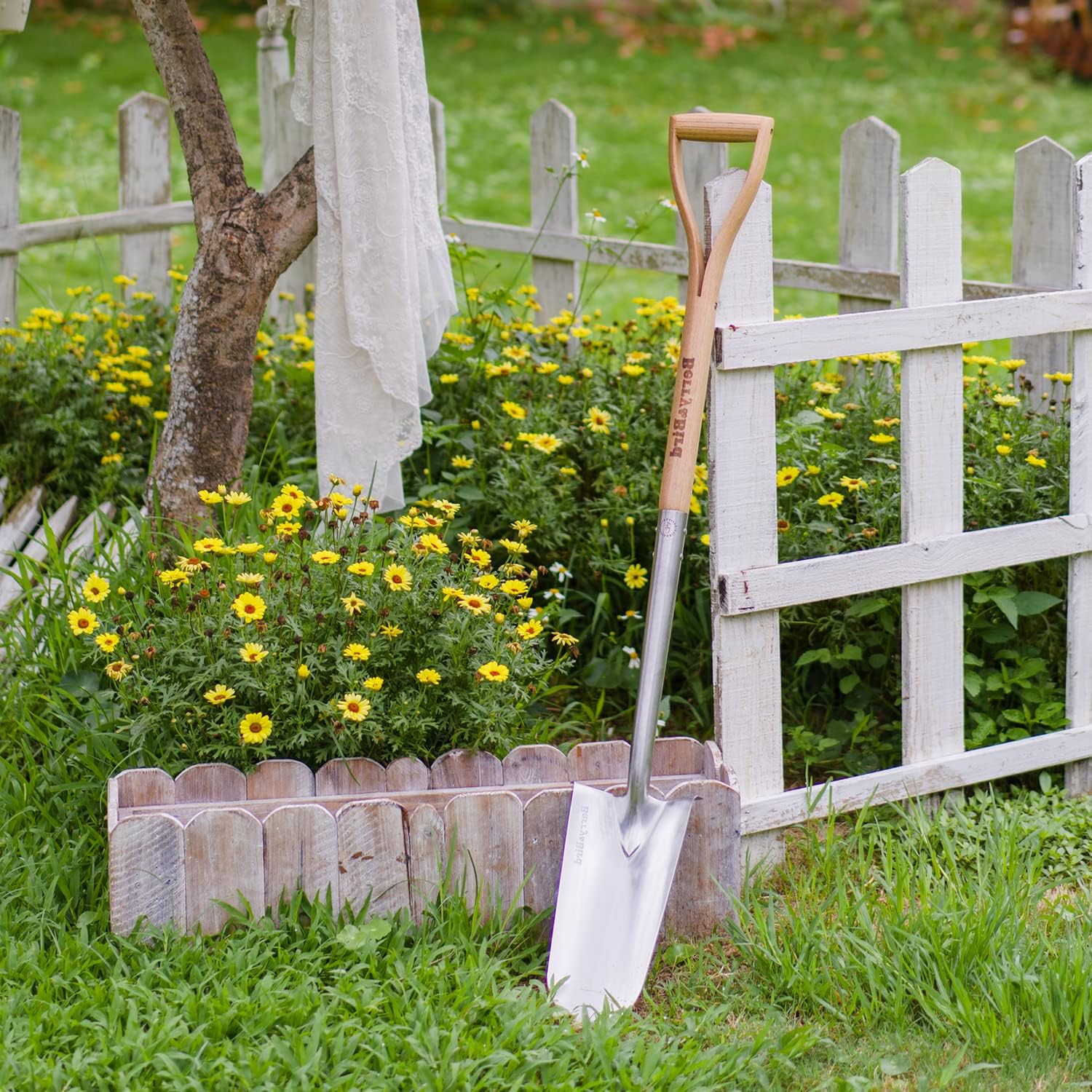
Berry & Bird Rabbiting Spade, Trenching Shovel
Fine Gardening receives a commission for items purchased through links on this site, including Amazon Associates and other affiliate advertising programs.
Ideal Tool for All Gardeners Use: Our heavy duty trenching shovel is designed by a professional gardening tool designer. Lifetime Durability: This heavy duty drain spade is made of high-quality stainless steel, it is very strong and durable, even if it is used for high-strength work, it will not bend. Ergonomic Wood Handle: The handle of this planting spade is made of ash hardwood harvested from FSC-certified forests and has an ergonomically streamlined design, making it very suitable for everyone’s hands. Multi-Use: This digging shovel is generally used for digging trenches, digging holes, transplanting, edging, moving compost, cutting thick turf and furrowing. The sharp blade allows you to cut, scoop, dig, lift and dice in hard soil.