

Plant breeding basics
The incredible diversity of the plant world means that within almost any plant species there are many variations of color, form, height, yield, growth, performance, disease resistance, and more. In nature, diversity is an advantage because it gives a species many options for survival.
As gardeners, we can capitalize on that diversity and even have some fun with it through plant breeding. The following overview covers the basics of how plants are bred, the differences between a few types of plant breeding, and some recommendations for home gardeners interested in experimenting with genetics.
Read More: Behind the Scenes of a Plant Evaluation at Chicago Botanic Garden
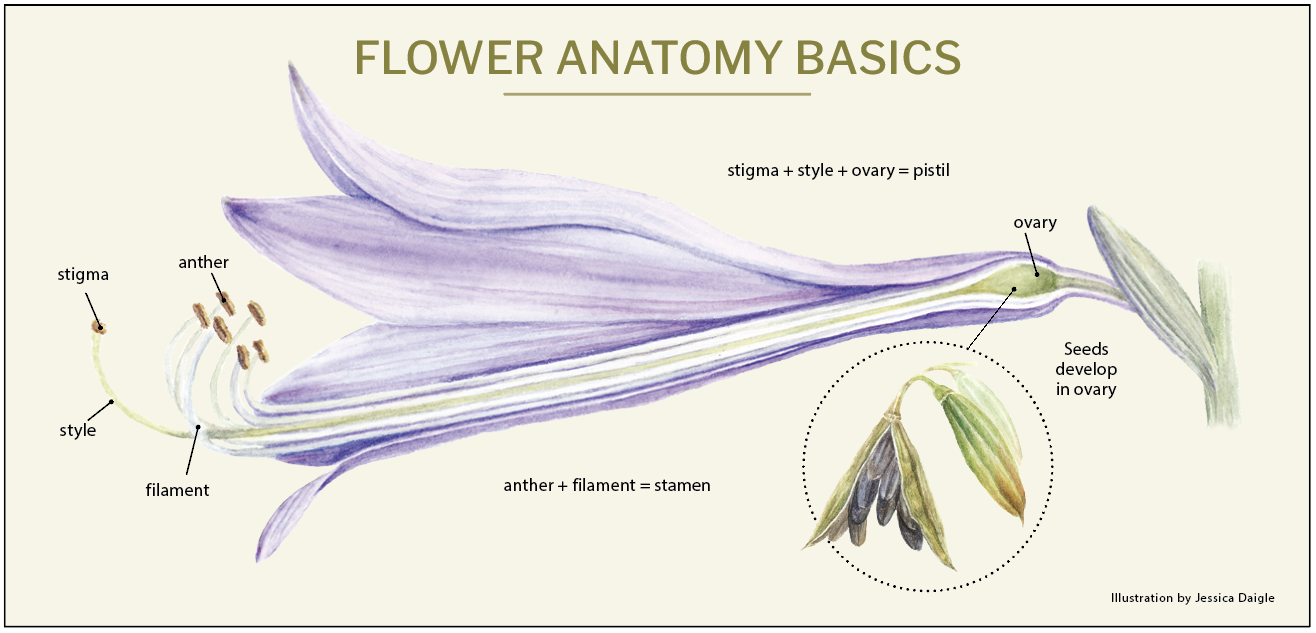
Get to know flower anatomy
An essential first step in plant breeding is learning how the reproductive organs of a given plant species are arranged. Looking inside a flower, see if you can distinguish between the male and female structures:
- The stamen is the male part of the flower, made up of a filament topped with a pollen-producing anther. At the base of the stamens there will often be nectaries, glands that secrete sugary rewards for pollinators.
- The pistil is the female part of the flower, with a rounded ovary at the base filled with potential seeds called ovules. Above the ovary is a stalklike style with a structure at the tip called the stigma that is receptive to pollen.
- Some species like asparagus (Asparagus officinalis, Zones 3–10) are categorized as dioecious, meaning that they produce separate male and female flowers on different plants.
- Monoecious species like squash (Cucurbita spp. and cvs., annual) have separate male and female flowers that are produced on the same plant.
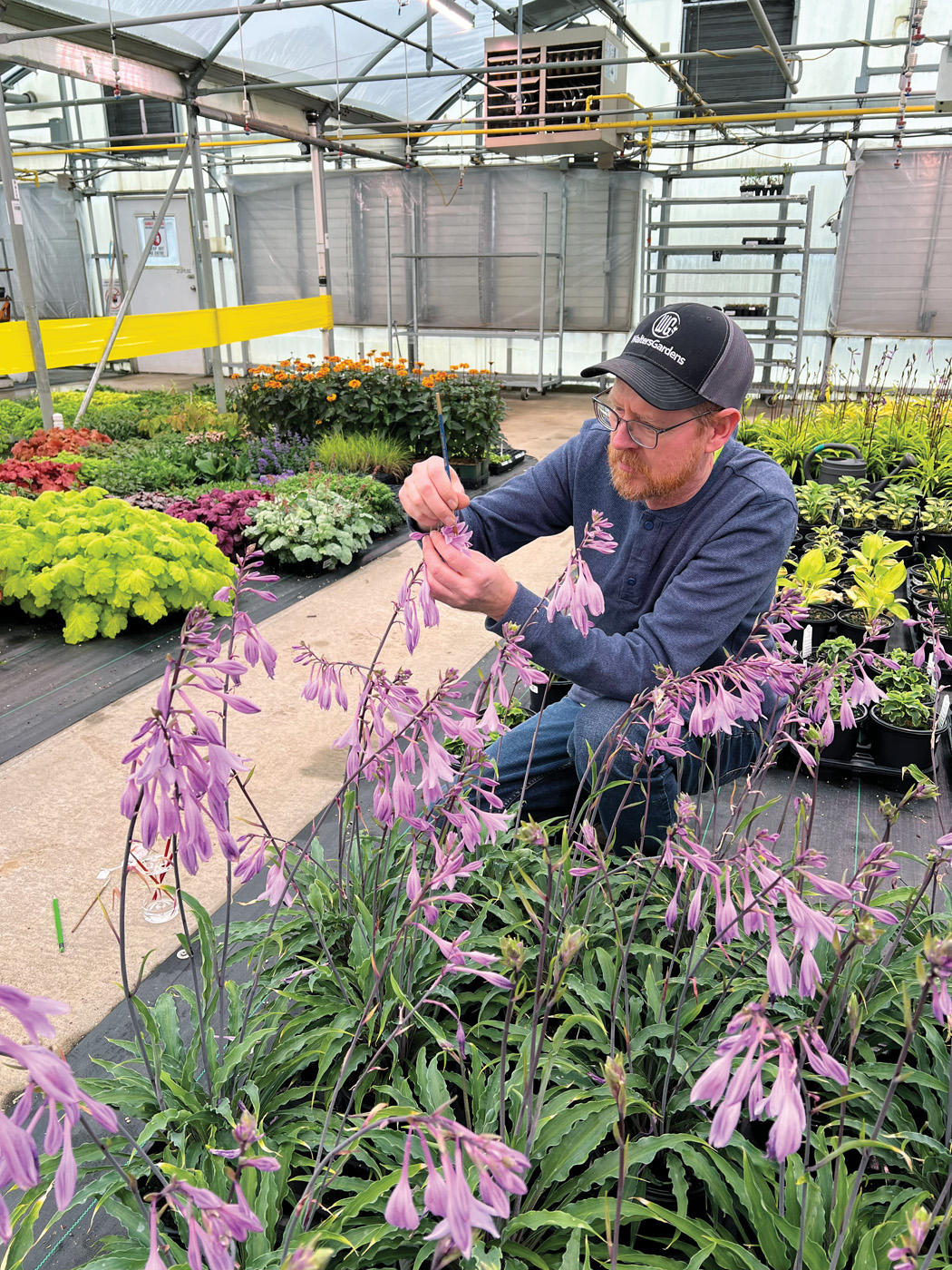
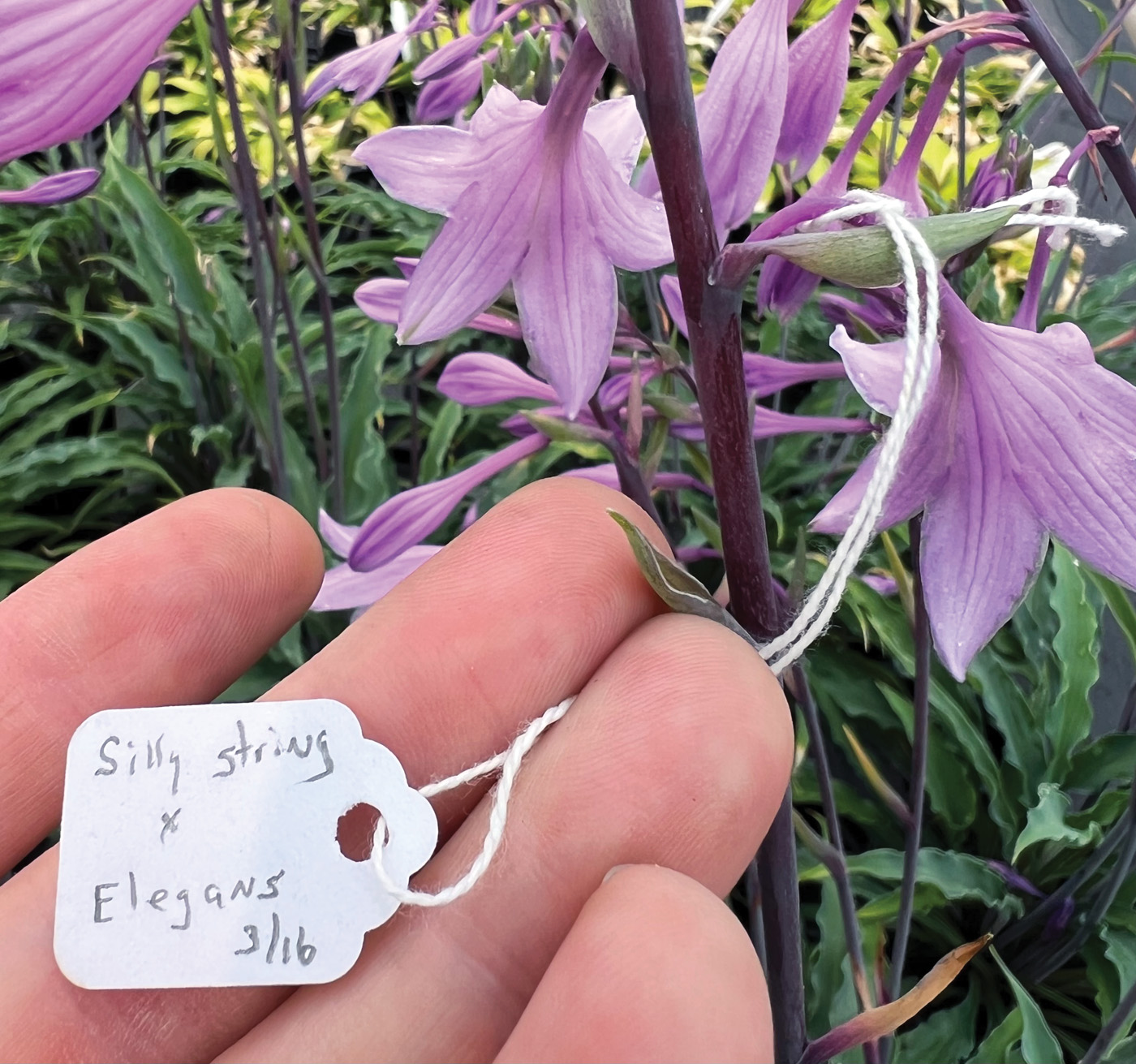
- Some plant species have bisexual flowers, also called perfect flowers, that contain both male and female parts. Plants in this category include tomatoes (Solanum lycopersicum cvs., annual), beans (Phaseolus vulgaris and cvs., annual), and hostas (Hosta spp. and cvs., Zones 3–9, pictured above and right).
Self-pollination vs. cross-pollination
Flower anatomy and arrangement will influence whether a species can self-pollinate or cross-pollinate, or if it is capable of both. Self-pollination (selfing) occurs when pollen lands on a stigma that is on the same plant. Cross-pollination (crossing) occurs when pollen moves from one plant to another. Species that have male and female flowers on two different plants can only cross, while monoecious plants and species with bisexual flowers can potentially self or cross.
Nature celebrates diversity, so some species have reproductive strategies that encourage crossing. Apples (Malus spp. and cvs., Zones 3–9), for example, are less likely to produce fruit from pollen with similar genetics. That’s why having more than one cultivar is often recommended to improve fruit set.
In other species, the male and female flower parts are active at different times. The pistils of magnolias (Magnolia spp. and cvs., Zones 3–9) are receptive before the stamens start producing pollen, while false indigo (Baptisia spp. and cvs., Zones 3–9) has stamens that are active before the pistils.
Read More: All About Growing Catmint – Plant Trial Results
Making new hybrids is a game of chance
Selfing and crossing will have effects over time and generations. To keep it simple, let’s assume that a trait like plant height is controlled by a pair of genes. Determining which genes will get passed on to the next generation would be like flipping two coins. With selfing, everything is fine unless you flip two heads or two tails. If you have two tails genes or two heads genes, that’s all you can pass to the next generation.
When both genes for a single trait are the same because of selfing, it is called inbreeding. Some species, like tomatoes and beans, don’t show many ill effects from inbreeding. In fact, this is often how we get open-pollinated heirloom varieties with characteristics that remain stable over generations.
However, other species like corn (Zea mays and cvs., annual) show reduced vigor and growth from selfing, an effect called inbreeding depression. Corn benefits from having different copies of genes for each trait, which we can use to our advantage.
Using the coin-flipping analogy again, imagine two different plant parents, each with four genetic traits represented by two pennies, two nickels, two dimes, and two quarters. There are two versions of each gene, heads and tails. Both plants have selfed for a few generations and, by random chance, parent 1 has the heads version of all eight genes, while parent 2 has all tails.
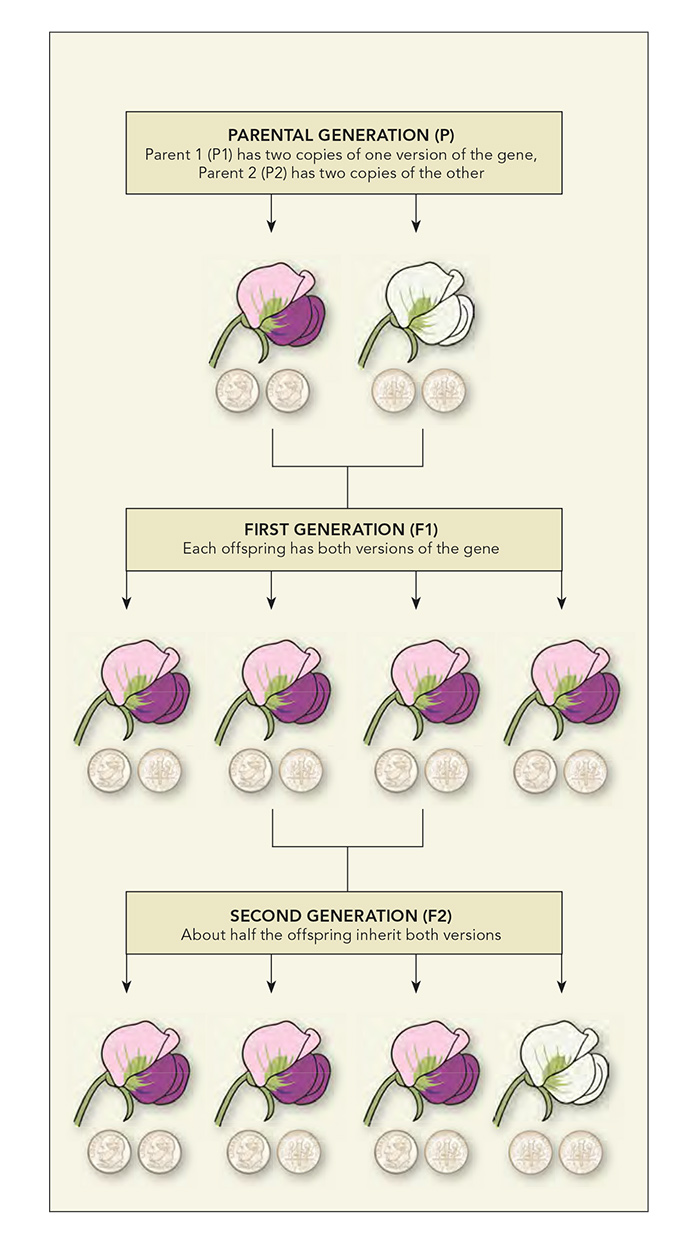
If they self-pollinate again, parent 1 will only pass on the heads genes to its offspring and parent 2 will pass on only tails. But if they are crossed, parent 1 provides the heads genes, and parent 2 provides the tails genes, giving the next generation two different genes for each trait. In some species, this results in increased performance, commonly known as hybrid vigor.
Through selfing, we could perpetuate parents 1 and 2 over multiple generations because they have only one version of each gene to pass along, heads or tails. Each time the two parent lines are crossbred, all the resulting offspring will inherit both versions of every gene. We call this initial hybrid generation the first filial, or F1 generation.
While the F1 generation is predictable, the next generation (F2) is very unpredictable. The chart on the left depicts the variations that are possible for just one trait. With a mixture of heads and tails for each of the four coins, you can imagine that many of the F2 offspring will look different from their parents and from each other.
Of course, our example only includes two parents, and a plant breeding company might work with tens or hundreds of parent plants, making many crosses between them to determine the ideal combination. But once you understand the basics of plant breeding, you can intuitively begin to figure out which parent plants in your home garden might be superior for making hybrids.
Watch: Behind the Scenes at Chicago Botanic Garden Plant Trials with Richard Hawke
DIY plant breeding is within your reach
In the 1950s, David Burpee announced he would give $10,000 to the first person who developed a white marigold. Two decades later, Alice Vonk won the award with ‘Snowbird’ (Tagetes ‘Snowbird’, annual), a plant she had bred from the lightest yellow varieties she could find, saving seed from the whitest flowers of each generation.
You could take a similar relaxed approach, or your plant breeding efforts can be more active and focused. After deciding which plant to work with, think about what characteristics you want to improve. Some easy plants to try are petunias (Petunia cvs., Zones 10–11), snapdragons (Antirrhinum majus and cvs., Zones 7–10), daylilies (Hemerocallis spp. and cvs., Zones 3–9), and squash.
The following tips and tricks will help cover the plant breeding basics:
- Practice dissecting flowers. See if you can locate the reproductive parts. Stamens will often have powdery yellow, orange, or white pollen on lobed anthers at the ends of thin filaments. A pistil usually has a swollen bump at the base, giving the structure a vaselike shape. If you are new to the process, search the internet for pictures or diagrams of your chosen plant species.
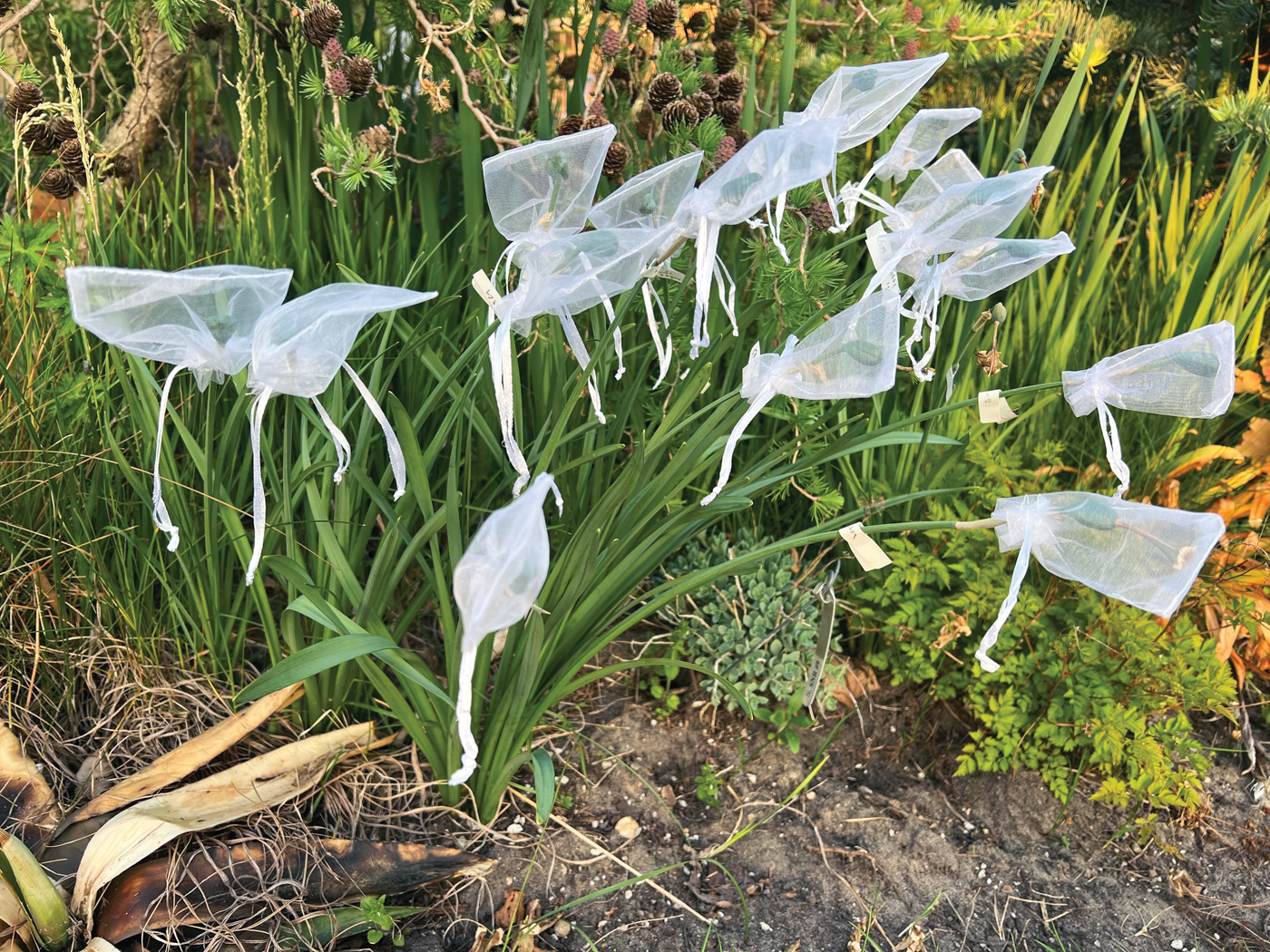
- Bag flowers before they open. Some flowers may need to be contained in net bags before they open to ensure you are the only one doing the pollinating.
- Get unwanted pollen out of the way. To avoid the risk of selfing, you can remove the stamens from flowers you are about to pollinate, a procedure known as emasculation.
- Transfer pollen carefully. You can use a paintbrush, cotton swab, or even a removed stamen to apply pollen onto the stigmas. Make sure to clean your paintbrush between crosses.
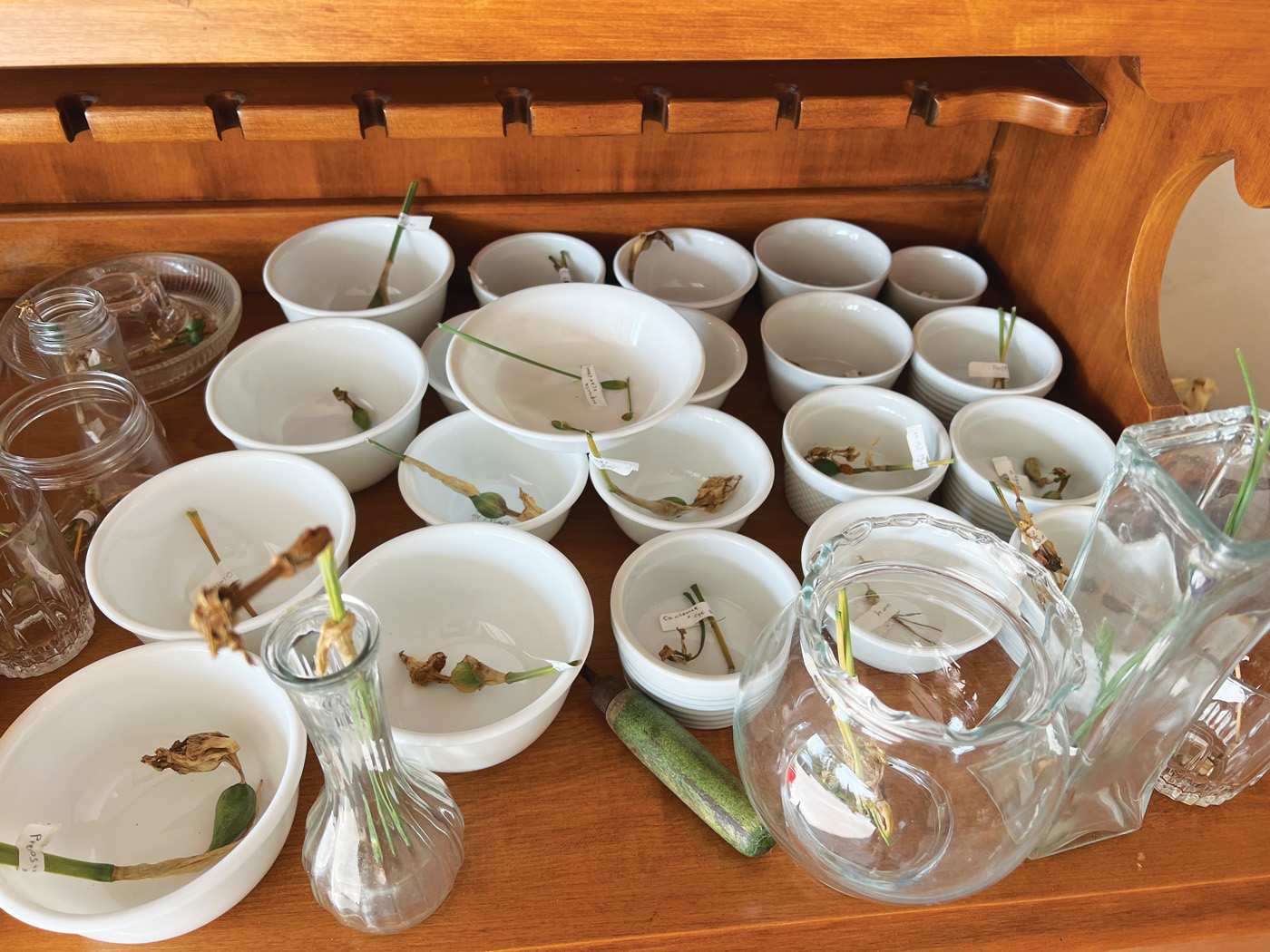
- Keep good records. It’s helpful to tie small tags onto each flower after it is pollinated, so you will know what cross was made.
- Watch for ripening seeds. If you are successful, the fruit will begin to swell. Collect the seeds after they fully ripen, store them in a cool, dark, dry place, and sow them the following spring.
- Evaluate your F1 generation. It’s important to remember that plant breeding is a numbers game. At some point you will have to winnow out—or rogue—seedlings with characteristics you don’t want. Plant breeders often develop thousands of seedlings before selecting just one, years down the road, after diligent evaluation. The rest are thrown away because they didn’t make the cut.
It may take a few years before your efforts pay off, but with luck you’ll end up with a new plant that’s totally different from anything you could buy. And to me, that will always feel like beating the odds.
All photos: Hans Hansen
Jared Barnes, Ph.D., is an associate professor of horticulture at Stephen F. Austin State University in Nacogdoches, Texas.
Learn More:
Subscribe to Fine Gardening Magazine
Check Out Our Podcast, Super Cool Plants!
Watch Videos on Our YouTube Channel
Fine Gardening Recommended Products
Harper Super Steel 700-lb. Platform Hand Truck
Fine Gardening receives a commission for items purchased through links on this site, including Amazon Associates and other affiliate advertising programs.
Manufactured in USA; Two position telescoping handle adjusts up to 62″ in height for tall loads. 700 lb horizontal capacity, 600 lb vertical capacity. Converts in seconds from 2 wheel dolly into 4 wheel cart. Heavy-duty pneumatic all-terrain 10″ wheels and 5″ durable swivel casters for easy maneuverability of bulky loads. 14″ x 7″ Heavy gauge base plate and wheel fenders to protect the load from the wheels.
Spear & Jackson 4930FZ Razorsharp Telescopic Tree Pruner
Fine Gardening receives a commission for items purchased through links on this site, including Amazon Associates and other affiliate advertising programs.
Telescopic tree pruner with SK5 carbon steel blade which stays sharper for longer. Variable length telescopic handle extends up to 92 Inch (2340mm). Lopper for cutting branches up to 1.2″ (30mm). 13 inch (330mm) saw is ideal for cutting thicker branches. Supplied with a long cord and pull-action handle. Part of the Razorsharp Advantage collection, the obvious choice for gardeners who demand and expect precise, powerful performance. “Grow Your Own” Great British Growing 2020 Award Winners.
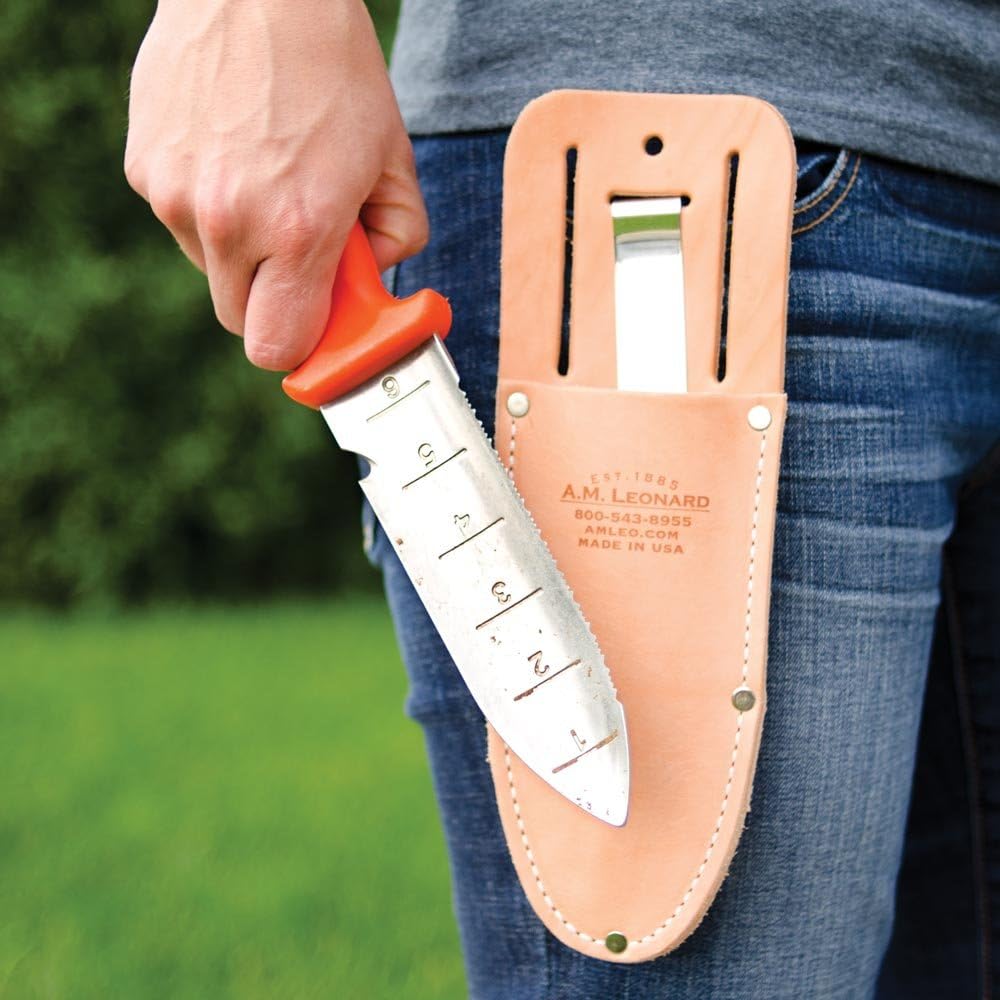
A.M. Leonard Deluxe Soil Knife & Leather Sheath Combo
Fine Gardening receives a commission for items purchased through links on this site, including Amazon Associates and other affiliate advertising programs.
MULTITASKING DUAL EDGES: a deep serrated edge and a tapered slicing edge ideal for tough or delicate cuts. DURABLE 6-inch stainless steel blade withstands 300 lbs of pressure. TWINE CUTTING NOTCH, DEPTH GAUGE MARKINGS & spear point – no need to switch tools when using this garden knife. LEATHER SHEATH: heavy duty, protective, clip on sheath to keep your knife convenient and secure. LIFETIME WARRANTY.