Expert Picks: Try These Native Shrub Alternatives to Common Landscape Plants in the Southeast
Looking to incorporate more native plants into your landscape? Our regional expert shares four versatile native shrub alternatives that thrive in the Southeast’s climate. These plant picks add year-round structure and seasonal beauty while providing valuable habitat. Research shows that incorporating native plants can increase the abundance and diversity of bees, butterflies, birds, and other beneficial wildlife, making your garden more resilient and ecologically rich.
‘Raulston Hardy’ Walter’s viburnum
- Name: Viburnum obovatum ‘Raulston Hardy’
- Zones: 7–10
- Size: 3 feet tall and 4 feet wide
- Conditions: Full sun to partial shade; moist, well-drained soil
- Native range: Southeastern United States
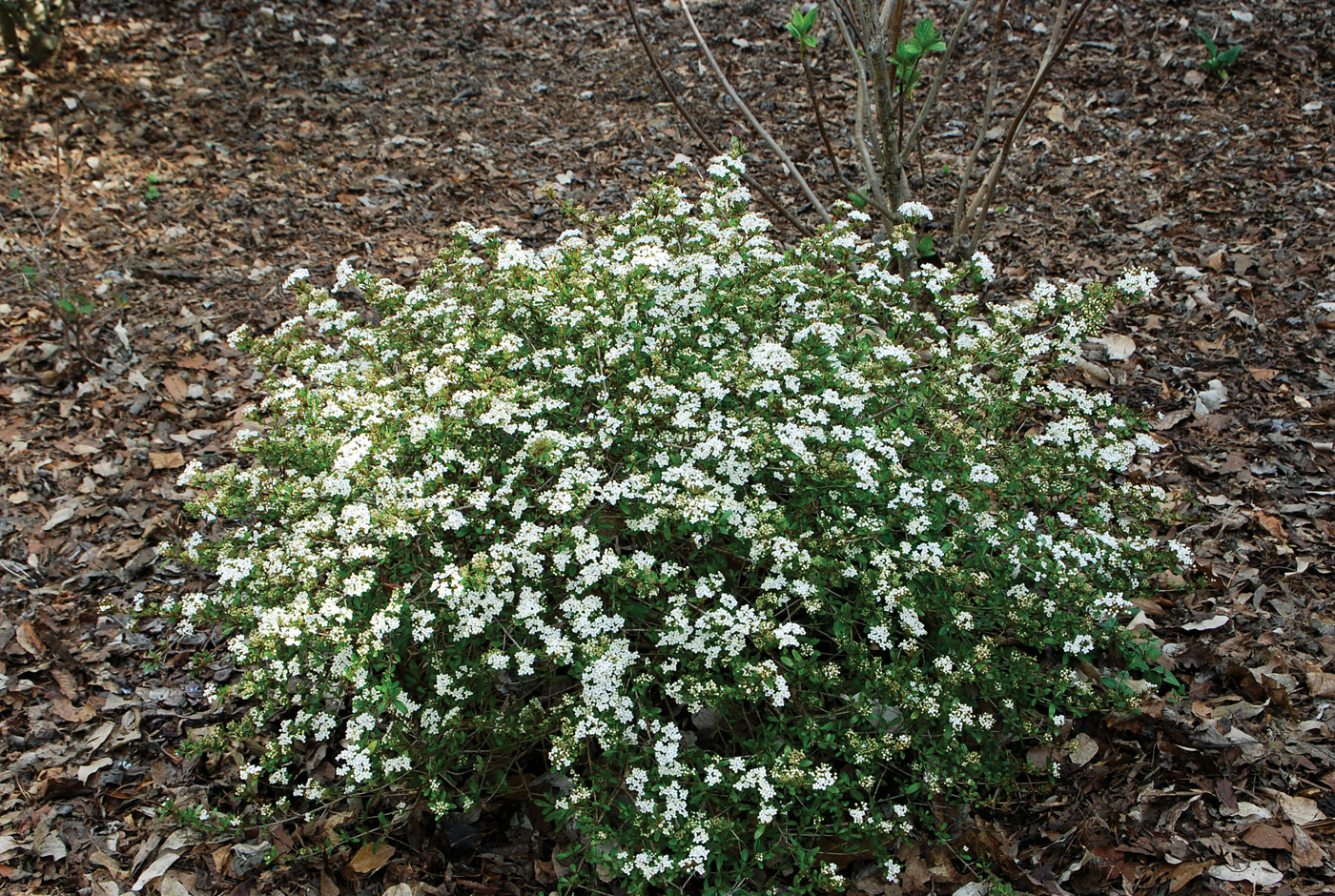
‘Raulston Hardy’ is a dwarf cultivar selected from an otherwise rangy shrub species native to the coastal plains of the Deep South. It grows happily in most soil types, forming a low mound of foliage that is generally evergreen, although it will drop its leaves in a particularly cold winter.
In April it is covered in masses of white, pollinator-friendly flowers, and it also blooms sporadically throughout the rest of the year. Consider it as an excellent substitute for the ubiquitous dwarf Japanese hollies (Ilex crenata cvs., Zones 5–8), with a similar form and leaf texture and the added bonus of an incredible flower show.
‘Green Thumb’ common witch hazel
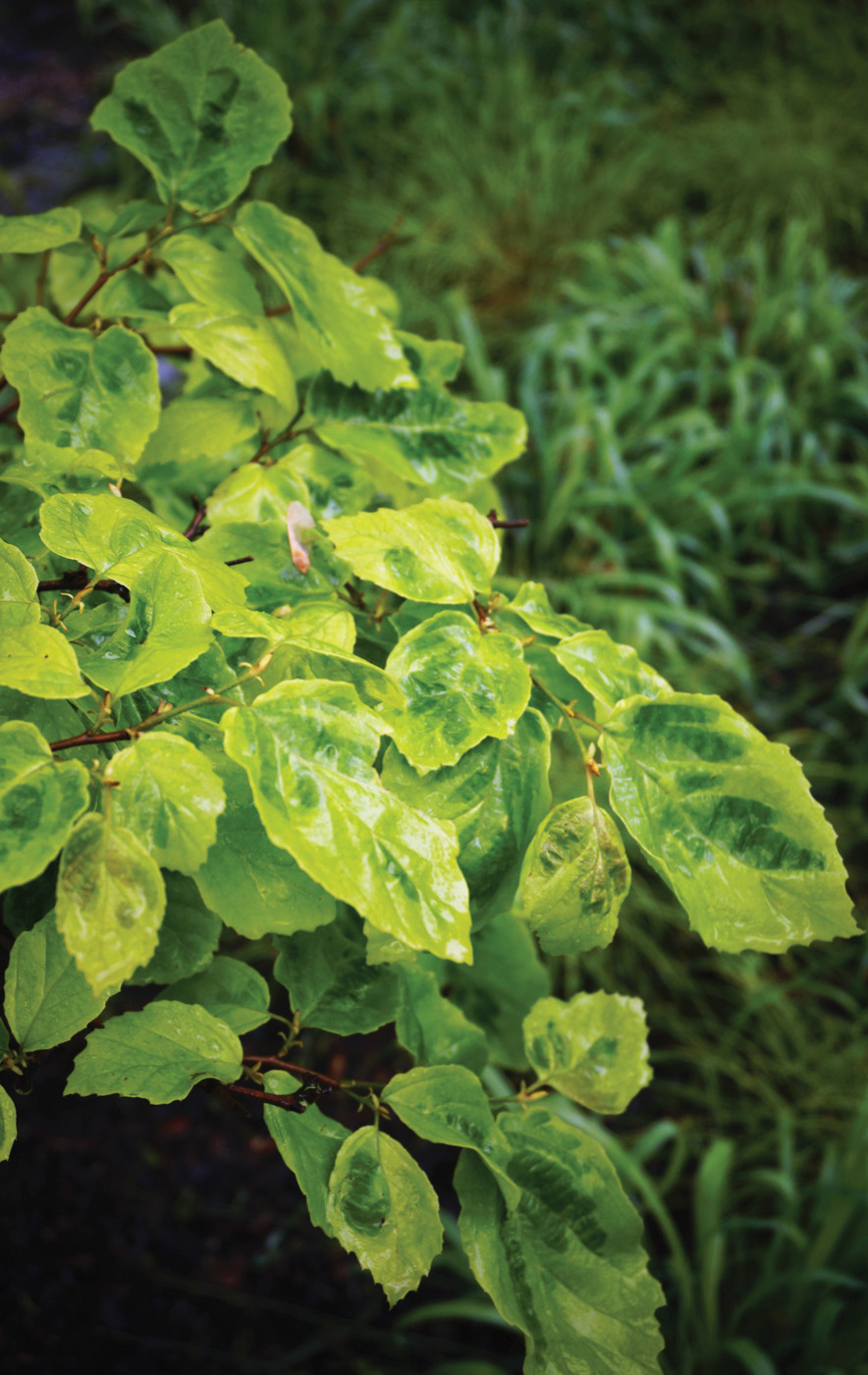
- Name: Hamamelis virginiana ‘Green Thumb’
- Zones: 5–9
- Size: 5 to 10 feet tall and wide
- Conditions: Full sun to partial shade; average to moist, well-drained soil
- Native range: Eastern North America
Witch hazels are, in general, woefully underused. ‘Green Thumb’ is a compact, fall- to winter-flowering cultivar with bright yellow blossoms that are an especially welcome sight on a cold winter day. While most witch hazels fade into the background over summer, this variegated selection has an irregular chartreuse border around the edge of each leaf. In fall, you can expect the foliage to consistently turn a nice yellow color. Think about swapping in ‘Green Thumb’ for unexpected seasonal interest instead of forsythia (Forsythia spp. and cvs., Zones 5–8) or flowering quince (Chaenomeles speciosa and cvs., Zones 5–8).
‘Red Velvet’ Atlantic white cedar
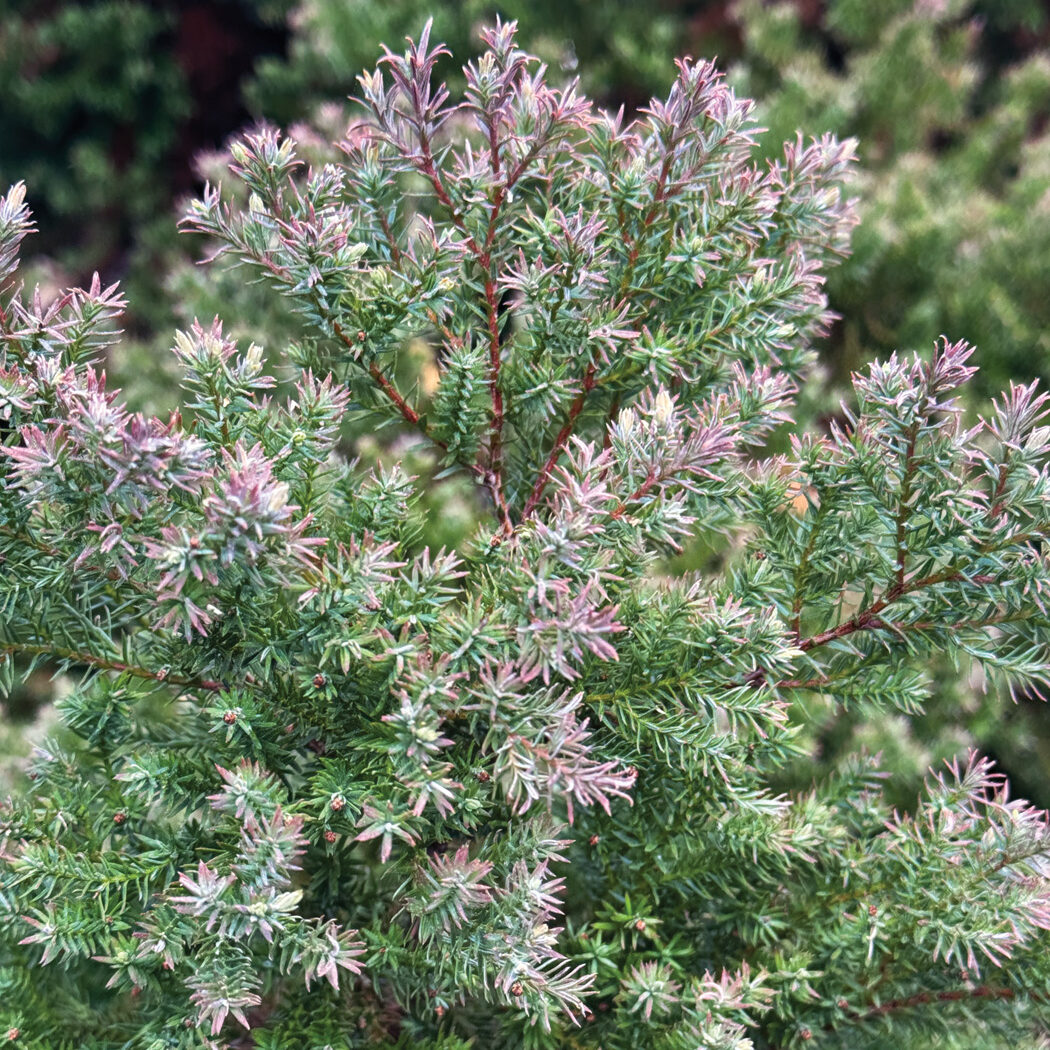
- Name: Chamaecyparis thyoides ‘Red Velvet’
- Zones: 5–9
- Size: 15 to 25 feet tall and 4 to 12 feet wide
- Conditions: Full sun; average to wet, well-drained soil
- Native range: Coastal regions of eastern North America
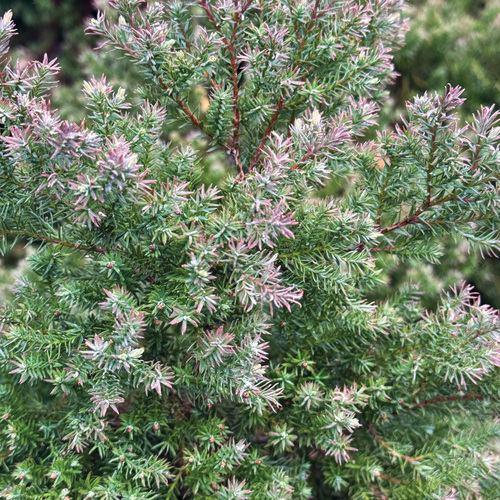
Our native Atlantic white cedar usually grows in low, boggy areas in its natural habitat, but in cultivation it prefers typical garden conditions. ‘Red Velvet’, an improvement on the old cultivar ‘Rubicon’, is an upright plant with soft, feathery needles.
During summer, the foliage is blue-green, but in fall it turns a lovely shade of burgundy-plum that lasts until the new needles emerge in spring. It is easy to grow and provides a unique texture, making it a wonderful swap for arborvitae (Thuja occidentalis and cvs., Zones 3–7).
Read More: Plant This, Not That for the Southeast
Steeplebush
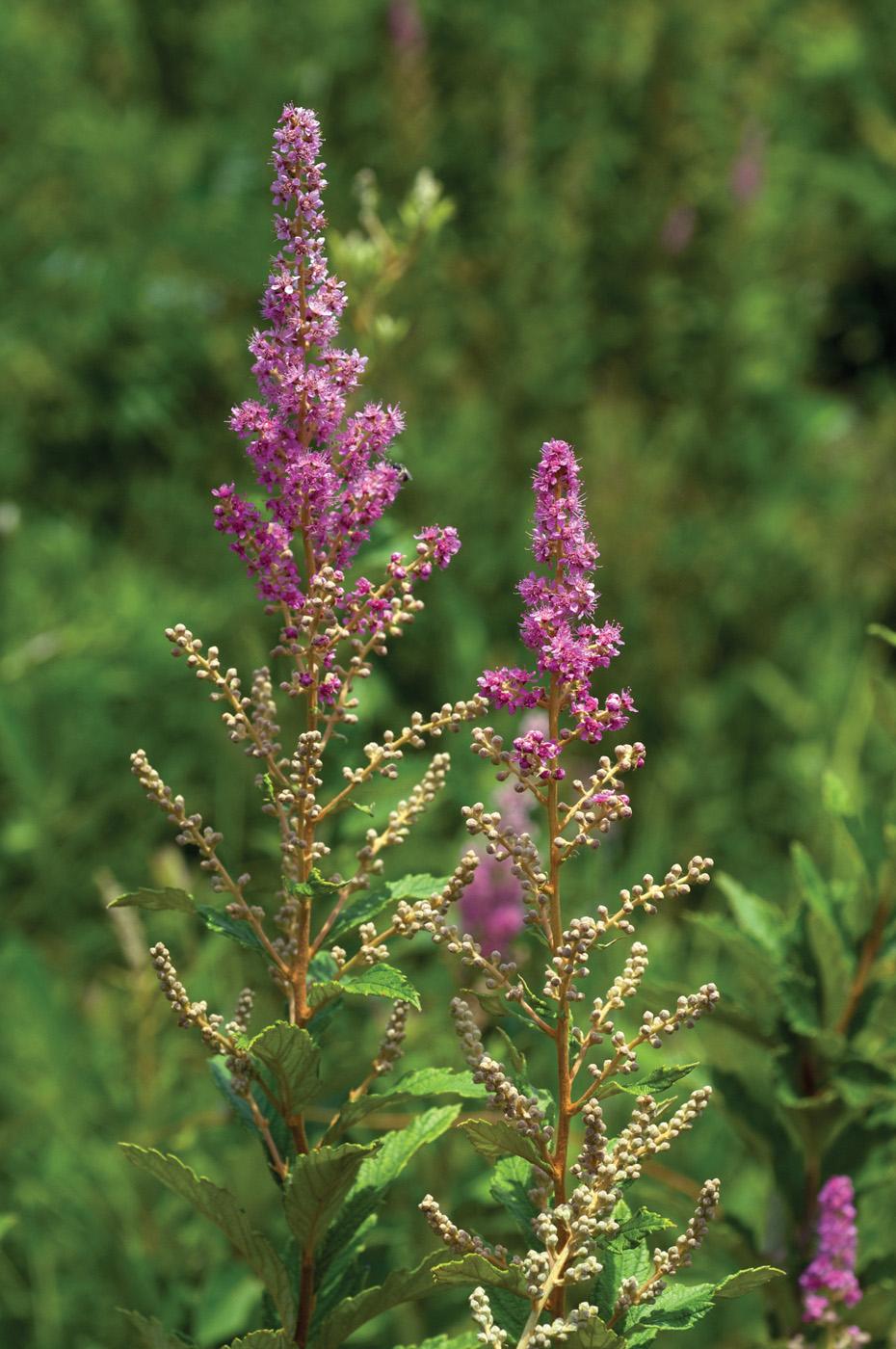
- Name: Spiraea tomentosa
- Zones: 4–9
- Size: 3 to 5 feet tall and wide
- Conditions: Full sun to partial shade; moist to occasionally wet, well-drained soil
- Native range: Eastern North America
Steeplebush is a deciduous shrub that grows naturally in wet spots but acclimates readily to average garden soil conditions. Regular watering will keep it looking its best, enabling it to form a suckering thicket of upright stems that grow up to 5 feet tall. Over a long period from mid- through late summer, these stems are topped with wands of fuzzy rose-pink flowers that open from top to bottom.
The showy, pollinator-attracting summer blooms make steeplebush a perfect replacement for butterfly bush (Buddleia davidii* and cvs., Zones 5–9), which is listed as invasive in multiple states.
*Indicates invasive plant alert. Check alerts in your area to learn more.
Regional Expert: Mark Weathington is the director of the JC Raulston Arboretum at NC State University in Raleigh, North Carolina, and author of Gardening in the South: The Complete Homeowner’s Guide.
See More:
Great Native Perennials for Your Region
Watch Videos on Our YouTube Channel
Get All Access to Fine Gardening!
Fine Gardening Recommended Products
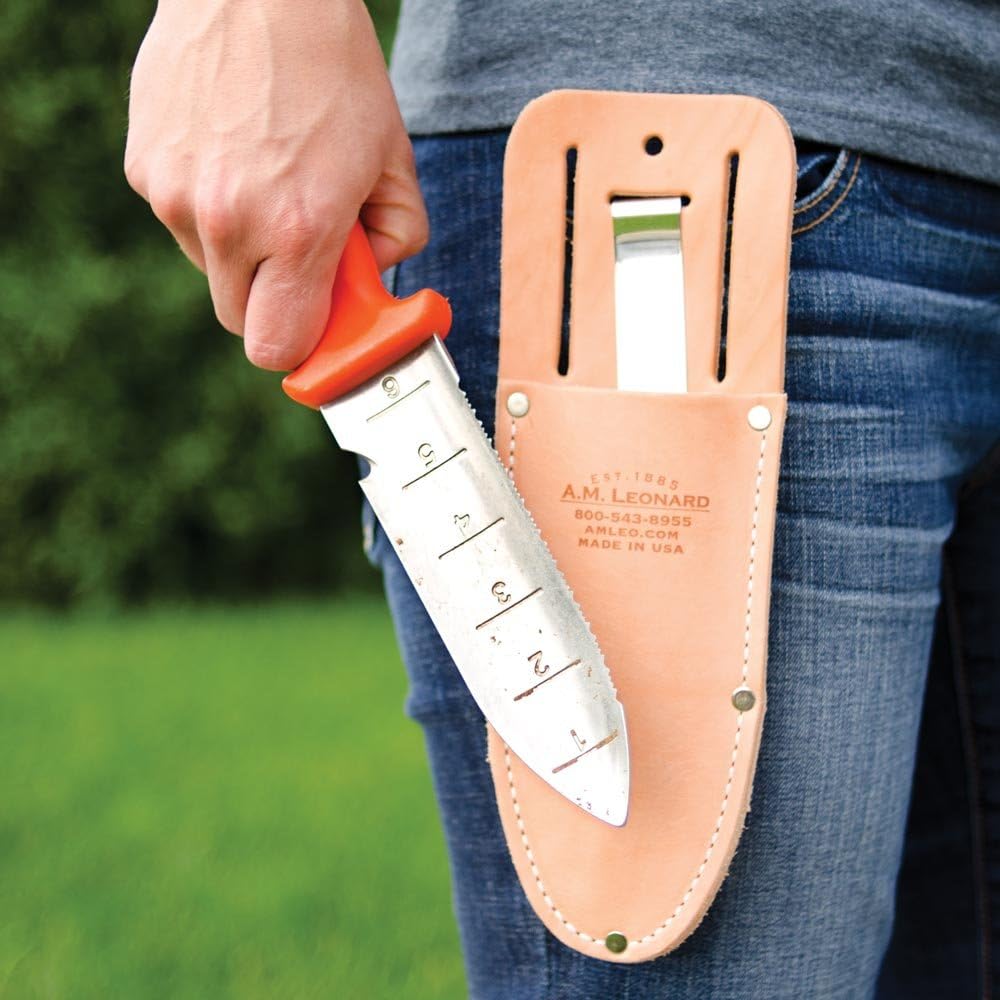
A.M. Leonard Deluxe Soil Knife & Leather Sheath Combo
Fine Gardening receives a commission for items purchased through links on this site, including Amazon Associates and other affiliate advertising programs.
MULTITASKING DUAL EDGES: a deep serrated edge and a tapered slicing edge ideal for tough or delicate cuts. DURABLE 6-inch stainless steel blade withstands 300 lbs of pressure. TWINE CUTTING NOTCH, DEPTH GAUGE MARKINGS & spear point – no need to switch tools when using this garden knife. LEATHER SHEATH: heavy duty, protective, clip on sheath to keep your knife convenient and secure. LIFETIME WARRANTY.