
Expert Picks: 4 Native Shrub Alternatives to Common Landscape Plants in the Northeast
Looking to incorporate more native plants into your landscape? Our regional expert shares four versatile native shrub alternatives that thrive in the Northeast’s climate. These plant picks add year-round structure and seasonal beauty while providing valuable habitat. Research shows that incorporating native plants can increase the abundance and diversity of bees, butterflies, birds, and other beneficial wildlife, making your garden more resilient and ecologically rich.
Cinnamon clethra
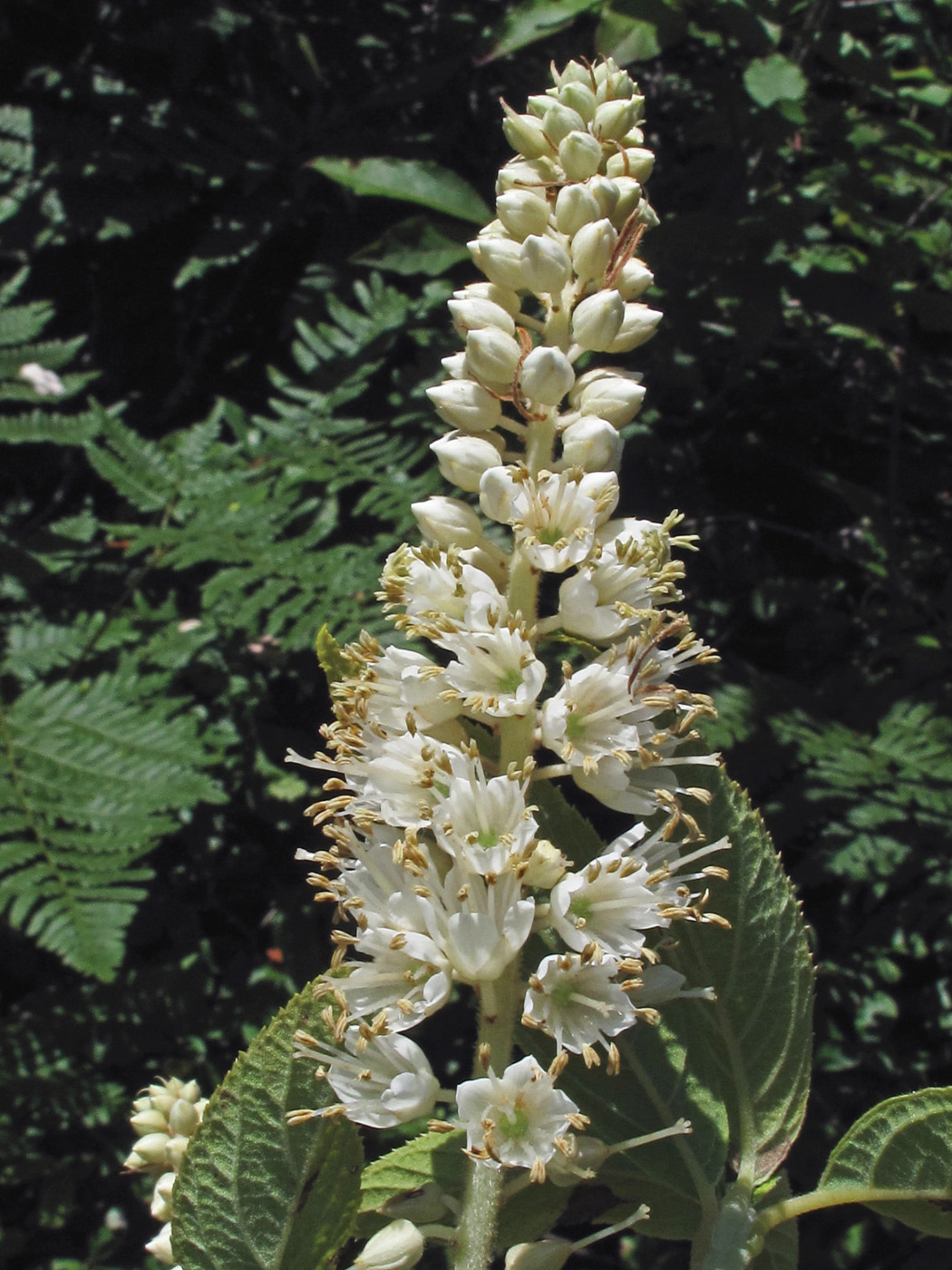
- Name: Clethra acuminata
- Zones: 5–8
- Size: 6 to 12 feet tall and wide
- Conditions: Full sun to partial shade; moist, acidic, well-drained soil
- Native range: Central and southern Appalachian Mountains
It’s understandable why butterfly bush (Buddleia davidii* and cvs., Zones 5–9) has become as popular as it is, with its bright blooms all aflutter with pollinators, but this nonnative shrub can do more harm than good with its invasive tendencies. Cinnamon clethra, which is also very popular with the buzzy, fluttery community, offers an unusual alternative.
It has the advantage of blooming in shade and has multiseason interest with its fragrant summer flowers, rich yellow fall leaves, and flaky, cinnamon-colored bark. Its gracefully layered growth habit is more attractive than butterfly bush, which always looks like a dry bundle of kindling to me. This shrub can take full sun in cooler zones.
‘Marie Hoffman’ roseshell azalea
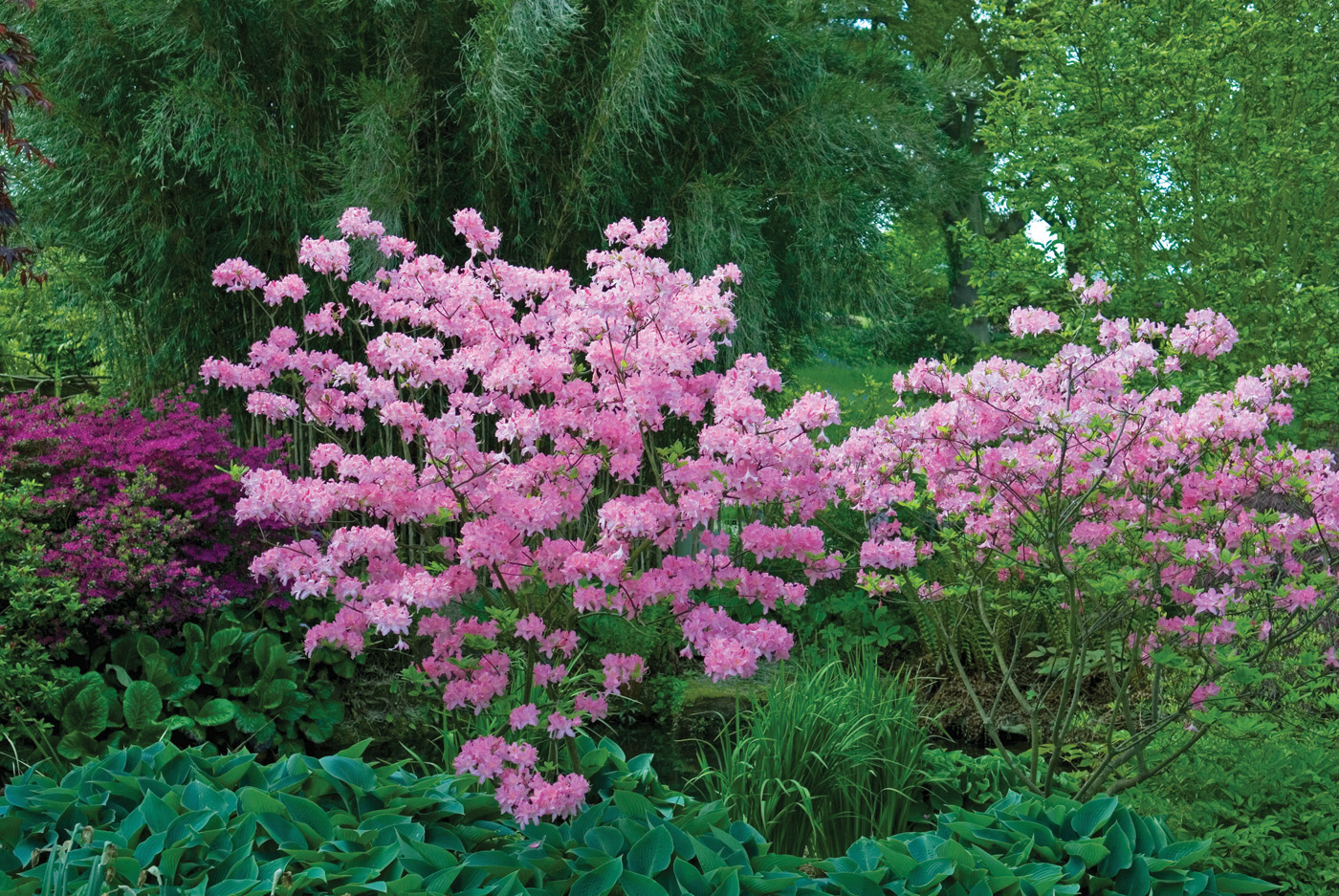
- Name: Rhododendron prinophyllum ‘Marie Hoffman’
- Zones: 4–8
- Size: 4 to 8 feet tall and wide
- Conditions: Partial shade; rich, acidic, well-drained soil
- Native range: Eastern North America
‘Marie Hoffman’ roseshell azalea is a stunning native alternative to the Asian varieties that flood stores each spring. Its large trusses of bright pink, fragrant flowers rival those of any rhododendron hybrid and are borne early in spring before the plant pushes out leaves. These vibrant blooms are also a good early pollen source for insects.
Like Asian azaleas, ‘Marie Hoffman’ makes an excellent foundation plant, with clear, vivid green leaves that redden in fall. It’s also similarly adaptable, tolerating drier soil and a slightly higher pH. You may not decide to rip out your other azaleas in favor of ‘Marie Hoffman’, but I am positive you will be happy you added it to your garden. Unfortunately, deer love it just as much, so keep that in mind when siting it.
Spicebush
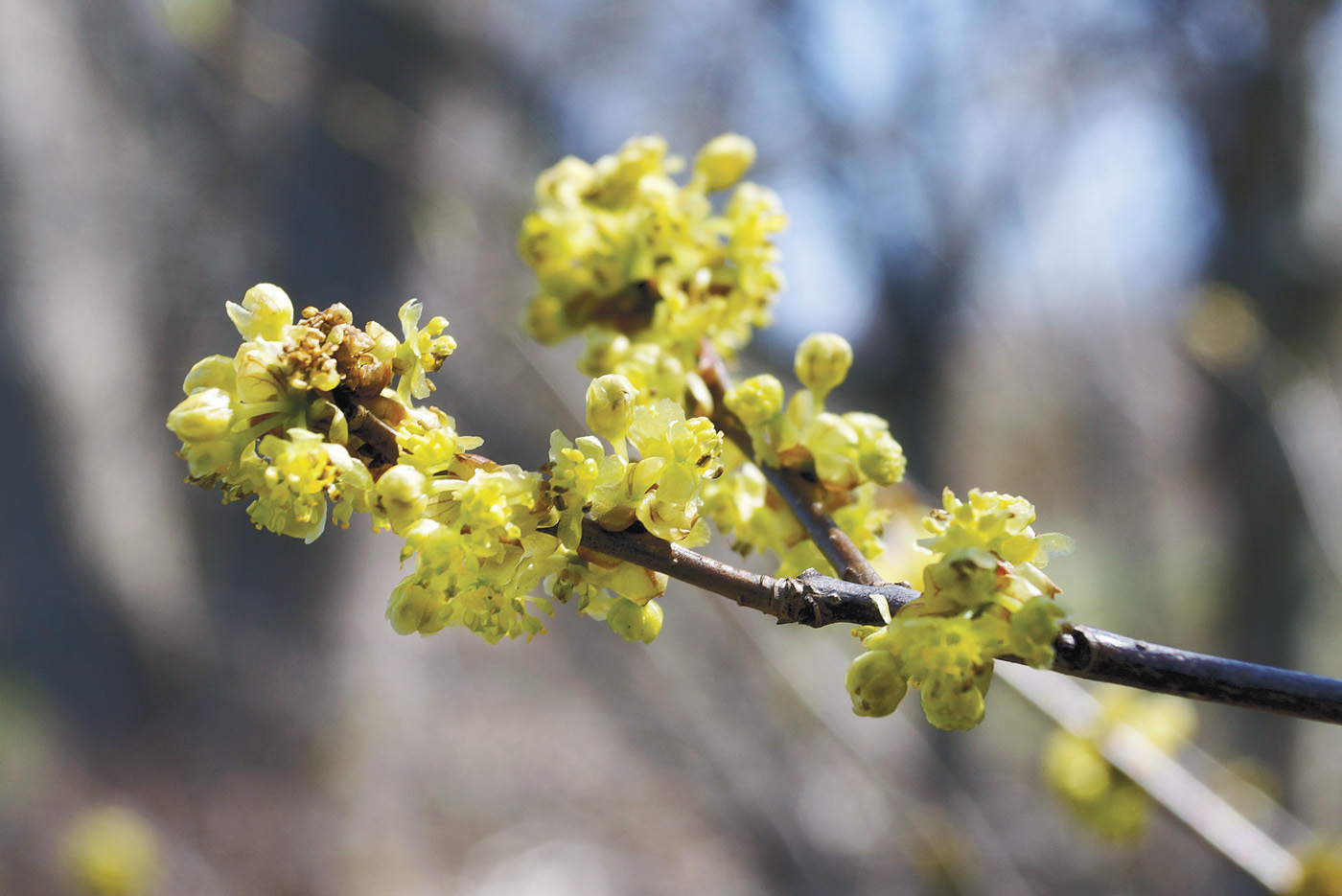
- Name: Lindera benzoin
- Zones: 4–9
- Size: 6 to 12 feet tall and wide
- Conditions: Full sun to full shade; average to moist soil
- Native range: Eastern North America
Spicebush isn’t going to deliver the spring power punch of a forsythia hedge (Forsythia spp. and cvs., Zones 4–9), but it is a superior plant in other ways. The soft yellow haze of spicebush flowers in native woodlands is often the first color I see in spring, and they provide needed food for early pollinators. The smooth, aromatic leaves host the spicebush swallowtail caterpillar. Its shiny red berries scintillate against pure yellow leaves in fall, until birds snap them up.
Unlike forsythia, spicebush can become a sculptural specimen and so can be used as a focal point, or it can be massed at a distance for more impact. Spicebush is easy to grow and is a useful shrub in shadier, damp spots. It will take full sun only with good moisture and can tolerate saturation.
Read More: Gardening for Caterpillars
Virginia rose
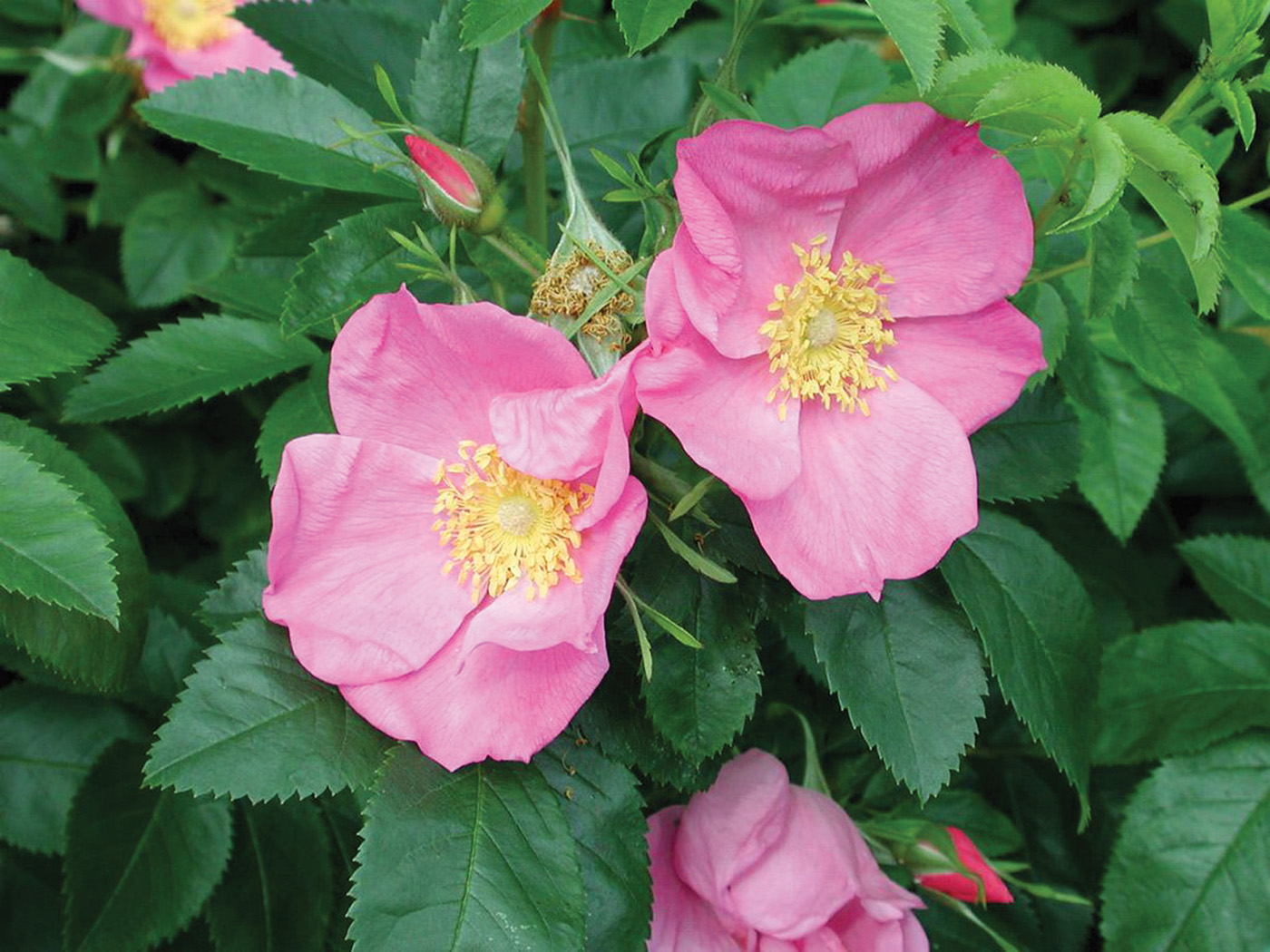
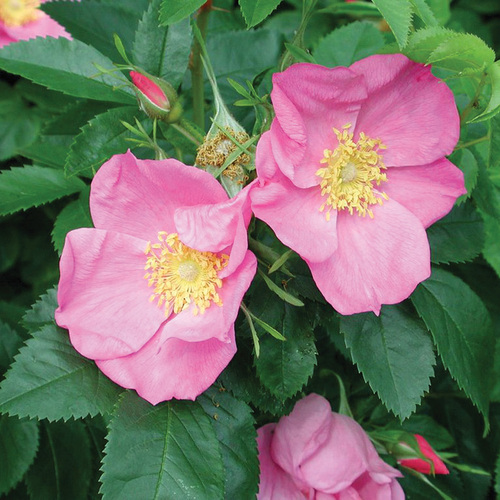
- Name: Rosa virginiana
- Zones: 3–8
- Size: 2 to 5 feet tall and 3 to 6 feet wide
- Conditions: Full sun to partial shade; dry to moist, well-drained soil
- Native range: Eastern North America
Flashy roses sold at big-box stores can be numbingly unvarying in color and form. They may be good for a gas station island, but for a garden, our native Virginia rose has far more character and subtlety. This free-blooming shrub grows in virtually any soil and is generally disease resistant.
Virginia rose is a bit of a space piggy, and you may find stray canes popping up several feet away. But if you have a large, sunny space to fill, this spreading habit can be helpful. Manage its enthusiastic ways by cutting back the canes to about a foot tall in early spring; this will still allow for flowers, as they form on new growth. In fall and winter, the bright red hips and canes provide further interest, especially combined with evergreens or tawny grasses.
*Indicates invasive plant alert. Check alerts in your area to learn more.
Regional Expert: Chloë Bowers is a landscape designer based in Newtown, Connecticut, and the moderator for the Gardening Answers forum. Join the conversation at FineGardening.com/discussion-forum.
See More:
Great Native Perennials for Your Region
Watch Videos on Our YouTube Channel
Get All Access to Fine Gardening!
Fine Gardening Recommended Products
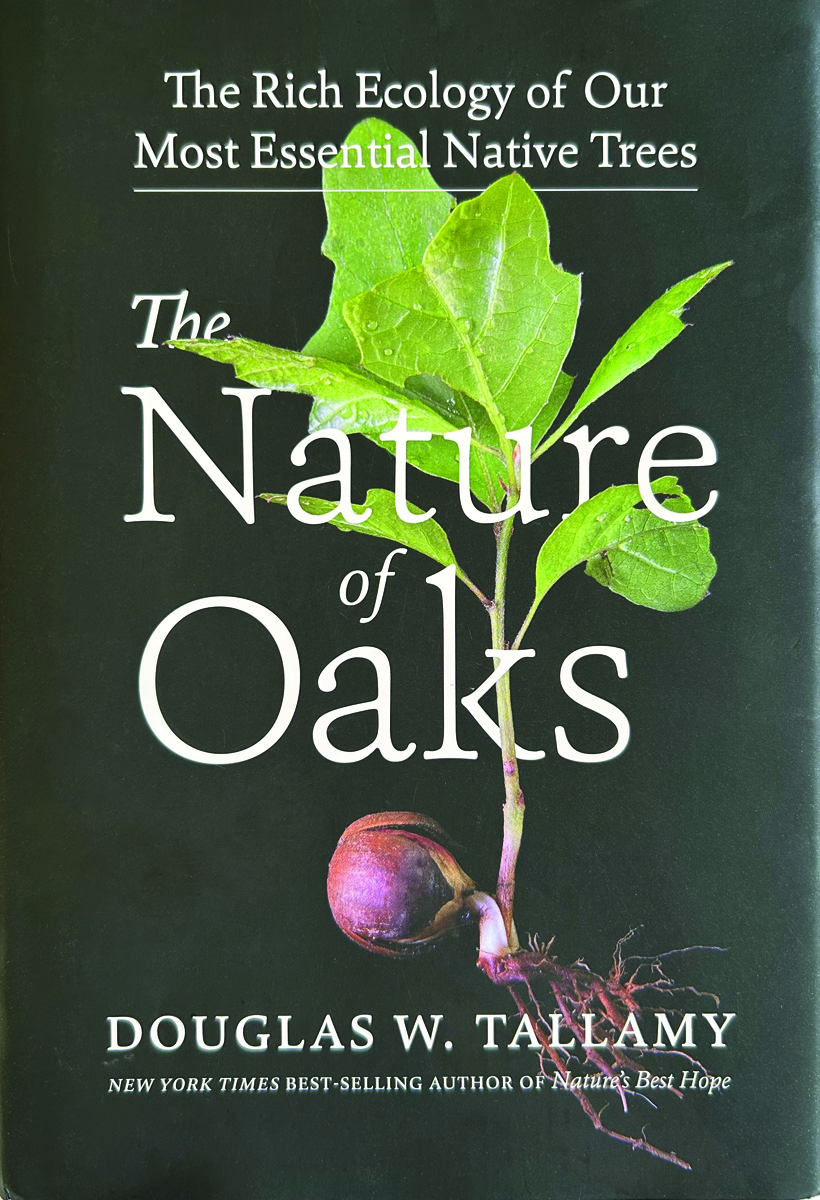
The Nature of Oaks: The Rich Ecology of Our Most Essential Native Trees
Fine Gardening receives a commission for items purchased through links on this site, including Amazon Associates and other affiliate advertising programs.
The Nature of Oaks reveals what is going on in oak trees month by month, highlighting the seasonal cycles of life, death, and renewal. From woodpeckers who collect and store hundreds of acorns for sustenance to the beauty of jewel caterpillars, Doug Tallamy illuminates and celebrates the wonders that occur right in our own backyards. He also shares practical advice about how to plant and care for an oak, along with information about the best oak species for your area.
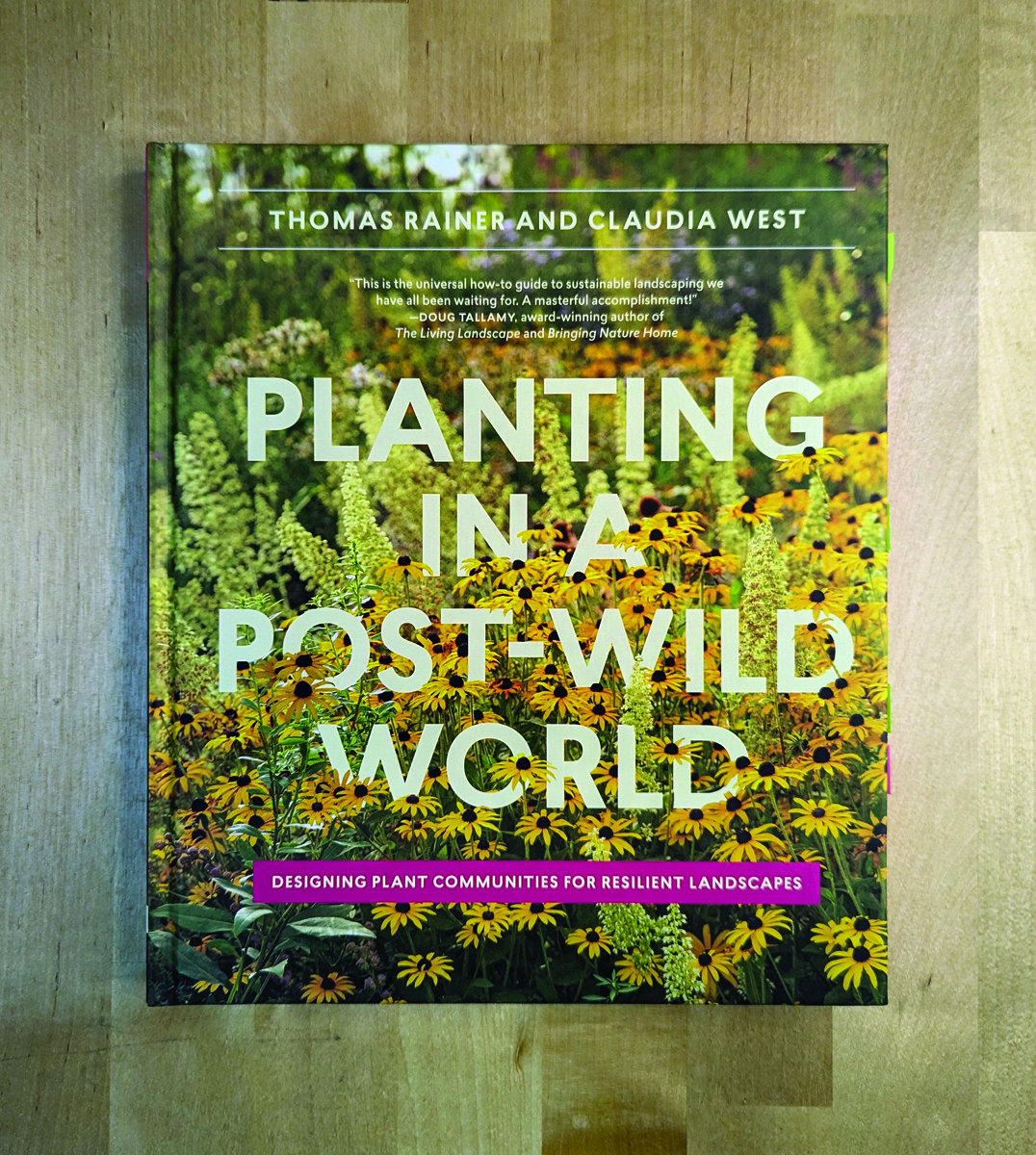
Planting in a Post-Wild World: Designing Plant Communities for Resilient Landscapes
Fine Gardening receives a commission for items purchased through links on this site, including Amazon Associates and other affiliate advertising programs.
Featuring gorgeous photography and advice for landscapers, Planting in a Post-Wild World by Thomas Rainer and Claudia West is dedicated to the idea of a new nature—a hybrid of both the wild and the cultivated—that can nourish in our cities and suburbs.
Black and Decker 22-inch Cordless Hedge Trimmer
Fine Gardening receives a commission for items purchased through links on this site, including Amazon Associates and other affiliate advertising programs.
Quick and easy to put into operation and is less noisy and lighter in weight than gas-powered hedge trimmers.
– 38 x 7 x 7 inches
– 6.9 pounds
– 1 Lithium Ion battery required (included)