
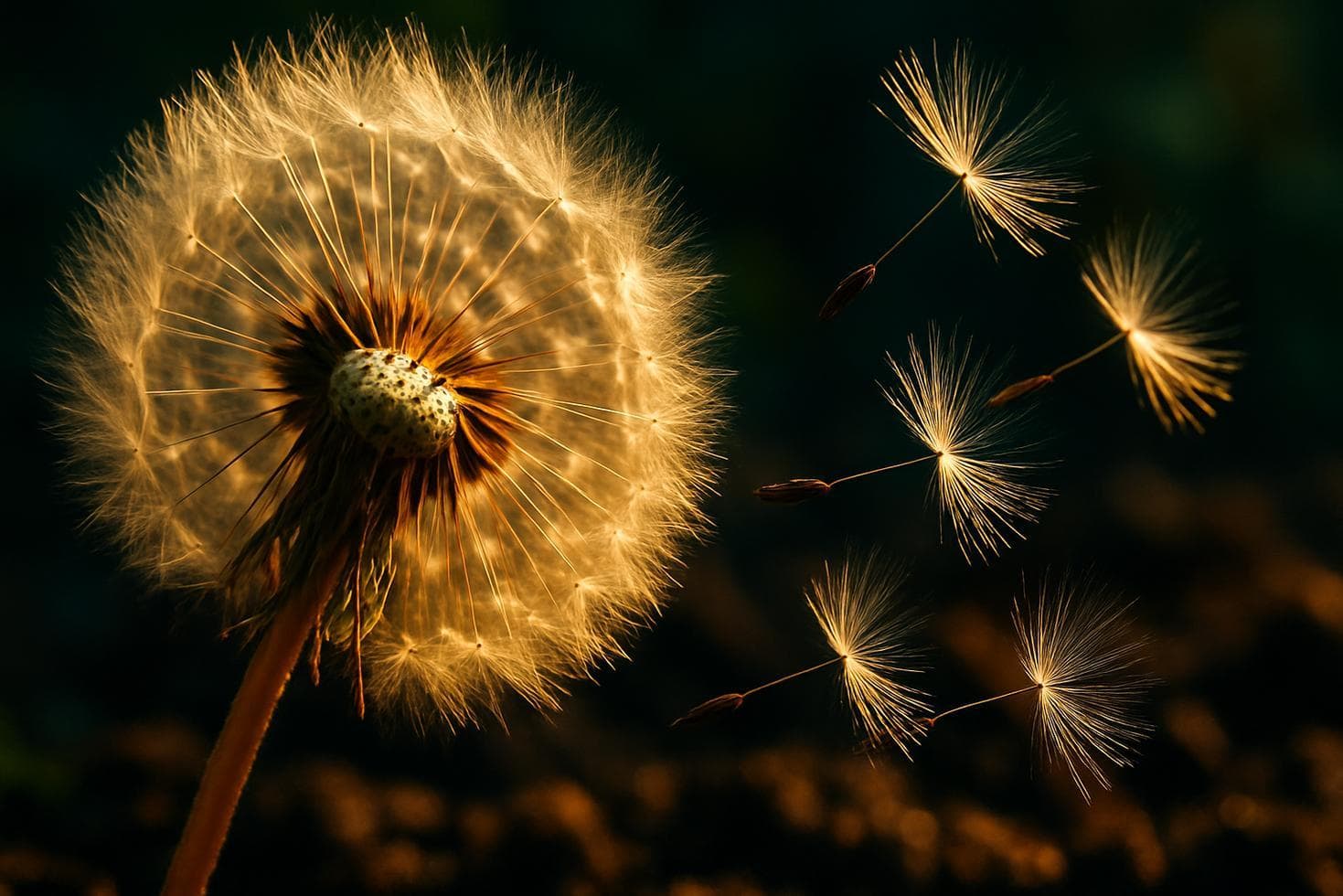
Dandelions fed families across Europe and Asia for centuries — every part edible, the deep taproot a living mineral pump — before herbicide marketing reframed a food plant as a lawn problem.
Taraxacum officinale is a perennial herb native to Eurasia that humans cultivated and ate as a valued food plant for much of recorded history, long before it acquired its modern reputation as a weed. That gap between what the plant actually is and what the lawn-care industry decided to call it is one of the stranger reversals in agricultural history. The dandelion’s biology never changed. The commercial incentive around it did.
Medieval herbals, ethnobotanical records, and agronomic histories all document the same pattern: a plant treated as a reliable vegetable, a beverage ingredient, and a soil resource across multiple cultures and centuries.
How Dandelions Were Used as a Food Plant Across Cultures
Every part of the plant served a distinct purpose. Leaves went into cooking pots the way spinach does today. Roots, slow-roasted, produced a bitter, caffeine-free beverage that stood in for coffee across communities where coffee was expensive or unavailable. Flowers fermented into wine that kept through cold months.
This was not incidental foraging. Medieval herbals recorded dandelion cultivation deliberately, alongside other recognized food plants. The taproot as a mineral-cycling mechanism was understood practically, even without modern soil-science vocabulary — gardeners observed that beds where dandelions had grown produced better yields.
How the Herbicide Era Reframed a Cultivated Plant as a Lawn Problem
The dandelion did not change its biology when herbicide companies began marketing in the twentieth century. It was already everywhere, easy to photograph, and familiar to homeowners. That visibility made it a useful commercial target.
The weed designation followed the product, not the plant’s actual characteristics. Reclassification driven by marketing needs rather than any new discovery about the plant’s behavior is what shifted public perception. A food crop with centuries of documented use became, within a generation, the emblem of a neglected lawn.
The plant naturalized across North America the same way it spread across Eurasia — reliably, persistently, nutritionally intact.
Closing
Dandelions evolved roughly 30 million years ago and reached every continent except Antarctica on their own terms. Centuries of deliberate human cultivation followed. The herbicide era added a new chapter, but it did not rewrite the plant’s actual record.
Something that fed people across continents for that long tends to be harder to dismiss than a single marketing era suggests.
Frequently Asked Questions
Were dandelions actually cultivated on purpose, or just foraged wild?
Historical sources including medieval herbals and ethnobotanical records document intentional cultivation of dandelions as a food plant, not only opportunistic wild harvesting.
What part of the dandelion was most useful nutritionally?
All parts were used — leaves as a cooked vegetable, roots as a roasted beverage, and flowers fermented into wine — with each serving a distinct dietary or practical role.
Why do dandelion taproots matter to soil health?
The deep taproot reaches subsoil mineral layers that shallow-rooted garden plants cannot access, cycling those nutrients upward into the topsoil.
When did dandelions get classified as weeds?
The weed designation became widespread during the herbicide marketing era of the twentieth century — a commercial reframing, not a botanical reclassification based on new science.