
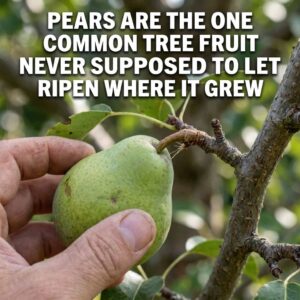
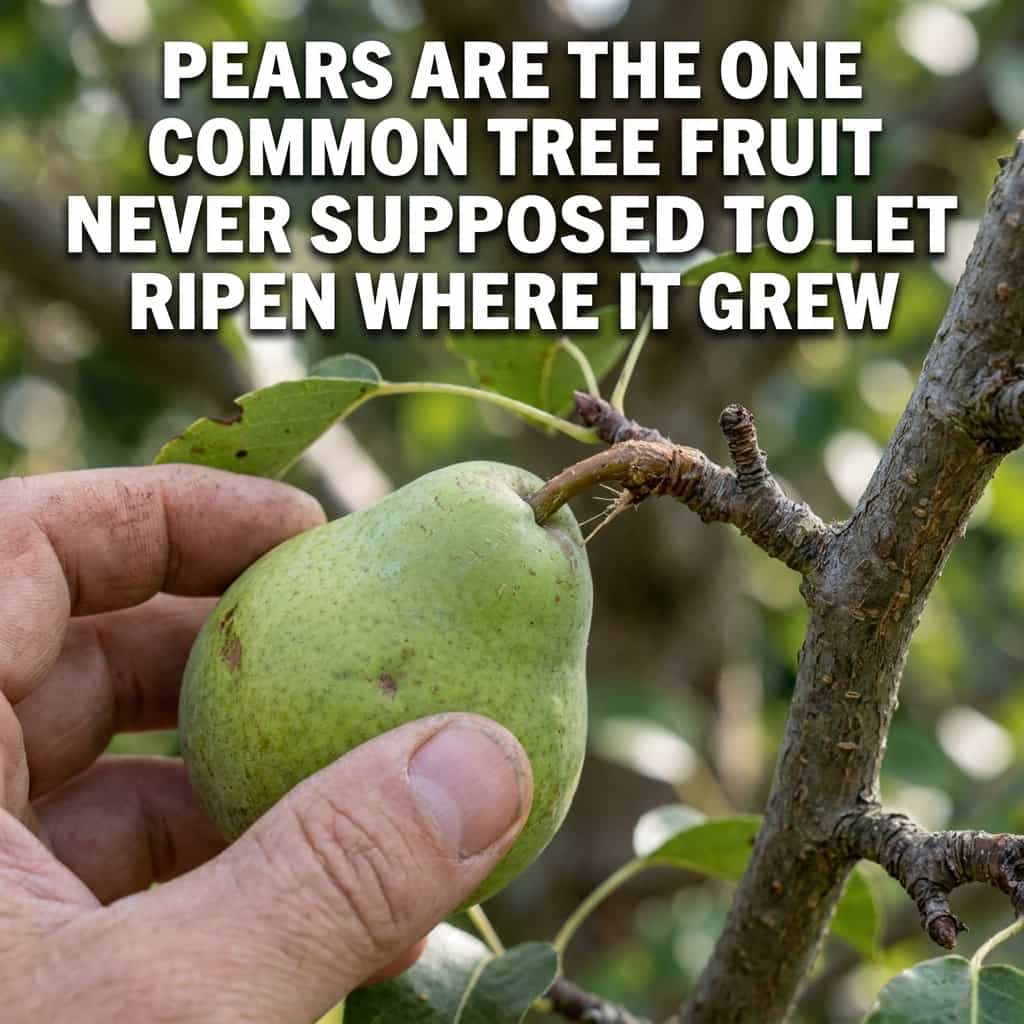
Every other fruit tree in the yard rewards patience — leave an apple, peach, or plum a little longer and it usually gets sweeter. Pears are the exception, and it catches a lot of gardeners off guard the first time it happens.
Wait for a pear to feel ripe on the branch, and by the time the outside finally softens, the inside has often already gone brown and grainy at the core. The fix growers have relied on for generations is simple: pick the fruit while it’s still hard, then let it finish ripening on the counter, not the tree.
Why Pears Don’t Ripen the Way Other Fruit Does
Most fruit ripens from the outside in. Pears ripen from the core outward. Left on the tree past maturity, the flesh around the core breaks down first and turns brown and mushy while the skin still looks tight and green. By the time a tree-ripened pear finally feels soft, the center is often already overripe or gritty from stone cells forming in the flesh. That’s why pears are picked mature but hard almost universally — it’s the only way to get smooth, buttery flesh all the way through.
How to Tell a Pear Is Ready to Pick
The most reliable signal is the tilt test. Cup a pear in your hand and tilt it upward to horizontal. A mature pear separates cleanly from the spur with just light pressure; if it resists and needs a hard tug or twist, give it more time. Color helps with some varieties — Bartlett and other yellow pears shift from deep green to a paler green-yellow as they mature — but Bosc, Anjou, and Comice barely change color at all, so the tilt test is what actually tells you.
Ripening Pears After They’re Picked
Once picked, pears finish ripening off the tree. Bosc and Anjou often ripen best with a short spell in the refrigerator first, then several days at room temperature (roughly 65-75F); Bartlett needs less of a head start and usually ripens fully at room temperature alone within about five days. Check for ripeness at the neck, just below the stem, rather than by squeezing the round body. A paper bag speeds things up, and adding a banana or apple adds extra ethylene to ripen pears even faster.
Frequently Asked Questions
Can I tell a pear is ripe by pressing on it like a peach or an avocado?
Not the same way. Pears ripen from the stem end inward, so pressing the body can bruise a pear that’s actually ready. Press gently near the stem instead.
What happens if I leave pears on the tree too long by accident?
An overripe tree pear is usually soft, discolored, or grainy at the core even while the skin still looks firm, and that texture doesn’t reverse. Pick any remaining fruit right away and use the softest ones for cooking.
Do all pear varieties change color when they’re ready to pick?
No. Yellow-skinned types like Bartlett shift from deep green to pale green or yellow. Bosc, Anjou, and Comice barely change color, so the tilt test matters more for those varieties.
[VF2W5]