

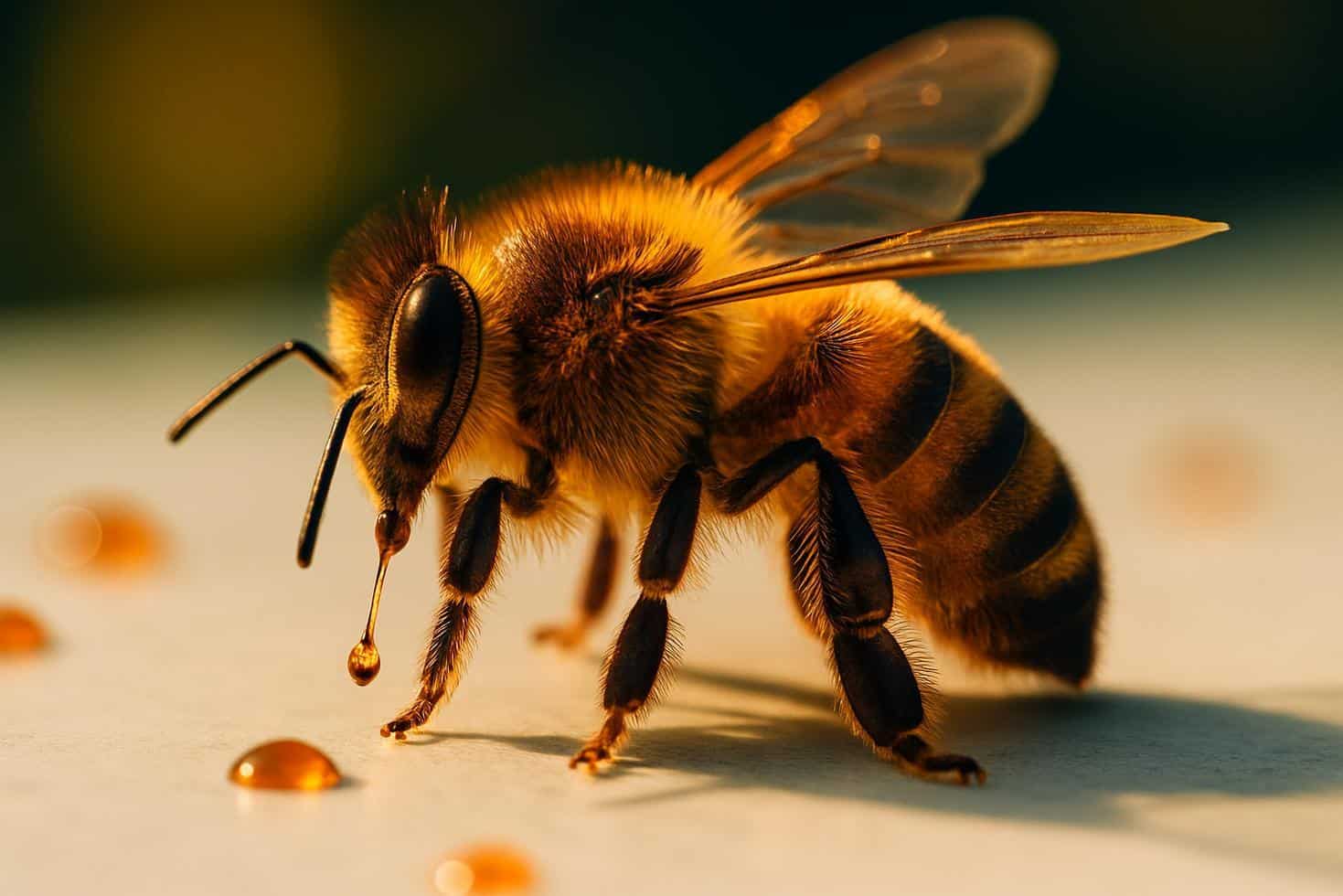
Melittin makes up 40–60% of dry bee venom by weight — and in lab studies, it cut cancer cell viability within 10 minutes at concentrations as low as 0.94 µM. Normal cells sat beside them, largely untouched.
Melittin, a 26-amino-acid peptide that makes up 40–60% of dry honeybee venom by weight, showed significant, selective cytotoxicity against triple-negative and HER2-enriched breast cancer cells in a 2020 Nature Communications study. That is already a striking sentence on its own. What makes it stranger is where the compound was hiding — inside a creature most people brush away without a second thought.
The study, by Ciampa et al., tracked what happens when melittin meets some of the most treatment-resistant cancer subtypes known. Triple-negative breast cancer and HER2-enriched breast cancer carry specific surface receptors that drive their growth. Melittin interfered with those receptors — specifically suppressing EGFR and HER2 phosphorylation and blocking downstream PI3K/Akt signaling — and the cancer cells began losing viability within 10 minutes.
—
—
How Melittin Disrupts Breast Cancer Cell Signaling
Melittin’s anticancer mechanism is not simple membrane destruction. The Nature Communications study showed it suppresses growth factor receptor phosphorylation at the plasma membrane, cutting off the activation cascades cancer cells rely on to proliferate. EGFR and HER2 — two receptor tyrosine kinases central to aggressive breast cancer growth — were both targeted.
Statistical analysis confirmed the selectivity: a general linear model (Wald Chi-Square = 12.9, p < 0.001, n = 33) showed melittin was significantly more potent against HER2-enriched and TNBC lines than against non-transformed normal cells. That is a real difference, not a rounding artifact.
What the Lab Numbers Actually Show
IC50 values for melittin in TNBC and HER2-enriched lines fell between 0.94–1.49 µM. In normal cells, that range shifted upward to 1.03–2.62 µM — measurably less potent. In time-course experiments, the SUM159 TNBC line showed greater viability loss than the HER2-enriched SKBR3 line from 30 minutes onward (two-way ANOVA, p < 0.0001).
In a separate mouse model study, melittin combined with radiation produced a tumor growth inhibition rate of 87.97% and extended median time-to-progression to 37.0 days, compared with 13.6 days in untreated controls.
What Delivery Research Is Trying to Solve Next
Melittin’s membrane-disrupting nature creates an obvious clinical problem: it doesn’t distinguish cancer from the rest of the body at therapeutic doses. Researchers have responded with nanoparticle encapsulation. Melittin loaded into niosomes showed superior cytotoxicity and greater inhibition of migration in 4T1 and SKBR3 models compared with free melittin — with minimal systemic toxicity recorded in the mouse data.
The approach is still preclinical. Lab dishes and mouse models are not human bodies, and no human trial data exists yet.
—
The compound has been in every honeybee sting for millions of years. Scientists are only now mapping what it does at the molecular level — and the signal from that 2020 Nature study is specific enough to keep the question open.
What arrives in the smallest packages sometimes turns out to be the most structurally complex.