


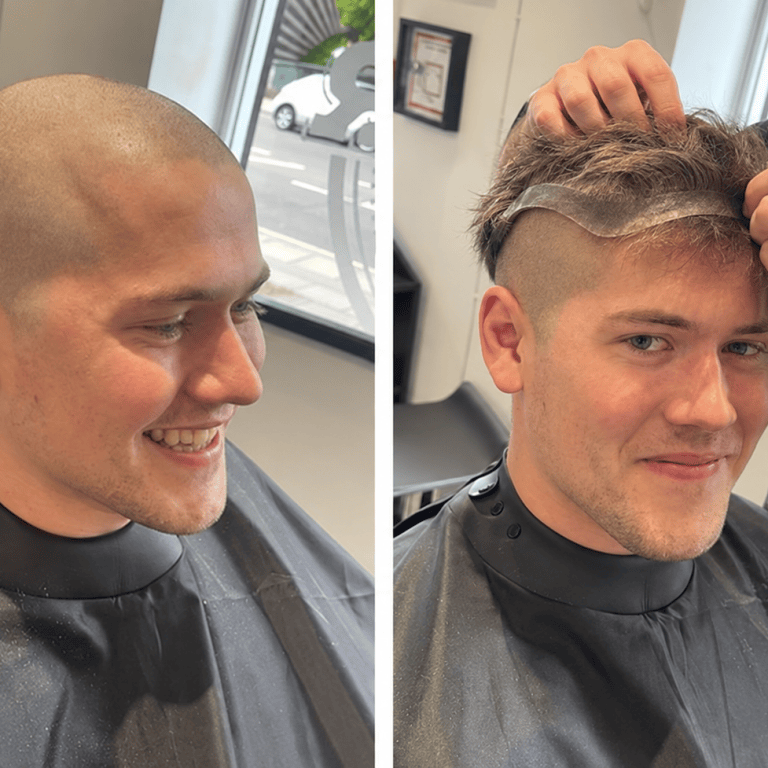
“Just shave it.”
For men experiencing hair loss, those two words come up constantly.
And for some men, shaving really is the right answer. It’s simple, inexpensive, and removes the need to think about thinning areas or a receding hairline.
But it isn’t the only answer.
Not every man wants a shaved head. Some prefer how they look with hair. Others enjoy styling it, want to maintain a familiar appearance, or simply aren’t interested in changing their entire look because their biological hair has started thinning.
That’s where the modern toupee has changed the conversation.
Today’s hair replacement systems can look very different from the thick, obvious hairpieces many people still associate with the word “toupee.” Fine base materials, more realistic hairlines, adjustable density, and professional cut-ins have made non-surgical hair replacement a practical option for men who want hair without waiting months for a transformation.
So why are some men choosing hair instead of reaching for the clippers?
Shaving Is Simple, but It’s Still a Style Choice
Shaving your head is often presented as the default response to significant hair loss.
But going bald by choice is still a choice about appearance.
Head shape, facial proportions, beard style, personal fashion, and simple preference can all affect whether someone likes the result.
Some men shave once and never look back.
Others immediately miss having hair.
There’s nothing unusual about either response.
The important shift is recognizing that hair loss doesn’t automatically require one specific reaction. You can shave, keep thinning hair, explore medical options with an appropriate professional, or use non-surgical hair replacement.
A toupee simply adds another option.
The Biggest Advantage Is Speed
Most changes involving natural hair take time.
Growing hair takes time. Changing a haircut takes time. Some approaches to hair loss may require months before a person can evaluate the result.
A hair system works differently.
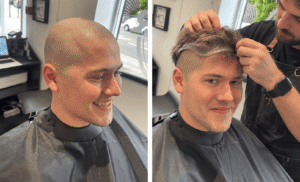
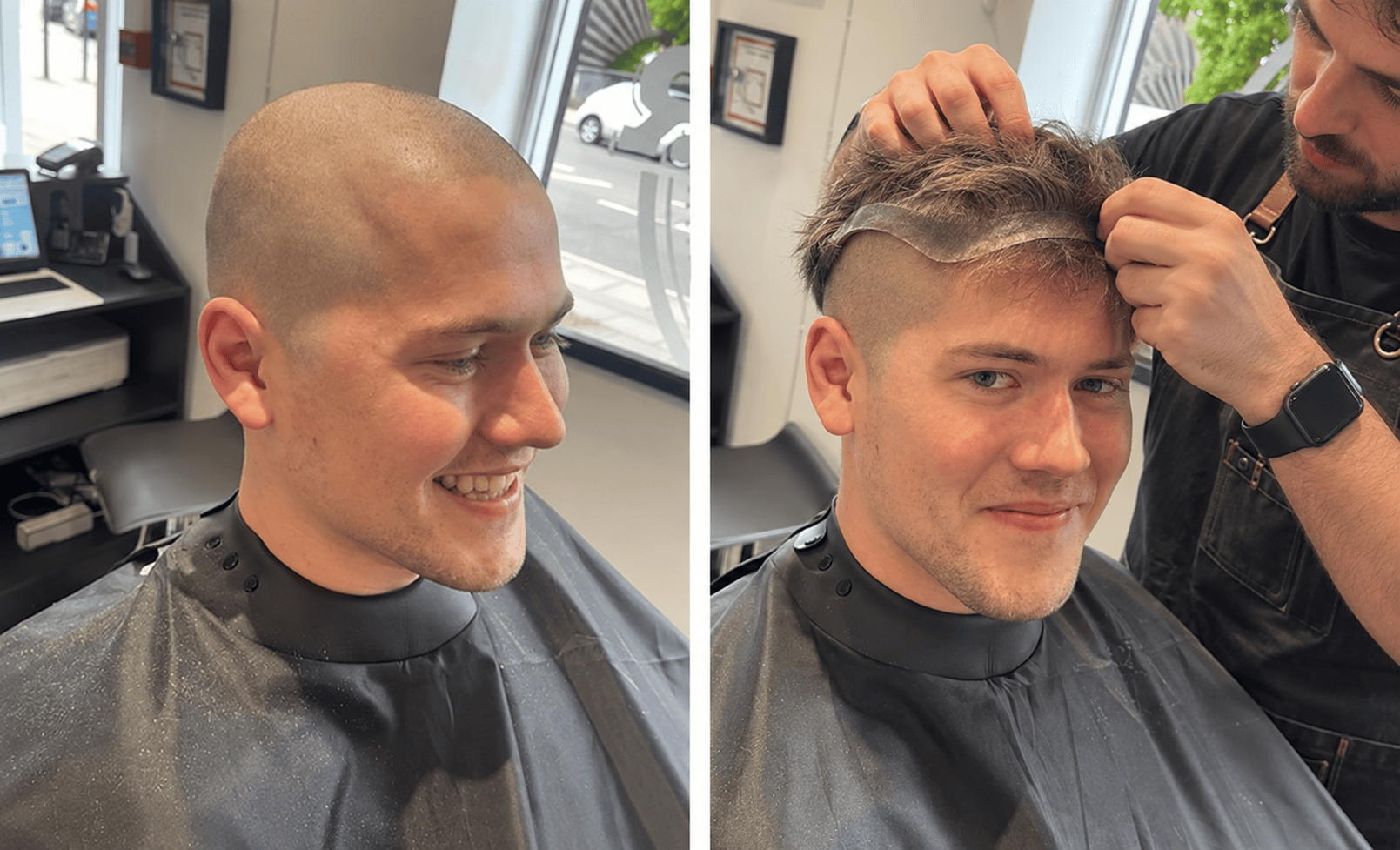
The visual change can happen as soon as the system is fitted, cut, and styled.
A thinning crown can appear covered. A receding hairline can be replaced with a different hairline. Someone who has had very little hair on top for years can suddenly have enough length to wear a completely different hairstyle.
That immediacy is one of the strongest reasons hair systems appeal to some wearers.
You’re not waiting for hair to grow.
You’re choosing what the finished hair should look like.
Modern Toupees Don’t Have to Look Like “Toupees”
The word itself carries baggage.
Mention a toupee and some people still picture an overly dense piece of hair sitting visibly on top of the head.
Modern systems can be constructed very differently.
A men’s toupee may use lace, thin polyurethane skin, monofilament, or a hybrid construction combining different materials. Hair can be ventilated into the base in ways designed to create different directions, densities, and hairline effects.
The result depends heavily on choosing appropriate specifications.
An extremely dense system with the wrong color and a poor haircut can still look obvious.
A well-matched system with realistic density and a good cut-in can produce a much more convincing transition into the wearer’s existing hair.
The technology helps, but selection and fitting still matter.
Hairline Design Has Changed the Game
The front hairline is one of the areas people notice most.
That’s especially true if you wear your hair up or back.
Fine lace can allow the front edge to sit discreetly against the skin. Thin skin systems approach the problem differently, using a translucent base intended to reduce the visual separation between scalp and system.
Neither material magically guarantees an invisible hairline.
Density matters. Hair direction matters. Attachment matters. The shape and position of the hairline matter too.
But compared with the stereotypical hairpieces many people remember, modern construction gives wearers far more control over the final appearance.
It also opens up hairstyles that expose more of the forehead.
You Can Choose the Hair You Want
Natural hair doesn’t come with an order form.
A hair system does.
That changes the relationship between hair loss and hairstyle.
Depending on the system, wearers can choose characteristics such as:
- Hair color
- Density
- Length
- Texture
- Gray percentage
- Base construction
- Hair direction
- Hairline design
This doesn’t mean every combination will look equally natural.
The best results usually work with the wearer’s age, facial features, remaining biological hair, and intended hairstyle.
But having those choices means you’re no longer limited entirely by what is still growing on top of your head.
For someone who has been designing every haircut around hiding a thinning area, that can be a significant change.
You Don’t Have to Commit to One Look Forever
Another advantage of non-surgical hair replacement is reversibility.
Shave your head and your biological hair has to grow back before you can return to your previous style.
A hair system can simply be removed.
You may wear systems for years and later decide you’re finished with them. You might change from lace to skin, reduce the density as you get older, choose a shorter hairstyle, or eventually decide you prefer being shaved.
That flexibility matters.
Trying a hair system doesn’t have to become a permanent identity.
It’s a grooming option.
TopUniqueHair Reflects How Much Choice Has Expanded
One noticeable change in today’s hair-system market is the number of constructions available for different priorities.
TopUniqueHair, for example, offers systems built around lace, skin, and other base configurations rather than treating every wearer as if he needs the same type of hairpiece.
That variety is important because a man who works out frequently may prioritize different features from someone primarily concerned with an exposed front hairline.
A first-time wearer may value easy handling, while an experienced wearer may be comfortable choosing a more delicate base to prioritize realism.
The useful question isn’t simply which system looks best in a product photo.
It’s which construction fits the way you’re actually going to wear it.
The Trade-Off Is Maintenance
Instant hair doesn’t mean maintenance-free hair.
This is where shaving clearly has an advantage.
A shaved head can be extremely straightforward to maintain. Hair systems require more involvement.
Depending on the attachment method and wearing routine, maintenance can include removing the system, cleaning adhesive residue, washing and conditioning the hair, cleaning the base, reattaching it, and restyling.
The hair itself also needs care.
Unlike growing hair, the strands in a system don’t receive natural oils from the scalp in the same way biological hair does. Overwashing, excessive heat, rough handling, and lack of conditioning can all affect how the hair looks and feels over time.
Anyone considering a system should understand this before buying one.
You’re trading some convenience for having hair.
Whether that trade is worthwhile is personal.
What About Exercise, Sweat, and Everyday Life?
One of the first questions new wearers ask is whether they can live normally in a hair system.
In many cases, normal daily activities can be compatible with wearing one, but the routine matters.
Exercise produces sweat. Hot weather produces more of it. Swimming introduces water and, depending on where you swim, chlorine or salt.
Attachment choice, base construction, maintenance frequency, and individual skin response all become relevant.
This is another reason copying someone else’s exact setup isn’t always useful.
A system worn by someone who works at a desk all week doesn’t face the same conditions as one worn by someone running outdoors every morning.
Lifestyle should influence the system, not the other way around.
A Good Cut-In May Matter More Than the System Itself
You can buy an excellent hair system and still get a disappointing result if the haircut is wrong.
The system has to become part of the wearer’s existing hair.
That transition happens during the cut-in.
A stylist can adjust the length, shape, and blending so the system works with the hair on the sides and back. The finished style should also make sense for the density and direction of the replacement hair.
This is where restraint can make a big difference.
Trying to recreate the thickest hairstyle you had at 18 isn’t always the most natural-looking approach.
Sometimes slightly lower density and a simpler haircut create a much more believable result.
There’s Also a Learning Curve
The first week with a hair system may feel very different from the tenth.
New wearers have to learn how to position it, style it, wash it, sleep in it, and understand when maintenance is needed.
They may experiment with different tapes or adhesives.
They may discover that the hairstyle they originally wanted isn’t actually the easiest one for their routine.
That’s normal.
Choosing a first system isn’t about designing the perfect setup you’ll use forever.
It’s about creating a reasonable starting point.
Experience will tell you what to change next time.
Toupee or Shaved Head?
There’s no universal answer.
Shaving makes sense for men who like the appearance and value simplicity. There’s no system to replace, no adhesive to clean, and no hairpiece to maintain.
A toupee serves a different priority.
It makes sense for someone who wants the appearance and styling possibilities of hair enough to accept the maintenance that comes with it.
Think about what matters more to you:
Simplicity or styling freedom?
Minimal maintenance or having hair?
A shaved aesthetic or a hairstyle you already know you like?
Those questions are more useful than asking what other men think you “should” do.
Hair Loss Doesn’t Have to Choose Your Hairstyle
Hair loss changes what naturally grows on your head.
It doesn’t necessarily have to decide what you look like afterward.
Some men embrace a shaved head. Some keep their remaining hair. Others explore different approaches to hair restoration or replacement.
Modern toupees have simply made the last category more flexible than it used to be.
They offer something very specific: an immediate, non-surgical way to wear hair again, with considerable control over its color, density, texture, length, and style.
That comes with maintenance and cost, so it won’t suit everyone.
But neither does shaving.
The real change isn’t that every balding man suddenly needs a hair system.
It’s that “just shave it” is no longer the only practical answer.