
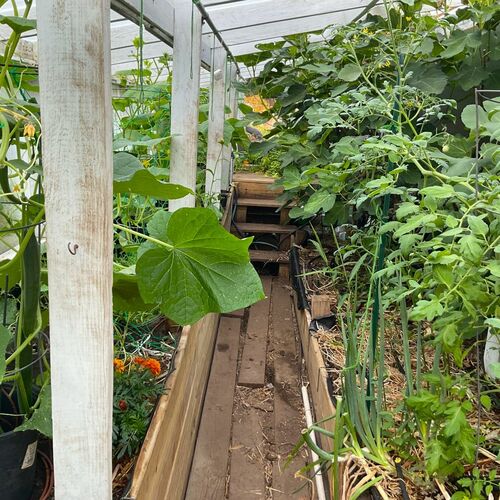
Today’s GPOD takes us to Dunstable, Massachusetts, for something a little different. Rather than touring a traditional garden, we’re looking inside a backyard greenhouse designed to extend the growing season through winter and summer alike. Here’s what she has to say:
The pandemic shutdown in 2020 forced all of our family members to stay home, providing a rare opportunity to make our dream of building a unique passive-solar greenhouse in the backyard come true.
This experimental project required a massive amount of digging. With everyone home for months, we were able to make it happen. It was a nerdy project involving lots of planning and calculations, but the execution required plenty of muscle power as well.
By the time we came out of the pandemic, we had built a one-of-a-kind greenhouse that has successfully provided many benefits to the garden: a place to overwinter subtropical plants, start seedlings early in spring, and grow vegetables and fruits throughout the year.
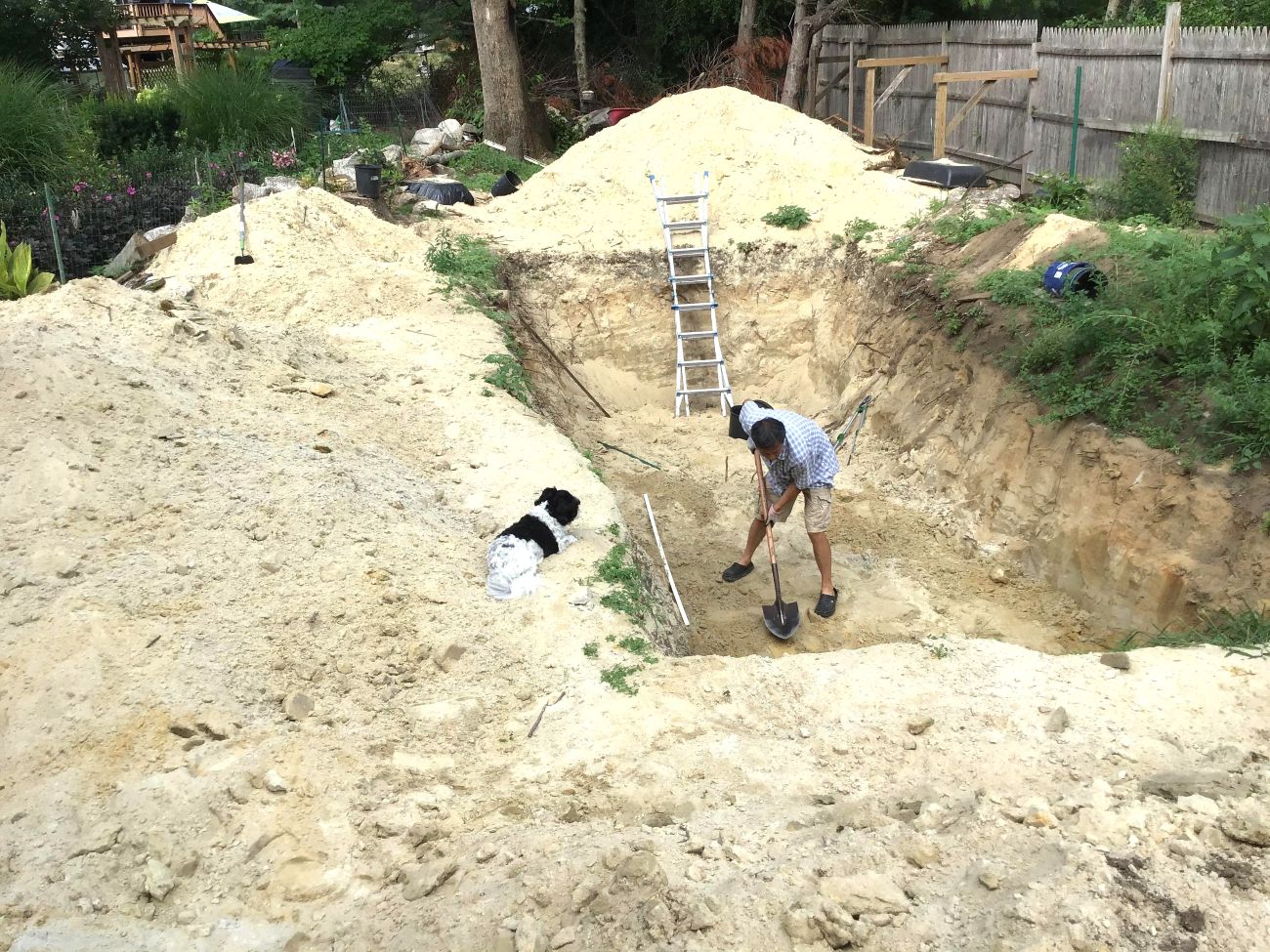
Digging began with a hole nearly 6 feet deep, 11 feet wide, and 26 feet long. Four of us took part with only two shovels: my nephew; son-in-law; husband, Philip; and me. Philip initially used power tools to help with the digging, but everyone preferred the hard labor as a workout. It took a little more than a month to finish. Our Havanese, Luke, 3 years old at the time, quietly watched from above while Philip worked. This photo was taken July 28, 2020. A 24-foot-long by 9-foot-wide greenhouse would eventually be constructed within the hole.
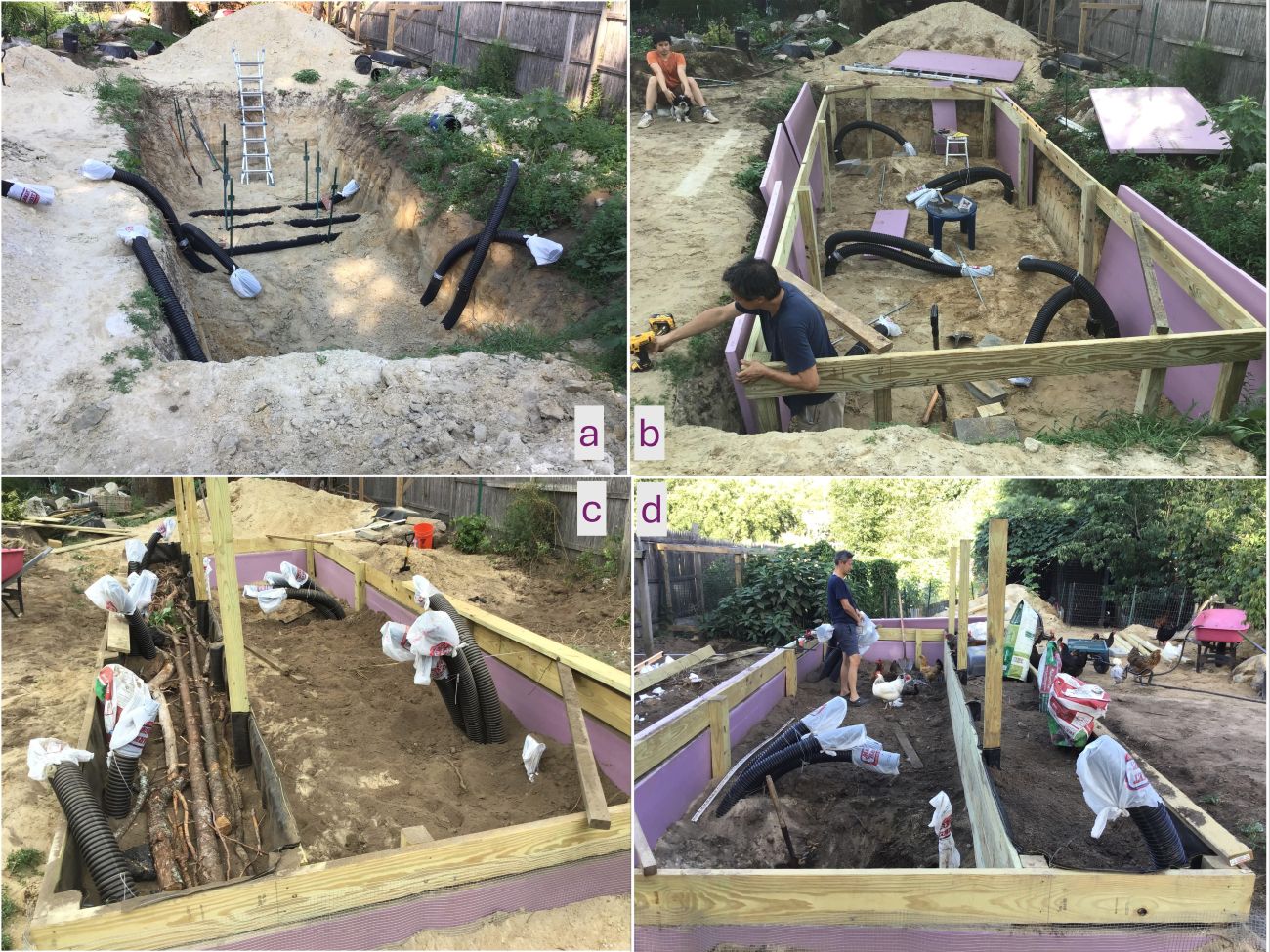
Construction continued underground. Eight 35-foot-long earth tubes were buried in two layers, with their ends extending aboveground to circulate air and exchange heat with the soil about 5 feet below (A). Underground framing and insulation followed, along with metal mesh buried around the walls to discourage animals from digging inside (B). Large logs were laid beneath the south growing bed (C), and chickens were eventually invited in to help fertilize the soil (D).
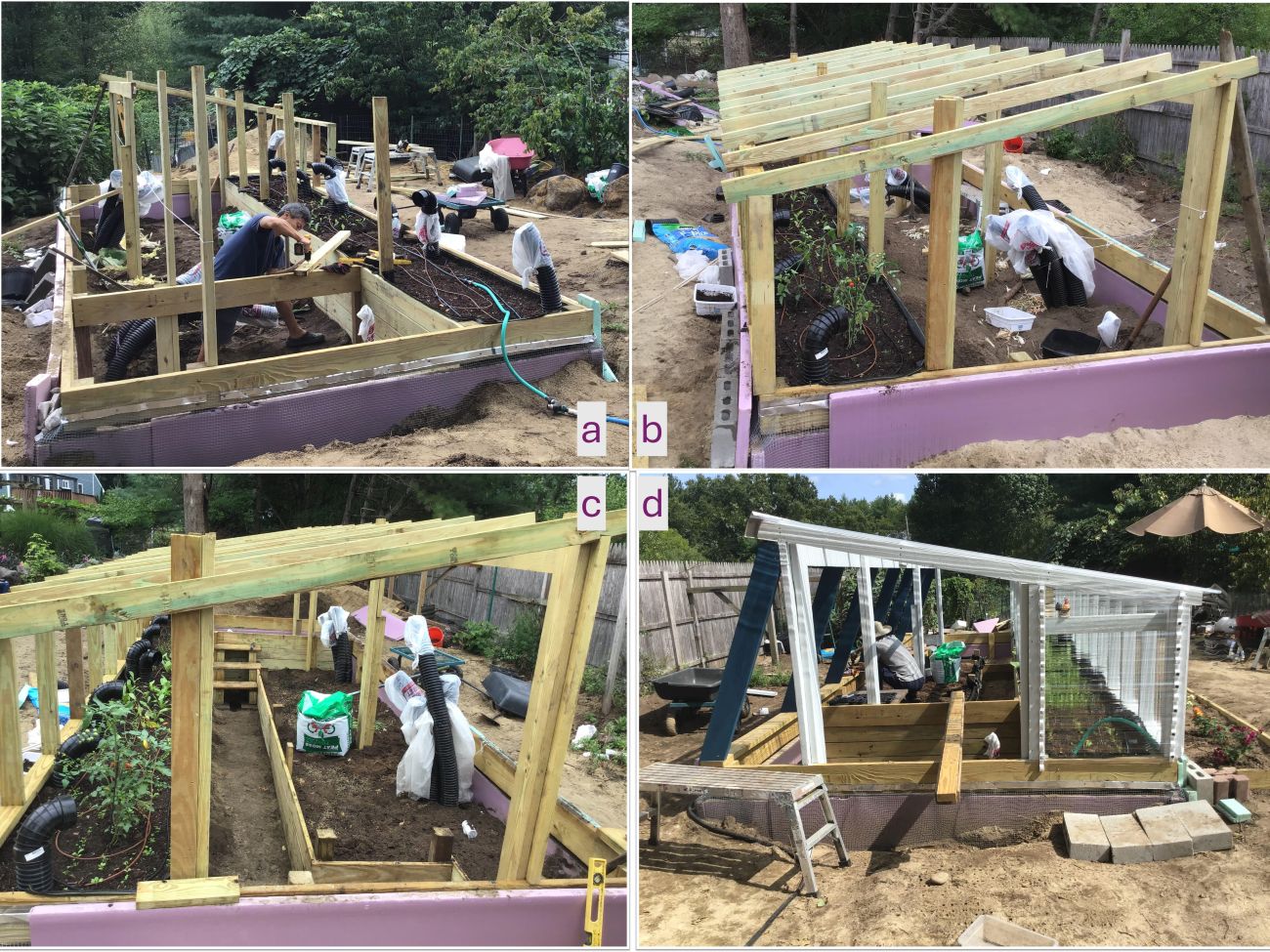
Aboveground construction began with the 30-inch-wide south growing bed, where drip irrigation was installed before vegetables were planted (A). A 4½-foot-wide growing bed was then constructed on the north side and filled with soil (B). The walkway between the two beds sits 2½ feet below ground level, allowing the aboveground structure to remain only about 5½ feet high and helping to stabilize temperatures (C). The structure was painted before the wall and roof panels were installed, and space was reserved for a 6½-by-4-by-3-foot water tank that collects rainwater from the roof and adds thermal mass (D).
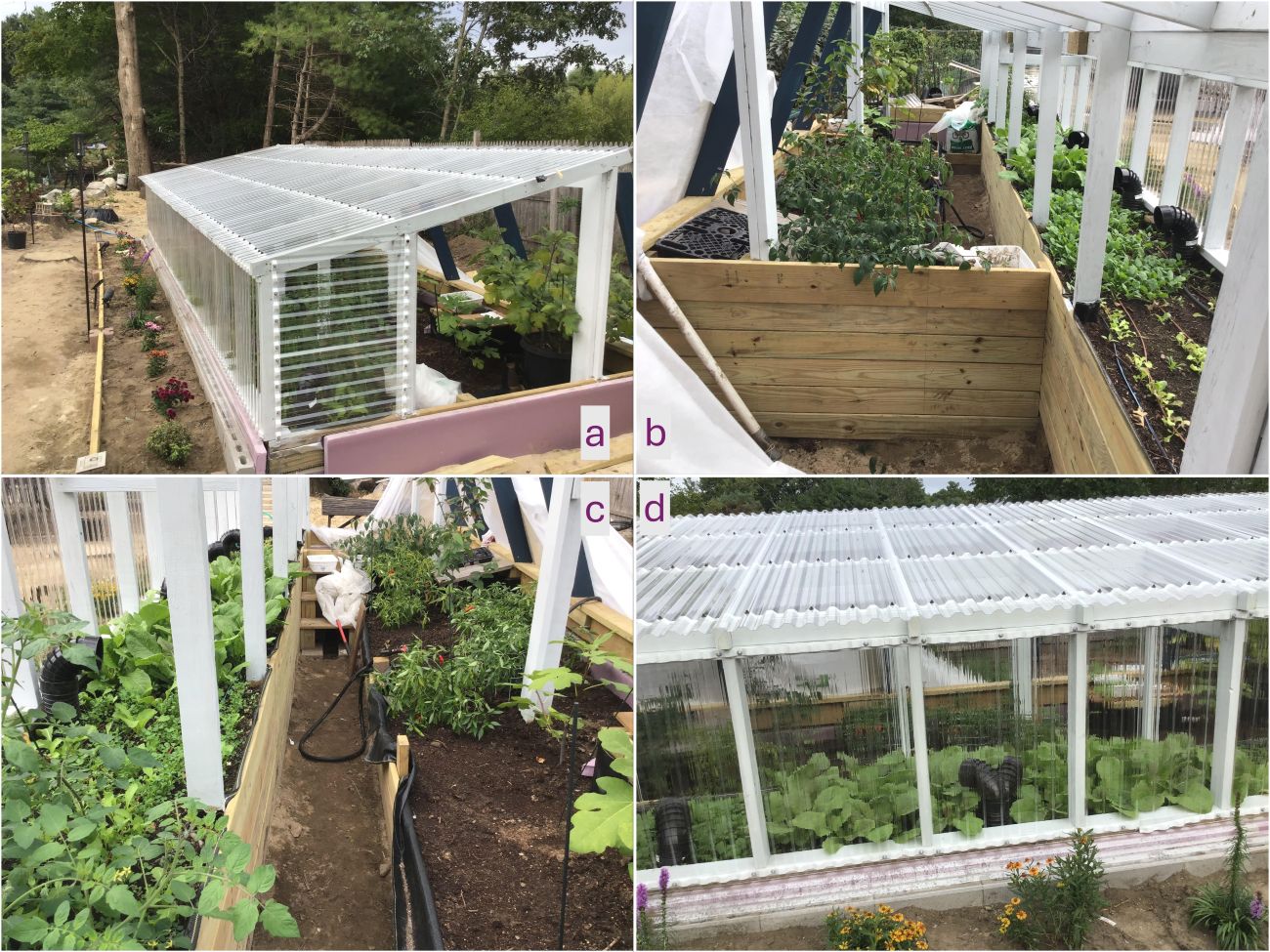
With the roof panels installed, a fig tree (Ficus carica, Zones 7–10) and more vegetables were moved into the greenhouse. These four views, all taken September 18, 2020, show the structure from different angles as construction neared completion (A–D).
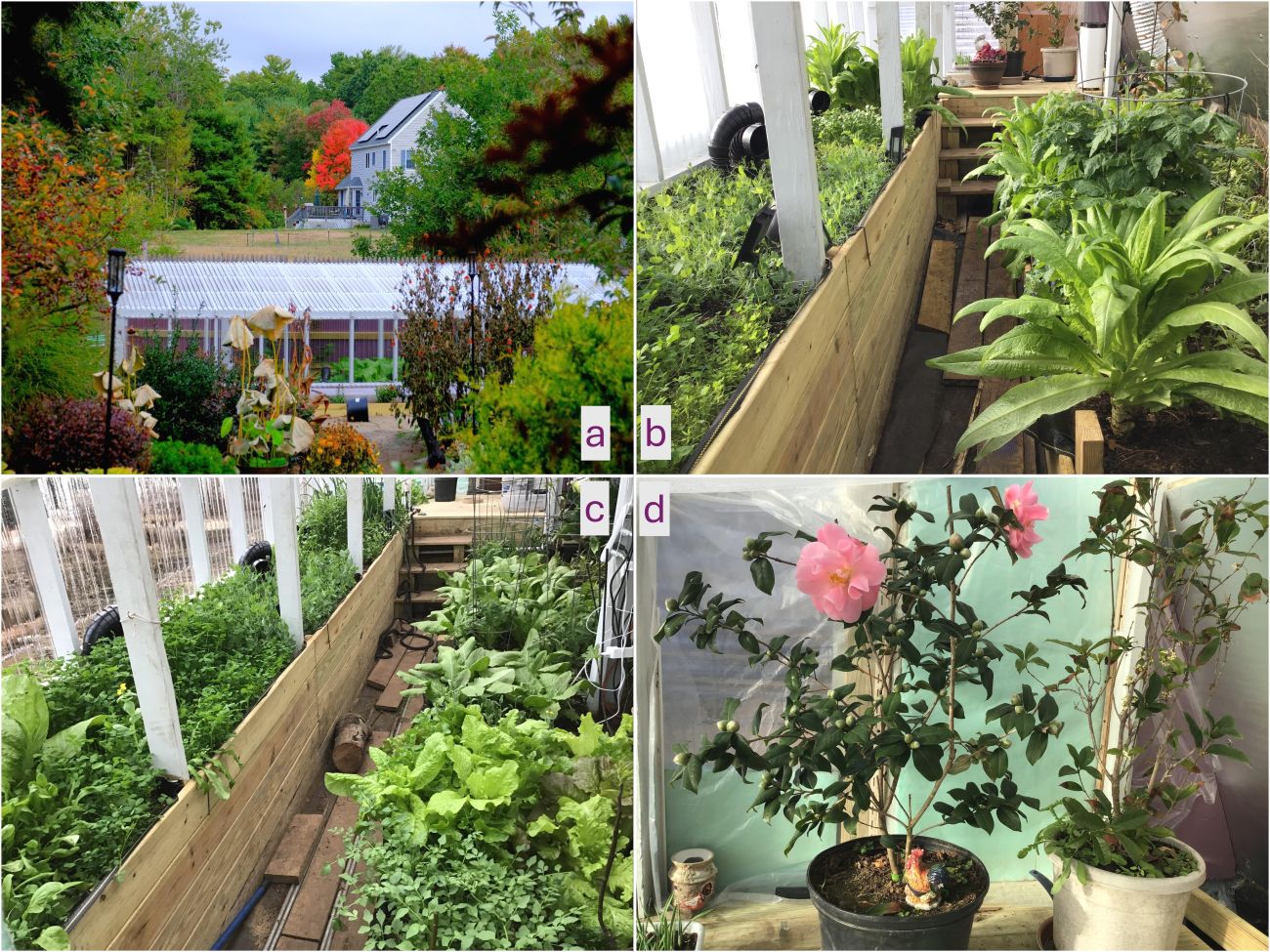
All wall and roof panels were installed just before the first autumn frost. The completed greenhouse is shown behind frost-damaged plants on September 27, 2020 (A). The growing season continued inside through winter, as seen in views taken between January 1 and March 26, 2021 (B–D). During freezing weather, two blowers using a combined 76 watts circulate air through the eight buried earth tubes, helping keep the greenhouse above 33°F. In summer, the same system brings cooler air from about 5 feet underground.
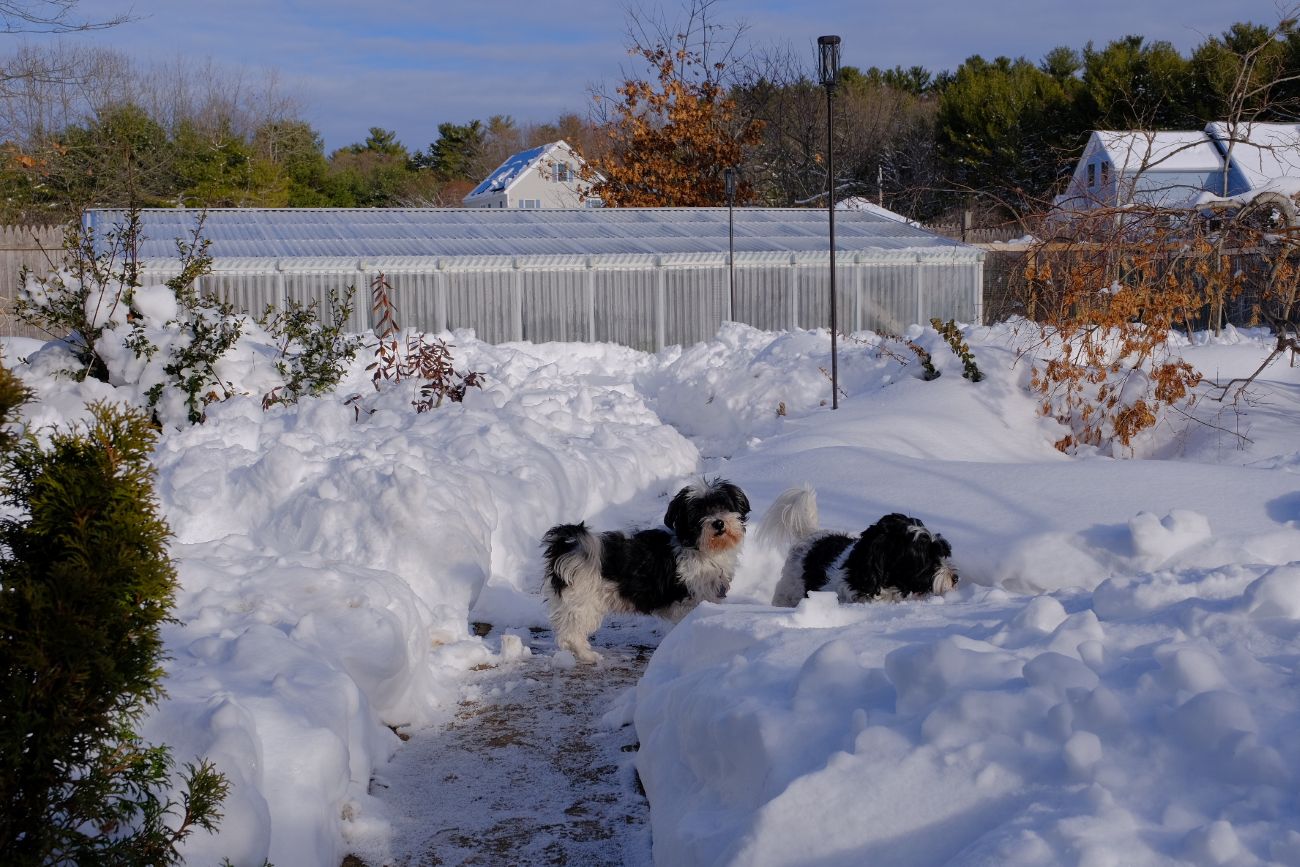
Luke and Deedee pose in front of the greenhouse on February 4, 2021, surrounded by a decidedly wintry landscape.
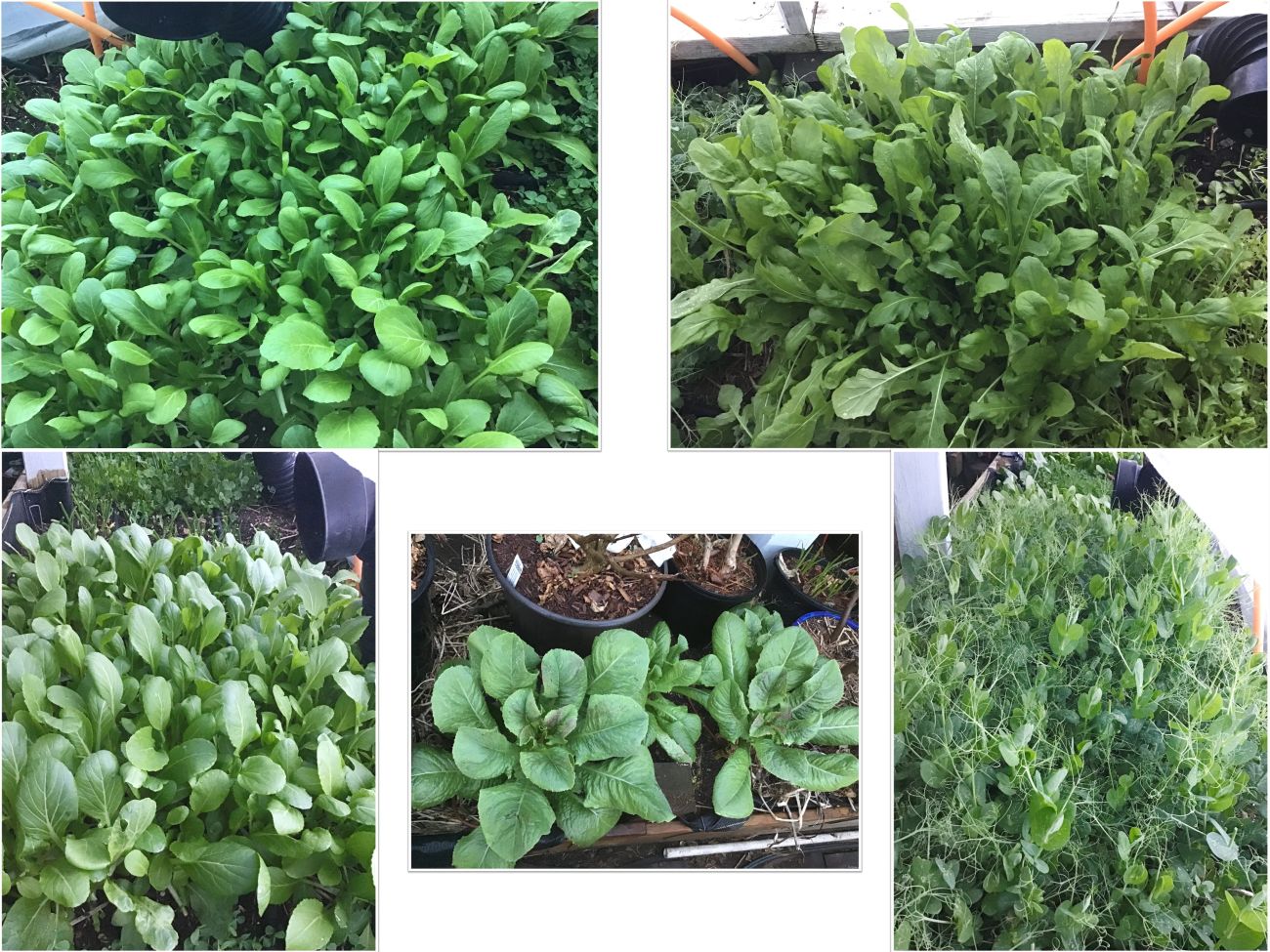
Leafy vegetables continue growing inside the greenhouse through winter, extending the harvest well beyond the outdoor growing season.
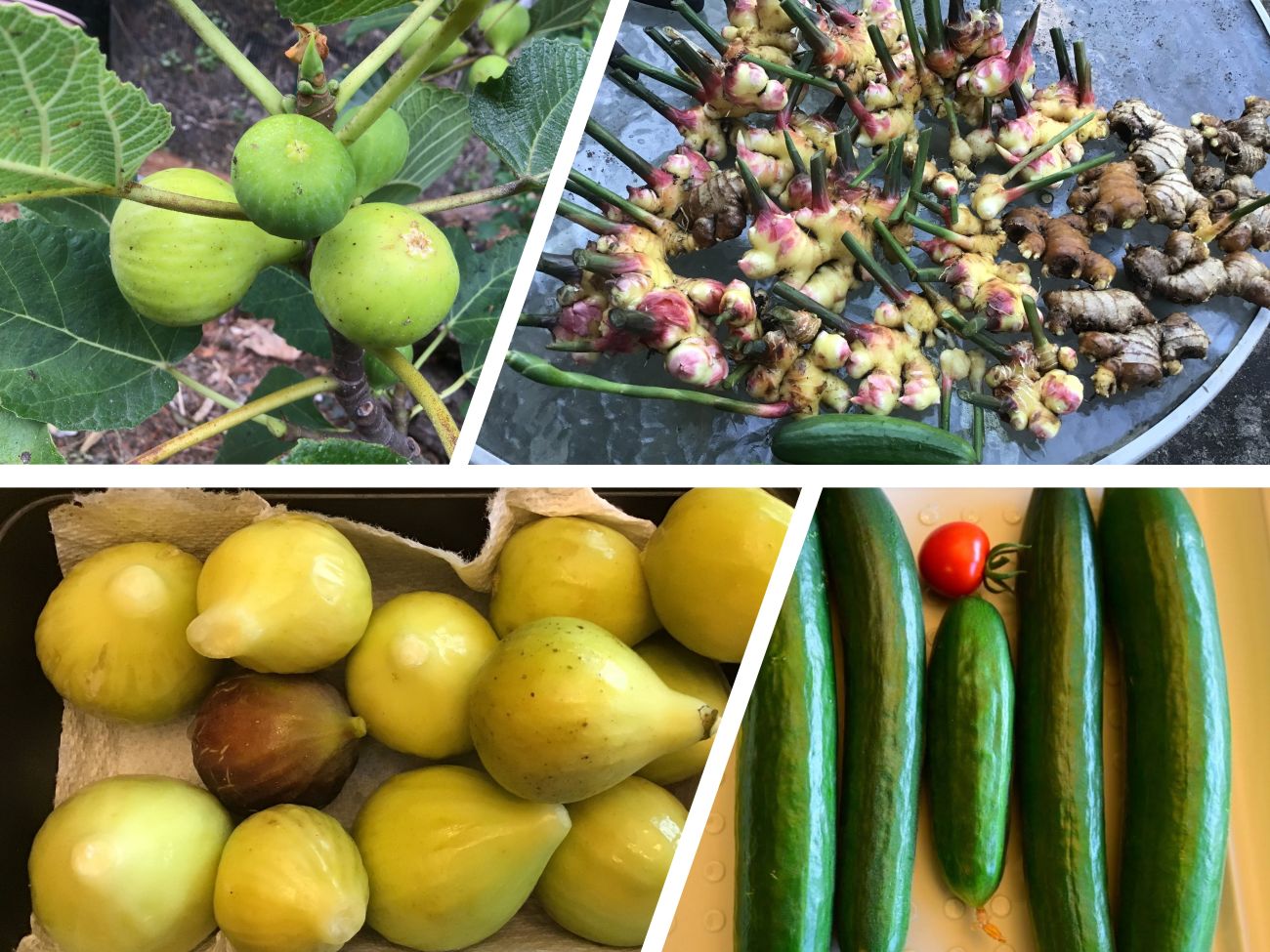
The summer harvest includes figs, ginger (Zingiber officinale, Zones 9–12), cucumbers (Cucumis sativus, annual), and other vegetables grown inside the greenhouse.
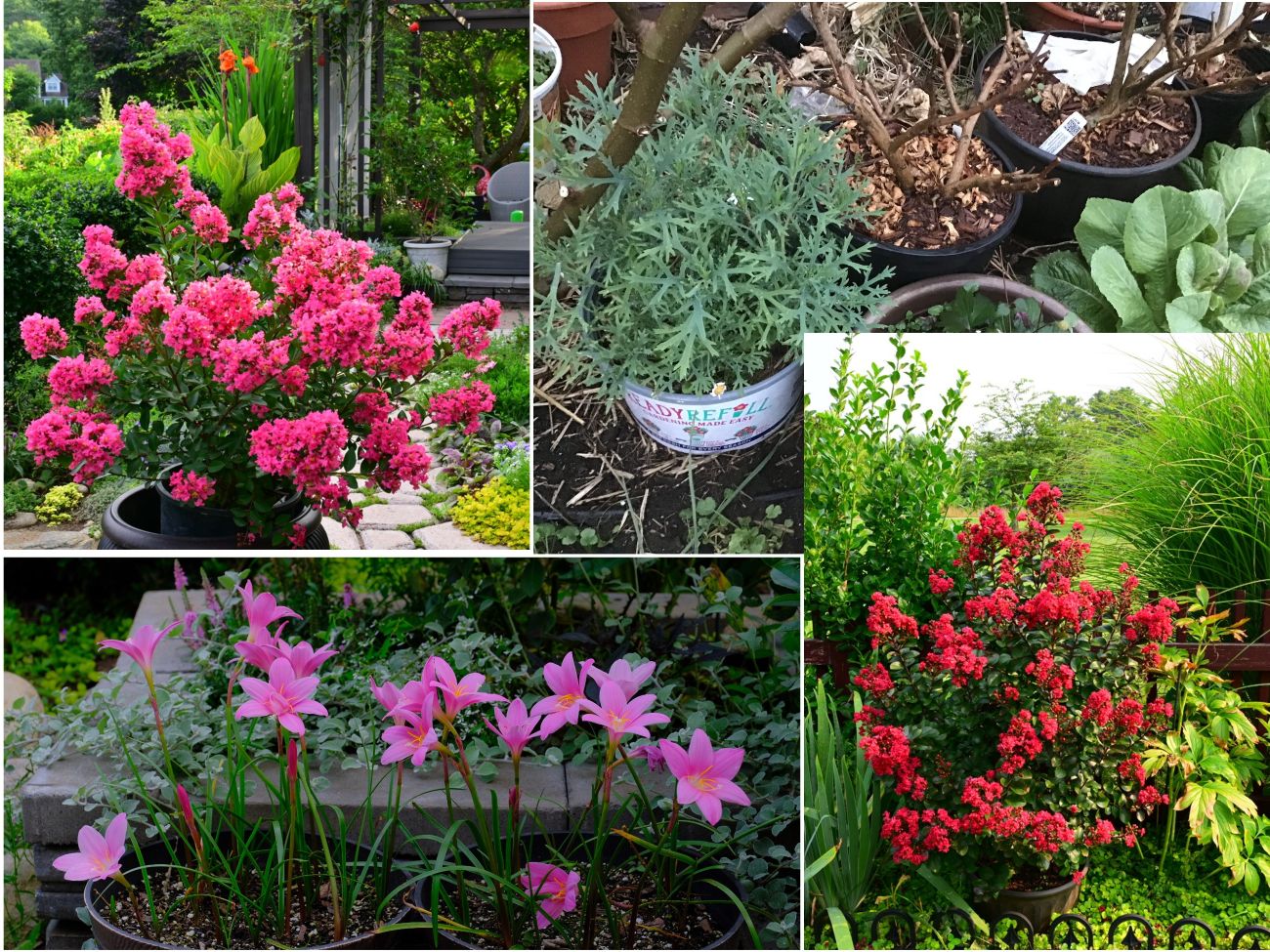
The greenhouse provides winter protection for plants that are not reliably cold hardy in Dunstable, including crape myrtle (Lagerstroemia indica, Zones 6–9), rain lily (Zephyranthes cvs., Zones 7–11), gardenia (Gardenia jasminoides, Zones 8–11), and marguerite daisy (Argyranthemum frutescens, Zones 10–11). Potted plants overwinter beneath the bare branches of the fig tree, while summer views show crape myrtle and rain lilies back in bloom.
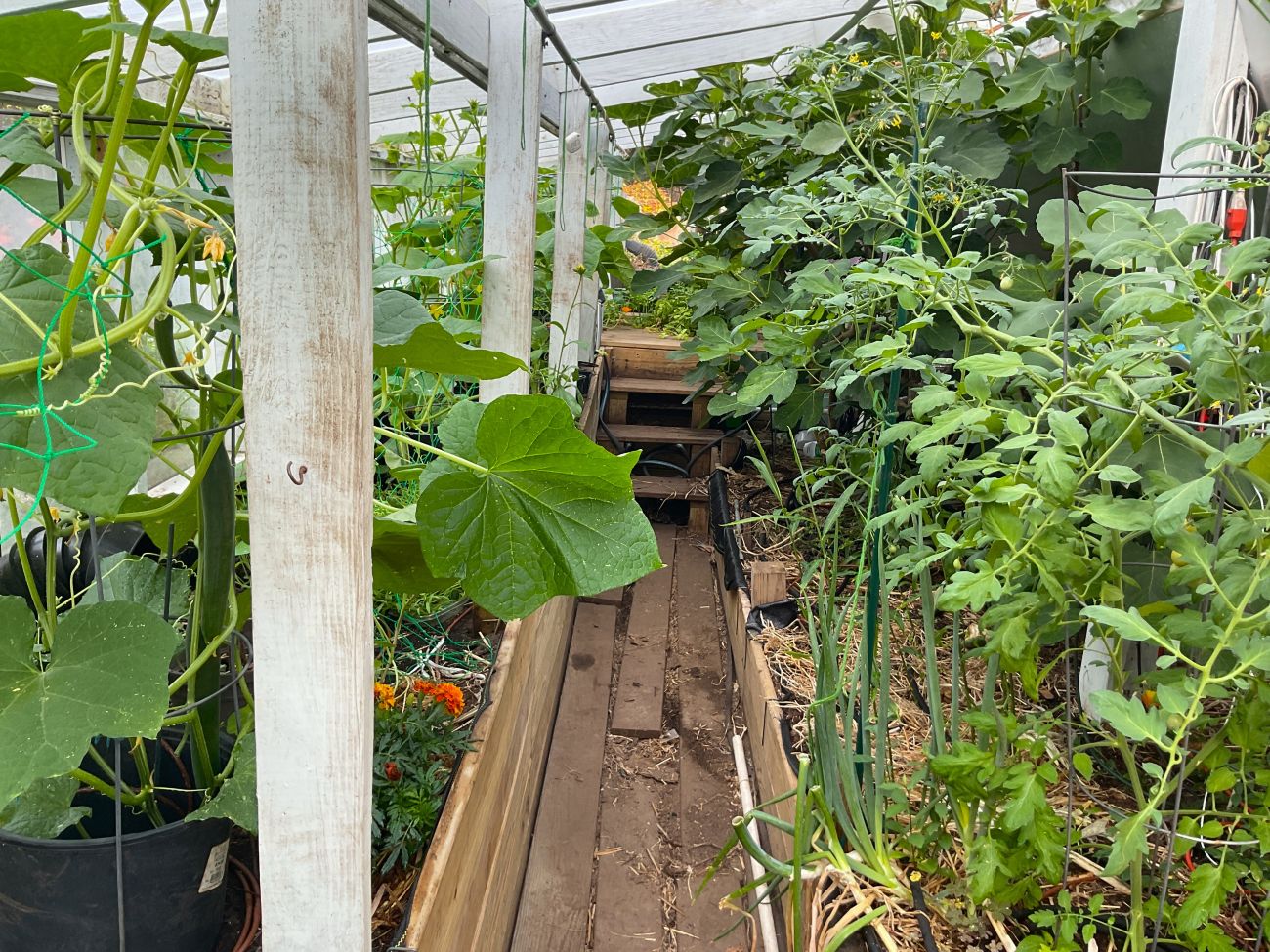
This photo, taken July 5, 2026, shows cucumbers, cherry tomatoes (Solanum lycopersicum, annual), ginger, a fig tree, and green onions (Allium fistulosum, Zones 6–9) growing inside the greenhouse. We grow our cucumbers only inside because cucumber beetles cause too much damage outdoors. Marigolds (Tagetes cvs., annual) planted beside the cucumbers have helped keep pill bugs in the neighboring bed, where they decompose the straw mulch. So far, the cucumber foliage is healthy, and the fruits are beautiful and delicious.
Thank you, Tingshu, for taking us through this remarkable project! It’s incredible to see what you’ve created and how the greenhouse continues to produce food and protect plants throughout the year.
We want to see YOUR garden!
Have photos to share? We’d love to see your garden, a particular collection of plants you love, or a wonderful garden you had the chance to visit!
To submit, fill out the Garden Photo of the Day Submission Form.
You can also send 5–10 photos to [email protected] along with some information about the plants in the pictures and where you took the photos. We’d love to hear where you are located, how long you’ve been gardening, successes you are proud of, failures you learned from, hopes for the future, favorite plants, or funny stories from your garden.
Do you receive the GPOD by email yet? Sign up here
Fine Gardening Recommended Products
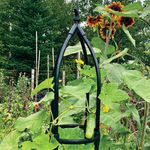
Lee Valley Garden Obelisks
Fine Gardening receives a commission for items purchased through links on this site, including Amazon Associates and other affiliate advertising programs.
Sturdy yet lightweight, these obelisks provide ample support for climbing plants while being easy to install and move. The medium obelisk stands 68 1/2″ high overall with a diameter of about 9 1/2″, compact enough for smaller containers indoors or out. The large size stands 86 1/2″ high with a diameter of 15 3/4″, ideal for larger outdoor spaces and containers.
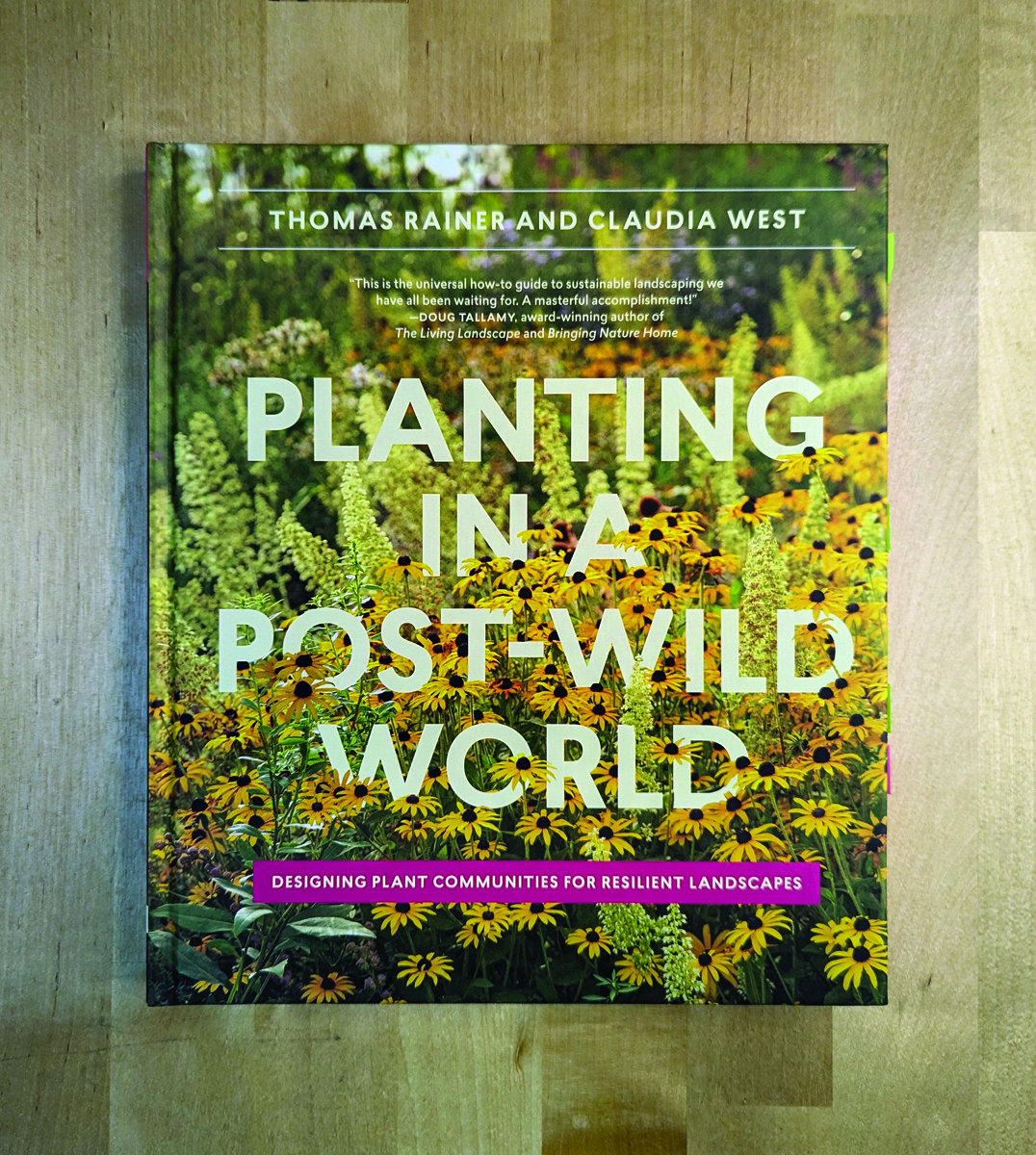
Planting in a Post-Wild World: Designing Plant Communities for Resilient Landscapes
Fine Gardening receives a commission for items purchased through links on this site, including Amazon Associates and other affiliate advertising programs.
Featuring gorgeous photography and advice for landscapers, Planting in a Post-Wild World by Thomas Rainer and Claudia West is dedicated to the idea of a new nature—a hybrid of both the wild and the cultivated—that can nourish in our cities and suburbs.
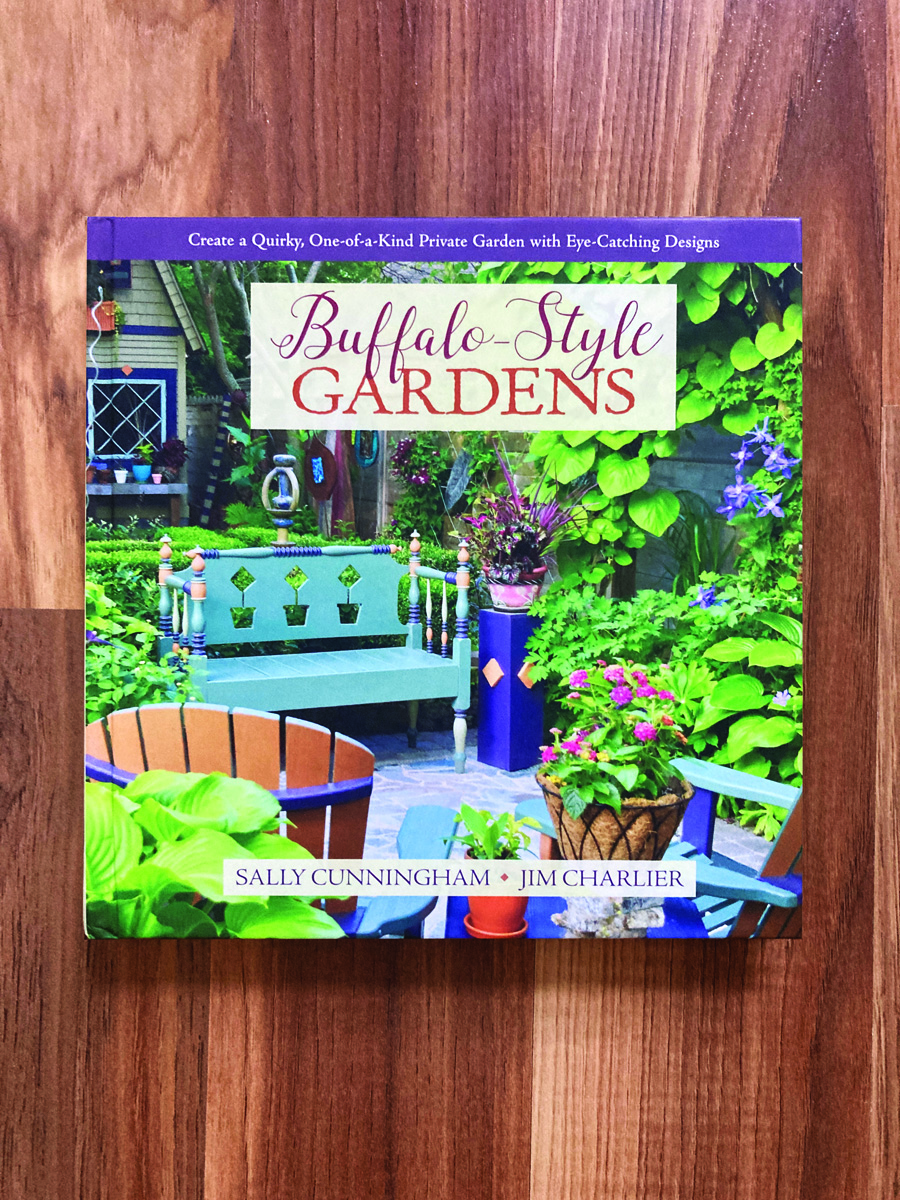
Buffalo-Style Gardens: Create a Quirky, One-of-a-Kind Private Garden with Eye-Catching Designs
Fine Gardening receives a commission for items purchased through links on this site, including Amazon Associates and other affiliate advertising programs.
Buffalo-Style Gardens is a one-of-a-kind, offbeat garden design book that showcases the wildly inventive gardens and gardeners of Buffalo – and offers readers “the best of the best” ideas to use in their own small-space gardens.