


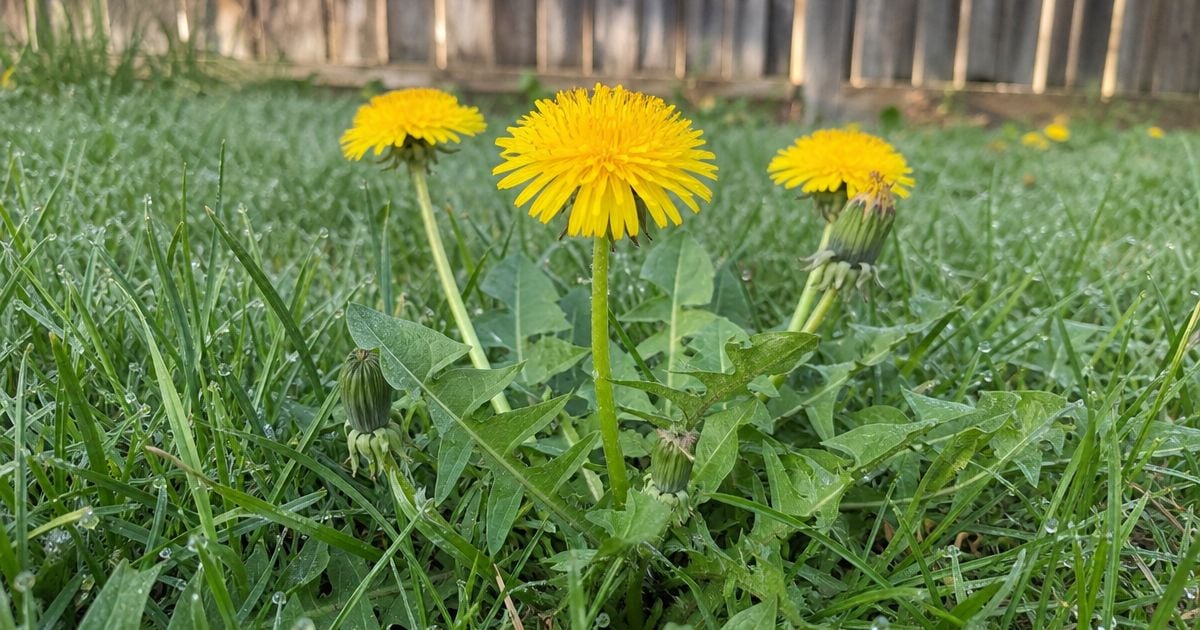
One cup of raw dandelion greens has more than three times the Daily Value of vitamin K.
Every spring, homeowners spend time and money trying to remove dandelions.
Yet one cup of raw, chopped dandelion greens holds about 103 milligrams of calcium and more than three times the Daily Value of vitamin K.
That is only the start. Here is what the research shows, where it stops, and how to use the plant safely.
A Surprisingly Nutritious Backyard Plant
USDA FoodData Central lists raw dandelion greens (Taraxacum officinale) at about 25 calories per cup. A cup of chopped leaves weighs roughly 55 grams.
| Nutrient | Per cup, raw | % Daily Value |
|---|---|---|
| Vitamin K | 428 mcg | 357% |
| Vitamin A | 279 mcg RAE | 31% |
| Vitamin C | 19.3 mg | 21% |
| Iron | 1.7 mg | 9% |
| Calcium | 103 mg | 8% |
| Potassium | 218 mg | 5% |
| Fiber | 1.9 g | n/a |
Figures are for one cup (55 g) of raw, chopped greens. Daily Values are the FDA’s.
Vitamin K is the standout. One cup supplies about 3.6 times the 120-microgram Daily Value.
Vitamin K helps activate osteocalcin, a protein found in bone. The NIH Office of Dietary Supplements says it is still unclear whether vitamin K supplements change osteoporosis risk.
So think of dandelion greens as a nutrient-rich vegetable, not a bone treatment. Cooked greens have a different nutrient profile.
The Roots Hold Another Surprise
Dandelion roots are the plant’s main energy store. A 2026 review in the International Journal of Food Science and Technology says they hold inulin, a carbohydrate that gut bacteria ferment.
That makes inulin a prebiotic, or food for gut microbes. In one lab test, a dandelion root infusion boosted the growth of 14 Bifidobacterium strains. Human trials are still limited.
The European Medicines Agency notes that root inulin content changes with the season. Inulin ferments in the colon and can cause gas, so go easy at first.
Roasted dandelion root has long stood in for coffee. A Cleveland Clinic dietitian notes the drink has no caffeine, and NC State Extension says roasted roots replaced coffee during World War II.
What Scientists Are Studying
Researchers keep studying dandelion, but every finding comes with limits. The type of study matters more than the headline.
| Topic | Type of study | What was found |
|---|---|---|
| Liver scarring (2010) | Mice, injected root extract | Less scarring after chemical liver damage |
| Skin cells (2015) | Human cells in a dish | Leaf and flower extracts reduced UVB damage markers; root was weaker |
| Urination (2009) | 17 healthy women, one day, no placebo | More urination after the first dose, no change after the third |
| Blood sugar (2024) | Lab test of root extracts | Slowed one carbohydrate enzyme, far less than a diabetes drug did |
A 2025 review of liver research says large human trials are still missing. A 2016 review found no human trial of dandelion for diabetes.
The National Center for Complementary and Integrative Health finds no compelling evidence that dandelion treats any health condition. It calls the amounts found in food likely safe.
Treat these studies as reasons for curiosity, not as medical advice.
Five Things You Probably Didn’t Know About Dandelions
- One flower is many. Each yellow “petal” is a tiny flower called a floret. Cornell counts 100 to 300 on one head. See how ray and disc florets differ in other composite flowers.
- Roots can run deep. Most taproots are 6 to 18 inches long, says University of Illinois Extension. The deepest on record reaches 6.5 feet, so don’t expect that from every plant.
- Seeds can form without fertilization. Most dandelions in North America do this, a trick called apomixis. Each seed is a genetic copy of its parent.
- Broken roots can resprout. Root pieces as small as a quarter inch can start new plants, and even a 1-inch piece left behind can regrow. That is why vinegar sprays burn leaves without killing the taproot.
- They feed early insects. Dandelions bloom when few other flowers are open, so bees use the nectar and pollen. Honeybees cannot live on dandelions alone, though.
Five Practical Ways to Use Dandelions
- Young leaves, raw. Pick leaves before the flower buds open for the mildest taste. Toss a few into a mixed salad. Heat and dry spells make leaves bitter.
- Older leaves, cooked. Boil them until tender, changing the water once to mellow the flavor, or cook them like spinach.
- Flowers. Blossoms taste sweetest early in the season and close up fast, so use them right away. They can be made into jelly.
- Roots, roasted. Roasted roots make a caffeine-free, coffee-like drink. Go easy, since roots are reported to act as a diuretic and a laxative.
- Your own patch. Sow seed from early spring through late summer, 6 to 9 inches apart. Use a pot sized for greens and herbs deep enough for the taproot. Greens are ready in 85 to 95 days. Seed sold as “Italian dandelion” is usually chicory.
Can You Eat Dandelions From Your Lawn?
Only if you are sure of the plant and the ground. Follow these steps:
- Identify it. A dandelion has one unbranched, hollow, leafless stem per flower. Catsear, a look-alike, has branched stems and hairy leaves. When in doubt, leave it out.
- Skip treated lawns. Never eat plants sprayed with herbicides or pesticides.
- Avoid roads. Soil near busy, older streets can hold lead, and dandelions accumulate heavy metals from soil.
- Stay away from pet areas. Keep harvests away from places pets and their waste reach.
- Wash twice. Rinse in cool running water, changing the water each time. Leaves hold soil and dust. Skip soap.
Greens in food amounts are likely safe for most people. Ask a doctor first if any of these apply:
- Allergies. People allergic to ragweed, daisies or marigolds may react. The sap can also irritate skin.
- Medicines. Blood thinners, diabetes drugs and water pills may interact in theory. Concentrated extracts and supplements are not the same as salad greens.
- Warfarin. Keep vitamin K intake about the same each day. Don’t suddenly start or stop eating greens.
- Gallbladder or bile duct problems. European regulators advise against dandelion herbal products when bile ducts are blocked.
- Pregnancy and breastfeeding. Little is known about amounts above normal food use.
Should You Leave Dandelions in Your Garden?
A plant can be useful and still be unwelcome. Dandelions feed early insects and fill salad bowls, yet many gardeners want a tidy lawn.
If you remove them, dig out as much taproot as you can. Pieces left behind can regrow.
Want more wild food? Browse other edible backyard weeds.
Frequently Asked Questions
Are dandelions edible?
Yes. Leaves, buds, flowers and roots are all edible. Young leaves picked before the flowers open taste mildest. Harvest only from places never treated with herbicides or pesticides, and wash everything well before eating.
What nutrients are in dandelion greens?
One cup of raw, chopped greens (about 55 grams) has about 25 calories, 103 mg calcium and 428 mcg vitamin K. It also has 279 mcg vitamin A (RAE), 19.3 mg vitamin C and 1.7 mg iron.
Are dandelions a good source of vitamin K?
Yes. One raw cup supplies about 3.6 times the Daily Value. People taking warfarin should keep their vitamin K intake about the same each day and ask their prescriber before changing how much they eat.
Can you eat dandelions from your lawn?
Only from a lawn never sprayed with herbicides or pesticides, away from roads and pet areas. Be certain of the plant’s identity, and wash the leaves twice in cool water. If you are unsure, skip them.
Why do dandelions keep growing back?
The taproot can resprout from small pieces, and one plant releases many wind-blown seeds. Most North American dandelions make seed without fertilization, so a single plant can start a new patch.
Does roasted dandelion root contain caffeine?
No. Dandelion root has no caffeine, though its roasted flavor is similar to coffee. Roots are reported to act as a diuretic, so drink it in moderation.