If you’re looking past vegetables, fruits, and herbs because you think they only belong in the kitchen garden, you’re missing a whole range of interesting, versatile possibilities for creating exciting ornamental containers. Edible plants can bring striking foliage, flowers, fruit, and structure to a container, even when producing a harvest isn’t the primary goal.
As a designer, I create vignettes in my gardens that engage the senses. It’s no different when composing a container or a grouping of containers. For now, set aside flavor and look at their other sensory qualities: visual appeal, fragrance, texture, and even the sounds of foliage and seed heads moving in the wind.
Read More: Best Sensory Garden Plants for Sound, Touch, Taste & Smell
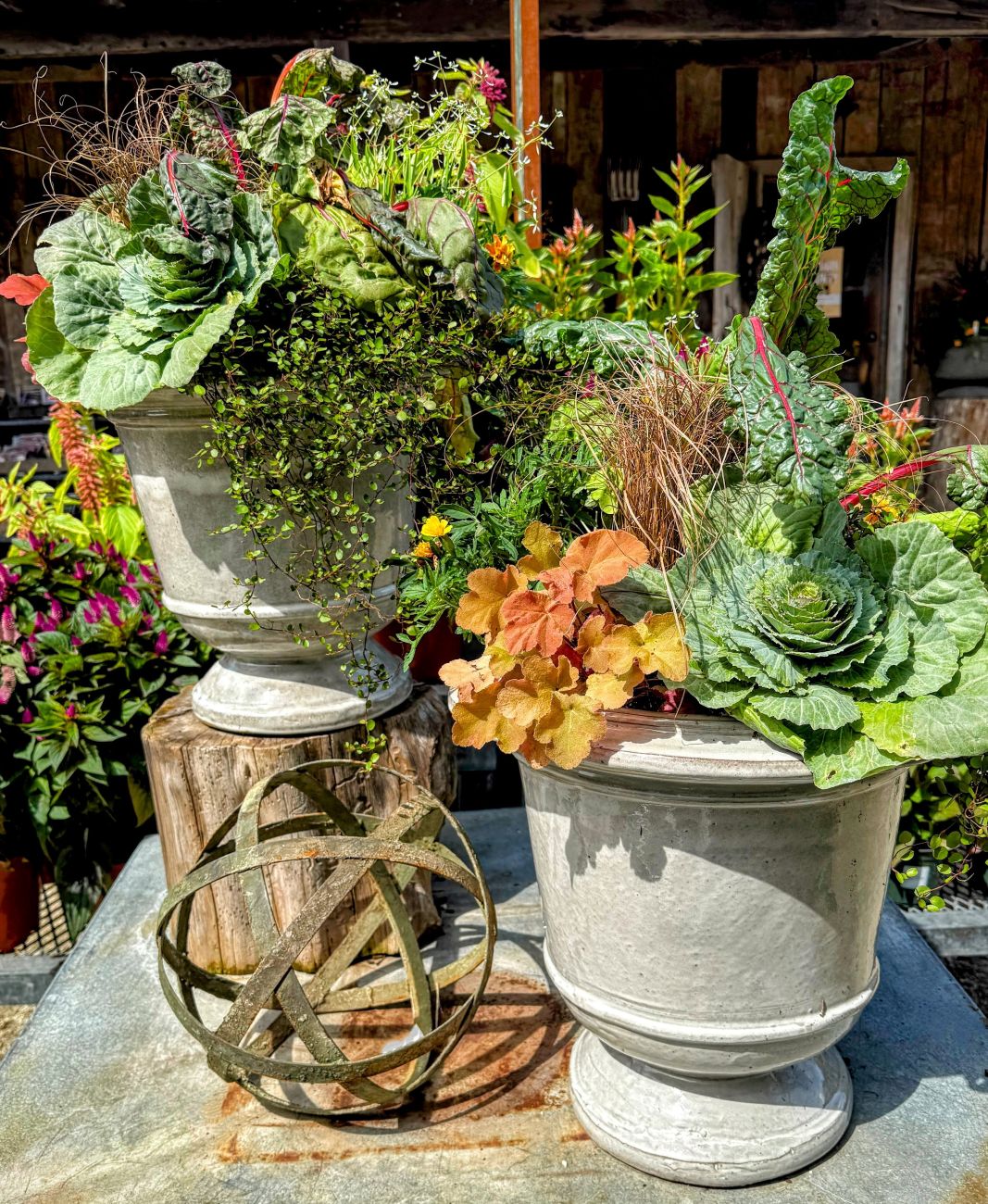
Tips for Designing with Ornamental Edibles in Containers
Successful container design balances aesthetics with the growing needs of individual plants. Before exploring specific edimentals—plants valued for both their edible and ornamental qualities—consider a few practical guidelines.
Know your goals
Growing vegetables in containers demands certain conditions if you want a good harvest. But when appearance takes priority over production, you can make different choices. For instance, allowing lettuce and other leafy greens to bolt can introduce interesting flower stalks and seed heads, even though the leaves may become bitter and less desirable for eating.
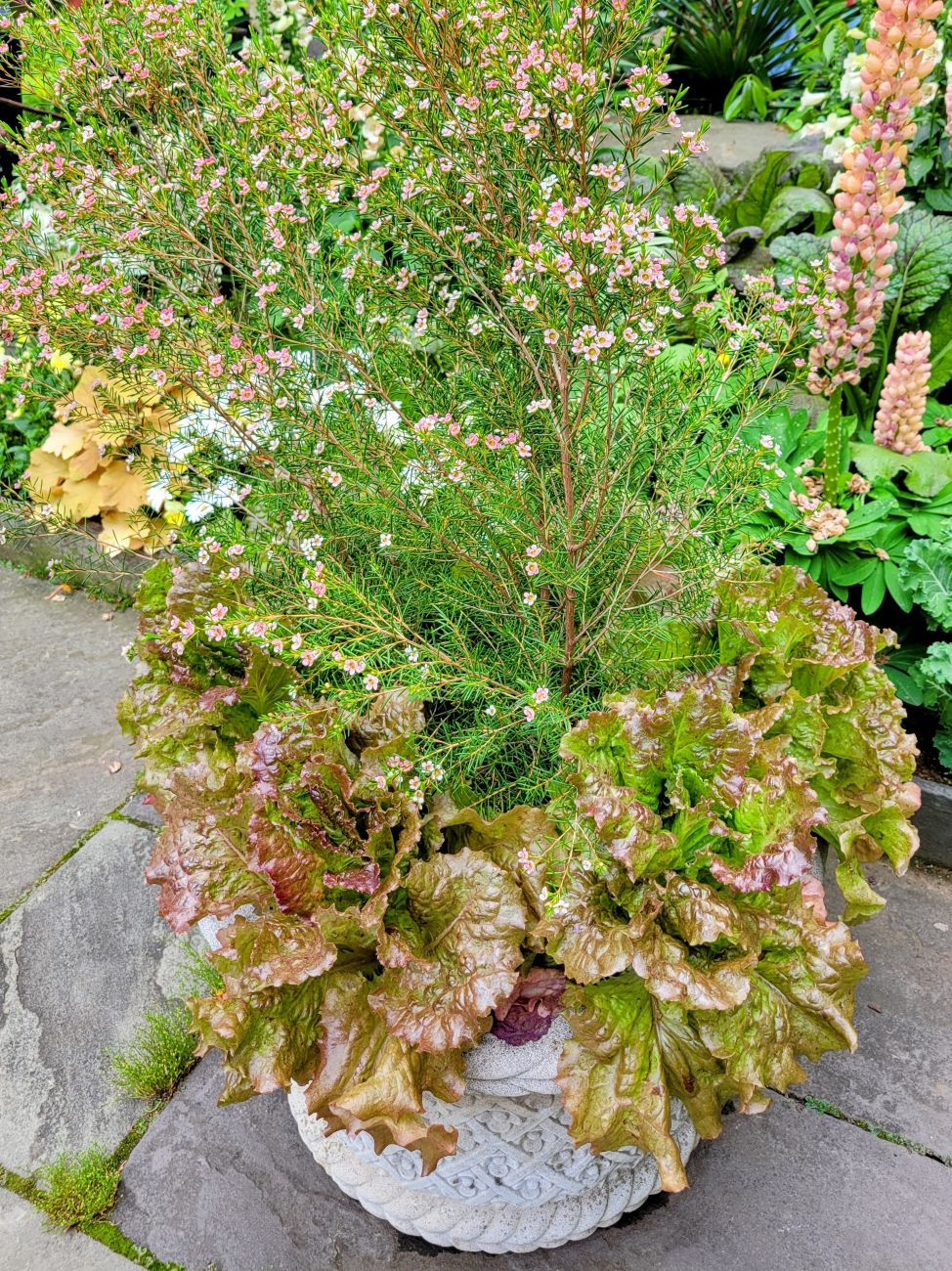
Right plant, right place, still applies
Containers give you greater control over growing conditions, but plants still need the right light, moisture, and soil. Choose edible varieties that tend to be compact, dwarf, bush, or well-behaved vines or climbers.
Choosing a container
It’s helpful to choose the largest container your budget and space will allow. Larger pots generally provide more room for roots and retain moisture longer, while smaller containers dry out more quickly and may require more frequent watering and feeding. Mixing container sizes also adds visual interest to a display. Whatever the size, make sure the container has adequate drainage.
Soil and nutrition
One advantage of container gardening is the ability to tailor the soil to your plants’ needs. Start with a quality potting mix and choose plants with similar preferences for drainage, moisture, and soil acidity. This flexibility also lets you grow plants that might struggle in your native garden soil.
Because container plants depend on a limited volume of soil, they may need supplemental fertilizer as nutrients become depleted. Think about what you’re trying to encourage: Excess nitrogen, for example, can promote leafy growth at the expense of flowers or fruit. Choose a fertilizer appropriate for your plants, follow label directions, and consult your local nursery or Extension service for specific recommendations.
Mulch and moisture
Mulch helps regulate soil temperature and retain moisture, even in containers. For open compositions where the soil surface is visible, use decorative materials such as small pine cones, shells, buckwheat hulls, or gravel. Leaf mold and finely shredded bark work well, too. Apply a shallow layer that allows water to pass through, and keep mulch away from plant crowns and stems.
Keep it sustainable
Use what you have and think about growing your own. Many vegetables are quite easy to start from seed. Growing your own is both economical and a way to reduce the need for purchased transplants, especially when you use peat-free soil mixes. Choosing peat-free mixes can also help reduce demand for peat extracted from carbon-storing wetlands. Collect rainwater where permitted for an additional irrigation source. Avoid using untreated household gray water on edible crops. Incorporating perennials also extends the life of your displays. They can be combined with seasonal plants or relocated elsewhere in the garden when a container needs refreshing.
Elements of Edimental Container Design
The ever-popular Thriller-Filler-Spiller container method holds its ground because of its snappy moniker and reliable formula. In this method, the thriller is the dramatic focal point; the filler is a bushy, mid-level plant or plants; and the spiller—wait for it—spills over the edge of the container. It’s an easy enough recipe that most people can create something attractive, but truthfully, many fail to think much about what they are combining, which results in the big-box special: a nondescript spiky grass towering over a showy fuchsia, with invasive creeping Jenny (Lysimachia nummularia, Zones 3–9) trailing out.
Compose containers like a landscape
We can do better. While perhaps less catchy, think about composing your container much like you might a landscape. Consider structure (the framework); form and habit (the shape); spatial orientation (how it reads visually—does the plant have a horizontal, vertical, or some other orientation?); visual texture (is the foliage fine, coarse, or medium?); and color (is it intense, receding, or something else?). Go beyond appearance and consider the full range of sensory experience: how plants move in the wind and what that sounds like, what they smell like, and how they feel when brushed up against.
Not every plant or combination will hit all the notes, so don’t stress. Focus on a few complementary qualities. Combine the plants in your container to create contrasts or enhance similarities. Look at leaf, bloom, and seed head form. The idea is to create layers—low, mid, and upper—and aim for three to five plants that play off each other’s traits within the container.
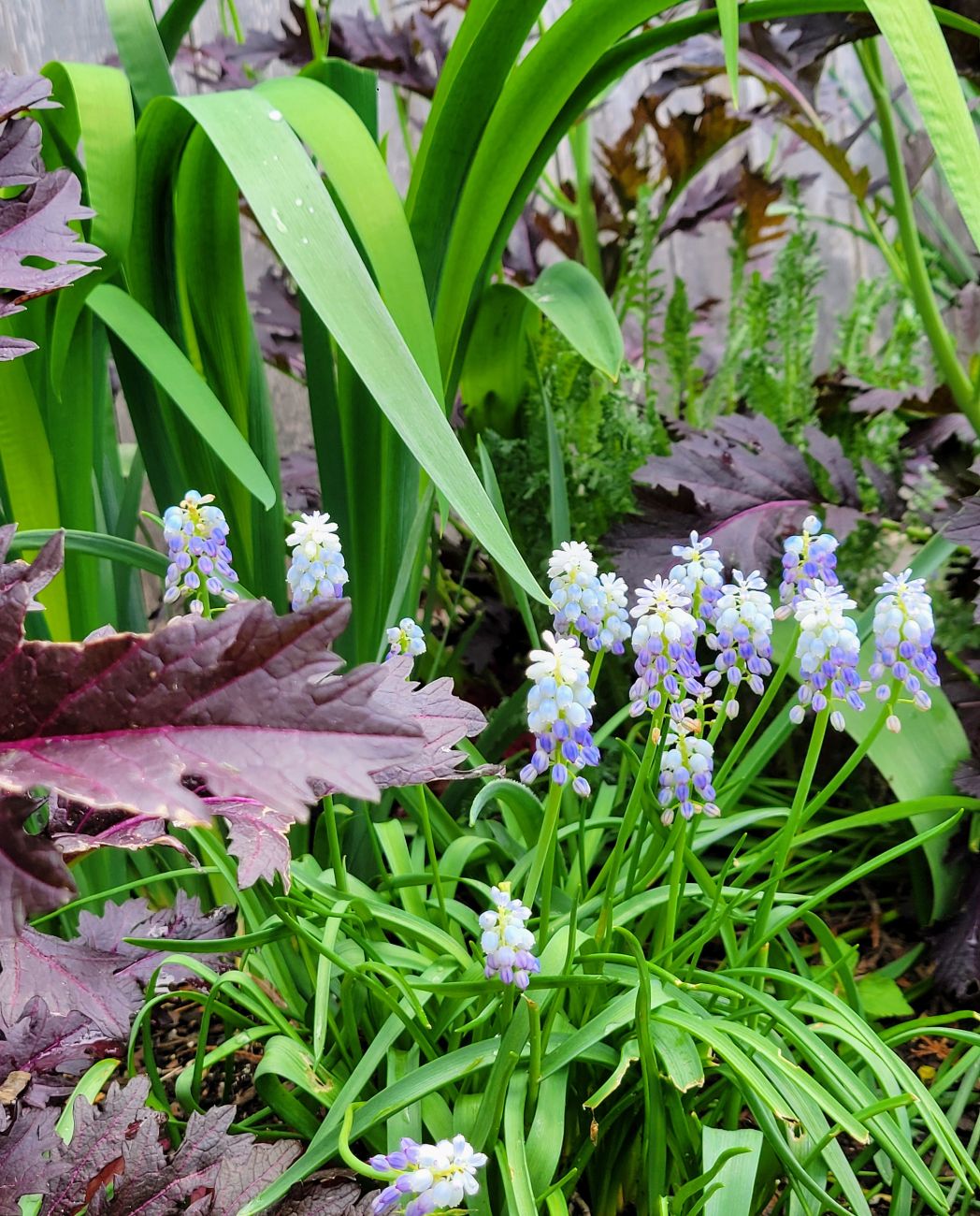
Establish your style
Are you trying to create something formal, informal, transitional, organic, or eclectic? Knowing how you want your container to read to the viewer can help you make choices about which edible plants may be a better addition to the mix.
Mix it up
When composing your containers, don’t forget to look beyond edimentals. Often the best containers mix edible plants with purely ornamental plants, such as leafy or flowering perennials and small shrubs. The juxtaposition of disparate plants usually determines a container’s success—different textures, colors, heights, and forms.
Create harmony within displays
While incorporating disparate elements creates visual interest, it’s also important to give the eye somewhere to rest. A collection of pots filled with different plant combinations can feel jarring without repetition or quieter areas to balance the display.
A repeat may be exactly what it sounds like: using the same plant or using the same color, form, or texture across pots. Areas to pause are pots that may contain one uniform element—such as like plants, colors, or containers.
Group containers together
Another approach is to view the containers as individual components. Rather than composing containers with several different kinds of plants (including vegetables, of course), try grouping containers that each have one type of plant. This can be a powerful display akin to naturalistic block-style planting design.
Accessorize with natural materials
Sometimes a container needs more. Perhaps it needs some staking for a vine, or simply a bit of additional texture. Incorporate natural materials such as pruned branches (dry or living), fallen branches covered in lichen, wild berry clusters, pine cones, grape or hop vines, dried elements such as grasses, or even small stumps.
And don’t neglect the value of seed heads—just because that kale bloom has now passed doesn’t necessarily mean you want to remove the plant; wait to see those prolific little yellow pods. And a radish gone to seed showcases its most redeeming feature: crunchy seed clusters that rattle in the wind!
Try unconventional containers
By definition, a container is simply a receptacle for holding goods or objects, so feel free to think beyond the pots you find at the nursery. Salvaged and vintage items work well combined with more traditional terra-cotta pots. Take a high-low approach and use found items from your own home along with a special planter from a boutique garden center.
Don’t forget these irreverent options can also be repurposed in unexpected applications—that antique copper colander can go on to lead a new life as a hanging basket. Just make sure repurposed containers provide adequate drainage and are suitable for growing food if you plan to harvest from them.
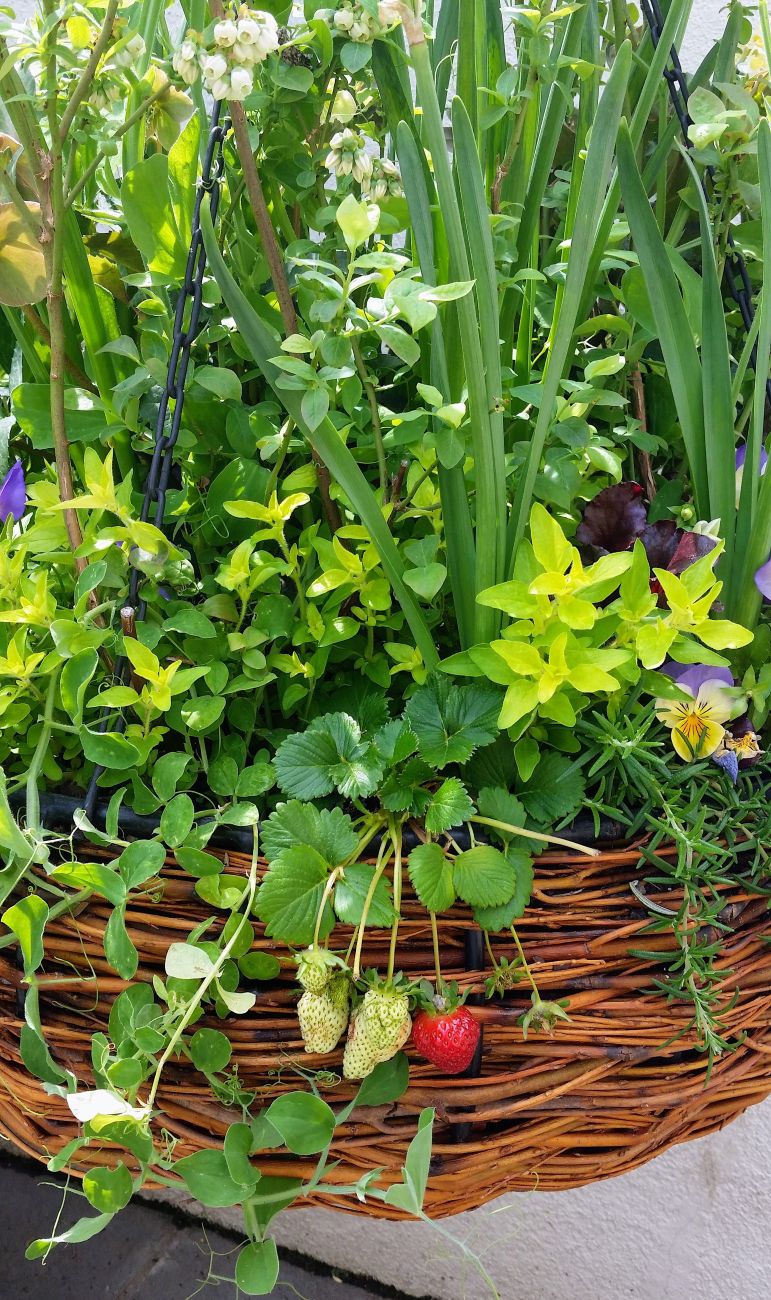
Think about seasonality
One of the biggest benefits of working with containers is the opportunity to modify them by adding or removing plants to capture the best seasonal foliage. While many edibles are annuals that end their season late in the year, others produce seed heads or even a second flush after cutback.
Some common edible members of the carrot family (Apiaceae), including carrots (Daucus carota, biennial); parsnips (Pastinaca sativa, biennial); parsley (Petroselinum crispum, biennial); and celery and celeriac (Apium graveolens, biennial), produce flowers in their second growing season. Their delicate foliage and umbrella-shaped flower clusters add texture and attract pollinators. Deep-rooted crops such as carrots and parsnips need sufficiently deep containers, particularly if you plan to leave them in place for a second season.
Uncommon Edimentals for Containers
Osage orange (Maclura pomifera, Zones 4–9) isn’t a citrus fruit at all. This North American native tree produces large, greenish yellow, orange-like fruits with a distinctive, bumpy surface. Although the fruits aren’t considered edible, their unusual appearance and citrus-like fragrance make them wonderful decorative accessories for autumn container displays.
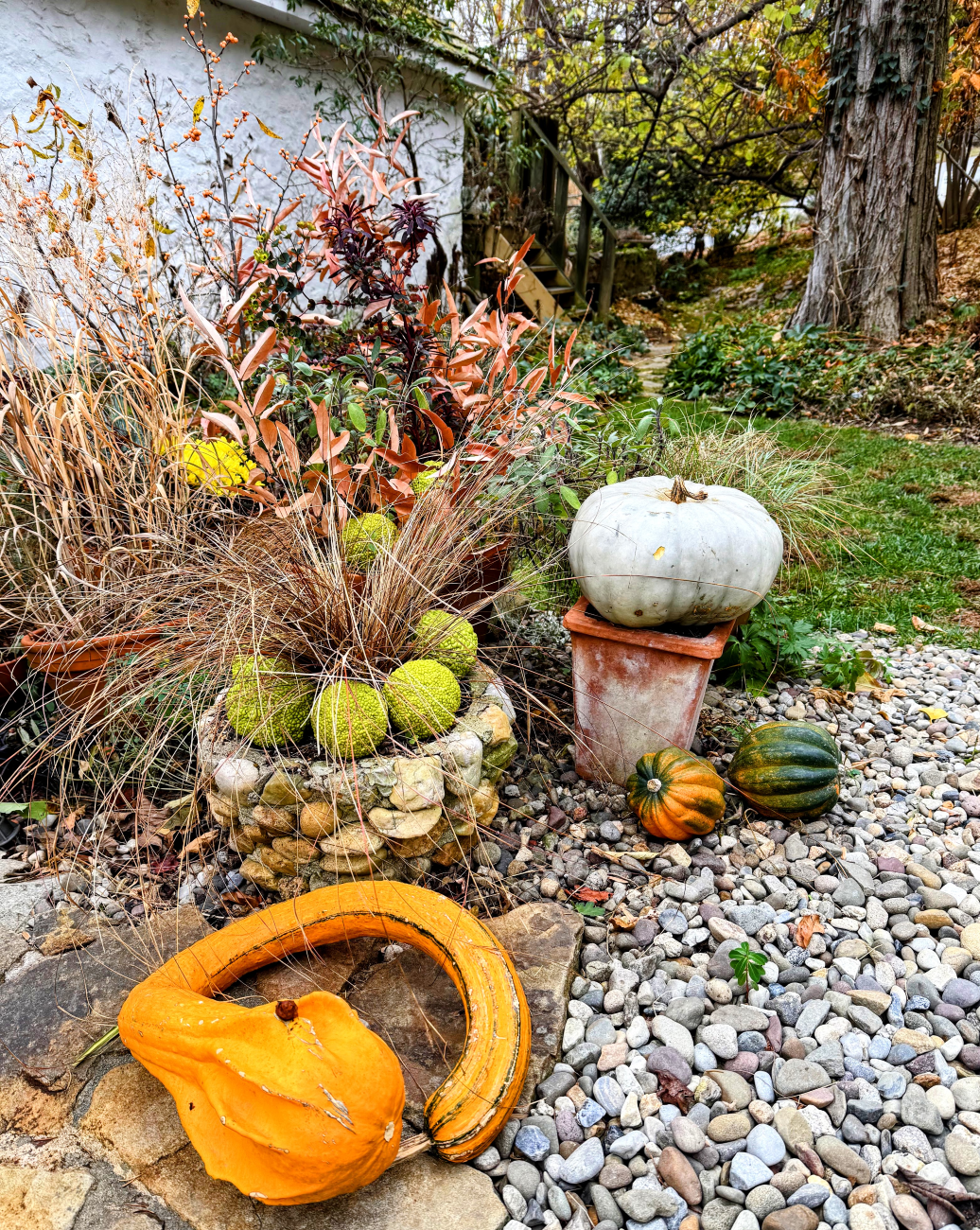
Another lesser-known edible is a well-known perennial: ostrich fern (Matteuccia struthiopteris, Zones 2–8). Its tightly coiled young fronds, known as fiddleheads, are harvested as a spring delicacy before unfurling into the familiar feathery foliage.
Lady fern (Athyrium filix-femina, Zones 3–8) offers similarly beautiful emerging fronds for ornamental containers, but it should not be treated as an interchangeable edible. Many ferns contain potentially harmful compounds, so accurate identification is essential. Only properly identified ostrich fern fiddleheads should be eaten, and they must be thoroughly cooked. For more information, see the University of Maine Cooperative Extension’s guide to fiddlehead safety. Of course, you can simply enjoy their fascinating emerging foliage up close in a container.
The options for ornamental edibles are endless!
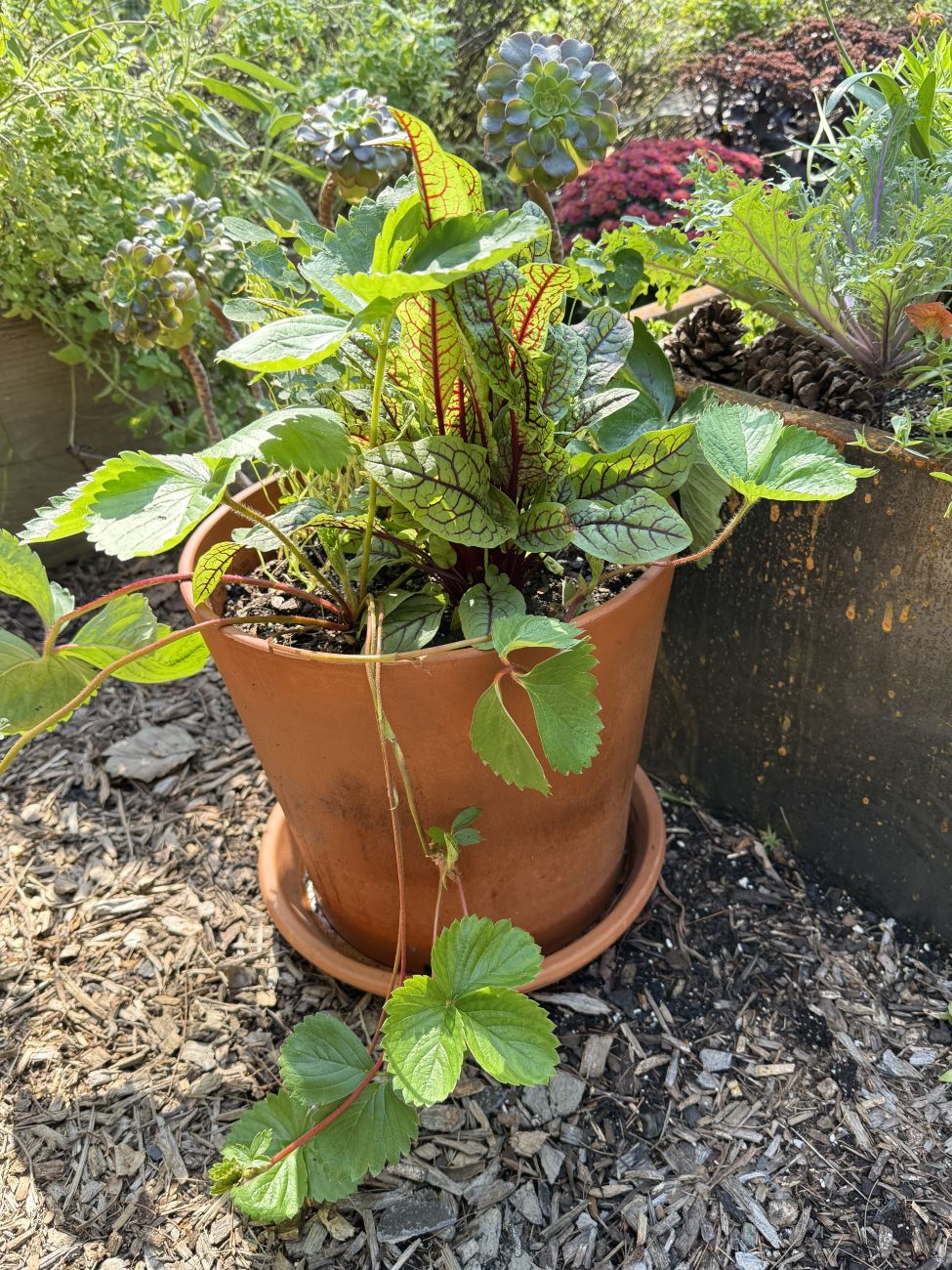
Vegetables that you may not have thought about embracing in your ornamental containers include okra (Abelmoschus esculentus, annual), with its large pods and hibiscus-like flowers; artichokes, such as ‘Purple Italian Globe’ (Cynara cardunculus var. scolymus ‘Purple Italian Globe’, Zones 7–10), with dramatic silvery foliage and purple flower heads (use your largest container); cucamelon (Melothria scabra, annual), also called mouse melon, which resembles a tiny watermelon on a prolific climbing vine; and leafy greens of all sorts. Look out for the striking edible red-veined dock (Rumex sanguineus, Zones 5–8), with the unpalatable common name, bloody dock—it’s a stunner. Its green leaves are marked with vivid red veins, and the young foliage is edible in moderation, although it contains oxalic acid.
More common edibles with uncommon traits include delicate currant tomatoes such as ‘Sweet Pea’ (Solanum pimpinellifolium ‘Sweet Pea’, annual) or compact tomatoes such as ‘Tiny Tim’ (Solanum lycopersicum ‘Tiny Tim’, annual).
Alpine strawberries (Fragaria vesca, Zones 4–9) come in a range of colors from white and pale yellow to pink and red, depending on the selection. These diminutive berries add character and spill over the edge of containers.
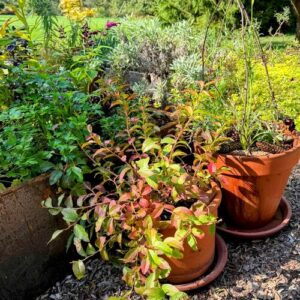
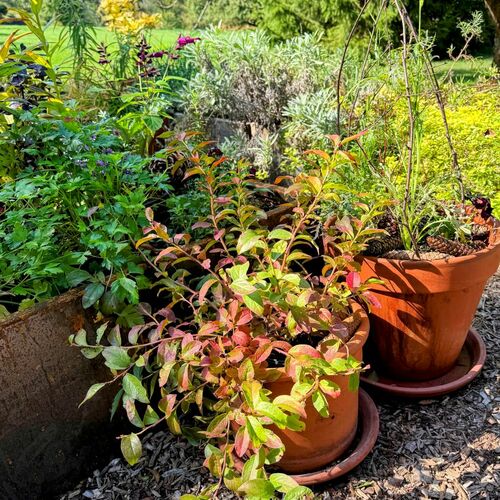
Peppers such as the teardrop ‘Biquinho Red’ (Capsicum chinense ‘Biquinho Red’, annual) are eye-catching and tolerant of many conditions. Compact blueberry (Vaccinium cvs., Zones 3–8) foliage glows red in the autumn, acting as a foil for its partners.
And there are so. Many. More. Whatever you’re interested in, you can find an edimental that will fill that niche.
Why You Should Choose Edibles for Ornamental Containers
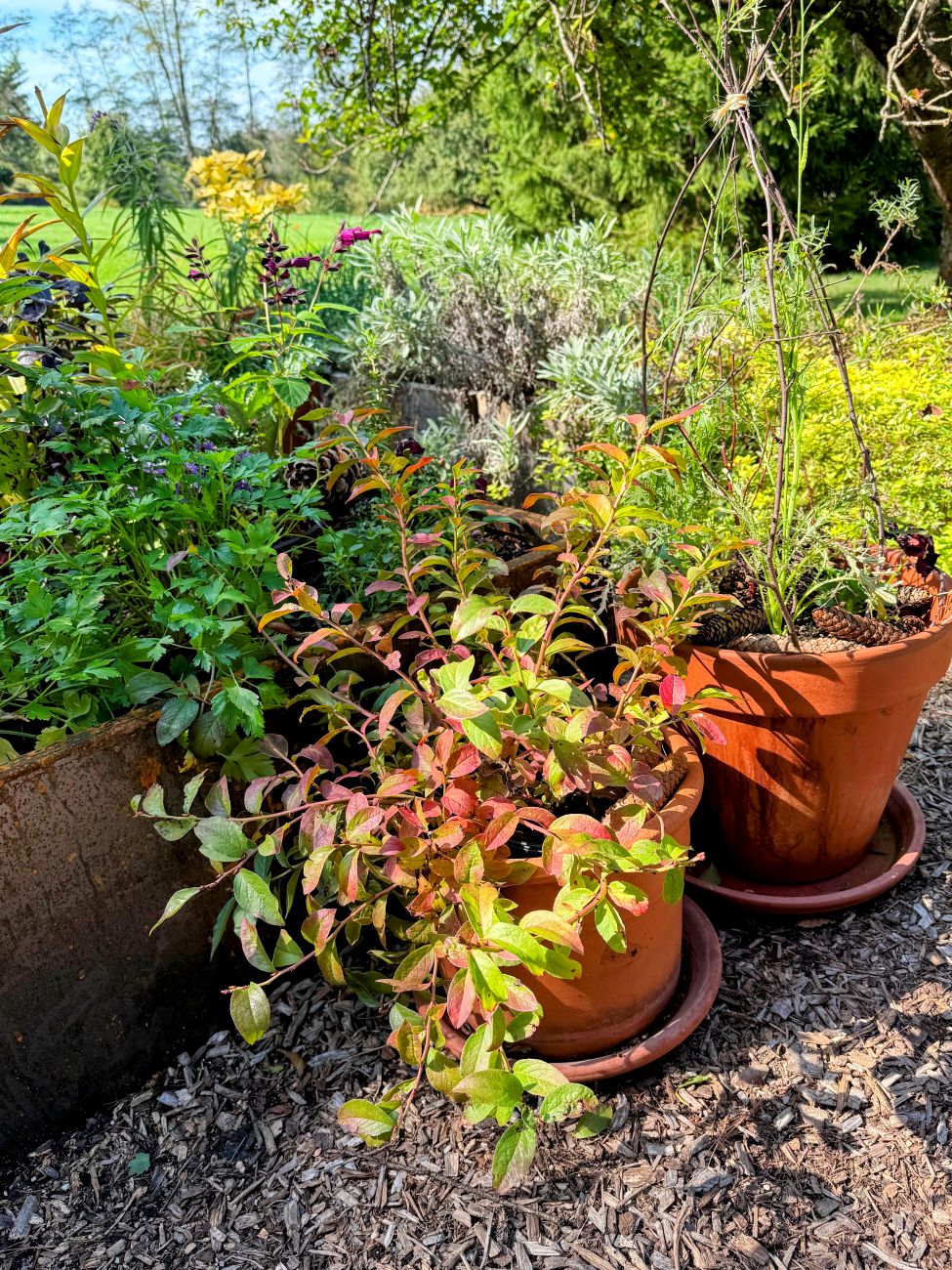
Edible plants offer a broader palette that many gardeners and designers overlook—choosing them for containers broadens your range of plant materials and, most importantly, creates opportunities for delight and intrigue when used in unexpected ways.
They also make it possible to garden in small spaces or places where in-ground planting isn’t practical. Containers can be moved to improve growing conditions, rearranged to create a new focal point, or grouped to screen an unwanted view. They also let you accommodate plants that might struggle in your native soil or spread too aggressively in garden beds, such as mint (Mentha cvs., Zones 3–9) or sunchokes (Helianthus tuberosus, Zones 3–9). Just be sure to give vigorous plants enough room to grow.
In the eastern United States, ornamental kales and cabbages, paired with mums, are a common sight this time of year. While there is nothing inherently wrong with them, now you know you have more edimental options, so why not experiment with a wider range of edible plants? From colorful leafy greens to fruiting vines and impressive seed heads, there’s no shortage of possibilities for creating containers that look as interesting as the plants themselves.
Find more inspiration for growing edibles in containers:
Discuss this article or ask gardening questions with a regional gardening expert on the Gardening Answers forum.
And for more Northeast regional reports, click here.
Heather Tuckman is a garden designer and owner of Resilient Ground Design in southeastern Pennsylvania. She combines her background in horticulture, garden design, and psychology to create beautiful, ecologically thoughtful landscapes.
Photos: Heather Tuckman
Fine Gardening Recommended Products

Nesco Snackmaster Express Food Dehydrator
Fine Gardening receives a commission for items purchased through links on this site, including Amazon Associates and other affiliate advertising programs.
500-watt 4-tray food dehydrator dries in hours with adjustable thermostat that allows you to dry different foods at proper temperatures (95°F – 155°F). Four 13.5-inch BPA-free trays allow you to dry large quantities at once with no tray rotation needed. Includes 1 fruit roll sheet and 2 original-flavor jerky spice and cure packets.
Johnny’s Selected Seeds Connecta® Cultivation Kit
Fine Gardening receives a commission for items purchased through links on this site, including Amazon Associates and other affiliate advertising programs.
Choose the right tool head for the job and switch out quickly with a simple push-button release. Includes the Connecta receiver, Connecta Collinear 4 head, Connecta Collinear 7 head, Connecta Contour Wire 4 head, Connecta Contour Wire 6 head, a sustainably harvested oiled ashwood handle, and a stainless-steel carrying clip.
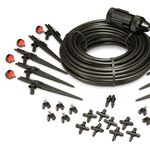
Rain Bird PATIOKIT Drip Irrigation Patio Watering Kit
Fine Gardening receives a commission for items purchased through links on this site, including Amazon Associates and other affiliate advertising programs.
– Complete 42-piece drip irrigation kit eliminates watering by hand
– Provides drip irrigation for up to 6 planters
– Easy to assemble: just attach to faucet, cut tubing and connect watering devices
– Attaches easily to your outdoor faucet or hose