

Hi GPODers! Today we’re welcoming back longtime contributor Susan from St. Paul, Minnesota (Zone 5a). Susan has shared her garden with us many times over the years, and today she’s taking us through some of her favorite moments from late July into October. If you’ve missed her previous visits, you can revisit last year’s gardening season at the 45th parallel. For now, let’s see what she’s been growing!
Still looking back. Here are some photos from late July to October.
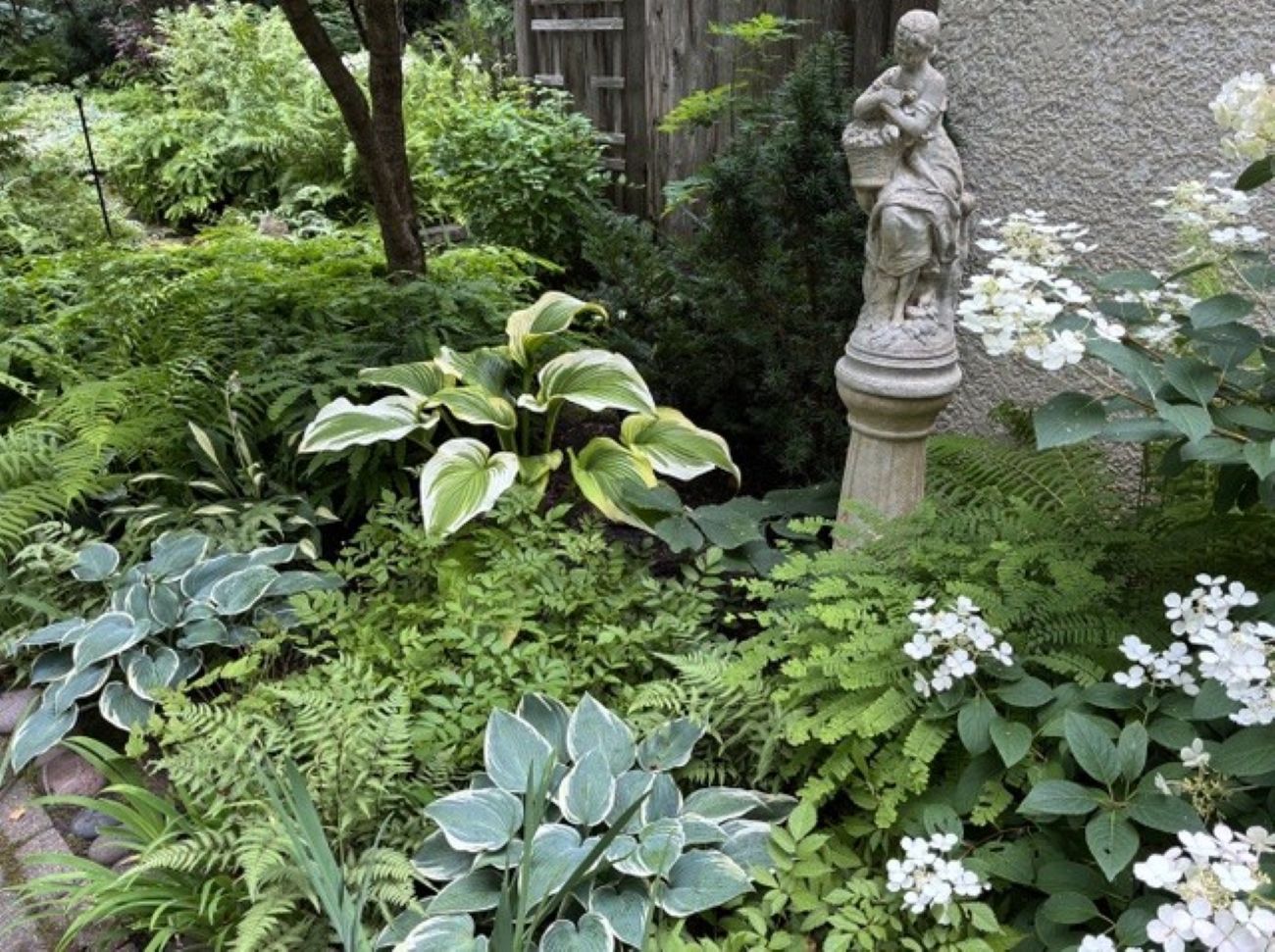
Back garden, late July. I had a huge ‘Montana Aureomarginata’ hosta (Hosta montana ‘Aureomarginata’, Zones 3–8) in the front garden, where it received too much sun. My husband dug it up for me, and I divided it into three clumps, one of which is pictured above. The bluish hostas are ‘El Niño’ (Hosta ‘El Niño’, Zones 3–9), and the hydrangea is ‘Little Quick Fire’ panicle hydrangea (Hydrangea paniculata ‘SMHPLQF’, Zones 3–8).
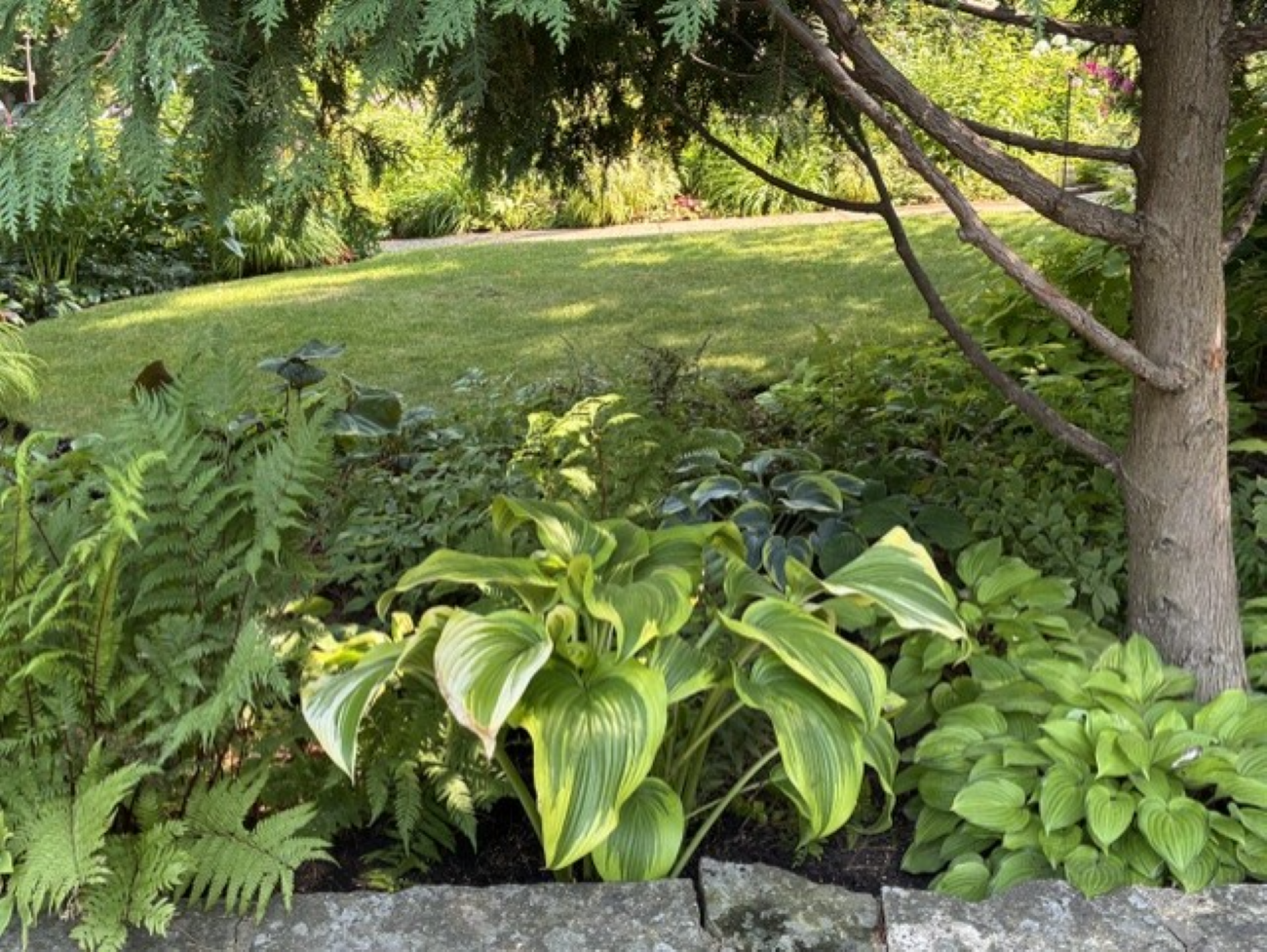
A second clump of ‘Montana Aureomarginata’ was replanted in the front garden, but in a shady spot under a white cedar (Thuja occidentalis, Zones 2–7).
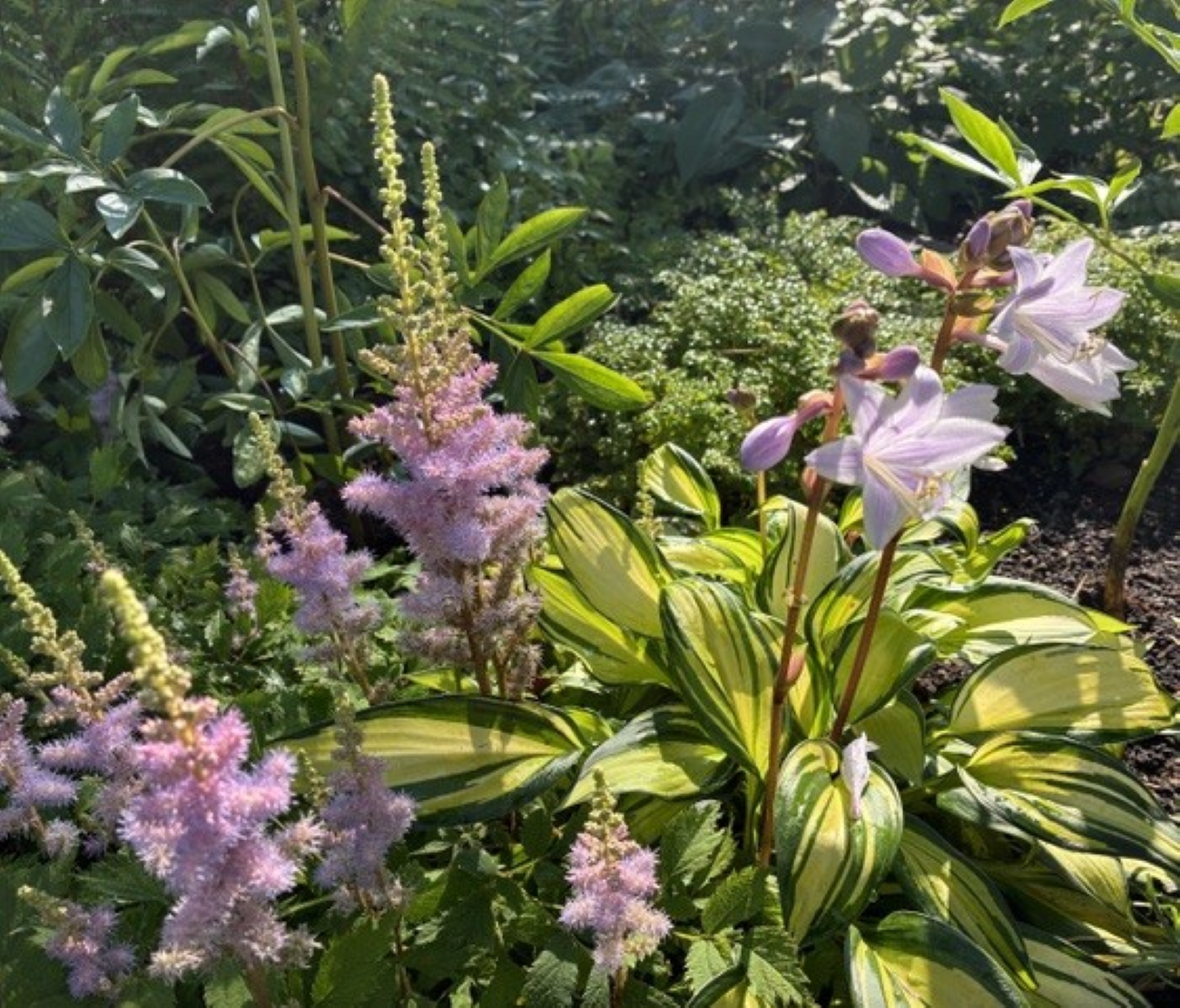
Speaking of hostas, this is one of my favorites; even the almost pinkish flowers are pretty. The similarly colored companion is Chinese astilbe (Astilbe chinensis, Zones 4–8).
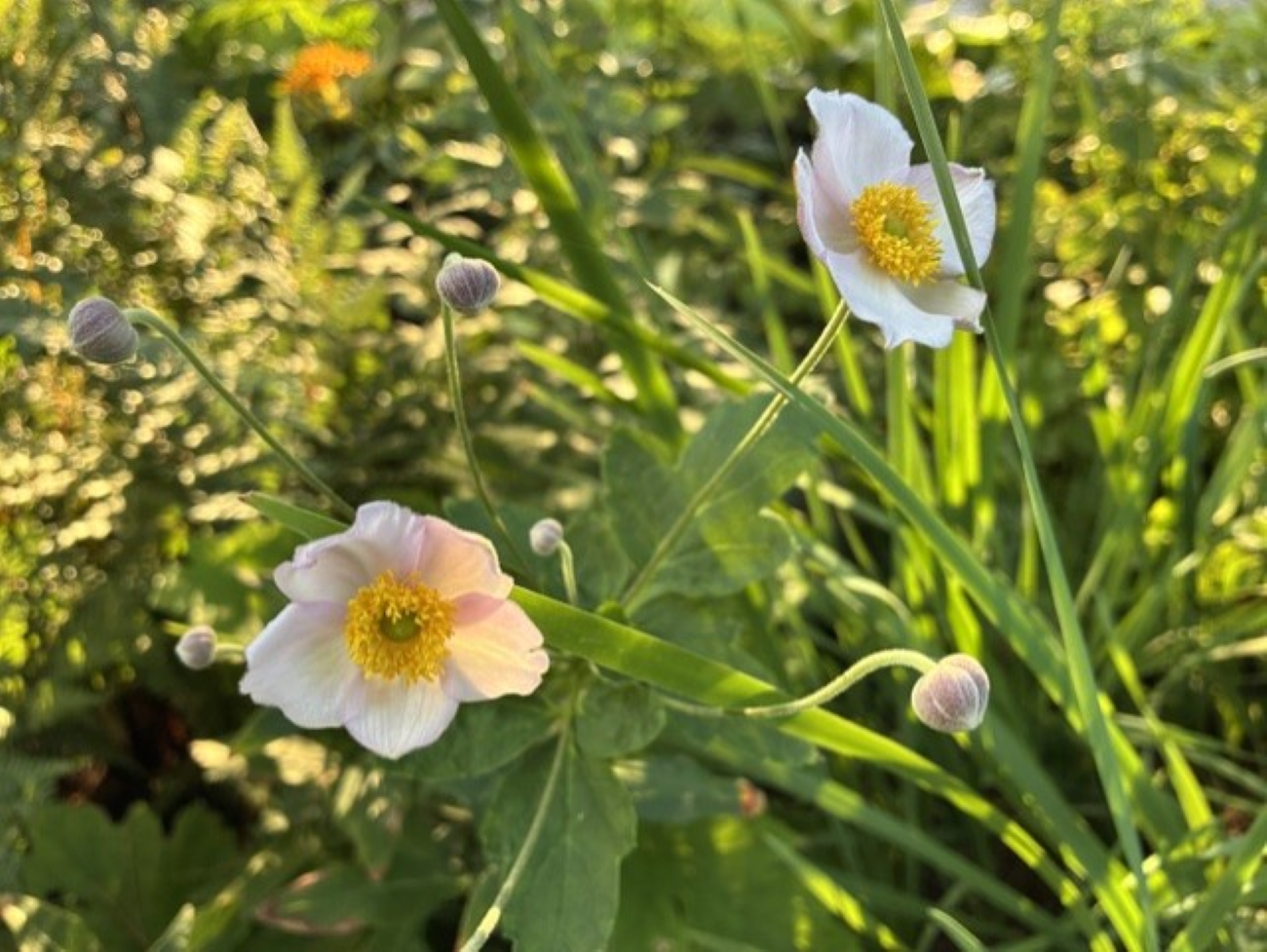
Grape-leaf anemone (Anemone tomentosa ‘Robustissima’, Zones 4–8) glows in the late-afternoon sun.
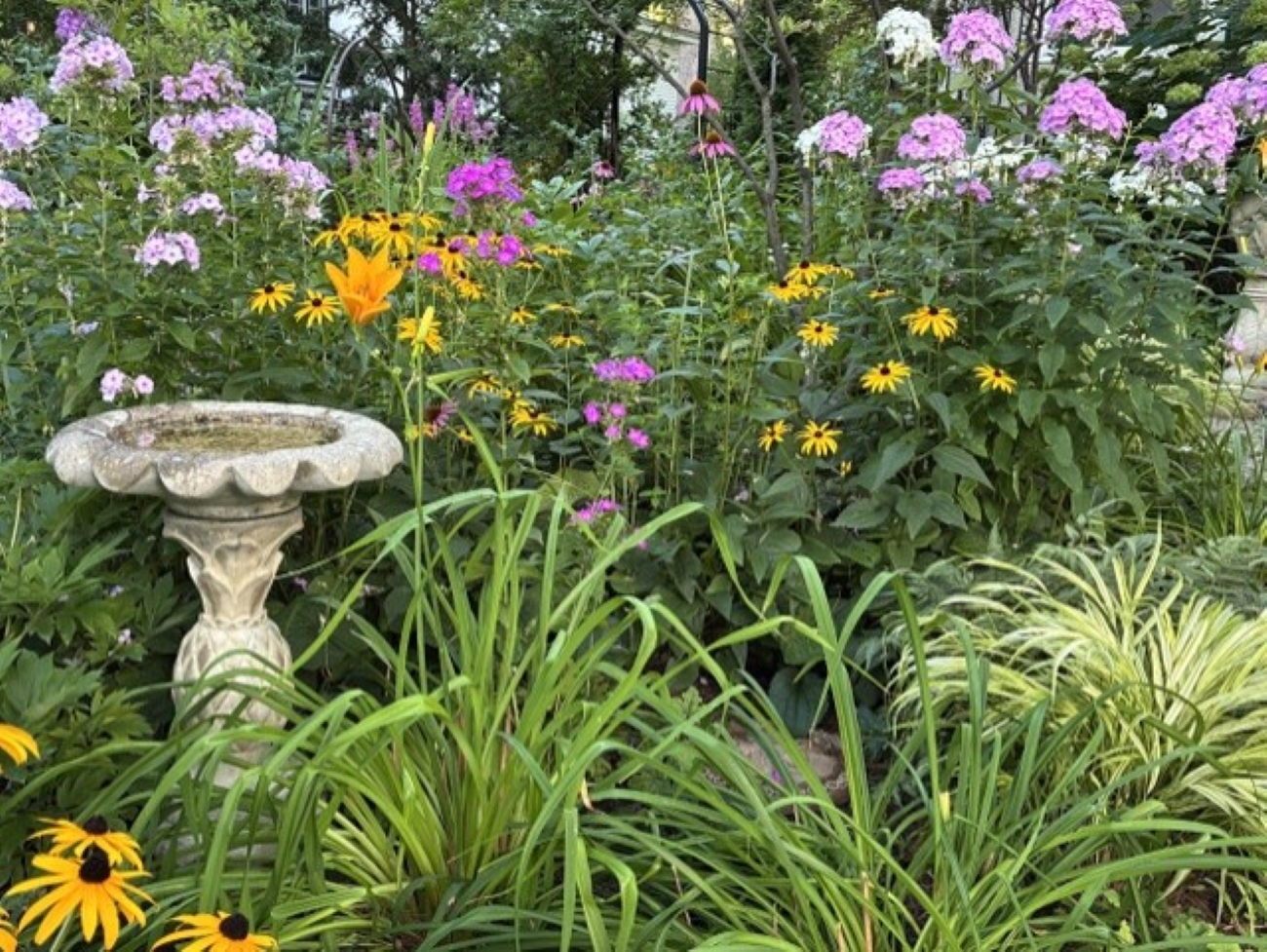
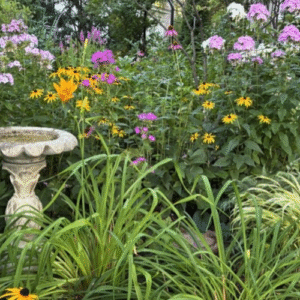
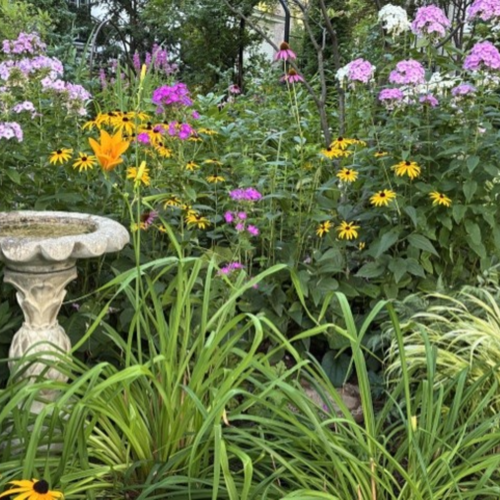
Front garden with end-of-summer gold and fuchsia. Garden phlox (Phlox paniculata cvs., Zones 4–8), black-eyed Susans (Rudbeckia cvs., Zones 3–9), and a daylily blossom (Hemerocallis ‘Autumn Gold’, Zones 3–9; Sutton, 1952, not the more recent one) missed by the deer.
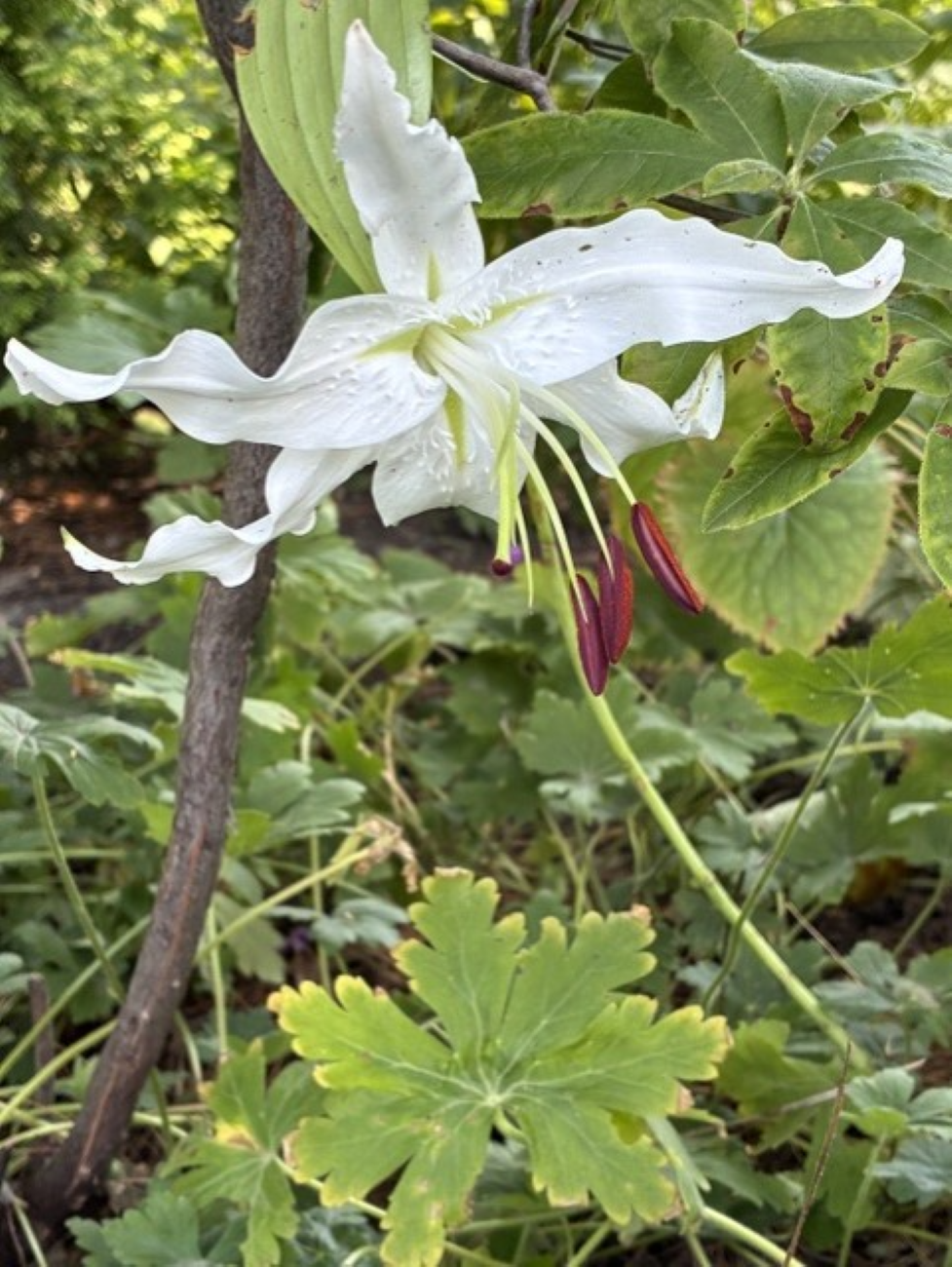
I was doing some planting in a redone, seldom-visited corner of the garden when I thought I spotted a piece of trash. It turned out to be a lone stalk and blossom of Japanese lily (Lilium speciosum ‘Album’, Zones 5–8) that had somehow escaped the scarlet lily beetle ravages and that I, too, had missed in my cutting-down frenzy. I have hope that the others will have survived.
According to Old House Gardens, this is a wild ancestor of ‘Casa Blanca’. OHG last offered it in 2012, and it is now considered “commercially extinct in the Netherlands.”
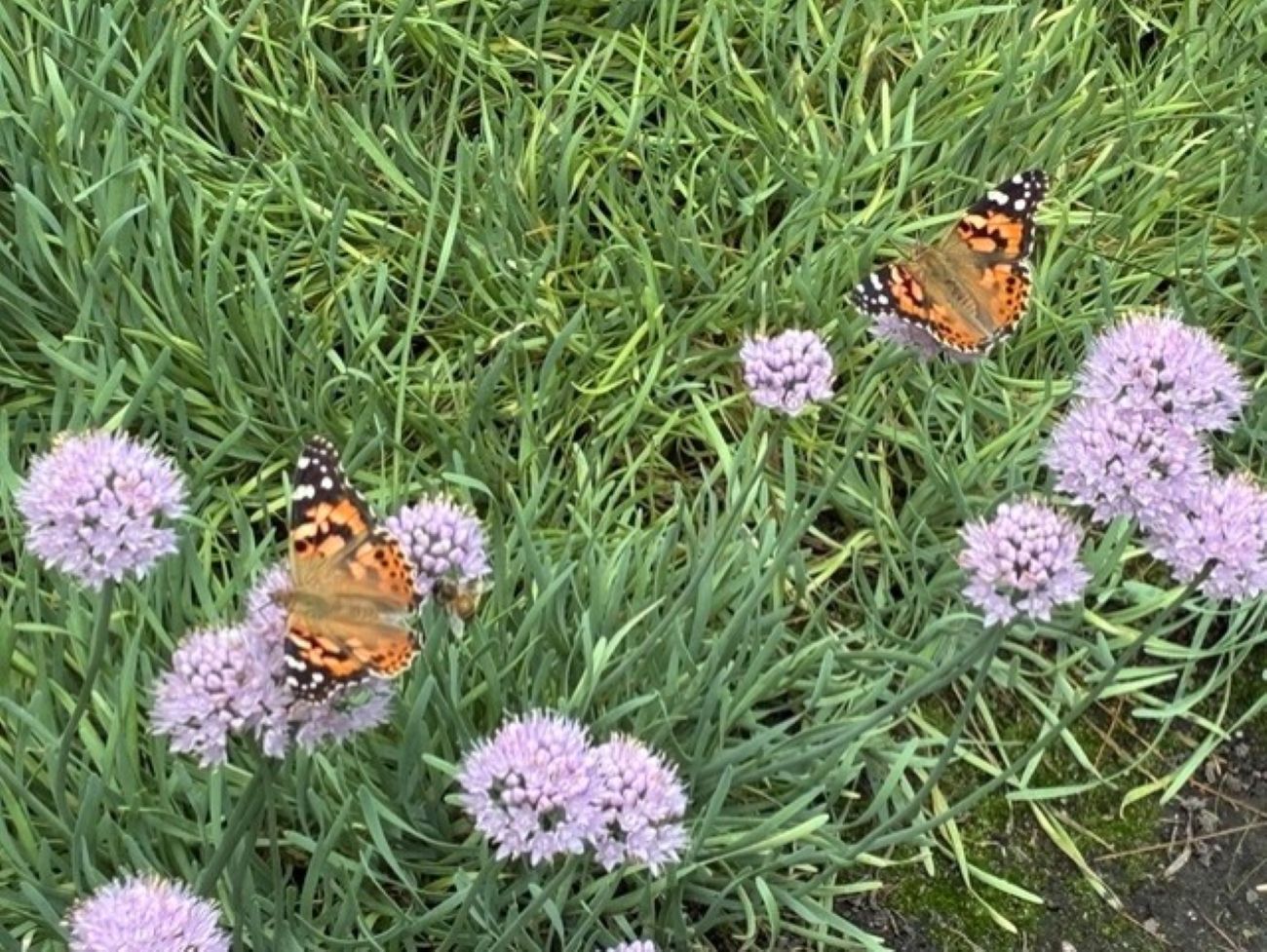
The painted lady butterflies love curly onion (Allium senescens ‘Glaucum’, Zones 4–8) as much as I do. Its long-lasting blooms perk up the late-summer, early-fall garden.
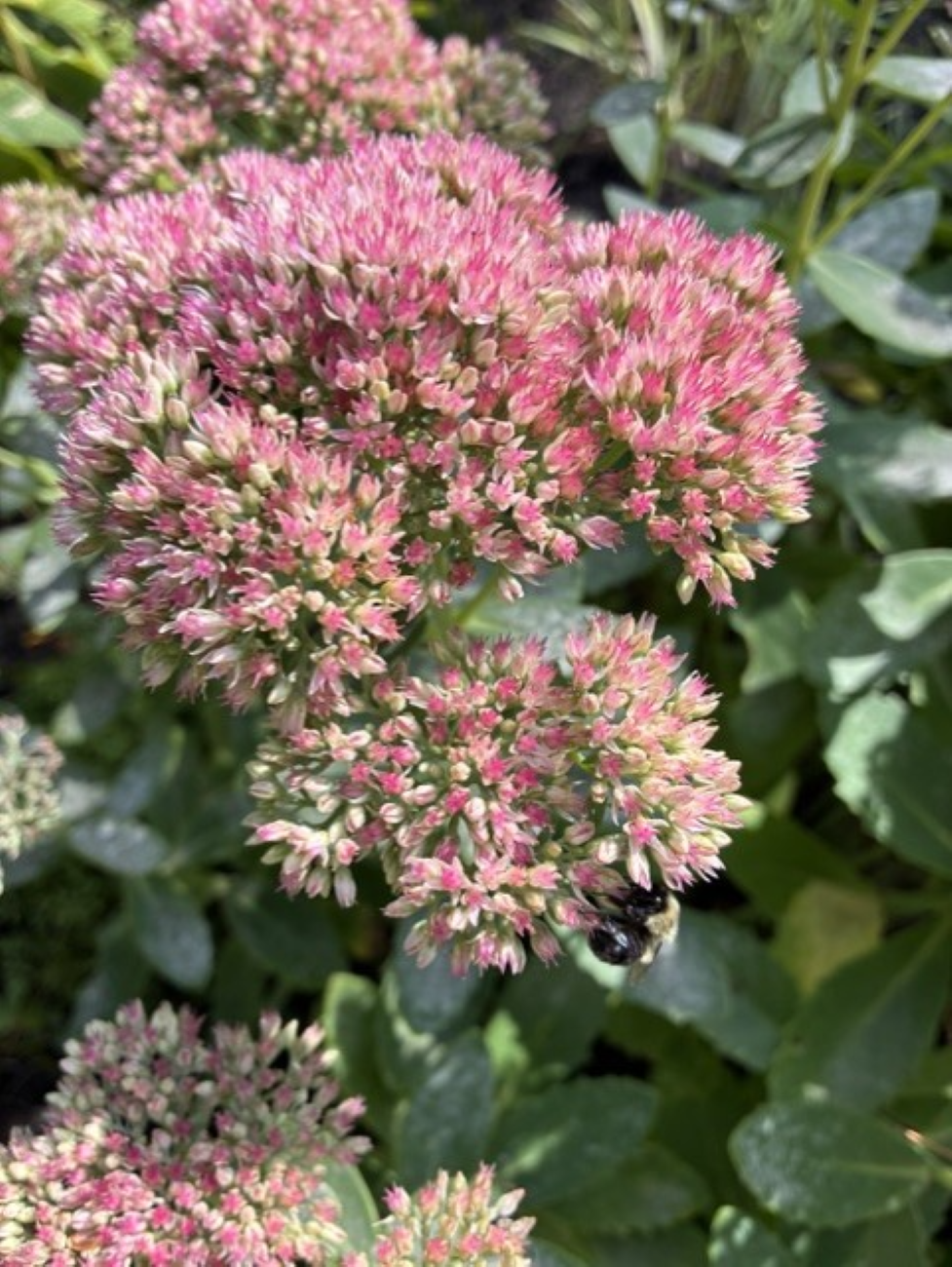
‘Autumn Joy’ stonecrop (Hylotelephium ‘Herbstfreude’, Zones 3–9) is a dependable fall bloomer, beloved by pollinators.
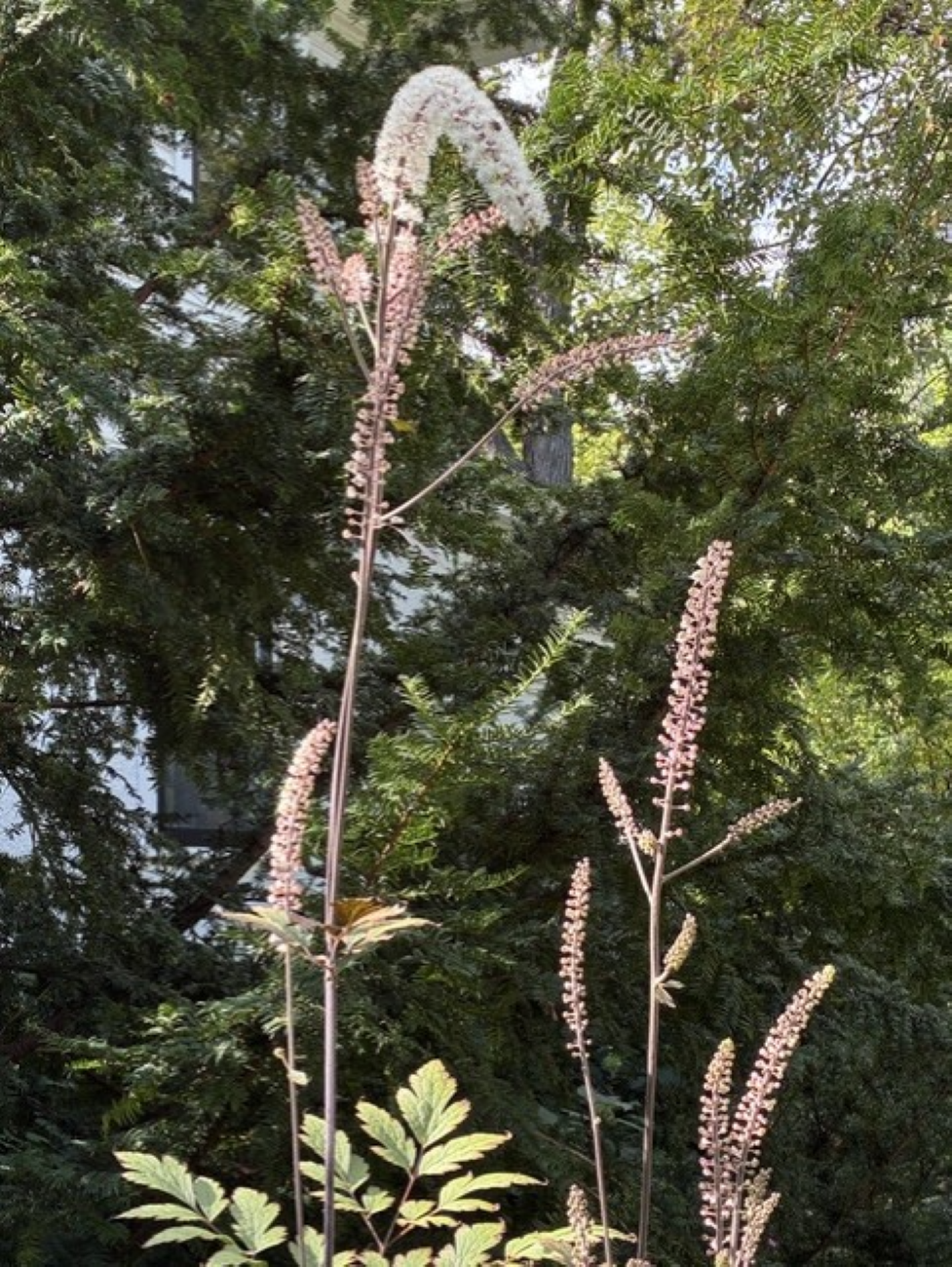
Another fall bloomer that attracts many pollinators is black cohosh, also known as bugbane (Actaea racemosa, Zones 3–8). This photo was taken on September 22, but other clumps of it are still blooming more than a month later.
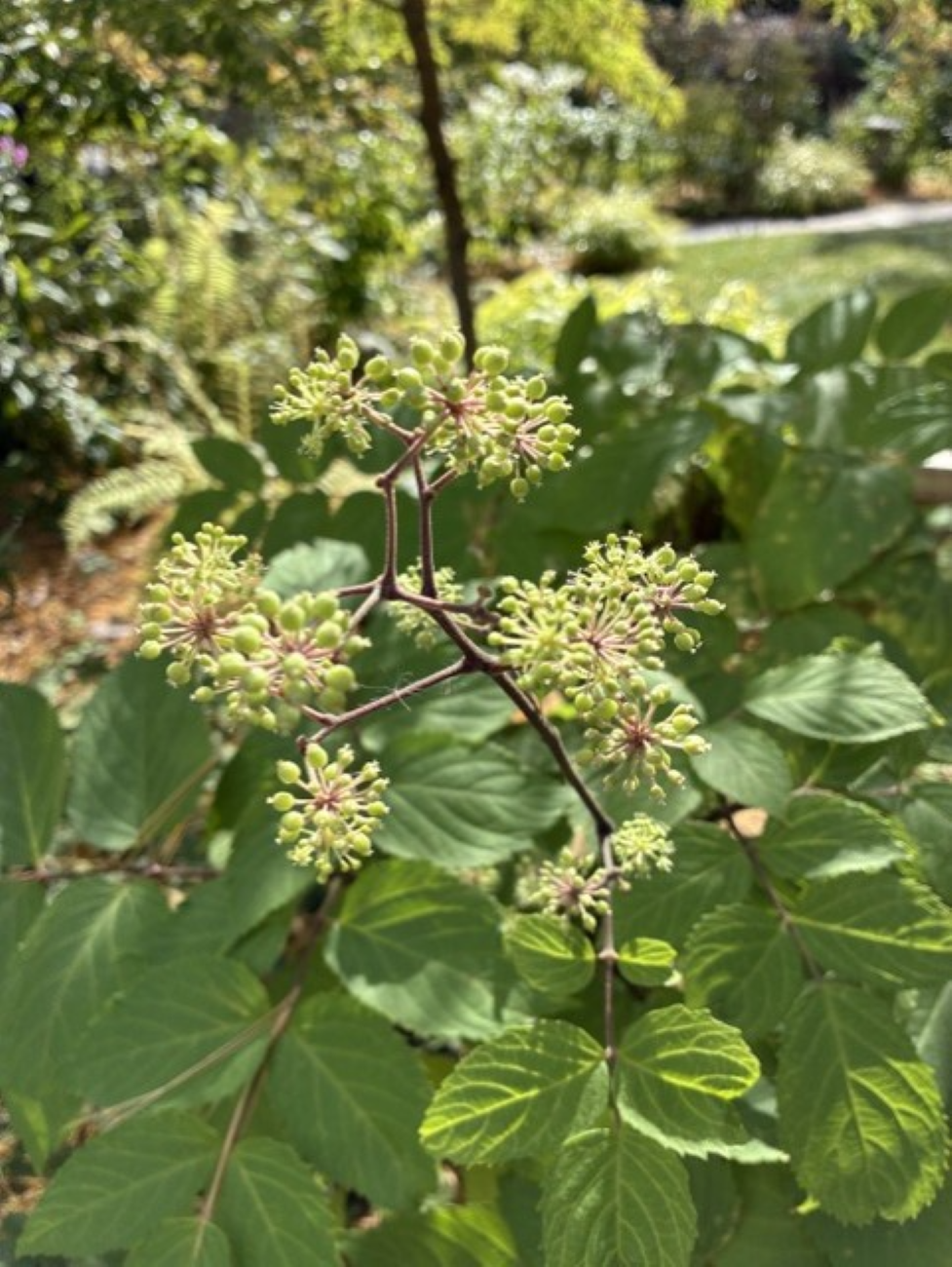
‘Sun King’ Japanese spikenard (Aralia cordata ‘Sun King’, Zones 3–9) is prized for its golden foliage, but it also develops small but interesting flowers and fruits late in the season.
Thank you for sharing another look at your garden with us, Susan! I especially loved the surprise lily. Finding a flower you thought you’d lost is always exciting, especially after dealing with pests!
We have more photos from Susan to share soon, so stay tuned for Part 2!
We want to see YOUR garden!
Have photos to share? We’d love to see your garden, a particular collection of plants you love, or a wonderful garden you had the chance to visit!
To submit, fill out the Garden Photo of the Day Submission Form.
You can also send 5–10 photos to [email protected] along with some information about the plants in the pictures and where you took the photos. We’d love to hear where you are located, how long you’ve been gardening, successes you are proud of, failures you learned from, hopes for the future, favorite plants, or funny stories from your garden.
Do you receive the GPOD by email yet? Sign up here
Fine Gardening Recommended Products

The New Organic Grower, 3rd Edition: A Master’s Manual of Tools and Techniques for the Home and Market Gardener, 30th Anniversary Edition
Fine Gardening receives a commission for items purchased through links on this site, including Amazon Associates and other affiliate advertising programs.
Since its original publication in 1989, The New Organic Grower has been one of the most important farming books available, with pioneer Eliot Coleman leading the charge in the organic movement in the United States. Now fully illustrated and updated, this 30th Anniversary Edition is a must-have for any agricultural library.

DeWalt Variable-Speed Cordless Reciprocating Saw with 6-Piece Saw Blade Set
Fine Gardening receives a commission for items purchased through links on this site, including Amazon Associates and other affiliate advertising programs.
You can fit a variety of blades to this saw to cut fallen branches or prune larger limbs from trees in a pinch. It’s fast, tough, easy to use, and extremely versatile.
– 18.31 x 6.13 x 4 inches
– 1-1/8-inch stroke length
– Variable speed trigger with 0-3000 spm
– DW4856 Metal/Woodcutting Reciprocating Saw Blade Set, 6-Piece
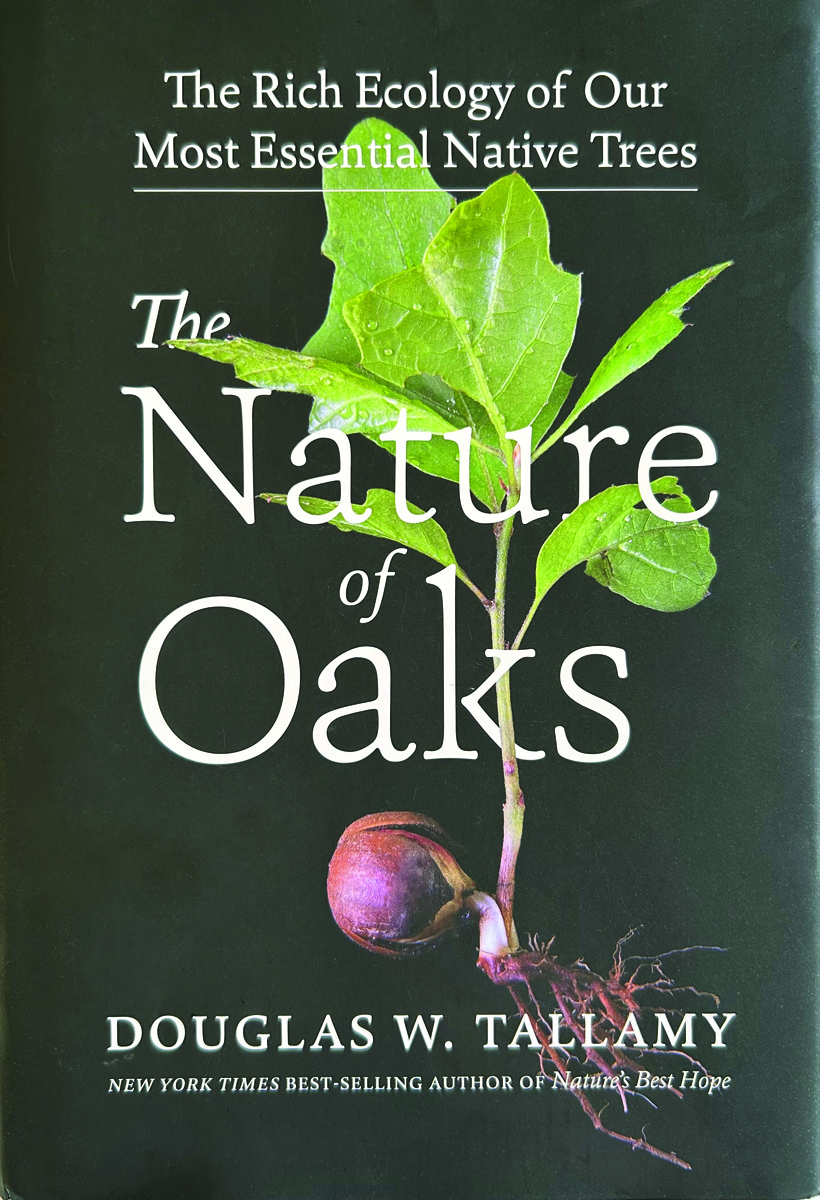
The Nature of Oaks: The Rich Ecology of Our Most Essential Native Trees
Fine Gardening receives a commission for items purchased through links on this site, including Amazon Associates and other affiliate advertising programs.
The Nature of Oaks reveals what is going on in oak trees month by month, highlighting the seasonal cycles of life, death, and renewal. From woodpeckers who collect and store hundreds of acorns for sustenance to the beauty of jewel caterpillars, Doug Tallamy illuminates and celebrates the wonders that occur right in our own backyards. He also shares practical advice about how to plant and care for an oak, along with information about the best oak species for your area.