Expert Picks: Try These Native Shrub Alternatives to Common Landscape Plants
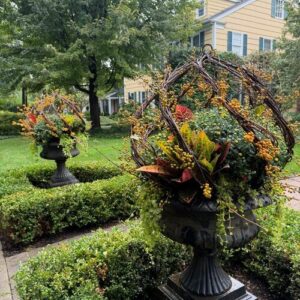
Looking to add more native plants to your landscape? Our regional expert shares four native shrubs that thrive in the Mid-Atlantic. These options add year-round structure, seasonal beauty, and valuable wildlife habitat. Replacing commonly used landscape shrubs with native alternatives is one of the easiest ways to boost both the beauty and biodiversity of your garden.
Read More: 16 Alternatives for Overused Perennials
Kodiak Fresh® bush honeysuckle
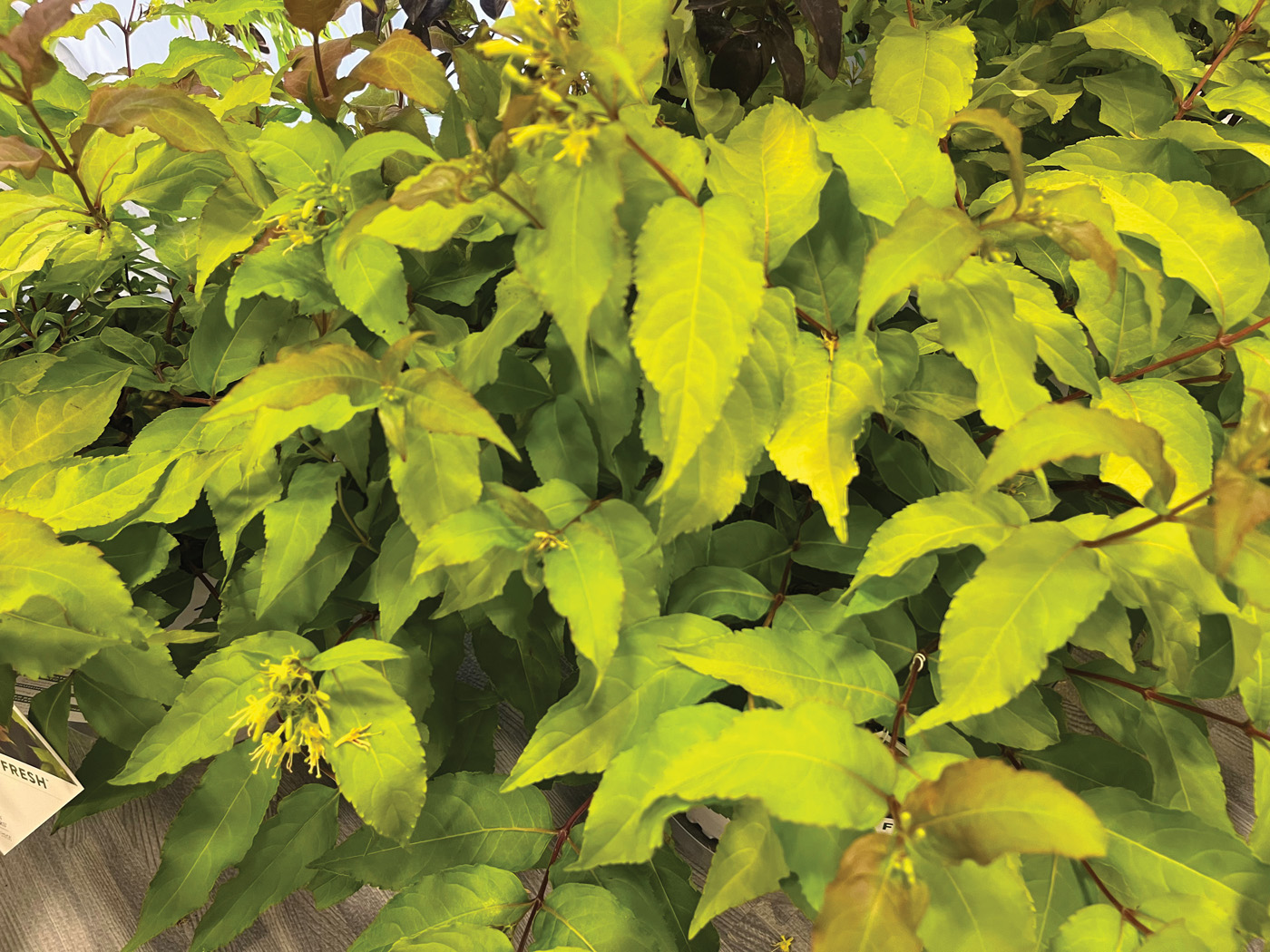
- Name: Diervilla × splendens ‘SMNDSS’
- Zones: 3–8
- Size: 2 to 3 feet tall and wide
- Conditions: Full sun to partial shade; moist, well-drained soil
- Native range: Hybrid of eastern North American species
Every garden era has an “it” shrub. Right now, it’s bush honeysuckle. More varieties of this woody plant appear every year at nurseries, and it is no surprise why. Gardeners are seeking out native alternatives that still give them what they need—structure, height, and color.
This plant checks all those boxes and makes an especially strong replacement for Japanese spirea (Spiraea japonica* and cvs., Zones 4–8), offering many of the same characteristics. ‘Gold Mound’ spirea, an old standby in home gardens, is easily swapped for Kodiak Fresh® bush honeysuckle. They have similar heights, mounded shapes, and bright foliage. While spirea has limited ecological value, bush honeysuckle is a magnet for pollinators.
‘Merlot’ redbud
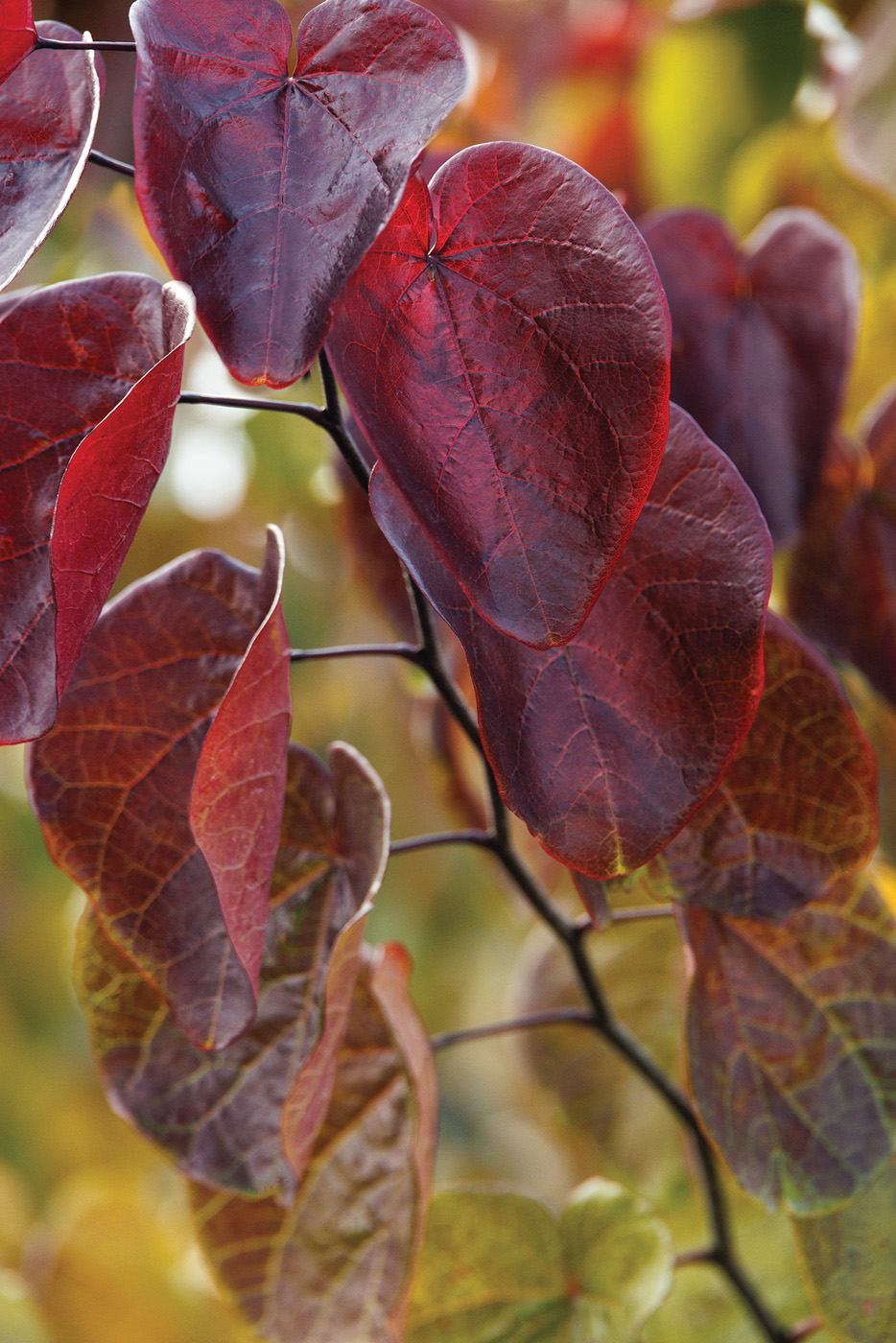
- Name: Cercis ‘Merlot’
- Zones: 6–9
- Size: 12 to 20 feet tall and wide
- Conditions: Full sun to partial shade; average to moist, well-drained soil
- Native range: Hybrid of central and eastern North American species
Seeing a large flush of purple can change your whole day. A 10-foot-tall sweep of dark foliage introduces a sense of majesty that instantly anchors a space. ‘Royal Purple’ smokebush (Cotinus coggygria ‘Royal Purple’, Zones 4–8) has played the role of the purple garden queen for decades. But increasingly I find myself relying on purple-leaved redbuds to create a similar effect.
One of my favorites is the cultivar ‘Merlot’. In its multistem form, it delivers top-to-bottom color all season long. The heart-shaped leaves are beguiling, and the tight pink spring blooms brim with energy. ‘Merlot’ also tolerates more sun than its purple-leaved parent, ‘Forest Pansy’ Eastern redbud (C. canadensis ‘Forest Pansy’, Zones 5–9).
‘Ruby Slippers’ oakleaf hydrangea
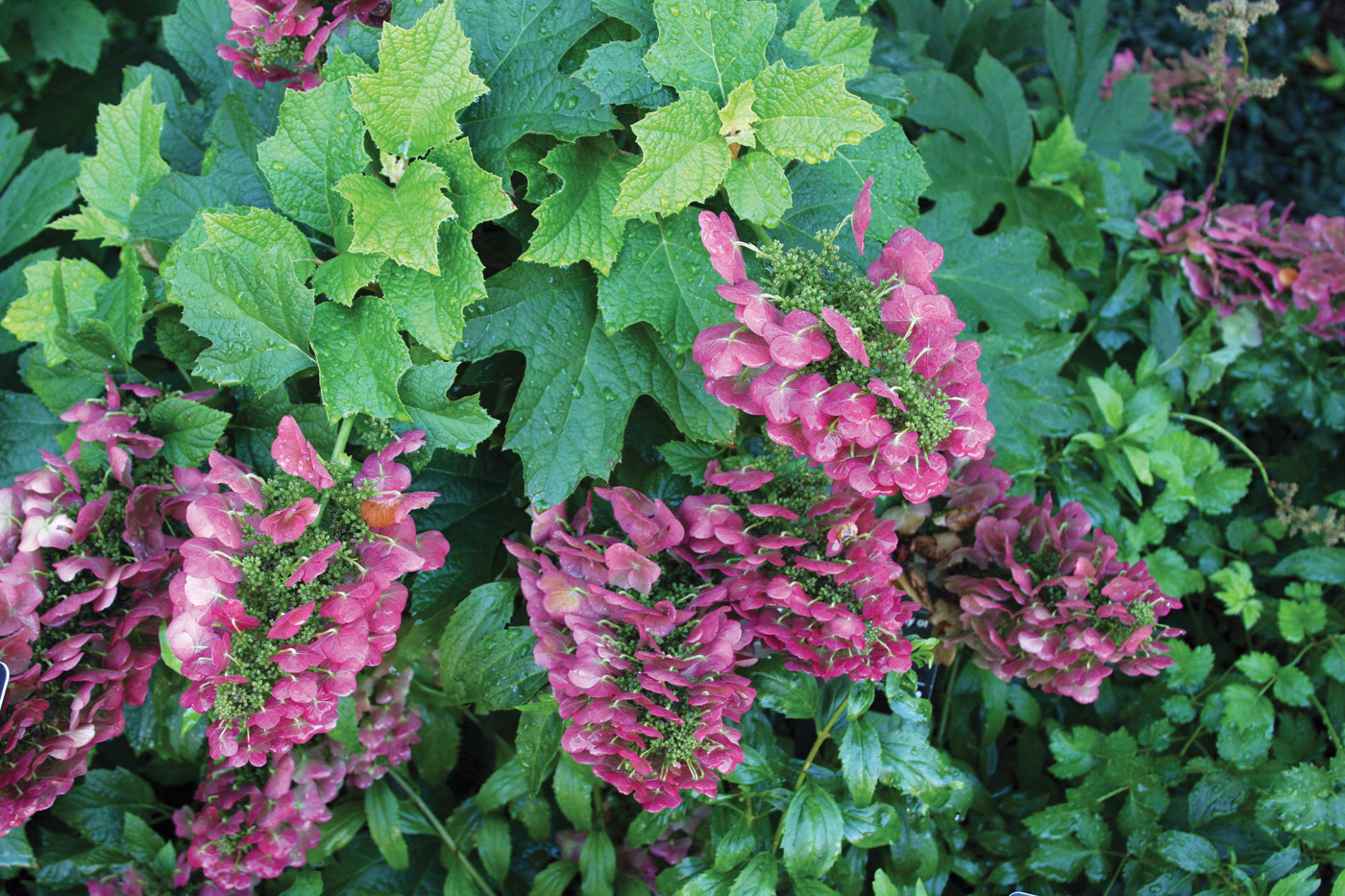
- Name: Hydrangea quercifolia ‘Ruby Slippers’
- Zones: 5–9
- Size: 3 to 4 feet tall and 4 to 5 feet wide
- Conditions: Full sun to partial shade; average to moist, well-drained soil
- Native range: Southeastern United States
When I first saw the lime-green blooms of Little Lime® panicle hydrangea (H. paniculata ‘Jane’, Zones 3–8), I wasn’t convinced. I’ve always favored pure white flowers and just assumed this cultivar and I would never get along. But come fall, it was a different story. The blooms turn shades of pink, white, and green—perfect for autumn arrangements that last deep into winter. I fell in love, but I was not alone. Now Little Lime® is ubiquitous and overused, so I searched for another compact alternative. I found it in ‘Ruby Slippers’ oakleaf hydrangea. The blooms open white, then gradually deepen from pink to ruby-red as the season progresses. The fall foliage is a rich burgundy, and it is a native plant to boot, tolerating drier soil than other hydrangeas.
Read More: Best Types of Hydrangeas for Stunning Fall Color
‘Brilliantissima’ red chokeberry
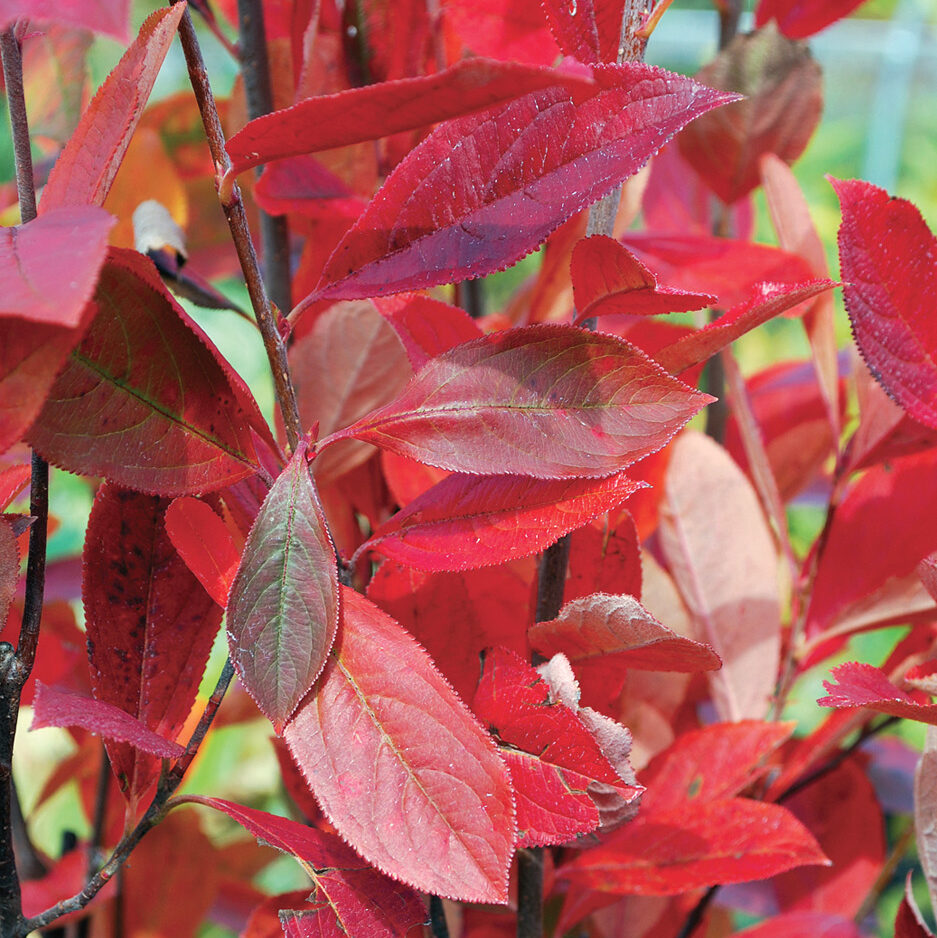
- Name: Aronia arbutifolia ‘Brilliantissima’
- Zones: 4–9
- Size: 6 to 8 feet tall and 3 to 5 feet wide
- Conditions: Full sun to partial shade; average to wet, well-drained soil
- Native range: Eastern North America
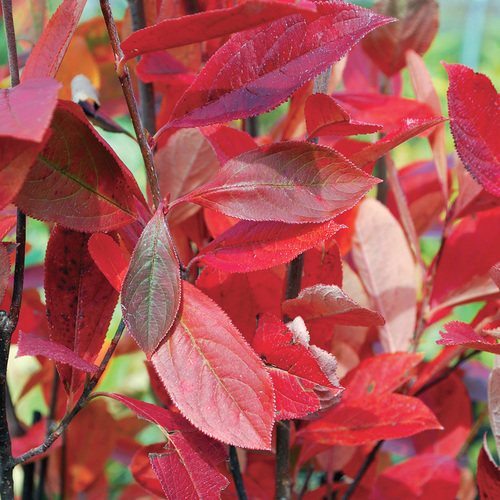
Burning bush (Euonymus alatus*, Zones 4–9) is something of a poster child for the native plant movement. The shrub has invaded forests throughout the Eastern United States, forming dense thickets that crowd out native plants, and it is now banned or restricted in several states. Yet people continue to plant it, drawn by its low cost and electric red fall color.
But there is a far better native alternative. ‘Brilliantissima’ red chokeberry delivers vivid scarlet foliage in fall while offering additional layers of seasonal interest and ecological value. Its white spring flowers provide nectar for pollinators, and clusters of glossy red berries persist into late fall and winter, feeding birds long after most shrubs have finished their show.
*Indicates invasive plant alert. Check alerts in your area to learn more.
Caitlin Bird Francke is a landscape designer, writer, and speaker who owns Caitlin Bird Landscape Design in Chatham, New Jersey.
See More:
Great Native Perennials for Your Region
Watch Videos on Our YouTube Channel
Get All Access to Fine Gardening!
Fine Gardening Recommended Products
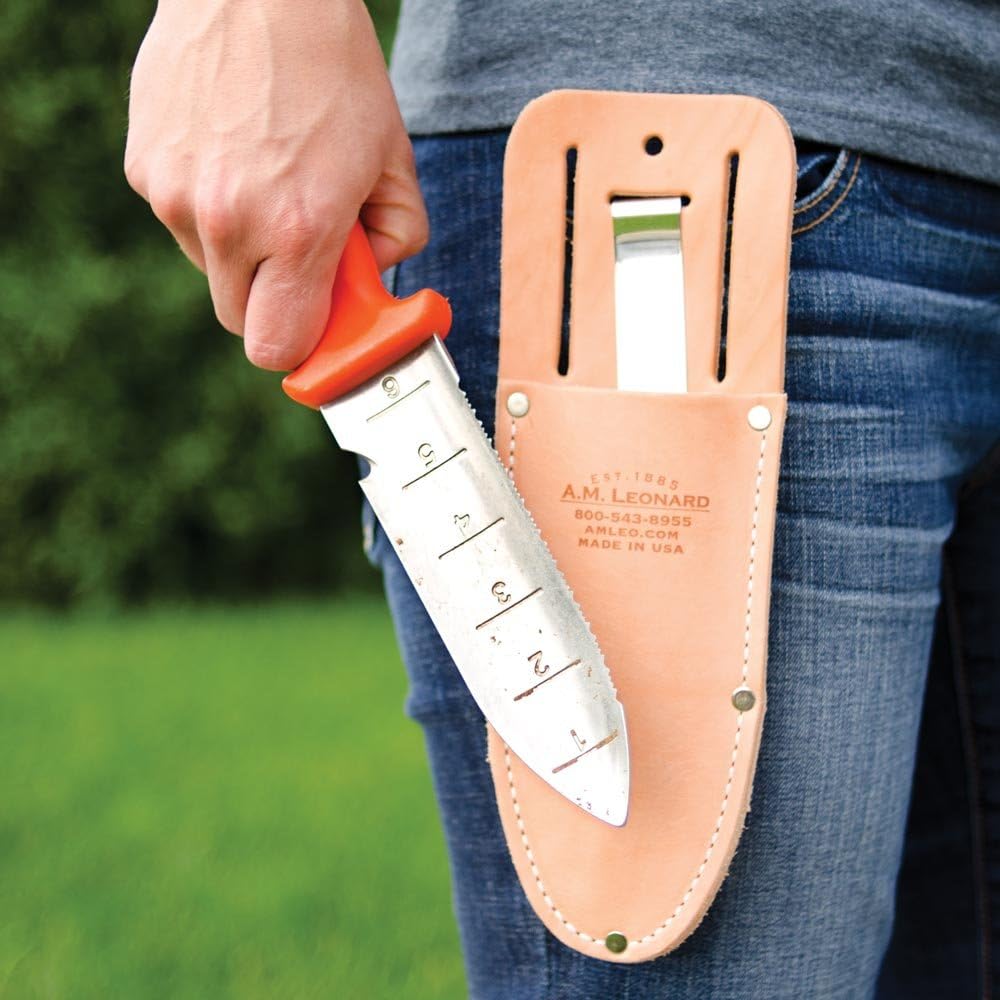
A.M. Leonard Deluxe Soil Knife & Leather Sheath Combo
Fine Gardening receives a commission for items purchased through links on this site, including Amazon Associates and other affiliate advertising programs.
MULTITASKING DUAL EDGES: a deep serrated edge and a tapered slicing edge ideal for tough or delicate cuts. DURABLE 6-inch stainless steel blade withstands 300 lbs of pressure. TWINE CUTTING NOTCH, DEPTH GAUGE MARKINGS & spear point – no need to switch tools when using this garden knife. LEATHER SHEATH: heavy duty, protective, clip on sheath to keep your knife convenient and secure. LIFETIME WARRANTY.