

Virginia’s largest botanical garden is getting greener. After switching to 100 percent renewable energy and working with local high school seniors to demonstrate the healing power of wetlands, the Norfolk Botanical Garden is now taking its next step in building—and planting—a better future. I visited Norfolk for an early look at the Garden of Tomorrow, which opens in late summer 2026.
Eco-friendly design
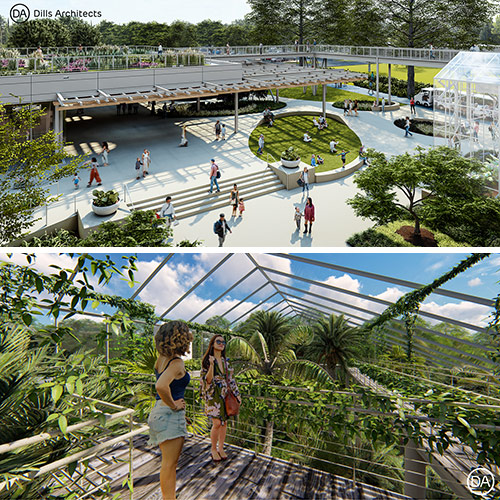
A massive new installment is on the horizon, with a grand entry pavilion, visitor center, world-class bistro, education center, and conservatory. However, the most impressive part of the Garden of Tomorrow isn’t its scale but rather its philosophy.
Norfolk Botanical Garden is putting the environment at the forefront of this expansion through regenerative design, an approach that gives back more than what’s taken during development. Sustainability is a bare minimum rather than an afterthought. It’s achieved through responsibly sourced building materials, consideration for local wildlife, and tough choices—like deciding not to use peat moss in the conservatory’s soil mix, because harvesting it degrades peatlands and releases carbon dioxide into the atmosphere.
Even the parking lot minimizes its environmental impact, with special water-permeable pavement and one tree per every seven parking spaces. It not only provides shade but also absorbs carbon, filters water, and reduces stormwater runoff.
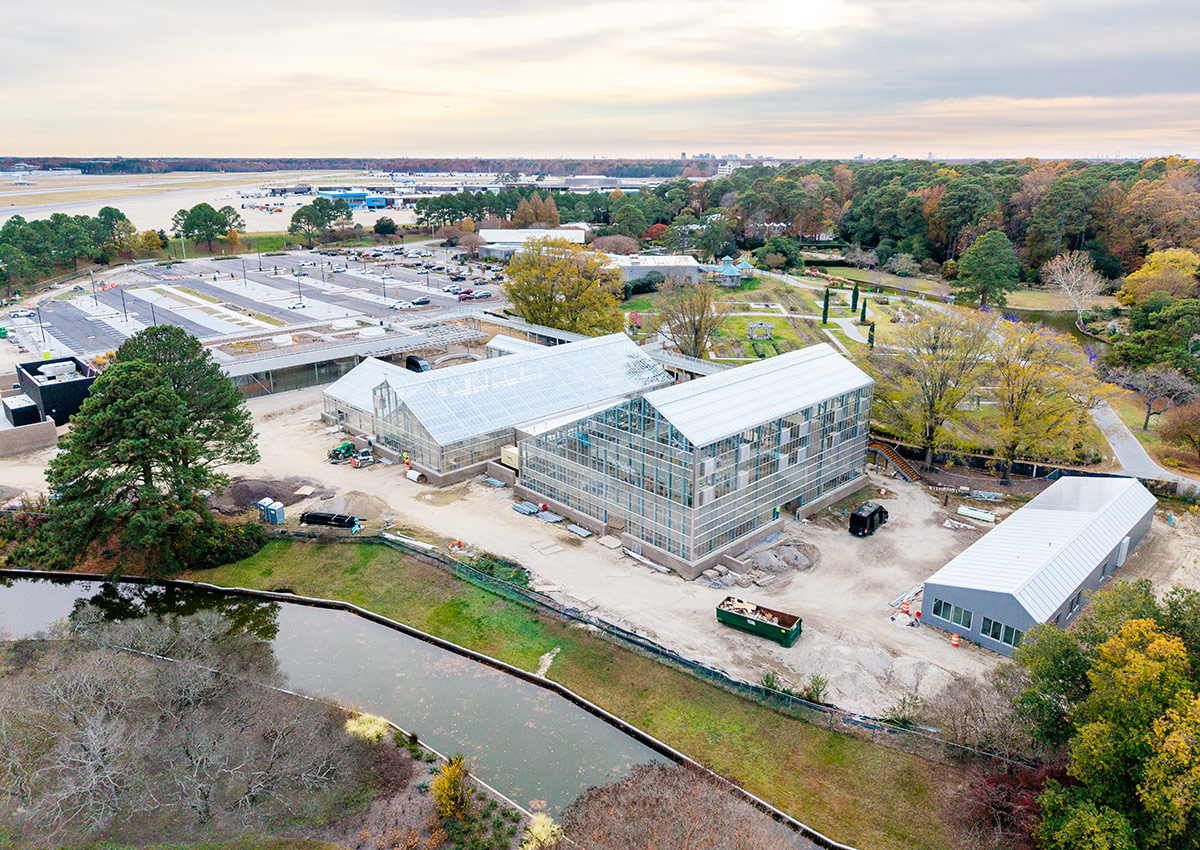
Rooted in conservation
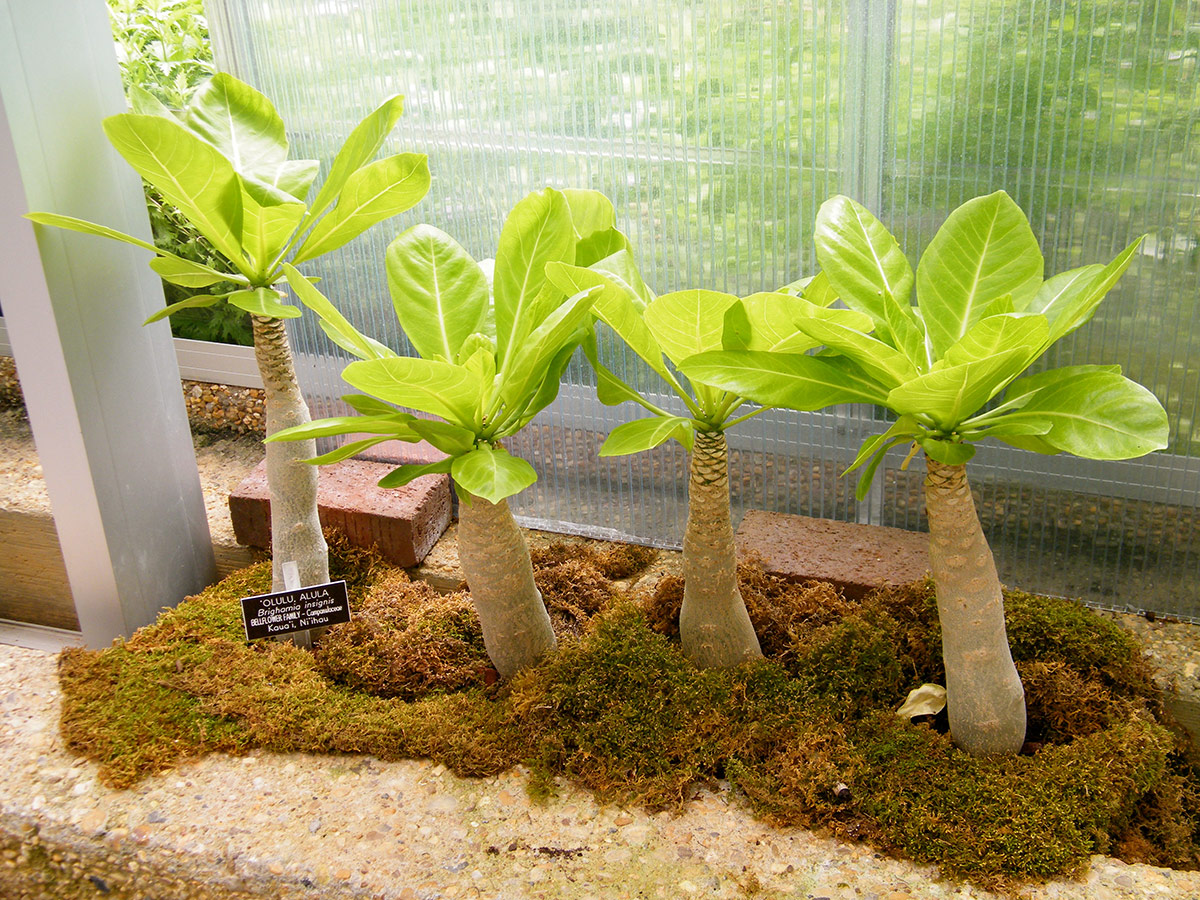
At the heart of the Garden of Tomorrow is the Perry Conservatory, a 26,000-square-foot greenhouse with tropical and desert biomes that display some of the prettiest, oddest, and rarest plants in the world. Each one has a story: The ‘ōlula (Brighamia insignis) is a small, cliff-dwelling Hawaiian palm that is now believed to be extinct in the wild after losing its only known pollinator, while a group of saguaro cacti (Carnegiea gigantea) were rescued from imminent destruction due to urban development in the Sonoran Desert in Arizona. This isn’t just a beautiful space full of plants; it’s a refuge for the displaced, endangered, and forgotten.
Perry Conservatory Director Michelle Baudanza, who has spent years tracking down many of these species or growing them from seed, believes that conservation is made possible through education. She aims to foster curiosity in guests of all ages by immersing them in a world unlike any they’ve ever seen, with strong visuals that leave a lasting impression. Information will be available at the touch of a fingertip: Each specimen on display will have a number that visitors can use at a nearby digital kiosk to discover its native habitat, pollinators, most fascinating facts, and ongoing conservation efforts.
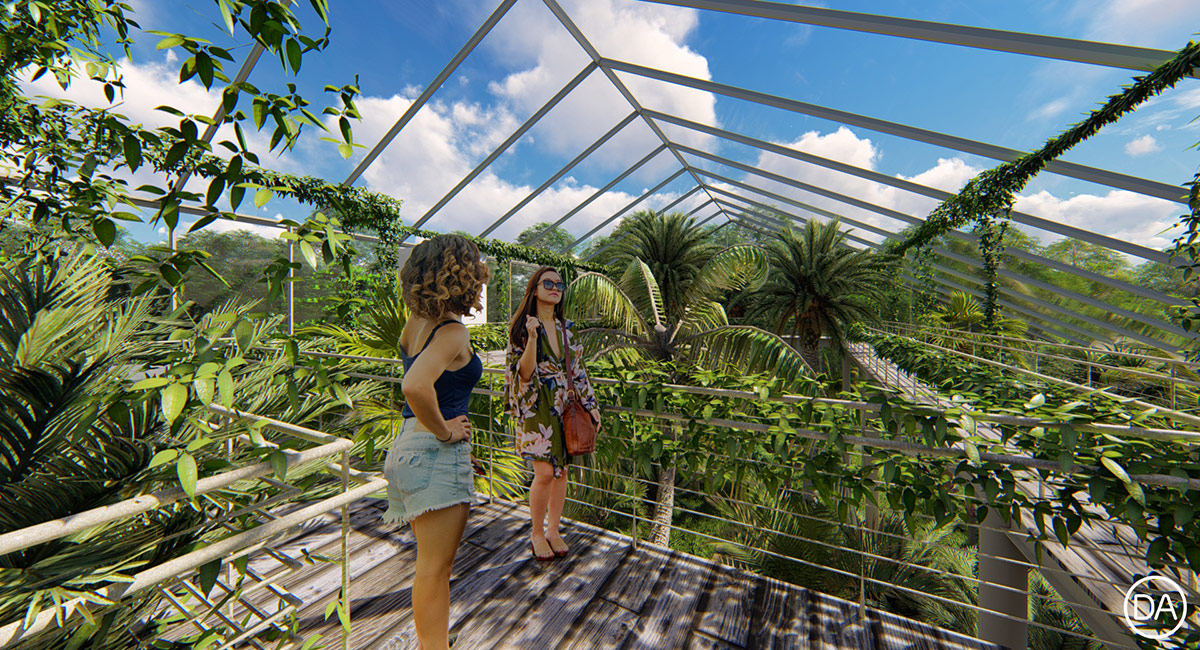
A stroll around the conservatory will offer visitors an exciting new perspective on plants—and in more ways than one. The building’s second-story Skywalk offers a top-down view of the biomes below, expanding the layers of biodiversity and allowing a closer look at taller trees and hanging plants. The Skywalk is as eco-friendly as everything else, with decking made of 95 percent recycled materials. Follow it outside and you’ll get an aerial view of one of the East Coast’s most renowned rose gardens on your way up to the green roof. There, drought-tolerant native perennials create yet another well-designed habitat.
Art, inside and out
One word that kept coming to mind during my visit was “harmony.” Every aspect of the Garden of Tomorrow is deliberate and balanced, marrying education and aesthetic, conservation and beauty, and man-made art with the natural art from which it draws inspiration.

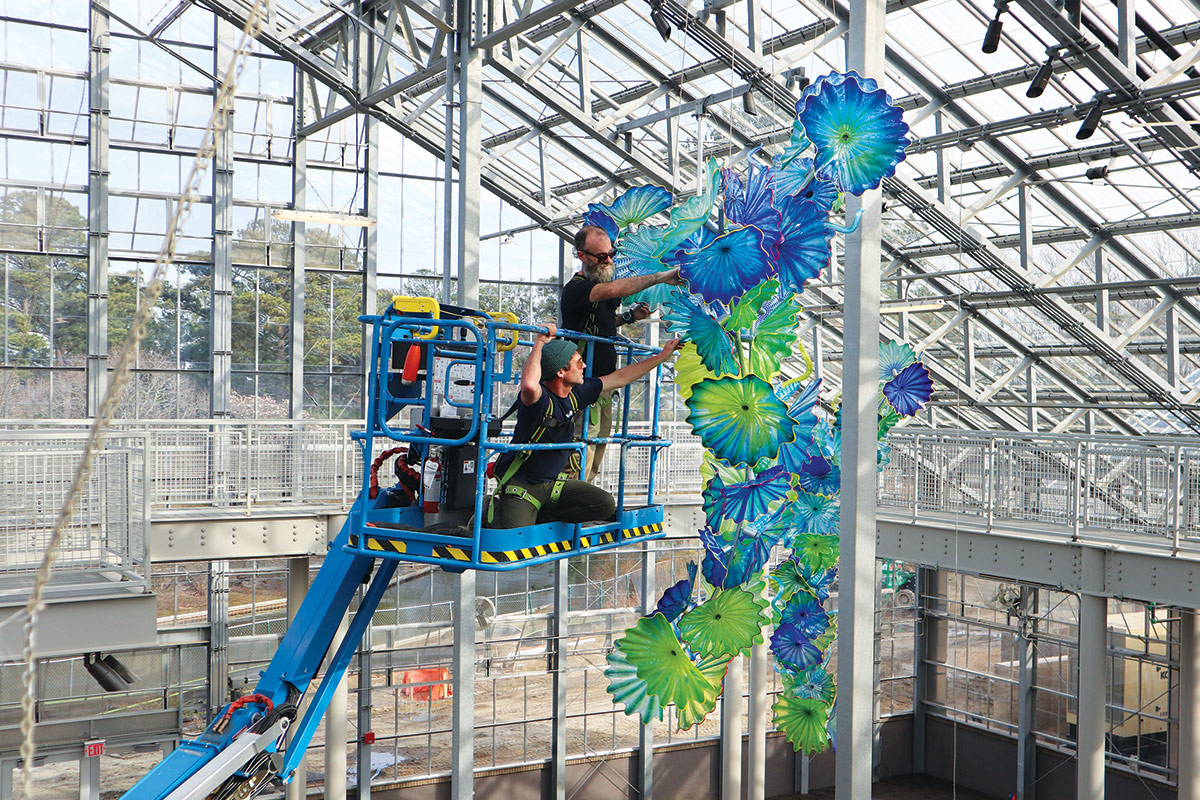
I was also treated to another rare sight: one of the biggest permanent collections of Dale Chihuly’s work on the East Coast. These huge glass art installations accentuate the shapes and color of the natural world. Two custom-made chandeliers hang from the conservatory’s high ceilings, while other pieces are integrated into the very plant beds, just as vibrant and organic as the surrounding foliage. Next door, the new visitor center houses “The Reeds,” the first Chihuly piece in the Garden’s collection and the name inspiration of its bistro.
With full-glass walls to let light in and afford a beautiful view out, the visitor center could almost be another conservatory. The building materials are responsibly sourced as well as stylish: naturally preserved wood and bio-cement, compostable light fixtures made of mycelium (that’s right, mushrooms), and two enormous live edge tabletops from a two-century-old red oak tree. It was cut down due to its declining health and eventually donated—like many other plants, finding a second chance and new purpose in the Garden of Tomorrow.
Soon, this new area will be the gateway into the Norfolk Botanical Garden, with admission, gift sales, a bistro, and its crown jewel of a conservatory all in one place.
Tomorrow is today
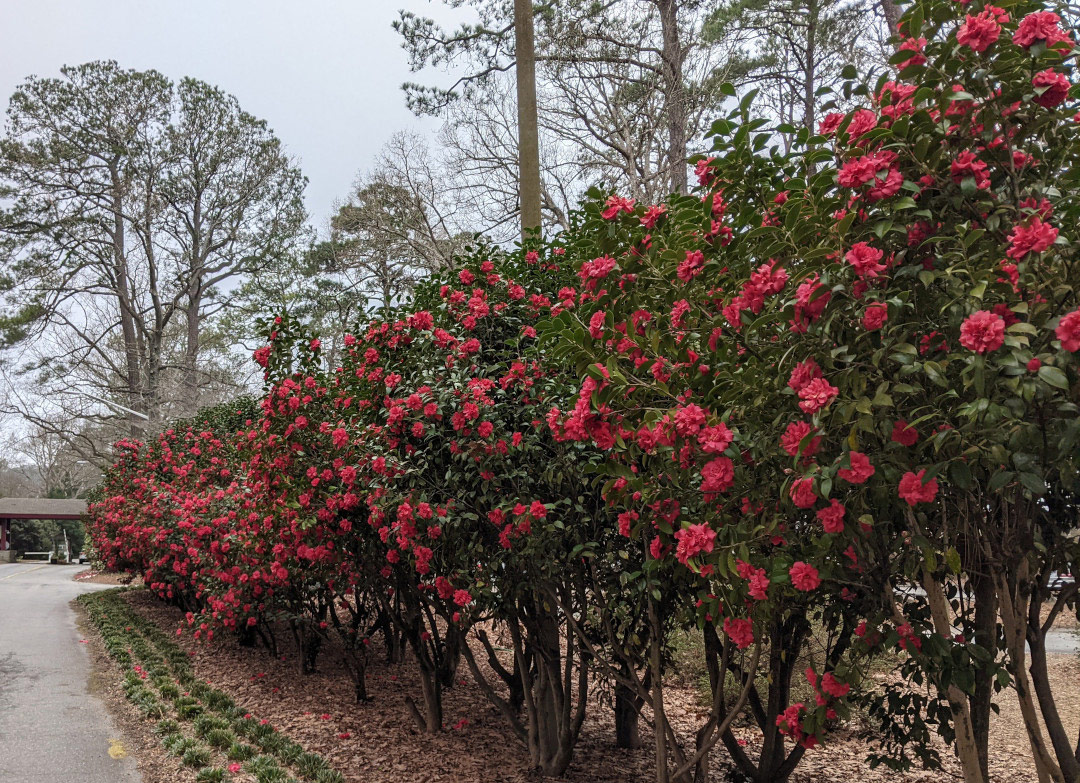
After years of planning and construction, “tomorrow” is almost here. The Garden of Tomorrow opens to the public in September 2026, with updates and more information available at gardenoftomorrow.org. The Norfolk Botanical Garden is open year-round and can be found at norfolkbotanicalgarden.org.
Learn more about great public gardens worth visiting:
Discuss this article or ask gardening questions with a regional gardening expert on the Gardening Answers forum.
And for more Southeast regional reports, click here.
Cheyenne Wine is a writer and gardener with experience in the plant nursery industry. She currently helps promote conservation efforts through the Virginia Department of Conservation and Recreation.
Fine Gardening Recommended Products
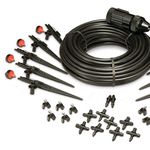
Rain Bird PATIOKIT Drip Irrigation Patio Watering Kit
Fine Gardening receives a commission for items purchased through links on this site, including Amazon Associates and other affiliate advertising programs.
– Complete 42-piece drip irrigation kit eliminates watering by hand
– Provides drip irrigation for up to 6 planters
– Easy to assemble: just attach to faucet, cut tubing and connect watering devices
– Attaches easily to your outdoor faucet or hose

Gilmore Rubber Hose Washer 10pk
Fine Gardening receives a commission for items purchased through links on this site, including Amazon Associates and other affiliate advertising programs.
– Live red rubber construction, 3/4in. washers
– Clip of 10
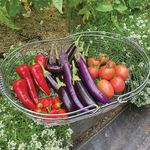
Lee Valley Large Gardener’s Wash Basket
Fine Gardening receives a commission for items purchased through links on this site, including Amazon Associates and other affiliate advertising programs.
This basket was designed to be used by gardeners to wash freshly harvested vegetables before taking them inside. You can gather your vegetables and then hose them off right in the same basket. However, you can also use it for fruit or add a cloth liner for serving bread or other baked goods. Measuring 16″ long, 11″ wide and 4″ deep, it is made of chrome-plated steel to resist rust.