
Artificial intelligence has the potential to change how we live our daily lives, and whether this makes you feel nervous or optimistic you can’t deny that conversations about AI are happening everywhere. So far, our digital overlords seem to have mastered the art of providing quick, confident, and sometimes accurate answers to any question. But AI can never replace human intuition, curiosity, or the spark of creativity that is ignited when people share their lived experiences and knowledge with each other.
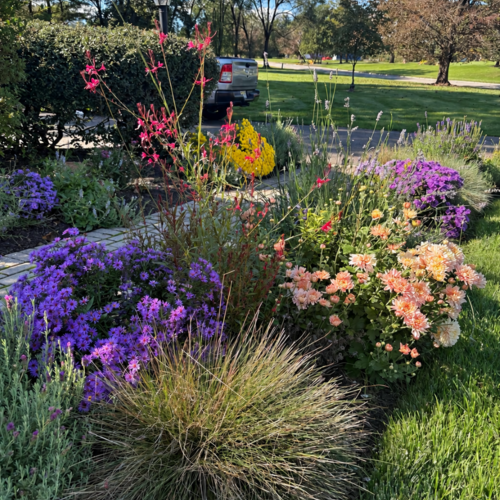
This issue sparkles with that kind of creative, interactive energy. Our cover story (“The Best New Perennials”), spotlights some standouts from the Chicago Botanic Garden’s famous plant evaluation trials, distilling huge amounts of data collected by Richard Hawke and his colleagues. But the article’s stellar plant list also represents a whole lot of vision and countless hours of hard work on the part of all the unsung heroes who bred or discovered these cultivars and brought them to market.
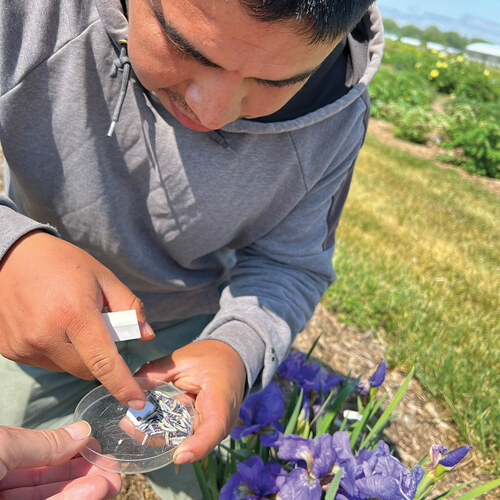
This issue also includes a cool collaboration in our Healthy Garden department, which pairs an easy-to-understand explanation of how plant breeding works by Jared Barnes accompanied with some wonderful behind-the-scenes photos by Hans Hansen. As we worked on the infographic, I imagined Gregor Mendel standing in the midst 10,000 pea plants in the late 1850s, piecing together the logic of how traits pass from one generation to the next. You can see echoes of Mendel’s intense focus and dedication in the photos of Hans and his coworkers at Walters Gardens (photo, above) as they go about their daily business of developing cool new plants for the rest of us to try.
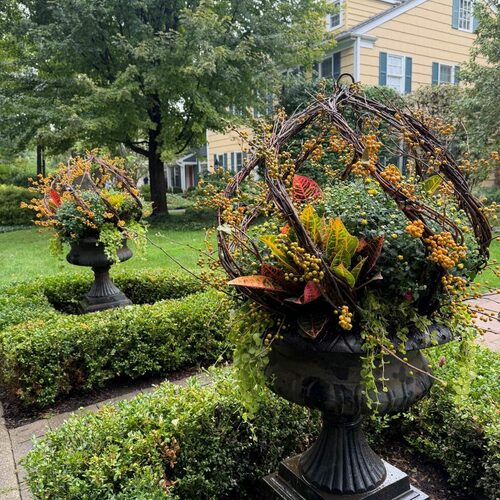
Our design features gardens on opposite coasts, but both articles highlight the importance of having details that make a visitor feel connected to the landscape around them. We even have an article devoted to plants that encourage immersive garden experiences (“Plants for the Senses”).
Every plant or animal has thousands of years of data in its genetic code, and we have all inherited adaptations that proved useful to our ancestors’ survival. A meadow or forest is a physical manifestation of the millions of possible solutions nature can find to a problem. The tech giants want us to see genius in their impulse to move fast and break things, but nature moves slowly, and finds new ways of doing things over the course of generations.
There’s no doubt that machine learning has boundless potential for advancing medicine, industrial design, and scientific research of all kinds. But do the rest of us really need data centers using huge amounts of water and energy resources to generate weird-looking cartoons and ideas that are almost, but not exactly, like an idea another person might come up with? If you need me, I’ll be out in the garden giving all of this a little more thought.
| – Carol Collins, Editor in Chief
|
 |

Fine Gardening Recommended Products
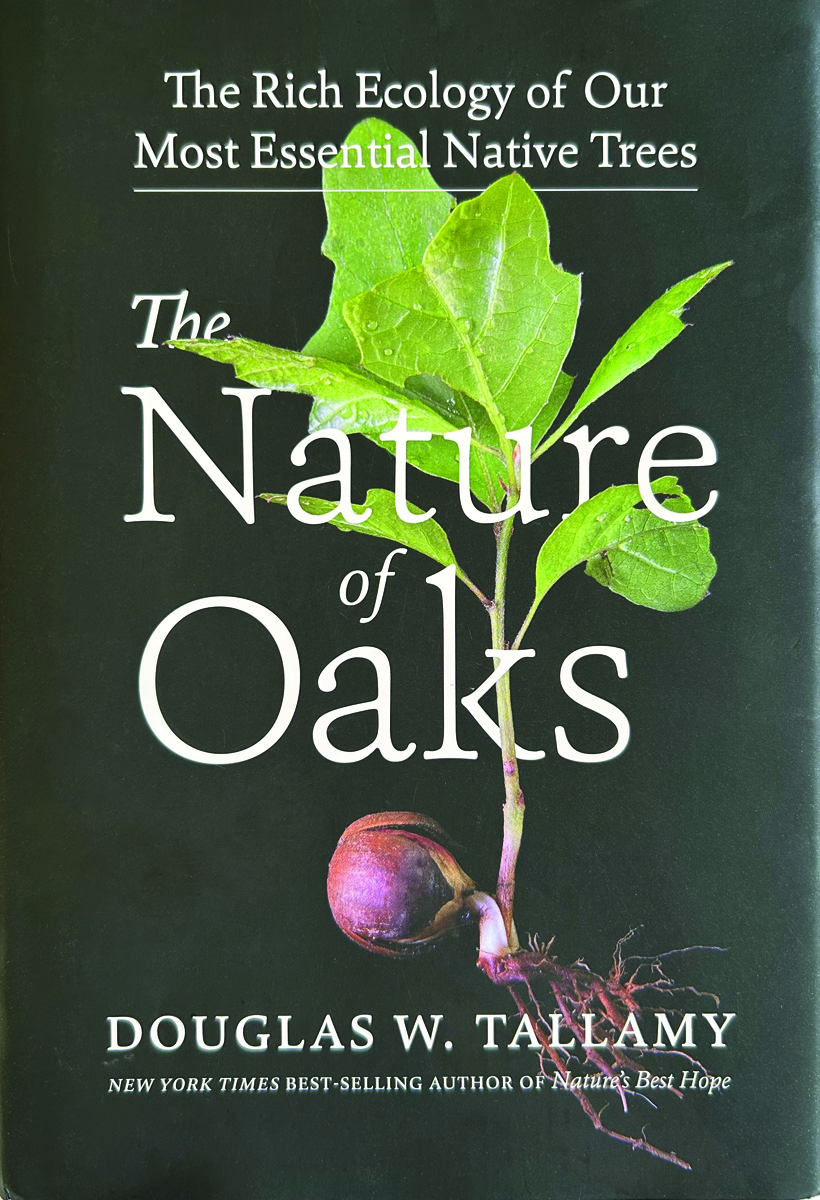
The Nature of Oaks: The Rich Ecology of Our Most Essential Native Trees
Fine Gardening receives a commission for items purchased through links on this site, including Amazon Associates and other affiliate advertising programs.
The Nature of Oaks reveals what is going on in oak trees month by month, highlighting the seasonal cycles of life, death, and renewal. From woodpeckers who collect and store hundreds of acorns for sustenance to the beauty of jewel caterpillars, Doug Tallamy illuminates and celebrates the wonders that occur right in our own backyards. He also shares practical advice about how to plant and care for an oak, along with information about the best oak species for your area.

Gardena 3103 Combisystem 12-Inch To 20-Inch Adjustable Metal Fan Rake Head
Fine Gardening receives a commission for items purchased through links on this site, including Amazon Associates and other affiliate advertising programs.
With adjustable tine spacing: suitable for raking coarse and fine material. Flexible, zinc-plated spring-steel prongs. Working width adjustable from 12-20 inches. Sold as head only, handle sold separately.

Alpine Corporation 28″ Tall Outdoor Birdbath with Scrollwork Decoration Yard Statue
Fine Gardening receives a commission for items purchased through links on this site, including Amazon Associates and other affiliate advertising programs.
STUNNING BIRDBATH: Quality birdbath is sure to attract feathered friends and create a charismatic ambiance for your garden, patio, deck, yard, or other outdoor space. SHALLOW SHAPE: Shallow and wide bowl assures that multiple small birds can drink and bathe safely at the same time
BEAUTIFUL DESIGN: Luxurious and antique styling adds a touch of elegance to your garden or yard. DURABLE CONSTRUCTION: Polypropylene material resists rust and damage from the elements while the sturdy base prevents the birdbath from tipping over. IDEAL SIZE: Birdbath measures 20″ L x 20″W x 28″H, the perfect size for your yard, and includes a one-year manufacturer’s warranty from date of purchase.