
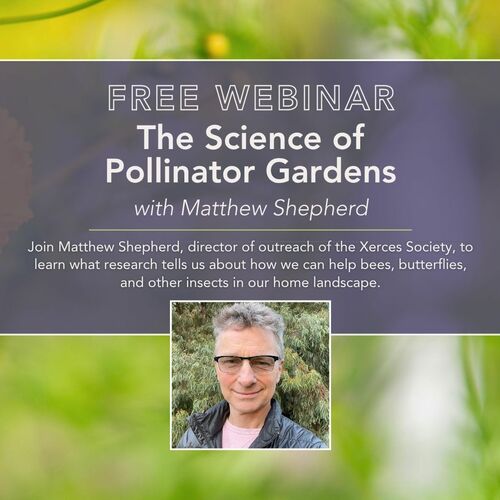
We all want our gardens to make a difference for pollinators, but what does the science actually say about how to help? In this webinar, we move beyond general gardening advice to explore the research that informs best practices for supporting bees, butterflies, and other beneficial insects right in your own backyard.
Drawing on peer-reviewed studies from researchers across North America and Europe, we will look at why native plants outperform non-natives for insects, how something as simple as leaving the leaves can shift insect populations, what the data shows about the real impacts of pesticides (including those lurking in plants purchased at your local garden center), and how much bee diversity a well-managed garden can actually support. We will also dig into recent findings on butterfly populations in the United States, including the landmark Xerces Society State of the Butterflies report and the research published in the journal Science on which it is based.
This is not a lecture of charts and tables. It is a conversation grounded in evidence, designed to help you garden with confidence and purpose.
June 26, 2026, 3:00 PM EDT / 12:00 PM PDT

About the Presenter
Matthew Shepherd is a conservation advocate with the Xerces Society for Invertebrate Conservation, one of the leading organizations in North America dedicated to the protection of invertebrates and their habitats. With decades of experience in pollinator conservation, Matthew brings both scientific rigor and practical wisdom to his work with gardeners, land managers, and conservation professionals. He has contributed to research on pesticide residues in pollinator habitat and mosquito treatment drift, and he is passionate about translating complex science into clear, actionable guidance for anyone who tends a patch of earth.
Watch our past webinars
Science of Soil with Kirsten Kurtz
Growing a Gravel Garden with Jeff Epping – Members Only
Native Alternatives to Non-Native Plants – Members Only
Fine Gardening Recommended Products

Sunnydaze 14-Inch Round Lava-Finish Ceramic Plant Pot
Fine Gardening receives a commission for items purchased through links on this site, including Amazon Associates and other affiliate advertising programs.
Made from ceramic in a vibrant green color, this outdoor plant pot features a one-of-a-kind lava finish. This decorative planter for outdoor plants measures 14″ in diameter (outer top, 8.5″ at bottom) x 11″ H and weighs 23.6 lbs. Its inner measurements are 11.75″ in diameter x 10″ H. The planter has a soil capacity of 3.05 gallons (0.41 cu ft).
Bird Houses for Outside Clearance with Copper Guard, Cedar Bird House Outdoor, Bluebird Finch Swallow Wren Chickadee
Fine Gardening receives a commission for items purchased through links on this site, including Amazon Associates and other affiliate advertising programs.
1-1/2″ ENTRANCE HOLE SIZE: SISTERBIRD bluebird houses for outside have a properly-sized entrance hole, through this blue bird houses for outside you can attract desirable species to your bluebird house, such as Bluebird, Wren, Tree Swallow, Chickadees, etc. While this blue bird house excluding predators and unwanted occupants, for example, European starlings. HIGH-QUALITY MATERIALS: SISTERBIRD birdhouse kits for kids and adults use untreated, unpainted cedar. bluebird nesting box has a rough surface, and birdhouses for outdoors can give birds a foothold as they enter and exit the cedar bluebird house. Cedar of birdhouses for outdoors clearance also can keep out weather-related damage. SAFE HOME FOR FLEDGLINGS: SISTERBIRD Bluebird BirdHouse Box with copper predator guard around the entrance hole can help young birds against predators. These birdhouses for outdoors interior grooves, like a small ladder, help young birds leave the cedar bird houses for outside, especially swallows and bluebirds. A great birdhouses for outside clearance for creating a trail. EASY AND FUN TO ASSEMBLE: Just use a screwdriver, you can experience the thrill of working with your family to build blue bird houses, and feel the pride that comes from building a bird nesting box for little birds. You can also DIY, paint it, making blue bird box special and unique, build your own blue bird houses for outdoors. EASY TO CLEAN & REUSABLE: SISTERBIRD wooden bird houses front door opens for easy cleaning after fledglings have left. When the season is over, clean out the blue bird boxes for outside and save bluebird birdhouses for outdoors clearance for next spring.
Niteangel Natural Wooden Insect Hotel, Garden Insect House for Ladybugs, lacewings, Butterfly, Bee, Bug
Fine Gardening receives a commission for items purchased through links on this site, including Amazon Associates and other affiliate advertising programs.
The insect nest box provide a safe environment where garden creatures can shelter, hibernate and lay their eggs, the insect house can also keep insects from entering your warm room. The insect hotel makes it easy to find and observe fascinating creatures. the butterfly, bees and ladybugs can use this product as habitat. Dry wood and Bamboo can be home to many insects such as ladybirds and lacewings which eat aphids and help keep your plants pest-free. the insect hotel improve the growth of plants in your yard by attracting beneficial insects. The iron design on the top can keep the insect house from rainwater. Let the insect house have a longer useful life and make the insects more comfortable. If you only have a balcony or yard, the hanging garden shelter is ideal as it provides a choice of suitable habitats in a small area.