
Happy Monday GPODers!
For many regions of North America spring has been slow to wake, but (based on the submissions that have begun rolling in) seasonal color has finally begun to emerge in a meaningful way. One gardener with some serious spring color in her small but mighty garden is Katherine Mendez (@katrmendez) in Westchester, New York (Zone 6b/7a). Katherine has only been gardening for four years and contends with a plentiful deer population that would happily make a meal out of her patch of plant beauty, but none of that is apparent from the spectacular spring color she has cultivated.
My name is Katherine, and I have been gardening since 2022. I have a very casual and laid back gardening style. I live in wooded area with a lot of deer pressure and wildlife. My plants get nibbled on a lot, so I try to find plants most animals tend to avoid as a food source. Hyacinths, narcissus, helleborus, astilbe, and rhododendron are good deer resistant choices for my garden. This year I tried to intermingle hostas and hydrangeas with my flowering bulbs in hopes of protecting them from the deer. I used a diluted mix of peppermint and water, along with neem oil to mask the smell of the hostas before they emerge in the spring to prevent the deer from munching them down to nubs. My hope for the garden next year is to incorporate native plants for my 6b/7a zone: Wild Geranium (Geranium maculatum, Zones 3–8), eastern red columbine (Aquilegia canadensis, Zones 3–8), black cohosh (Actaea racemosa, Zones 3–8), along with spring ephemerals such as yellow trout lily (Erythronium americanum, Zones 3–8), Dutchman’s breeches (Dicentra cucullaria, Zones 3–7), bloodroot (Sanguinaria canadensis, Zones 3–8), and red trillium (Trillium erectum, Zones 4–7).
What I love about gardening is getting to experiment with a variety of plants and playing with different colors, shapes, and textures in a space. Now after expanding my horticulture knowledge, I realize the ecological importance of planting native species. So when I choose my plants now, I focus on the native range of the plant and what would work well for the area given the light and soil type (right plant, right place).
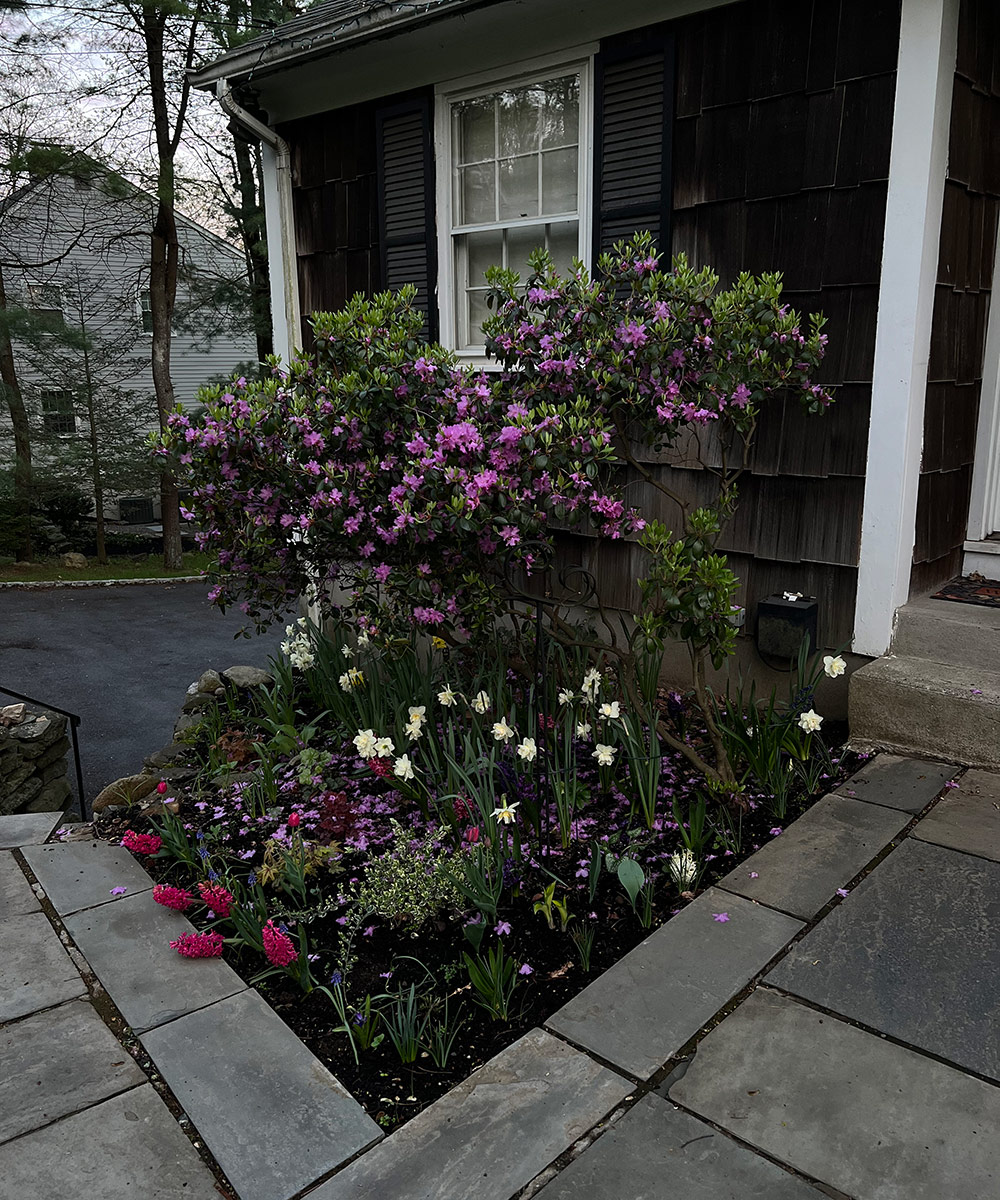 My garden!
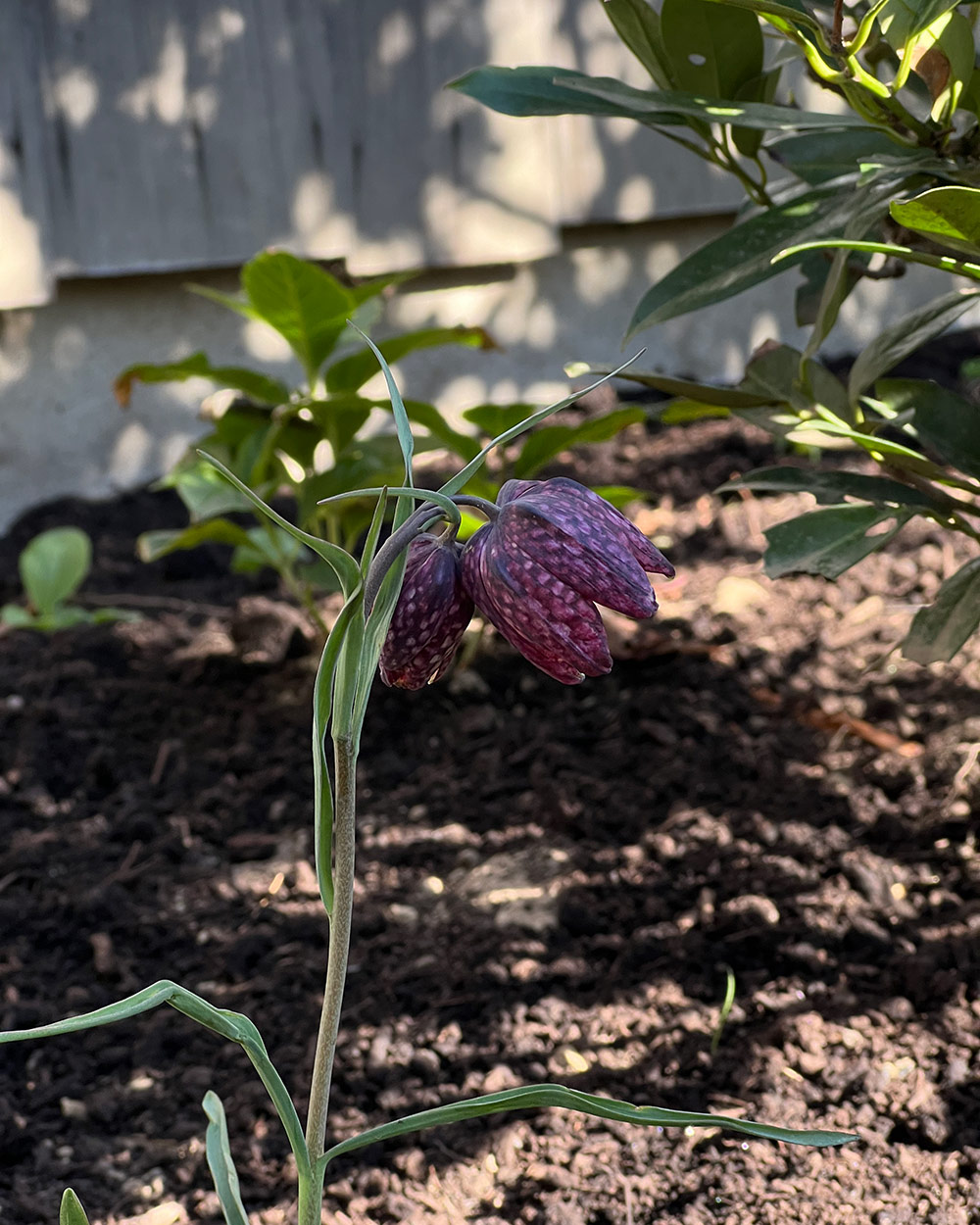 Checkered fritillary (Fritillaria meleagris, Zones 3–8) and behind is Tiny Tuff Stuff™ mountain hydrangea (Hydrangea serrata ‘MAKD’, Zones 4–9) I planted this year.
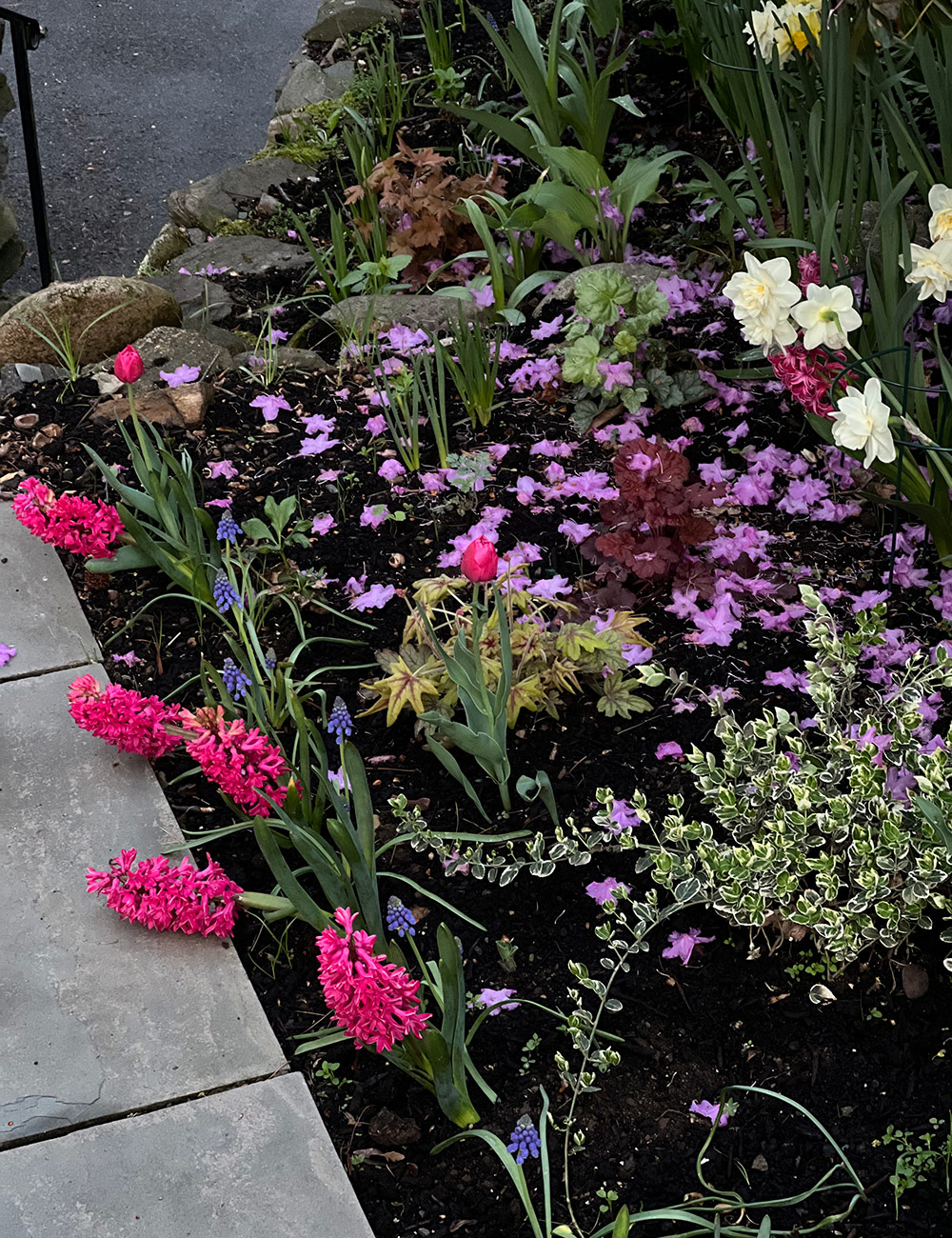 Empire State mix hyacinth (Hyacinthus ‘Empire State Mix’, Zones 4–8), grape hyacinth (Muscari armeniacum, Zones 4–8), Fortune’s spindle (Euonymus fortunei, Zones 4–9) (to be removed as it’s considered to be invasive in my area), pink tulips, ‘Eye Spy’ foamy bells (Heucherella ‘Eye Spy’, Zones 4–9), ‘Mahogany Monster’ and ‘Spearmint’ coral bells (Heuchera ‘Mahogany Monster’ and ‘Spearmint’, Zones 4–9), and a purple rhododendron from the last home owners (it has been here since 2004!).
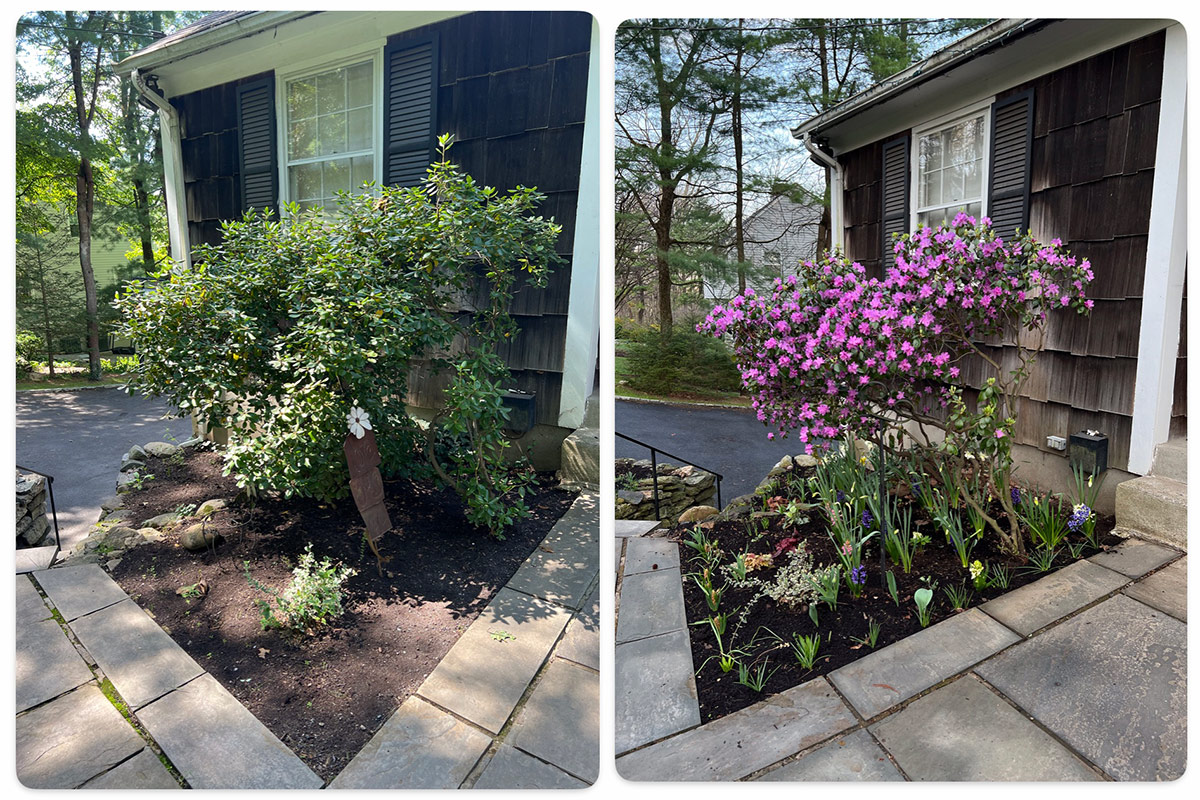 September 2025 (left) and April 2026 (right)
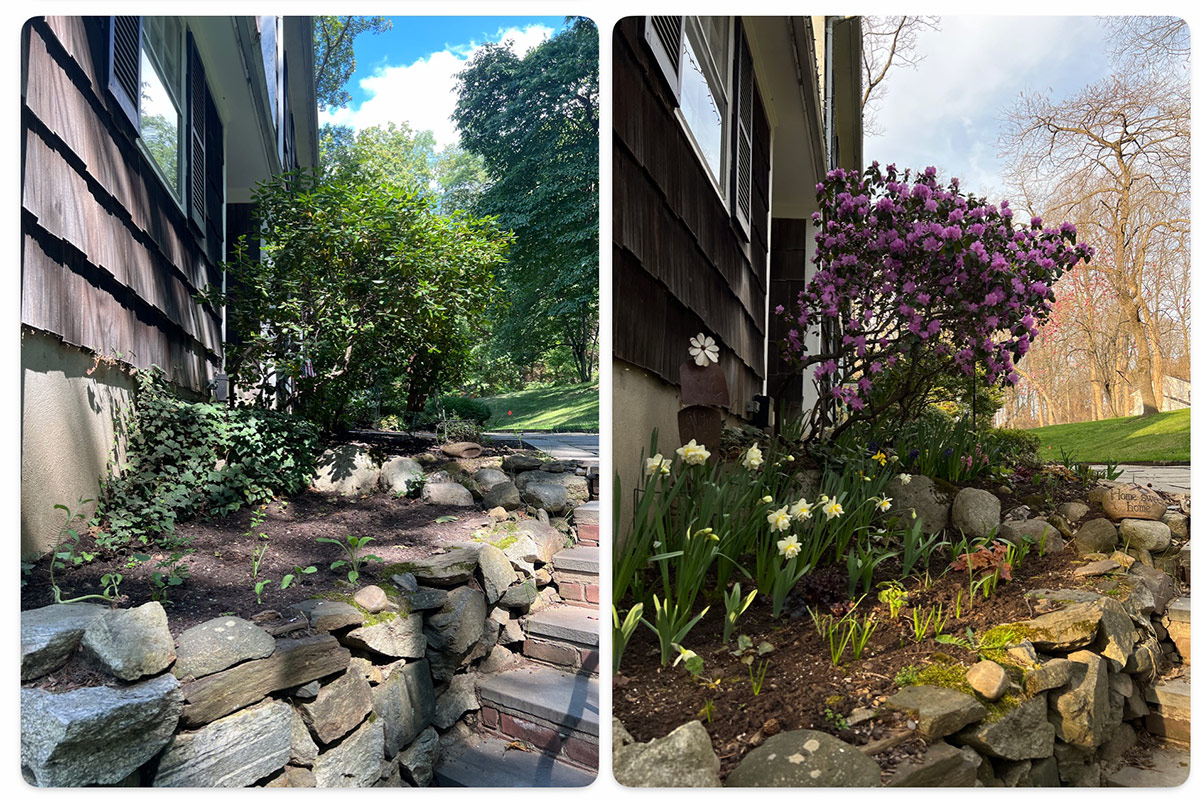 Here’s a before and after of the part-shade garden! I removed the mass of English ivy (Hedera helix), amended the soil, planted bulbs, and poorly attempted to prune the rhododendron (hopefully it bounces back and doesn’t become too top heavy).
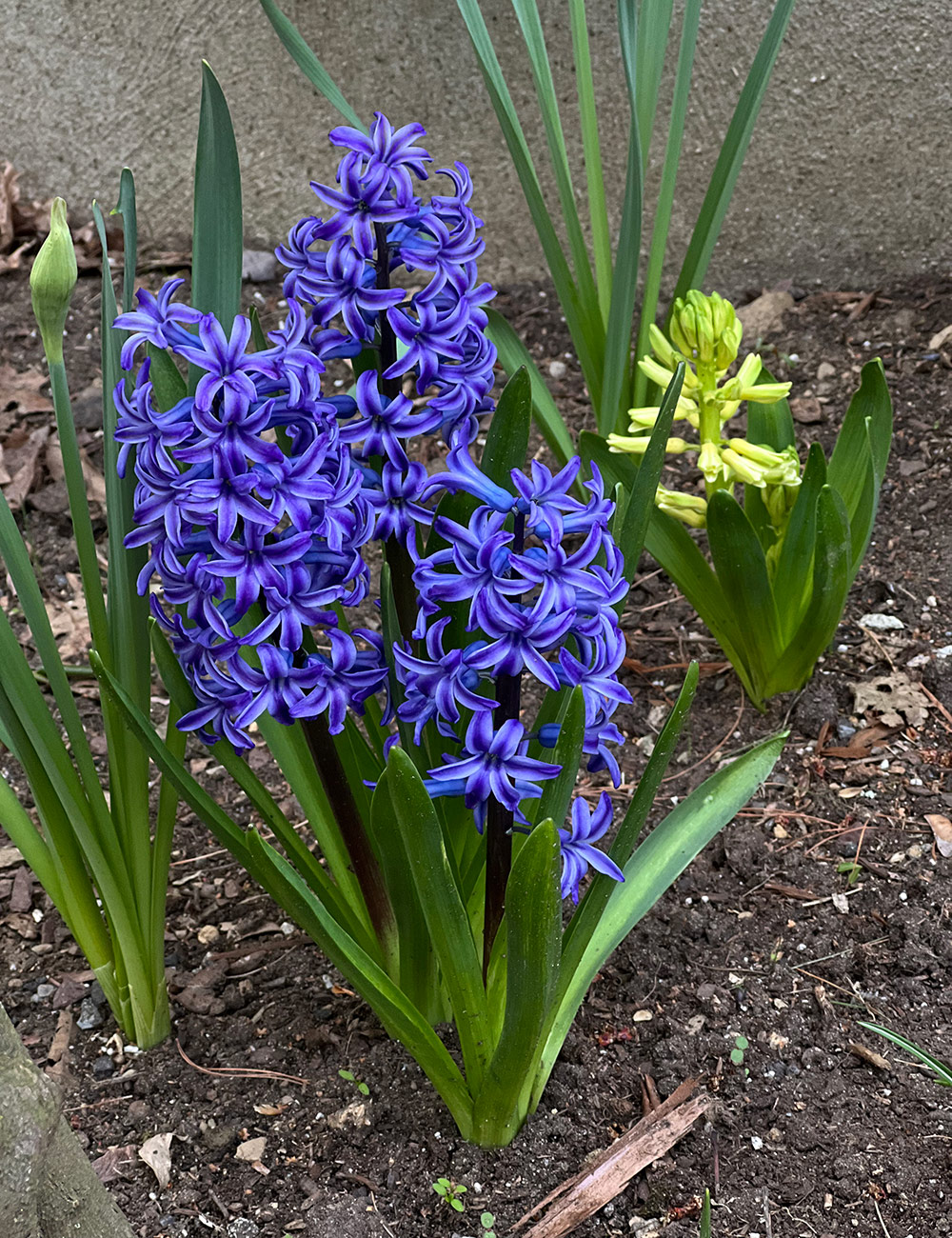 I love how fragrant hyacinths are!
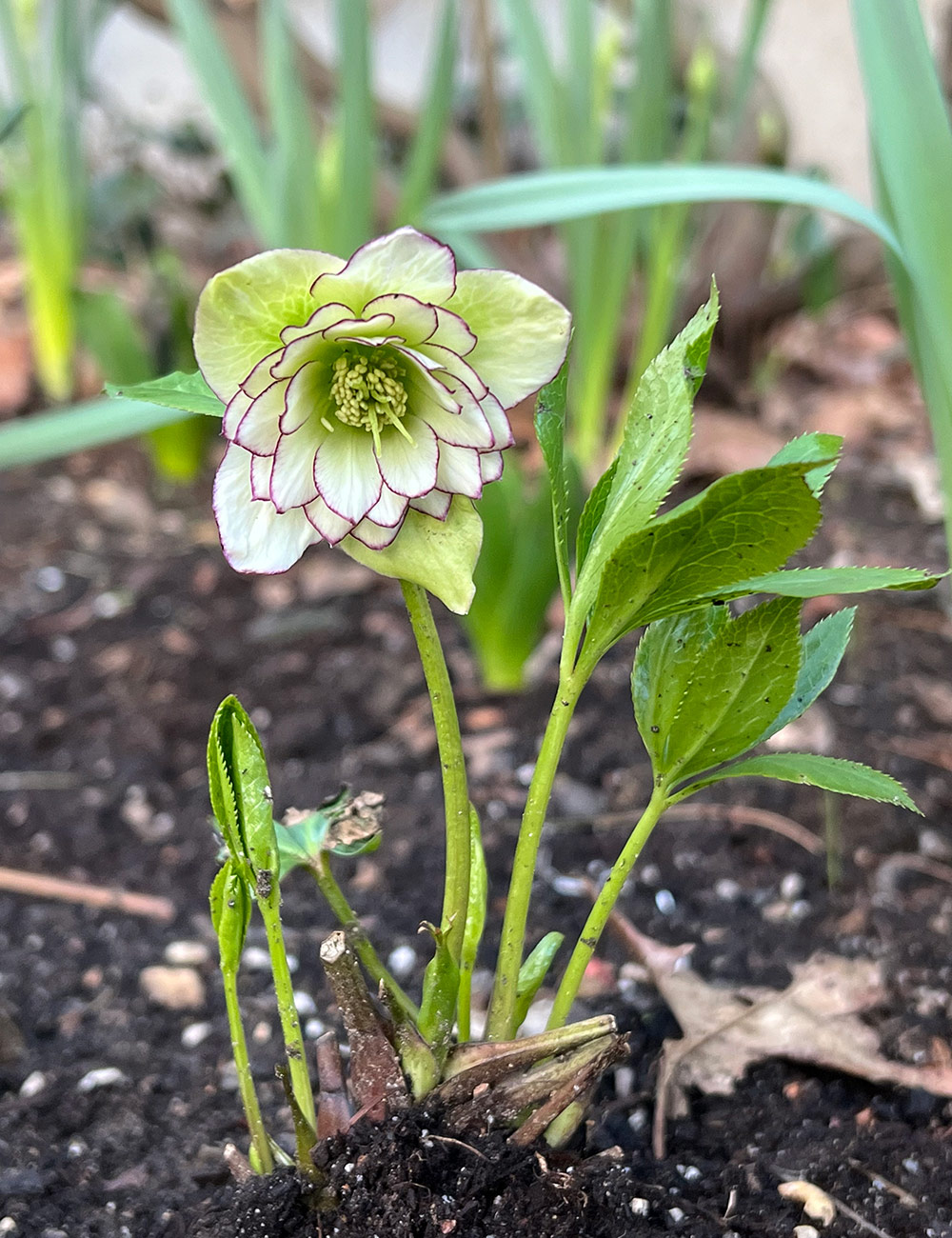 Lenten rose/hellebore—Potentially the cultivar Winter Jewels® ‘Rose Quartz (Helleborus ‘Rose Quartz’, Zones 5–9)?
Thank you so much for sharing these beautiful photos of your spring garden, Katherine! I’m so impressed with the garden beauty you have cultivated and the horticulture knowledge you have acquired in four short years, and I hope we get to see future updates as your gardening journey continues.
No matter where you are in your gardening journey, we would love to feature your garden on the blog! Please consider sharing photos of last year’s highlights, favorite scenes through the seasons, or the interest that has emerged so far this year. Follow the directions below to submit your photos to Garden Photo of the Day!
We want to see YOUR garden!
Have photos to share? We’d love to see your garden, a particular collection of plants you love, or a wonderful garden you had the chance to visit!
To submit, fill out the Garden Photo of the Day Submission Form.
You can also send 5–10 photos to [email protected] along with some information about the plants in the pictures and where you took the photos. We’d love to hear where you are located, how long you’ve been gardening, successes you are proud of, failures you learned from, hopes for the future, favorite plants, or funny stories from your garden.
Do you receive the GPOD by email yet? Sign up here
Fine Gardening Recommended Products
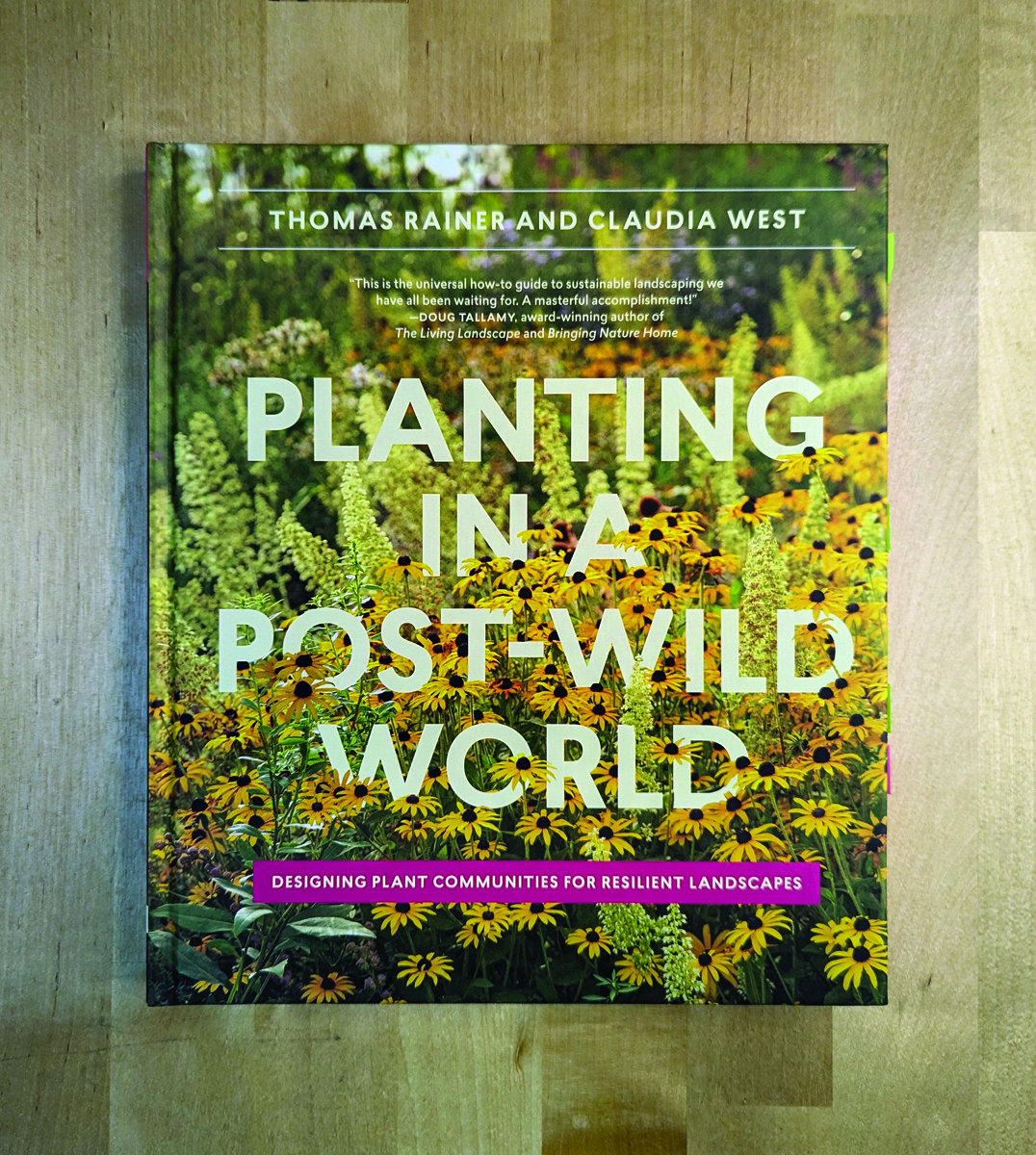
Planting in a Post-Wild World: Designing Plant Communities for Resilient Landscapes
Fine Gardening receives a commission for items purchased through links on this site, including Amazon Associates and other affiliate advertising programs.
Featuring gorgeous photography and advice for landscapers, Planting in a Post-Wild World by Thomas Rainer and Claudia West is dedicated to the idea of a new nature—a hybrid of both the wild and the cultivated—that can nourish in our cities and suburbs.
ARS Telescoping Long Reach Pruner
Fine Gardening receives a commission for items purchased through links on this site, including Amazon Associates and other affiliate advertising programs.
Telescopes from 4 to 7′. Cut and Hold (160) Blades. Drop forged blades for unsurpassed long lasting sharpness. Lightweight, 2.3 lbs., for continued use. Perfectly balanced for easy pruning.