
Create a beautiful spring garden for the Southwest
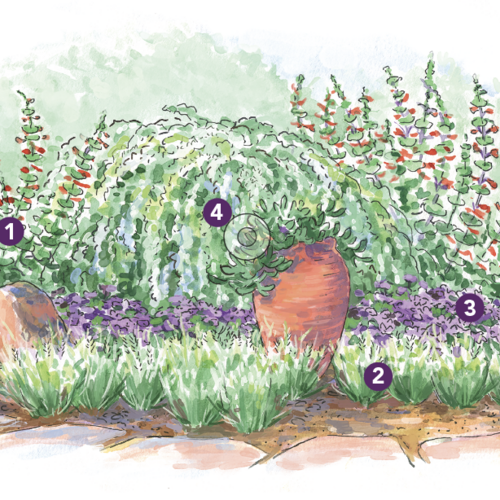
Southwest regional expert and professor of horticulture at Stephen F. Austin State University in Texas, Jared Barnes, Ph.D., shares a smart planting plan specifically curated for the region’s climate. Alabama snow wreath is a deciduous shrub and excellent alternative to non-native spirea that anchors this planting with graceful structure. Colorful blooms from scarlet penstemon and prairie phlox complement the design and are sure to attract hummingbirds and butterflies throughout the season. Texas sedge weaves texture and movement along the front of the bed, forming an attractive ground cover in this Southwest spring garden layout.
Spring garden layout plant list
Read on for details about each numbered plant in the illustration above, and learn how to recreate this expert design in your own landscape.
See More: Design Ideas for the Southwest
1. Scarlet penstemon
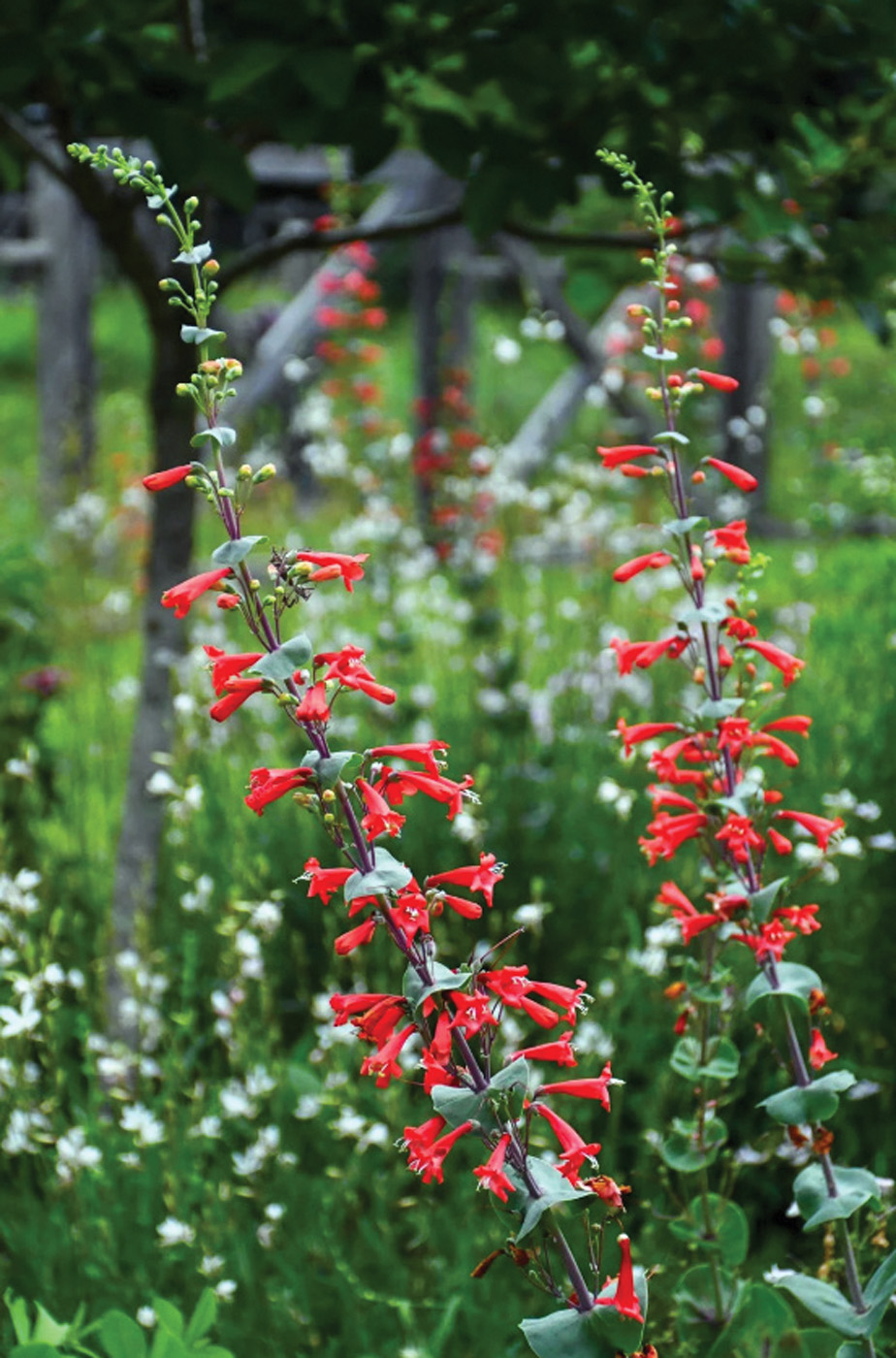
Penstemon murrayanus
- Zones: 5b–9
- Size: 4 feet tall and 1 to 2 feet wide
- Conditions: Full sun; average to dry, well-drained, sandy soil
- Native range: Arkansas, Louisiana, Oklahoma, and Texas
Scarlet penstemon is at the top of my list of favorite perennials. Most penstemons melt in the South, but this species is tough and drought tolerant once established. The glaucous blue leaves appear in spring on elongated stems that sport hints of purple. Soon to follow are tubular coral flowers that are beloved by ruby-throated hummingbirds.
In early spring when few other perennials have gained height, scarlet penstemon can tower over shorter flowering plants and ground covers. One plant makes a statement, but I love to repeat it throughout my garden. After flowering, the stems can be cut back, and there will be a low basal rosette of pale blue-green foliage readying for the next growing season.
2. Texas sedge
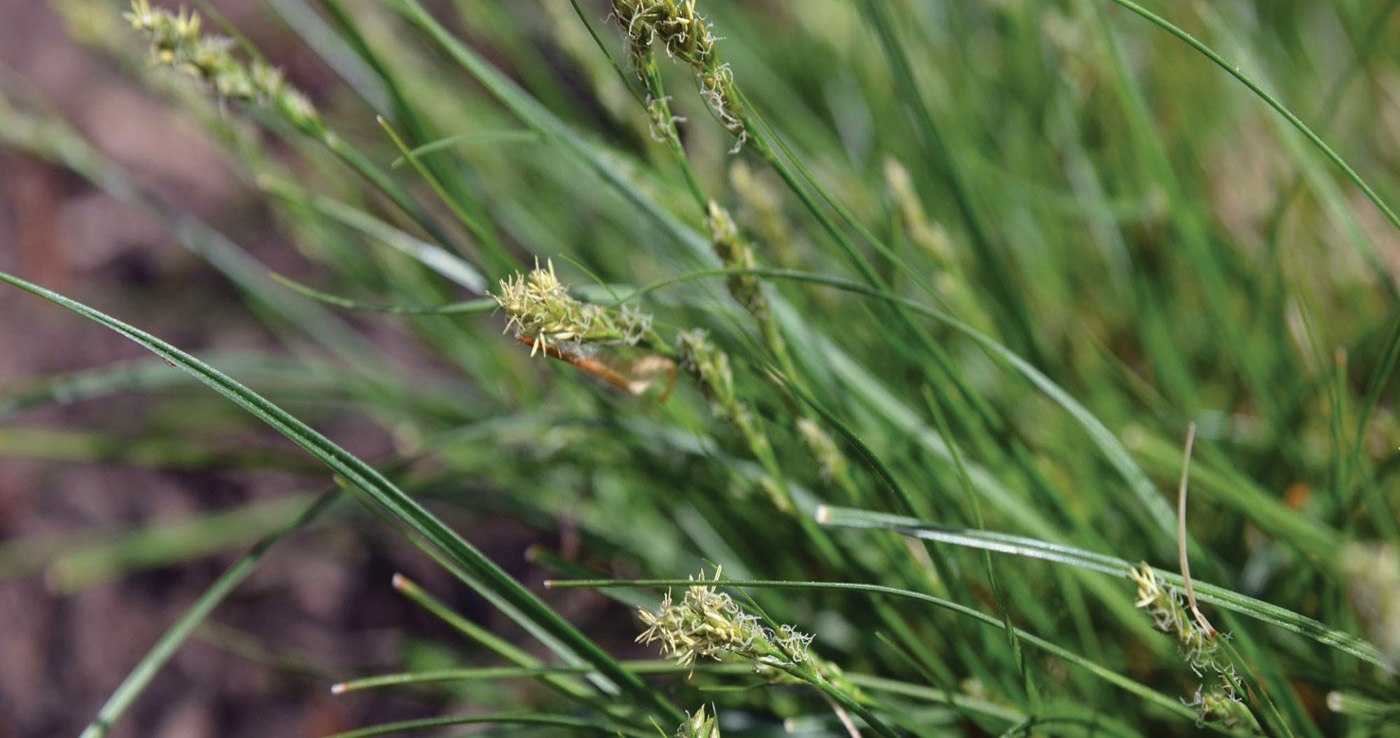
Carex texensis
- Zones: 5–9
- Size: 6 to 12 inches tall and 12 to 18 inches wide
- Conditions: Full sun to full shade; dry to moist, well-drained soil
- Native range: Central and eastern United States
After we bought our property, I noticed a lovely green sedge everywhere. It was in wet spots, dry spots, sunny spots, and shady spots; it even tolerated being mowed in the lawn. An expert helped me key it out and identify it as Texas sedge.
Inspired by the gardening world’s growing interest in sedges, I tried it in some garden beds and was delighted to discover that it makes a wonderful ground cover that is very compatible with other plantings. Instead of using mulch, I rely on Texas sedge to cover the soil’s surface. It’s not very aggressive, and a clump will slowly spread out over time. It is mostly maintenance-free, but can be cut back right after flowering to keep the plants looking tidy.
Read More: Lawn Replacements for the Southwest
3. ‘Bonnie’s Pink’ prairie phlox
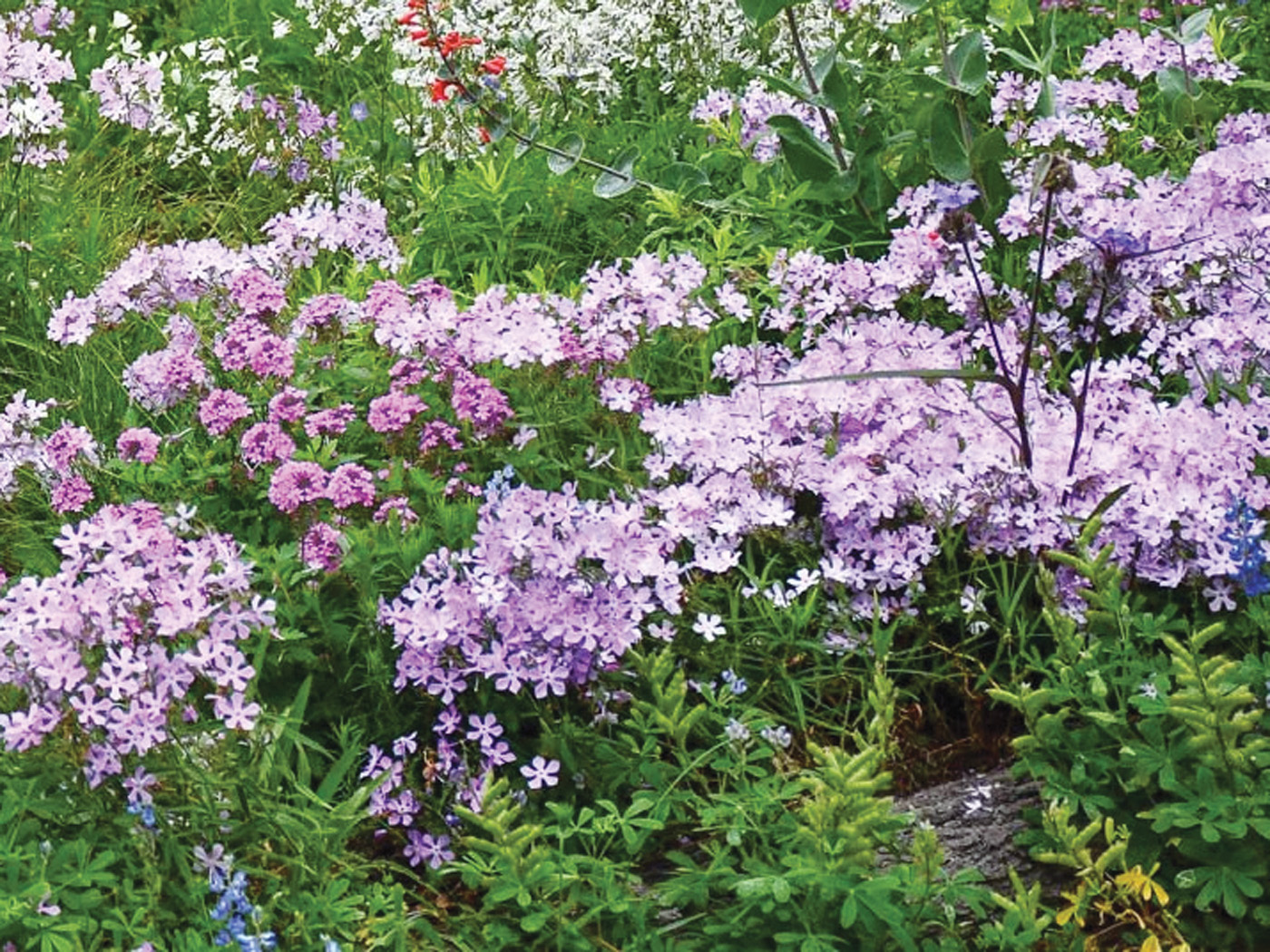
Phlox pilosa ‘Bonnie’s Pink’
- Zones: 4–9
- Size: 12 to 18 inches tall and 24 to 36 inches wide
- Conditions: Full sun to partial shade; wet to dry, well-drained soil
- Native range: Eastern United States
In spring, roadsides in East Texas are blanketed with prairie phlox. It weaves itself among grasses and other wildflowers, blooming in myriad shades of pink. The habit and performance of the straight species can be variable, so ‘Bonnie’s Pink’ was selected for its upright habit and more floriferous nature.
When it blooms, I highly recommend sticking your face in a clump to inhale the heavenly fragrance. In my garden, the tiger swallowtails flock to ‘Bonnie’s Pink’ more than they do to the wild-type prairie phlox. The extended bloom period from March into May makes it a great seasonal filler in designs. Give this rhizomatous plant some room, because it loves to spread out.
Read More: How to Create a Butterfly Haven
4. Alabama snow wreath
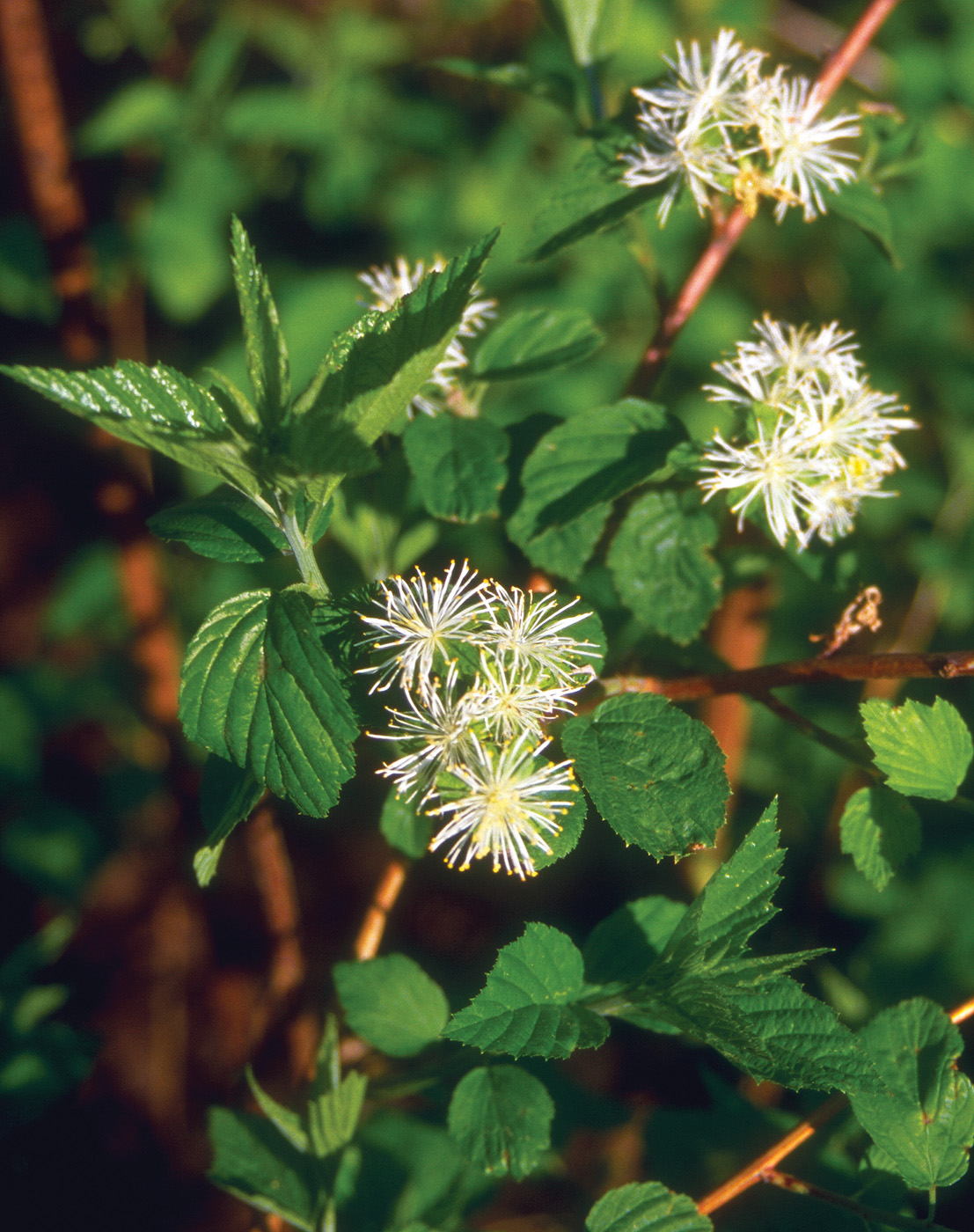
Neviusia alabamensis
- Zones: 5–8
- Size: 3 to 6 feet tall and wide
- Conditions: Full sun to partial shade; well-drained soil
- Native range: Arkansas to Georgia
If you’re looking for a native alternative to the old-fashioned, non-native spirea (Spiraea japonica*, Zones 3–8), check out Alabama snow wreath. In spring, this deciduous shrub covers itself in pom-pom-like blooms arranged on arching branches. The flowers are apetalous, meaning that they lack petals, and their snowy color comes from long white stamens.
After the blooms fade, this shrub has a nice rounded appearance that helps it blend into the garden for the rest of the growing season. In or out of bloom, it serves as a good backdrop to showy perennials. While Alabama snow wreath is rare in the wild, it grows great in cultivation and will slowly sucker and spread out after a few years. In my garden, established plants tolerate dry spells well.
*Japanese spiraea (Spiraea japonica) is considered invasive in AL, GA, IN, KY, PA, TN, VA.
Fine Gardening Recommended Products
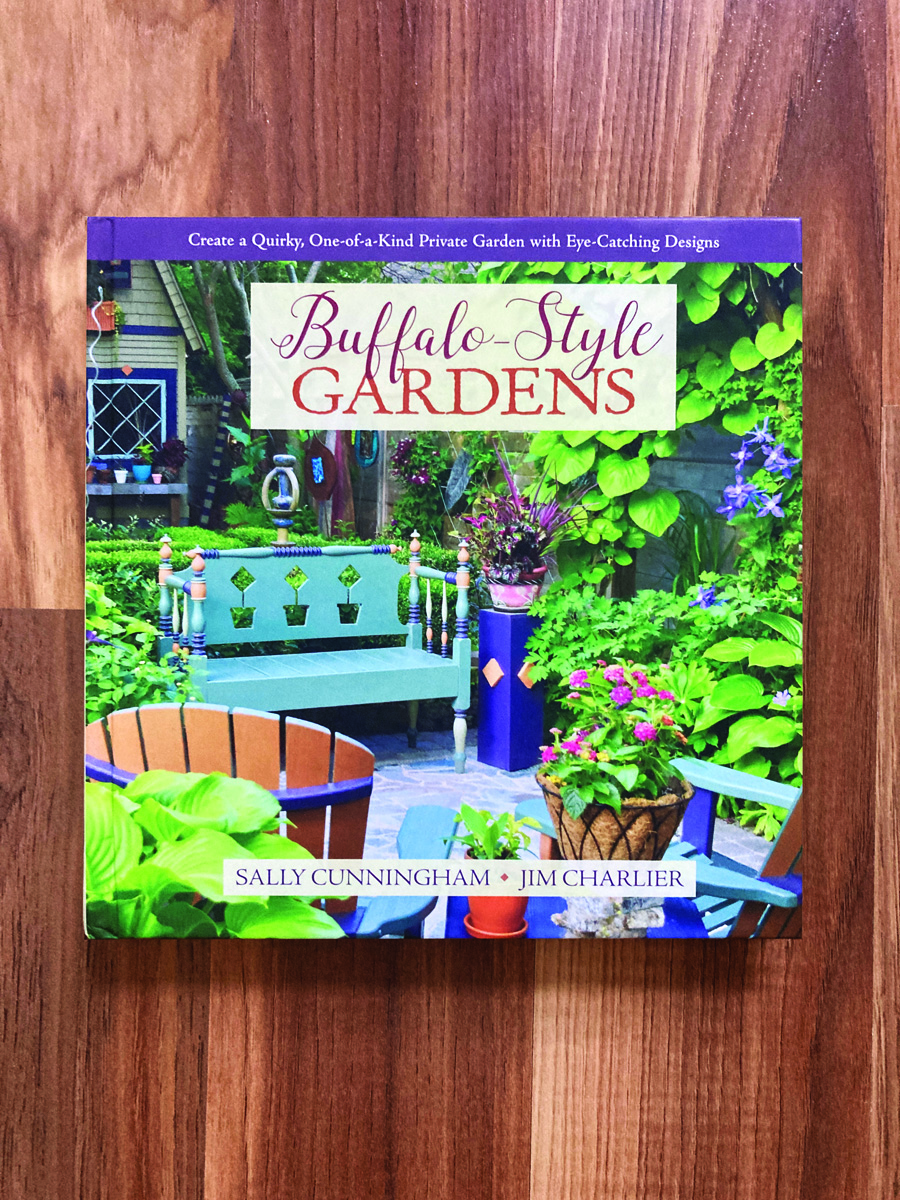
Buffalo-Style Gardens: Create a Quirky, One-of-a-Kind Private Garden with Eye-Catching Designs
Fine Gardening receives a commission for items purchased through links on this site, including Amazon Associates and other affiliate advertising programs.
Buffalo-Style Gardens is a one-of-a-kind, offbeat garden design book that showcases the wildly inventive gardens and gardeners of Buffalo – and offers readers “the best of the best” ideas to use in their own small-space gardens.

Lee Valley Garden Knife
Fine Gardening receives a commission for items purchased through links on this site, including Amazon Associates and other affiliate advertising programs.
These knives have a trowel-like blade with a sharp edge to let you use the same tool for digging, planting and cutting. The blade is sharpened on both sides, with serrations on one edge to help with cutting tough roots or dividing perennials. Deeply stamped markings on the blade (in 1/2″ and 5mm increments) help you set the correct planting depth for seeds and bulbs.

The New Organic Grower, 3rd Edition: A Master’s Manual of Tools and Techniques for the Home and Market Gardener, 30th Anniversary Edition
Fine Gardening receives a commission for items purchased through links on this site, including Amazon Associates and other affiliate advertising programs.
Since its original publication in 1989, The New Organic Grower has been one of the most important farming books available, with pioneer Eliot Coleman leading the charge in the organic movement in the United States. Now fully illustrated and updated, this 30th Anniversary Edition is a must-have for any agricultural library.