



Have you ever stood with a coffee cup in your hand looking at a garden bed and said, “How do I make sense of it all?” You have great plants growing well, but it doesn’t look how you want it to look. Maybe you have a space that is ready to plant, with dark lovely soil, but no idea where to start.
As a garden designer, even I’ve had those moments—times when I’ve been collecting plants and plopping them in the ground without conscious design thought. When that happens, I go back to the basics, pull out my shovel, and start shuffling. There are many ways to design a garden and many considerations, but when in doubt, “KISS” it—Keep It Simple, Stupid. It may seem silly (or a little rude), but this key design principle continues to remind professionals and novices alike to not overthink it!
Pivotal plant method
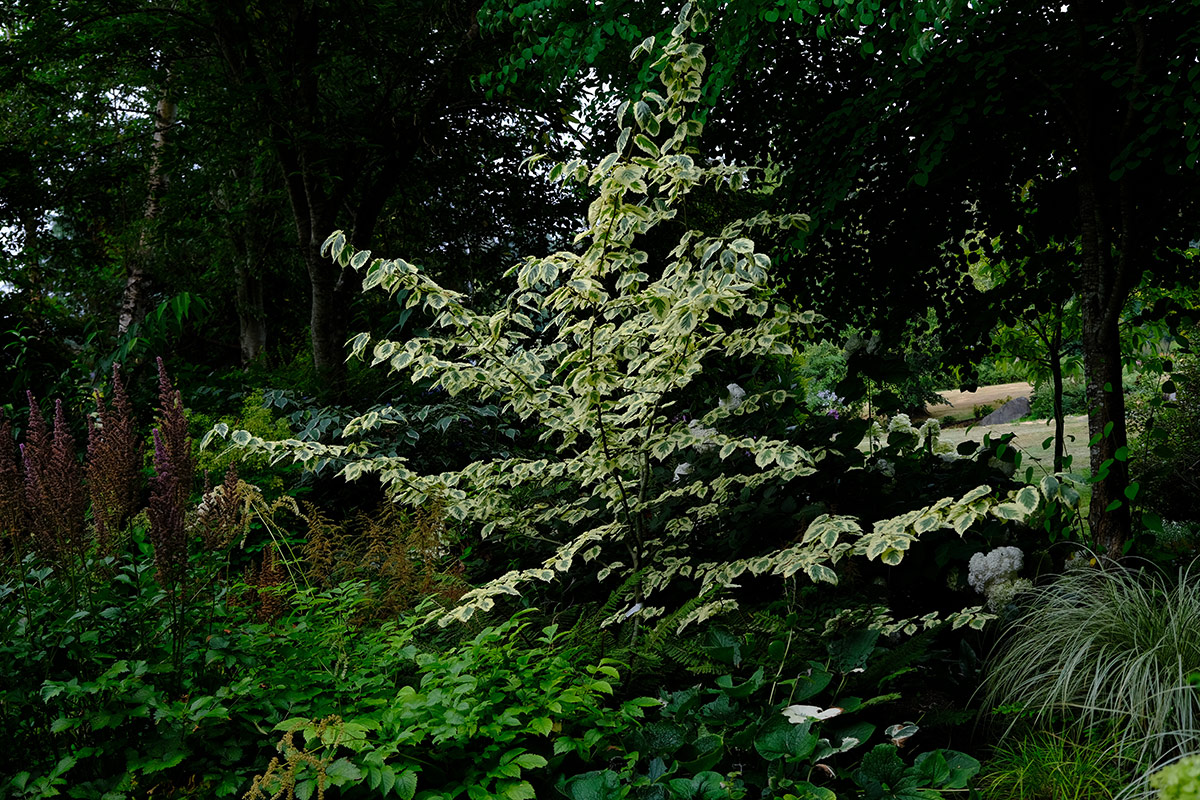
When you’re really stuck, the pivotal plant method is a great design technique to jump-start the process. Pick one plant that you absolutely love everything about, and use it as your main inspiration for color, texture, and seasonality—then add the rest. Think of it as the star of the show.
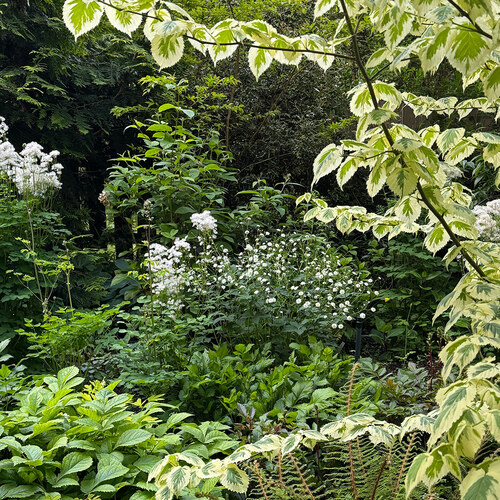
In this demonstration, I’m using a variegated dove tree (Davidia involucrata ‘Lady Sunshine’, Zones 6–8) as my pivotal plant. This is a fairly rare small tree, and I really want it to be a specimen in the garden. This tree will easily stop you in your tracks with its beauty when surrounded by a supporting cast of plants that complement it. It grows in sun to part shade but really looks best in high-canopy shade with good bursts of sun. The green and white hues will be repeated in the surrounding plants. It is deciduous, so evergreen elements for winter interest need to be included, and building layers into your garden bed will be essential for a cohesive design.
Goal 1: Match plant needs
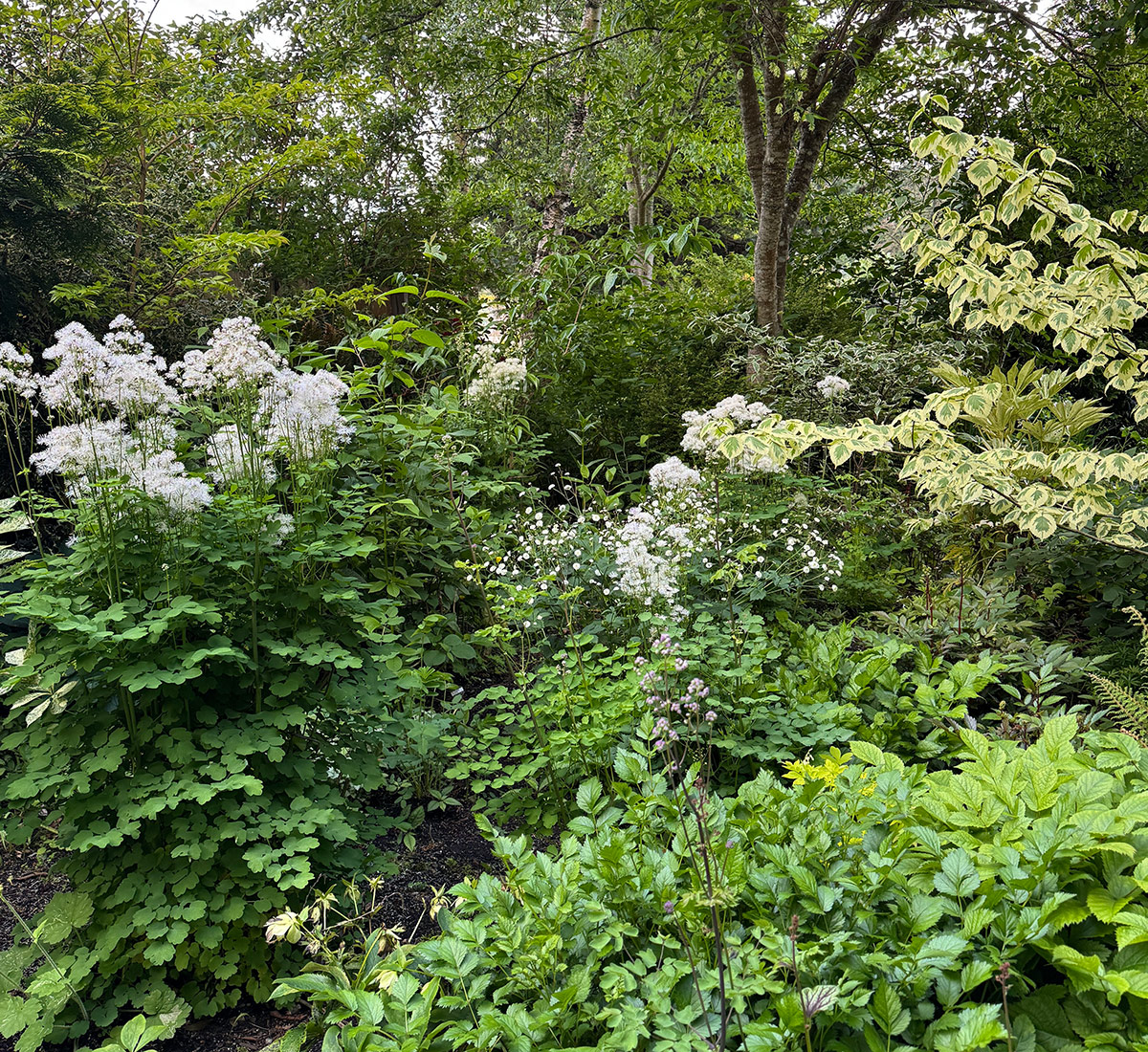
I hate the word “rule” because there aren’t really any rules in gardening, so we’ll consider the main goals of this method instead. First, only pick plants that like the same stuff: Soil conditions, water needs, and sun exposure all need to be the same. Do not try to put a full-sun plant that likes sandy soil into a shady, damp spot. They’ll be grumpy, and so will you.
Goal 2: Mix up the interest
Choose plants that offer different interests at different times. Think blooms, evergreens, bulbs, grasses, ground covers, and perennial plants. Make sure they fit your color plan. In this example, I’m using a green and white color palette.
Goal 3: Layer, layer, layer!
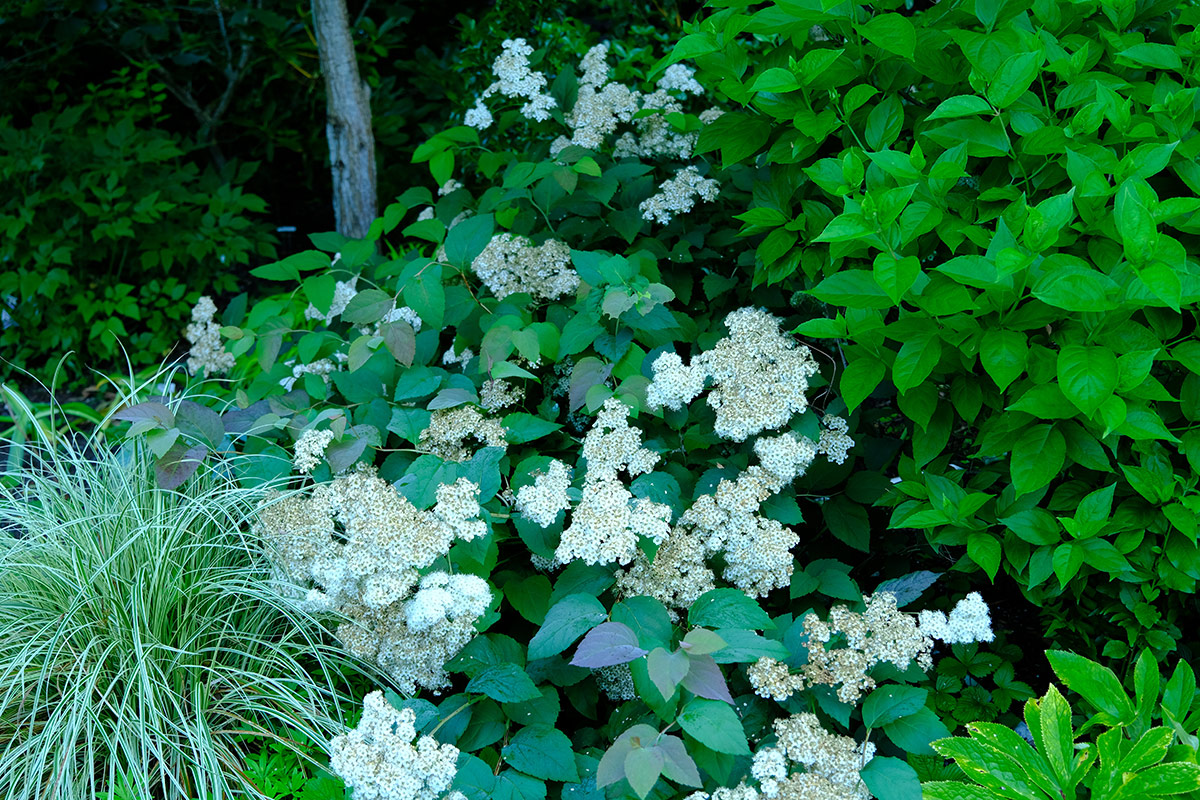
As you are planning and plotting your design, be sure to consider texture and mature heights. Layers are the best way to get a polished look in your garden. Here are some of the plants used for this design that can also work with other green and white plant palettes:
Lowest layer: Pick two low ground cover plants, one perennial and one evergreen, like ‘Silver Carpet’ lamb’s ear (Stachys byzantina ‘Silver Carpet’, Zones 4–8) and sweet woodruff (Galium odoratum, Zones 4–8). Also tuck in small bulbs—for example, snowdrops or white crocus.
Mid layer: Medium-height plants—choose different textures and use the white in more variegated leaves or white blooms with contrasting leaves:
- Double Play® Blue Kazoo® spirea (Spiraea media ‘SMSMBK’, Zones 3–8) is a great example with blue leaves, white blooms, and wonderful fall color.
- Variegated winter daphne (Daphne odora ‘Aureomarginata’, Zones 7–9) for an evergreen element with white variegation and white blooms.
- White ‘Sparkling Diamond’ hellebores (Helleborus ‘Sparkling Diamond’, Zones 5–9) are also great in this design.
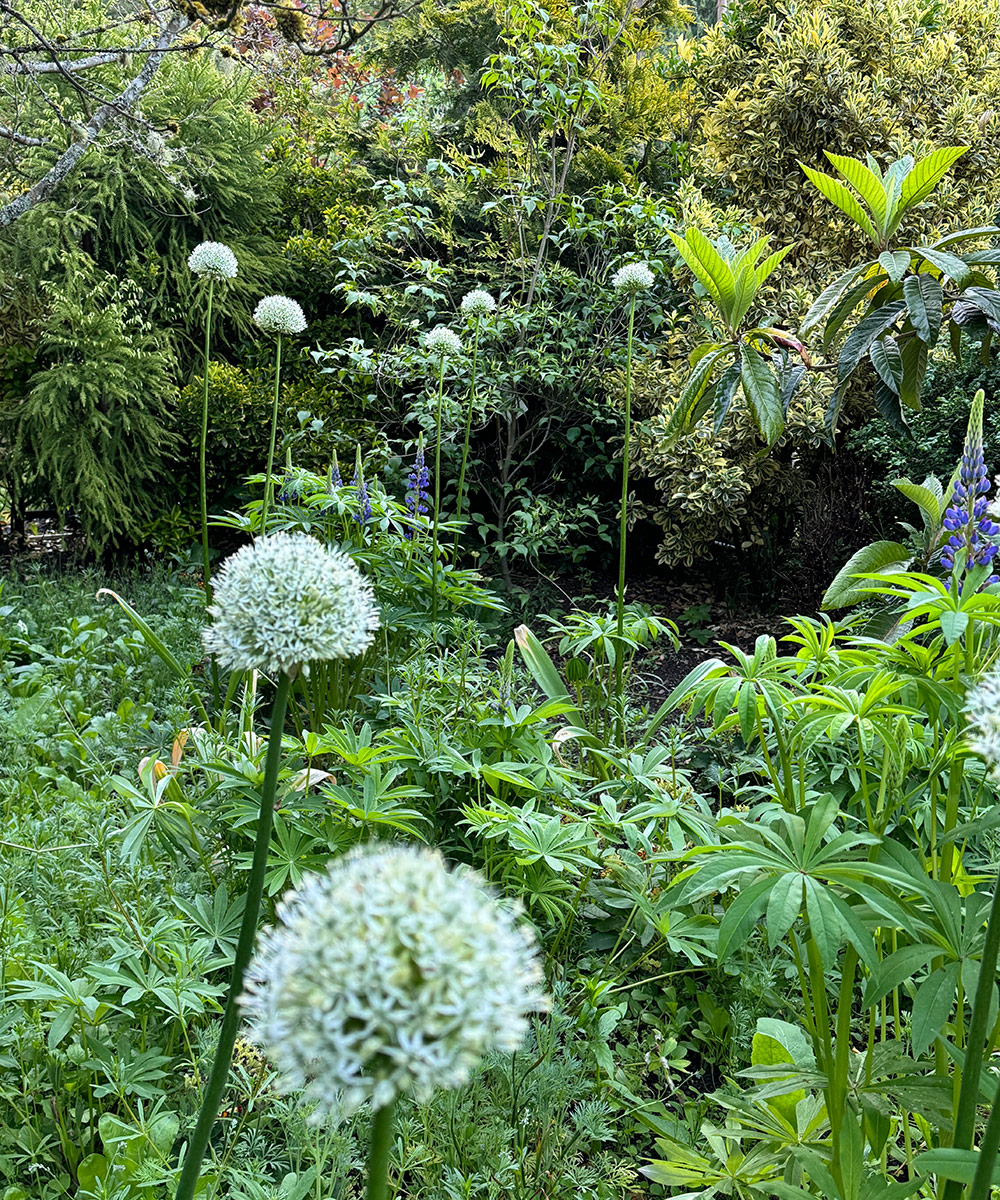
- ‘Mount Everest’ allium (Allium stipitatum ‘Mount Everest’, Zones 4–8) or white pineapple lily (Eucomis pole-evansii, Zones 7–10) (I put these in the sunniest spot) are bulbs that fit well in the design.
- ‘Cappuccino’ astilbe (Astilbe ‘Cappuccino’, Zones 4–8) (lovely contrasting bronze leaves) and Nimbus™ White meadowrue (Thalictrum aquilegiifolium ‘Nimbus White’, Zones 5–9) are good options for perennials in the mid layer.
- Feather Falls™ sedge (Carex oshimensis ‘Feather Falls’, Zones 5–9), an evergreen grass with lovely green and white variegation, is a great texture change.
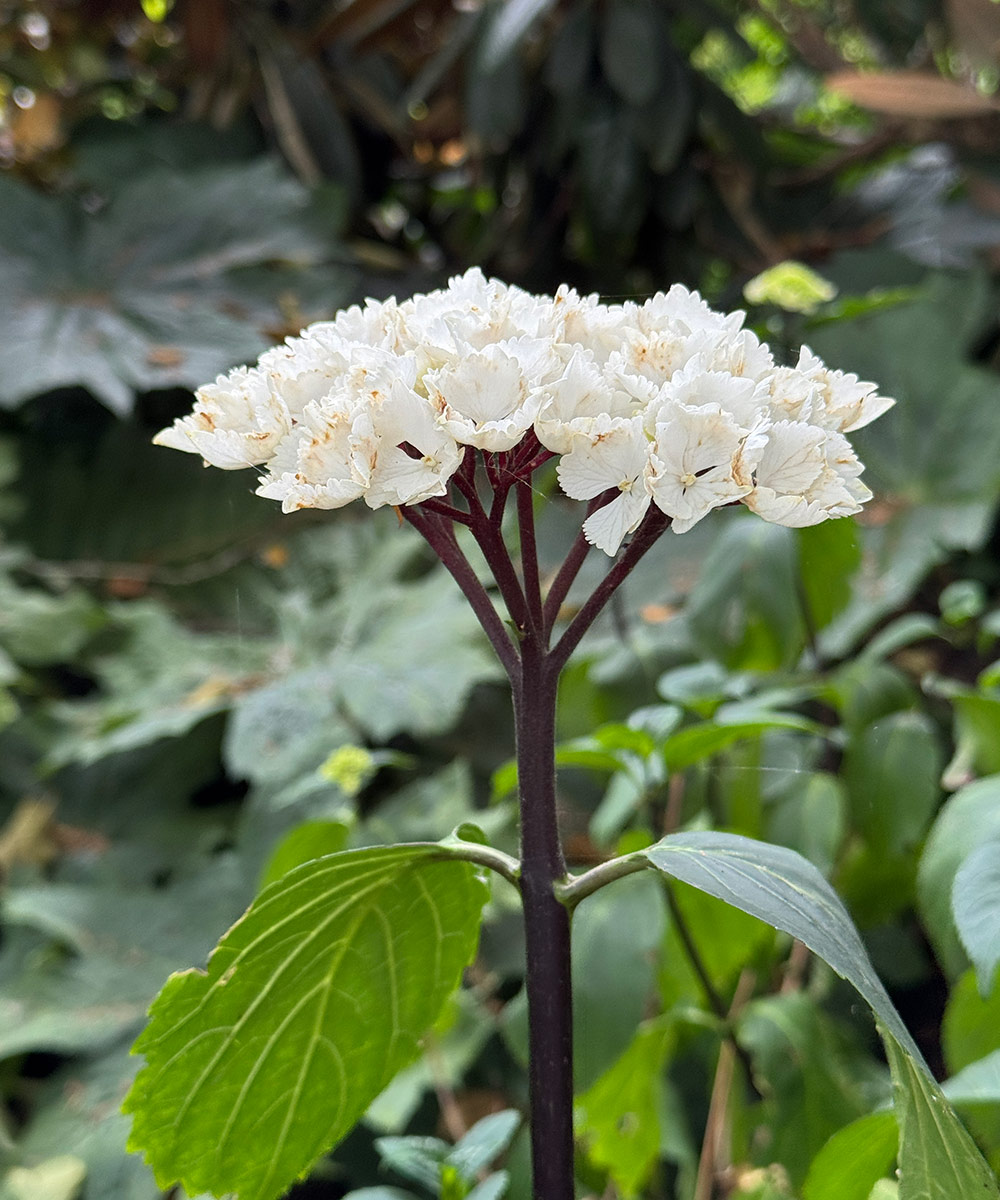
Tallest layer: Bigger shrubs and taller elements could be:
- ‘Zebra’ bigleaf hydrangea (Hydrangea macrophylla ‘Zebra’, Zones 5–8)
- Seaside Serenade® Glacier Bay bigleaf hydrangea (Hydrangea macrophylla ‘CAMCHO45’, Zones 4–9)
- Morning Dew™ stachyurus (Stachyurus praecox ‘Morning Dew’, Zones 4–9)
- ‘Fragrantissimum’ rhododendron (Rhododendron ‘Fragrantissimum’, Zones 8–10)
Goal 4: Repeat yourself, and don’t forget the extras
A well-designed bed does not consist of “one of each.” Each layer should have at least one plant that is repeated. For a path through this area, you can place the same plant on both sides at regular intervals to draw the eye along the path, but exact placement depends on the length and width of your bed. In this garden it could be the evergreen carex, the white astilbe (in groups or sweeps), and the white allium. Shrubs get repeated as well; most designers use sweeps or multiples of three or five.
Hopefully you will feel inspired to add in some art or hardscape elements as well. Think of a sitting area, one great chair, or a small water feature.
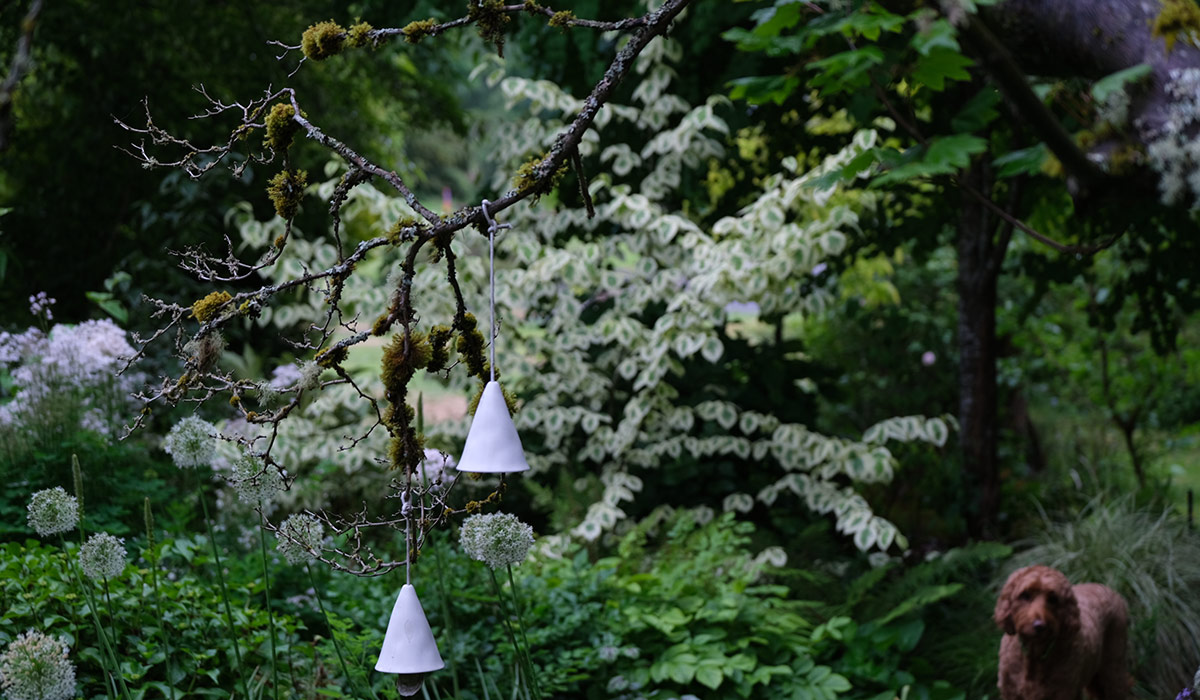
Applying the pivotal plant method in your garden
Whew! This might seem like a lot, but once you get started you will see how it goes together smoothly. Plant selection can be challenging, but a good nursery person, a visit to a botanical garden (plant labels are useful), or online descriptions can help. Just remember, nurseries sell what’s currently “in season.”
The example garden I outlined here is green and white, but you can easily change the color palette and utilize this method with plants that fit into the color story you choose. There is lots of room for experimentation and fun here.
Find more garden design ideas and advice from Susan:
Discuss this article or ask gardening questions with a regional gardening expert on the Gardening Answers forum.
And for more Pacific Northwest regional reports, click here.
Susan Calhoun is the owner of Plantswoman Design in Bainbridge Island, Washington.
Photos: courtesy of Susan Calhoun
Fine Gardening Recommended Products

DeWalt Variable-Speed Cordless Reciprocating Saw
Fine Gardening receives a commission for items purchased through links on this site, including Amazon Associates and other affiliate advertising programs.
You can fit a variety of blades to this saw to cut fallen branches or prune larger limbs from trees in a pinch. It’s fast, tough, easy to use, and extremely versatile.
– 18.31 x 6.13 x 4 inches
– 1-1/8-inch stroke length
– Variable speed trigger with 0-3000 spm
ARS Telescoping Long Reach Pruner
Fine Gardening receives a commission for items purchased through links on this site, including Amazon Associates and other affiliate advertising programs.
Telescopes from 4 to 7′. Cut and Hold (160) Blades. Drop forged blades for unsurpassed long lasting sharpness. Lightweight, 2.3 lbs., for continued use. Perfectly balanced for easy pruning.

Black and Decker 22-inch Cordless Hedge Trimmer
Fine Gardening receives a commission for items purchased through links on this site, including Amazon Associates and other affiliate advertising programs.
Quick and easy to put into operation and is less noisy and lighter in weight than gas-powered hedge trimmers.
– 38 x 7 x 7 inches
– 6.9 pounds
– 1 Lithium Ion battery required (included)