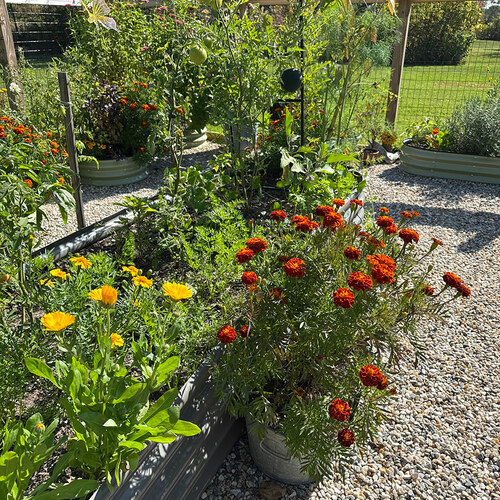


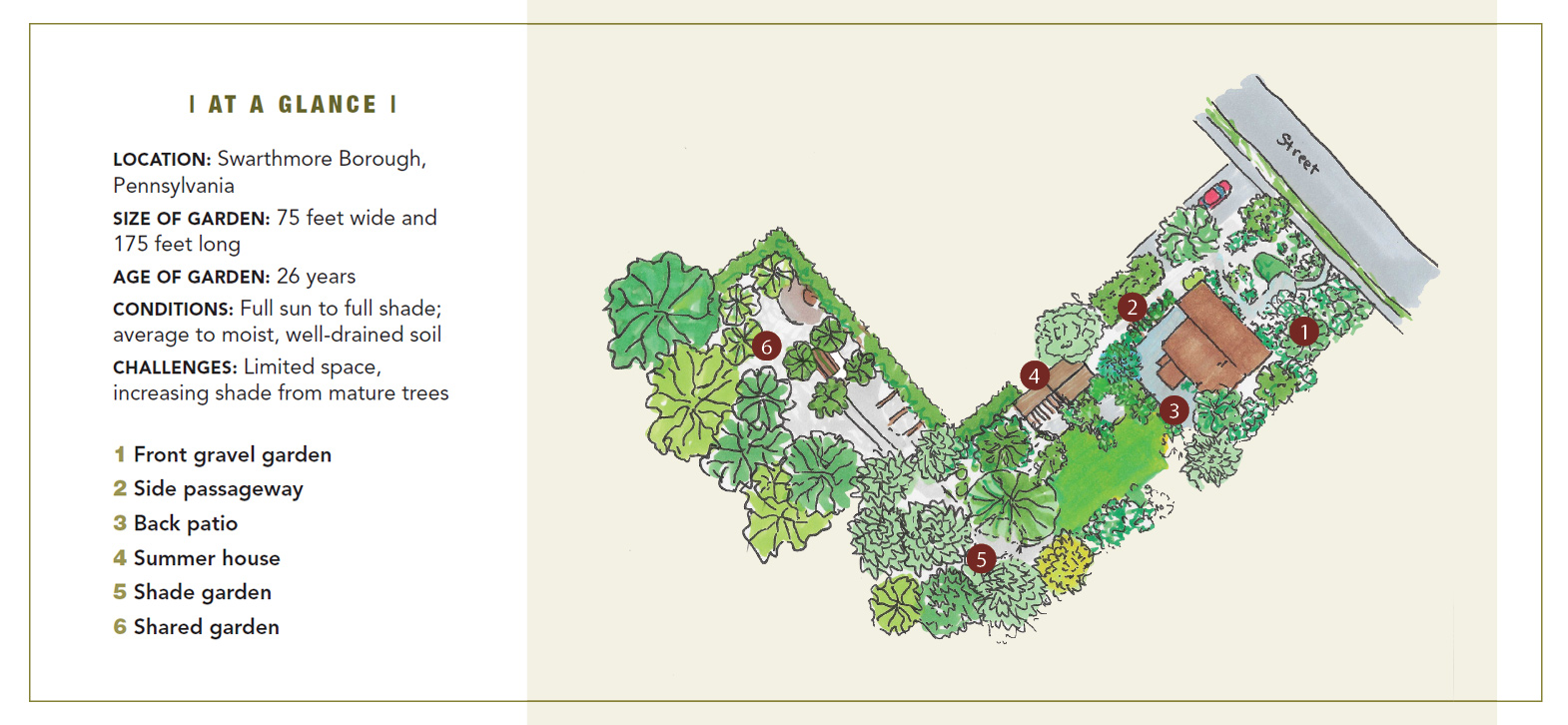
In 1999 I purchased a small stone house on one-third of an acre in the southwestern suburbs of Philadelphia. After years of studying horticulture and working in renowned public and private gardens, I couldn’t wait to start building my own garden rooms on this relatively small property. I wanted one of everything—a cottage garden, a vegetable garden, a perennial border, a pond, a woodland garden, and a patio for displaying container plantings. Naturally, my desires exceeded the available space, so I needed to prioritize. Mapping out the sizes and locations of my most coveted outdoor rooms on paper, I developed a workable plan that has guided the garden’s development ever since.
The spaces closest to the house are a great place to start turning into garden rooms
It would have been nice to renovate the whole landscape at once, but limited time and financial resources slowed the process down. After cleaning up stumps, dying trees, invasive plants, and piles of debris, I focused on putting a back patio by the kitchen door. A local landscaper installed a rectangular patio, which is 30 feet long by 12 feet wide and spans the entire back of the house. It is made of rectilinear Pennsylvania bluestone pavers set into a bed of stone dust, with no mortared joints.
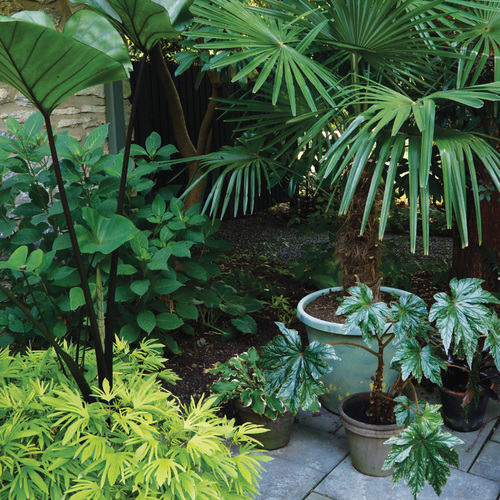
If I could do it over again, I would make the patio wider. It quickly filled with terra-cotta pots, jardinieres, and other garden ornaments, leaving barely enough space for a table and chairs. To create walls for my first garden room, I planted a hedge of ‘Steeds’ Japanese holly (Ilex crenata ‘Steeds’, Zones 5–9) and maintained it at a height of about 5 feet tall. This provides a sense of enclosure while still allowing views into the garden from the patio. During the growing season the pots are filled with large tropical plants complemented by smaller accent annuals, with a different color theme each year.
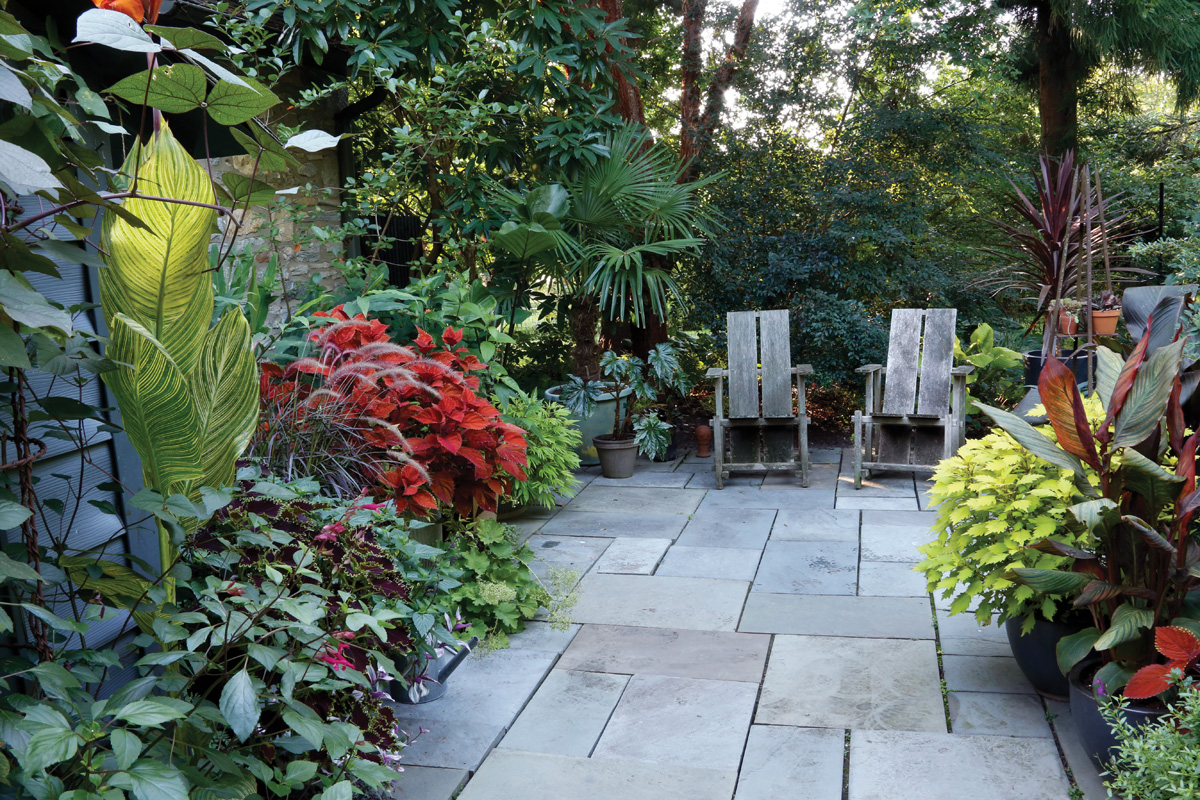
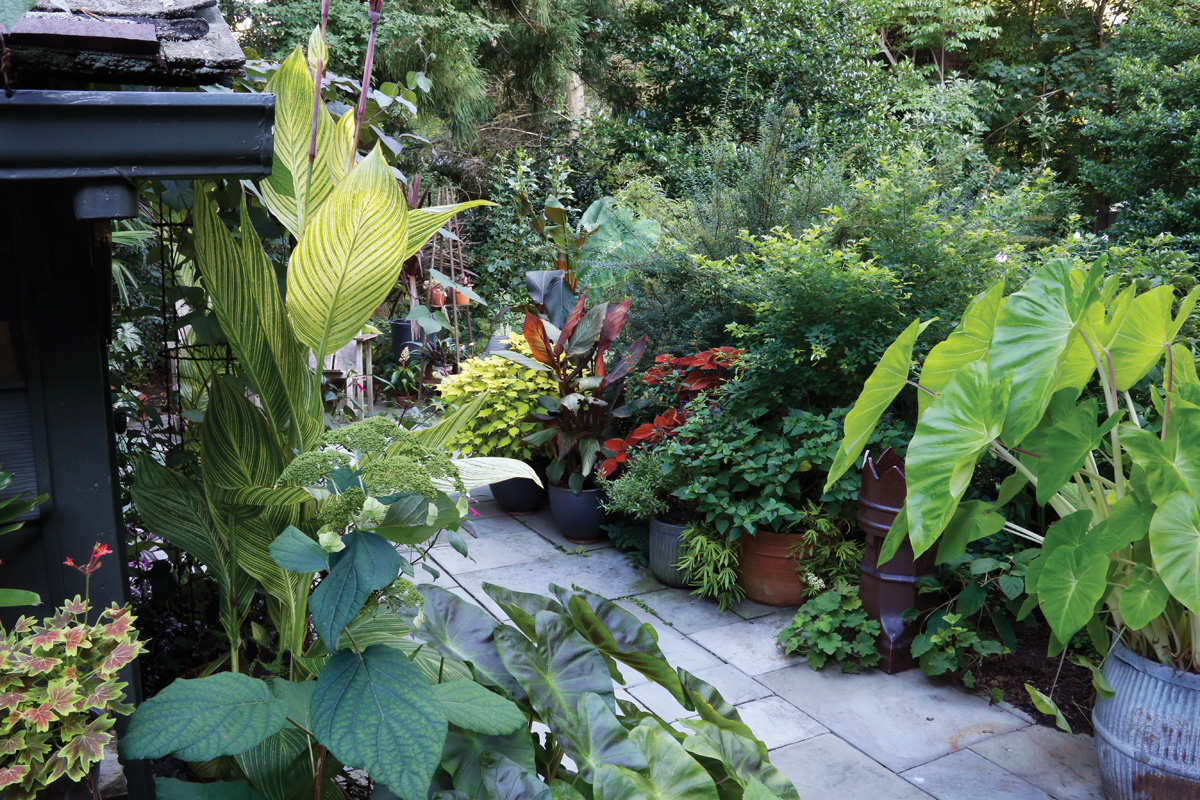
On a small lot there is limited space for full-sized trees, so another early priority was choosing which trees I wanted most and deciding where to plant them. A paperbark maple (Acer griseum, Zones 4–8) was the perfect addition at the corner of the patio, where its stunning exfoliating bark is on display every day of the year. Evergreens like ‘Yoshino’ Japanese cedar (Cryptomeria japonica ‘Yoshino’, Zones 5–8) were strategically sited along property boundaries to provide privacy. Planting with trees’ mature sizes in mind is always important, especially on a tight site, and the plantings around them will need to be adapted and updated as the trees mature and cast more shade on the beds below.
A plant-forward front garden creates curb appeal with personality
The next priority after the completion of the back patio was to deal with the weed-infested patch that vaguely resembled a front lawn. I removed all the turf and installed a flagstone path connecting the sidewalk to the front door. Large swaths of colorful perennials were planted, flanking the path, for a cottage garden effect.
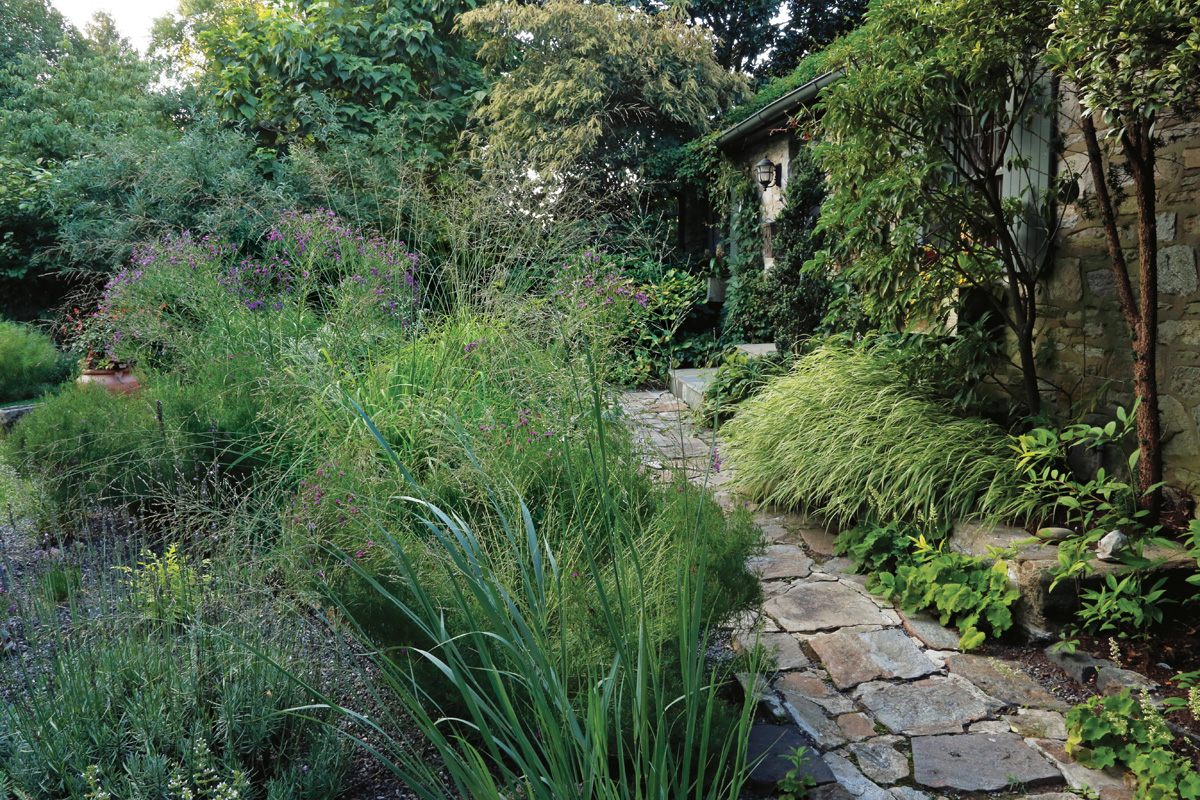
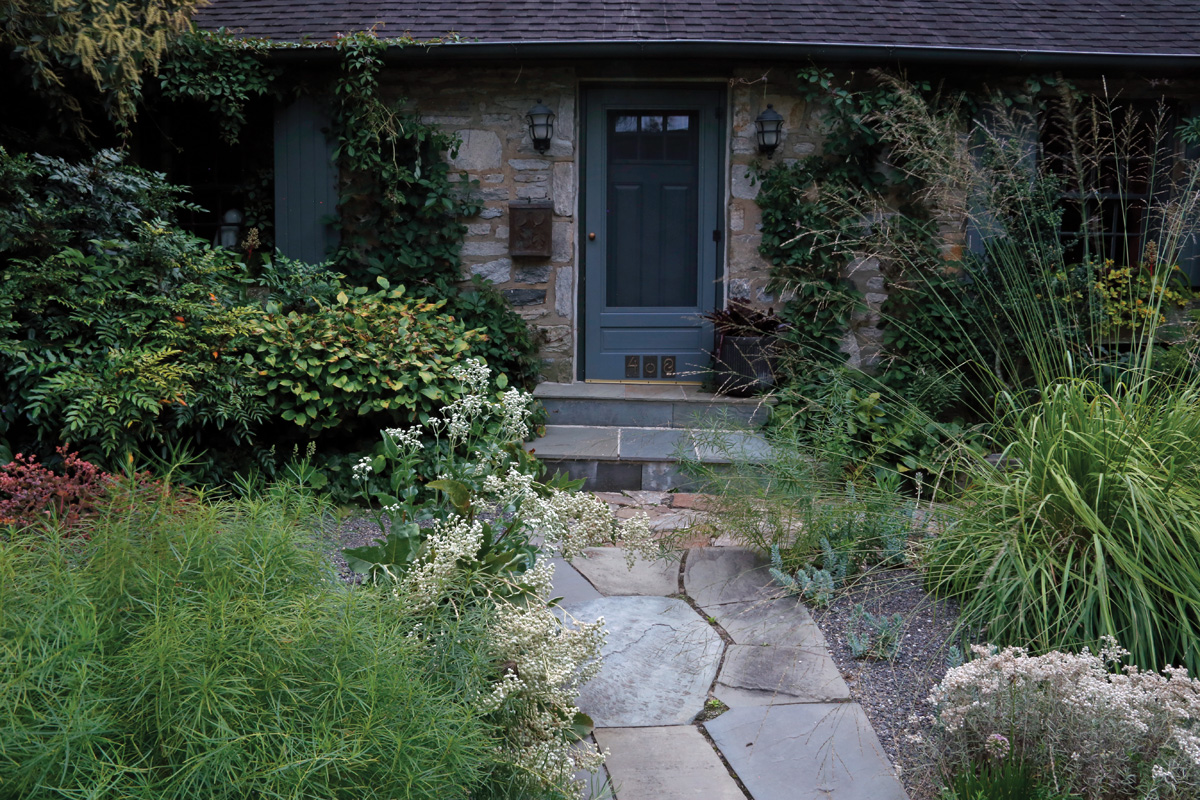
Over nearly 17 years, the front garden has matured and morphed into many other versions. A few trees that were key focal points died, and shade-loving plants that had been under their canopy were moved elsewhere. Some of the original cottage garden plants were overly aggressive and needed to be treated as weeds. The contents of the beds ebbed and flowed until the early days of COVID lockdowns, when my new home office looked directly into what had become a somewhat dismal front garden. I knew a facelift was needed.
The new plan was to install a gravel garden in front of the house. Approximately 6 to 8 inches of the existing topsoil was removed, and we spread 2 inches of 5⁄8-inch granite gravel over the surface and rototilled it into the soil. An additional 6 inches of gravel was installed on top of that. I kept the best shrubs from the previous garden, as well as some key perennials like threadleaf bluestar (Amsonia hubrichtii, Zones 5–8) and ‘Skyracer’ purple moor grass (Molinia caerulea subsp. arundinacea ‘Skyracer’, Zones 5–8).
The gravel garden provided a welcome opportunity to trial new plants, to learn which are most able to grow through the gravel and anchor themselves in the soil below. All the plants had to be deer resistant as well, like Phenomenal® lavender (Lavandula × intermedia ‘Niko’, Zones 5–8), soapweed yucca (Yucca glauca, Zones 3–8), and butterfly weed (Asclepias tuberosa, Zones 3–9).
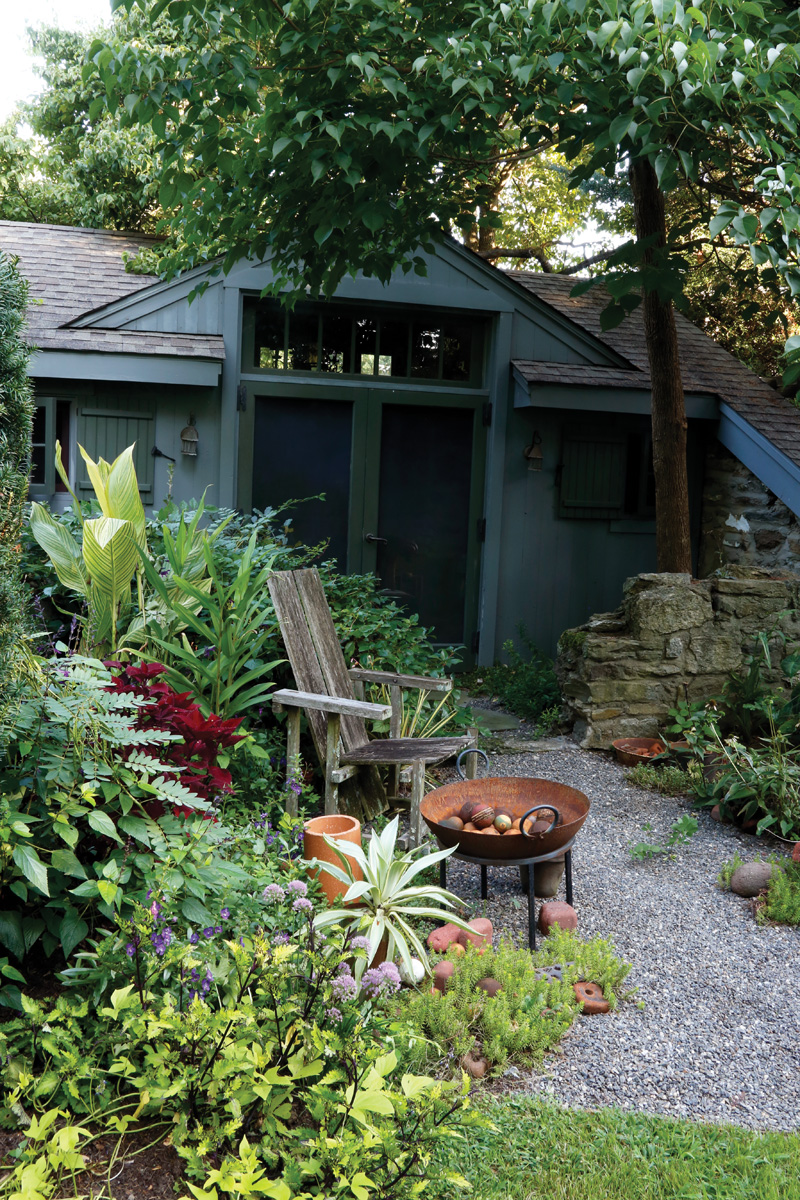
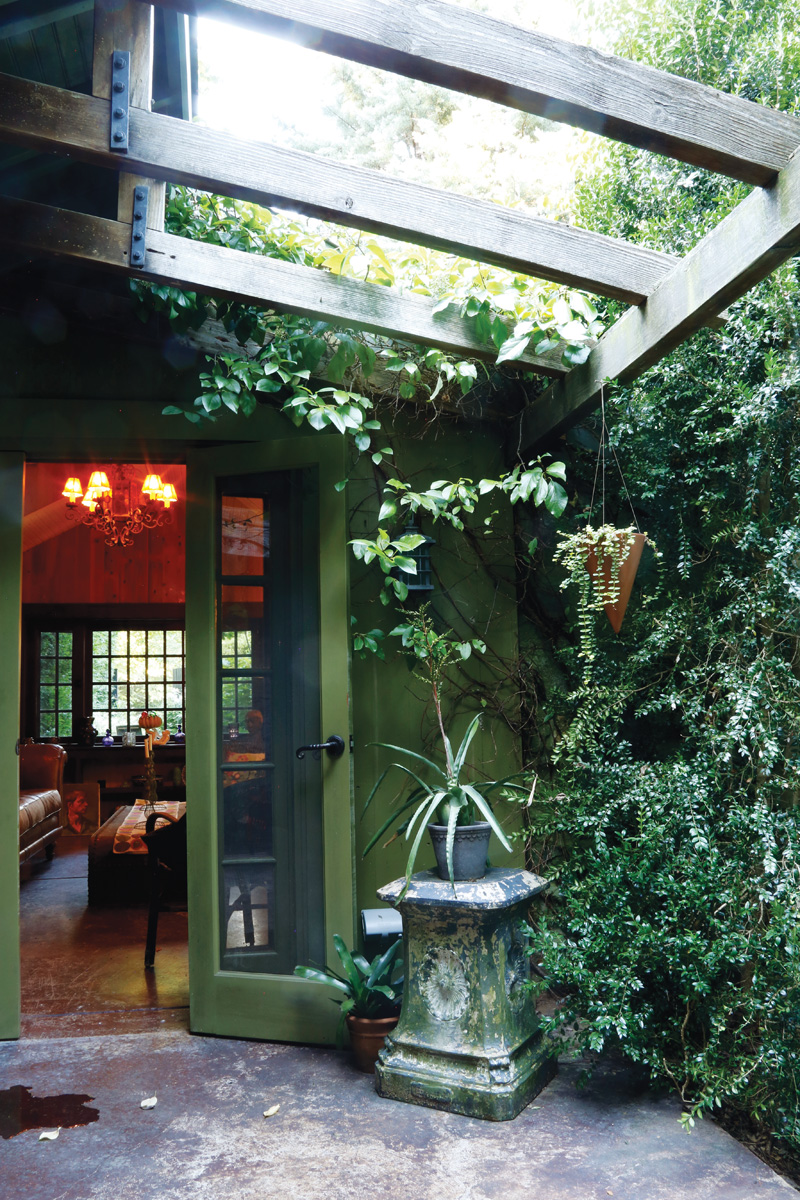
An updated outbuilding and shared garden make outdoor living even more enjoyable
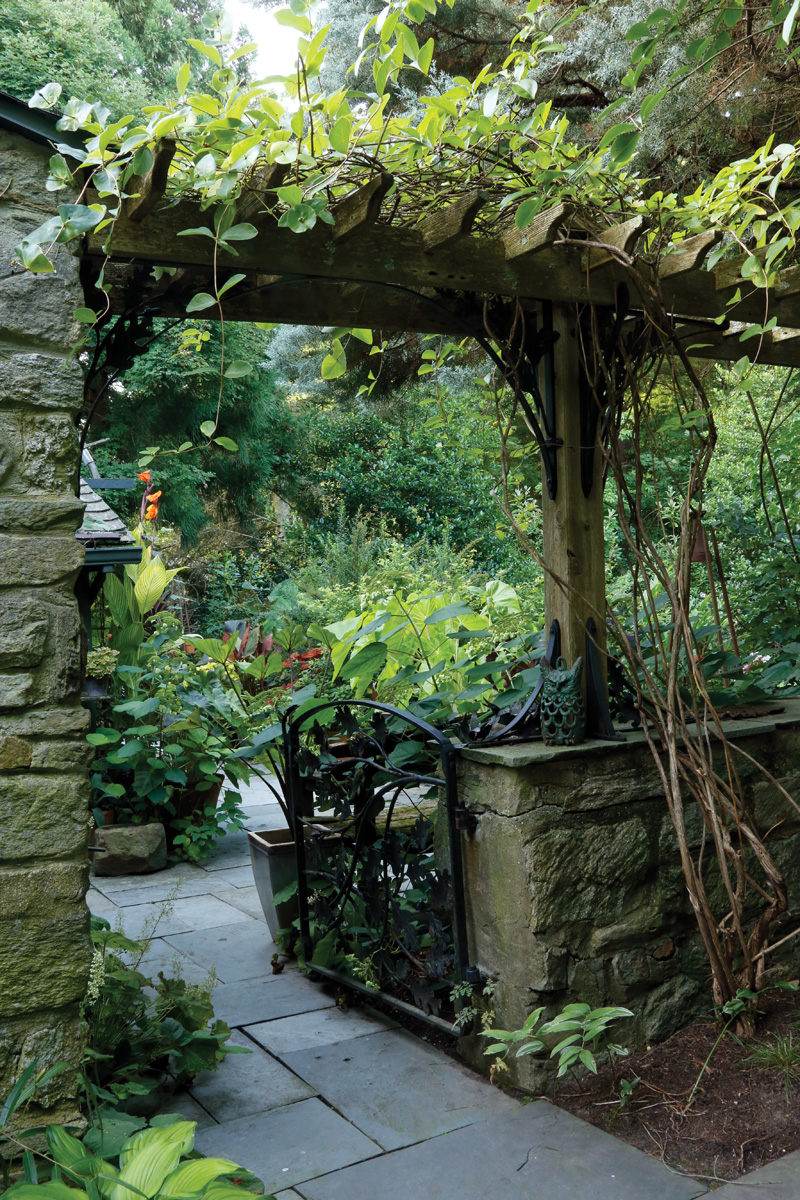
The home’s original detached garage was too small for practical use with modern-day cars. Eventually, I fenced in part of the driveway leading back to the garage, installed a wide bluestone pathway, and planted beds around its perimeter to create a passageway garden. This transitional space connecting the front and back landscapes makes the rear patio and garden feel more private and secure.
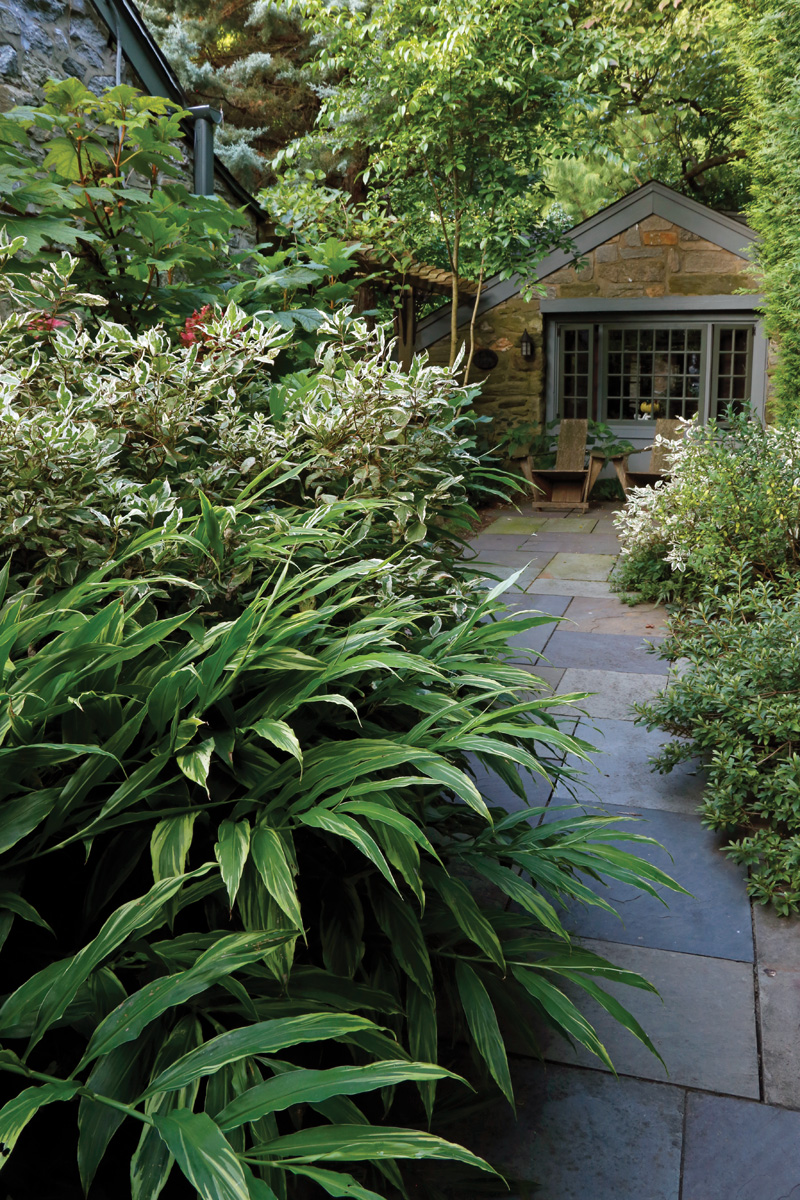
For years, I treated the garage like a rustic garden folly, annually installing a large mixed bed of showy tropical plants around its foundation. Then, just before the economic crash of 2018, I took out a home equity line of credit and hired an architect to convert the ruin-like outbuilding into a summer house. From inside the updated structure, French doors open into an informal round gravel seating area on one side, while the back of the garage has become an open-air patio with a pergola resembling roof rafters. During the summer months I display a mix of tender ferns, aroids, and other shade-loving tropical forest plants in this open but sheltered space. The summer house’s comfortable, functional outdoor living rooms bridge the divide between home and garden and have proven to be equally suitable for entertaining and for restorative garden solitude.
Collaborate with neighbors on outdoor rooms
An adventurous collaboration with my next-door neighbors has also made outdoor living more enjoyable. More than a decade ago, I approached them with a plan to convert part of their backyard into a 4,000-square-foot edibles garden enclosed by a hedge of ‘Green Giant’ arborvitae (Thuja ‘Green Giant’, Zones 5–8) and planted with vegetables, berries, and four ‘Saijo’ Asian persimmon trees (Diospyros kaki ‘Saijo’, Zones 7–10). The plan included compost bins, a chicken coop, a toolshed, and a custom-designed communal table. I offered to pay for the installation, agreed to maintain the garden in perpetuity, and ran a water line from my house for irrigation. Our mutual appreciation for this shared space has made us better neighbors and closer friends, and both households enjoyed endless vegetables, eggs, and persimmons over the years.
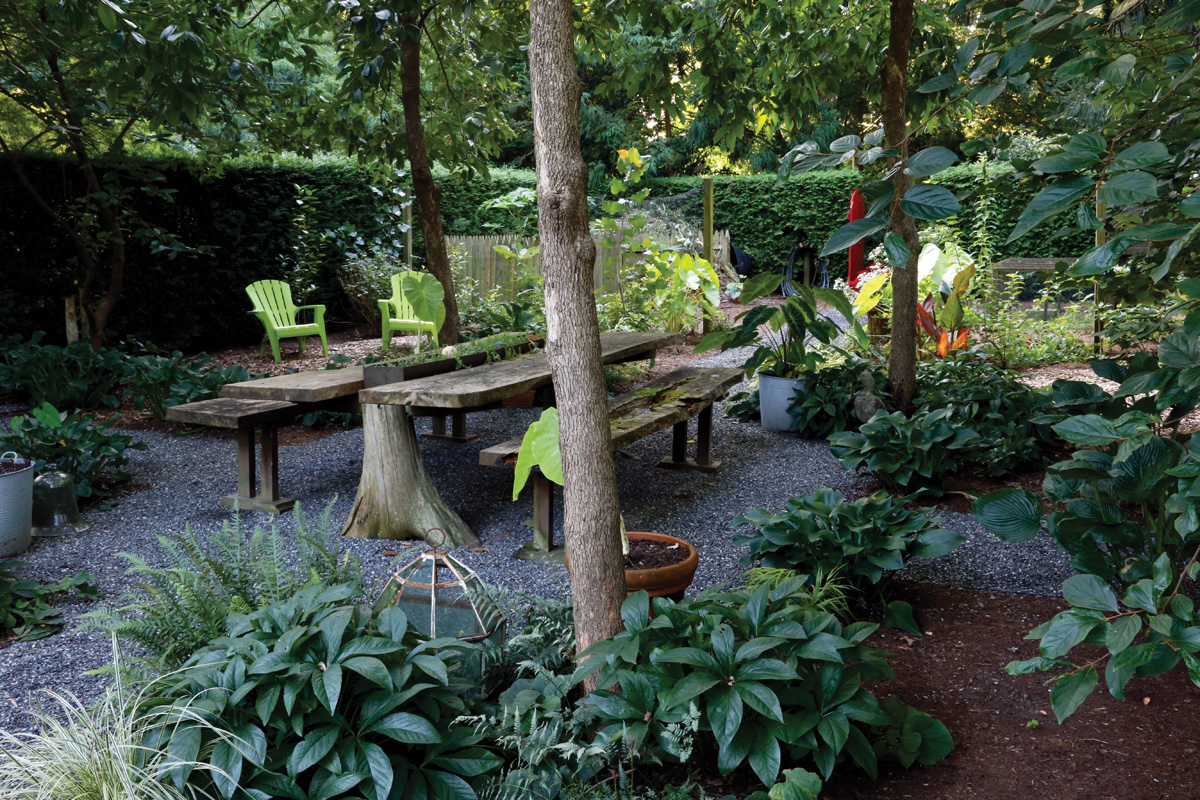
The garden has become too shaded to produce many vegetables and is in transition. For now, I am calling it The Garden of Whimsy, and am working on a few features that will make it a magical place for the neighbors’ grandchildren when they come to visit.
Over the last 26 years, gardens on my little property have come and gone. Some spaces have looked great for a couple of years, then go into decline and need to be renovated or embellished. Like nearly every garden in the world, it is dynamic and always evolving, with things constantly changing for better or for worse. Gardening is a journey, and my hope is that the journey will never end.
Andrew Bunting is vice president of horticulture at the Pennsylvania Horticultural Society in Philadelphia.
Photos by Carol Collins
Fine Gardening Recommended Products

isYoung Birdlook® Smart Bird Feeder with Camera
Fine Gardening receives a commission for items purchased through links on this site, including Amazon Associates and other affiliate advertising programs.
Upgraded Dual Granary Bird Feeder. G11 Smart Bird Feeder with Camera – The upgraded dual granary design allows for separate food dispensing, giving birds the freedom to choose while preserving the food’s original taste. With a 2L extra-large capacity, it reduces the need for frequent refills. The drainage design ensures the food stays dry and prevents spoilage from rain. Ideal as a camera bird feeder for birdwatching enthusiasts. 2K HD Camera & Close-Up Bird Watching. Experience clear bird watching with the G11 smart bird feeder. This bird feeder with camera features a 170-degree wide-angle lens and a 1296P HD camera, ensuring vibrant images and videos. With AI-powered recognition, it can identify over 16,000 bird species (subscription required, first month free) and provides extensive birding knowledge. Its unique design helps attract more birds to your backyard. App Alerts & Super Night Vision. The smart bird feeder camera detects motion within 0.5 seconds and sends instant notifications through the “VicoHome” app. With a 2.4G Wi-Fi connection, you can view real-time updates on bird activity right from your app. The video bird feeder also features night vision, ensuring vibrant images and videos even in low light conditions. Ideal for wild bird feeders, this advanced functionality enhances your bird-watching experience day and night.
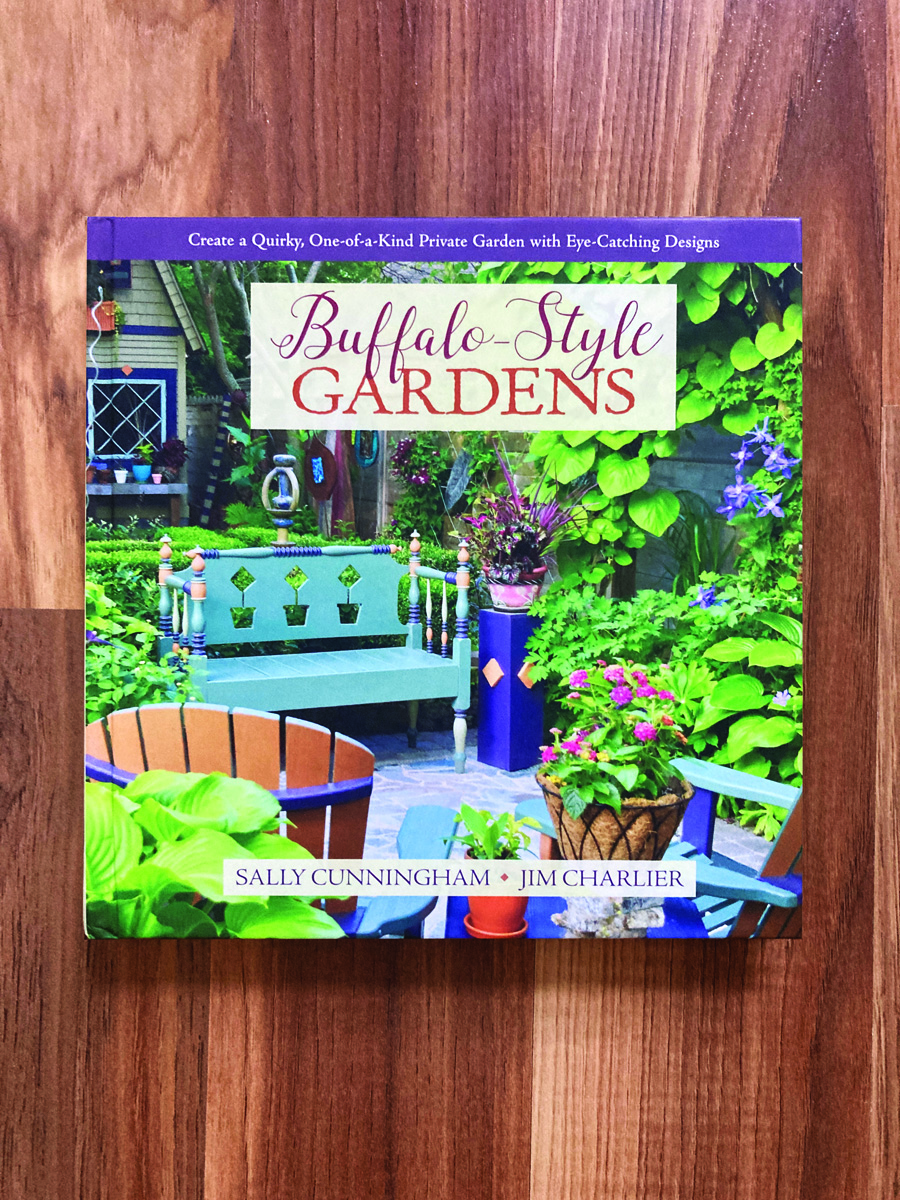
Buffalo-Style Gardens: Create a Quirky, One-of-a-Kind Private Garden with Eye-Catching Designs
Fine Gardening receives a commission for items purchased through links on this site, including Amazon Associates and other affiliate advertising programs.
Buffalo-Style Gardens is a one-of-a-kind, offbeat garden design book that showcases the wildly inventive gardens and gardeners of Buffalo – and offers readers “the best of the best” ideas to use in their own small-space gardens.
ARS Telescoping Long Reach Pruner
Fine Gardening receives a commission for items purchased through links on this site, including Amazon Associates and other affiliate advertising programs.
Telescopes from 4 to 7′. Cut and Hold (160) Blades. Drop forged blades for unsurpassed long lasting sharpness. Lightweight, 2.3 lbs., for continued use. Perfectly balanced for easy pruning.