
Give a Mature Garden New Life
There’s a common feeling among gardeners, a mix of excitement and trepidation, when they face an established garden that has simply gotten . . . old. Maybe it’s a long border that’s become a tangled mess of overgrown shrubs, or a foundation bed that’s now a dense jungle, threatening to swallow the whole house. Or, perhaps, like Tom and Nancy Erickson, you’ve moved to a new property with an existing garden that, while once show-stopping, now feels stuck in a different era. The Ericksons, who relocated from Washington, D.C., to Minneapolis a few years back, fell in love with a charming Tudor-style home overlooking a nearby lake.
The house was perfect, but the landscape? It was ready for a refresh. I was thrilled when the couple hired me to come in and breathe new life into this garden, though I knew it would be quite a challenge. When we were finished, I realized the approaches used to inject color and interest back into this space could easily be adapted to anyone’s tired beds and borders.
See More: 3 Planting Plans from a Mature Garden
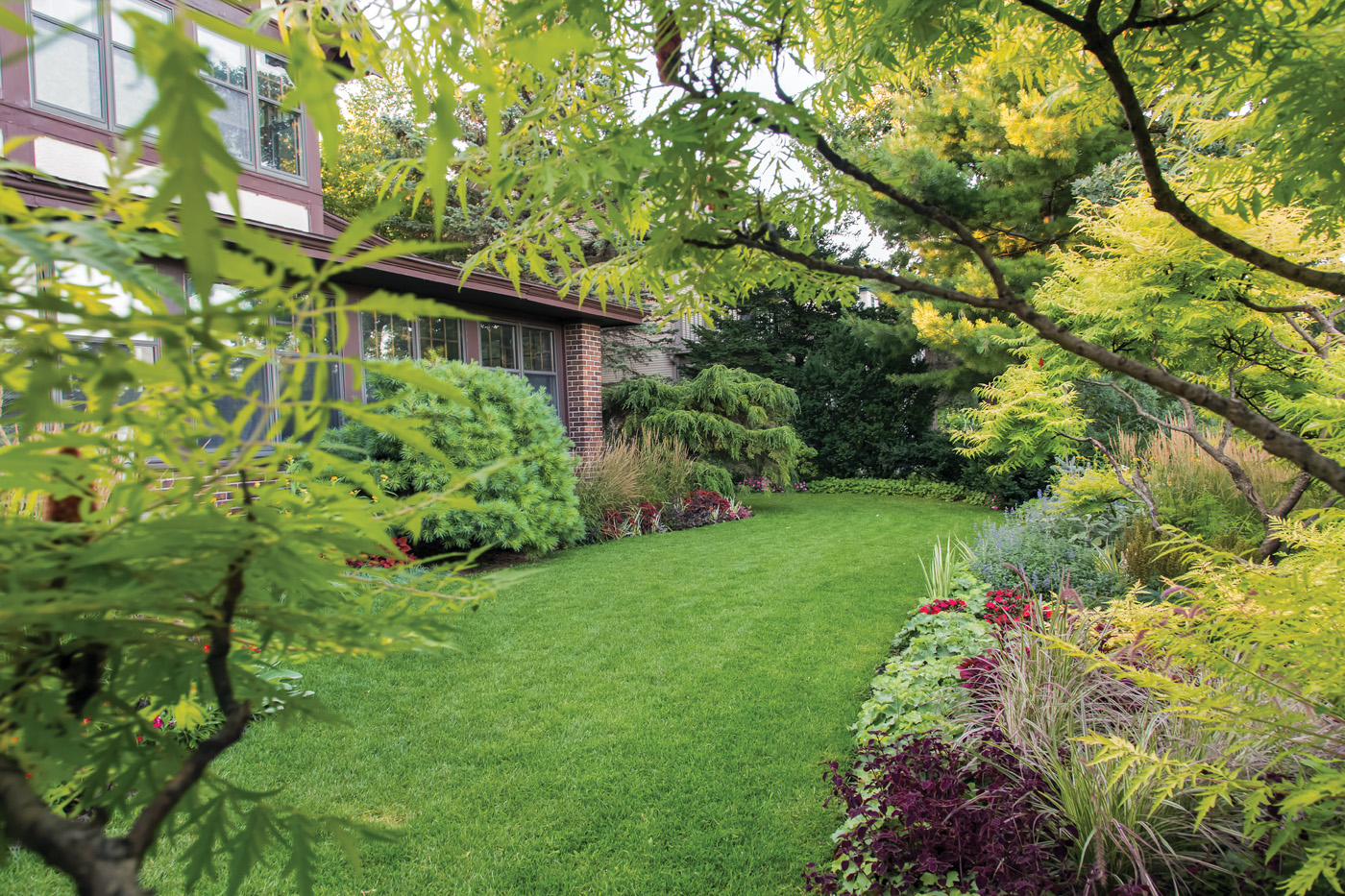
Figure out what stays and what goes when it comes to pre-existing plants
The first step in any garden renovation, especially with an aged landscape, is a thorough assessment. It’s like an archaeological dig, but instead of ancient artifacts, you’re looking for the good, the bad, and the overgrown. The Ericksons’ garden, for example, had a prominent backbone of mostly conifers that were planted decades earlier. Some were magnificent specimens, the kind you simply cannot replace, offering year-round structure and privacy. Others were clearly past their prime; overgrown, diseased, or, worst of all, completely blocking the incredible lake views that were one of the property’s main draws.
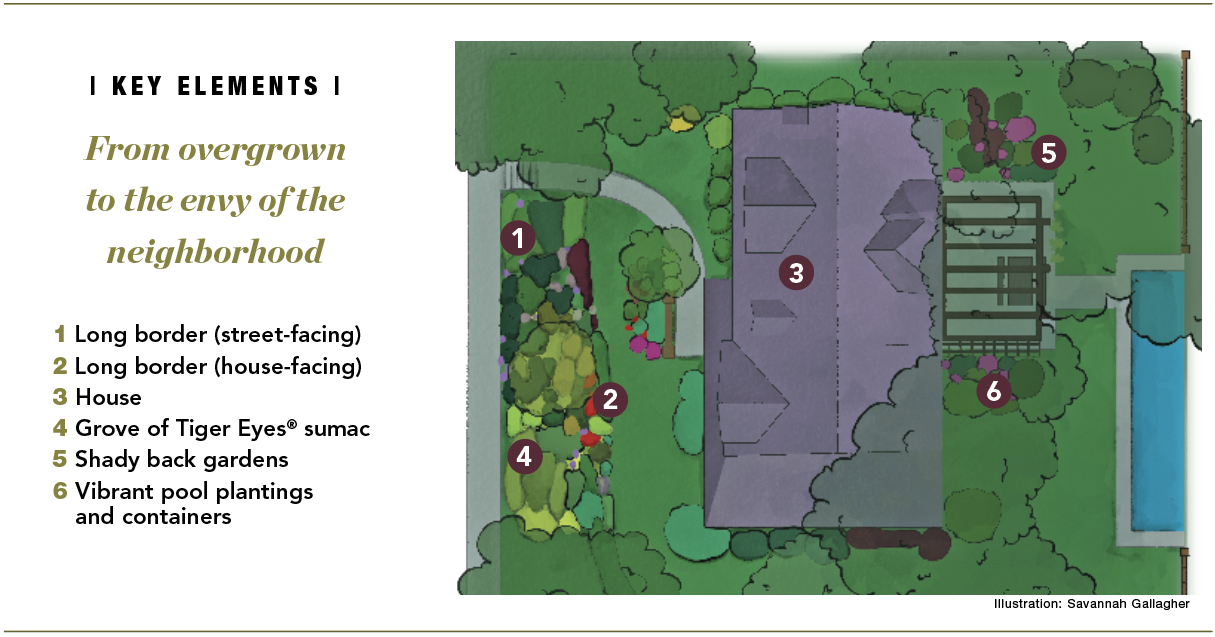
Garden at a Glance: From overgrown to the envy of the neighborhood
This west-facing lakeside property has a view to die for, but the surrounding garden had grown so out of control, there wasn’t a clear view of the water from the house anymore. The backyard also lacked any personality to match the playful pool. With some strategic pruning, removals, and replanting, the outside areas have now become a suburban oasis.
Keep existing stately plants and trees
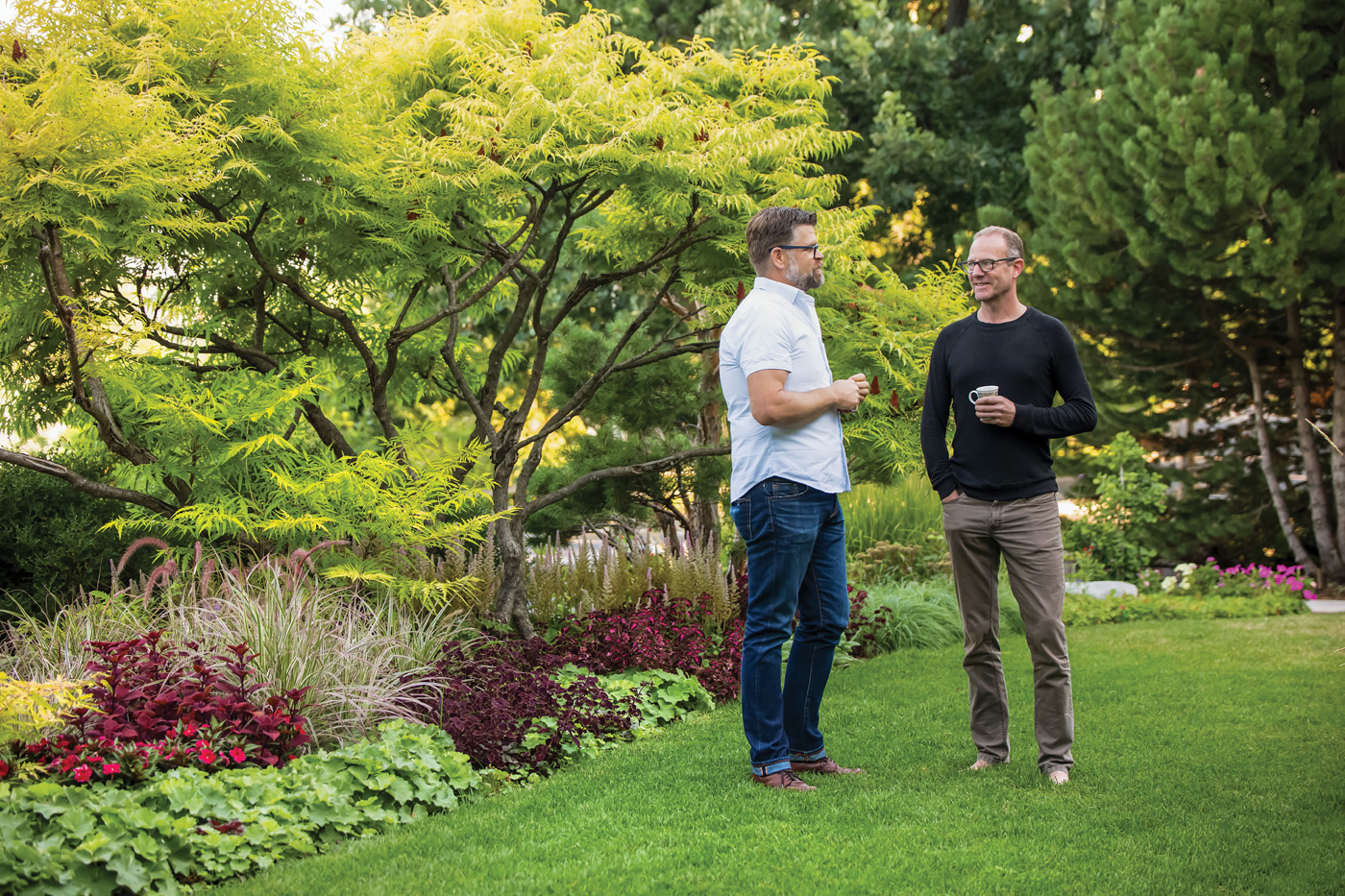
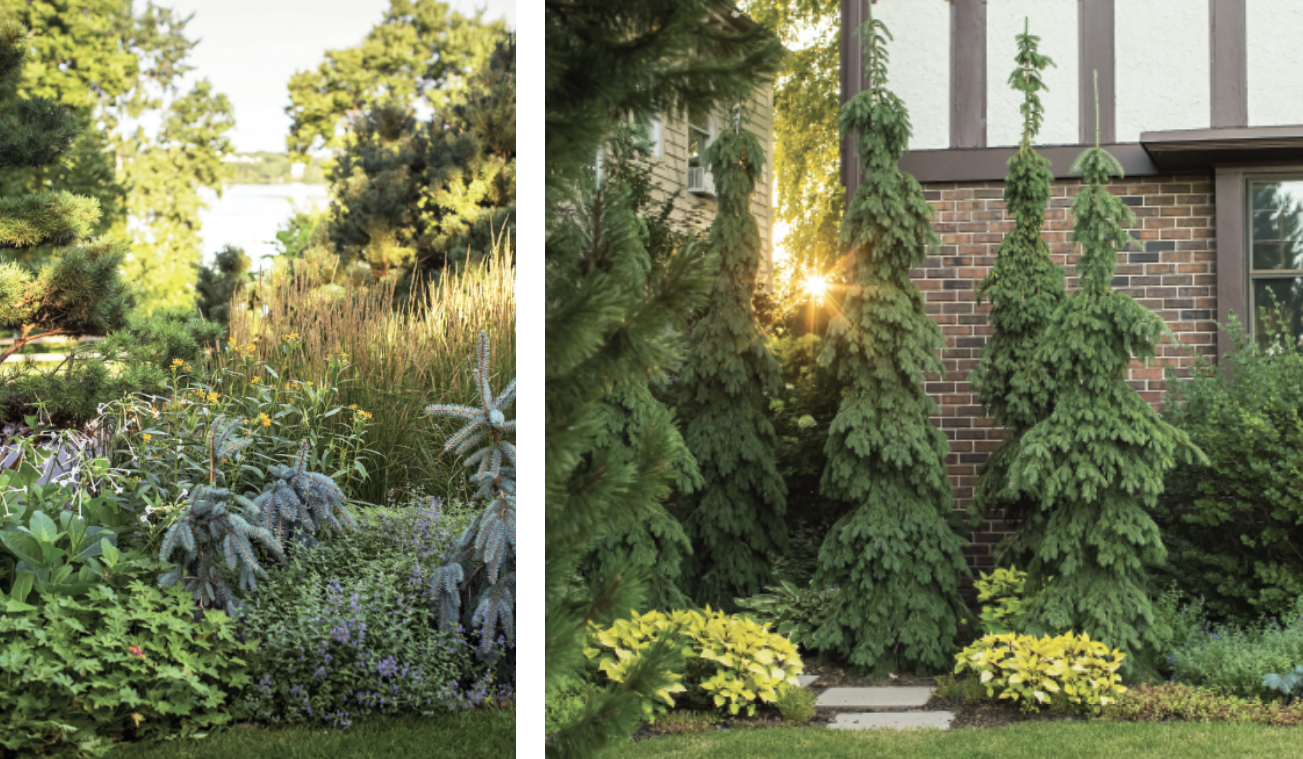
My approach was a balance of preservation and pragmatic removal. Why keep some older species? For cost savings, of course—mature plants are expensive to replace! But more importantly, they offer a sense of venerability and establishment that new plantings can’t replicate. They give the garden a certain gravitas. We kept a few stately evergreens and other maturing dwarf conifers that were too precious to lose. Healthy, well-placed woodies, including mature bur oaks (Quercus macrocarpa, Zones 3–8), river birches (Betula nigra, Zones 4–9), and even some select perennials, were also kept and played an instrumental role in shaping the garden’s next phase. Selective pruning, and in some cases severe pruning, was necessary as well to rejuvenate plants, open views, or create better forms.
Remove struggling plants to make room for new additions
Then there were the removals. This can feel ruthless, but it’s essential. The definition of a weed is a plant out of place, no matter how intentional the plant may have been at one point in its history. We took out several struggling evergreens that were either too diseased or simply out of scale with the house. These removals weren’t just about aesthetics; they were about making space for new plants, more light, and greater plant diversity and interest. This first phase is all about creating breathing room so the garden can evolve.
Read More: Top Plants to Reinvigorate a Mature Garden
Fill in obvious gaps in a mature garden with dynamic additions
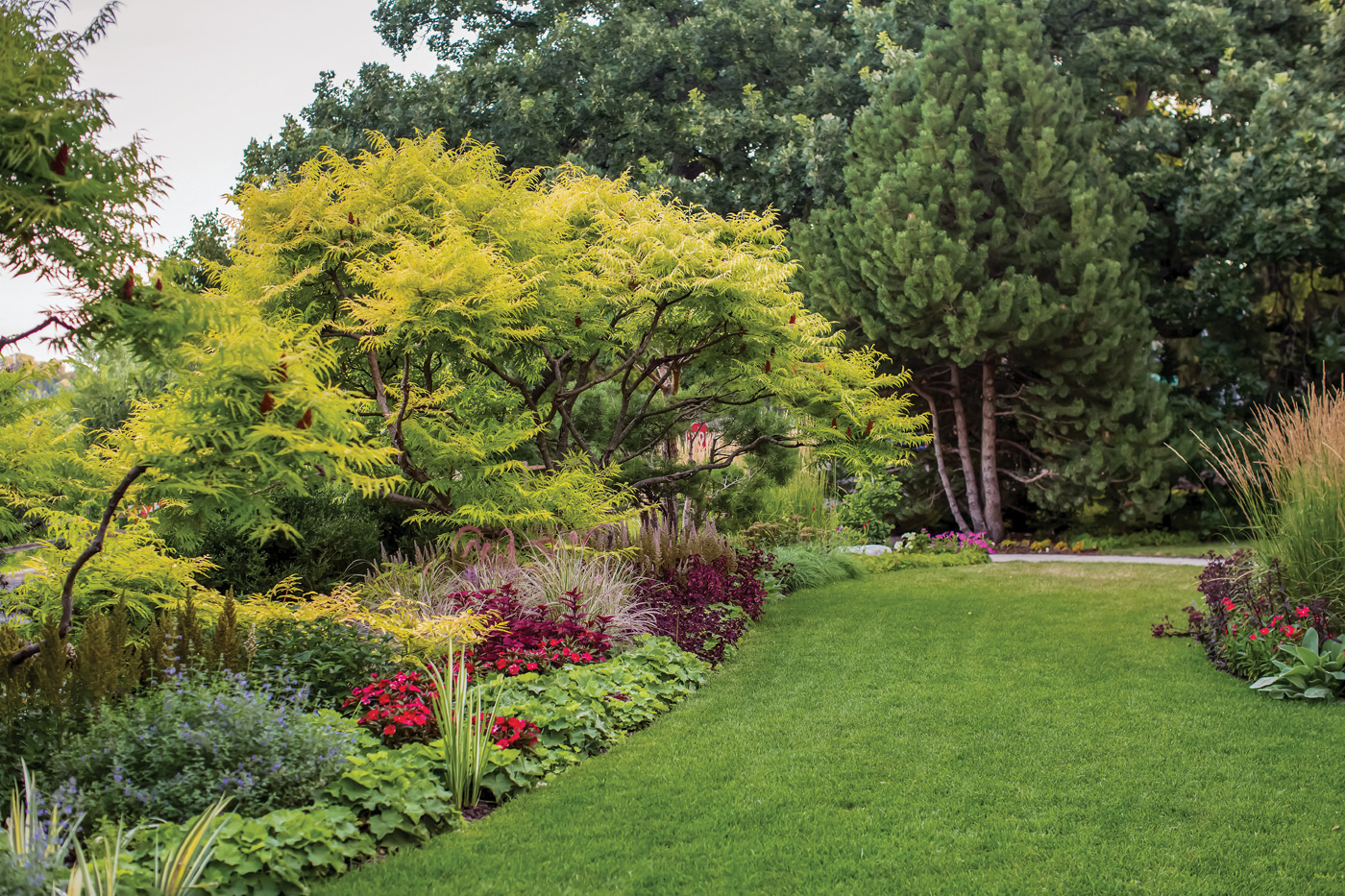
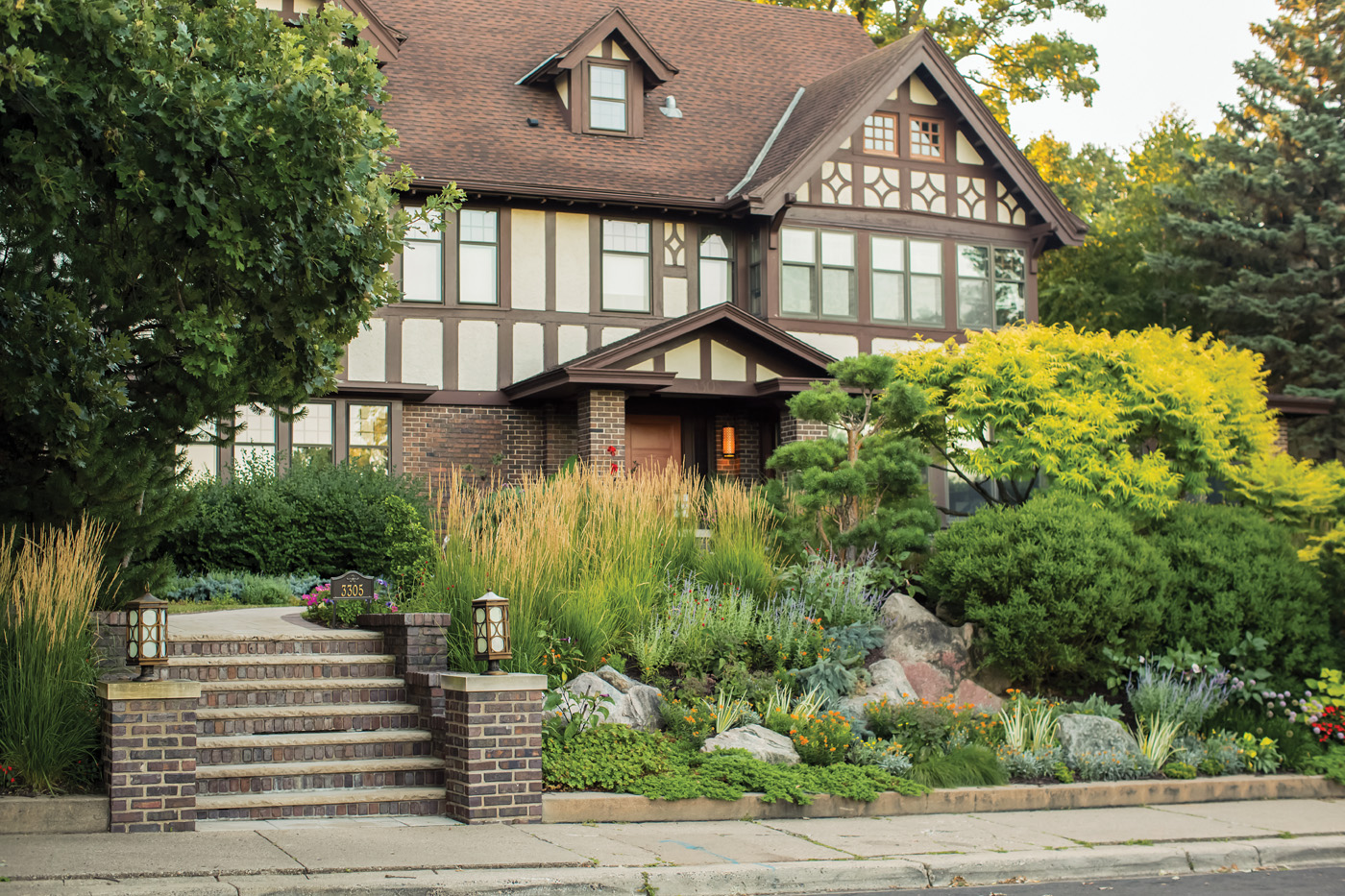
Once we had a clearer picture of the garden’s foundational elements—what remained and what we had removed—the next step was to start building back the beds. The long border in the front of the house was a prime candidate for this. With some of the older, unruly plants gone, there were now noticeable gaps. We deemed these the “blank canvases.” And this was where the fun began: adding broad and repeated brushstrokes of interesting perennials, smaller woody shrubs, and grasses to complement the scale of the older plants that remained. We reserved plenty of room for annuals and bulbs too, so that this once boring border would shine in every season. Also, we paid careful attention to how people would view the plantings from the house, from the street/lakeside, and when walking through the front yard.
When selecting these filler plants, I chose varieties that would add interest and diversity to an already compelling landscape. Several focal points were already in place, thanks to the existing bones. But a focal point isn’t just a plant; it’s also a statement within the garden. So including several more of these to draw the eye, provide structure, and offer year-round appeal was important. Many of these new focal points had weeping forms, like ‘Procumbens’ Colorado blue spruce (Picea pungens ‘Procumbens’, Zones 2–7), which inherently gives a sense of movement and drama.
Create complementary garden pairings
Each plant was chosen not just for its individual beauty but for how it would interact with its neighbors and contribute to the overall composition of the garden. Complementing these stars with a supporting cast of botanicals was achieved through thoughtful pairings of contrasting color, texture, and form. One interesting combination would lead to the next, which would lead to the next. I was sure to repeat specific plants, similar textures, or analogous colors to draw the eye in, while creating cohesion throughout the entire landscape.
Though the pre-existing front landscape consisted mainly of conifers, one bright spot left in place was a grove of architectural Tiger Eyes® sumac (Rhus typhina ‘Bailtiger’, Zones 4–8). This set a precedent for me to add in a few more choice deciduous woody plants for diversity. A ‘Jade Butterflies’ ginkgo (Ginkgo biloba ‘Jade Butterflies’, Zones 4–8), a favorite tree used in the Ericksons’ former garden, had to be included. A small grouping of Ice Dragon® Japanese maples (Acer × pseudosieboldianum ‘IslID’, Zones 4–7) lent a measure of significance to another spot. And areas of Quick-Fire® panicle hydrangea (Hydrangea paniculata ‘Bulk’, Zones 3–9) provided fabulous flower power for summer, fall, and winter interest.
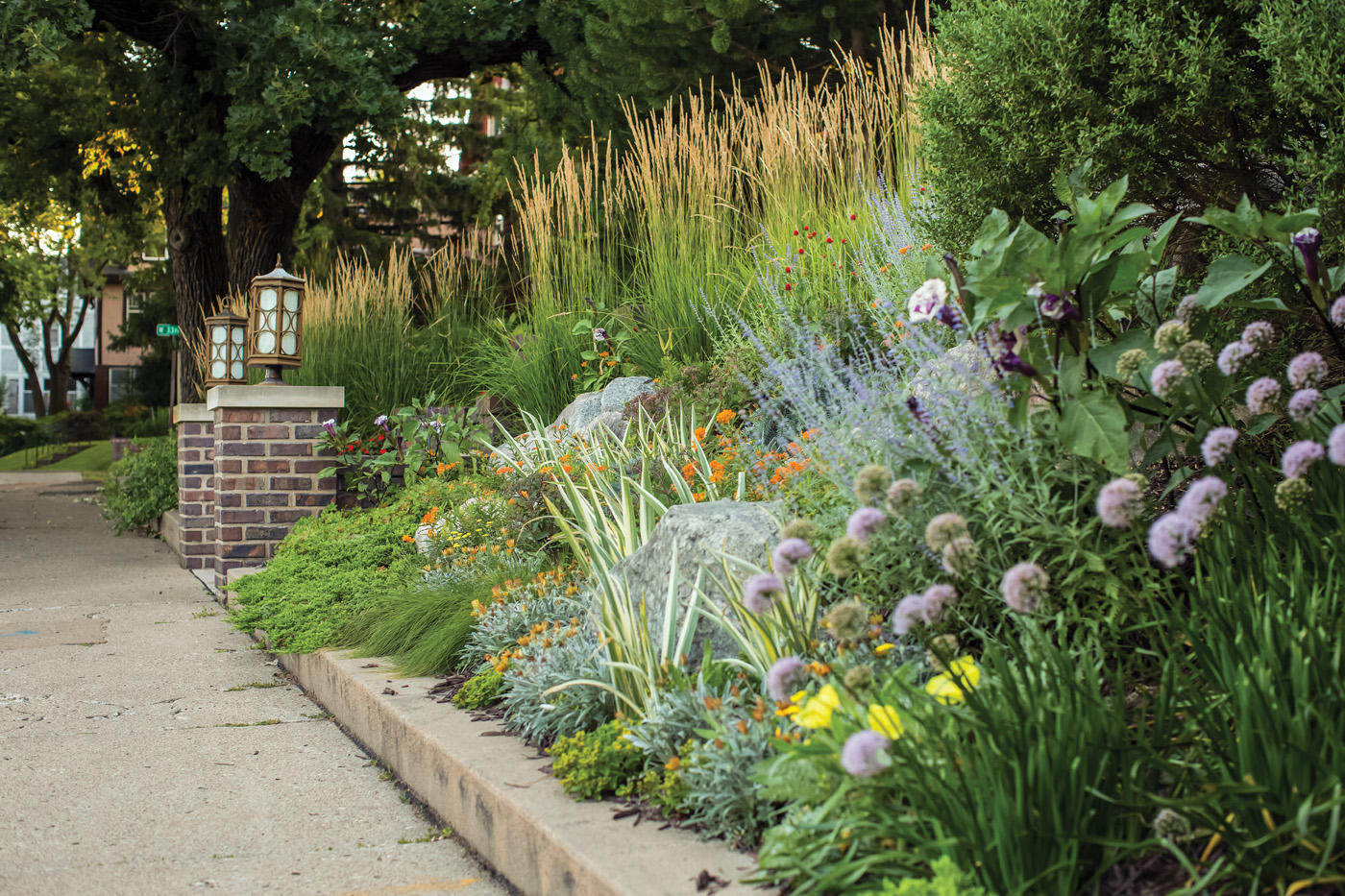
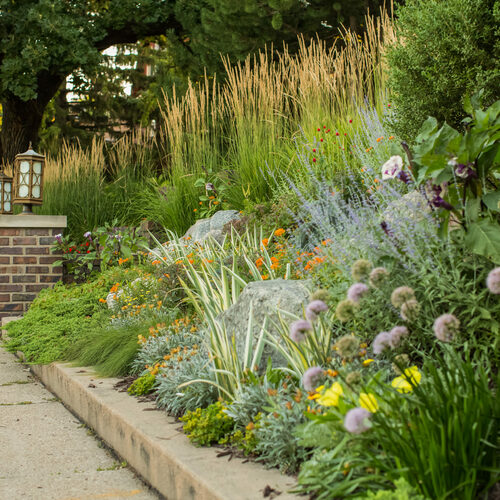
Drifts of perennials filled many of the remaining blank spaces (above). Russian sage (Salvia yangii, Zones 4–9), native butterfly weed (Asclepias tuberosa, Zones 3–9), irises (Iris spp. and cvs., Zones 3–9), and alliums (Allium spp. and cvs., Zones 4–9) helped to blend everything together. Ornamental grasses like ‘Karl Foerster’ feather reed grass (Calamagrostis × acutiflora ‘Karl Foerster’, Zones 5–9) added height between the woody plants and other perennials while allowing a bit of transparency to the plantings beyond.
| TIP: Don’t Forget the Containers |
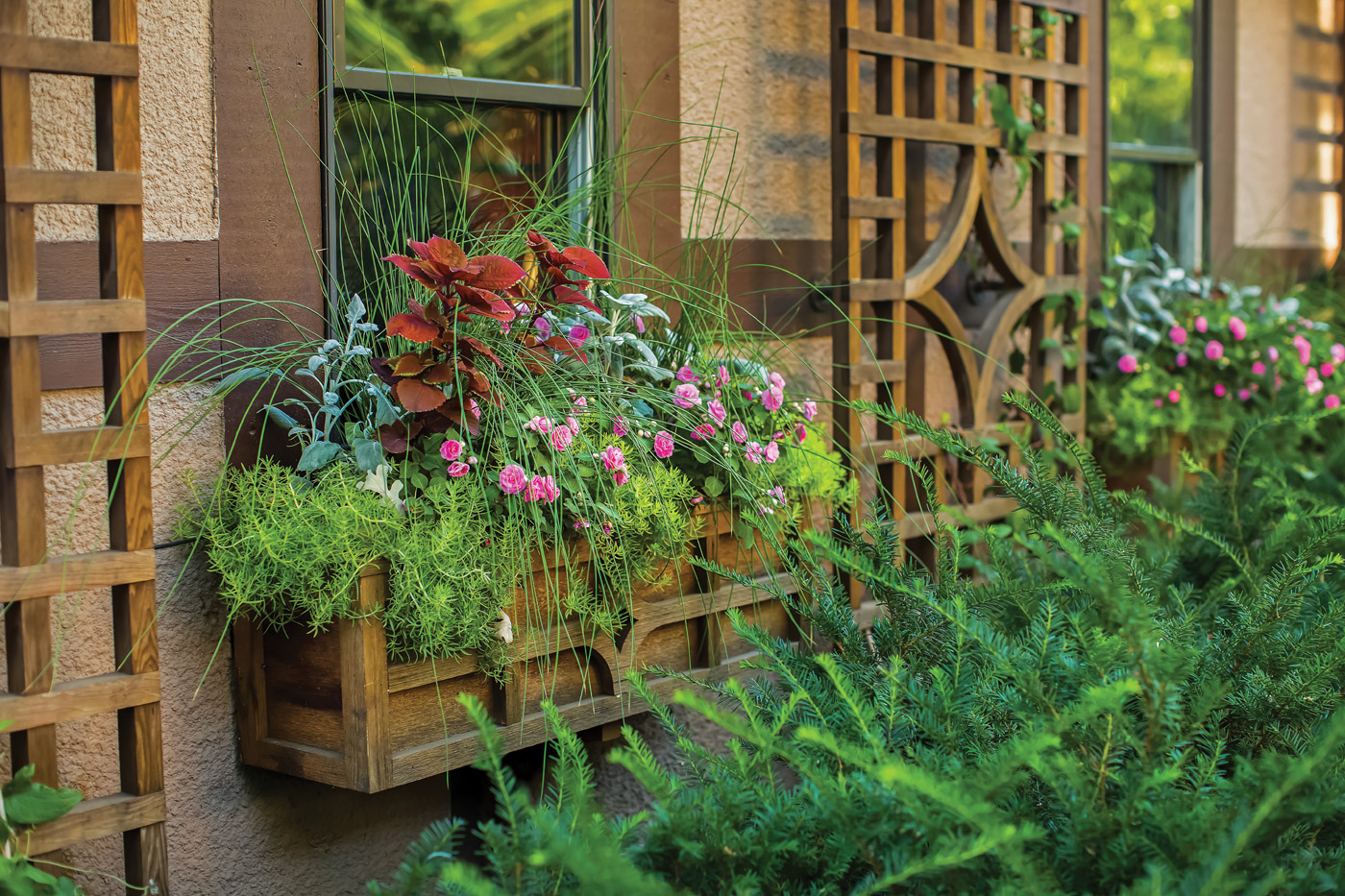
Permanent window boxes, containers, and urns serve as year-round focal points in the garden now, acting to highlight the best of each season. They effectively link the house to the landscape and breathe life into hardscaped areas, such as the space surrounding the backyard pool. Containers are the icing on the cake, the finishing touch that truly elevates the garden and makes room for playful experimentation with new plants and color schemes as the weather changes. They are also incredibly forgiving, allowing you to easily adjust the garden’s personality year after year.
Infuse beds in a mature garden with ribbons of seasonal color
With the structural elements and perennial plantings in place, the final step in breathing new vitality into the landscape was to fill the beds with sweeps of ephemeral color. This is where flowering bulbs and annuals truly shine, providing that essential layer of ongoing interest and vibrancy. My approach here was to install swaths, not just individual specimens. Planting in drifts creates greater impact, mimicking nature and guiding the eye through the garden.
Broad brushstrokes of various bulbs offer near-continuous bloom in this garden from early spring through early summer. Rabbit-resistant daffodils (Narcissus spp. and cvs., Zones 3–9) and giant globe alliums (Allium giganteum, Zones 4–9) are favorites, but timely early application of a rabbit and deer repellent keeps the bunnies away from other more tasty bulbs.
Plant annuals to fill gaps and add instant color
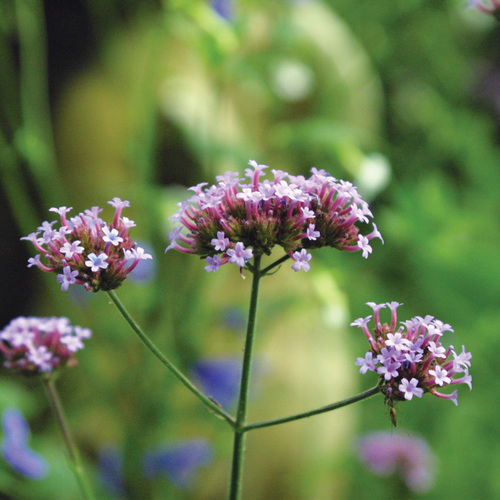
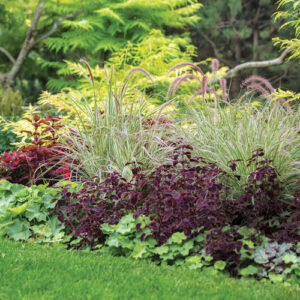
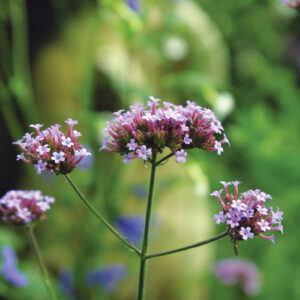
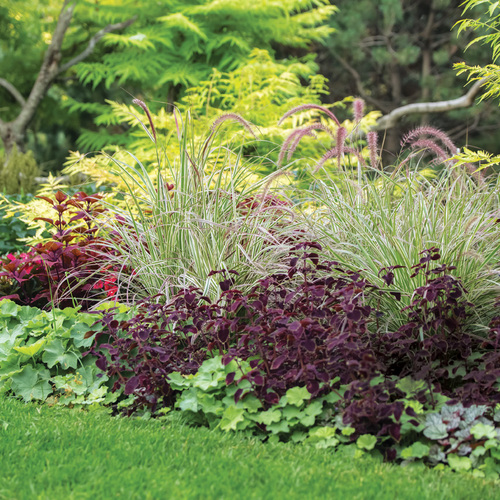
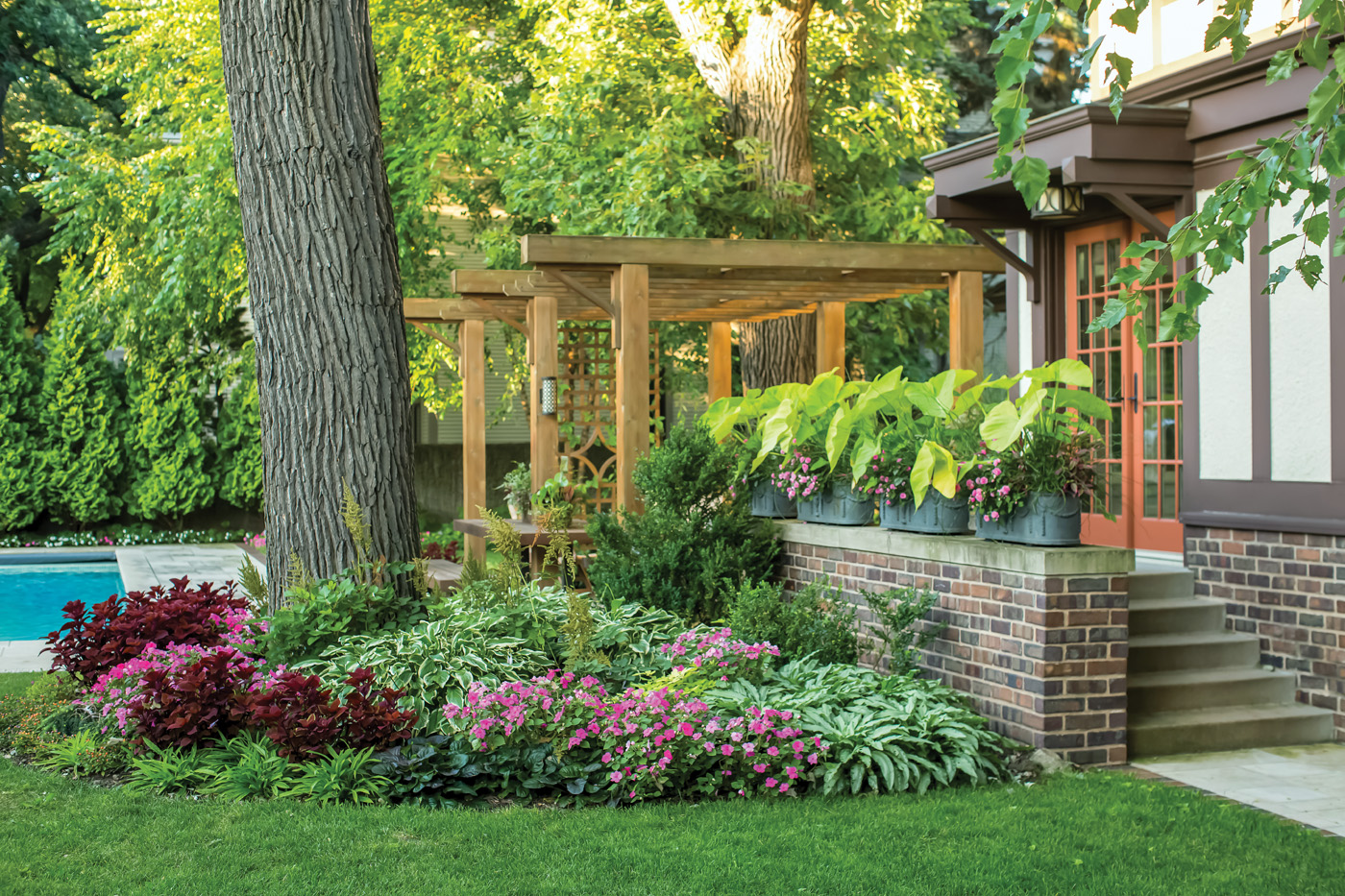
Annuals play a critically important role in my garden playbook. They provide instant gratification, filling in any remaining gaps and offering ongoing, brilliant color from spring until the first hard frost. They also offer a license to change and evolve from year to year. Why would you wear the same outfit over and over when you have a whole wardrobe to choose from? For the Ericksons’ garden, I often choose a mix of bright coleus (Coleus scutellarioides and cvs., Zones 10–11), polka dot plant (Hypoestes phyllostachya and cvs., Zones 10–11), and elephant’s ear (Alocasia spp. and cvs., Zones 10–11), with their incredible foliage patterns, and cheerful impatiens (Impatiens walleriana and cvs., Zones 10–11) in shady spots (photo above). In sunnier pockets, bigger globe amaranth (Gomphrena globosa and cvs., annual) and tall verbena (Verbena bonariensis, Zones 7–11) add height, becoming pollinator magnets while complementing the shorter annuals with mounding habits. Favorites are repeated every year, but I always leave room for something new.
Read More: Top Plants to Reinvigorate a Mature Garden
Reinventing an aged garden is a journey of thoughtful assessment, strategic editing, and inspired new plantings. It’s about honoring the past while creating an exciting, evolving landscape that truly reflects the present and future. By carefully balancing preservation with innovative design, any tired garden can be transformed into a dynamic and captivating space that brings joy for years to come.
Subscribe to Fine Gardening Magazine
Scott Endres is a horticulturist, designer, and co-owner of Tangletown Gardens, a retail garden center, landscape design firm, and regenerative agriculture farm based in Minneapolis, Minnesota.
Fine Gardening Recommended Products

Attracting Beneficial Bugs to Your Garden, Revised and Updated Second Edition: A Natural Approach to Pest Control
Fine Gardening receives a commission for items purchased through links on this site, including Amazon Associates and other affiliate advertising programs.
This revised and updated edition of Jessica Walliser’s award-winning Attracting Beneficial Bugs to Your Garden offers a valuable and science-backed plan for bringing balance back to the garden. With this indispensable gardening reference—now updated with new research, insights, and voices—learn how to create a healthy, balanced, and diverse garden capable of supporting a hard-working crew of beneficial pest-eating insects and eliminate the need for synthetic chemical pesticides.
The Regenerative Landscaper: Design and Build Landscapes That Repair the Environment
Fine Gardening receives a commission for items purchased through links on this site, including Amazon Associates and other affiliate advertising programs.
2024 Nautilus Award Gold Medal Winner! This awe-inspiring guide weaves together permaculture design, food resiliency, climate adaptation, community organizing, and indigenous wisdom that you can implement in your own backyard.
The Crevice Garden: How to make the perfect home for plants from rocky places
Fine Gardening receives a commission for items purchased through links on this site, including Amazon Associates and other affiliate advertising programs.
A crevice garden replicates the environmental conditions of mountain tops, deserts, coastlines, and other exposed or rocky places on earth. These striking garden features provide perfect conditions for the plants native to these far-off places, bringing the cultivation of these precious gems within everybody’s reach.