

Water Conservation Can Be Beautiful
When developing a strategic site water management plan for a client, our landscape and irrigation design company always starts with gathering and evaluating information about the property’s unique conditions. Are there existing water sources such as ponds, rivers, or seasonal washes? What roof surfaces, outbuildings, or other structures are available for water capture? Is the land flat, gently sloped, or terraced?
Jump To: Is it Time to Hire a Professional?
Effective site water management
A thorough site analysis compiles and organizes the details that will shape the direction of an effective water strategy. Water management is not about a single technique or system. It is about integrating all available water sources into a cohesive, intentional plan.
At its core, strategic site water management is about making the most of a precious and finite resource. Even when water arrives effortlessly at the turn of a faucet, it has been extracted, treated, and delivered using significant energy. A thoughtful strategy acknowledges this reality and offers solutions for using this resource as efficiently and responsibly as possible.
Harvesting roof water is a logical place to start
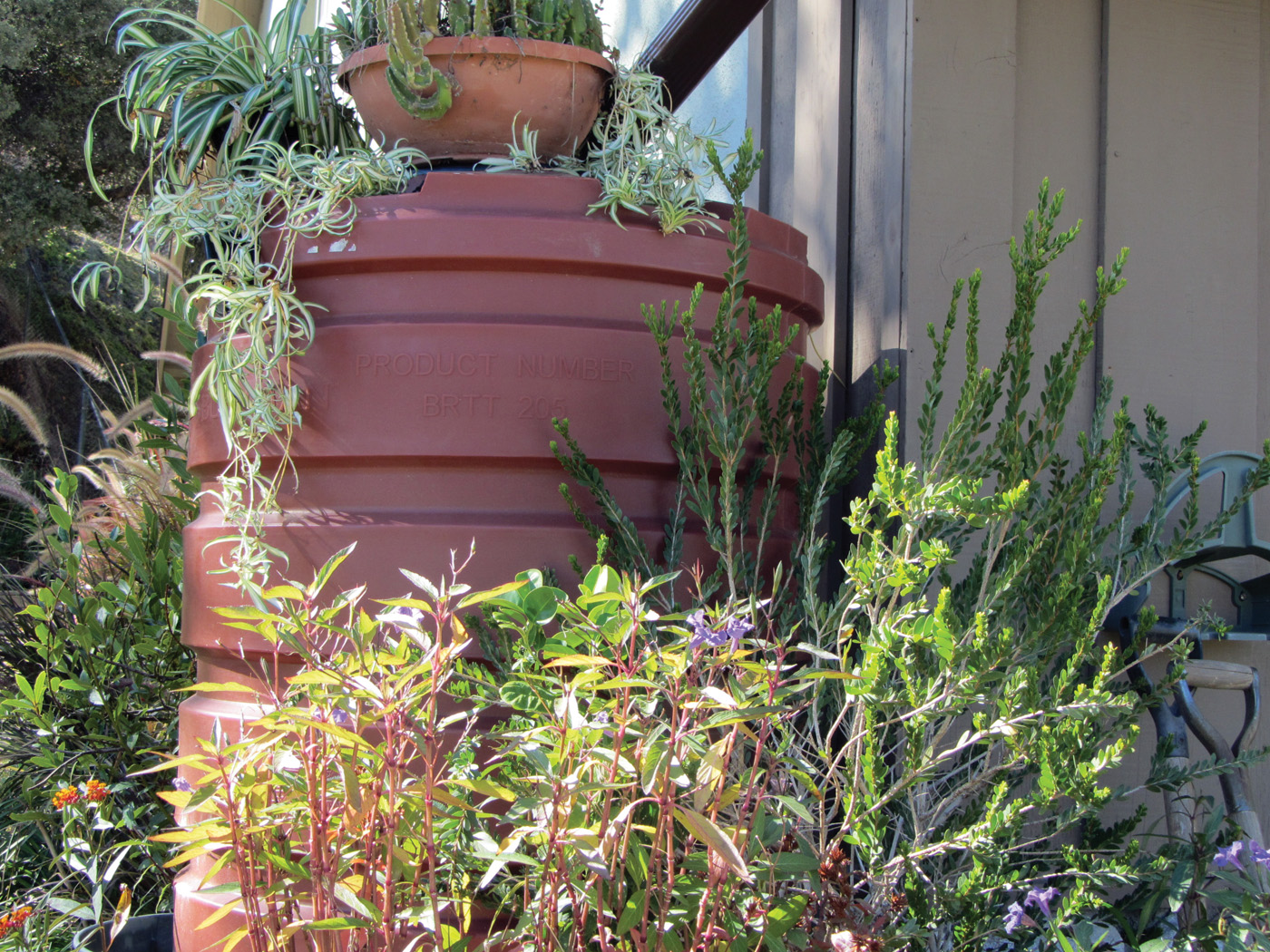
Capturing and making use of rainfall from roofs is a practice that has been around for thousands of years, and it remains one of the most efficient ways to supplement your landscape’s water needs. Well-designed gutters and downspouts will direct roof water into a tank or cistern, where it can be stored for later use.
A few quick calculations will tell you how much water you can realistically expect to collect. An inch of rain falling on 1 square foot of roof will yield approximately 0.623 gallons of water. Multiplying this number by the total square footage of the roof will give you the number of gallons that could be collected for each inch of rain that falls. Multiply that result by your region’s average annual rainfall, and you will have a realistic estimate of how much water may be available each year.
Consider storage tank sizes
Keep this number in mind when sizing storage tanks. As a general rule, a single inch of rain can yield roughly 600 gallons of water from a 1,500-square-foot roof. Over the course of a rainy season, water totals can become significant, so don’t sell yourself short with an undersized tank or rain barrel.
A basic rainwater-harvesting system includes several components: the collection surface, gutters and downspouts, pre-filtration or first-flush devices, storage tanks, and a distribution method. Storage tanks are available in a wide range of sizes and materials, with designs available for installation both above and below ground.
Before installing a system, it is important to review local regulations and building codes. Some municipalities have specific requirements or restrictions related to rainwater harvesting. Homeowners’ associations may also have covenants that affect system design or placement.
Read More: Rain Barrels for Rainwater Irrigation
Passive methods use land contours to slow runoff and capture stormwater
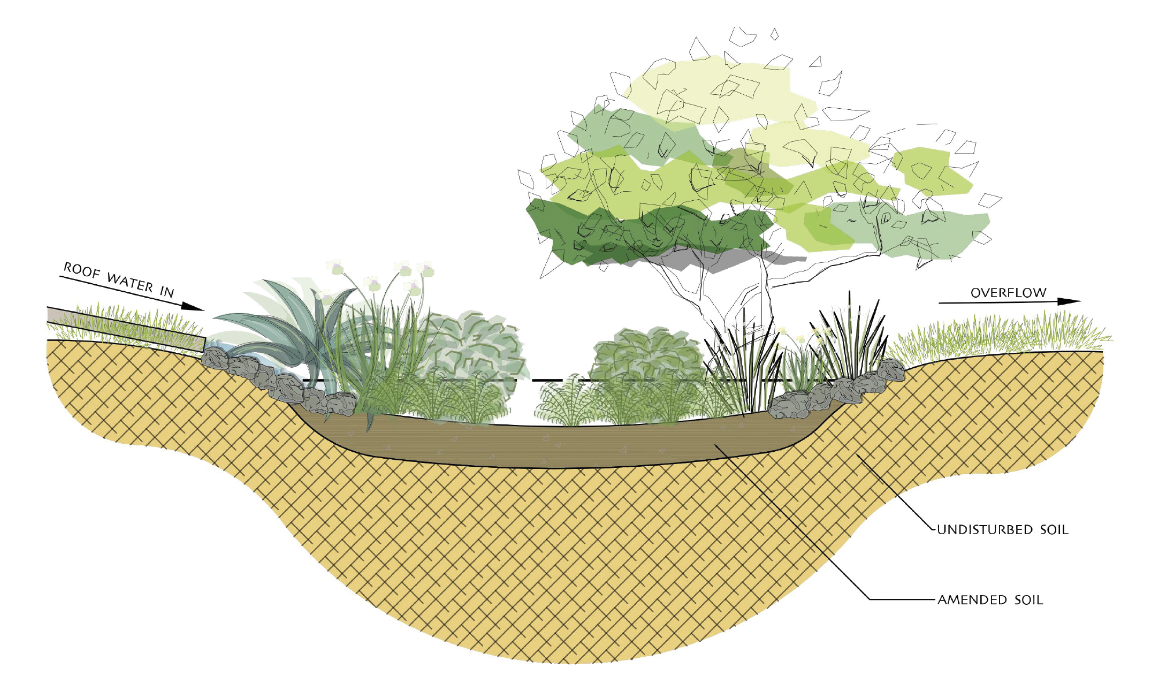
Collecting and redirecting stormwater at ground level could also play a critical role in your water management strategy, whether your terrain is sloped or flat. You can use terracing, earth berms, and stone check dams to slow and hold runoff on slopes, while rain gardens (above) and bioswales help to capture and infiltrate stormwater on flatter sites. Passive water-harvesting techniques work with gravity and natural land contours to slow and spread water out, allowing it to sink into the soil where it will be most beneficial.
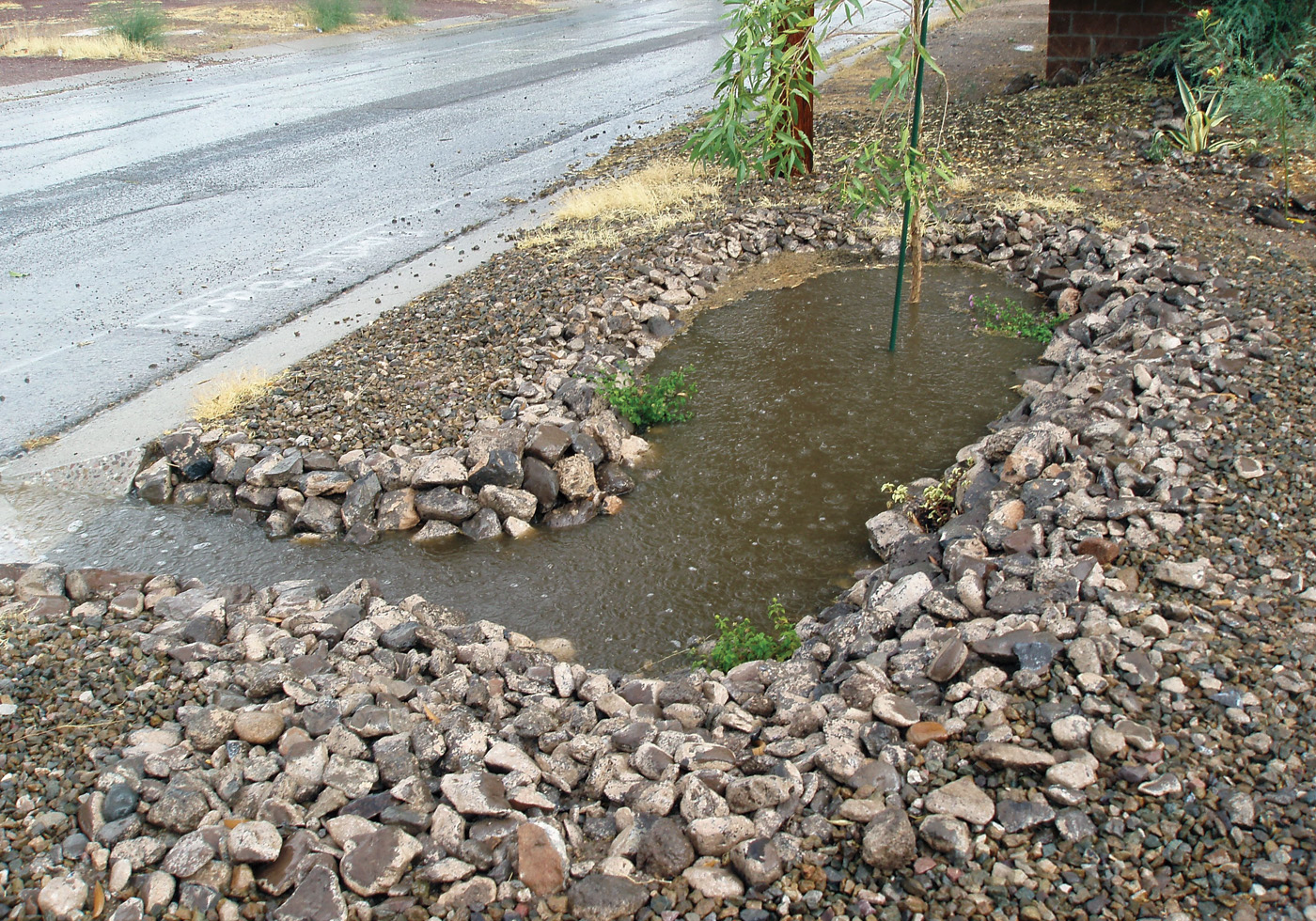
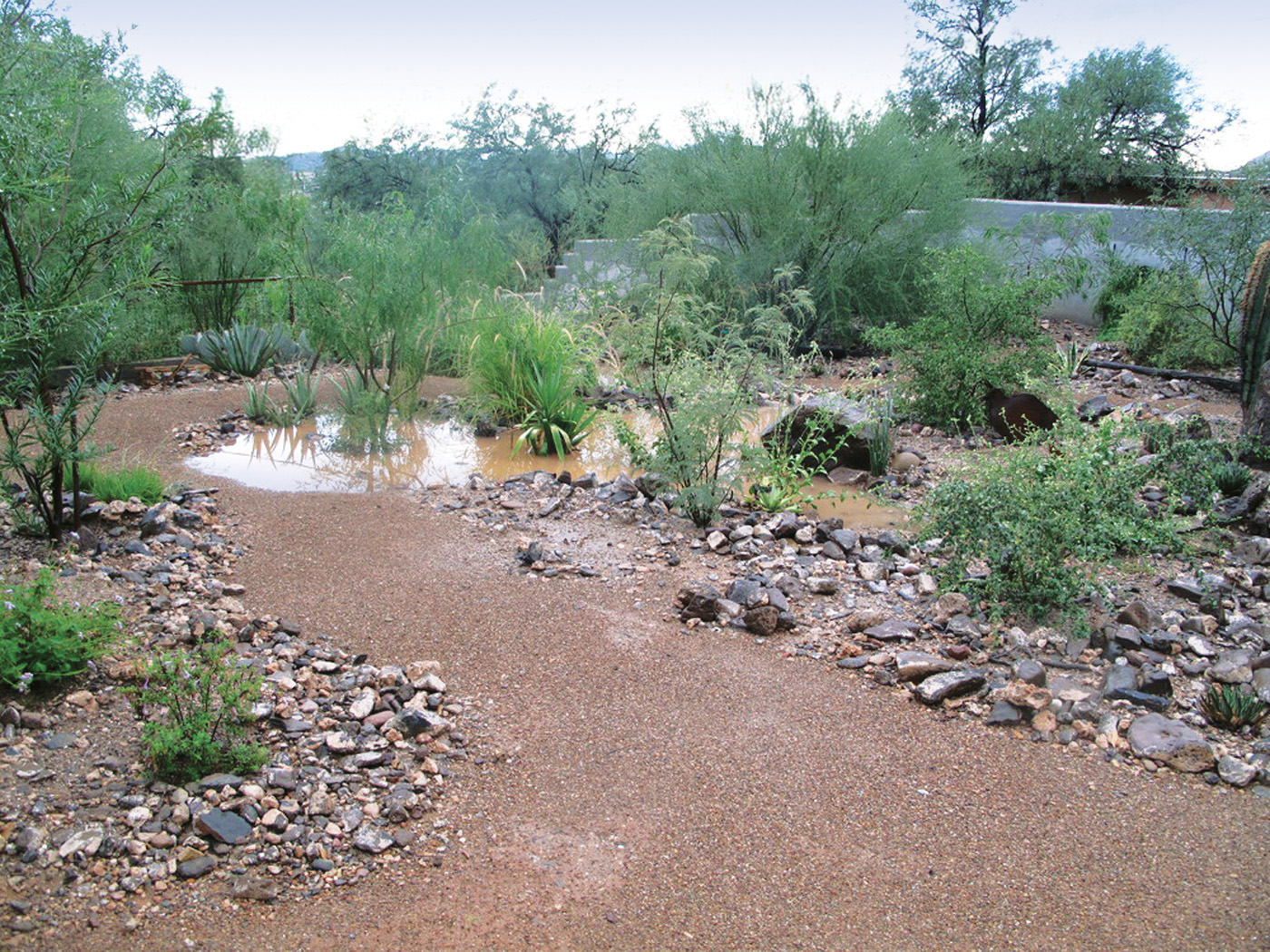
One simple method is the creation of shallow basins or water wells around trees to capture rainfall and prevent irrigation water from running beyond the root zone (above). In New Mexico, these are often called media lunas, or half-moon berms, shaped to intercept runoff and direct water toward plantings.
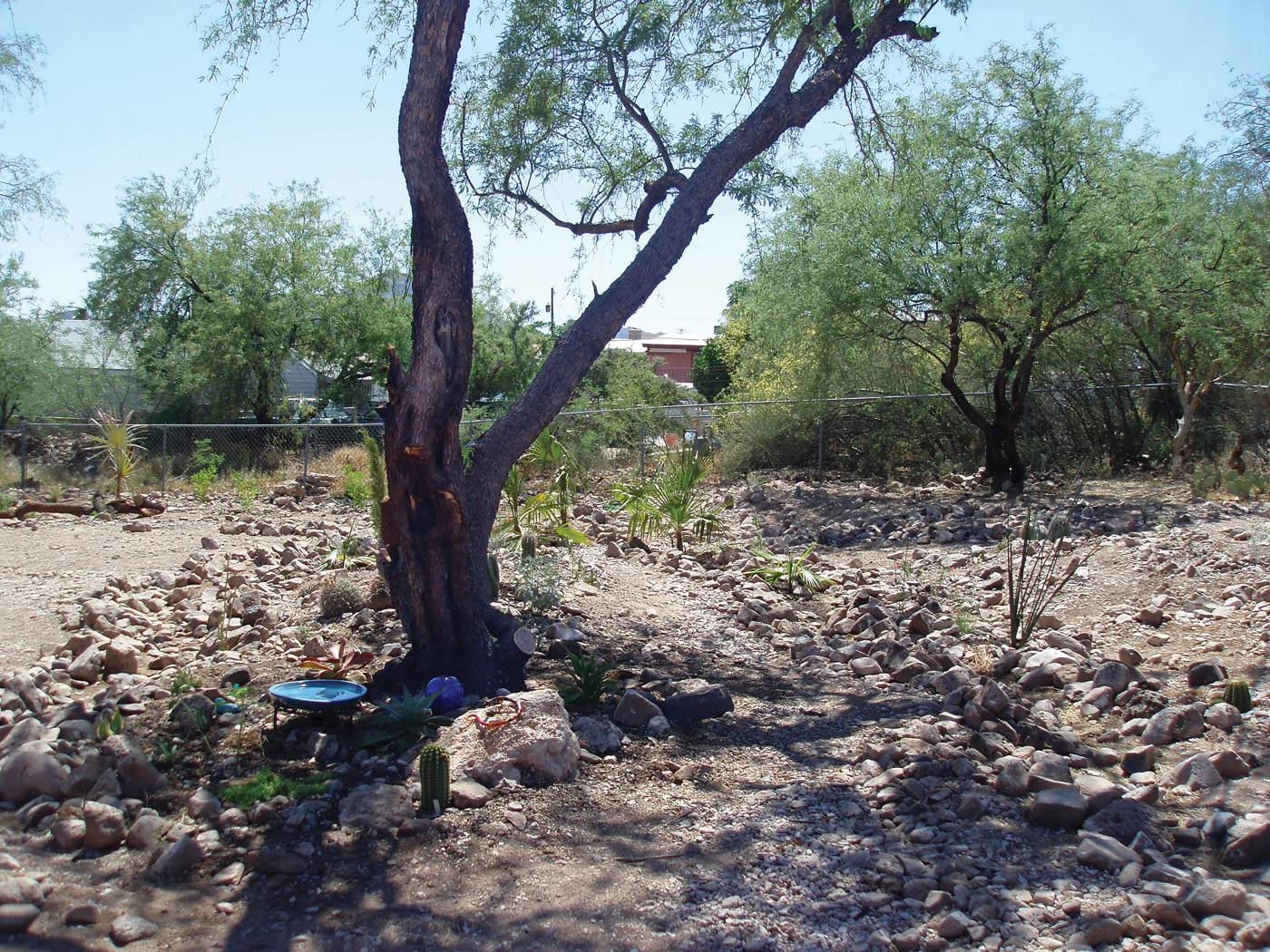
On larger or sloped sites, straw bales can temporarily slow water in washes or dry streambeds. Stone check dams, sometimes called one-rock dams, are effective in reducing erosion and capturing sediment in drainage channels. Terracing (below) can dramatically reduce slope length, allowing rainwater to soak in while preserving topsoil and organic mulch.
These low-tech approaches often deliver some of the highest returns, improving soil moisture, reducing erosion, and supporting healthier plant growth without additional energy inputs.
Before photo
After photo
Efficient irrigation systems make the most of precious water resources
Even with robust water-harvesting strategies in place, supplemental irrigation is often necessary, especially in arid and semi-arid climates. An efficient irrigation system begins with thoughtful design and continues through ongoing monitoring and adjustment.
Choosing an irrigation system
When choosing an irrigation system, the goal should be precision and accountability. Modern controllers, paired with flow monitoring, allow homeowners and professionals to track water use by individual zones and quickly identify leaks or system failures. Whether a property is on municipal water or a well, measuring irrigation water use is a cornerstone of strategic water management. Simply put, if there is no measurement, there is no understanding. Integrating rainwater harvesting with irrigation systems can range from simple setups to more complex fully integrated systems.
Over the past two decades, I’ve watched the irrigation industry evolve toward smarter, more data-driven management systems. Many of the tools now considered best practice, such as weather-based controllers and zone-level flow monitoring, were first introduced to widespread professional use by long-established manufacturers such as Hunter Industries, and this has made them much more accessible to homeowners.
Learn More: Improving and Preserving Soil Health Q&A Webinar
Hydrozoning
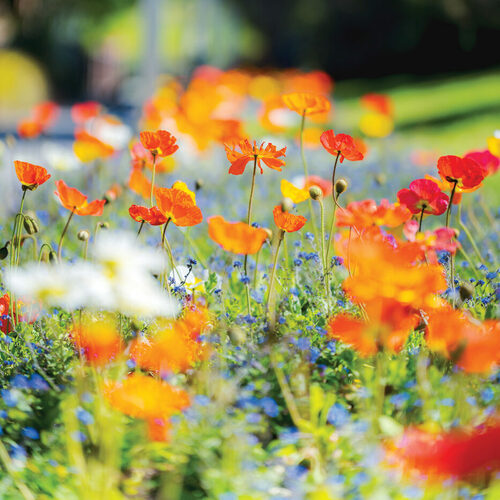
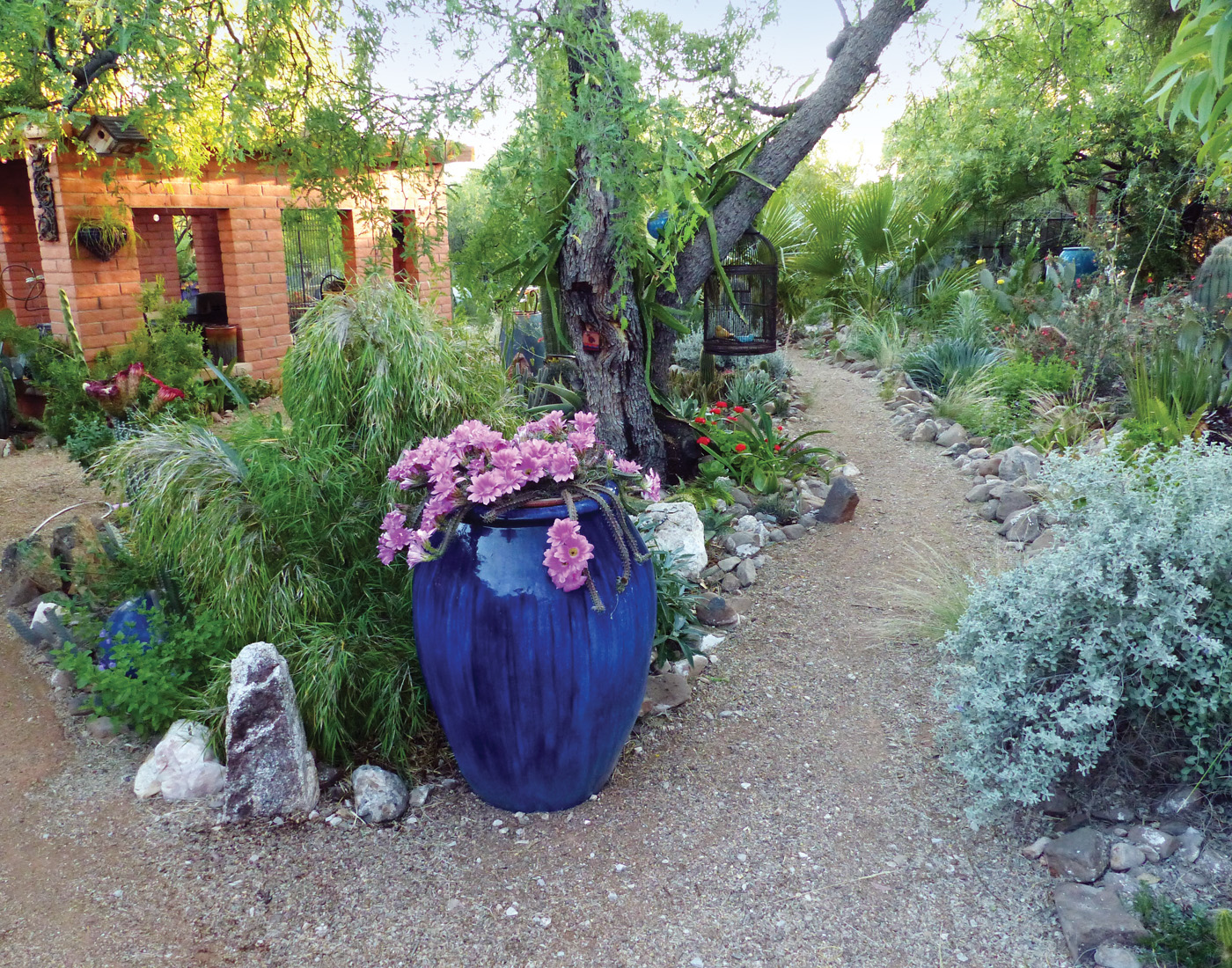
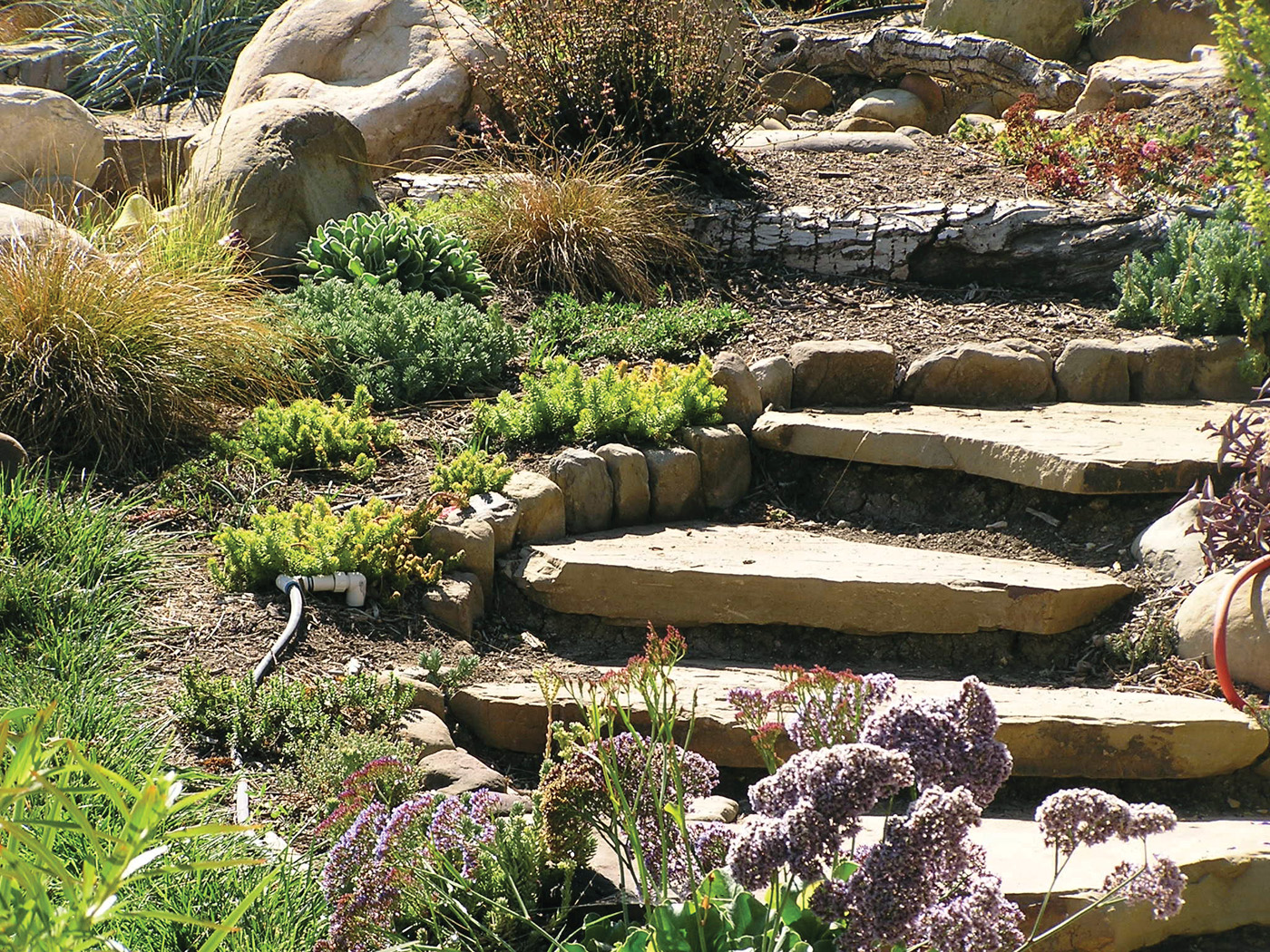
Hydrozoning is a method that brings thoughtful planting design and irrigation planning together. It involves grouping plants with similar water needs so they can be irrigated appropriately (photo above). Turf, shrubs, perennials, and trees often require different amounts of water, and designing zones to accommodate those distinctions will prevent the wasteful practice of overwatering some areas while under-watering others.
Irrigation audits
An irrigation audit provides a snapshot of how well a system is performing. Audits typically evaluate distribution uniformity, pressure regulation, controller settings, and overall efficiency.
Many systems function far below their potential because they have never been evaluated or adjusted after installation. Regular audits help ensure that water is applied evenly and only where needed.
Irrigation efficiency is often expressed as a percentage rating. Well-performing systems typically score between 75 and 90 percent, while poorly rated systems fall below 70 percent. You can learn more about how irrigation efficiency is evaluated by visiting www.irrigation.org.
Designing, planning, and implementing a strategic water management strategy allows gardeners to reduce their dependence on other water sources while still enjoying healthy, resilient, and beautiful outdoor spaces.
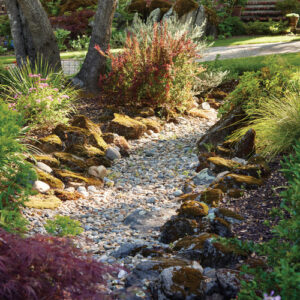
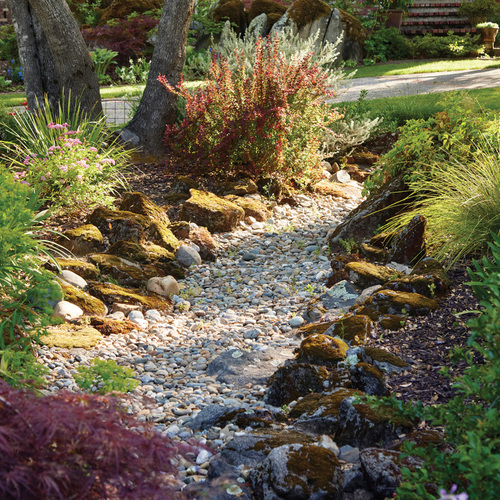
Learn More: How to Build a Stylish Dry Creek Bed

Is it time to hire a professional?
Use this quick checklist to decide whether to tackle the water site management work yourself, or bring in help.
You can likely DIY if…
- Your project scope is small, such as a limited area or a few irrigation zones.
- The work is straightforward and does not require specialized technical design.
- No heavy equipment is needed.
- Local restrictions are minimal, with few HOA or municipal requirements.
- You are adding to an existing plan and already have about 70 percent of an integrated water management strategy in place.
It’s time to call a professional if…
- Your project is medium to large in scope or spans the entire property.
- The work is complex and requires coordination between drainage, grading, planting, and irrigation.
- Heavy equipment is required for excavation, trenching, or grading.
- Restrictions are substantial, including HOA rules and local permitting requirements.
- You’re starting from scratch or expanding a project by more than 20 percent, meaning the work approaches a full system installation.
- Multiple systems must work together, including active and passive rainwater harvesting, cistern-connected gutters and downspouts, rain gardens or bioswales, and an irrigation system designed to match the planting plan.
Landscaping Tip: If the budget is tight, there’s a smart middle path
If you are handy, hire a landscape designer or landscape architect for design only, then manage the project and complete portions of the work yourself. Or, if the budget allows, a qualified design-build firm can handle both the design and construction and coordinate all the components efficiently.
Mark G. Brotton is a landscape designer certified by the Association of Professional Landscape Designers (APLD), and owner of Living Water, an irrigation and landscape design firm based in Santa Fe, New Mexico.
Fine Gardening Recommended Products
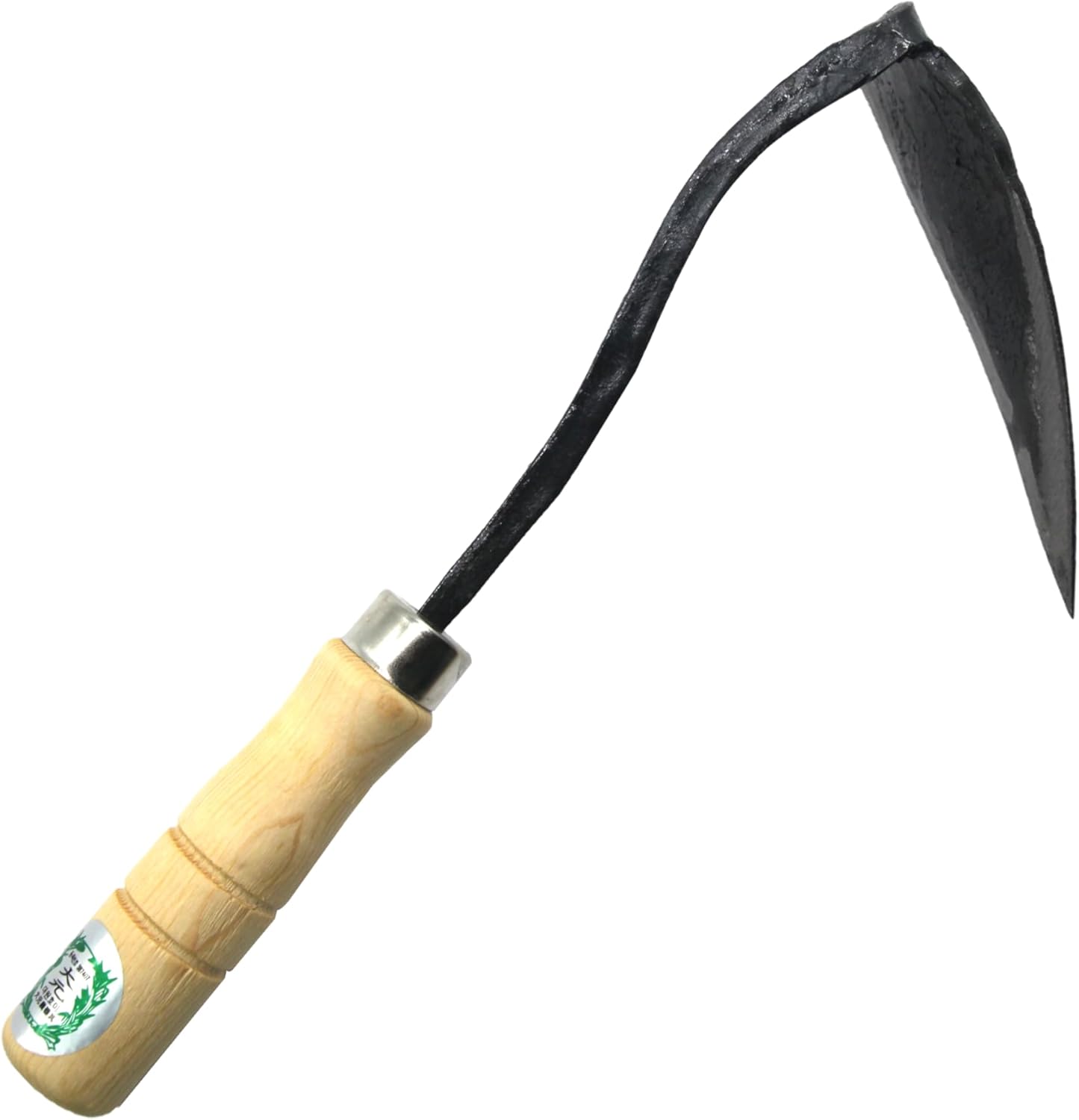
Ho-Mi Digger – Korean Triangle Blade
Fine Gardening receives a commission for items purchased through links on this site, including Amazon Associates and other affiliate advertising programs.
Versatile Tool: The Easy Digger Korean Triangle Blade Ho Mi Ho-mi is a versatile gardening tool designed for leveling and digging in home and garden settings. Efficient Design: Its unique triangular blade shape allows for easy soil penetration and efficient leveling of garden beds or landscaping areas. Durable Construction: Crafted with sturdy materials, this tool ensures long-lasting performance and reliability.
Ergonomic Handle: The comfortable handle provides a secure grip, reducing hand fatigue during extended use. Compact Size: Its compact design makes it easy to maneuver in tight spaces and store when not in use.
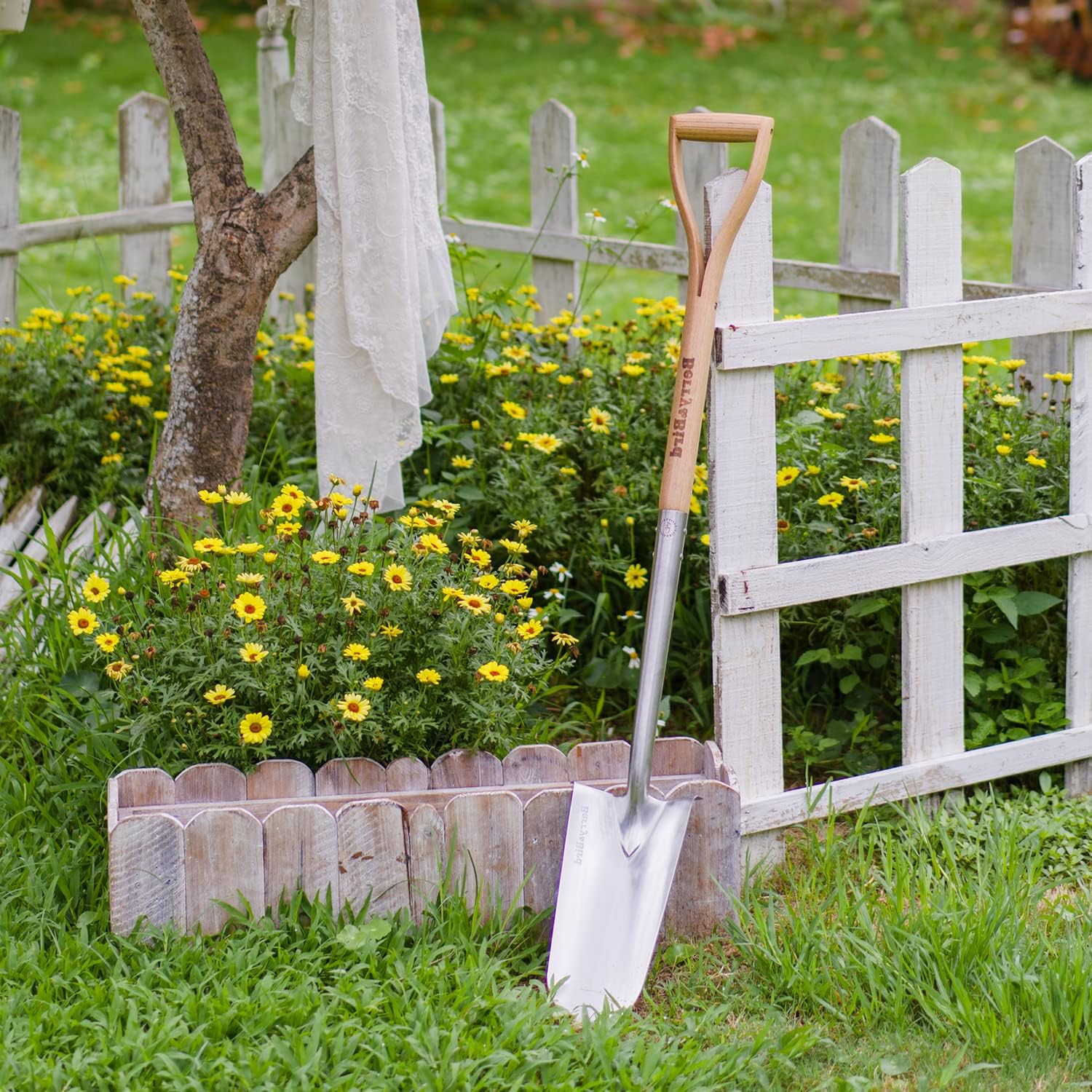
Berry & Bird Rabbiting Spade, Trenching Shovel
Fine Gardening receives a commission for items purchased through links on this site, including Amazon Associates and other affiliate advertising programs.
Ideal Tool for All Gardeners Use: Our heavy duty trenching shovel is designed by a professional gardening tool designer. Lifetime Durability: This heavy duty drain spade is made of high-quality stainless steel, it is very strong and durable, even if it is used for high-strength work, it will not bend. Ergonomic Wood Handle: The handle of this planting spade is made of ash hardwood harvested from FSC-certified forests and has an ergonomically streamlined design, making it very suitable for everyone’s hands. Multi-Use: This digging shovel is generally used for digging trenches, digging holes, transplanting, edging, moving compost, cutting thick turf and furrowing. The sharp blade allows you to cut, scoop, dig, lift and dice in hard soil.
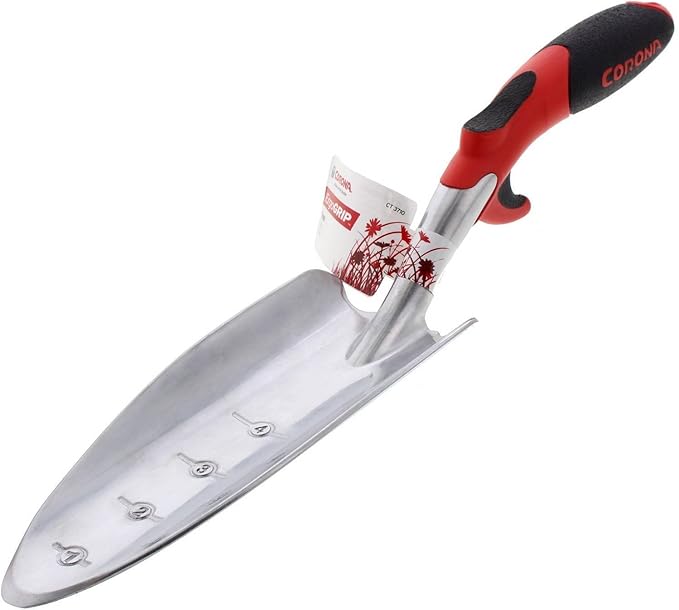
Corona E-Grip Trowel
Fine Gardening receives a commission for items purchased through links on this site, including Amazon Associates and other affiliate advertising programs.
Handle Material: Aluminum. Handle Length: 14-1/2 in. Overall Length: 14.5 in. Head Material: Aluminum. Handle Color: Red.