



Hi GPODers!
We’re keeping the theme of gardens in transition going this week as we return to Carla Zambelli Mudry’s garden in Malvern, Penn. Carla has generously shared standout plants in her garden through the seasons for several years now (check out a sampling of her previous submissions here.). But Carla is treating us to a deep dive on spring this year. She has already shared her earliest spring blooms (Carla’s Early Spring Flowers Part 1 and Part 2) as well as some fabulous flowers and foliage during midseason (Carla’s Mid-Spring Flowers and Mid-Spring Foliage). Today we’re getting a look at her collection of roses and clematis as the garden inches closer to summer.
And just like that, the roses and clematis start to burst into bloom in all their splendor!
Roses were one of my first loves in the garden. The first rose I ever planted was a hybrid tea named John F. Kennedy, and I planted it with my father when I was a very little girl.
Then, in the 90s, I discovered antique roses, old roses, found roses, and David Austin English roses.
Because I live with woods, I have discovered that English roses and antique roses are the best for the garden. They are the most disease resistant and pest resistant.
People often think roses are difficult to grow, and they actually aren’t. What they require, however, is a good routine—that’s cleaning up after them, regular feeding, good pruning, and things of that nature.
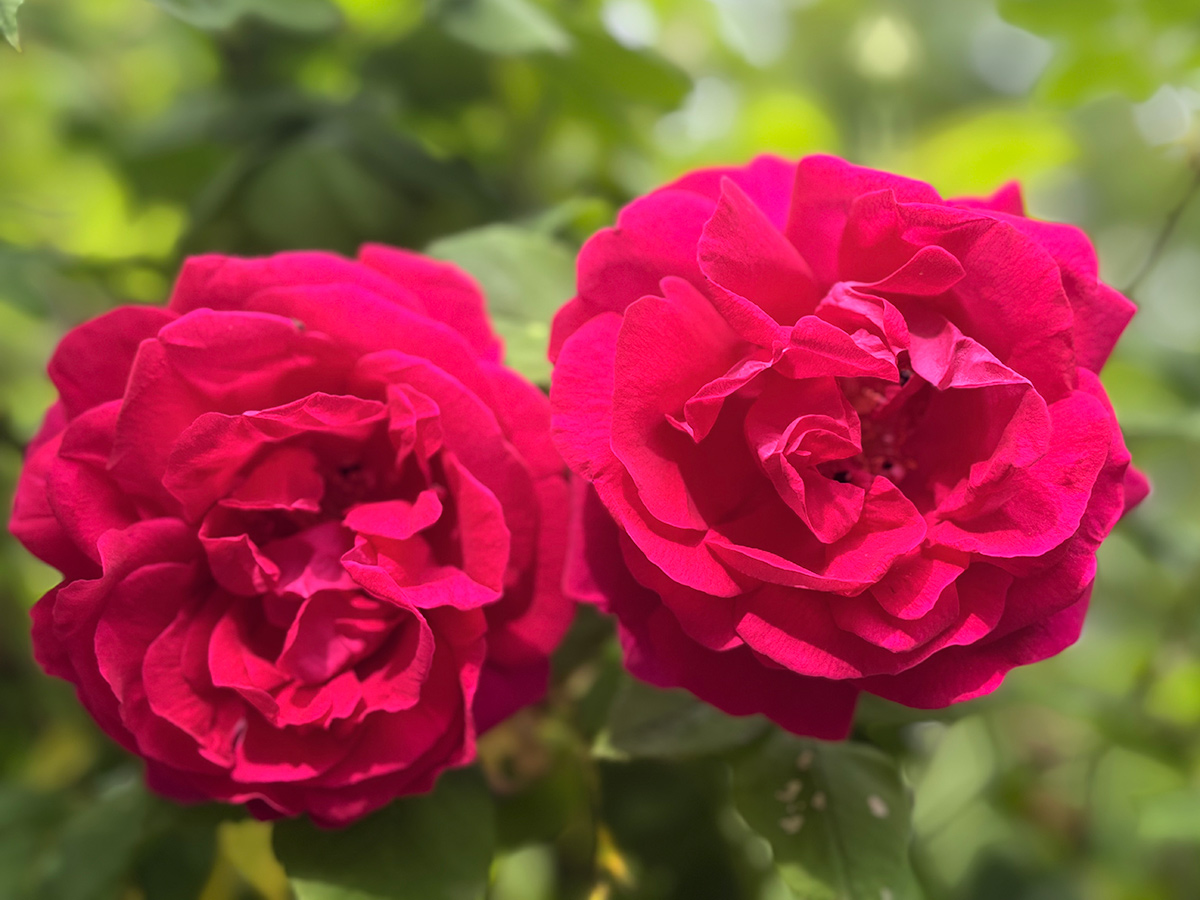 Carla has an impressive collection of roses that we will only see a sampling of in this post, but it felt appropriate to start with this stunning pair in that quintessential bright pink-red color.
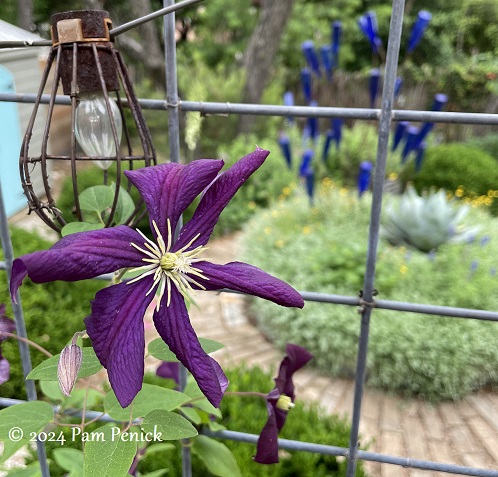
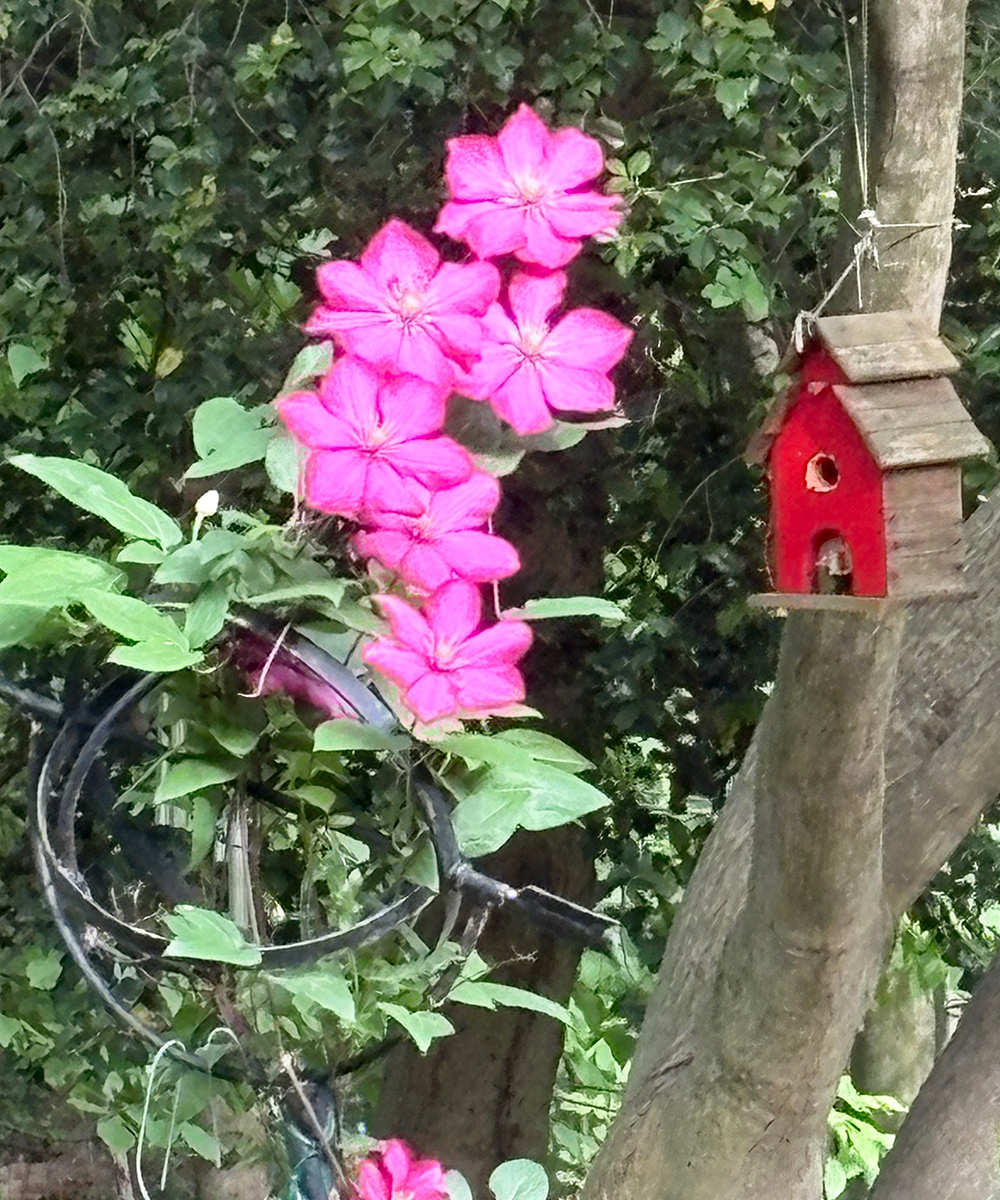 Along with her collection of roses, Carla has an assortment of clematis in a range of exciting colors. I adore how she’s growing this bright pink variety on an unconventional trellis that adds even more interest and allows it to grow up next to her bright red birdhouse.
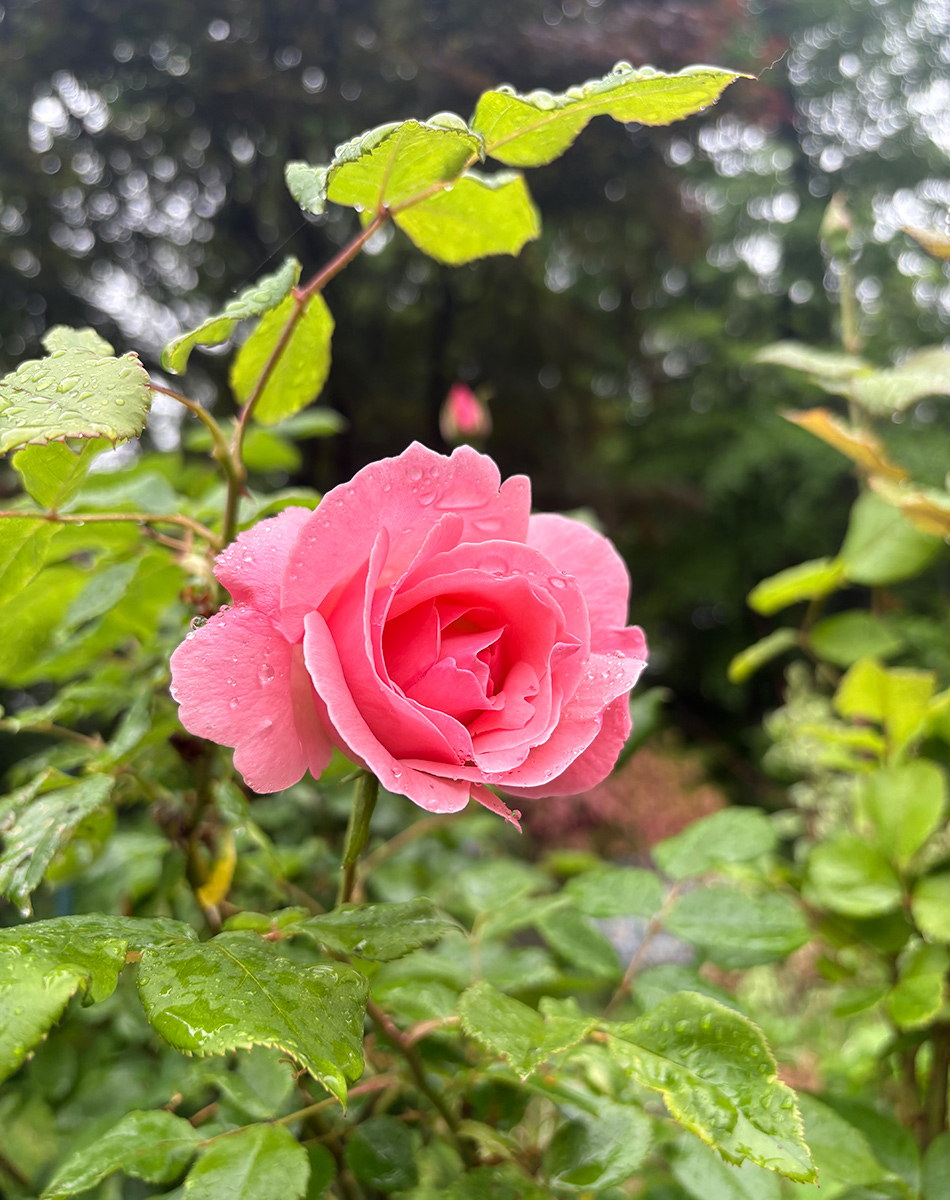 The simple beauty of a single rose covered in droplets from a fresh rain.
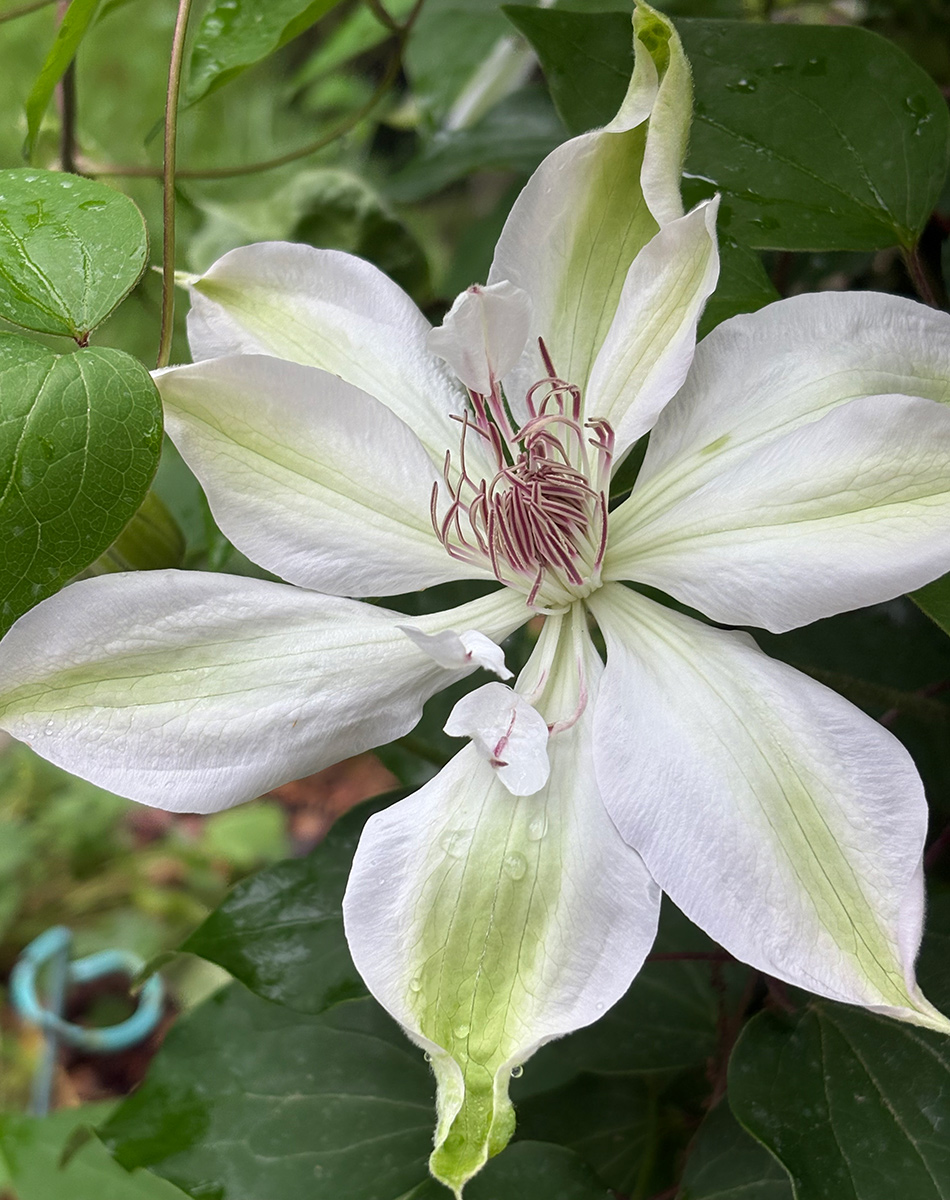 While clematis might be synonymous with the various shades of purple and pink they’re most often utilized for, there are some equally incredible very light to white varieties. This might be the Henryi cultivar (Clematis ‘Henryi’, Zones 4–8).
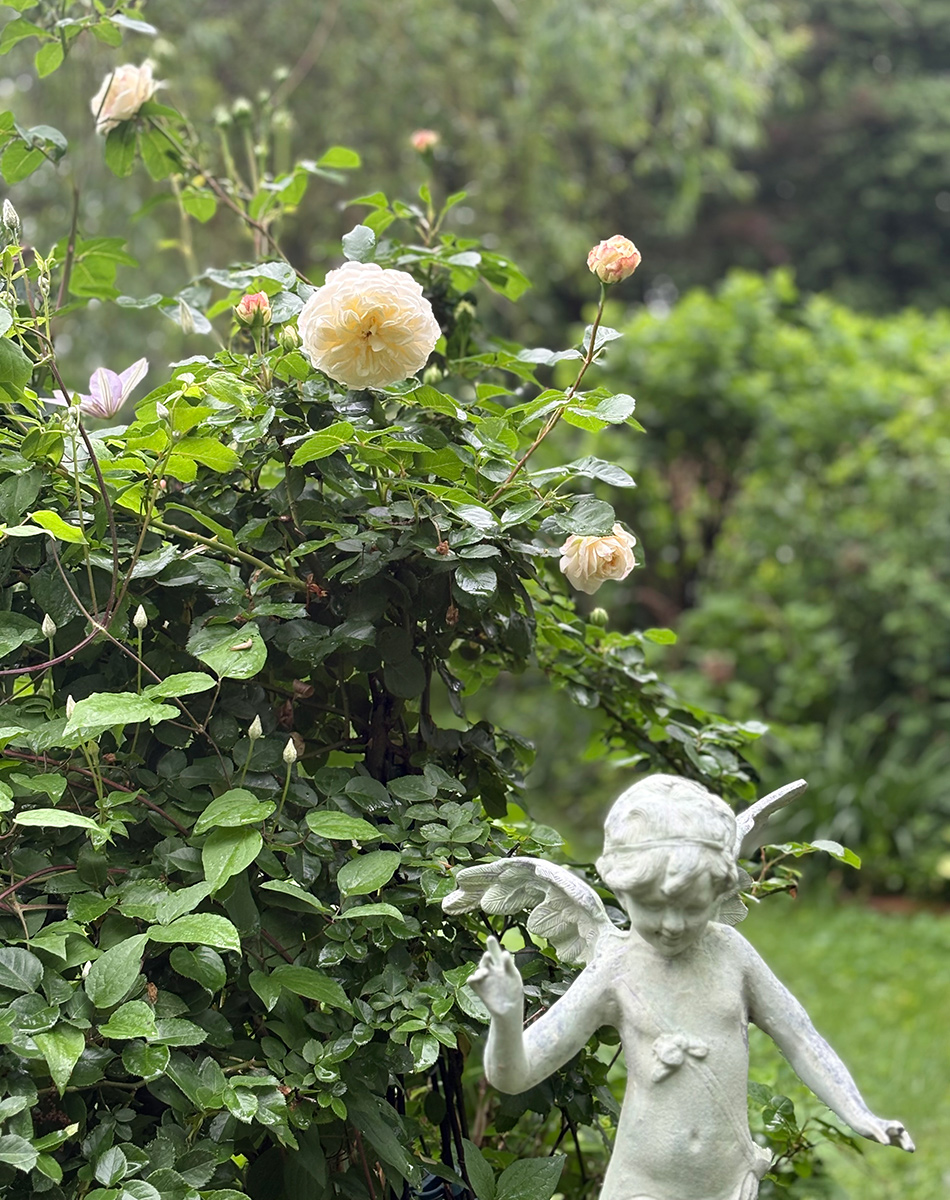 White roses can be more commonplace, but I really love this creamy color.
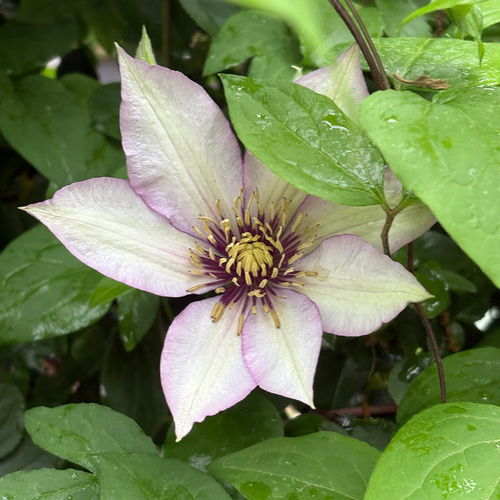
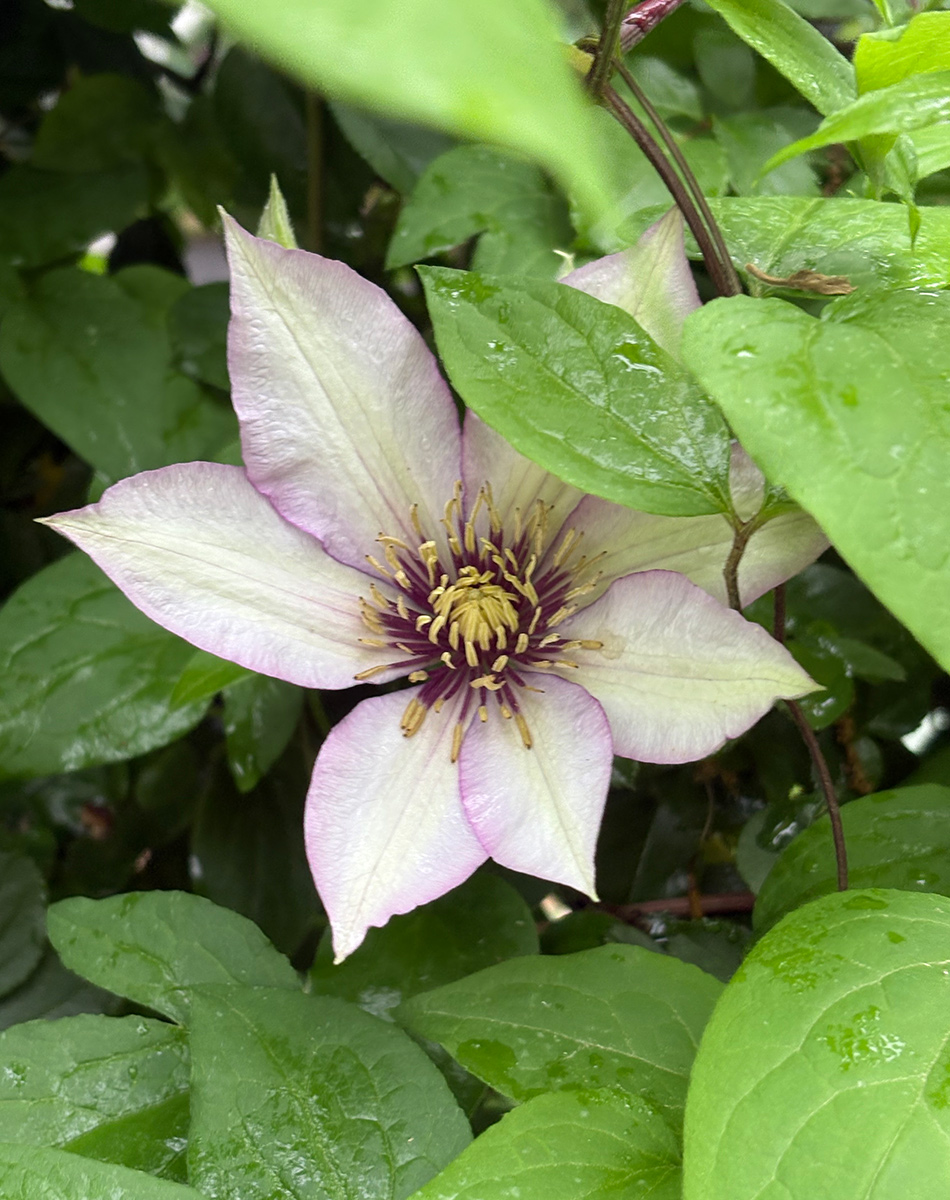 Another light clematis that is a great companion to the whiter cultivar above, this must be a Boulevard® Samaritan Jo™ clematis (C. ‘Evipo075’, Zones 4–9). The subtle purple edges on these blooms are just dreamy.
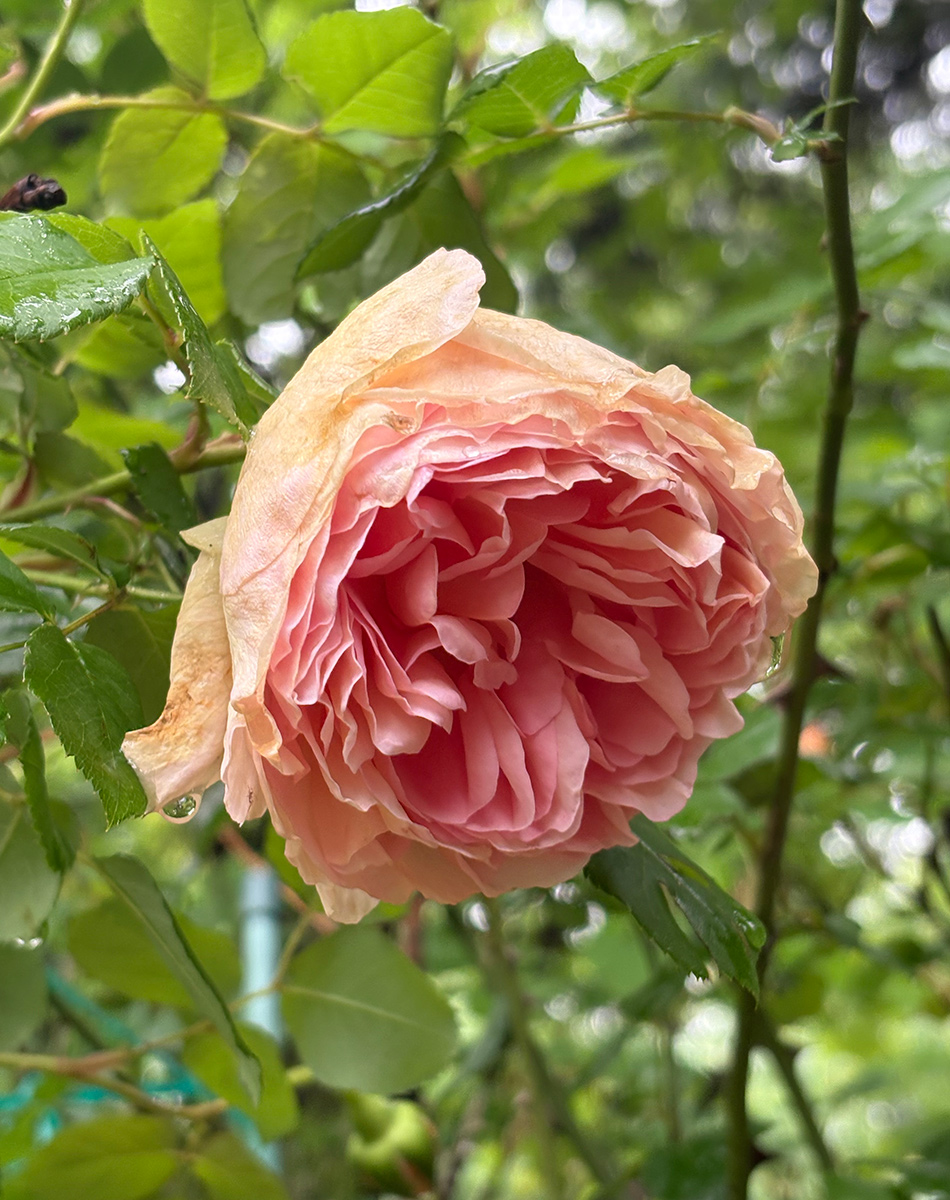 Many of the roses that Carla mentioned grow best in her garden—antique roses, old roses, English roses—often have incredible double forms with an unimaginable number of petals packed into each bloom. This peachy variety is an excellent example.
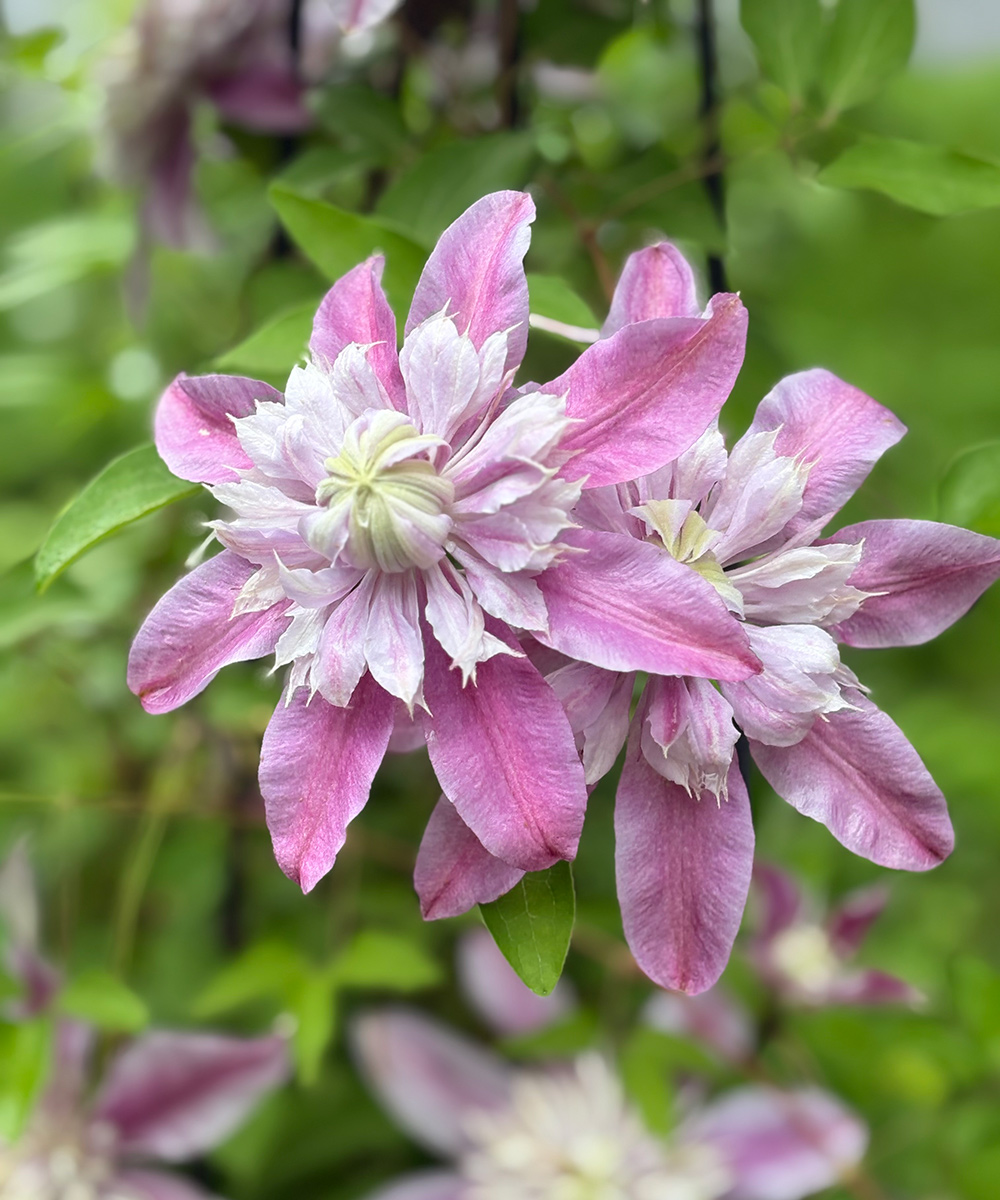 Yes, clematis come in double forms too! These ruffly Josephine clematis (C. ‘Evijohill’, Zones 4–9) are absolutely sensational.
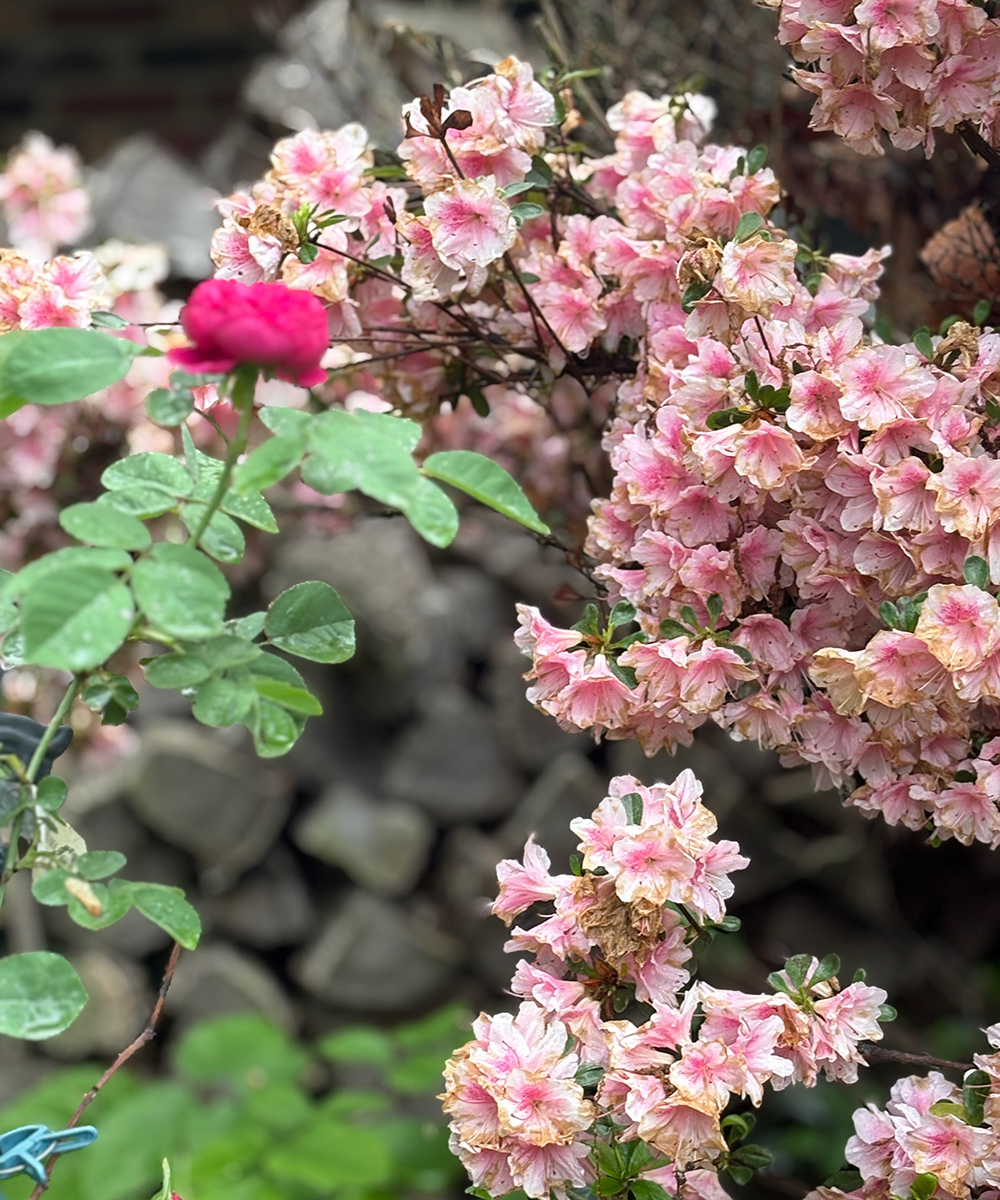 A bright pink rose is backdropped with what must have been the tail end of Carla’s azalea blooms. The flowers on this shrub are starting to fade, but plenty of beautiful, peachy-pink color remains.
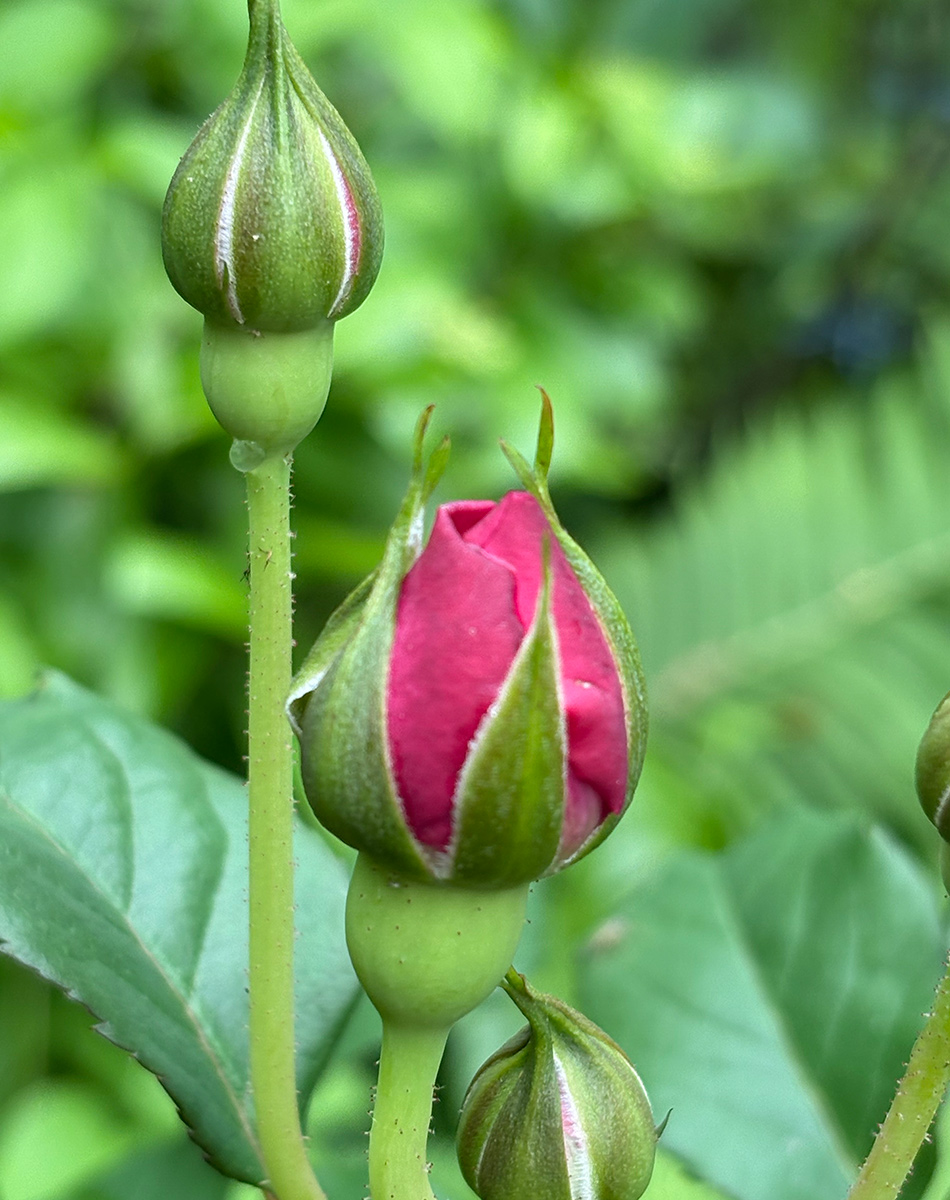 Some ripe rosebuds just starting to open and reveal more blooms for this colorful display. One of the most exciting aspects of spring is that it is just the beginning of the garden show!
I could not fit all of Carla’s incredible roses and clematis into this post, but thankfully she included this great video slideshow to showcase more of her enviable collection.
Thank you for sharing yet another wonderful assortment of spring blooms with us, Carla! No matter how many times you share your stunning garden, there is always an exciting plant I haven’t noticed before or something new to admire.
What plants in your garden signal the end of spring and start of summer? Does your space slowly transform as temperatures rise, or does summer arrive in your outdoor space all at once? Let us know how your garden’s summer transition is going by leaving a comment or sharing your photos with the blog! Follow the directions below to submit photos via email, or send me a DM on Instagram: @agirlherdogandtheroad.
We want to see YOUR garden!
Have photos to share? We’d love to see your garden, a particular collection of plants you love, or a wonderful garden you had the chance to visit!
To submit, send 5–10 photos to [email protected] along with some information about the plants in the pictures and where you took the photos. We’d love to hear where you are located, how long you’ve been gardening, successes you are proud of, failures you learned from, hopes for the future, favorite plants, or funny stories from your garden.
Have a mobile phone? Tag your photos on Facebook, Instagram or Twitter with #FineGardening!
Do you receive the GPOD by email yet? Sign up here
Fine Gardening Recommended Products
Monarch Butterfly Rescue Wildflower Seeds 4 oz.
Fine Gardening receives a commission for items purchased through links on this site, including Amazon Associates and other affiliate advertising programs.
HIGH QUALITY SEEDS and EXPERT GUIDANCE: Experience the quality seed difference. We are committed to providing the highest quality, open-pollinated, non-GMO/non-GE seeds to our customers, guaranteed. A trusted source of high quality seeds since 1985. ATTRACT MORE MONARCHS: We know seeds and we know pollinators! Our expertly crafted botanical garden seed mixes contain a wide variety of both perennials and annuals that are specifically designed to attract pollinators. Attract more Monarchs and Butterflies in general. Gardener tested, pollinator approved! All Of Our Wildflower Varieties Are 100% Pure Seed, They come with complete planting instructions. Compare and see the quality value. This Wildflower Seed Mix will make the perfect gift for those gardeners in your life.
Black and Decker 22-inch Cordless Hedge Trimmer
Fine Gardening receives a commission for items purchased through links on this site, including Amazon Associates and other affiliate advertising programs.
Quick and easy to put into operation and is less noisy and lighter in weight than gas-powered hedge trimmers.
– 38 x 7 x 7 inches
– 6.9 pounds
– 1 Lithium Ion battery required (included)
Bee Watering Station with Vivid Flower Design
Fine Gardening receives a commission for items purchased through links on this site, including Amazon Associates and other affiliate advertising programs.
Thoughtful Combo: You will receive a bee feeder and 30 glass marbles. This thoughtful combo can provide clean water for the bees, you just need to put the marbles into the bee watering station, add water (note: the water level should not exceed the height of the marbles) and hang them in the right place. The round, colored marbles can provide a place for the bees to stand and prevent them from falling into the water, effectively keeping the bees safe. Fine Material: This exquisite bee bath is made of high quality iron material, smooth surface, rust and weather resistant, not easy to fade, sturdy and reliable. Bee cups for garden can well meet the drinking water needs of lovely bees, and it can also provide food for bees, such as sugar water, nectar, etc., attracting more bees to your outdoor area and making your garden full of vitality. Perfect Size: The butterfly watering station has an overall height of 13.4 inches, a bowl diameter of 9.4 inches, and a weight of 0.44 pounds. The bee cup serves the needs of the bees well without plunging them into dangerously deep water or taking up unnecessary space in your garden, and this compact and efficient design makes it a practical addition to any outdoor space. Elegant Design: Our bee watering cups are designed in unique flower shapes with vibrant and realistic colours to attract lovely bees to your garden and patio, bee feeders for outside are not only functional but can also be used as a landscaping element, their vibrant floral patterns enhance the beauty of your garden. Multicolored Decoration: Colorful bee water stations look like flowers in a garden, flower bed or pot and attract bees and butterflies. They can drink or bathe in bee feeders, which are highly decorative and practical.