



Hi GPODers!
As the years progress in our gardens, we witness change. Many of these transformations are inevitable due to the changing seasons, condition fluctuations, and life-cycle stages of our plants. As humans, we also experience change alongside our gardens, and sometimes that dictates how our landscapes evolve. Linda in Kinmundy, Illinois (Zone 6), has seen her space transform quite a bit over the past four decades, but it will soon be time for another major transformation. As she considers the more low-maintenance plants that will make her gardens easier for her to enjoy, we get to see some fantastic photos of her flower-filled landscape at its peak.
I have been gardening here for over 40 years. My husband and I built the house (literally—a contractor framed and roofed it, and we did the rest), and then I started making flower beds. My husband isn’t interested in gardening, but he is very good to create hardscaping for me. He has built me a greenhouse, pergola, and tunnel arbor, and installed lovely old iron fencing, among other things. Now I am at the point where I need to think about downsizing, but that doesn’t really mean getting rid of anything—just focusing on shrubs, Japanese maples, flowering trees, and lots of ground cover.
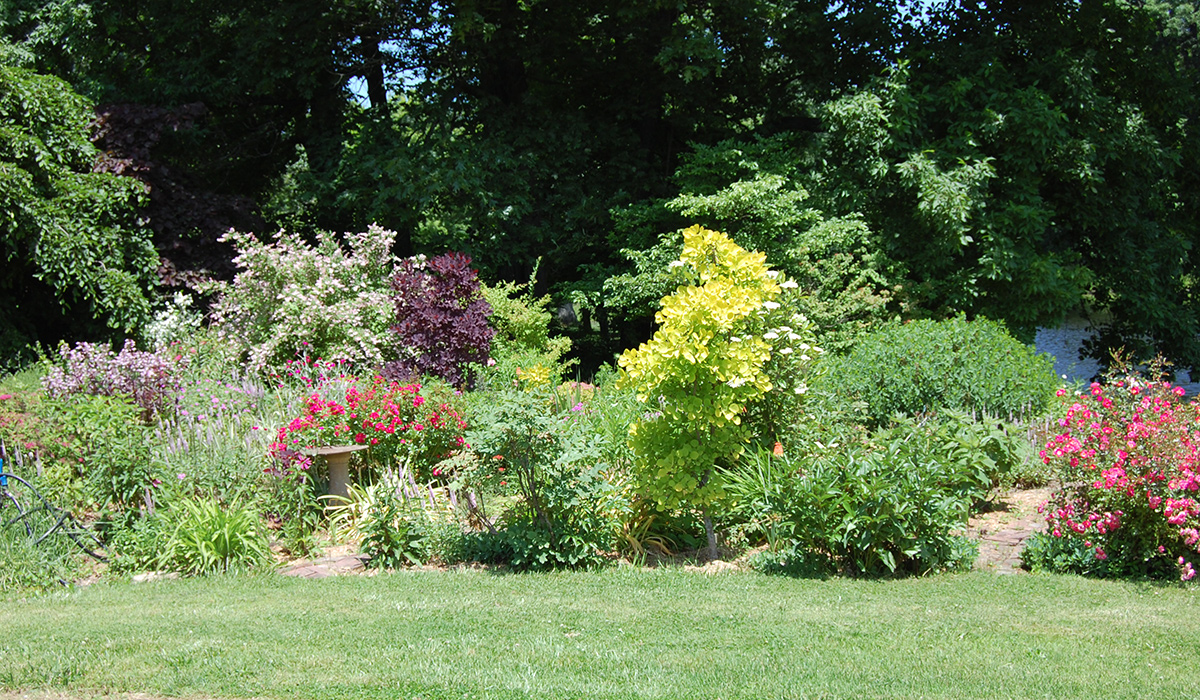 The first bed I made: I’m trying to transition it to shrubs and small trees.
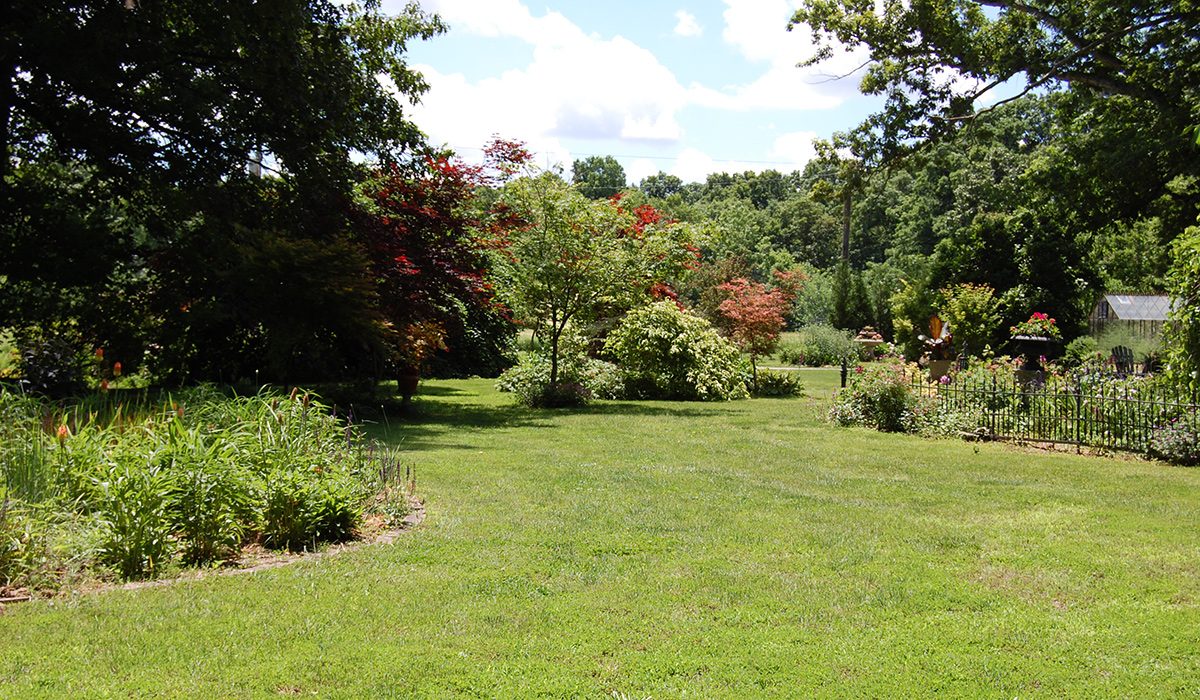 Of course, that first bed was far from the last. Several flower-filled plantings are scattered about Linda’s spacious property.
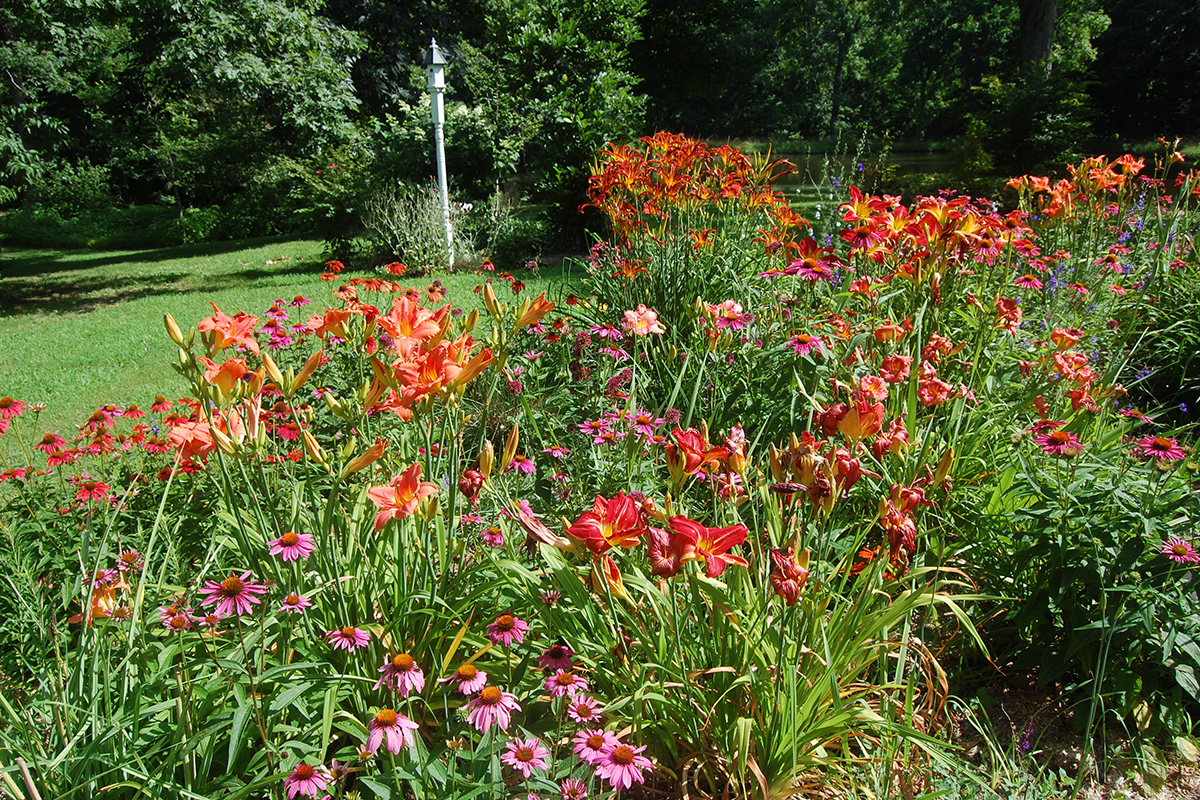 My hot bed
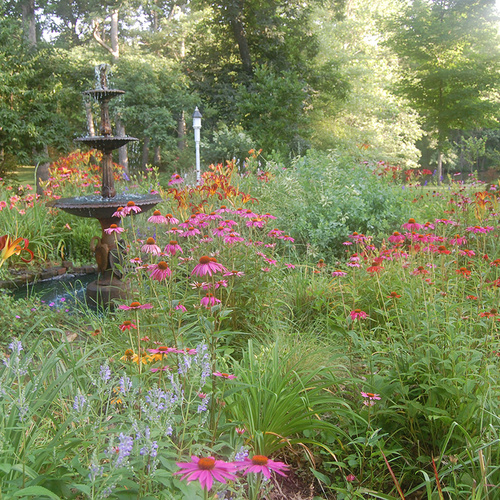
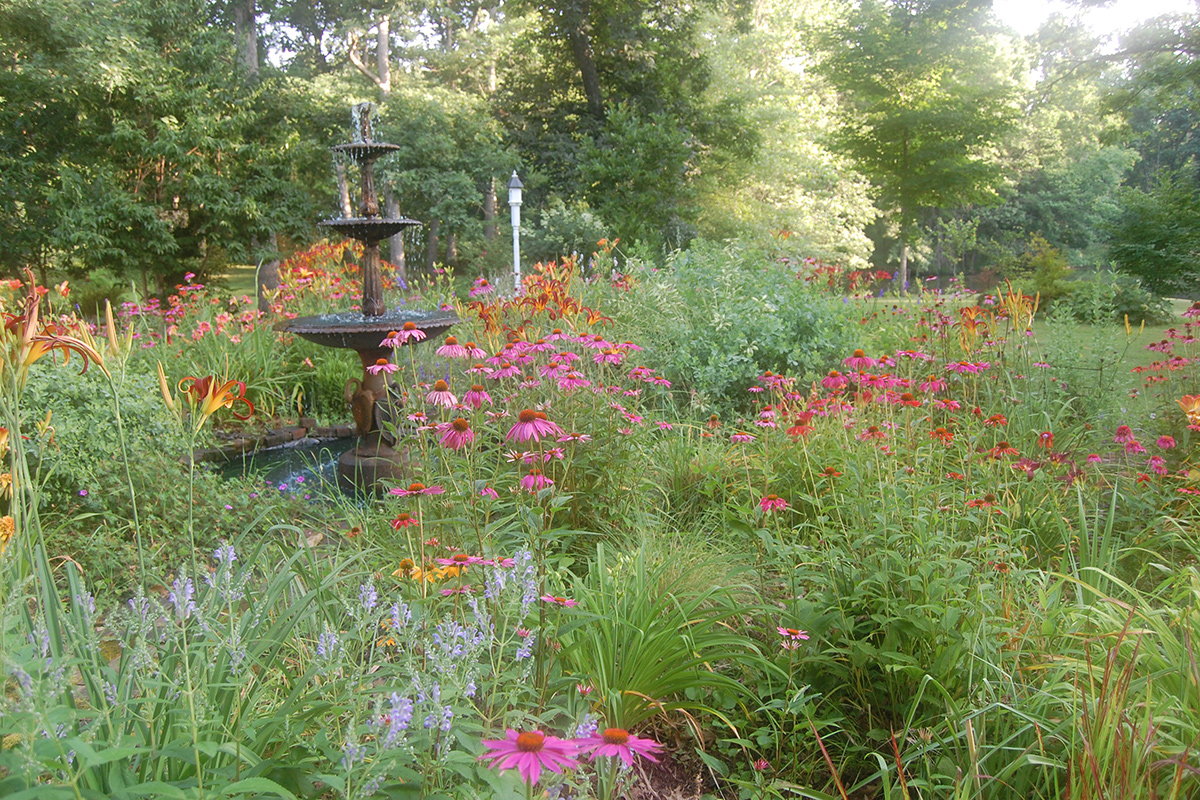 Linda has achieved what many dream of: a gorgeous meadow garden that is full of blooms and still manages to not look messy. These timeless, wild plantings have tons of appeal but can require a decent amount of maintenance if you want consistent blooming. Incorporating more shrubs, trees, and ground covers into these plantings will make them far easier to maintain.
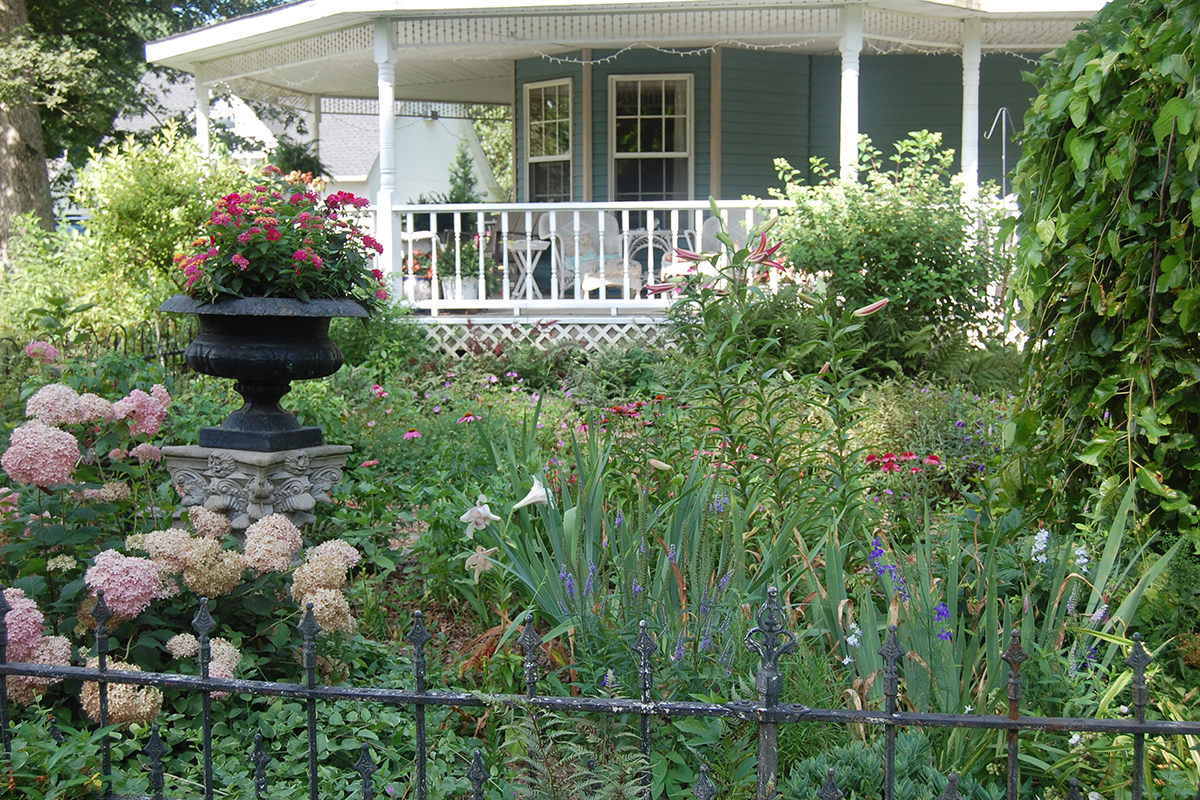 Linda’s front garden is equally floral. Even after she makes her transition to lower-maintenance plantings, the usual arrangement of foundation shrubs will not be found here.
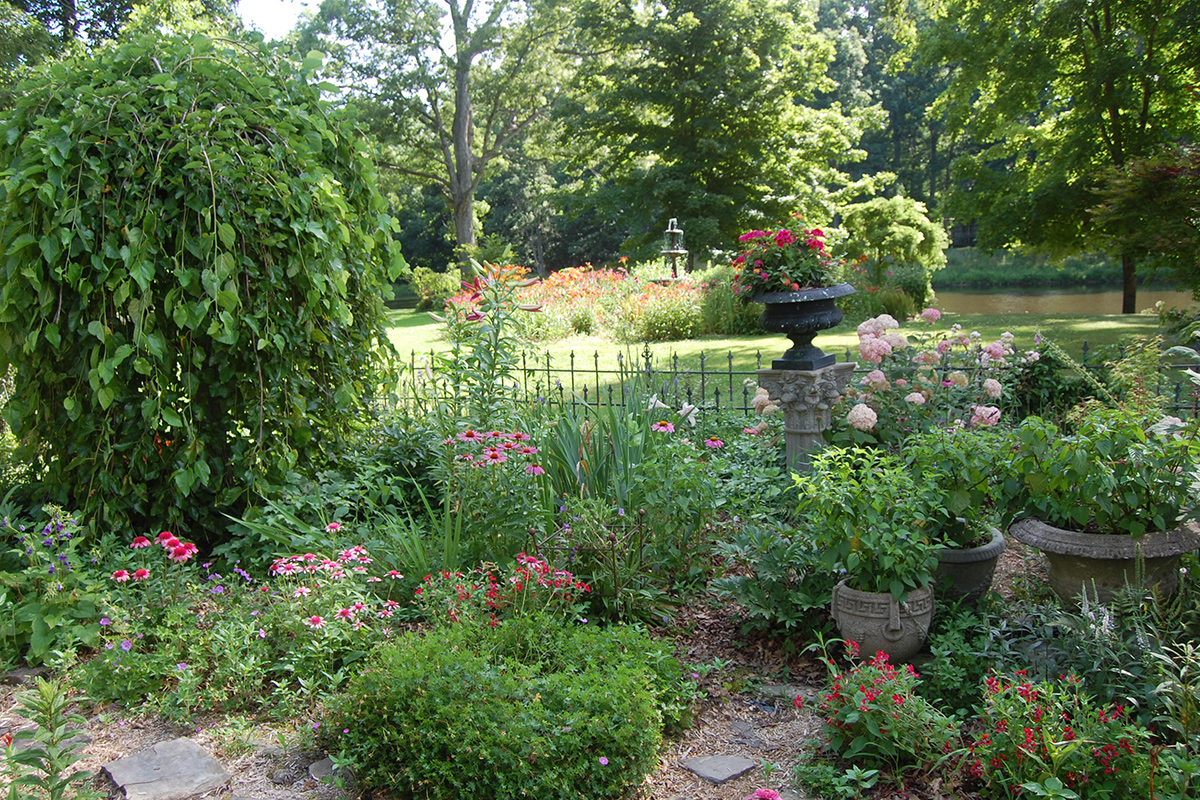 The view from the front porch
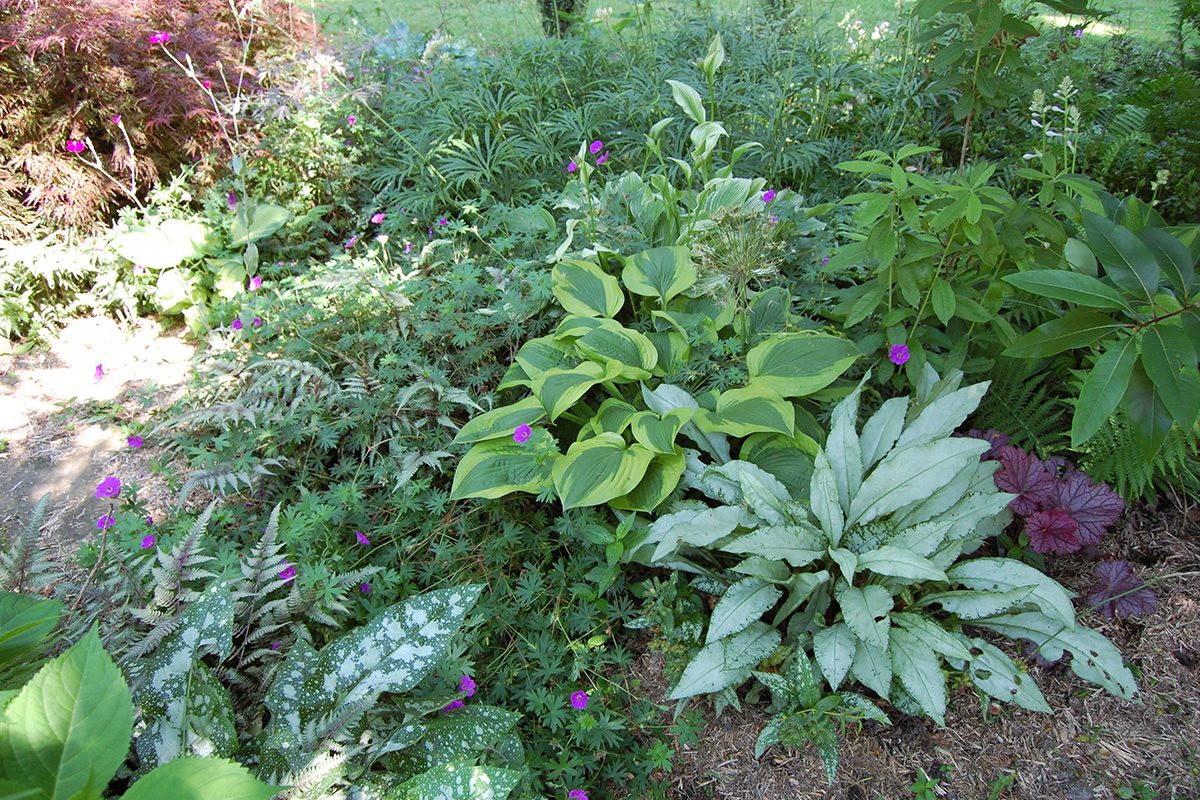 When I was younger, I wanted lots of color, but I am learning the joys of green.
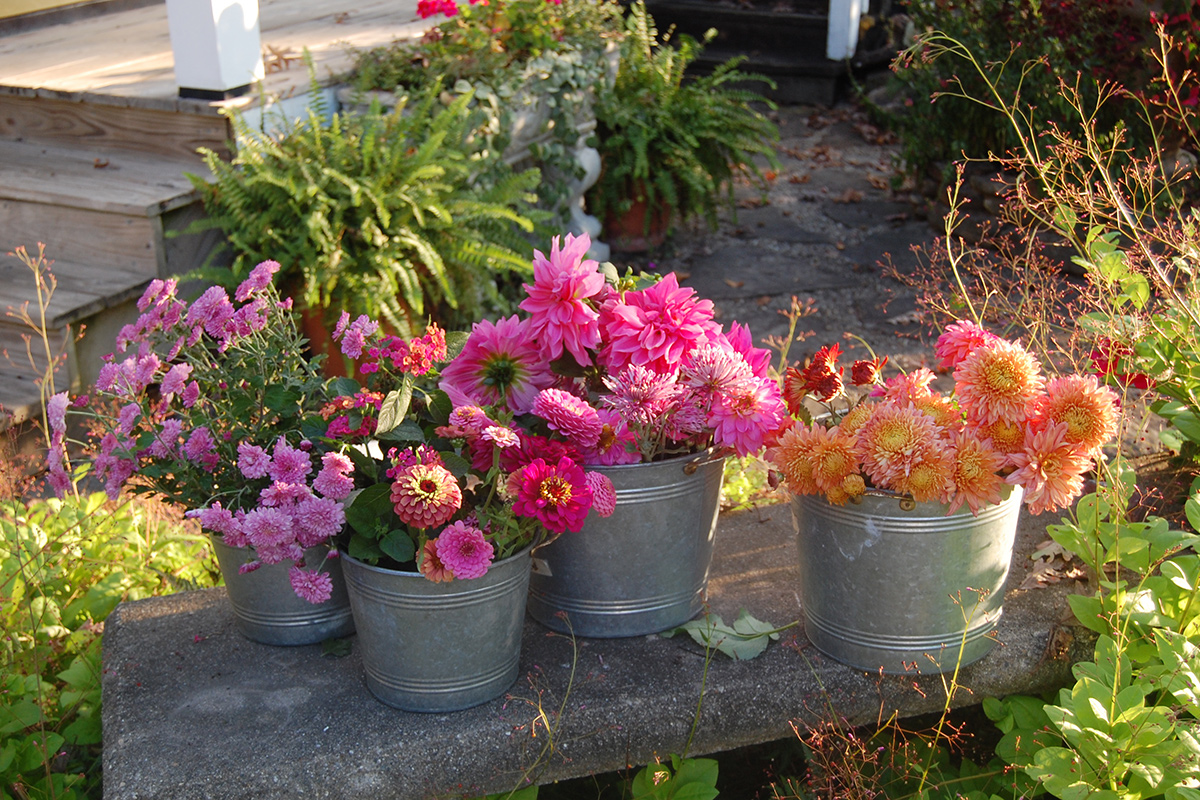 Dahlias are kind of high-maintenance, but I can’t give them up yet.
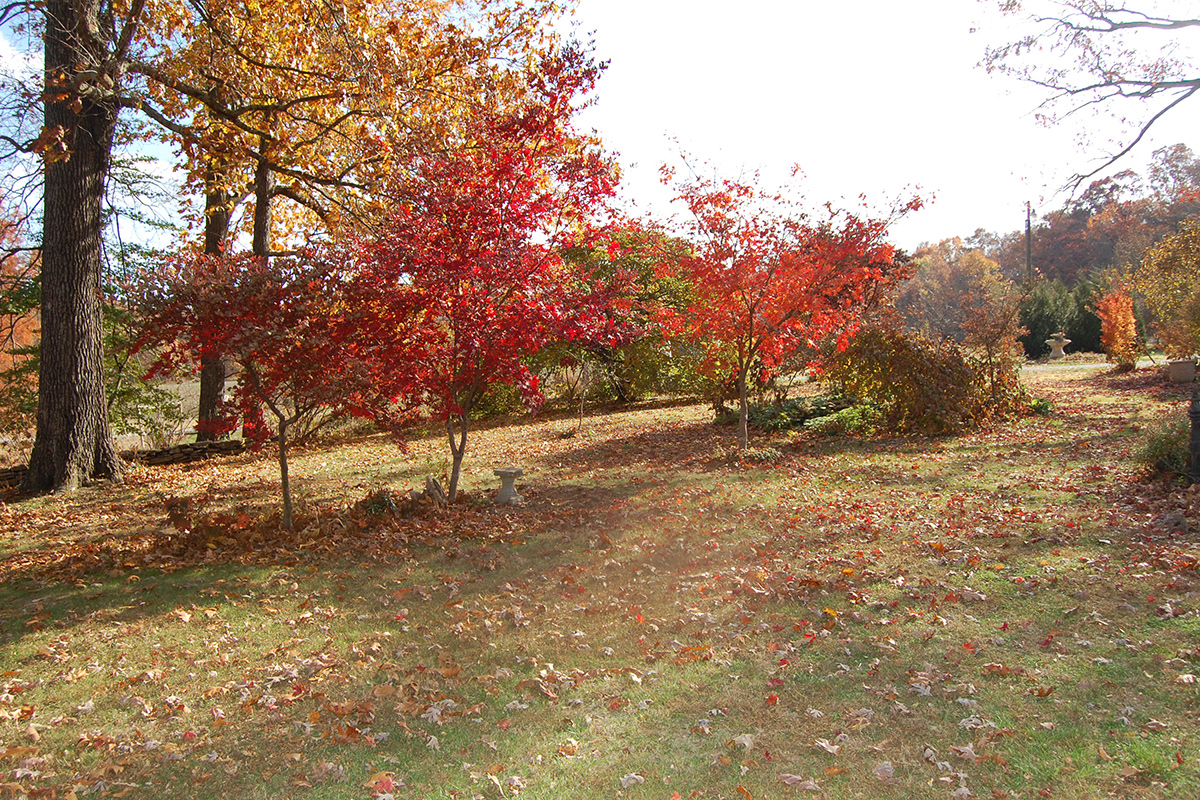 Lastly, as the flowers fade, the foliage in Linda’s garden gives her one final show of color to round out the year. While the prospect of saying goodbye to her high-maintenance beds must be a daunting one, there is the silver lining of even more fall-color possibilities to look forward to.
Thank you so much for sharing your stunning gardens with us, Linda! The flower beds you have crafted are enviable, but I’m sure the more low-maintenance designs you create will be just as delightful.
What changes are you planning on making in your garden this year? Is it time to downsize like Linda, or is there still room in your landscape for brand-new beds and exciting additions? Let us know in the comments, or consider sharing photos of last year’s garden so we can really enjoy your “after” photos later in the season. Follow the NEW directions below to submit your photos to Garden Photo of the Day!
We want to see YOUR garden!
Have photos to share? We’d love to see your garden, a particular collection of plants you love, or a wonderful garden you had the chance to visit!
To submit, fill out the Garden Photo of the Day Submission Form.
You can also send 5–10 photos to [email protected] along with some information about the plants in the pictures and where you took the photos. We’d love to hear where you are located, how long you’ve been gardening, successes you are proud of, failures you learned from, hopes for the future, favorite plants, or funny stories from your garden.
Do you receive the GPOD by email yet? Sign up here
Fine Gardening Recommended Products

Winco Aluminum Utility Scoop, 58-Ounce, Medium
Fine Gardening receives a commission for items purchased through links on this site, including Amazon Associates and other affiliate advertising programs.
The Winco Aluminum Utility Scoop makes garden tasks faster and easier with its oversized 85-ounce capacity. Perfect for transferring potting mix into planters or seed trays, it moves soil quickly without the mess. The scoop shape allows for precise backfilling around plants and easy pouring into cells, while also making it simple to refresh containers or measure out soil amendments like compost, worm castings, or biochar. Durable and reliable, it’s a practical upgrade from small scoops that slow you down.
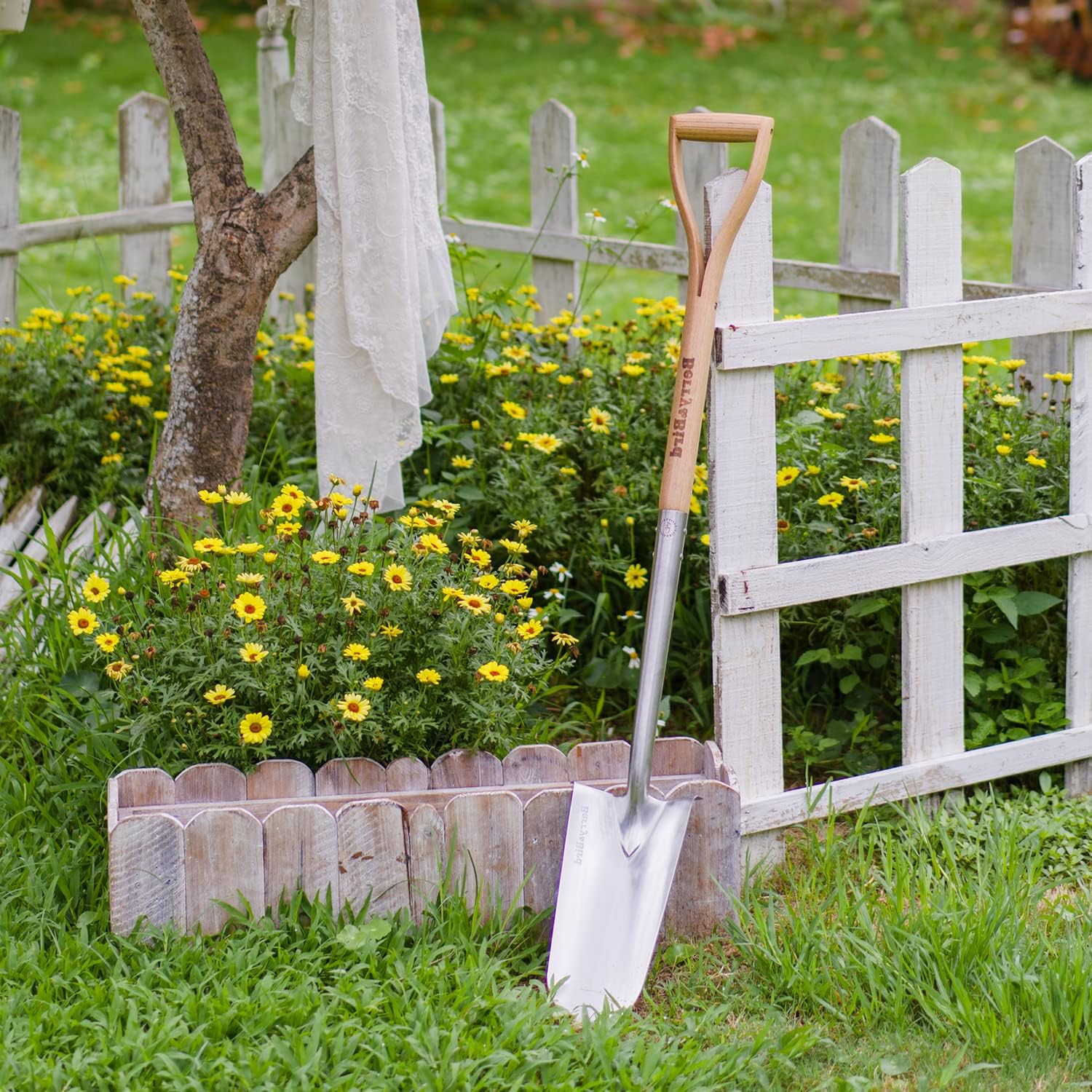
Berry & Bird Rabbiting Spade, Trenching Shovel
Fine Gardening receives a commission for items purchased through links on this site, including Amazon Associates and other affiliate advertising programs.
Ideal Tool for All Gardeners Use: Our heavy duty trenching shovel is designed by a professional gardening tool designer. Lifetime Durability: This heavy duty drain spade is made of high-quality stainless steel, it is very strong and durable, even if it is used for high-strength work, it will not bend. Ergonomic Wood Handle: The handle of this planting spade is made of ash hardwood harvested from FSC-certified forests and has an ergonomically streamlined design, making it very suitable for everyone’s hands. Multi-Use: This digging shovel is generally used for digging trenches, digging holes, transplanting, edging, moving compost, cutting thick turf and furrowing. The sharp blade allows you to cut, scoop, dig, lift and dice in hard soil.
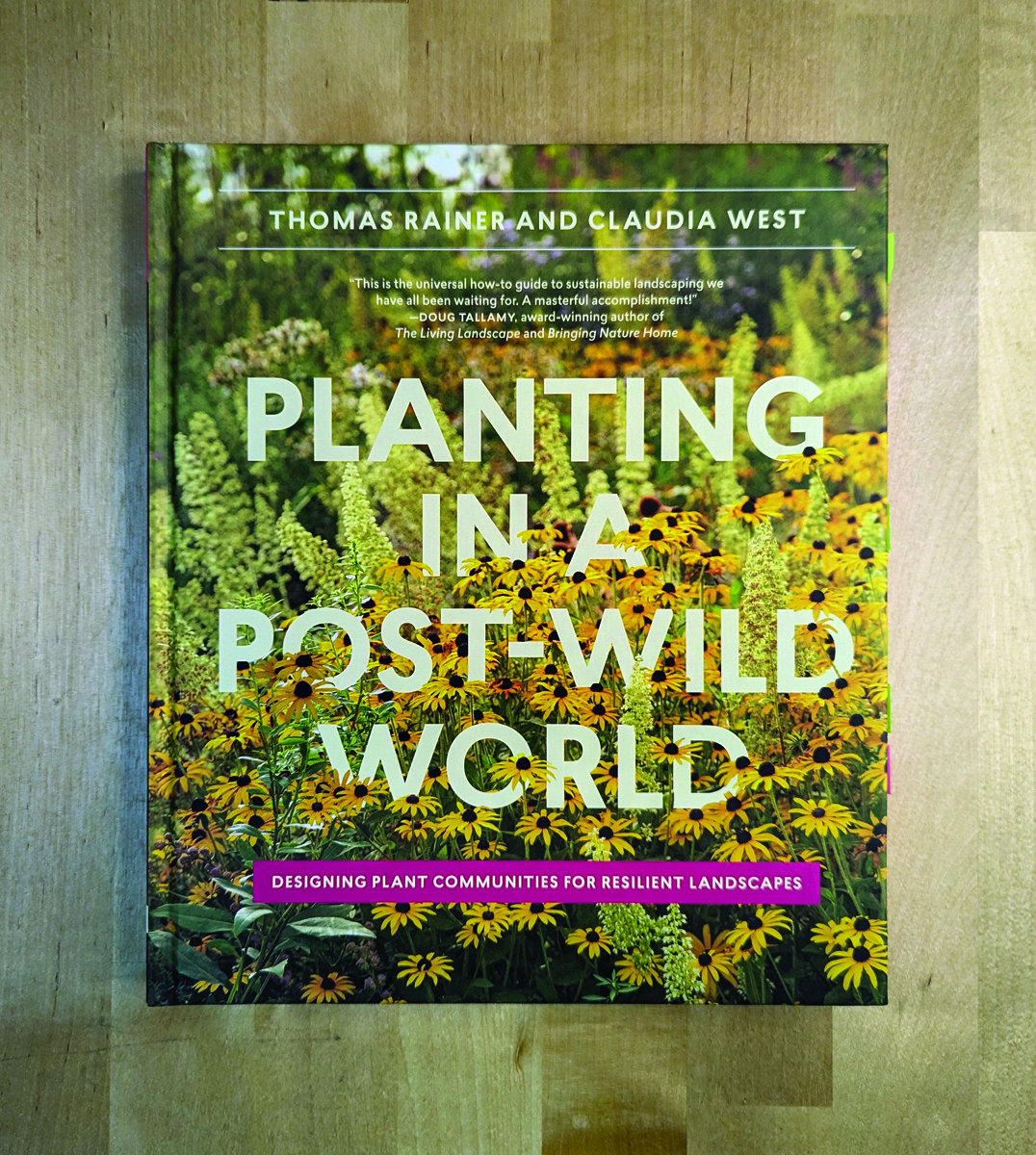
Planting in a Post-Wild World: Designing Plant Communities for Resilient Landscapes
Fine Gardening receives a commission for items purchased through links on this site, including Amazon Associates and other affiliate advertising programs.
Featuring gorgeous photography and advice for landscapers, Planting in a Post-Wild World by Thomas Rainer and Claudia West is dedicated to the idea of a new nature—a hybrid of both the wild and the cultivated—that can nourish in our cities and suburbs.