

Happy Friday GPODers!
Today is our last day “On the Road” (this week) and features the last batch of public garden photos from our production specialist, Katie Meyer (for now). If you missed the posts that went out the past couple of Fridays, we have already seen some fascinating plants and captivating combinations from Lauritzen Gardens in Omaha, Nebraska and Iowa’s Greater Des Moines Botanical Garden in July. Today we’re retuning to Des Moines to see photos from a trip Katie made to the same garden in January. As a member of the garden, Katie enjoys visiting whenever she can and her photos show that there is much to be enjoyed in every season.
I needed to warm up on a cold day in January so I went and used my membership at Des Moines Botanical Garden for a stroll. I did a few loops to get in some steps and enjoyed a seat on one of the pathways to soak it all in. The orange trumpet blossoms are my favorite spot in the garden, such a dramatic and pretty bloom! I also explored the indoor conservatory where they have their collection of orchids and various seasonal displays and container plantings. It has been worth every penny to get a membership and be able to pop by to get a dose of plants (especially in winter!)
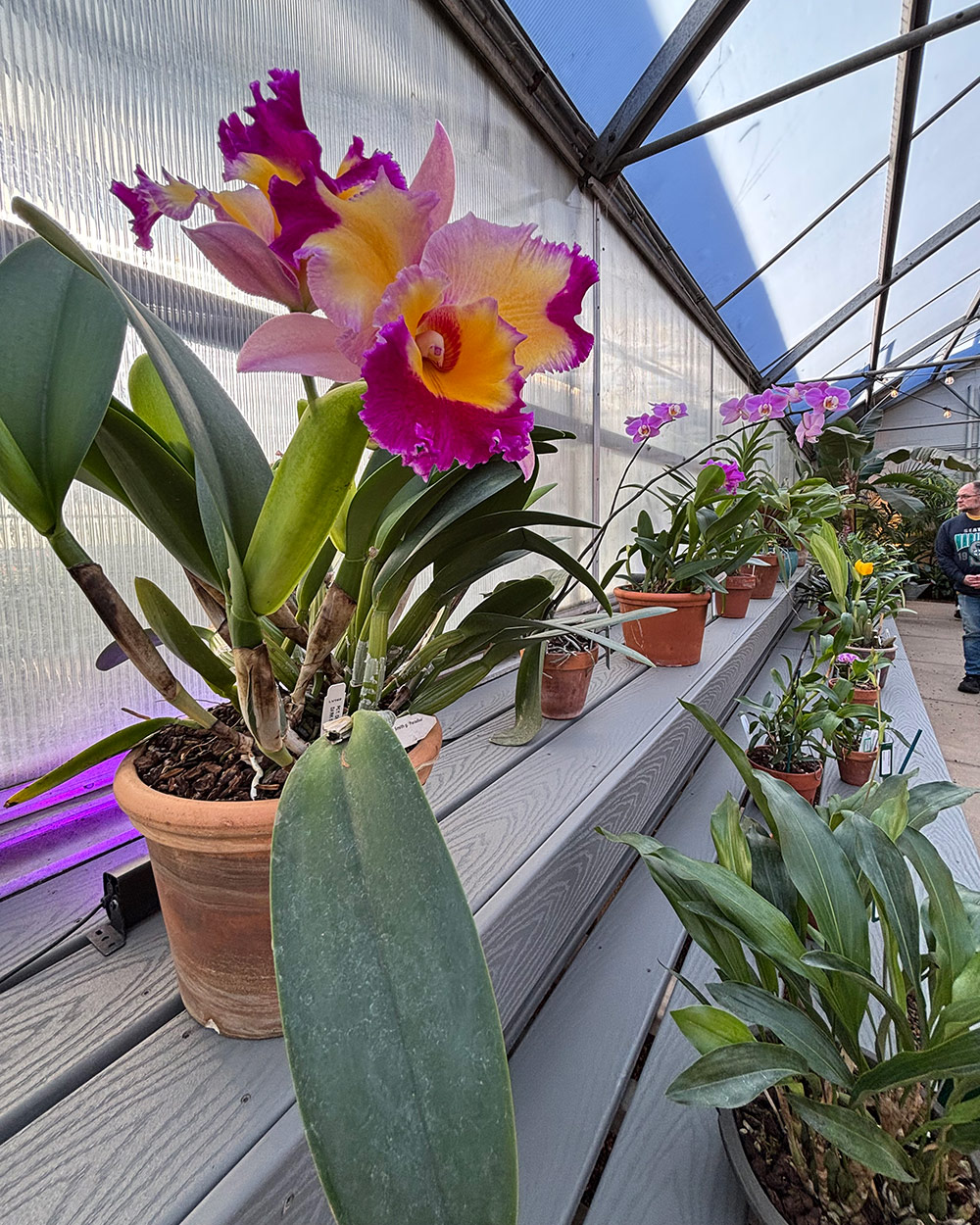 A conservatory staple, orchids are always enchanting bursts of color. A stunning Cattleya hybrid, which is also known as the queen of orchids or the corsage orchid (because of its popularity for use in corsages and wedding arrangements), is a real bright spot in the foreground.
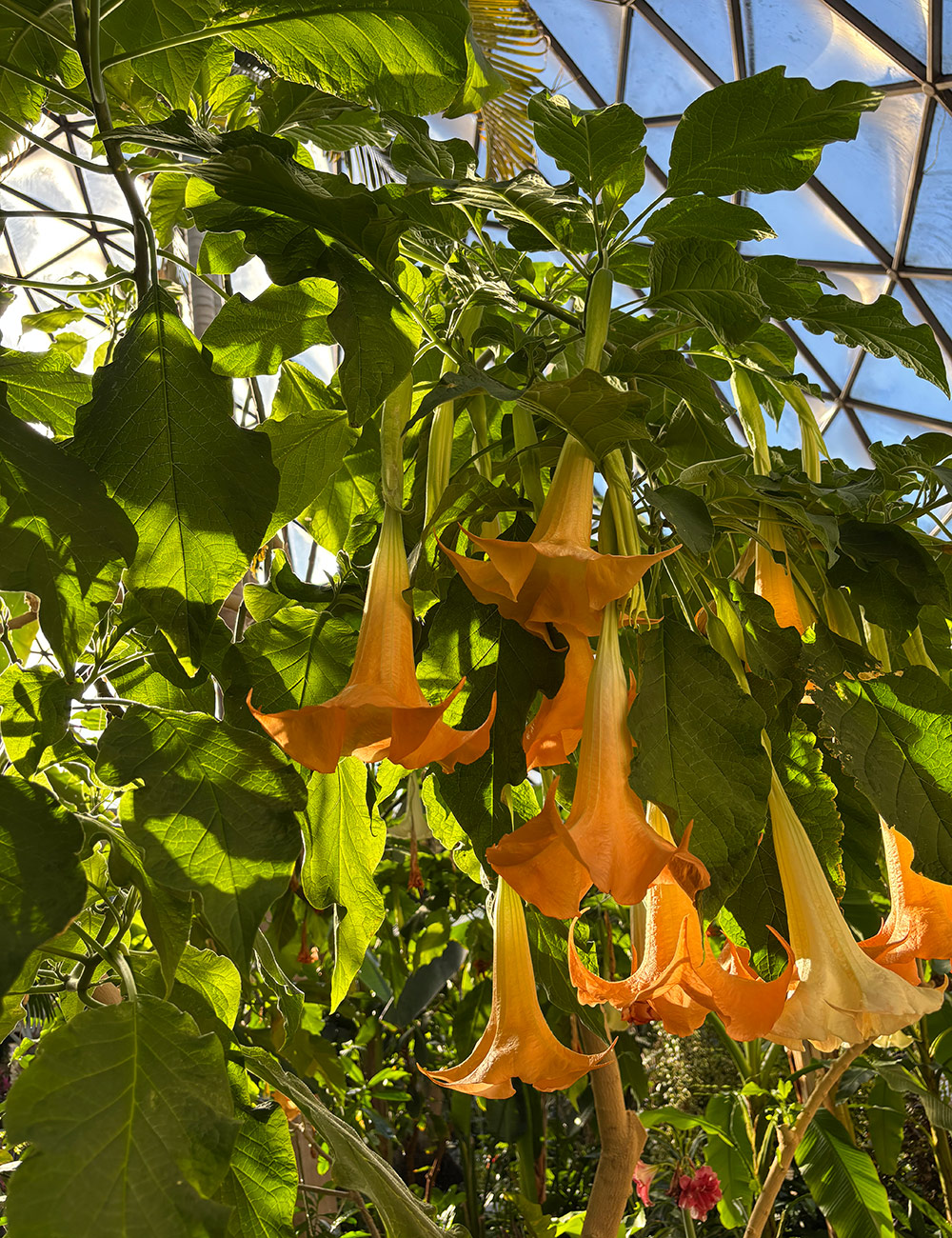 It’s easy to understand why Katie’s favorite spot in the garden is under this cascade of Angel’s trumpet blooms. This might be the gold variety (Brugmansia ‘Charles Grimaldi’, Zones 10–11), which can have flowers that range from bright yellow to golden peach.
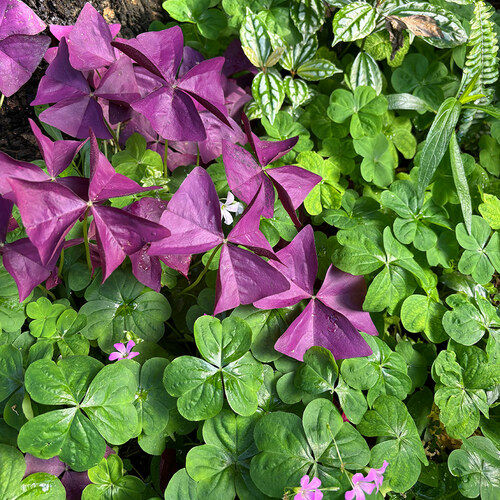
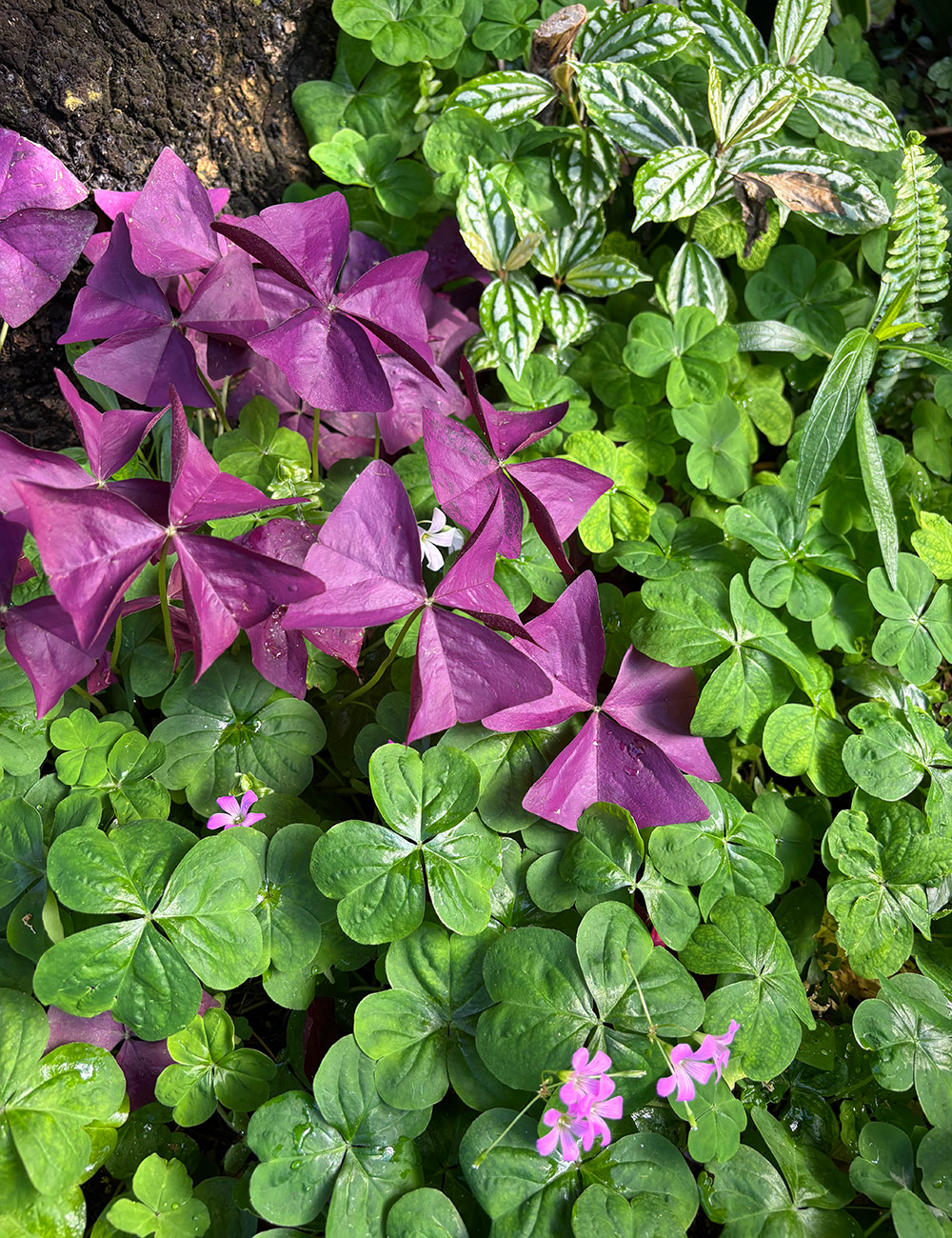 Even when flowers aren’t big or bold, the foliage in conservatories can be equally enchanting. False shamrock (Oxalis triangularis, Zones 8–11) is usually grown as a houseplant by northern gardeners, and its relative the large-flowered pink-sorrel (Oxalis debilis, Zones 8–11) can spread aggressively or invasively in tropical regions, but it makes for a stunning combination in this contained and controlled space.
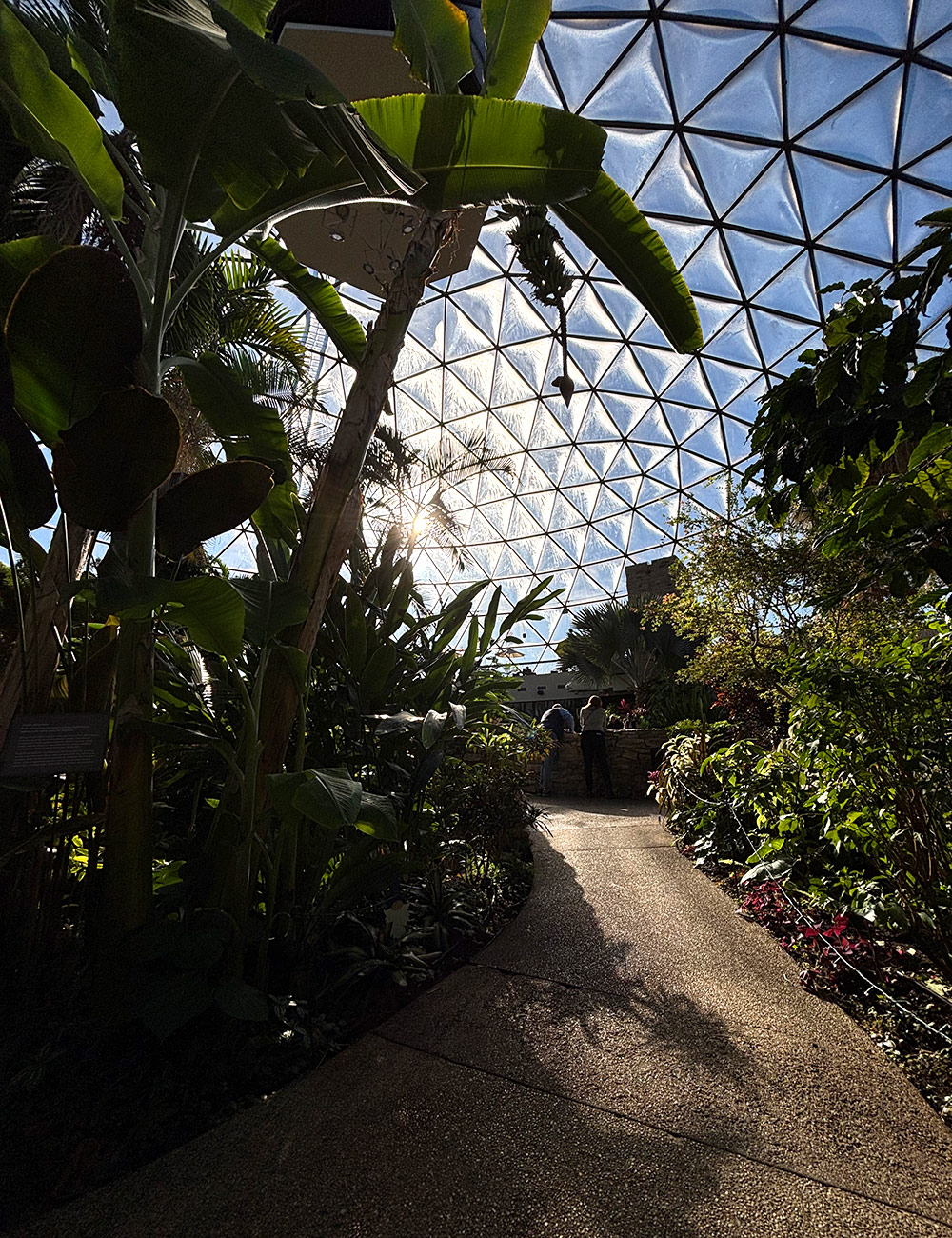 If the sun isn’t strong enough to fight away the chill outside, it will certainly be toasty amongst the tropical plants in the conservatory. The immersive landscapes that are built inside might even have you forgetting for a second that you aren’t walking through a tropical rainforest.
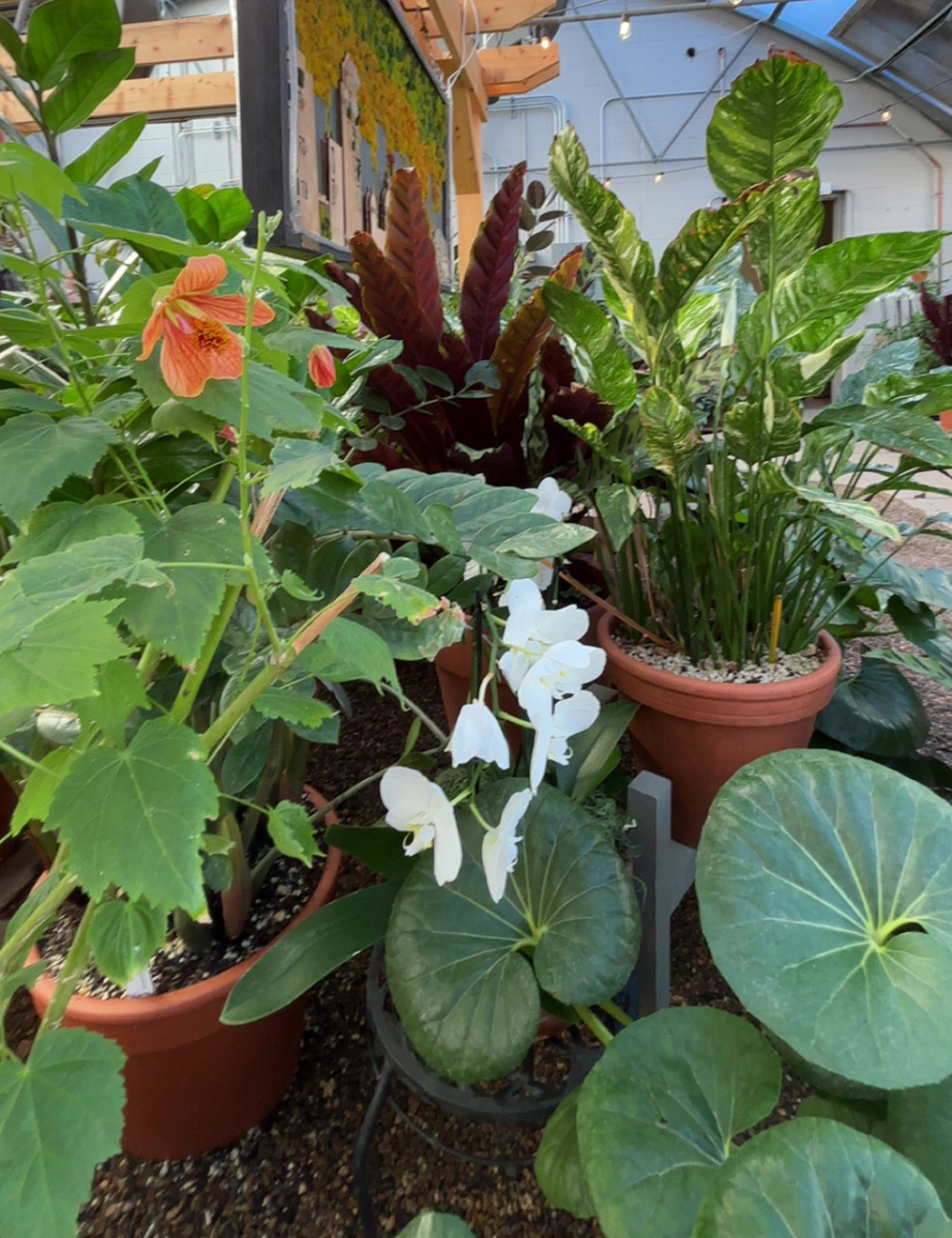 Here are some of the cool container plantings that Katie mentioned in her intro, looking like a outstanding houseplant collection: A orange flowering maple bloom (Abutilon spp., Zones 10–11), a cluster of white begonia flowers, a variegated peace lily plant in the background—potentially the ‘Domino’ cultivar (Spathiphyllum ‘Domino’, Zones 11–12), and the smooth, round leaves of a leopard plant (Farfugium japonicum, Zones 7–10).
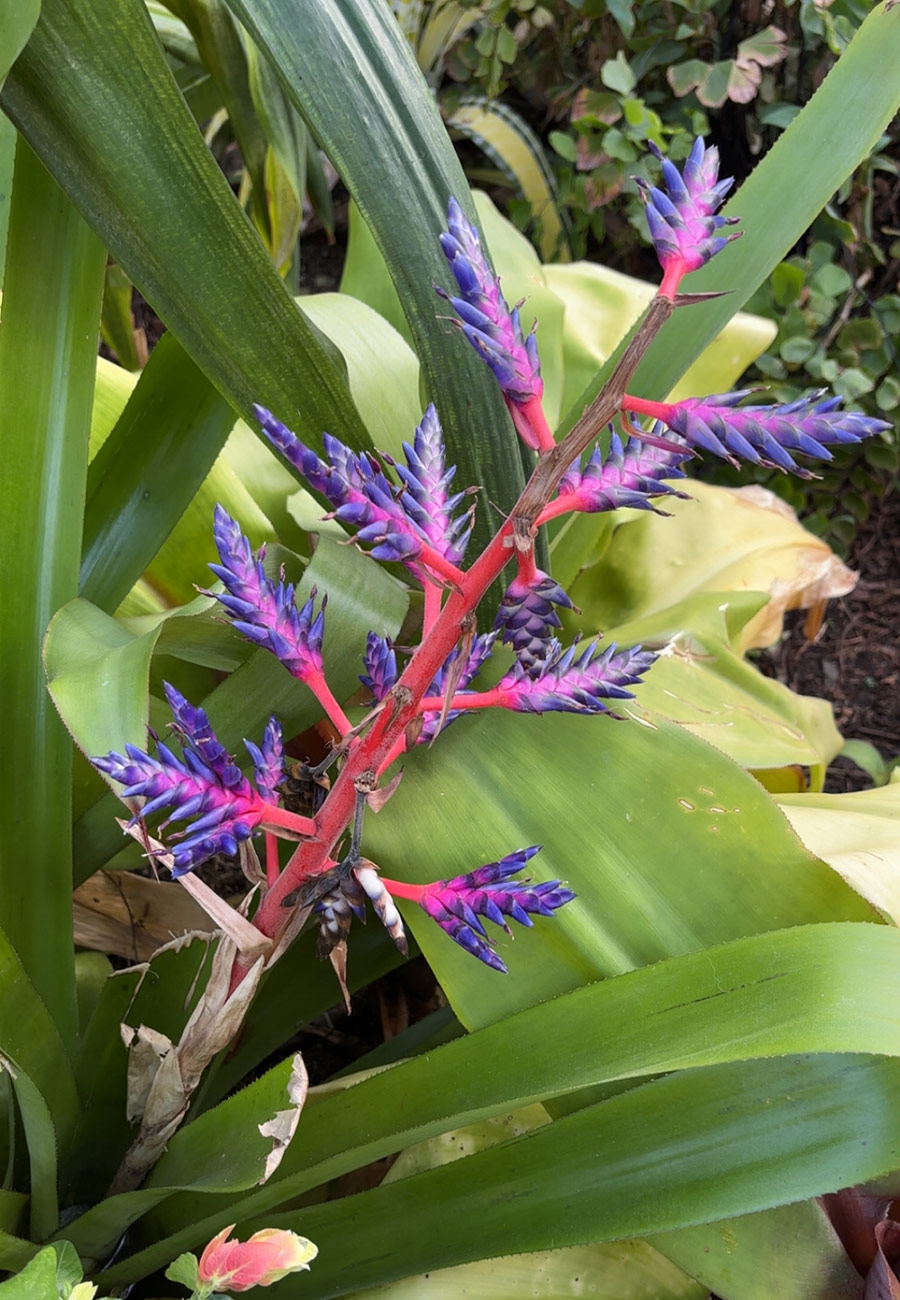 Lastly, a tropical flower that will surely have you doing double takes. Conservatories are often full of interesting and unusual plants, but Blue Tango bromeliad (Aechmea ‘Blue Tango’, Zones 9–12) still finds a way to stand out from the crowd with the contrast of its blue-violet flowers and bright pink bracts.
I hope you have found lots of inspiration and a few new bucket-list travel destinations through our week ‘On the Road’ with GPOD! I look forward to the spring garden submissions that will be arriving soon, but feel free to keep sharing more of favorite public gardens in the mean time. Follow the NEW directions below to submit your photos to Garden Photo of the Day!
We want to see YOUR garden!
Have photos to share? We’d love to see your garden, a particular collection of plants you love, or a wonderful garden you had the chance to visit!
To submit, fill out the Garden Photo of the Day Submission Form.
You can also send 5–10 photos to [email protected] along with some information about the plants in the pictures and where you took the photos. We’d love to hear where you are located, how long you’ve been gardening, successes you are proud of, failures you learned from, hopes for the future, favorite plants, or funny stories from your garden.
Do you receive the GPOD by email yet? Sign up here
Fine Gardening Recommended Products

New England Springport Arbor Trellis
Fine Gardening receives a commission for items purchased through links on this site, including Amazon Associates and other affiliate advertising programs.
The New England Springport Arbor brings classic style and smart function to any garden. Its flat-top design and crisp white vinyl finish create a clean, modern look—without the upkeep.
Perfect for small-space gardening, the half-lattice side panels support climbing plants like roses, clematis, or grapes, helping you grow vertically when ground space is limited.
Built-in eye hooks make it easy to hang flower baskets or garden décor, while the open top allows sunlight to filter through.
Whether used to frame a narrow path or define a cozy corner, this arbor adds structure, height, and charm to any small outdoor space.
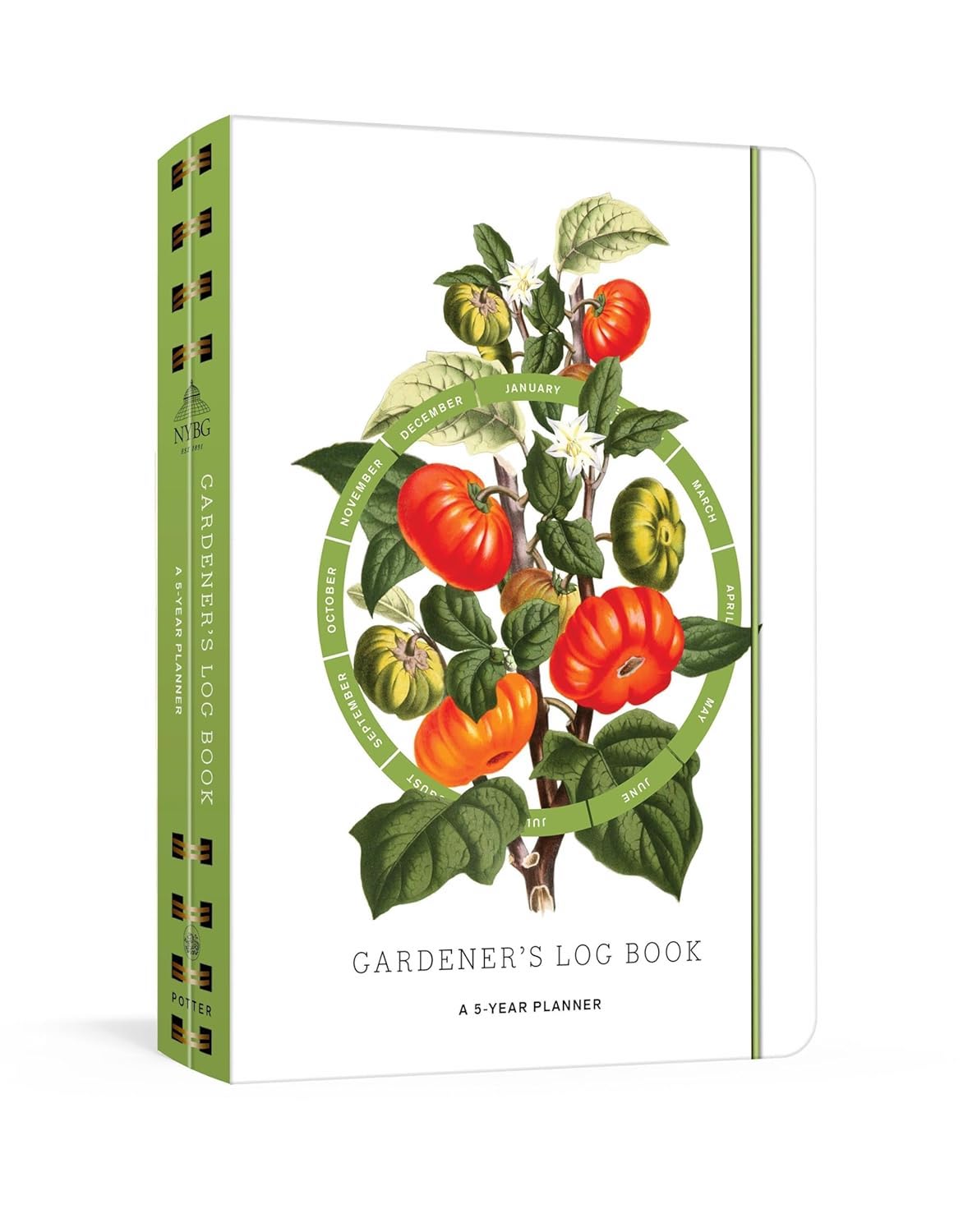
Gardener’s Log Book from NYBG
Fine Gardening receives a commission for items purchased through links on this site, including Amazon Associates and other affiliate advertising programs.
This weatherproof five-year log book includes the following features:
· Sturdy waterproof cover to protect pages from rain and muddy soil
· Lined pages and gridded paper for plotting beds
· Five years of 12-month bloom and harvest grids for recording what you planted and when
· Authoritative appendices on composting, pruning, pest and disease control, and container gardening
· Useful reminders by season on fertilizing, mulching, and transplanting
· Space for listing your favorite sources and suppliers.
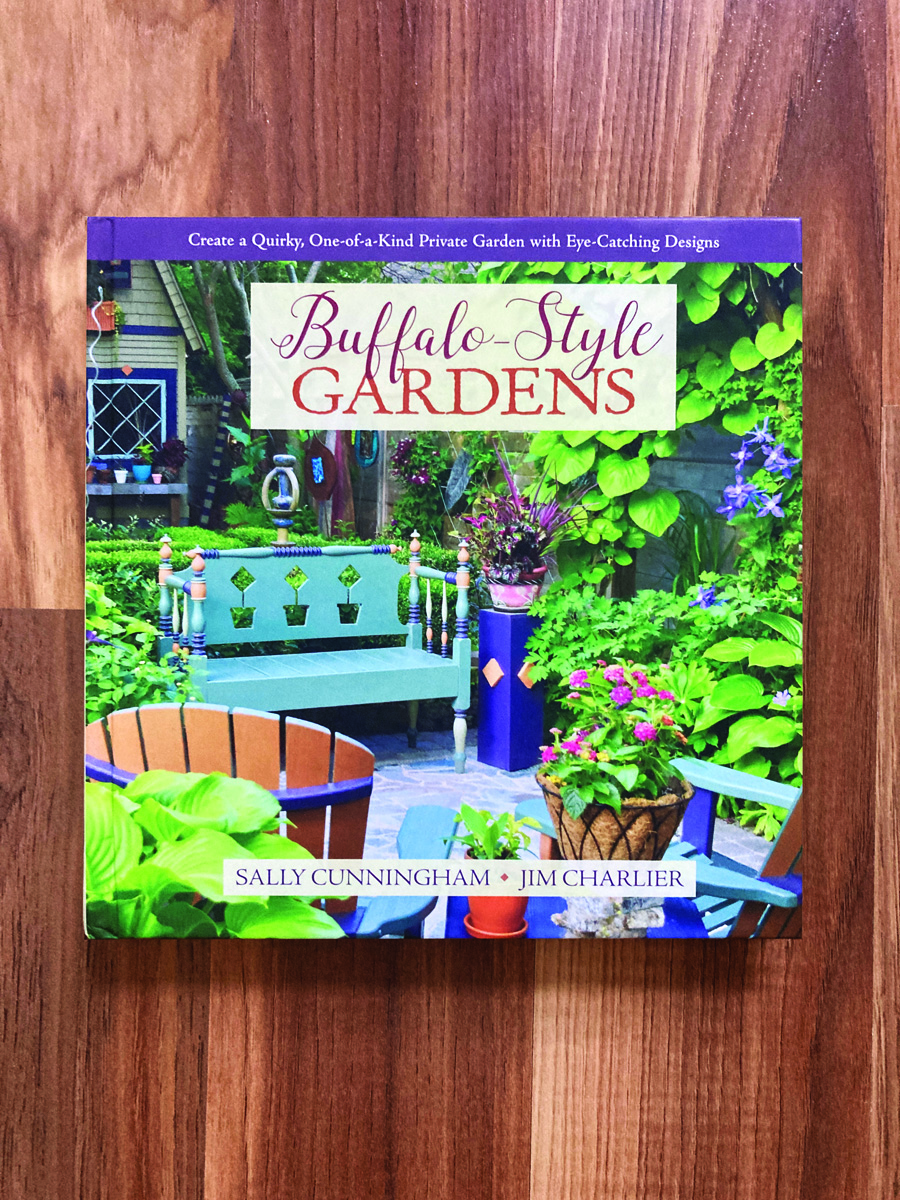
Buffalo-Style Gardens: Create a Quirky, One-of-a-Kind Private Garden with Eye-Catching Designs
Fine Gardening receives a commission for items purchased through links on this site, including Amazon Associates and other affiliate advertising programs.
Buffalo-Style Gardens is a one-of-a-kind, offbeat garden design book that showcases the wildly inventive gardens and gardeners of Buffalo – and offers readers “the best of the best” ideas to use in their own small-space gardens.