




Hi GPODers!
A couple of weeks ago we saw some spectacular garden scenes from Bonnie Phipps Moninger’s fall trip to Japan (Check out those posts, if you missed them: Part 1 and Part 2), and today we’re retuning to the small but mighty country for another look at their lush landscapes. Bonnie’s submission focused on the temple gardens throughout Kyoto, but Charlona from Houston, Texas wanted to share one of the most famous gardens in the counry: Shinjuku Gyoen National Garden in Tokyo. The grounds of this historical monument and botanical wonderland were originally a feudal lord’s Tokyo residence during the Edo Period (1603-1868) in Japan, but it was eventually converted into a botanical garden and finally opened to the public in 1949. Carlona had the pleasure of visiting this garden marvel this January.
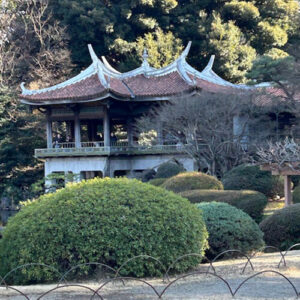
These pictures are from a trip we took to Japan in January 2026. While in Tokyo, I wanted to see a traditional Japanese garden, so we went to Shinjuku Gyoen National Garden, part of the National Parks of Japan. The park is 144 acres and is one of the largest parks in Tokyo. It features over 1,500 cherry trees, a very large greenhouse, and three main styles: Japanese traditional, French formal, and English landscape.
 Shinjuku Gyoen National Garden in the heart of Tokyo, Japan, in January 2026.
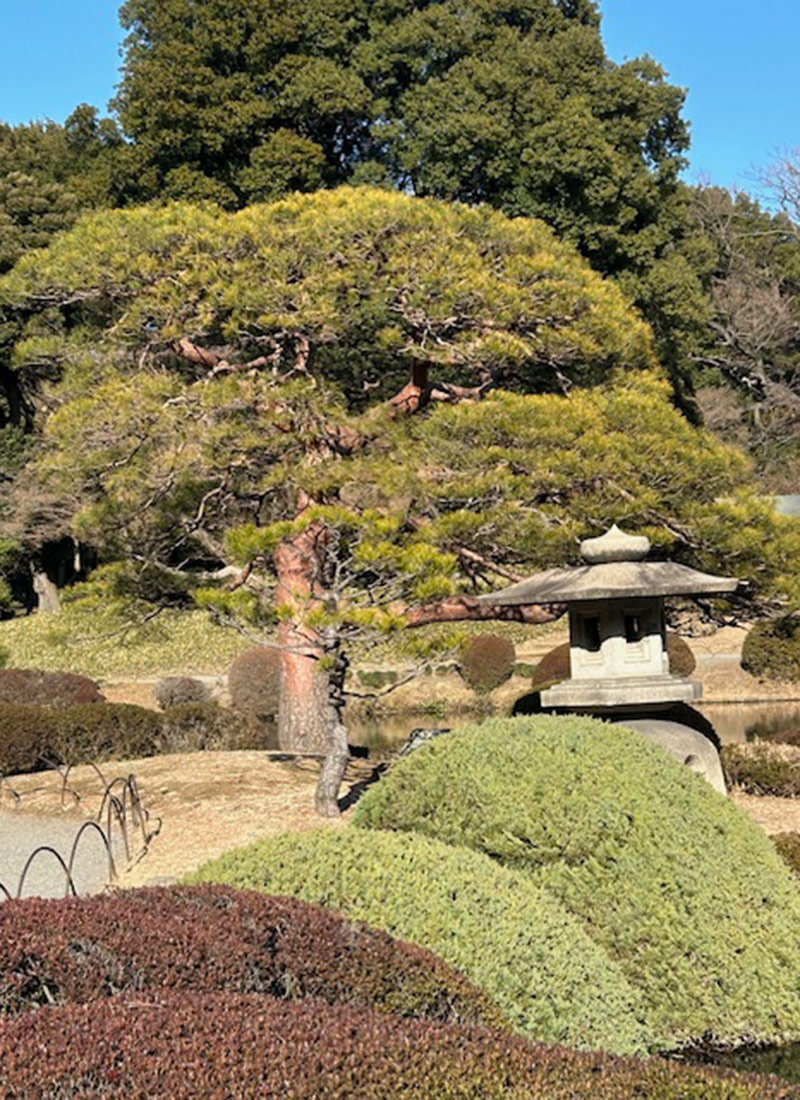 Japanese gardens are probably most known for their artful and meticulous pruning, and that is abundantly on display at Shinjuku Gyoen National Garden. Many trees and shrubs are trained with a method called “cloud pruning,” or Niwaki, which creates rounded foliage clusters that look like floating green clouds. Learn more about this technique in this article from the Royal Horticultural Society: Cloud pruning.
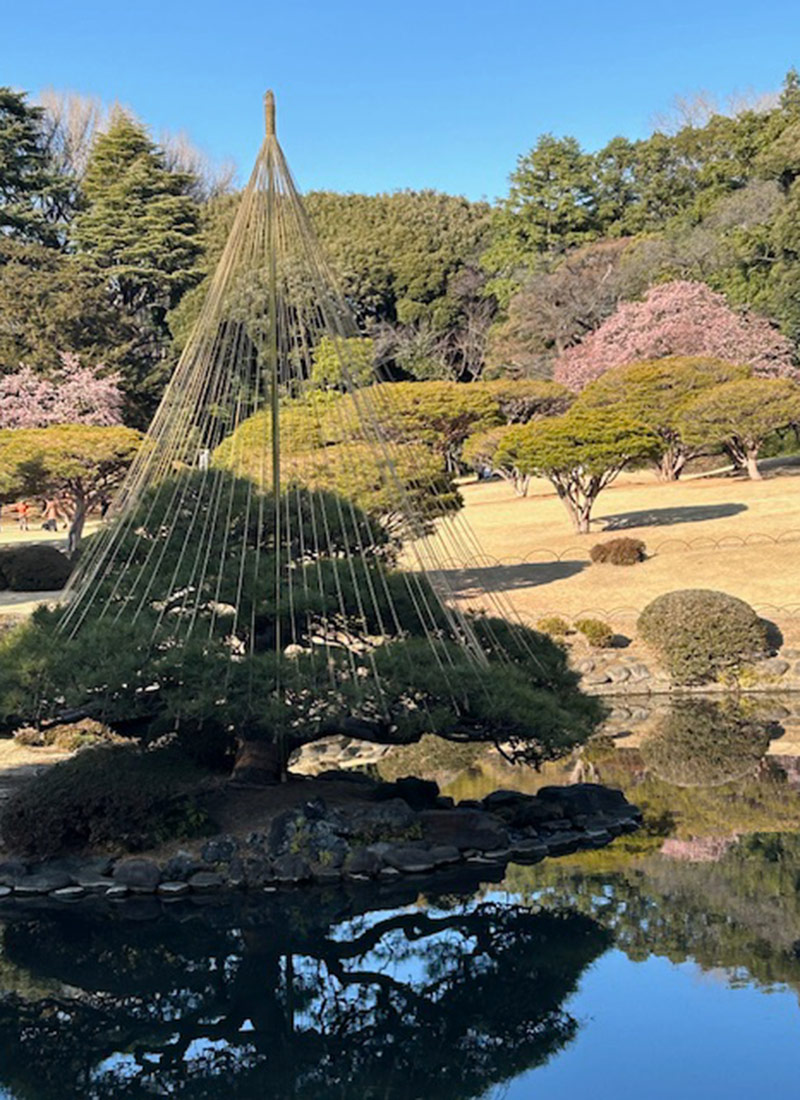 The rope structure around the tree helps disperse snow so that it can’t pile up and break the tree branches.
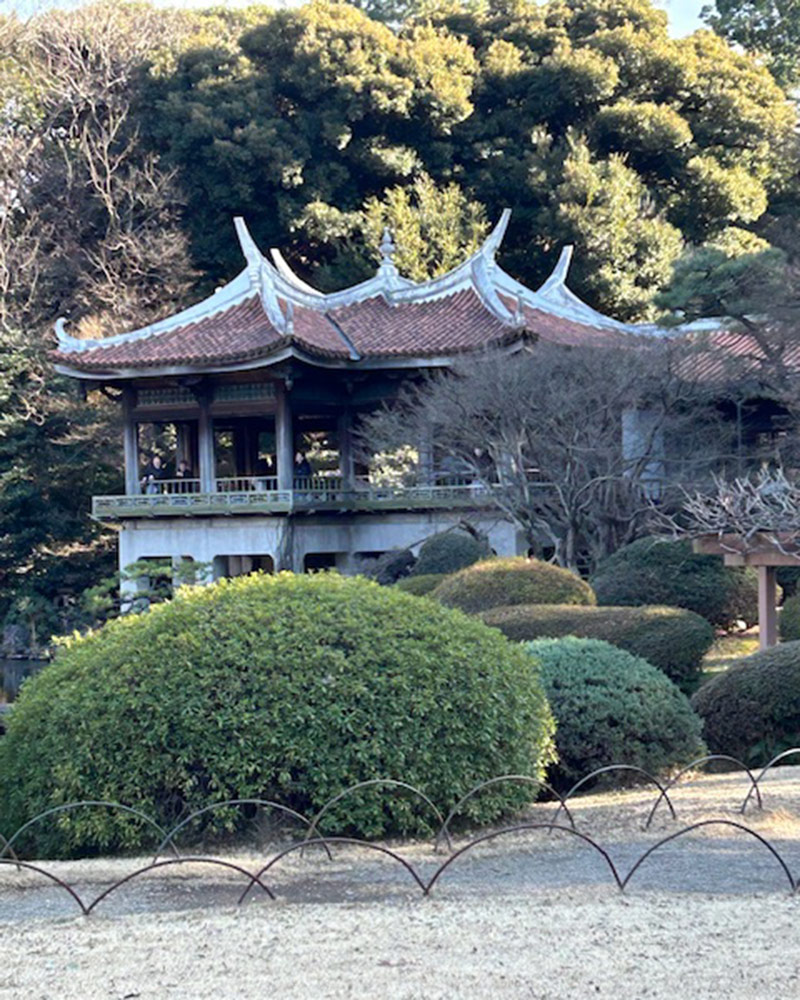 This lush landscape and fascinating collection of plants is also home to stunning garden structures—although most buildings on the grounds were, unfortunately, destroyed during World War II. The ornate structure above is the Kyu Goryo-tei Pavillion, or the Taiwan Pavilion, which was given to the park by Japanese people residing in Taiwan to commemorate the wedding of Emperor Hirohito in 1927.
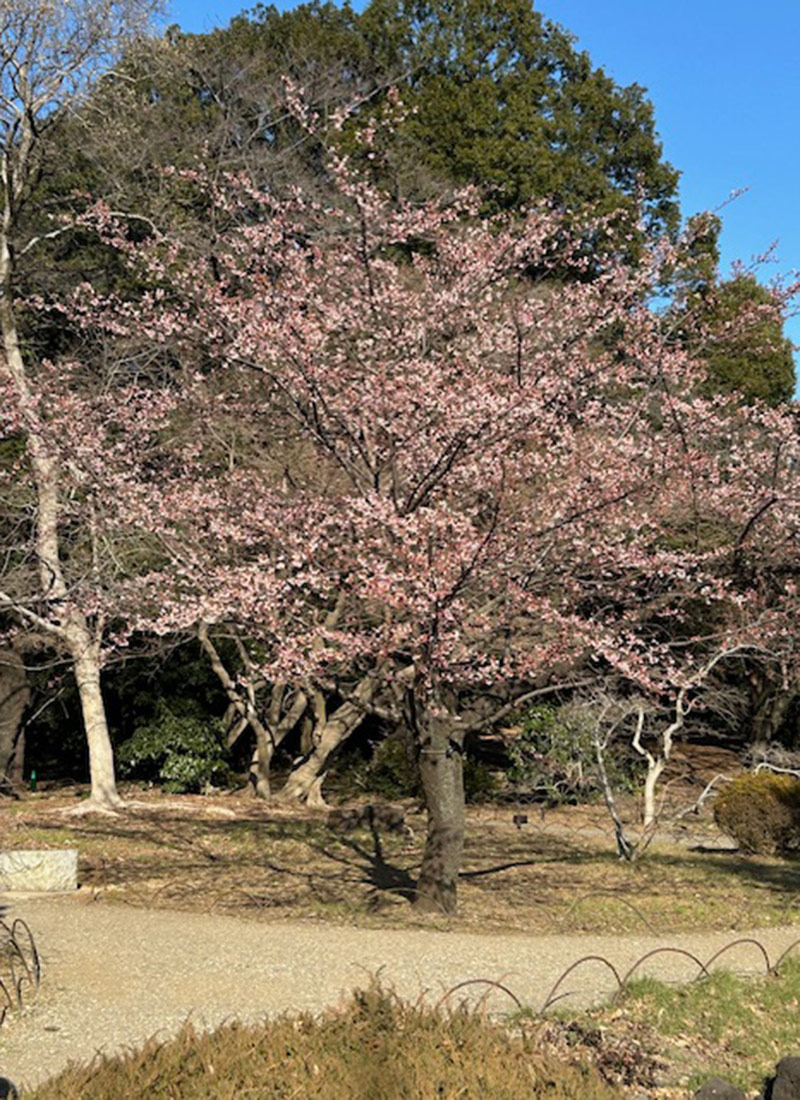 Cherry tree in bloom
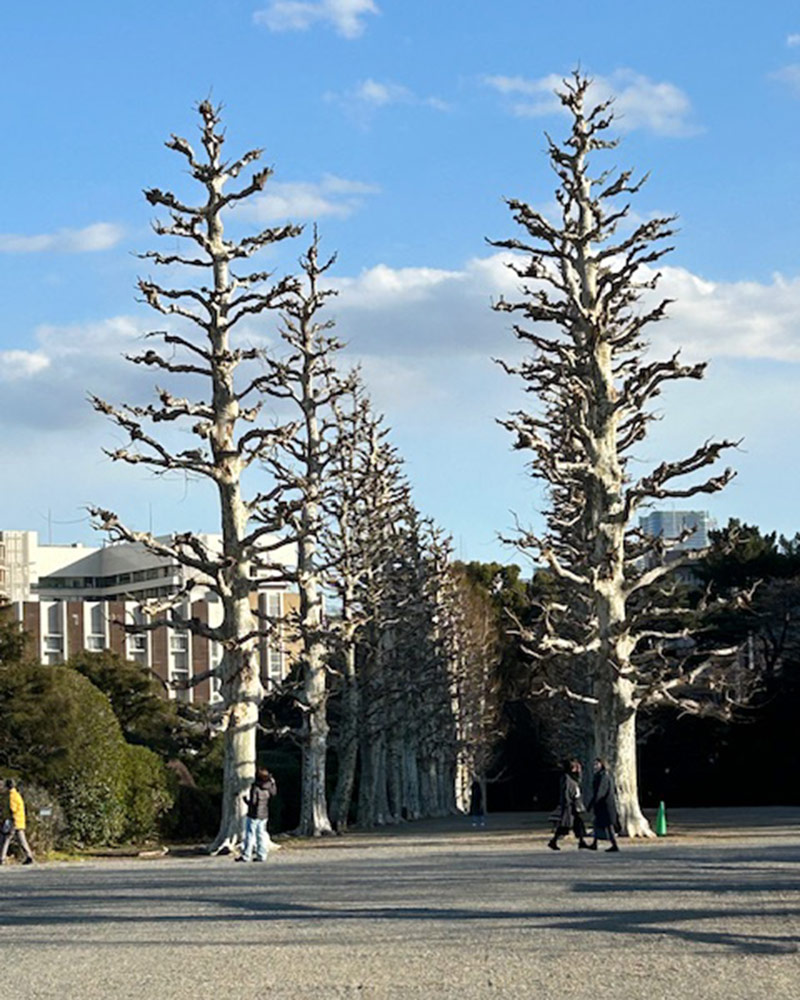 The London plane tree (Platanus x acerifolia, Zones 4–9) is a hybrid cross between American sycamore (Platanus occidentalis, Zones 4–9) and Oriental plane (Platanus orientalis, Zones 7–9), and is very tolerant of pollution.
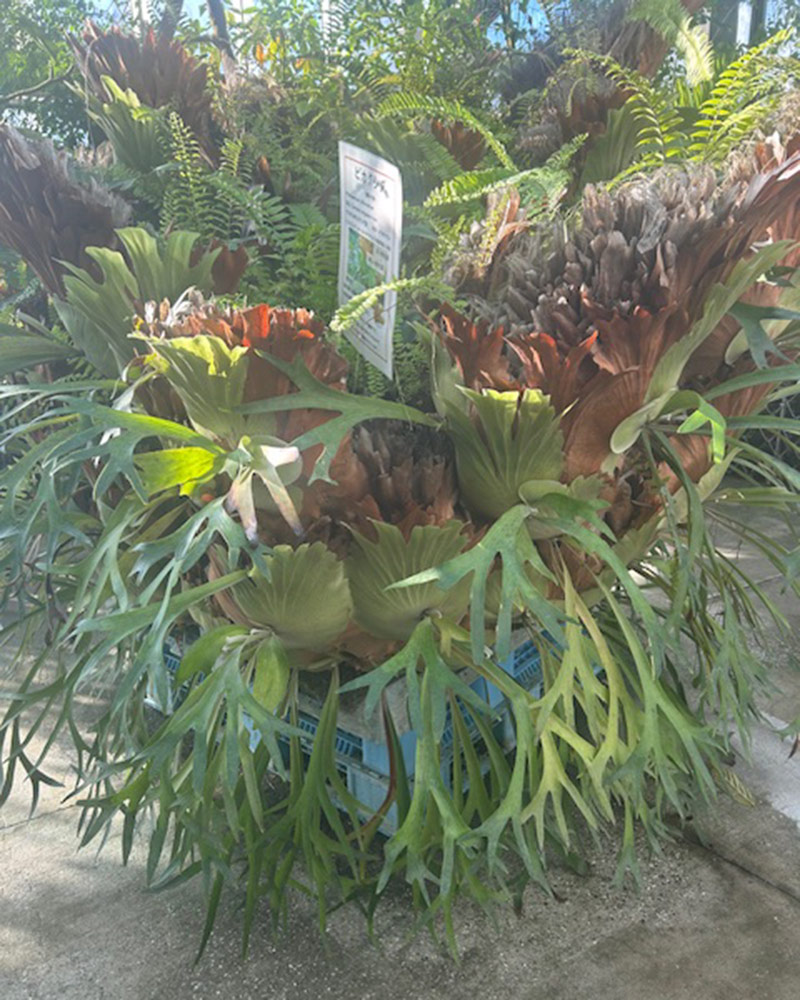 The National Garden has a very large indoor greenhouse. This was a giant staghorn fern (Platycerium bifurcatum, Zones 9–13).
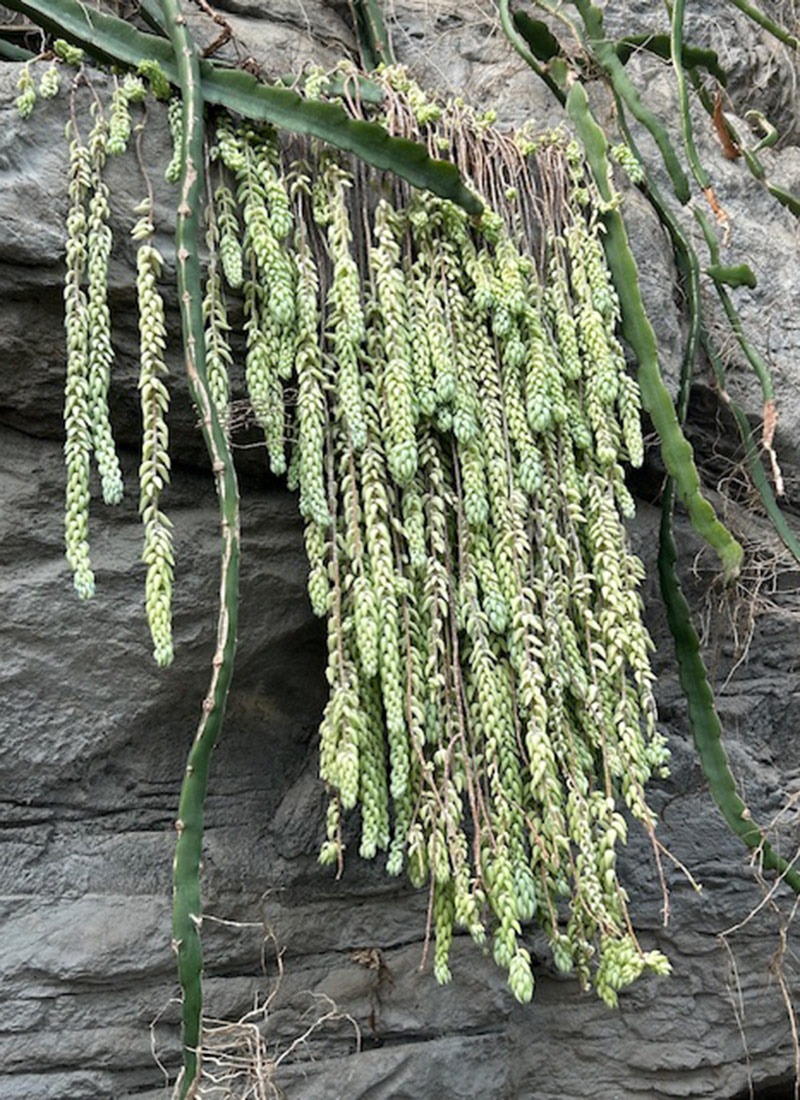 Burro’s tail (Sedum morganianum, Zones 10–11) growing on a wall in the greenhouse.
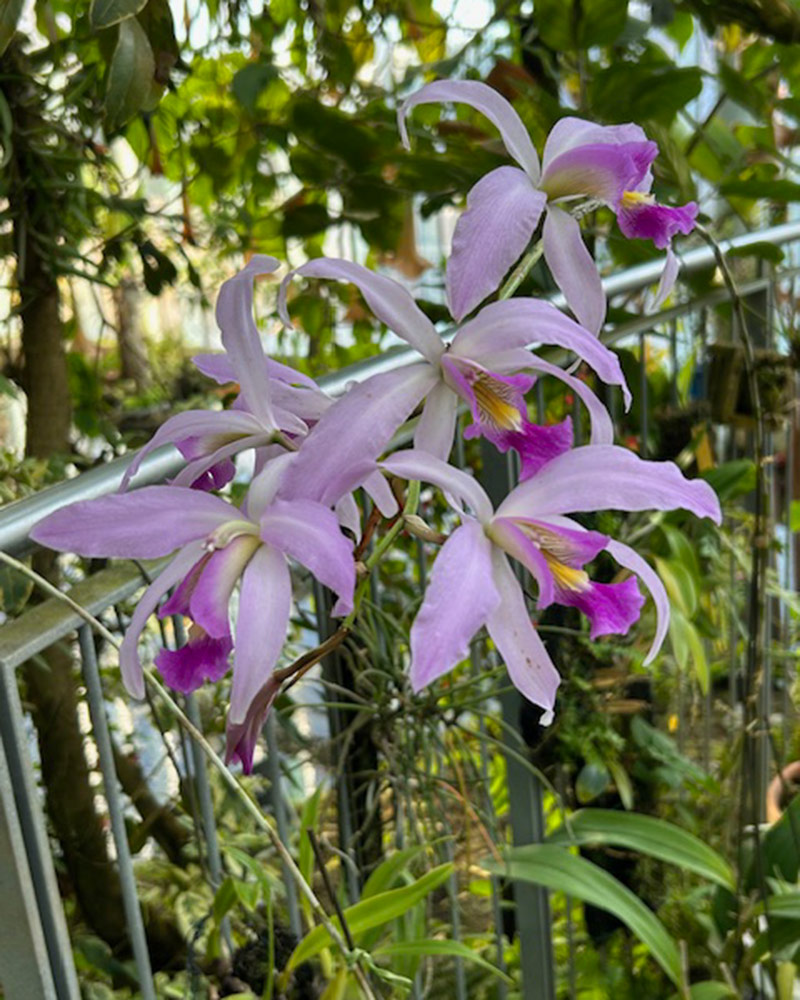 Finally, although Japanese garden design usually favors rich foliage over bright flowers, there are some blooms to enjoy at Shinjuku Gyoen. This gorgeous laelia orchid (Laelia anceps, Zones 9–11) was another spectacular specimen that Charlona spotted in the greenhouse.
Thank you so much for sharing these fascinating photos from this world-class botanical garden, Charlona! For anyone that appreciates the naturalistic look of Japanese garden designs, Shinjuku Gyoen National Garden is one of the most amazing landscapes to experience.
While I will never get sick of going “On the Road” with GPOD, I can’t help but wonder: Where is spring?? The season has been slow to get going in much of North America this year, but there must be some spring color that our readers in warmer climates can share to get the rest of us through the last stretch of cold. If you’re starting to see spring color emerge in your garden, please consider sharing some photos with the blog. Follow the directions below to submit your photos to Garden Photo of the Day!
We want to see YOUR garden!
Have photos to share? We’d love to see your garden, a particular collection of plants you love, or a wonderful garden you had the chance to visit!
To submit, fill out the Garden Photo of the Day Submission Form.
You can also send 5–10 photos to [email protected] along with some information about the plants in the pictures and where you took the photos. We’d love to hear where you are located, how long you’ve been gardening, successes you are proud of, failures you learned from, hopes for the future, favorite plants, or funny stories from your garden.
Do you receive the GPOD by email yet? Sign up here
Fine Gardening Recommended Products

Plant Covers Freeze Protection 10 ft x 30 ft Floating Row Cover 0.9oz/yd²
Fine Gardening receives a commission for items purchased through links on this site, including Amazon Associates and other affiliate advertising programs.
Lightweight and Breathable MATERIAL Good for protecting Plant: the plant frost cover material is 0.74 oz/sq non-woven polypropylene fabric, which is lightweight, breathable, and durable. The plant blanket frost protection allows sunlight reach the plants, perfect for protecting plants from the damage of freeze or frost. Wide Application In your Garden Work. The plant row cover not only can work as a barrier against frost, but also can be a great tool for germination and good for rapid seedling growth. By using the fabric plant covers over your plant, you can start the plant earlier in the spring and extending the growing season of your plants. How to Use the Plant Covers: you can cover the plant covers for freeze over your the plants loosely directly and then secure the plant frost blanket with soil, stones or staples. You can also support the floating row covers with a hoop, make enough room for plants to breath and grow. You could also cut the plant covers into different sizes for different purposes.

DeWalt Variable-Speed Cordless Reciprocating Saw with 6-Piece Saw Blade Set
Fine Gardening receives a commission for items purchased through links on this site, including Amazon Associates and other affiliate advertising programs.
You can fit a variety of blades to this saw to cut fallen branches or prune larger limbs from trees in a pinch. It’s fast, tough, easy to use, and extremely versatile.
– 18.31 x 6.13 x 4 inches
– 1-1/8-inch stroke length
– Variable speed trigger with 0-3000 spm
– DW4856 Metal/Woodcutting Reciprocating Saw Blade Set, 6-Piece
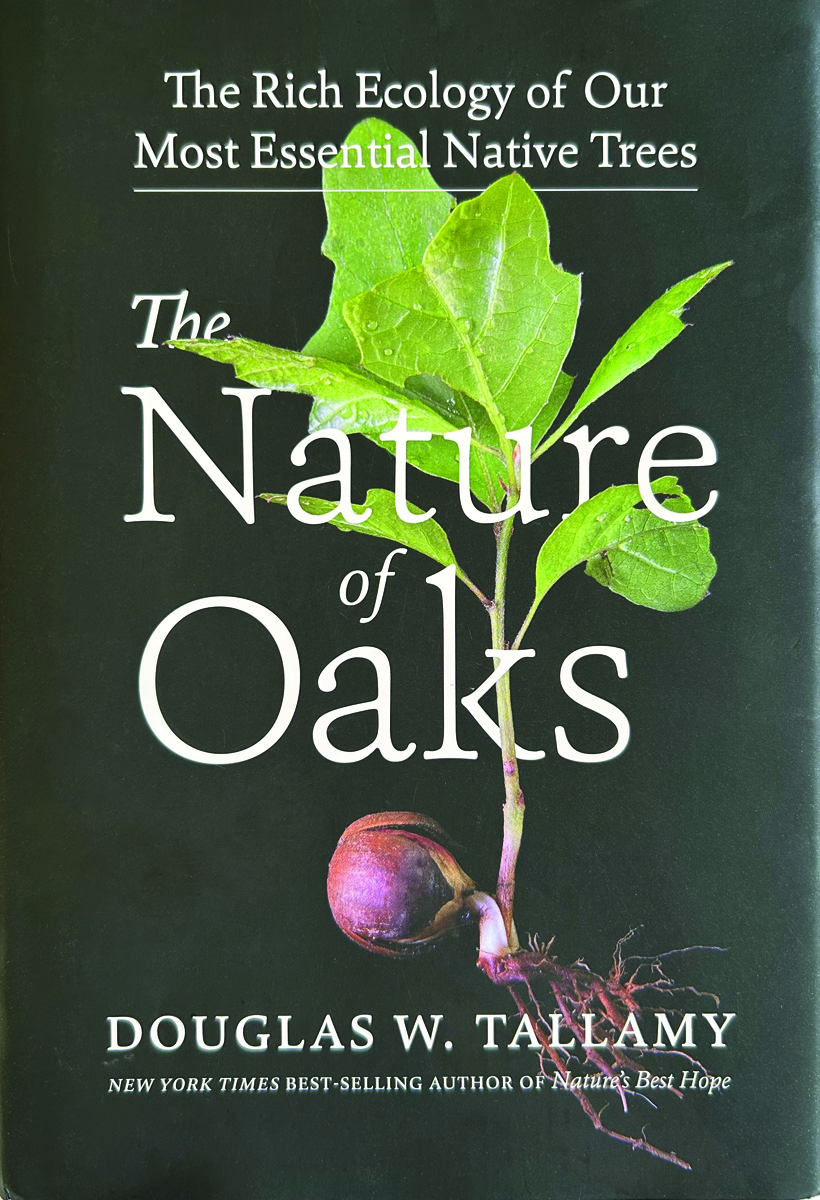
The Nature of Oaks: The Rich Ecology of Our Most Essential Native Trees
Fine Gardening receives a commission for items purchased through links on this site, including Amazon Associates and other affiliate advertising programs.
The Nature of Oaks reveals what is going on in oak trees month by month, highlighting the seasonal cycles of life, death, and renewal. From woodpeckers who collect and store hundreds of acorns for sustenance to the beauty of jewel caterpillars, Doug Tallamy illuminates and celebrates the wonders that occur right in our own backyards. He also shares practical advice about how to plant and care for an oak, along with information about the best oak species for your area.