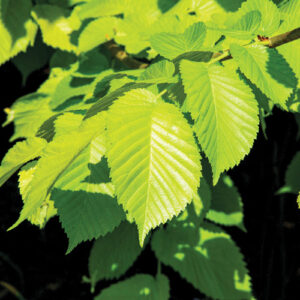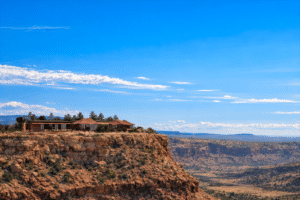




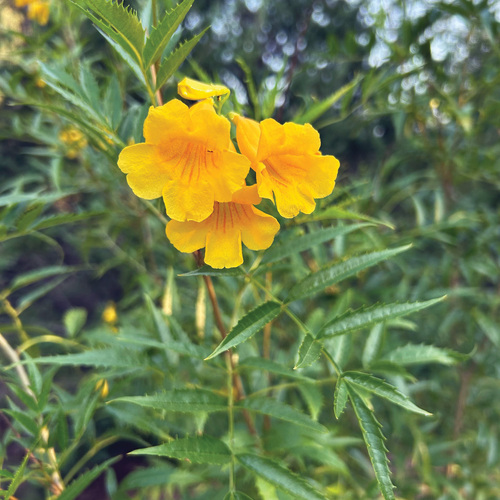
Discover standout plants for the Southwest that are easy to grow, drought-tolerant, and appealing to pollinators. If you need versatile, fast-growing plants to fill gaps and support your garden’s structure, these reliable background performers are a smart choice. Handpicked by our regional expert, you may find the perfect fit for your landscape.
Read More Regional Reports for the Southwest Here
Mealy blue sage
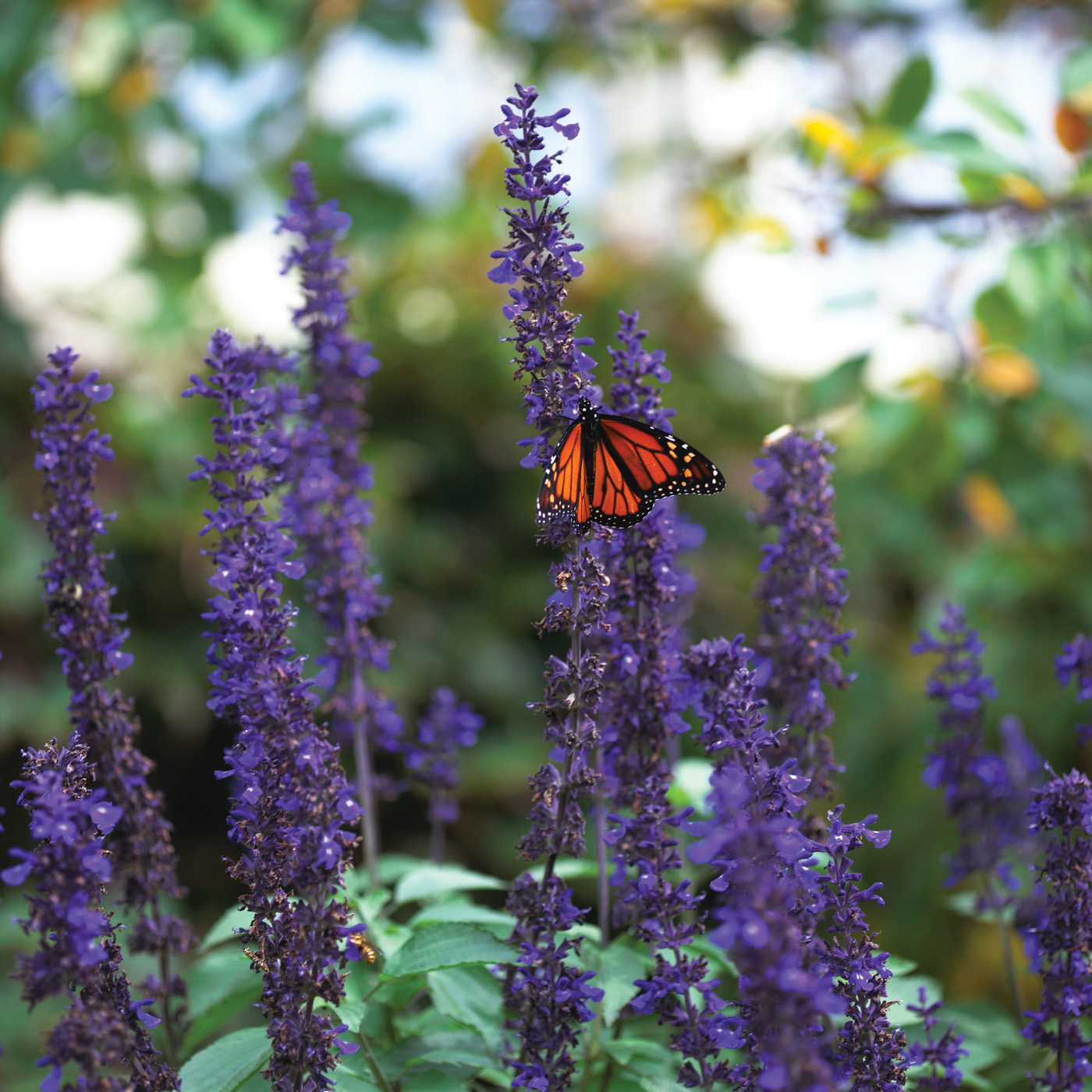
Name: Salvia farinacea
- Zones: 8–10
- Size: 2 to 3 feet tall and wide
- Conditions: Full sun; well-drained soil
- Native range: New Mexico, northeastern Mexico, and Texas
Mealy blue sage is as stunning as it is tough, with an exceptionally long bloom period and great drought tolerance. This perennial is a favorite of bumblebees, hummingbirds, and butterflies, but thankfully not deer, due to its aromatic foliage. While it fits right into a rock garden, it also works in a perennial border or a more naturalistic design, performs well in containers, and is a good cut flower.
Mealy blue sage is easy to grow and responds nicely to pruning. Disturbance leads to swift foliar regrowth, making it a resilient choice for high traffic areas. The floral display is magnificent in spring and fall, especially after a hard cut. I find that a late-summer chop to the ground results in a more vibrant display in autumn.
White gaura
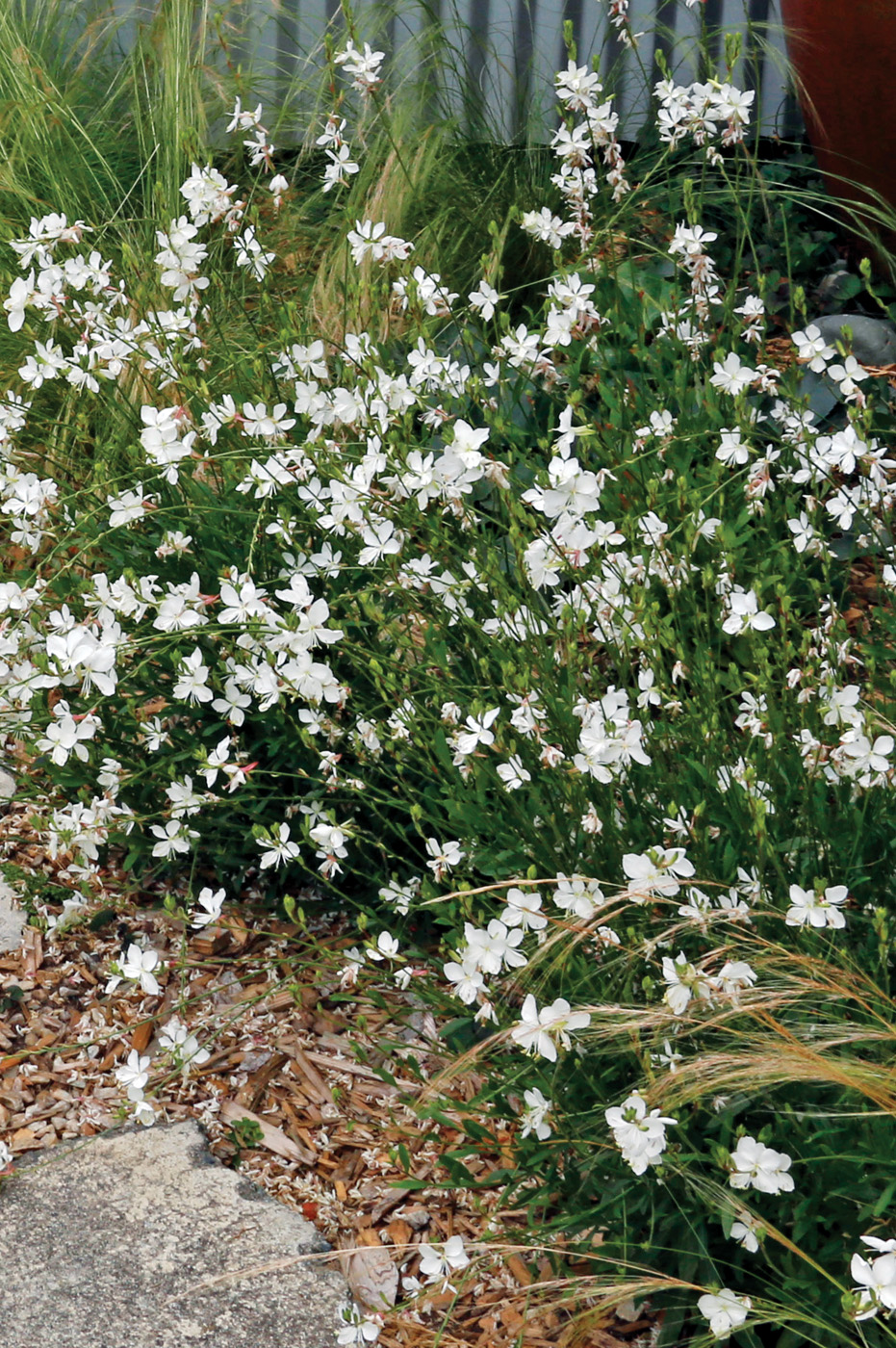
Name: Oenothera lindheimeri
- Zones: 5–9
- Size: 3 to 5 feet tall and 1 to 2 feet wide
- Conditions: Full sun to partial shade; tolerates a range of soil types
- Native range: Northern Mexico, Louisiana, and Texas
This elegant native boasts wispy, arching branches dotted with flowers that resemble dancing white butterflies. Its airy vase form makes white gaura an outstanding specimen plant, but it also looks spectacular in large drifts. The pink flower buds open to white blooms that gradually shift back to pink.
A cutback in July will result in more compact foliage and encourage fall blooms. In winter, cut the plants to the ground to promote denser spring foliage. This perennial attracts bees, butterflies, and hummingbirds, and is the larval host of the lovely white-lined sphinx moth. Once established, white gaura grows a long taproot that allows it to withstand drought; however, it will need additional water in containers.
Yellow bells
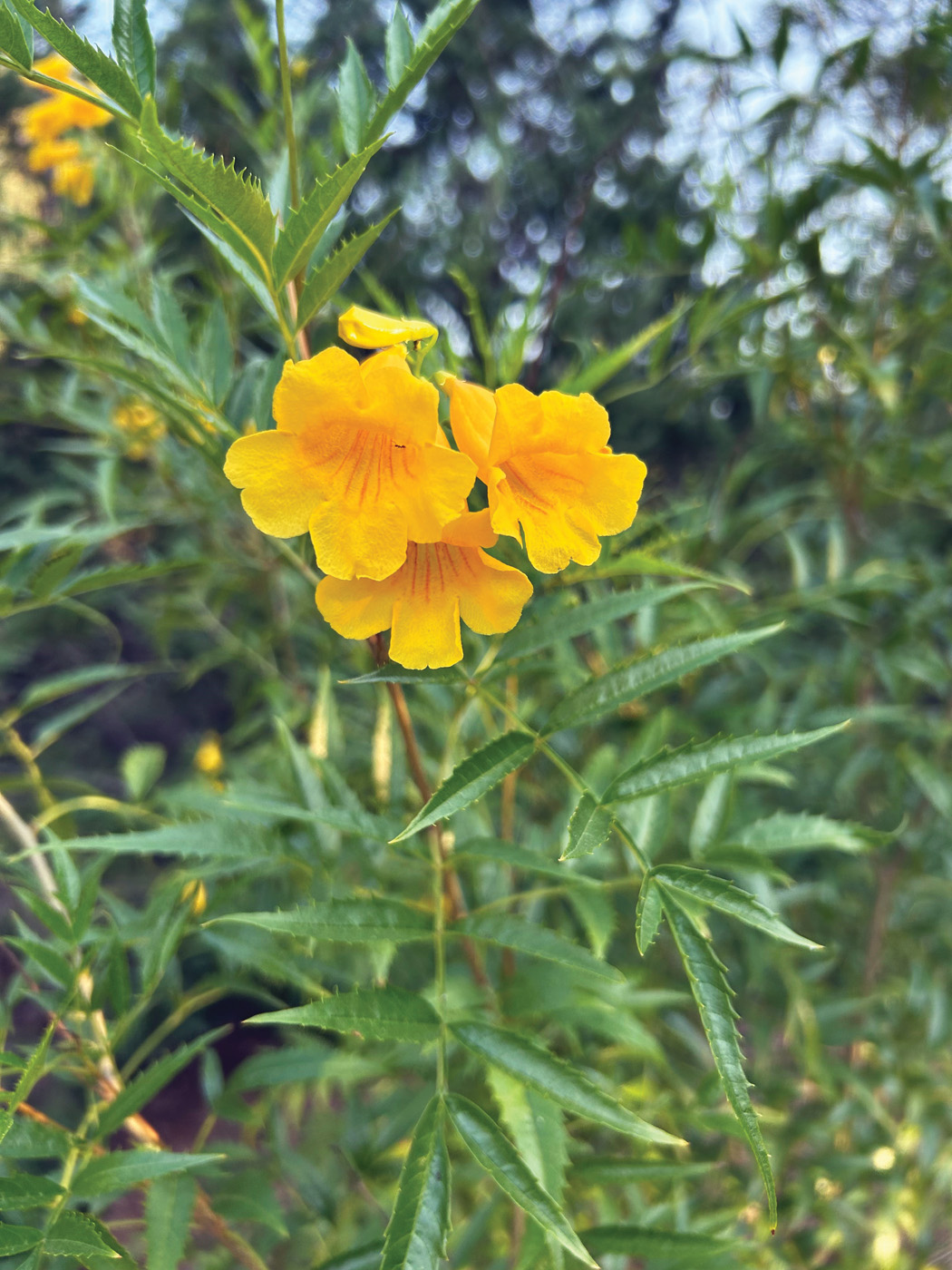
Name: Tecoma stans var. angustata
- Zones: 8–11
- Size: 6 to 10 feet tall and wide
- Conditions: Full sun to partial shade; well-drained soil
- Native range: Northern Mexico and Southwestern United States
Showy trumpet-shaped flowers give this incredibly drought-tolerant plant its signature look. The leaves of var. angustata are much thinner than those of the straight species, an adaptation to the heat and drought of the Southwest. This plant is also able to take advantage of downpours with dry spells in between, so allowing the soil to completely dry out before watering may result in a happier plant full of blooms.
The eye-catching flowers open from early spring to late fall, often showing off in the middle of summer when there is not much else blooming. Yellow bells will size up and reach its mature height quickly. It will die back after a freeze, but new spring growth quickly fills in.
Fragrant sumac
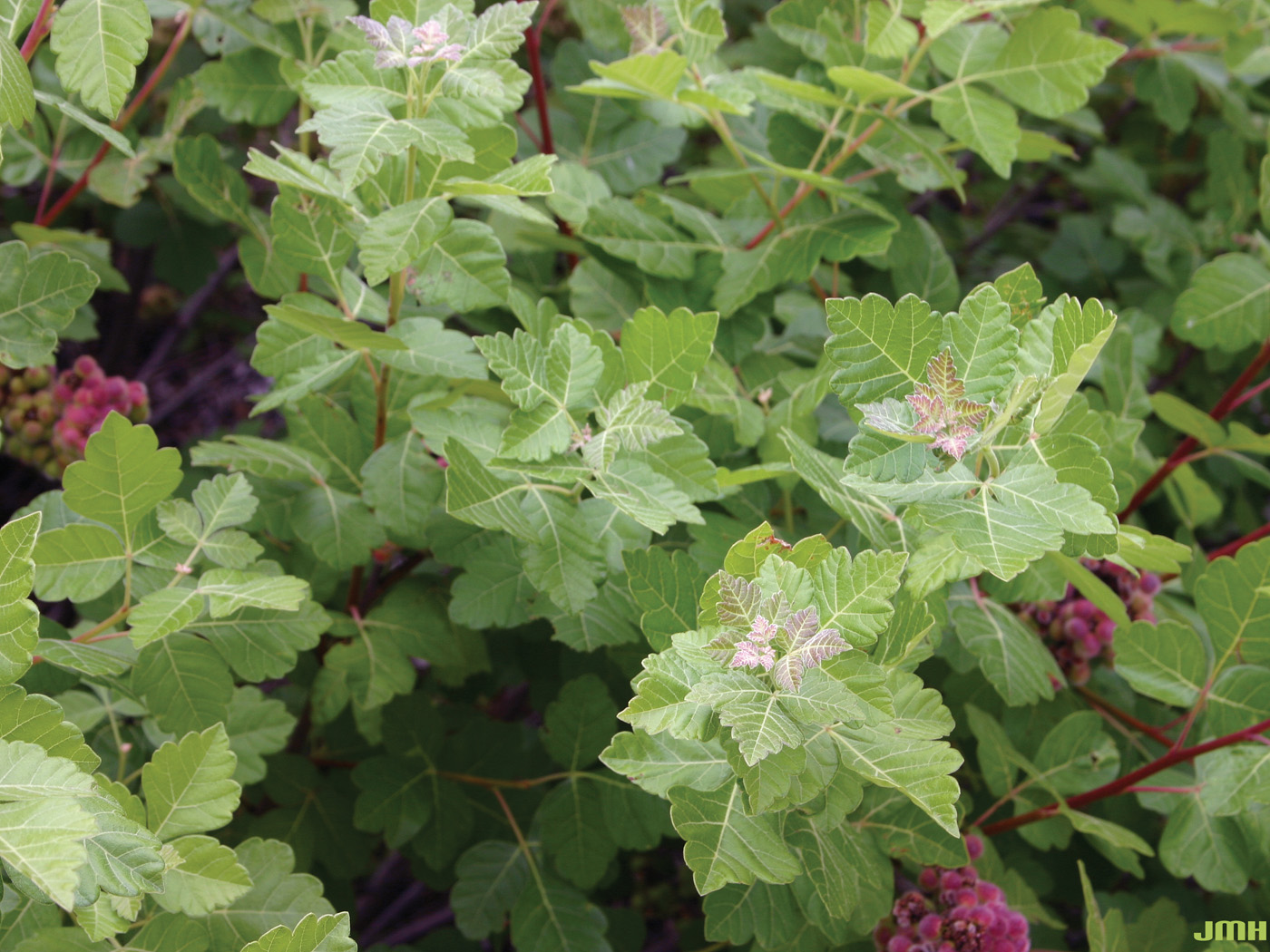
Name: Rhus aromatica
- Zones: 3–9
- Size: 2 to 6 feet tall and 6 to 8 feet wide
- Conditions: Full sun to full shade; dry to average, well-drained soil
- Native range: North America
In many places, the low growth pattern of fragrant sumac makes it an excellent ground cover candidate. Here in Texas, where everything is bigger, it quickly grows to around 6 feet tall. While fragrant sumac is prone to forming thickets, a tree form can be achieved if you are willing to prune out suckers once or twice a year. The citrus-scented leaves take on beautiful deep hues of red, yellow, orange, and purple as fall settles in.
Fragrant sumac is dioecious, meaning male and female flowers are borne on separate plants. The small flowers provide early spring nectar for pollinators, and the clusters of reddish berries that ripen in late summer and persist into winter are a critical food source for birds.
Regional expert: Amy Galloway is a horticulturist at the Lady Bird Johnson Wildflower Center in Austin, Texas.
Fine Gardening Recommended Products
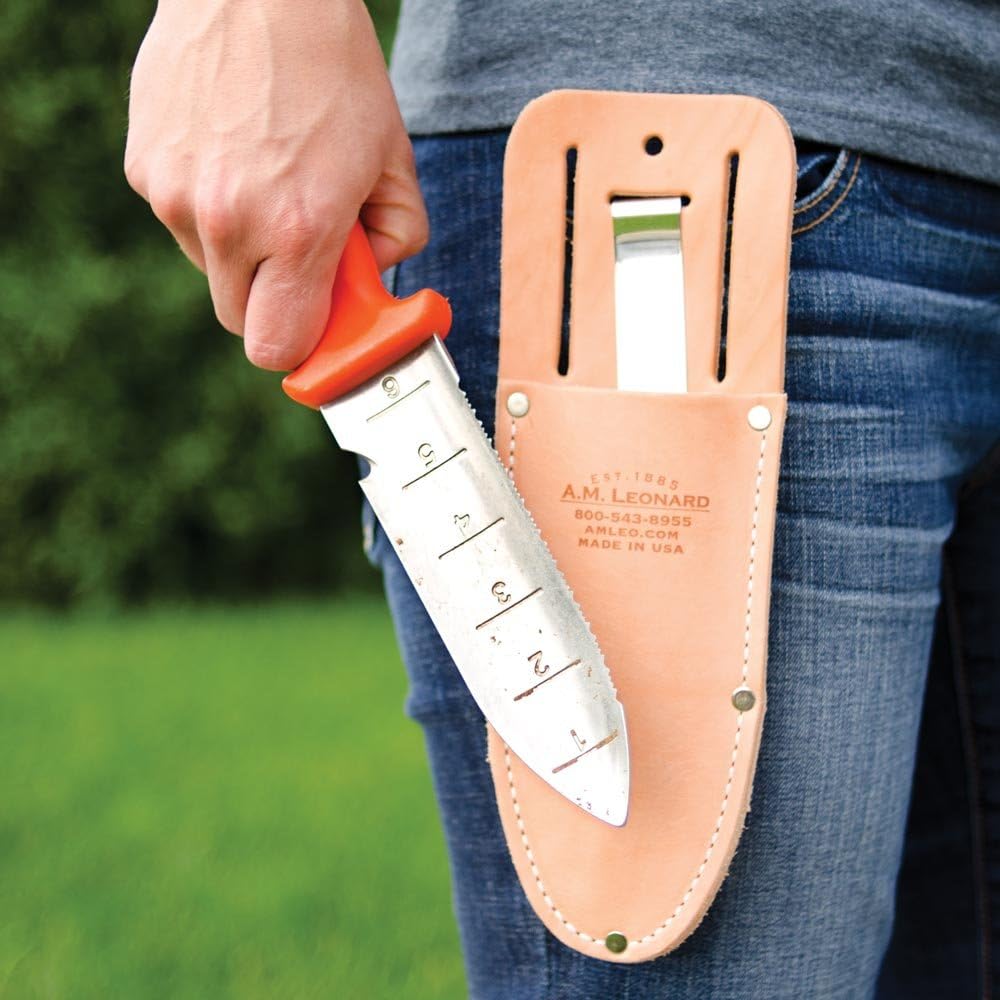
A.M. Leonard Deluxe Soil Knife & Leather Sheath Combo
Fine Gardening receives a commission for items purchased through links on this site, including Amazon Associates and other affiliate advertising programs.
MULTITASKING DUAL EDGES: a deep serrated edge and a tapered slicing edge ideal for tough or delicate cuts. DURABLE 6-inch stainless steel blade withstands 300 lbs of pressure. TWINE CUTTING NOTCH, DEPTH GAUGE MARKINGS & spear point – no need to switch tools when using this garden knife. LEATHER SHEATH: heavy duty, protective, clip on sheath to keep your knife convenient and secure. LIFETIME WARRANTY.