

One of my main goals as a landscape designer is to bring some of the untamed beauty of natural ecosystems into the smaller, more structured context of a residential garden. An essential early step in my process is to observe and understand a garden’s environmental setting, carefully noting details that could imbue the design with a genuine sense of place. I develop a limited, site-appropriate plant palette that will evoke a balanced, authentic sense of harmony.
| At a glance |
|
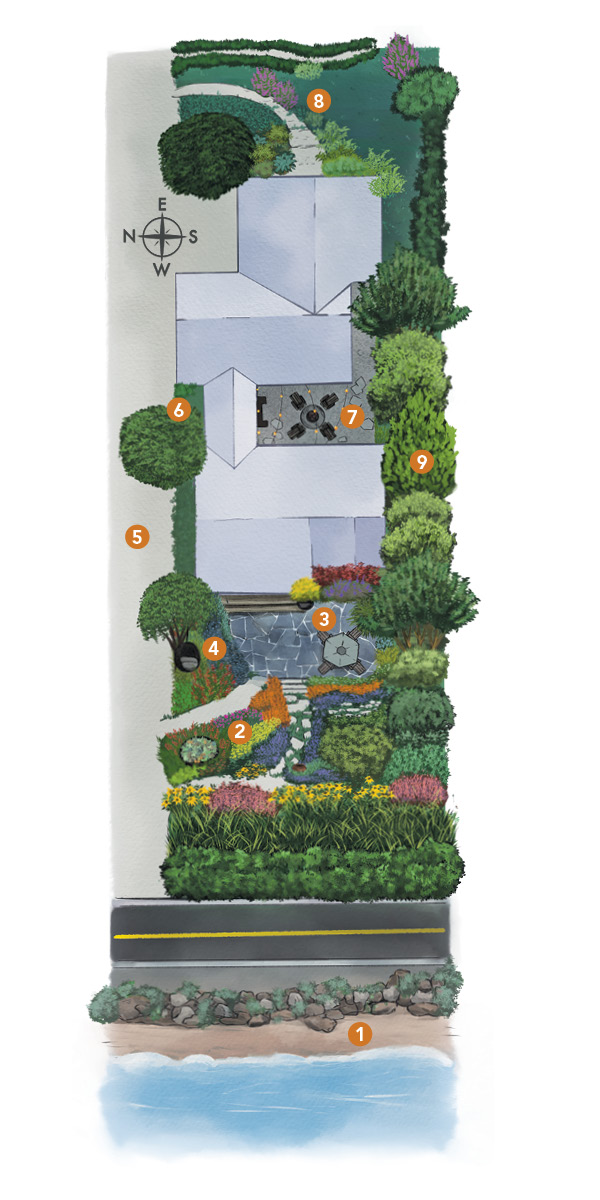
Location: Bainbridge Island, Washington Zone: 8b Size: .48 acres Conditions: Full sun to partial shade; rocky, well-drained soil 1. Beach on Puget Sound 2. Full-sun front garden 3. Patio dining table 4. Tree swing 5. Shared driveway 6. Shaded side entrance 7. Courtyard fire feature 8. Back garden 9. Mixed hedging along property line |
 |
This was my approach when I moved into my home with its existing garden 14 years ago, but with the luxury of time that is often not available when working with clients. Through the seasons, I was able to observe the changing light and soft breezes that are key players in this waterfront location, as well as the intense summer sun and winter’s strong winds, heavy rain, and salt spray. Fast-draining, rocky soil is another challenging factor. Over time, I preserved the plants that performed well in these conditions with little care, while letting go of the lawn and any lackluster or needy plants that didn’t thrive. The look of the garden has grown more relaxed and organic as the plant choices have become more tailored to the site. Here are some ideas for balancing order with wildness that I’ve gleaned from the process of developing my own garden retreat.
WELL-ADAPTED PLANTS MINIMIZE MAINTENANCE AND STRENGTHEN A SENSE OF PLACE
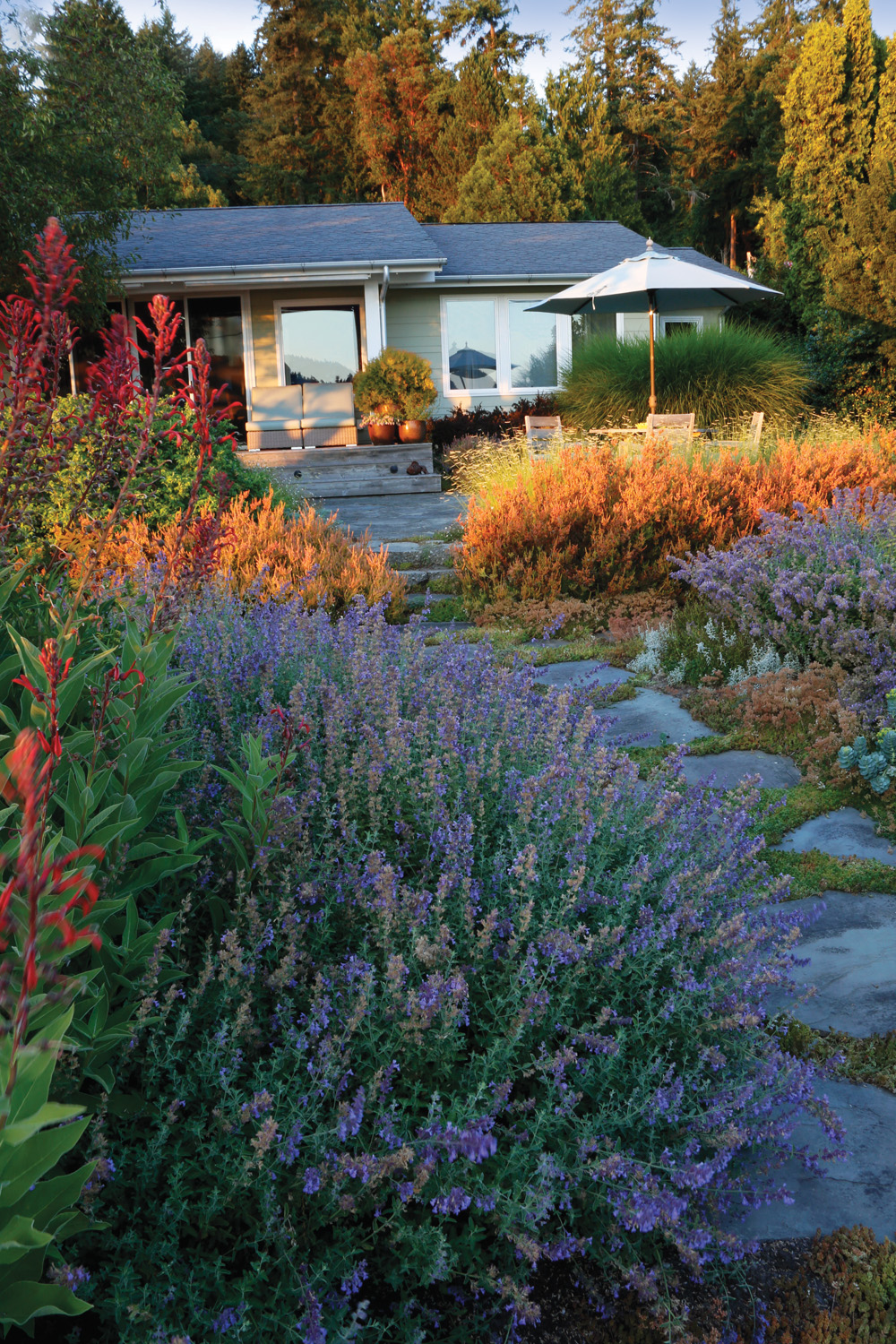
In the early days of garden renovation, I kept the larger trees and shrubs that framed the space, enhanced its privacy, and contributed to its informal design aesthetic. Rather than adding a variety of different plants, I focused on expanding and repeating plantings that already worked. Over time, prioritizing plants with relaxed forms has reduced maintenance and created a more organic, naturalistic look.
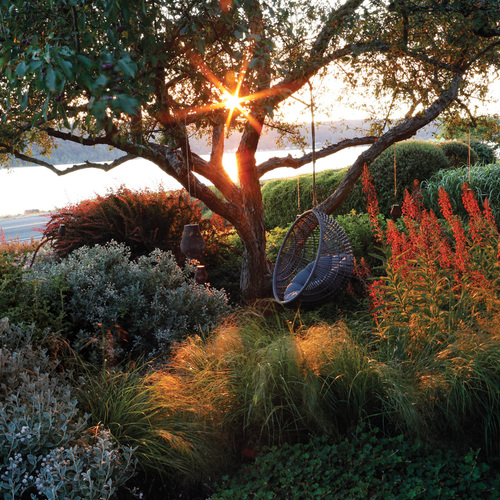
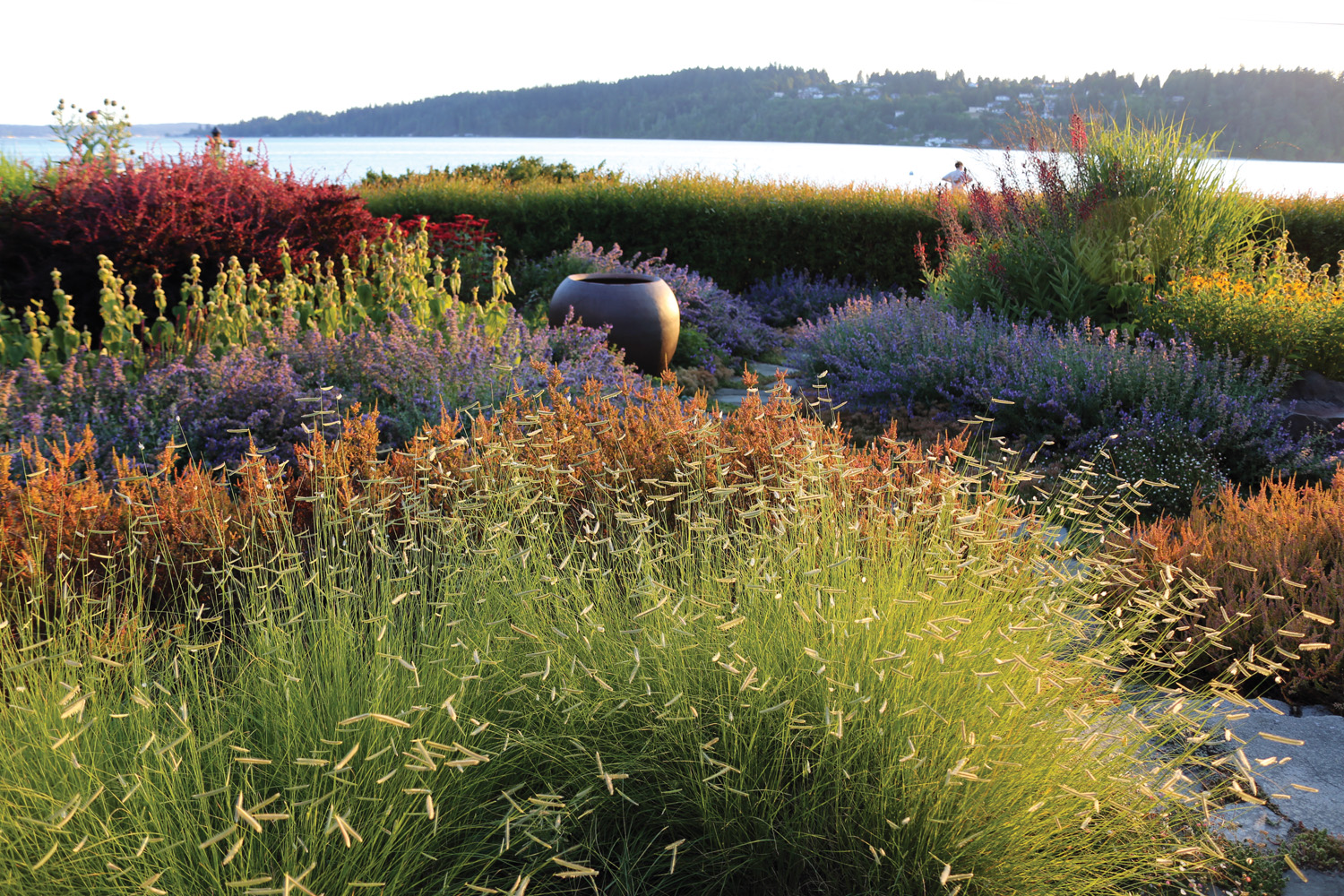
I increased the plant palette minimally to enhance the restful and authentic feeling of the waterside setting. I favored ornamental grasses like ‘Blonde Ambition’ blue grama grass (Bouteloua gracilis ‘Blonde Ambition’, Zones 4–9) and ‘Moorhexe’ purple moor grass (Molinia caerulea ‘Moorhexe’, Zones 5–8), which have seed heads that glow when backlit by the golden evening sun and move softly in the breeze against the water backdrop (photo below).
When choosing flowering ground covers, perennials, and shrubs, I considered seasonality and went with long and profuse bloomers that support pollinators. There’s enough variety to encourage biodiversity, and enough repetition to have a calming effect. Chilean lobelia (Lobelia tupa, Zones 7–10) and ‘Walker’s Low’ catmint (Nepeta × faassenii ‘Walker’s Low’, Zones 4–8) offer a long bloom cycle. Evergreens like daisy bush (Brachyglottis greyi, Zones 8–10) and ‘Firefly’ heather (Calluna vulgaris* ‘Firefly’, Zones 4–8; See invasive alert for this plant) anchor the beds with continuous color through the seasons.
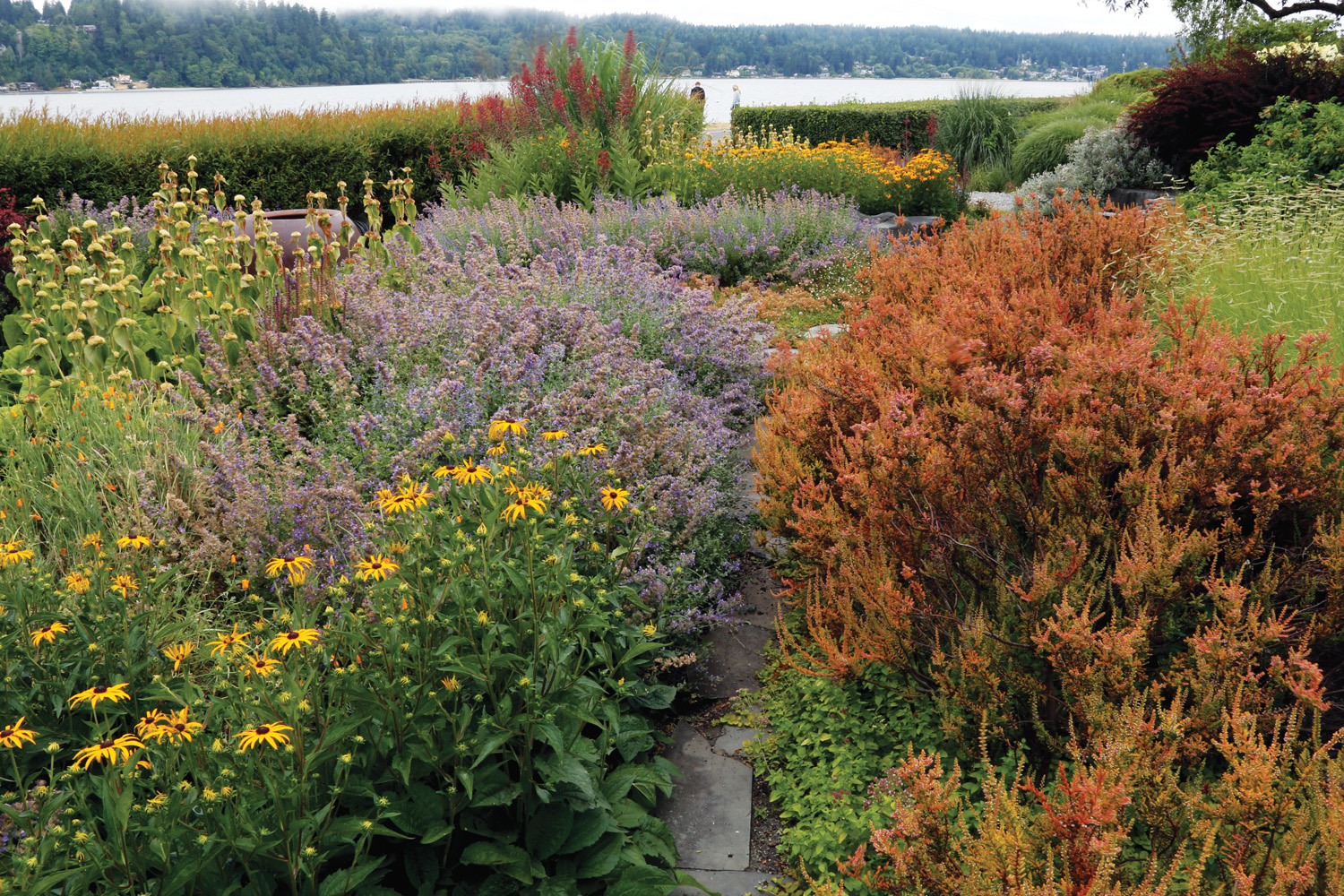
Allowing some self-sowers to spread adds an element of improvisation that relaxes the layout. Mexican daisy (Erigeron karvinskianus, Zones 6–9) edges the patio and sows itself in a few new locations each year. Judicious editing of volunteers maintains balance yet allows spontaneity. Choosing plants that can be left undisturbed in winter enhances the wild feel of the garden, especially if some selections provide food or habitat for insects and wildlife. I’ve included plenty of perennials like ‘Goldsturm’ black-eyed Susan (Rudbeckia fulgida var. sullivantii ‘Goldsturm’, Zones 3–9) and Jerusalem sage (Phlomis russeliana, Zones 5–9), which have striking seed heads that birds feast on in fall and winter.
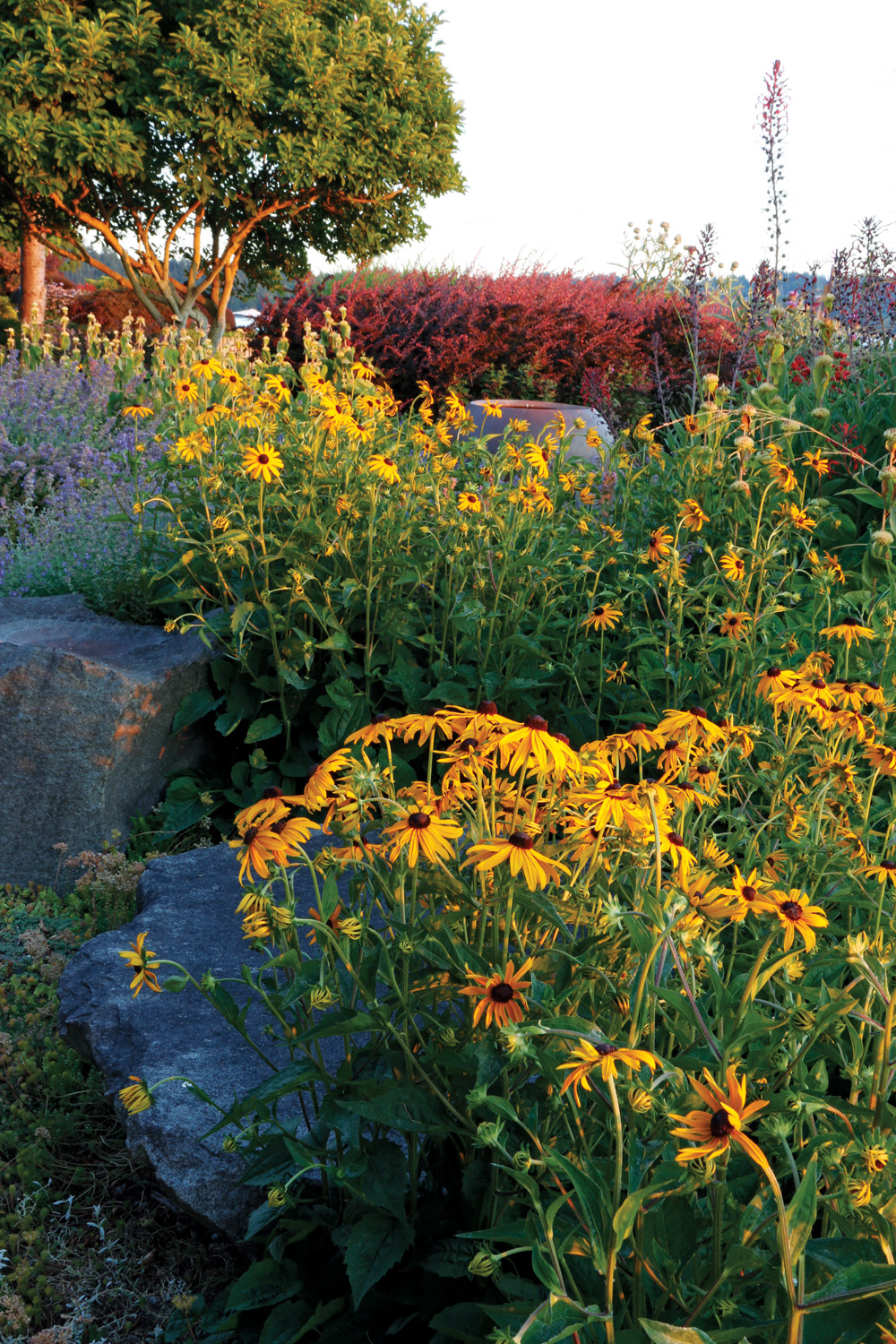
As time has passed, I’ve considered my choices and eliminated anything that required too much care to thrive, or that looked out of place living near the water in the Pacific Northwest. Any new plants I add must enhance the site’s attributes, adapt effortlessly to the existing conditions, and look at home in a relaxed environment.
SIMPLIFY COLORS AND SHAPES TO ACHIEVE AN EASYGOING, ORGANIC LOOK YEAR-ROUND
Sometimes less is more, and simplifying plant variety, colors, and forms can result in more cohesion. In addition to selecting site-appropriate plants, focusing on plant form and foliage makes it easier to narrow down a plant list. Prioritizing color shifts through the seasons, and leveraging plants that offer a variety of attributes other than just blooms makes a more dynamic design. In this garden, I have favored softer color transitions over high-contrast combinations, and I look for harmony and echoes in leaves, stems, bark, and blossoms. ‘Firefly’ heather has foliage that changes through the year with chartreuse and peach in summer and brick red in winter. ‘Caradonna’ meadow sage (Salvia nemorosa ‘Caradonna’, Zones 4–9) offers deep violet blooms on black stems in summer, and a hedge of yellow willow (Salix lutea, Zones 4–9) adds brilliantly colored twigs in winter. The seed heads of ‘Blonde Ambition’ blue grama grass also offer interest in winter and are foraged by birds.
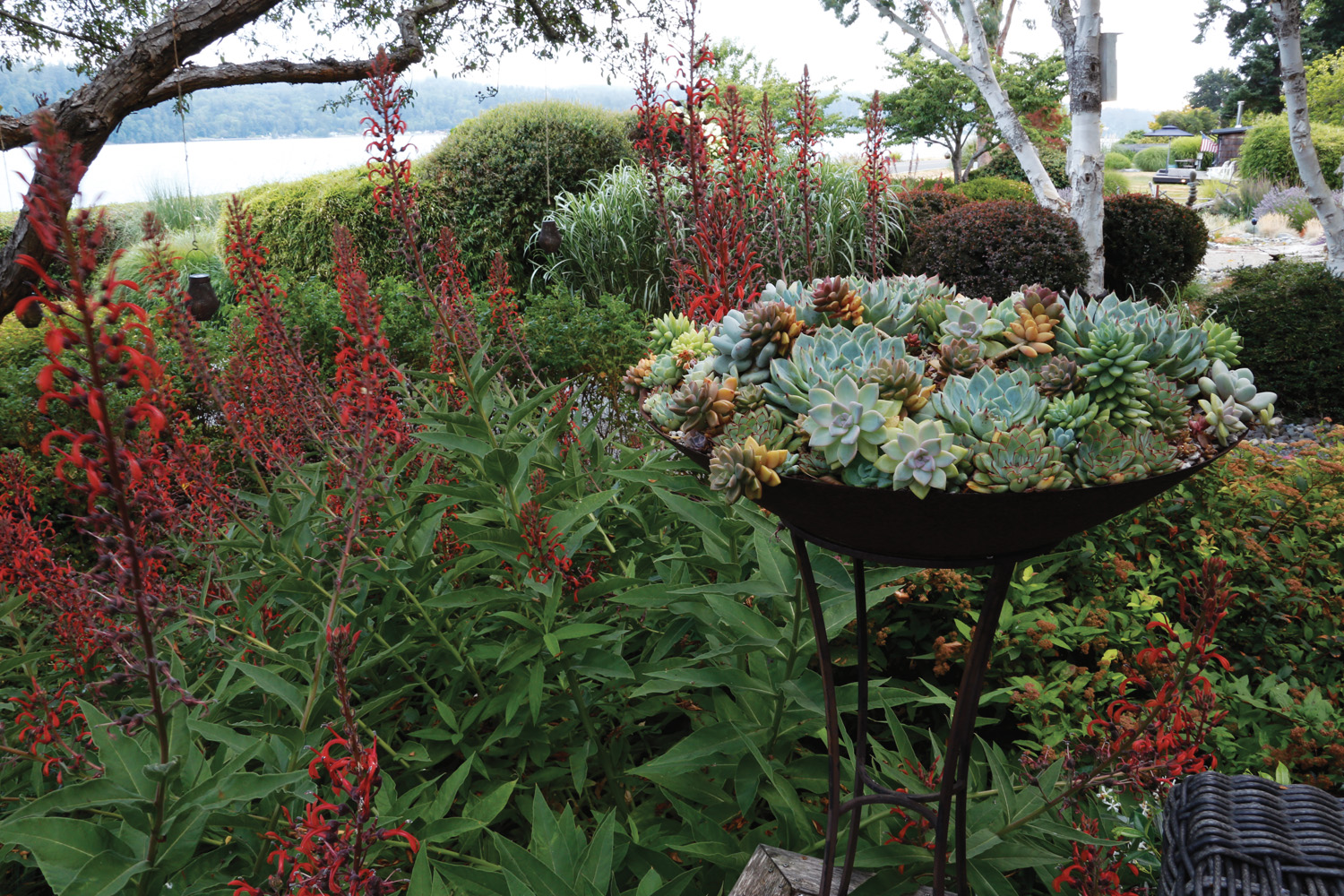
Massed forms can be more impactful than individual specimens, so I organized groups of plants in loose waves and tiers. Layering and repetition mimics how a landscape typically evolves in a natural setting and is visually calming. Alternating evergreens with drifts of herbaceous or deciduous plants creates continuity through the year, with some seasonal interest that shifts and changes. Intersecting the layers and lines keeps the layout soft and natural.
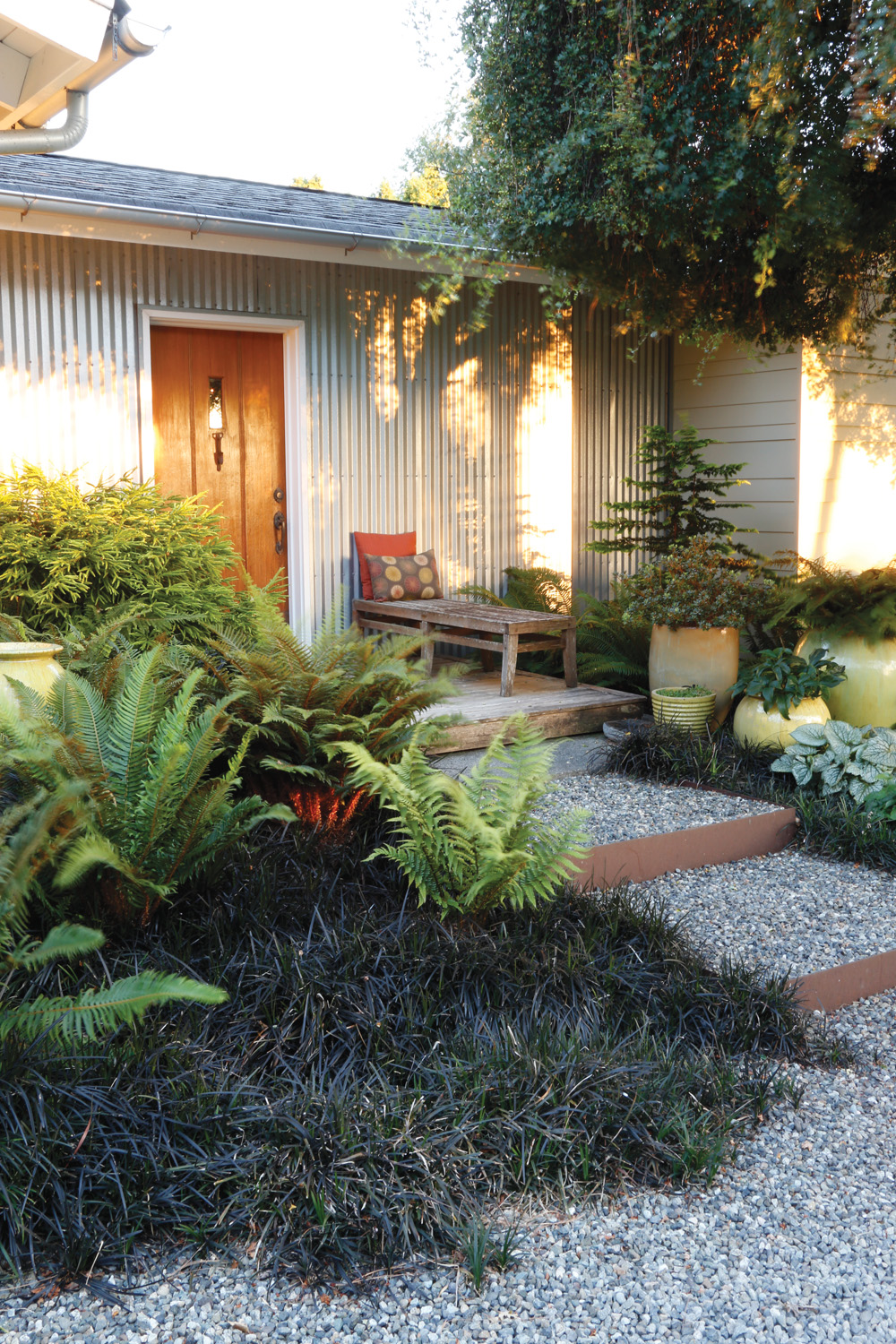
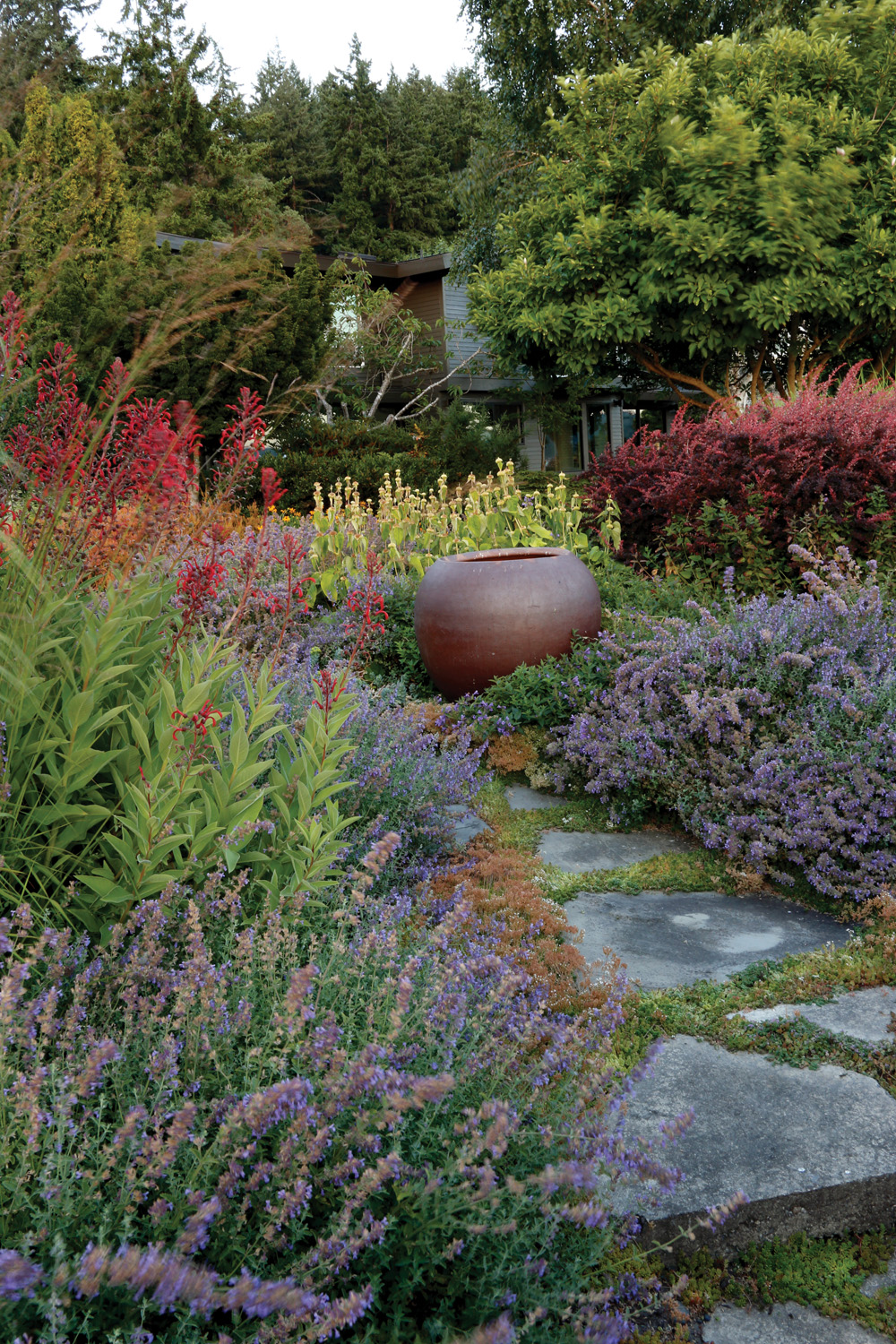
Prioritizing plants that look best with relaxed forms helps reduce maintenance and create a pleasant, more organic look. In most parts of the garden, including the shaded north entrance, the majority of perennials and shrubs need to be fairly low to protect the water view, with just a few larger trees retained for privacy and framing (photo below). Choosing screening plants that mature to just the right height, like daisy bush, reduces upkeep and allows their natural forms to flourish.
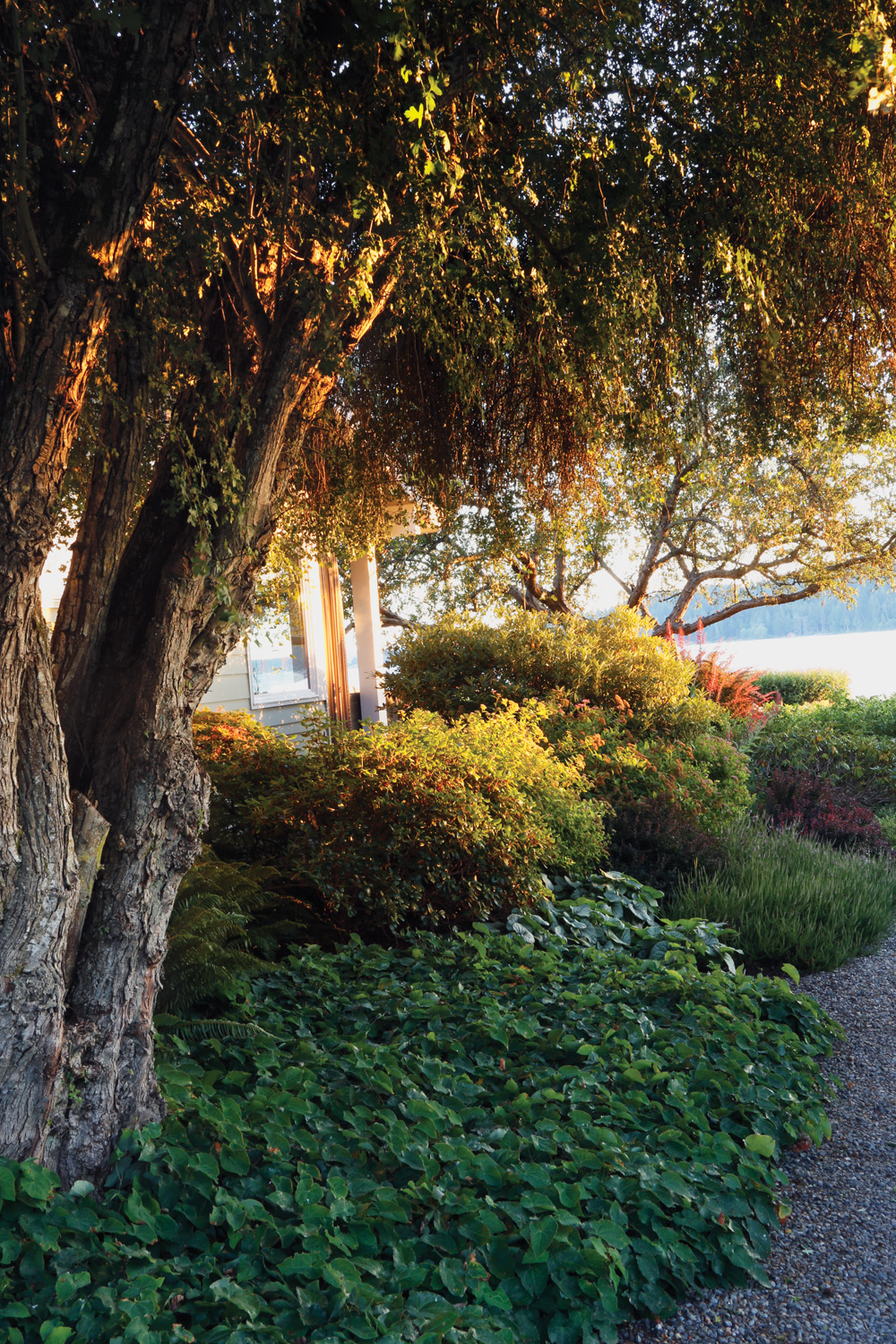
ACHIEVING HARMONY AND BALANCE SOMETIMES MEANS LETTING GO
By design, gardens are sanctuaries, places to unwind, reflect, and be in the present moment. These green havens provide a spot close to home for us to connect to the natural world, cultivating a reverence for it and the seasonal cycles. Gardens also give us the opportunity to express creativity through a dynamic and ever-changing living medium. Whether you are anticipating spring renewal, enjoying the bounty of high summer, celebrating autumn’s fireworks, or daydreaming about new ideas during winter dormancy, there are always things to study and imagine in a garden. This practice of careful and loving observation helps develop a wealth of knowledge, empowering you to maximize your landscape’s attributes in the choices you make both in plants and overall site planning.
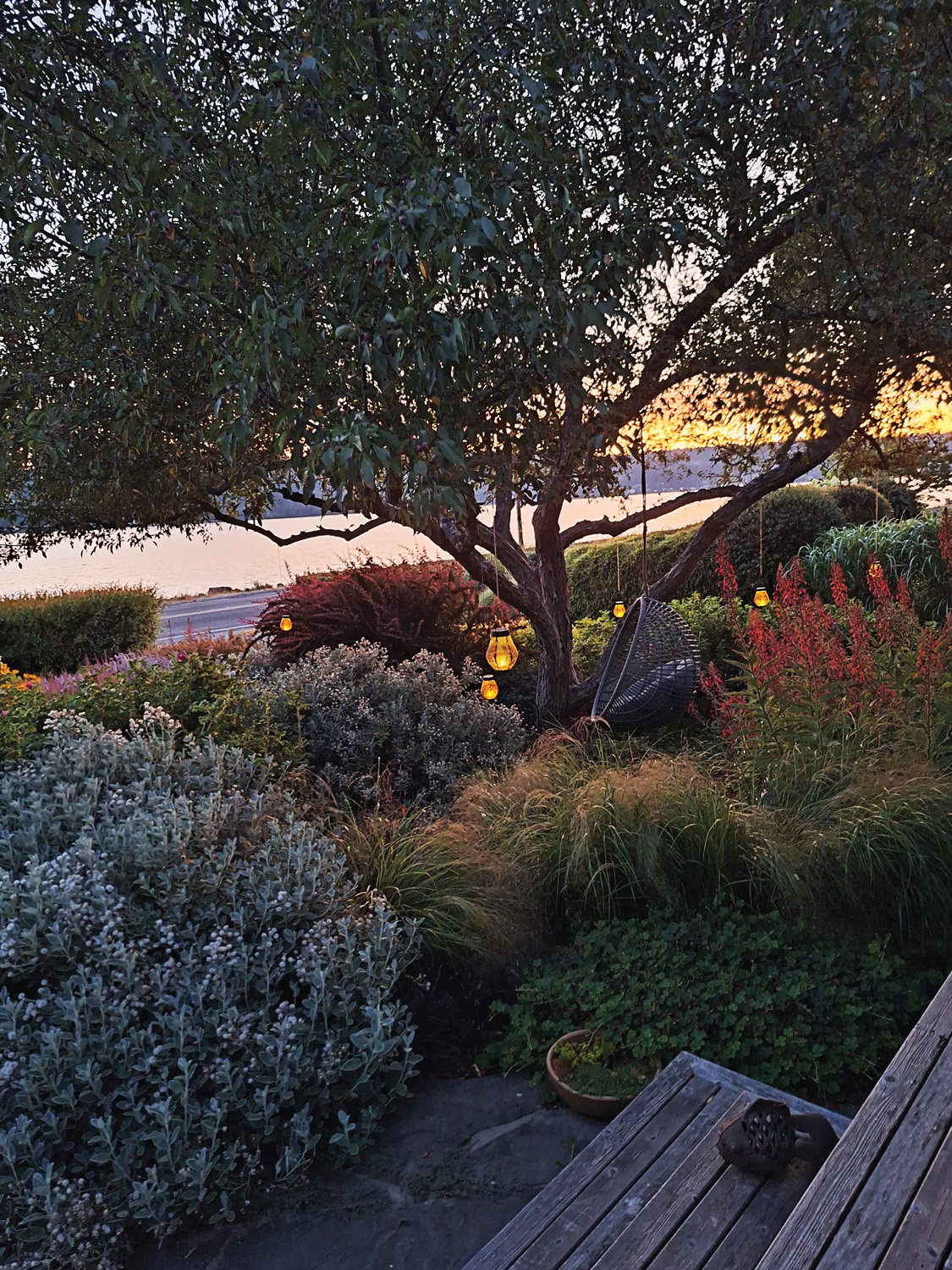
All gardens require ongoing editing, care, and nurturing, which is part of the joy of gardening. Some routine tasks are disruptive to the natural cycles and can create more work for the gardener. Site-appropriate choices that evolve out of a deeper understanding of your landscape and a more relaxed design aesthetic can create a space that requires less maintenance. Understanding that a garden is an ever-changing performance, rather than a static backdrop, helps you to let go and enjoy the exciting changes through the seasons.
| Design Ideas |
Tips for getting your garden back to nature
A design that evokes the beauty of wild places and makes the most of unique site attributes will imbue the landscape with a sense of place. Here are a few ideas for bringing tranquility to your own garden sanctuary.
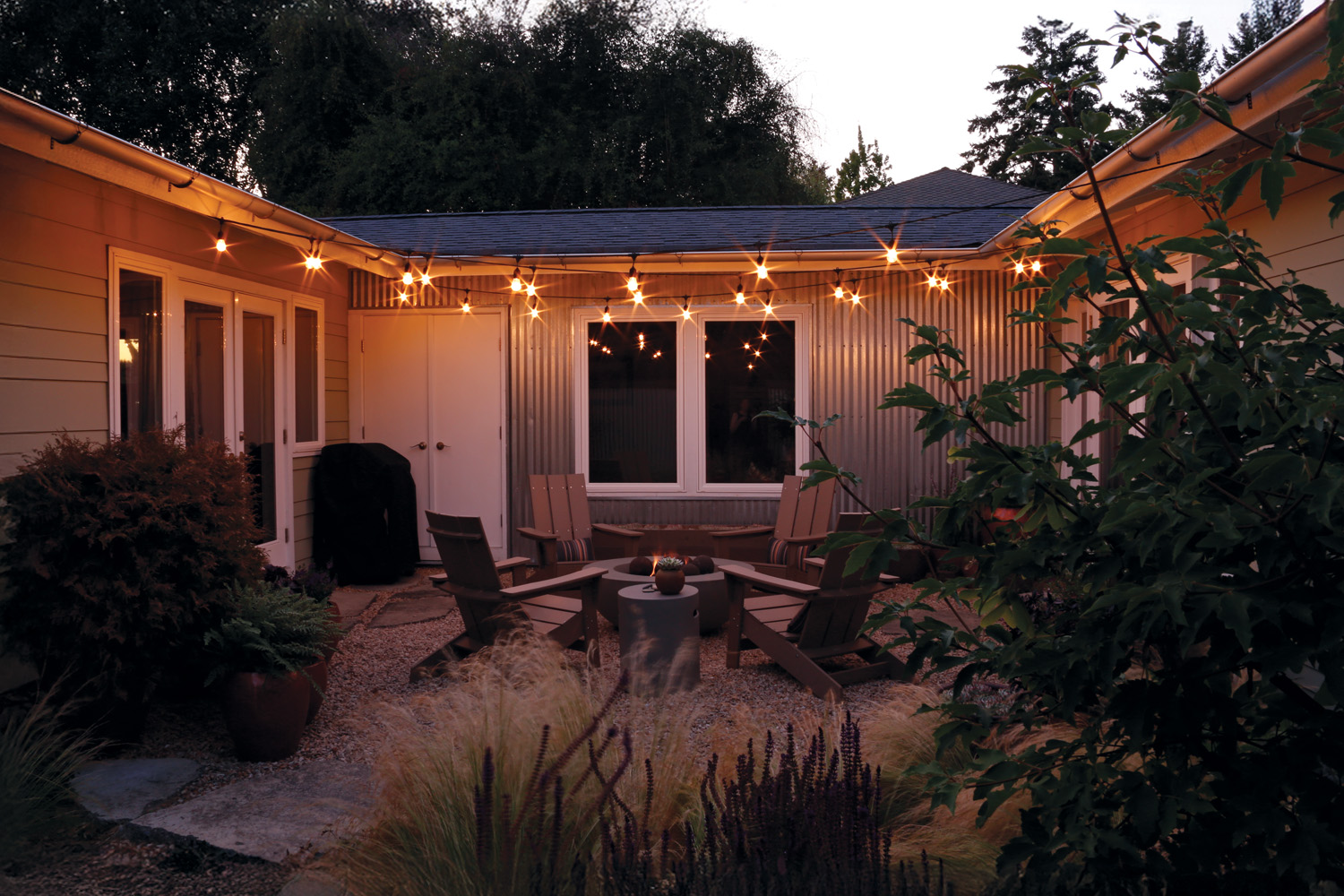
Create seating areas based on when they will be used. In this garden, seating options are designed to be convenient and inviting in the evening hours, when the garden becomes an after-work retreat.
Leverage unique aspects of your location. Late-afternoon backlighting and gentle breezes make ornamental grasses a fantastic choice in my garden as they glow in the evening sun and add movement to the landscape.
Choose plants wisely. You may love all plants, but not all plants will love your garden. Learn your site conditions, and select species that will thrive. Massing and repeating plants that perform effortlessly creates an organic feel and is visually peaceful.
Let go of perfection. Gardens are natural spaces. When it comes to care, sometimes less is more. Accepting change through the seasons and allowing transformations to occur can create a dynamic performance.
*Invasive alert: Scotch heather (Calluna vulgaris) is considered invasive in NC, MA, and RI.
Tish Treherne is the owner and designer at Bliss Gardens on Bainbridge Island, Washington.
Fine Gardening Recommended Products

Monarch Butterfly Rescue Wildflower Seeds 4 oz.
Fine Gardening receives a commission for items purchased through links on this site, including Amazon Associates and other affiliate advertising programs.
HIGH QUALITY SEEDS and EXPERT GUIDANCE: Experience the quality seed difference. We are committed to providing the highest quality, open-pollinated, non-GMO/non-GE seeds to our customers, guaranteed. A trusted source of high quality seeds since 1985. ATTRACT MORE MONARCHS: We know seeds and we know pollinators! Our expertly crafted botanical garden seed mixes contain a wide variety of both perennials and annuals that are specifically designed to attract pollinators. Attract more Monarchs and Butterflies in general. Gardener tested, pollinator approved! All Of Our Wildflower Varieties Are 100% Pure Seed, They come with complete planting instructions. Compare and see the quality value. This Wildflower Seed Mix will make the perfect gift for those gardeners in your life.

Spear & Jackson 4930FZ Razorsharp Telescopic Tree Pruner
Fine Gardening receives a commission for items purchased through links on this site, including Amazon Associates and other affiliate advertising programs.
Telescopic tree pruner with SK5 carbon steel blade which stays sharper for longer. Variable length telescopic handle extends up to 92 Inch (2340mm). Lopper for cutting branches up to 1.2″ (30mm). 13 inch (330mm) saw is ideal for cutting thicker branches. Supplied with a long cord and pull-action handle. Part of the Razorsharp Advantage collection, the obvious choice for gardeners who demand and expect precise, powerful performance. “Grow Your Own” Great British Growing 2020 Award Winners.