

Water-wise woodies: Try these 10 drought-tolerant trees and shrubs
Change is the nature of nature, but knowing that doesn’t make accepting those changes any easier. Droughts are becoming more frequent and more intense across North America, even in areas where they were not previously a concern. Gardeners in regions that don’t experience long periods of drought may still be faced with increased periods of extreme heat or cold, which can put plants under water stress.
One way to smooth the bumpy ride of these shifts is to prioritize sustainable planting practices. Woody plants form the backbone of a garden, and varieties that naturally thrive with less water are especially valuable, conserving moisture for other plants while also reducing overall maintenance. Look to the following selections—and other drought-tolerant shrubs and trees—to help your garden face future challenges with resilience and grace.
Learn More: What Makes a Plant “Water-Wise?”
These tough trees will anchor your landscape without flagging in the heat
‘Brodie’ Eastern red cedar is an upright cultivar offering functional beauty and wildlife value
Juniperus virginiana ‘Brodie’
- Zones: 3–9
- Size: 20 to 30 feet tall and 6 to 8 feet wide
- Conditions: Full sun to partial shade; dry to moist, well-drained soil
- Native range: Central and eastern North America
Sometimes what you have been looking for has been right under your nose all along. Eastern red cedar, along with its near-twin western-native counterpart, Rocky Mountain juniper (Juniperus scopulorum, Zones 3–9), is such a familiar roadside sight that we fail to see it for the garden superstar it is. This tough, long-lived evergreen is drought tolerant in all soil types and has ornamental and wildlife value.
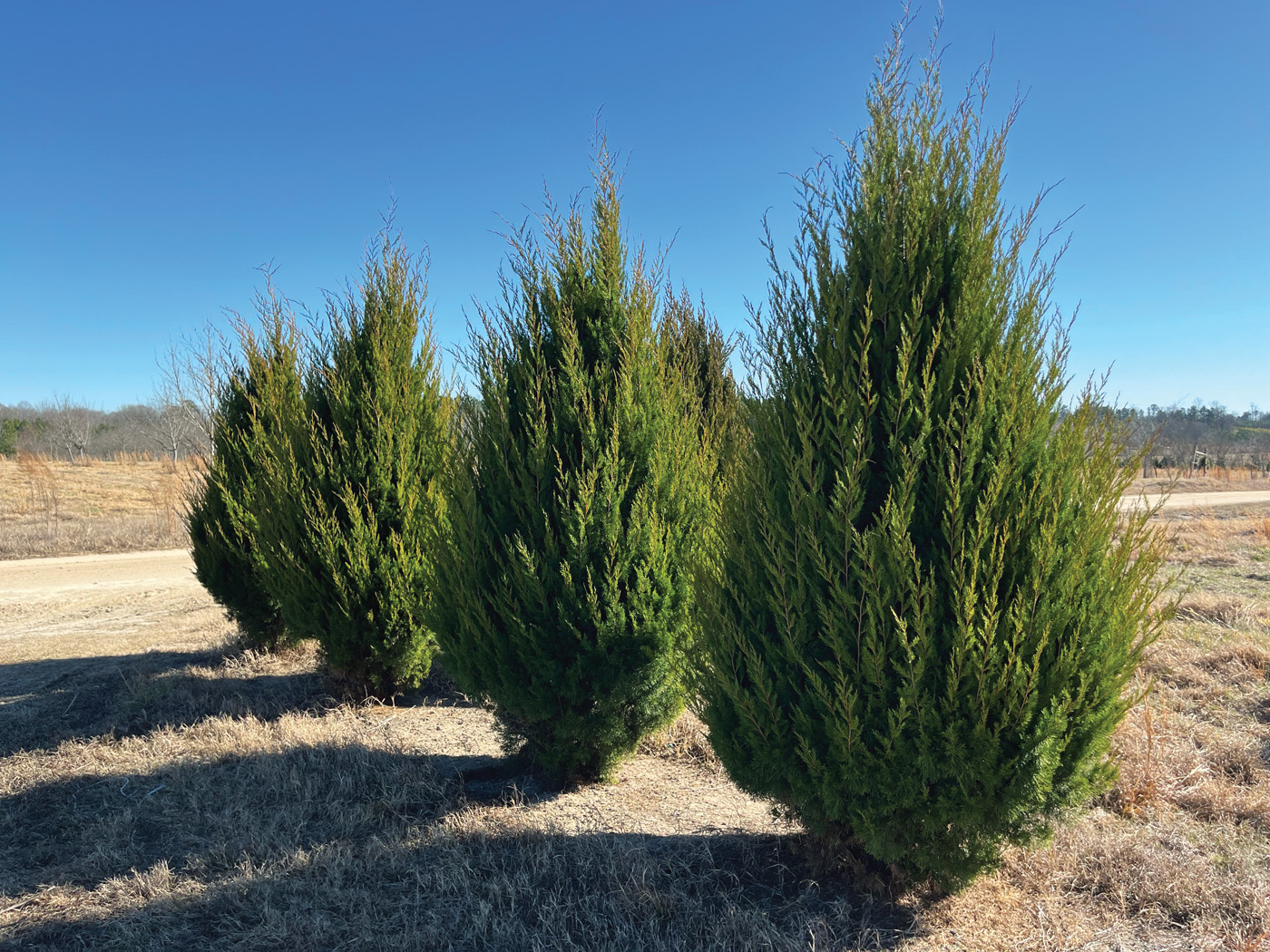
What can vary quite significantly is its form, but certain cultivars can achieve a predictable stature. If you’re seeking a screening plant or stately specimen, ‘Brodie’ Eastern red cedar is upright with a shape that is between conical and columnar. As a female cultivar, it will eventually produce blue, berry-like cones beloved by cedar waxwings. Its scale-like leaves feed the juniper hairstreak butterfly and several moth species. This selection from a keystone species is a solid choice for almost any garden except those near apple orchards, due to its susceptibility to cedar-apple rust.
Related: 7 Skinny Native Conifers for the Southwest
Golden Spirit™ smokebush’s unique coloration lends a pop of bright hues that won’t fizzle out in the sun
Cotinus coggygria ‘Ancot’
- Zones: 4–8
- Size: 8 to 15 feet tall and 6 to 15 feet wide
- Conditions: Full sun to partial shade; average to well-drained or rocky soil
- Native range: Southern Europe and central and western Asia
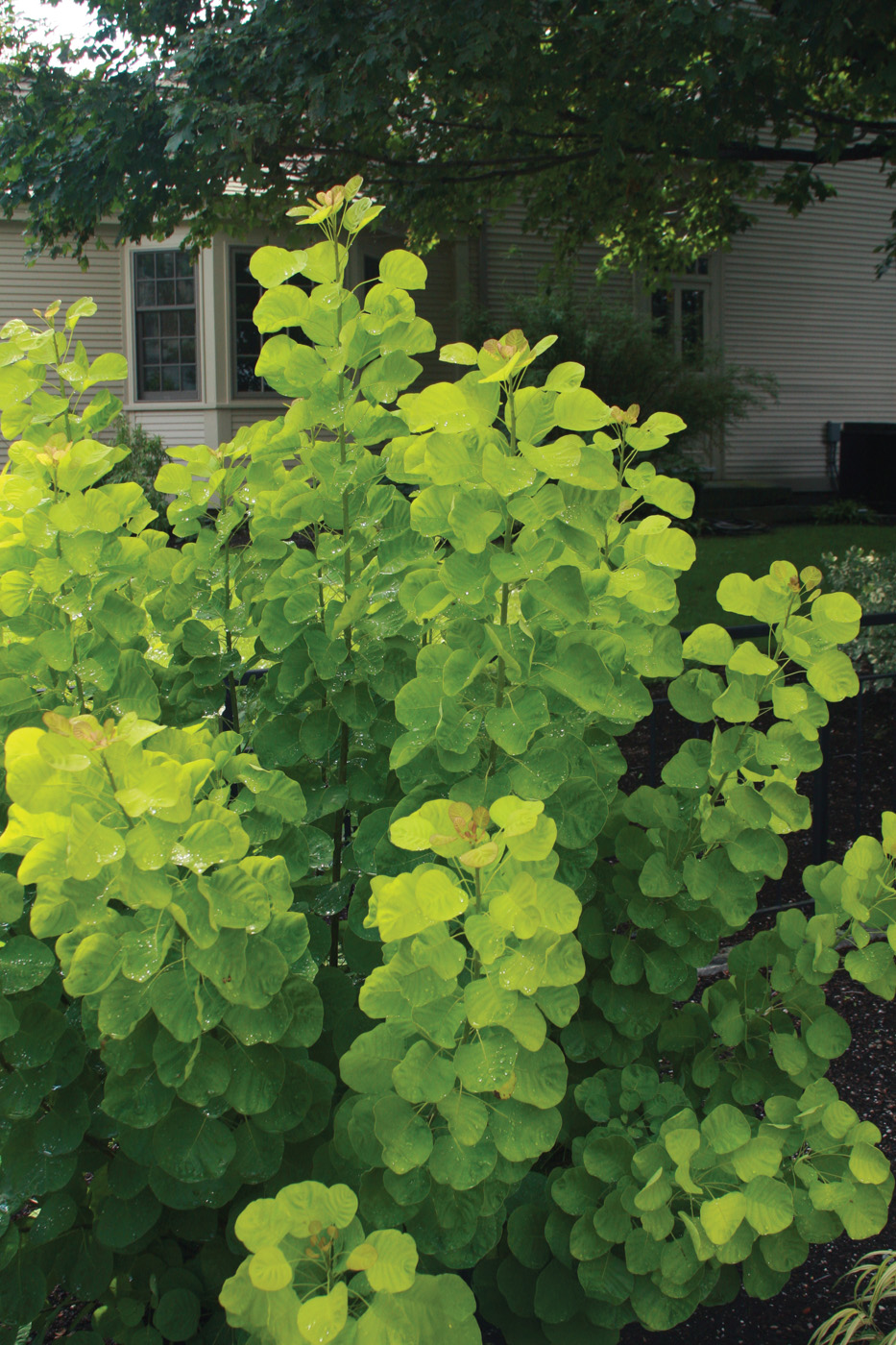
Smokebushes are tough and fascinating, and there is no denying that they are water-wise, growing well in poor and dry soil. Green- and burgundy-leaved cultivars have long been available, but my favorite is the eye-catching chartreuse Golden Spirit™. Its nearly circular leaves emerge yellow with red edges, looking like gold coins floating among thin branches. It is naturally multi-trunked but can be trained to a single leader tree if desired.
Grown with some shade, its summer color will be a soothing yellow-green. In full sun, the leaves retain more yellow without burning, and its fall color is often a lovely mix of bright yellow and rusty red. Golden Spirit™ is a light smoker. The airy pink clouds of flowering stalks that bloom in summer are a bit less abundant than on other smokebushes but are still attractive. Let it grow skyward for diva drama, or trim it back every few years for maximum spread and the brightest foliage color.
If you thought a palm couldn’t be cold hardy, windmill palm will surprise you
Trachycarpus fortunei
- Zones: 7–10
- Size: 10 to 40 feet tall and 6 to 14 feet wide
- Conditions: Full sun to partial shade; dry to moist, well-drained soil
- Native range: Central and eastern Asia
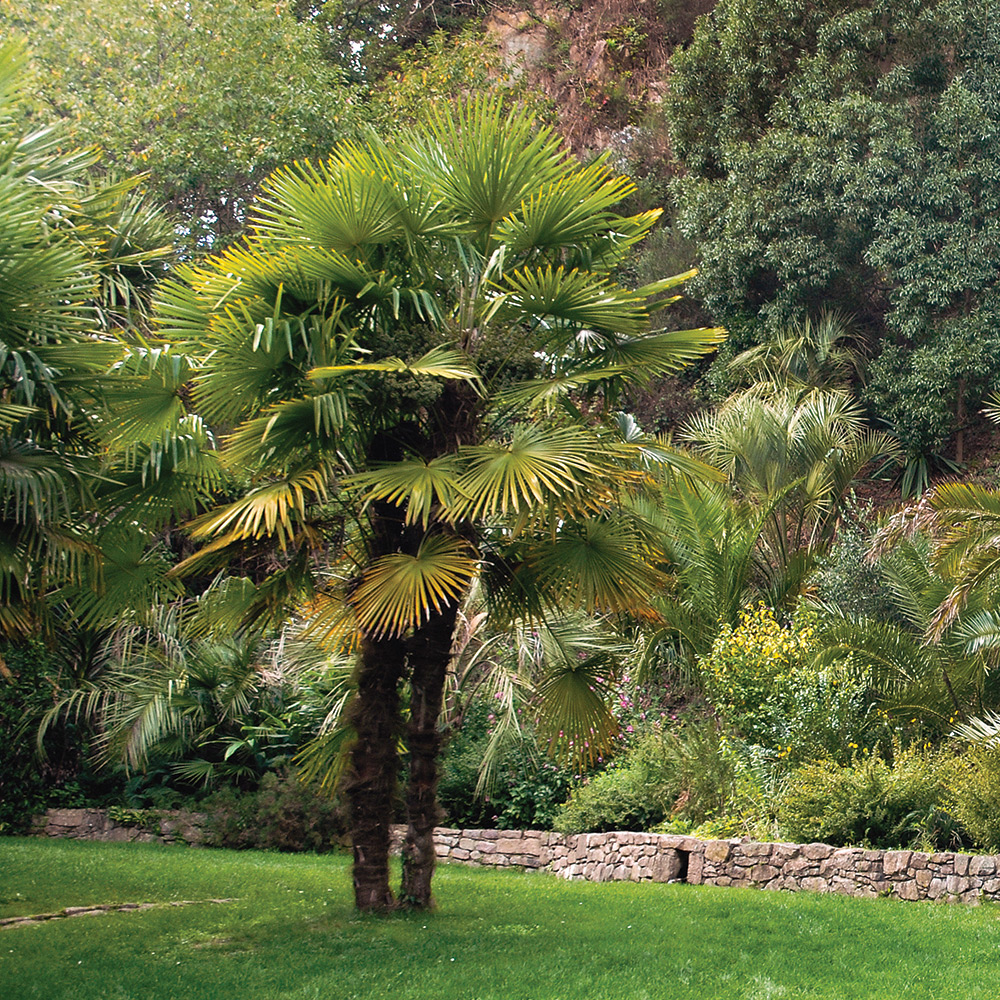
Palms and water seem to go together, but nature can challenge our beliefs sometimes. Not only is this upright palm drought tolerant once established, but it’s also one of the most cold-hardy palms around. Windmill palm brings a tropical flair to gardens and is also a striking focal point in more formal landscapes. Its pleated, evergreen, 3-foot-long leaves fully fan out from its narrow columnar trunk, which grows slowly but surely from a shrub-like start. Dark fibers among the pattern-forming leaf bases cover the trunk and provide habitat and nesting material for wildlife, while female plants produce large clusters of small blue-black fruits. With a fibrous, mat-like root system, it can be planted relatively close to buildings and hardscapes. At the lower end of its zonal range, plan to protect it from winter winds. You simply can’t beat windmill palm for an impressive show, especially when frosted with an inch or two of snow.
Chalk maple may be lesser known but makes a rewarding and adaptable landscape tree
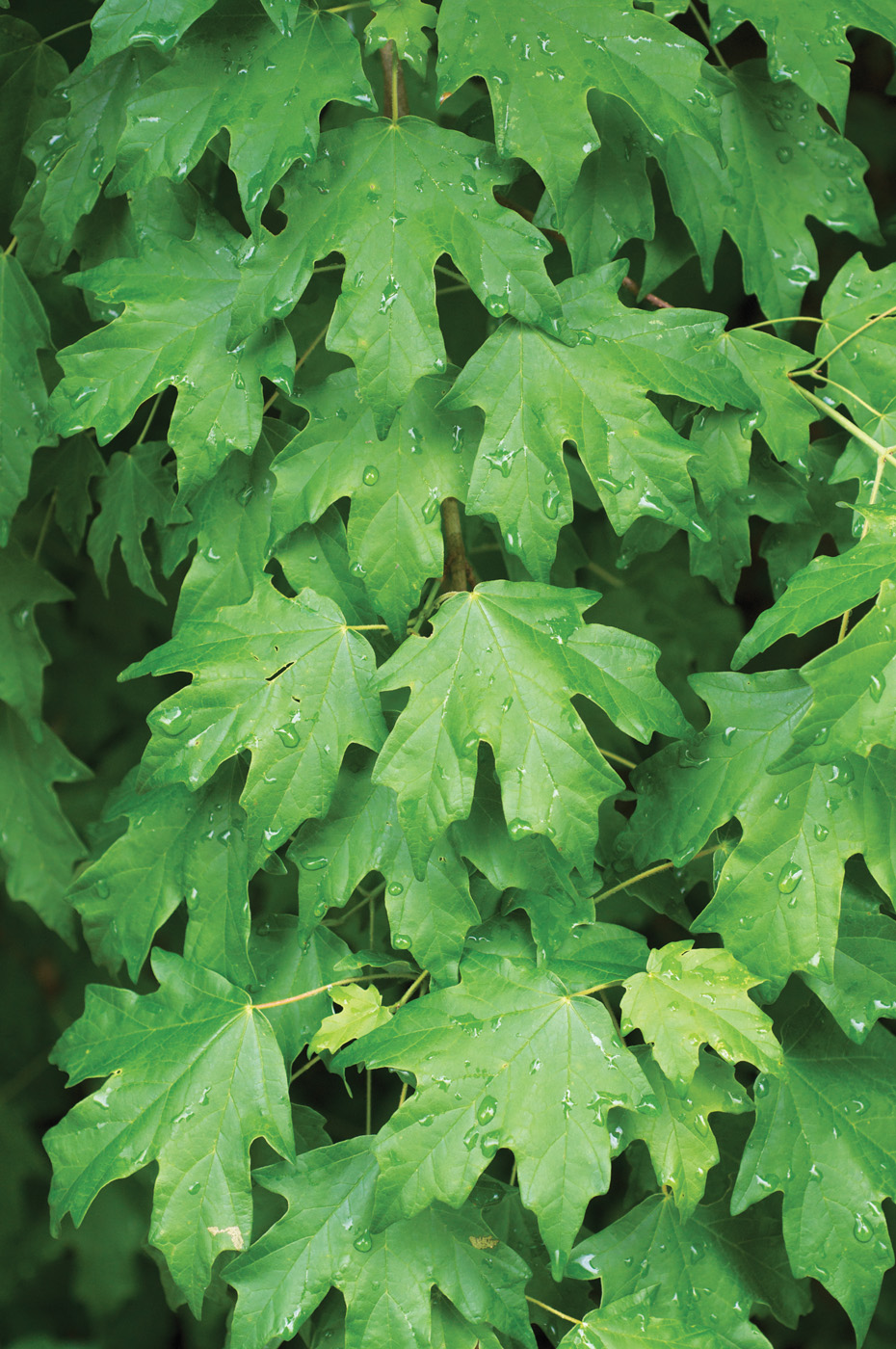
Acer leucoderme
- Zones: 5–9
- Size: 25 to 30 feet tall and 20 to 25 feet wide
- Conditions: Full sun to full shade; average to well-drained soil
- Native range: Southeastern United States
An intriguing cousin of sugar maple (A. saccharum, Zones 3–8), chalk maple is tolerant of drier conditions, which is only one of its many charms. This tree’s ultimate height makes it appropriate for smaller landscapes, yet it is still tall enough to provide shade. Quite shade tolerant itself, it can be planted in an understory as a successor to older trees. Its natural propensity toward two or three main trunks and a slight openness to its rounded crown make it reminiscent of Japanese maples (A. palmatum and cvs., Zones 5–9).
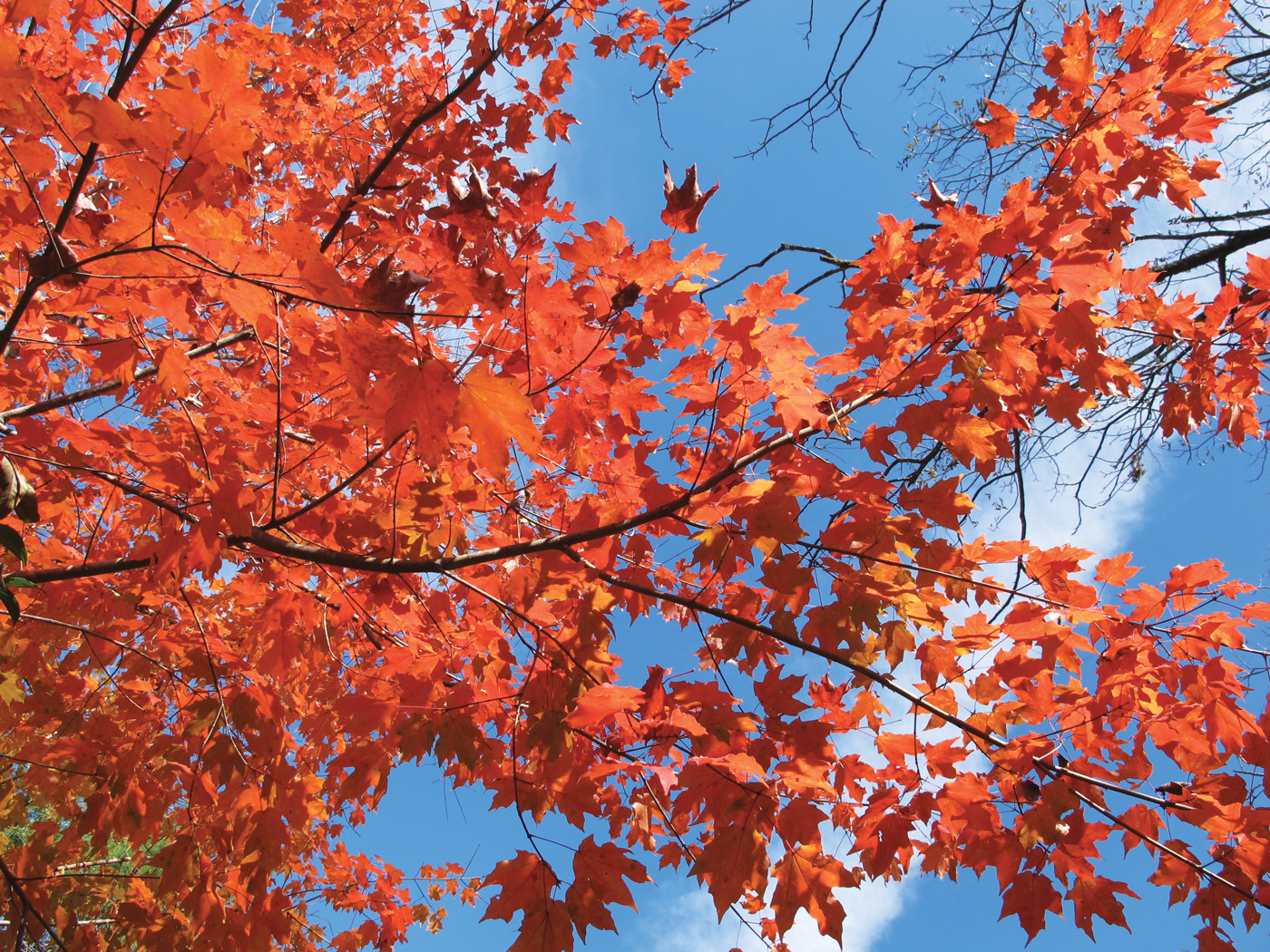
But the real glory comes in fall with consistently gorgeous leaf color, which is often pumpkin-orange with yellow undertones or sometimes a rich red. Chalk maple hails from drier woodland areas in the Southeast but is hardy to Zone 5. Limited availability is the only catch, as it’s mainly sold by specialty nurseries. But it is too wonderful and water-wise for its time not to come.
Learn more: Drought-Tolerant Woodies Podcast Episode
Turn to these drought-tolerant shrubs as specimens or bedding plants
Kalm’s St. John’s wort has a fancy name that matches its super extravagant blossoms
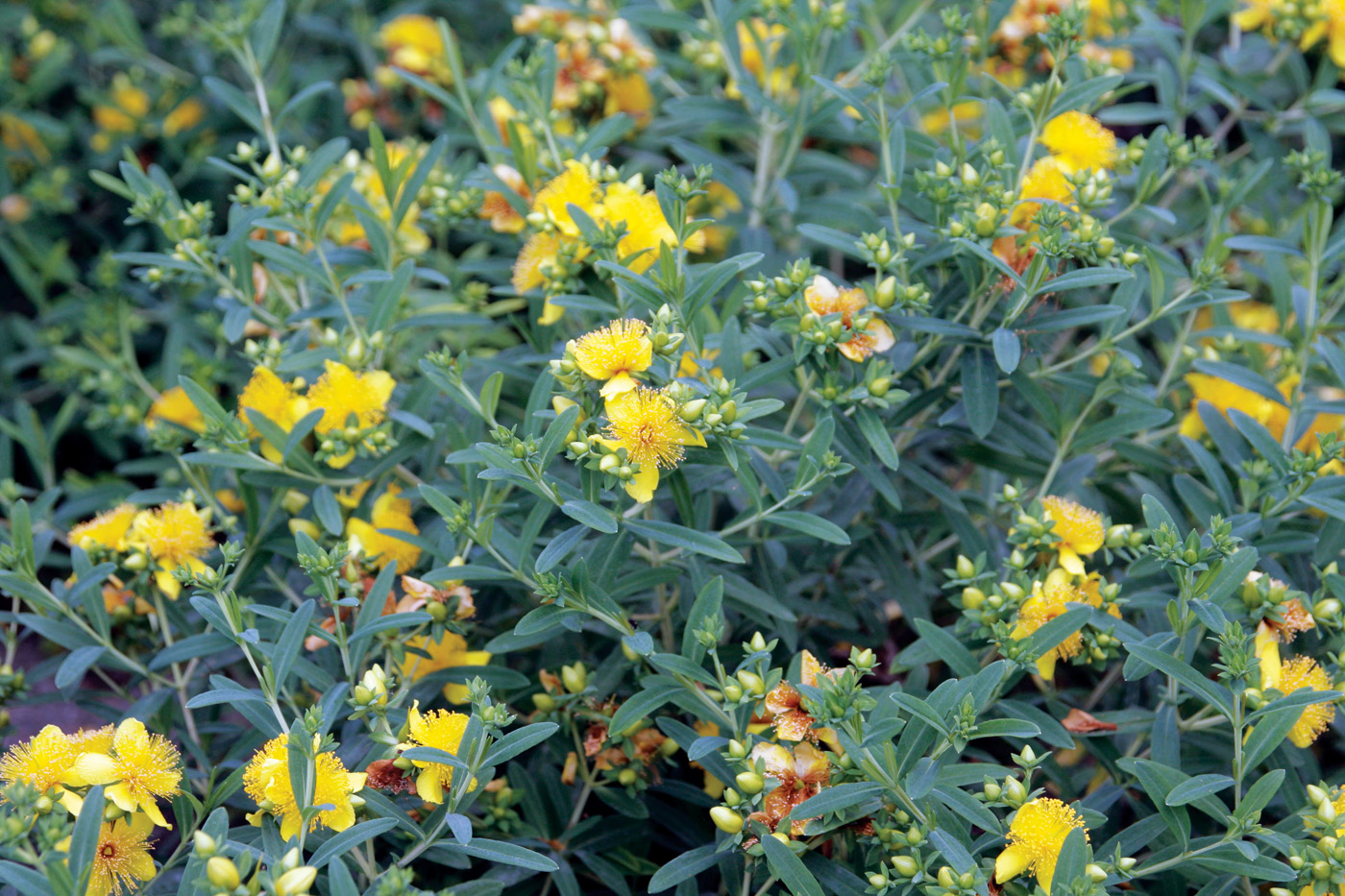
Hypericum kalmianum
- Zones: 4–8a
- Size: 2 to 4 feet tall and wide
- Conditions: Full sun to partial shade; pH neutral, well-drained soil
- Native range: Great Lakes region of North America
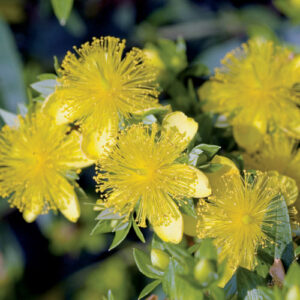
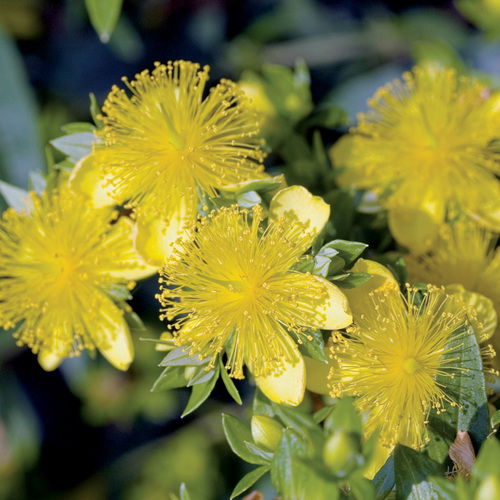
The wow factor of this native plant comes from the approximately six weeks in summer when it is smothered in lemony gold, 1-inch-wide flowers. Expect a rave of diverse bee species, moving at breakneck speed, to gather pollen from the tips of filaments that provide much of the floral show. When not in bloom and vibrating with pollinators, the shrub itself has a medium-fine texture, with a somewhat open habit due to its extensive branching and narrow bluish green leaves. In winter, slightly peeling bark, oval-shaped fruit capsules, and a few retained leaves provide continued interest.
Give this selection time to get well-established and fill out, then expect drought tolerance, disease resistance, and a mature size that fits well in many landscapes. If you decide to prune after flowering, take no more than a third of its height away at a time. This impressive shrub hosts the gray hairstreak butterfly but is thankfully not a favorite of deer.
Learn More: Our Favorite Deer-Resistant Plants | Podcast Episode
Appreciate sweet box for its toughness in addition to its fragrant flowers
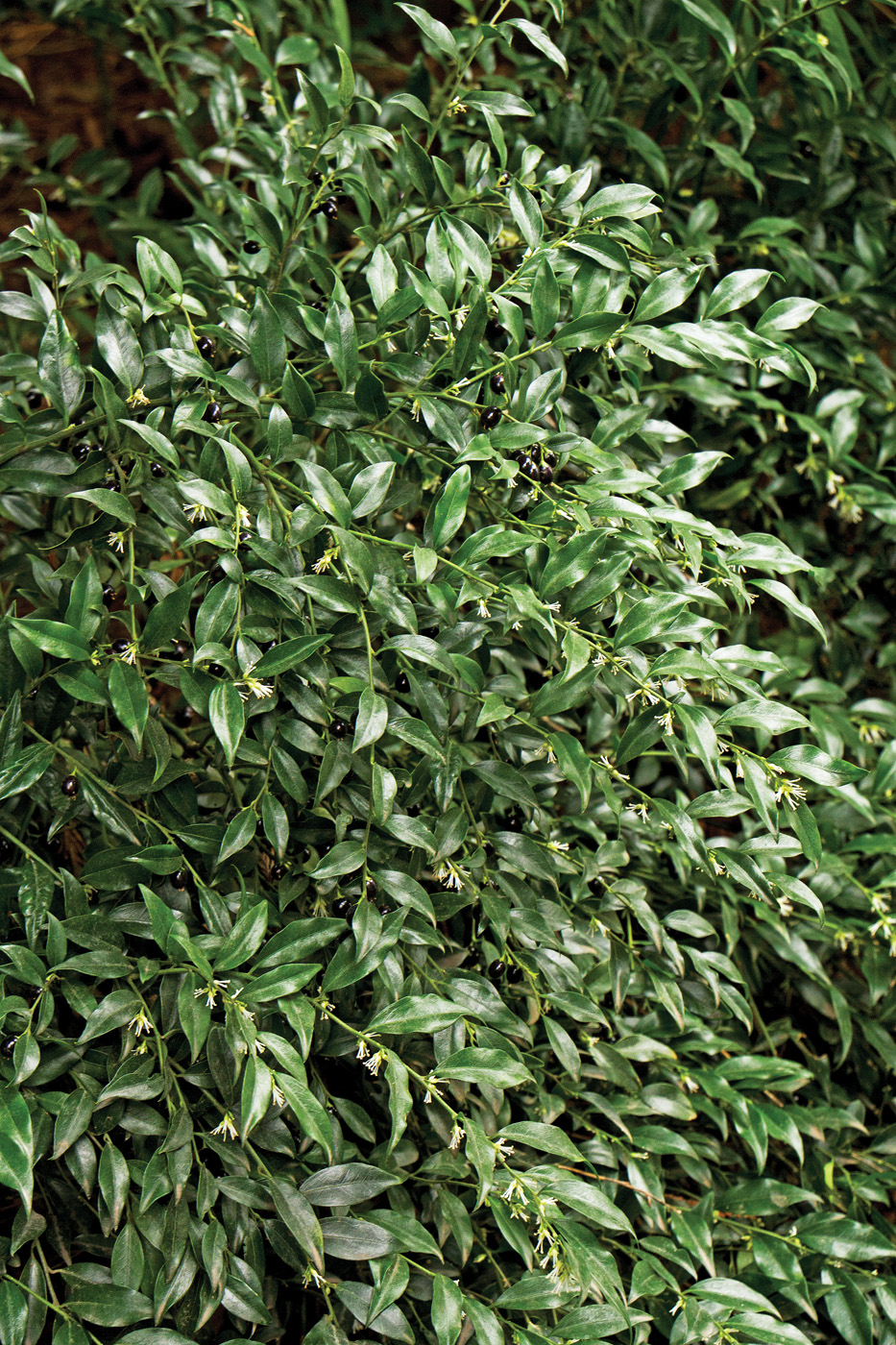
Sarcococca confusa
- Zones: 6b–9
- Size: 3 to 5 feet tall and wide
- Conditions: Partial to full shade; average to moist, well-drained soil
- Native range: China
Fragrance in winter feels like such a luxury. But when coming from a slowly spreading evergreen shrub in dry shade, it’s more than a fleeting indulgence. Plant sweet box in shady spots close to paths or entryways and give it time to reach its ultimate potential. The promise of softly sweet vanilla-like fragrance floating through the air on sunny February days is worth your patience. An abundance of small, partially hidden flowers with creamy white filaments are followed by fruits that are initially red and then shiny bluish black, adding to the appeal. Sporting glossy leaves with slightly wavy edges, a mature shrub is a handsome mix of formal and carefree. It can be pruned if desired but generally doesn’t need it. And it’s unlikely to be bothered by insects or herbivores either.
Bobo® panicle hydrangea delivers a compact form, a hardy disposition, and bountiful blooms
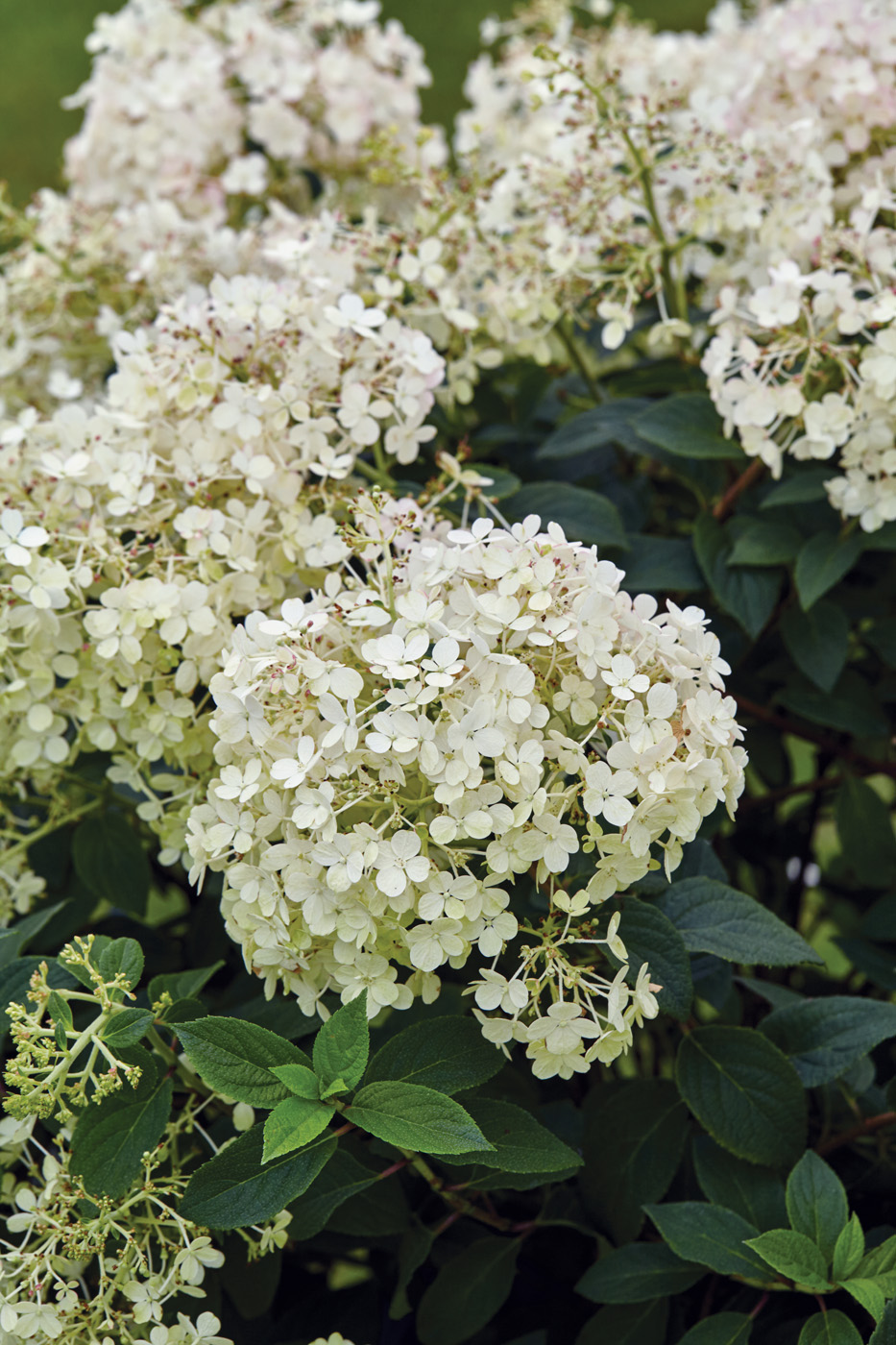
Hydrangea paniculata ‘Ilvobo’
- Zones: 3–8
- Size: 2 to 3 feet tall and 3 to 4 feet wide
- Conditions: Full sun to partial shade; average to moist, well-drained soil
- Native range: China and Japan
Panicle hydrangeas are everywhere for a reason. They are sturdy and long-lived, have large bloom clusters, and are very forgiving of pruning mistakes because they bloom on new growth. Best of all, once they are well- established, panicle hydrangeas only require supplemental water in extreme drought. But if you’ve become a little uninspired by their ubiquity, perhaps this cultivar will change your perspective by bringing this shrub down to a more intimate size.
Bobo® looks as cute as it sounds thanks to the mass of cottontail-like flowers covering even young shrubs. These blooms are creamy white and conical, topping short, sturdy branches in summer. Their color holds for months, often taking on pink tones. This shrub has a mounded form similar to bigleaf hydrangea (H. macrophylla and cvs., Zones 5–9), with the sturdiness and dense, upright flowers of a panicle hydrangea. Provide a top-dressing of compost each year for exceptional blooms.
Fire Chief™ arborvitae will light up your garden with hot color and heat tolerance
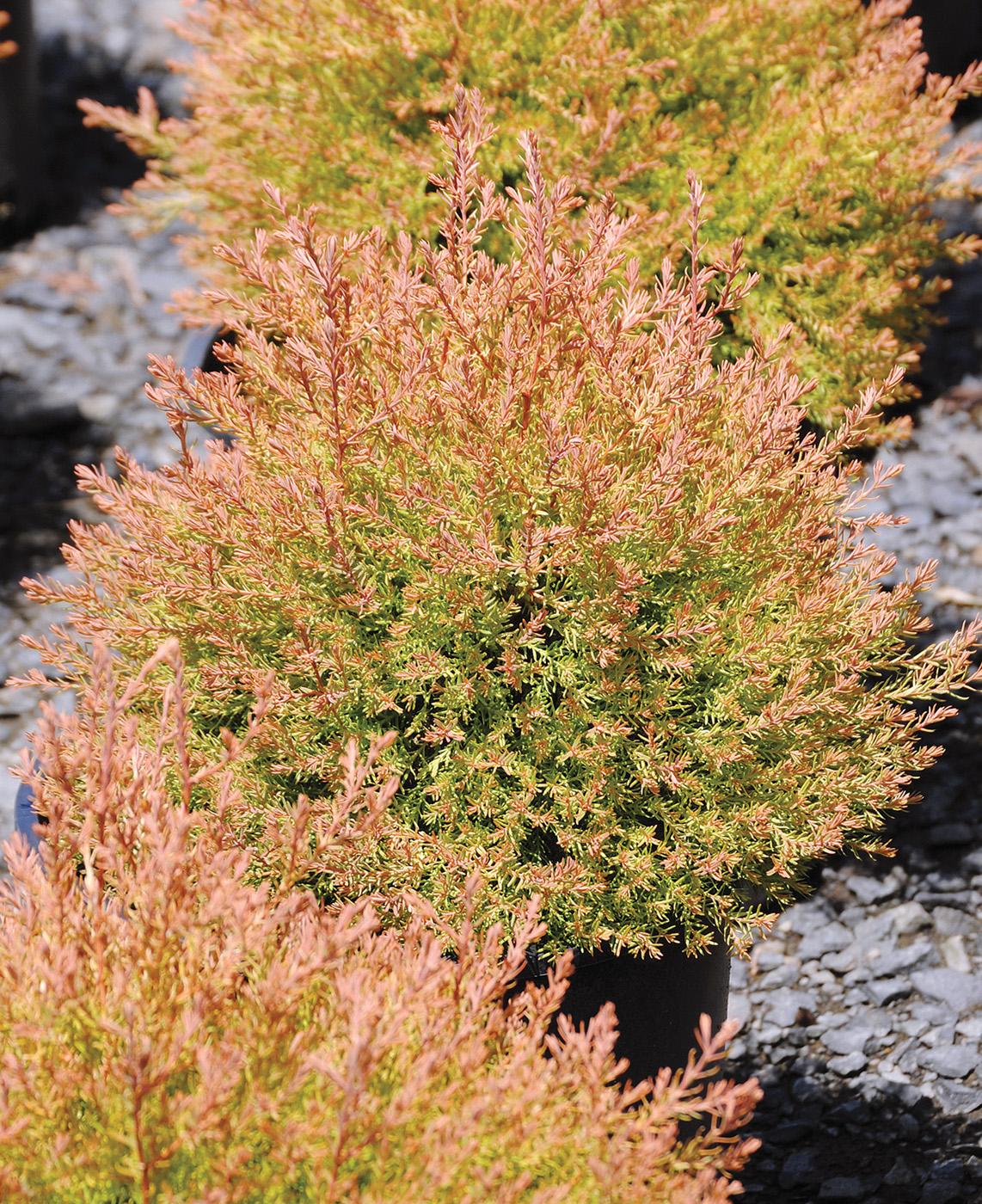
Thuja occidentalis ‘Congabe’
- Zones: 5–8b
- Size: 3 to 4 feet tall and wide
- Conditions: Full sun to partial shade; all soil types except sandy
- Native range: Eastern North America
Fire Chief™ arborvitae is well-named. This globe-shaped cultivar of the wonderful native American arborvitae is stout and sturdy and won’t melt under pressure. Its scale-like leaves emerge lime green and shift toward gold as they are exposed to more sun. As the season progresses, foliage brightens into oranges, then turns rust-red in fall and winter. Even in full sun, there’s fire but no burn; the effect is glowing and textural.
This shrub is slow-growing and doesn’t need pruning to keep its rounded form intact. This species of arborvitae is not known to be especially heat or drought tolerant, but Fire Chief™ has shown improvement in both these categories. With the right setting, care, and soil full of organic matter, it will establish an extensive root system, which will lend it water-wise sustainability and assure a long tenure in your garden.
Rethink roses with In Your Eyes®, which boasts multicolored blooms, drought tolerance, and disease resistance
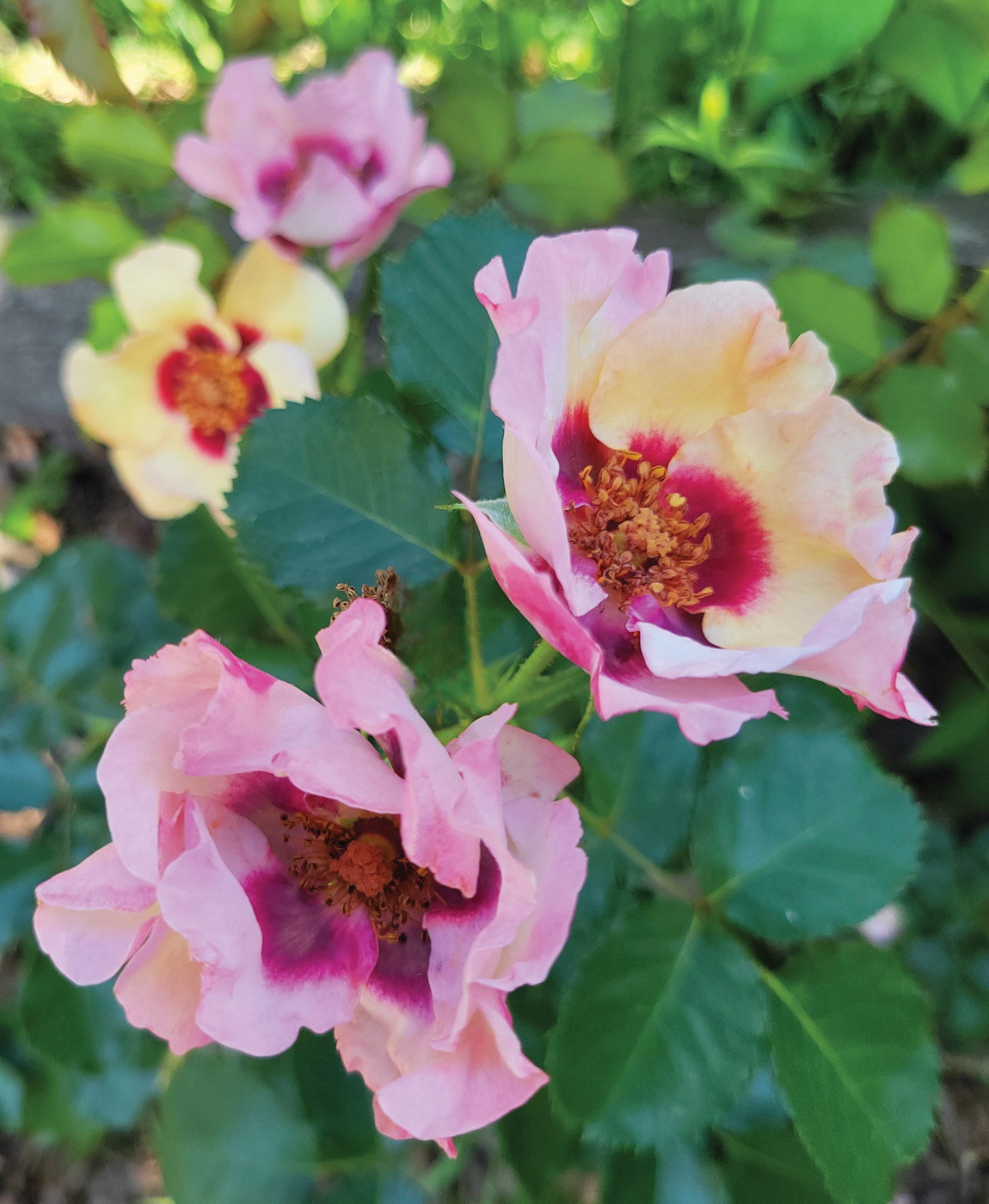
Rosa ‘WEKefybomeba’
- Zones: 5–9
- Size: 6 to 8 feet tall and 3 to 5 feet wide
- Conditions: Full sun to partial shade; average to well-drained soil
- Native range: Hybrid
Roses, for all their cultural importance, can have a reputation for being high-maintenance and disease prone. But with their thick, deep roots, most are quite water-wise. Rose breeding has made many improvements to the genus, and the hybridization of persica rose (R. persica, Zones 4–9) with shrub roses has resulted in a beauty with particularly low water needs. In Your Eyes® features clusters of hue-changing single blossoms with prominent colored eyes that ring the middle of each bloom. Petals begin a custardy yellow with burgundy centers and fade to lavender with deep purple centers, making a flowering shrub look like a multicolored canvas. Add to that a mild fragrance and disease-resistant foliage, and I’m sold. Is it on the large side? Yes. Is it constantly in full bloom? No. But when even a single branch is in flower, it will draw your eye. A hard prune in winter and occasional deadheading is all the maintenance this rose requires to keep you entranced.
New Jersey tea is an ornamental native shrub that will surprise you with its durability
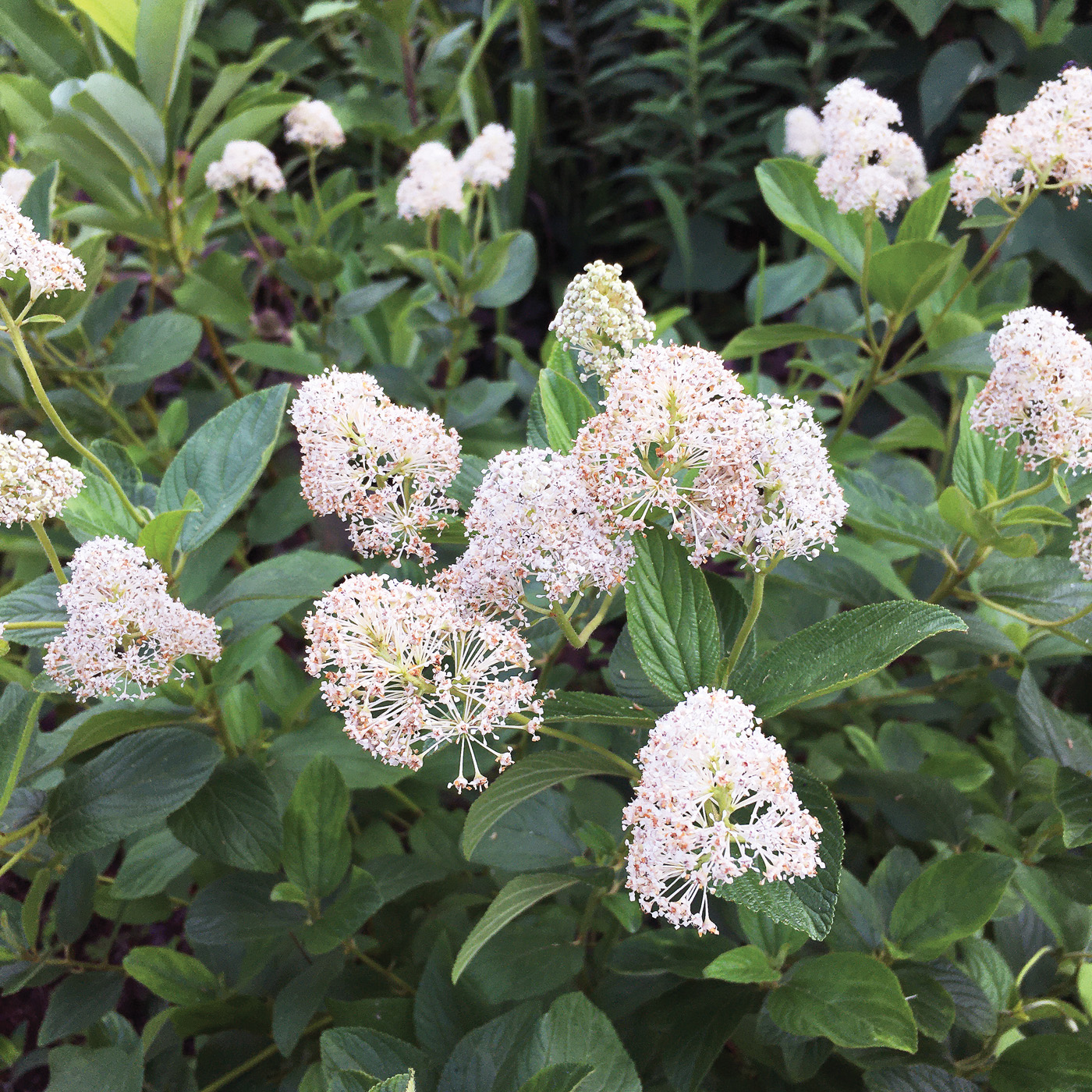
Ceanothus americanus
- Zones: 4–8
- Size: 2 to 4 feet tall and 3 to 5 feet wide
- Conditions: Full sun to partial shade; dry to medium, well-drained soil
- Native range: Central and eastern North America
The charm of this interesting native plant sneaks up on you. Seen growing in southern mountains and along northern roadsides, it is tough as nails in sun and drought. Welcome it into your garden and its mounded form will be more apparent, as will be the pollinator magnetism of its white flowers, which look like frothy bubbles in a bath. It attracts bees, butterflies, and even hummingbirds, and its leaves feed the larvae of the beautiful spring azure butterfly. Deep taproots account for New Jersey tea’s drought tolerance but also mean that special care must be taken when planting. Start out with a younger plant and nurture it for a year or two. As the shrub ages, it can be cut back to near ground level for rejuvenation if desired. The leaves have an attractive texture due to impressed veins and even boast a bit of fall color.
Learn More:
Create a Water-Wise Garden with Stone
Native Shrubs to Replace Boxwood in Your Garden
Find Out What Region You Are In
| Sources for Drought-Tolerant Shrubs and Trees |
The following mail-order sources may offer some of the plants featured in this article:
- Direct Native Plants, Middle River, MD; 410-696-1372; directnativeplants.com
- Fast Growing Trees, Fort Mill, SC; 800-973-8959; fast-growing-trees.com
- Spring Hill Nursery, Lawrenceburg, IN; 513-354-1509; springhillnursery.com
- White Flower Farm, Litchfield, CT; 800-503-9624; whiteflowerfarm.com
- Wilson Bros. Gardens, McDonough, GA; 770-573-1778; wilsonbrosgardens.com
Paula Gross is the former associate director of the University of North Carolina at Charlotte Botanical Gardens and a co-author of The Southeast Native Plant Primer: 225 Plants for an Earth-Friendly Garden.
Fine Gardening Recommended Products
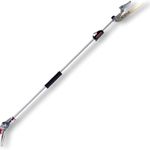
ARS Telescoping Long Reach Pruner
Fine Gardening receives a commission for items purchased through links on this site, including Amazon Associates and other affiliate advertising programs.
Telescopes from 4 to 7′. Cut and Hold (160) Blades. Drop forged blades for unsurpassed long lasting sharpness. Lightweight, 2.3 lbs., for continued use. Perfectly balanced for easy pruning.
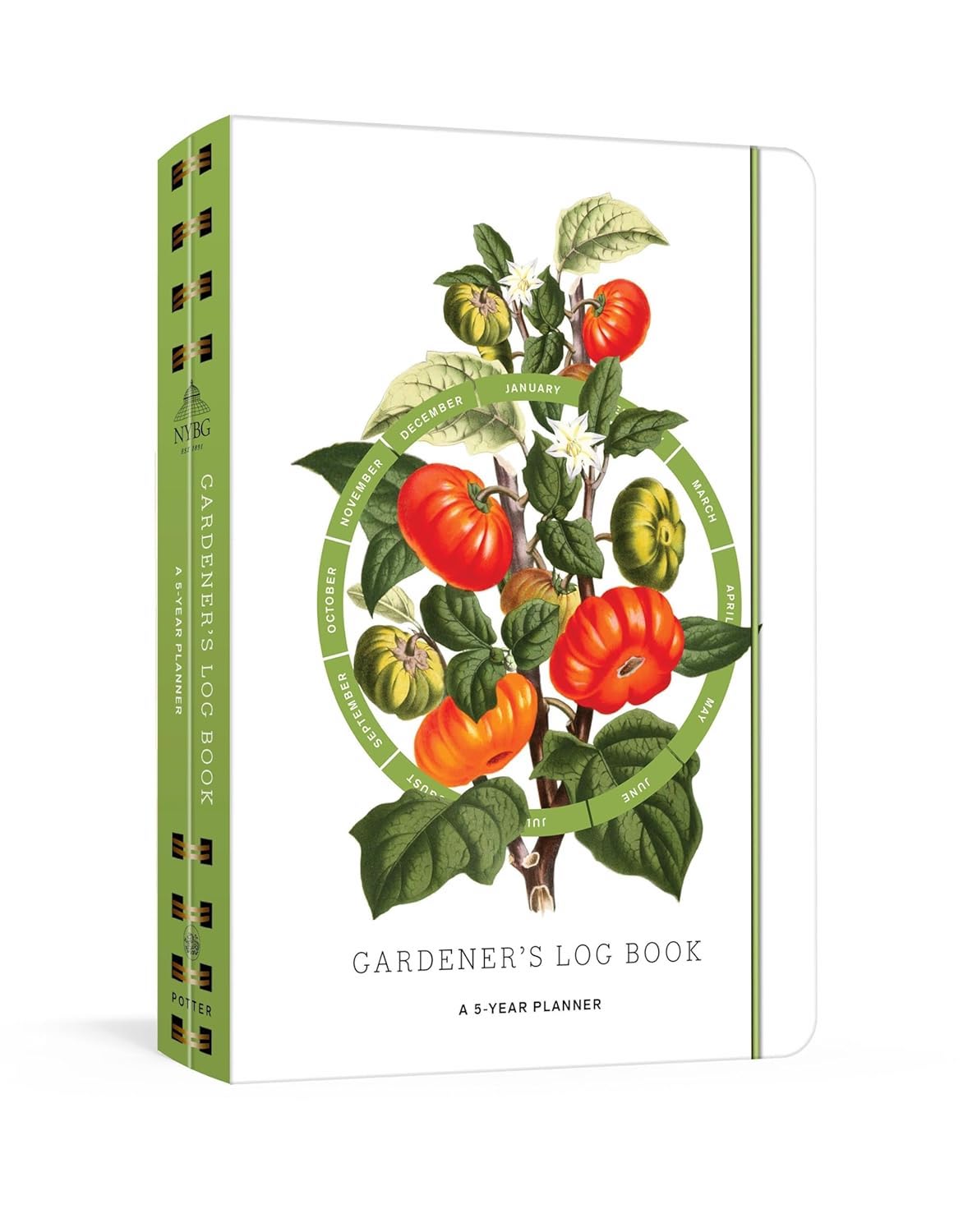
Gardener’s Log Book from NYBG
Fine Gardening receives a commission for items purchased through links on this site, including Amazon Associates and other affiliate advertising programs.
This weatherproof five-year log book includes the following features:
· Sturdy waterproof cover to protect pages from rain and muddy soil
· Lined pages and gridded paper for plotting beds
· Five years of 12-month bloom and harvest grids for recording what you planted and when
· Authoritative appendices on composting, pruning, pest and disease control, and container gardening
· Useful reminders by season on fertilizing, mulching, and transplanting
· Space for listing your favorite sources and suppliers.